Calgary’s housing market sorts cleanly by lifestyle tier. The luxury hilltop communities sit south of the Bow River. The inner-city condo cores draw young professionals to walkable streets. The mid-family suburbs anchor the southeast and northwest quadrants. The affordable starter pockets cluster in the northeast and southern fringe. Each tier has its own price band, its own daily rhythm, and its own best fit for a buyer at a particular life stage.
The 2025-2026 Calgary market posted a benchmark detached price near $565,600 with an average of $641,844, essentially flat year-over-year. Inventory tightened back into seller ‘s-market territory in March 2026. The neighborhoods below cover the spread from $250,000 entry condos in the northeast to estate homes north of $4 million in Bel-Aire.
Established Mid-Family Suburbs
The mid-family tier covers most of Calgary’s southeast and northwest suburbs. Mahogany and Auburn Bay anchor the southeast with lake-community amenities and detached pricing in the $619,000 to $797,000 range. Tuscany sits in the northwest with three K-9 schools inside the community and a C-Train station. Cranston and Legacy hold the lower end at around $480,000.
These suburbs work for households that want larger lots, fenced backyards, and amenity scales designed for kids. The trade-off is a 25-to-35-minute commute to downtown and limited walkability outside the central village clusters in each community.
Luxury and Estate Communities
Mount Royal sits on the slope above downtown and is the city’s oldest luxury enclave, originally developed for Canadian Pacific Railway executives in the early 1900s. Upper Mount Royal recorded a 2025 median price of $3.6 million, with the 22 single-family homes sold averaging $2.8 million. Many of the original homes are heritage-protected, and 68 designated heritage residences remain inside the community.
Bel-Aire and Roxboro round out the trophy tier. Bel-Aire posted Calgary’s highest 2025 average sale price at $4.6 million on three transactions. Roxboro averaged $2.3 million across nine sales, with riverfront positioning driving the premium. Outside the inner south, Aspen Woods on the western edge of the city offers newer estate construction at slightly lower price points.
Filtering Calgary Listings by Neighborhood
A buyer working through Calgary’s housing options usually starts by setting price and quadrant filters, then narrows by community. Calgary’s benchmark detached price sat near $565,600 in 2025-2026 with an average around $641,844, but community-level numbers swing from the $400,000s in Cranston to well above $1 million in Aspen Woods and Mount Royal. A search of calgary homes for sale returns active inventory citywide, which lets a buyer see what each lifestyle tier looks like in real terms before committing time to neighborhood tours.
Inner-City for Young Professionals
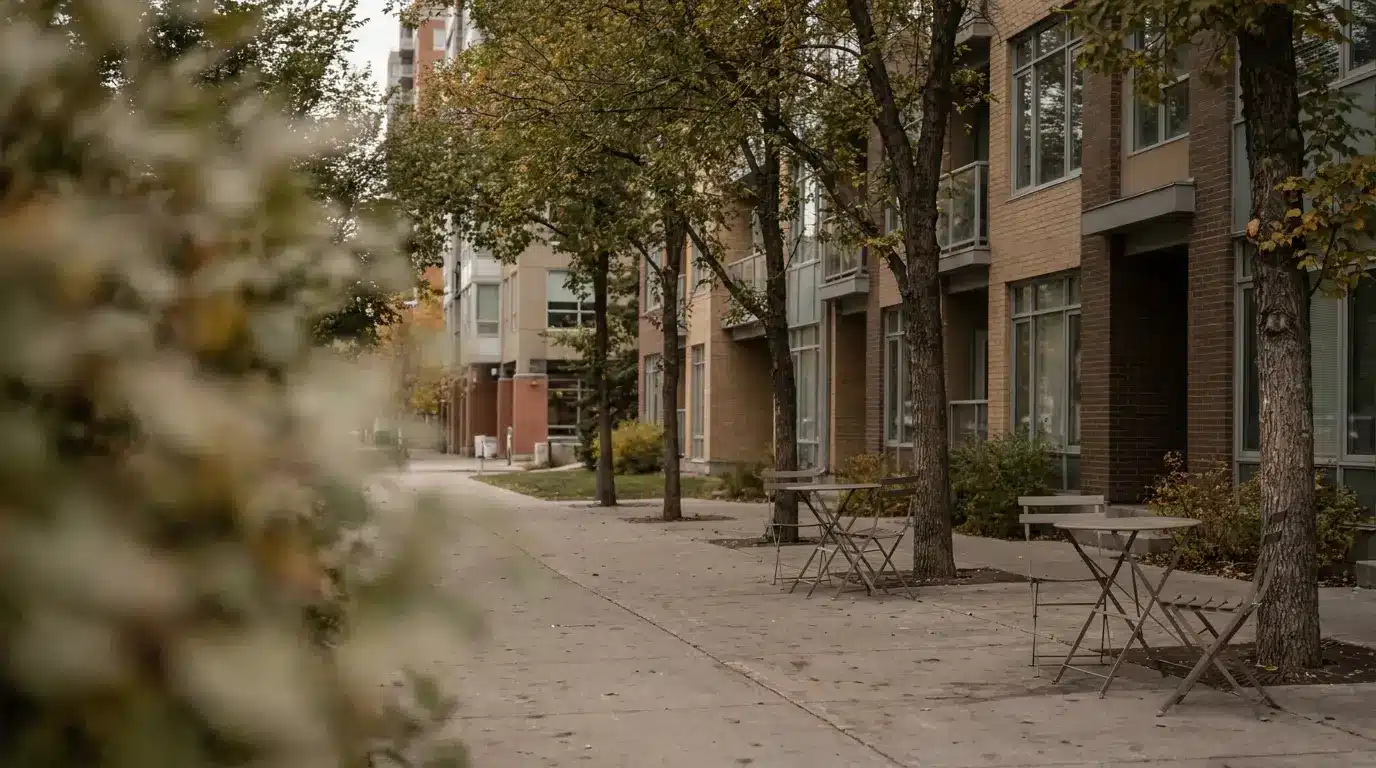
The Beltline, Mission, East Village, Kensington, and Altadore are the inner-city options for young-professional buyers. The Beltline carries the highest concentration of condos, restaurants, and entertainment, with units ranging from $200,000 entry-level to $1.5 million for penthouses. Mission balances Beltline access with quieter Elbow River pathways and proximity to the Repsol Sport Centre. East Village is the newest of the inner-city options, redeveloped under a 2009 master plan that has so far attracted $4 billion in private investment behind a $400 million city infrastructure spend.
For buyers who prefer character over high-rise, Kensington and Altadore deliver pre-war detached and semi-detached stock with walkable main streets. Pricing in those two runs higher per square foot than the Beltline towers, but the lot and the trees come with it.
Affordable Starter Communities
Skyview Ranch in the northeast offers detached homes around $475,000 and condos in the low $200,000s, which puts it in reach for first-time buyers earning the Calgary median income. Saddle Ridge and Taradale sit nearby with similar pricing. The northeast quadrant trades on transit access and proximity to the airport, with the trade-off being a longer commute to the downtown core.
Seton in the southeast is the master-planned alternative for first-time buyers who want newer construction and built-in amenities. The community centres on the South Health Campus and the Brookfield Residential YMCA, a 493,000-square-foot recreation centre with two NHL-size ice rinks and an Olympic-size pool. Pricing is typically below Mahogany and Auburn Bay despite the comparable amenity package.
Lifestyle Considerations Across the Quadrants
Calgary lifestyle sorts mainly by walkability and recreation access. The inner-city neighborhoods offer the highest walkability scores and the shortest commutes. The Beltline carries more than 70 restaurants along the 17th Avenue SW retail spine. The southeast and northwest suburbs trade walkability for community-scale amenities, organized recreation, and lake or pathway access. The northeast offers the lowest cost of entry and the strongest cultural mix.
Recreation access splits along the Stoney Trail ring road. The west and northwest sit within 90 minutes of Banff National Park, which makes weekend hiking and skiing the default. The southeast sits closer to provincial parks like Kananaskis Country via Highway 22. The inner-city quadrants offer the Bow and Elbow River pathway systems on doorstep terms.
Pricing Ranges by Lifestyle Tier
The 2025-2026 numbers map roughly: starter ($250,000 to $500,000) covers Skyview Ranch, Saddle Ridge, Bridlewood, and entry-level condos in the Beltline. Mid-family ($500,000 to $800,000) covers most of Mahogany, Auburn Bay, Tuscany, Royal Oak, and Cranston. Mid-luxury ($800,000 to $2 million) covers Aspen Woods, West Springs, Bridgeland infills, and the Hillhurst character market. Trophy tier ($2 million to $5 million-plus) sits in Mount Royal, Bel-Aire, Roxboro, Elbow Park, and select Eagle Ridge properties.
Days on market in 2025 favored sellers in the upper tiers. Bel-Aire averaged 15 days on market, and Roxboro averaged 11.
A Final Read
Calgary’s housing market gives a household more lifestyle options than its population would suggest. The luxury enclaves carry a hundred-year heritage. The inner-city cores deliver walkability that few other Canadian cities can match at the price. The mid-family suburbs offer an amenity scale that exceeds most North American comparisons. The starter communities give first-time buyers a path that does not require waiting until their forties. The right pick comes from matching the tier to the household’s life stage and weekly calendar.