There is a difference between a home that looks serene in a photo and one that actually feels grounded to live in.
The second kind usually comes down to materials.
Not louder finishes or more decoration, but surfaces that soften light, hold up to daily use, and gain character instead of losing appeal after a few years.
Tile plays a bigger role in that feeling than most people realize.
It sets the temperature of a room visually, and often physically. It influences how a bathroom reads in morning light, how a kitchen backsplash reflects movement, and whether a floor feels timeless or trend-bound.
The best tile brands for calm, natural interiors understand that beauty is only part of the job. Their materials also need to handle moisture, foot traffic, cleaning routines, and real-life installation conditions.
For homeowners, design-forward renovators, and architects alike, the sweet spot is usually the same: tile that feels quiet, tactile, and lasting.
That often means paying attention to variation, substrate requirements, sealing needs, and how a material will age once it is actually installed.
What makes a tile brand feel calm and long-lasting?
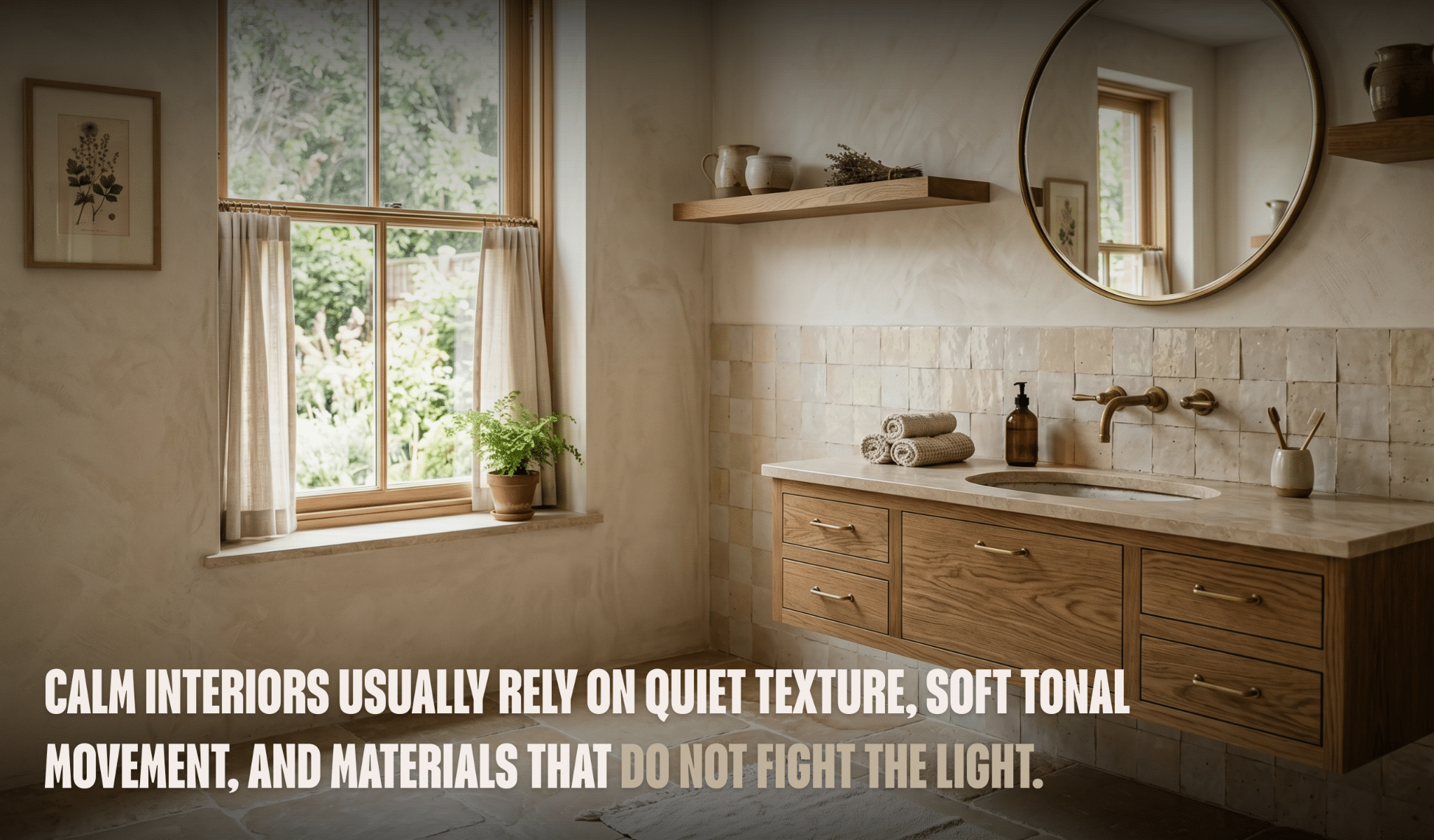
Before getting into the brands, it helps to define what “natural, calm, and long-lasting” really means in practice.
Natural-looking tile tends to have tonal movement, surface depth, and a finish that does not read overly glossy or flat.
Think limestone with gentle fossil markings, handmade ceramic with slight glaze pooling, or terracotta that develops a soft patina over time.
Calm tile palettes usually stay within mineral-inspired tones like chalk, sand, mushroom, bone, olive, clay, and warm white.
Long-lasting, though, is about more than appearance. In wet areas, you want to think about water exposure, grout maintenance, slip resistance underfoot, and whether the tile needs sealing before and after grouting.
On walls, layout planning matters too.
A beautiful handmade tile can lose its effect if the install leaves awkward slivers at corners or poorly resolved edges. That is why the strongest brands tend to pair design credibility with clear installation guidance.
If you are already collecting ideas for a more spa-like bath, it is worth revisiting how to make a neutral bathroom feel luxurious and relaxing, especially the emphasis on natural elements and restrained finishes.
1. clé tile
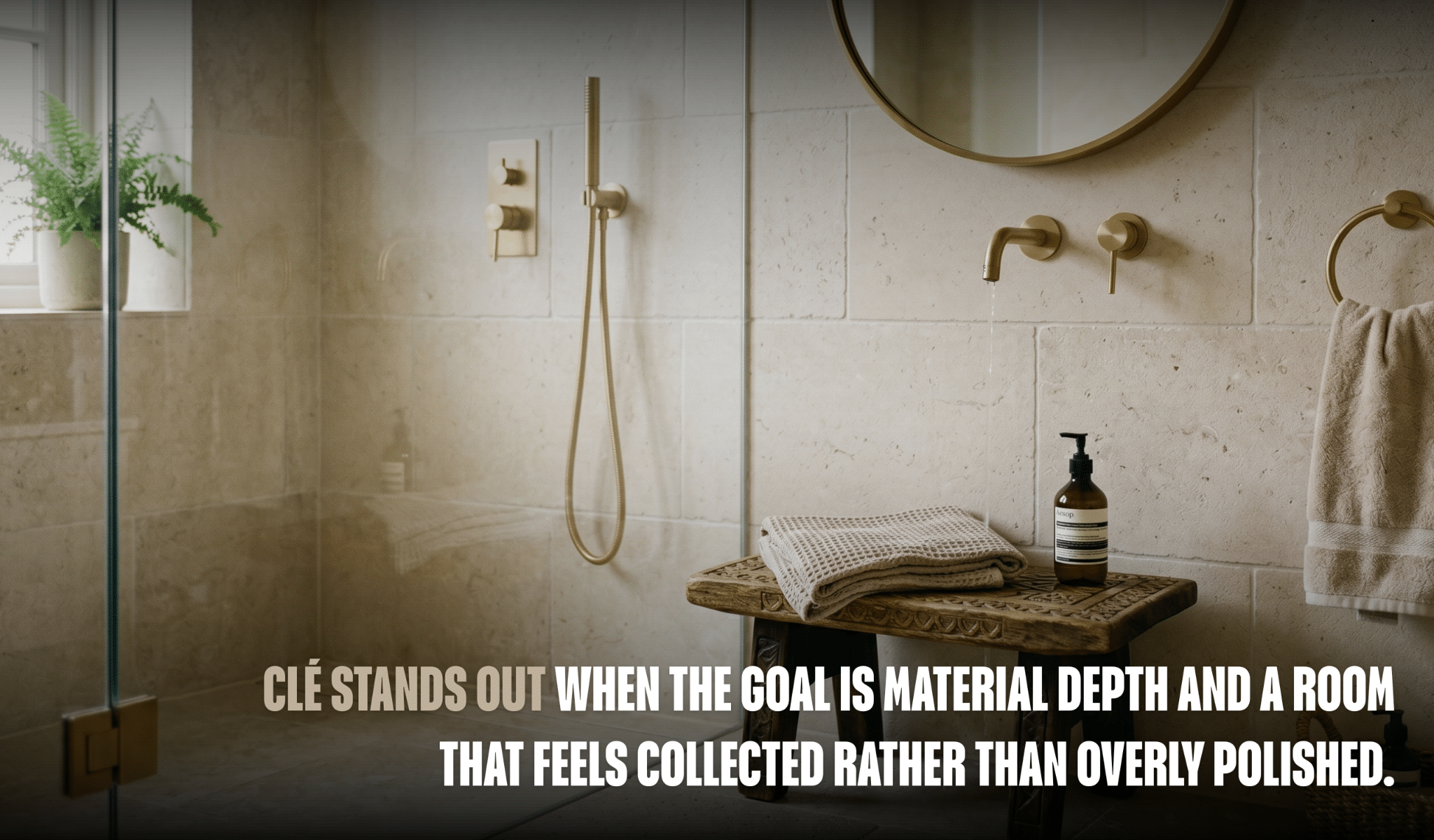
For homes that are meant to feel soulful rather than slick, clé is one of the strongest names to know.
The brand has built a following around artisan-forward surfaces, including zellige, terracotta, cement, brick, terrazzo, ceramic, and natural stone, with a particularly rich stone offering through its limestone, marble, slate, and travertine collections.
For a quiet, lasting bathroom material, luxury limestone tile for bathroom renovations is a smart fit because limestone brings a soft, fine-grained look that reads elegant without feeling cold.
clé’s Grand Place limestone collection is positioned as versatile, durable, and suitable across traditional to ultra-modern interiors, which makes it especially useful for designers trying to create calm continuity from floor to wall.
Like most natural stones, limestone needs the right kind of handling. Sealing, proper edge treatment, and thoughtful layout all matter. That practical side is part of what makes the material feel lasting rather than simply beautiful in a showroom sample.
Best for: limestone, zellige, and terracotta surfaces in homes that want editorial depth, artisan texture, and a calm, collected feel.
2. Tabarka Studio
Tabarka Studio is a smart second inclusion when you want artisanal warmth without moving too close to clé’s exact lane. The brand is especially known for handcrafted terracotta and surfaces that feel rooted in old-world materiality rather than trend-driven finish stories.
This is the kind of tile brand that works well when a home needs warmth underfoot or a little more visual age.
Terracotta from Tabarka can make an entry, mudroom, sunroom, or kitchen feel more grounded and less newly installed in the generic sense. It brings character through natural tone and patina rather than gloss or graphic pattern.
That makes it especially appealing in homes that want to feel relaxed, textured, and genuinely lived in. It does not aim for machine-perfect sameness, and that is part of its strength.
That same preference for tactile, natural-looking finishes also shows up in stone veneer design ideas that add texture and style to your house. The overlap is clear: rooms usually feel warmer and more memorable when material texture is allowed to do some of the work.
Best for: terracotta floors, warm transitional spaces, and homes that want artisan heritage with a softer, lived-in finish.
3. Fireclay Tile
Fireclay Tile is a strong middle ground between handcrafted character and broad project usability. Its handmade Original Ceramic line is available in a wide color range and is defined by visible artisan qualities including color variation, finish depth, and surface irregularity. The company also highlights its use of all-natural, lead-free ingredients and California manufacturing.
For calm interiors, Fireclay is most convincing in muted, mineral-based tones rather than high-contrast palettes. Soft whites, foggy greens, clay neutrals, and muddied blues can bring enough movement to a backsplash or bath wall without making the room feel busy.
It is also a practical brand for more planning-heavy projects.
Fireclay offers design files, installation guides, and spec resources, which makes it easier for architects and contractors to coordinate the jump from inspiration to execution. That is not glamorous, but it is often the difference between a material that photographs well and one that installs cleanly.
3. Mercury Mosaics
Mercury Mosaics is a strong choice for homeowners who want handmade ceramic tile with personality, but not in a way that overwhelms the room.
The brand’s appeal lies in visible glaze movement, handcrafted production, and shapes that bring charm without feeling overly busy.
Where this brand works best is in smaller moments that benefit from close-up texture.
A backsplash, powder room wall, fireplace surround, or niche can all feel warmer and more personal when the tile shows slight shifts in glaze and finish. That kind of movement helps the surface feel alive to daylight rather than flat or overly standardised.
Mercury Mosaics is less about stone-led calm and more about ceramic warmth. Used in softer tones, it can still sit beautifully within natural, understated interiors.
Best for: handmade ceramic backsplashes, powder rooms, and feature areas where glaze variation and handcrafted charm matter most.
5. Mosaic Factory
Mosaic Factory rounds out the list well because it brings handcrafted surface character from a slightly different angle. The brand works across zellige, terracotta, terrazzo, and cement tile, and is especially useful for readers who want Moroccan-influenced warmth or visible hand-touched texture in smaller doses.
This is often the kind of tile that works best when it is allowed to be expressive in one area rather than spread everywhere. A niche wall, powder room, fireplace detail, or backsplash can all benefit from the kind of variation Mosaic Factory offers. It adds movement and material interest without requiring the whole room to revolve around the tile.
It is also a good lower-overlap option because it feels handmade and globally sourced, but not positioned in exactly the same editorial way as clé.
Best for: Moroccan-influenced bathrooms, handcrafted feature areas, and smaller spaces where visible variation adds warmth and character.
How to choose the right brand for your home
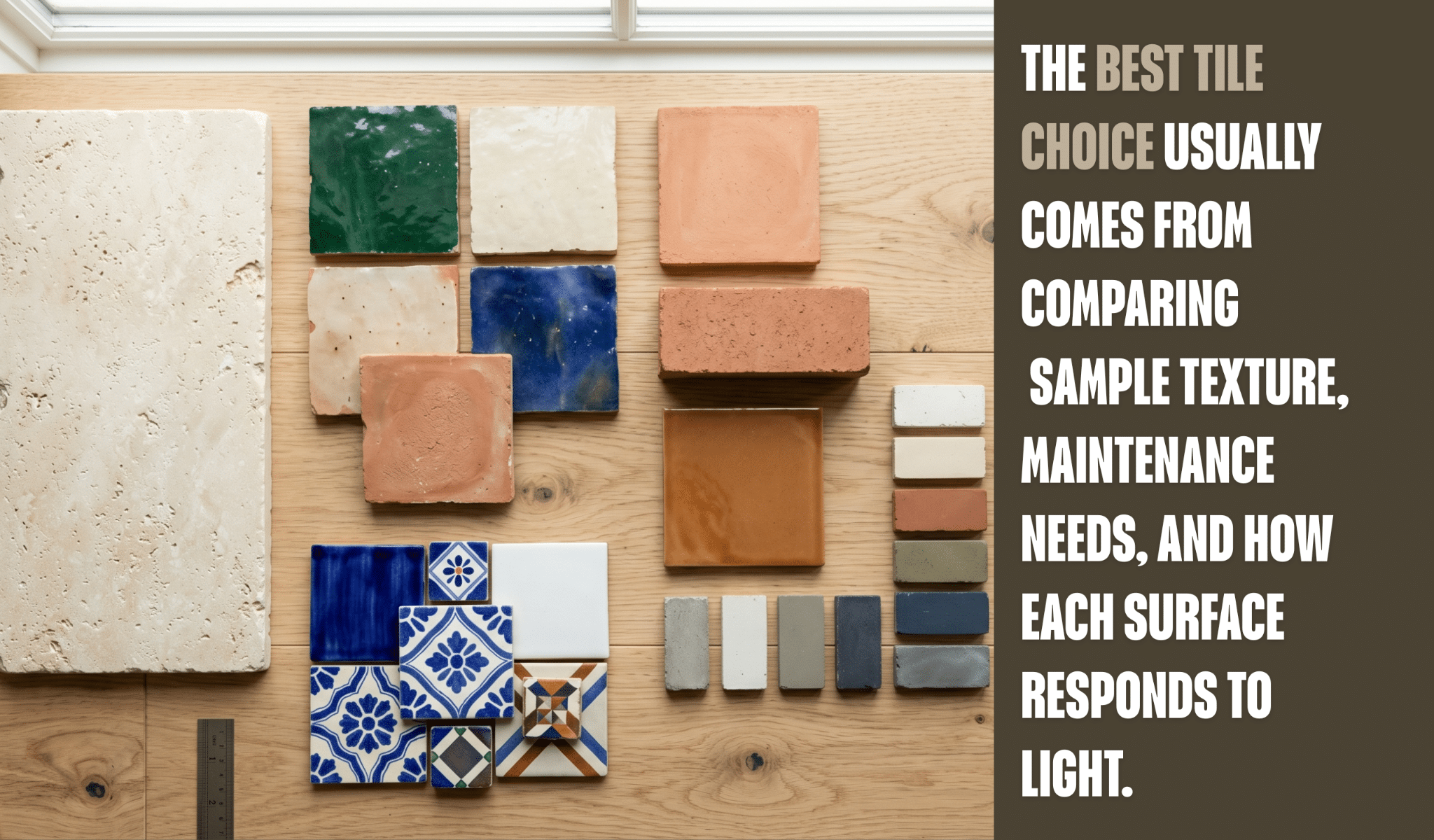
The right brand depends less on name recognition and more on the kind of calm you want to create.
Whatever brand you choose, sample first and view the tile in morning and evening light.
Ask how the material handles moisture, whether it needs sealing, what grout joint width is recommended, and how edges should be resolved at corners and transitions.
Those questions may seem small, but they are often what separate a room that feels calm and intentional from one that feels unfinished.
The most lasting homes are rarely built from trendy surfaces alone. They are built from materials that feel believable, age gracefully, and still look right when the rest of the room evolves around them.