A dry garden can be misleading. Beds look settled, paths seem clear, and the shed might pass for perfectly fine from the outside. Then a steady rain comes through, and suddenly the yard starts telling on itself.
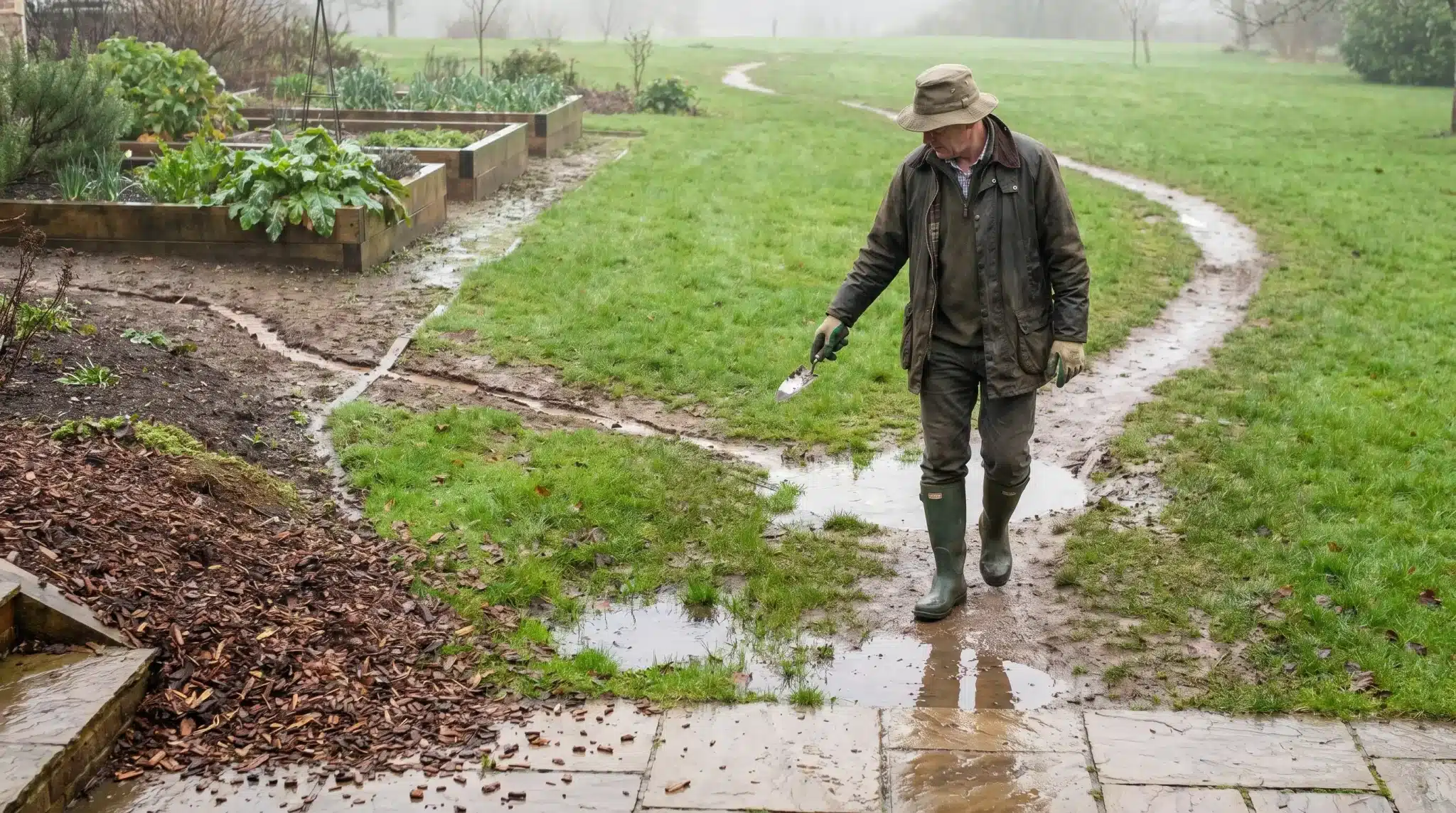
A muddy shortcut appears across the lawn. Mulch piles up where it shouldn’t. Soil splashes onto young leaves. A puddle lingers near the patio edge. Maybe there’s a damp patch by the shed door that wasn’t obvious yesterday. None of these signs has to be dramatic to matter. Small clues are often the first hint that a garden is working harder than it needs to.
Walk the Yard While the Clues Are Fresh
The best garden audit happens before everything dries out and tidies itself back into the background. Puddles shrink. Mud hardens. Mulch gets kicked back into place. Damp corners lose their evidence by the next sunny afternoon.
Take a slow walk through the parts of the yard you use most: the route to the garden beds, the hose area, the shed entrance, the patio edge, and any low spots near fences or downspouts. This isn’t about hunting for every flaw. It’s about noticing the patterns that keep showing up whenever the weather turns wet.
If one corner always feels slick, one path always turns muddy, or one storage area always smells damp, that’s useful information.
Let the Mud Show You the Real Paths
Mud has a way of exposing how people actually move through a yard. The path you planned and the route everyone uses are not always the same thing.
Look for footprints, paw prints, wheelbarrow tracks, or flattened grass cutting across the lawn. Those marks often point to a route that feels more natural than the official one. Maybe the path is too narrow. Maybe it curves around a bed in a way that makes no sense when you’re carrying tools. Maybe the compost bin, hose, or shed sits just far enough away that people keep taking the shortcut.
Pay close attention to working areas near gates, hoses, compost piles, and storage spots. These places take more wear than decorative corners because they’re used in real life, not just admired from a distance. A little mess is normal. Repeated mud in the same place means water and foot traffic are wearing down the soil together.
Read the Beds Before You Tidy Them
Garden beds often show stress in small, quiet ways. Before you smooth everything over, scan the edges. Mulch gathered at the bottom of a slope, soil pushed into a path, or a thin channel through a bed can all suggest that water is moving faster than the soil can hold.
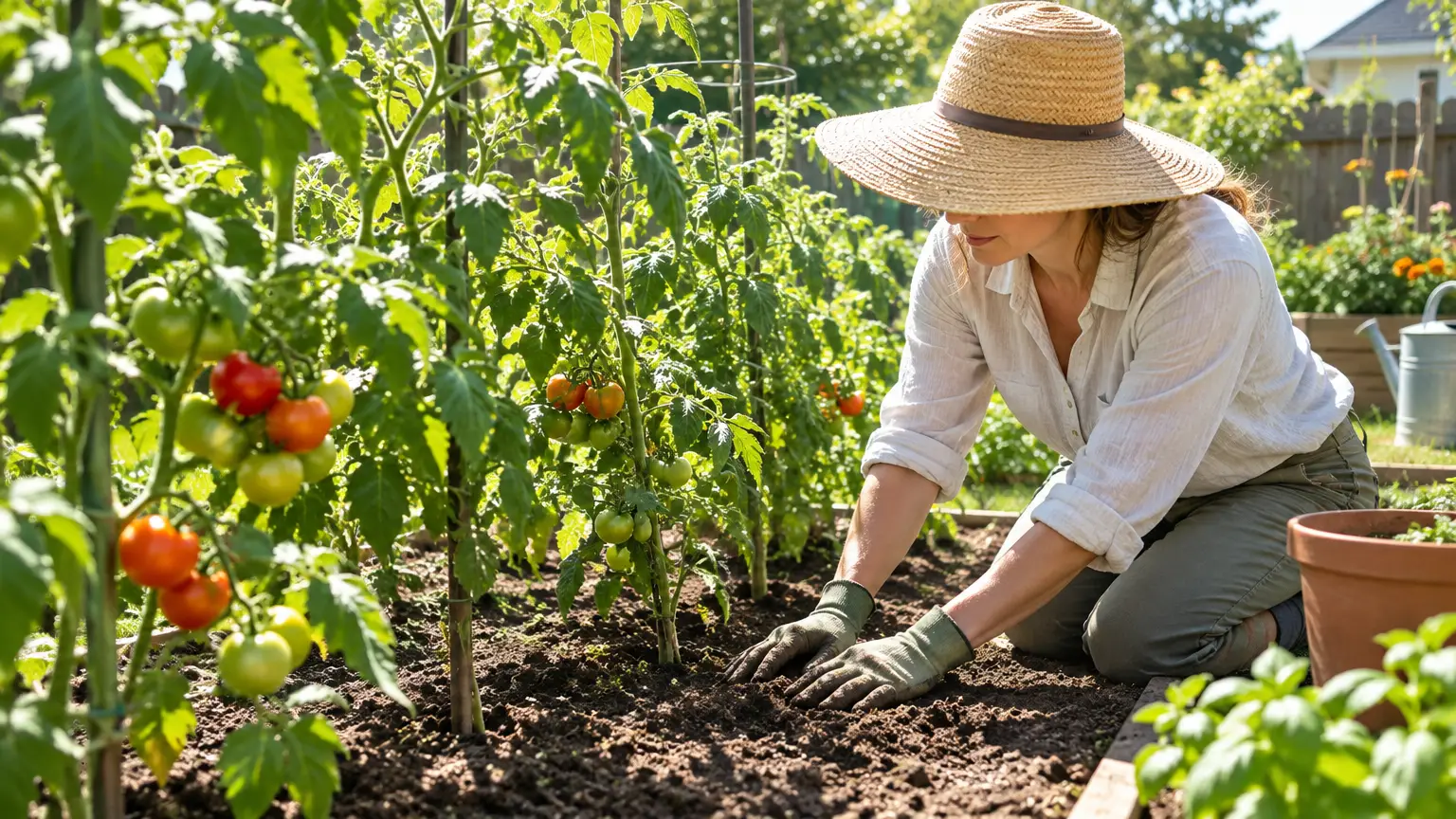
Young plants deserve a closer look. Heavy rain can loosen seedlings, expose shallow roots, splash soil onto leaves, or leave water sitting around delicate stems. Press loose soil back gently, and pull wet mulch away if it has packed itself too closely around the crown of a plant.
The same troubled corner is worth remembering. If one bed always washes out or stays soggy, the issue may be the bed shape, compacted soil, or the direction water takes as it moves through the yard.
Follow the Runoff Trail
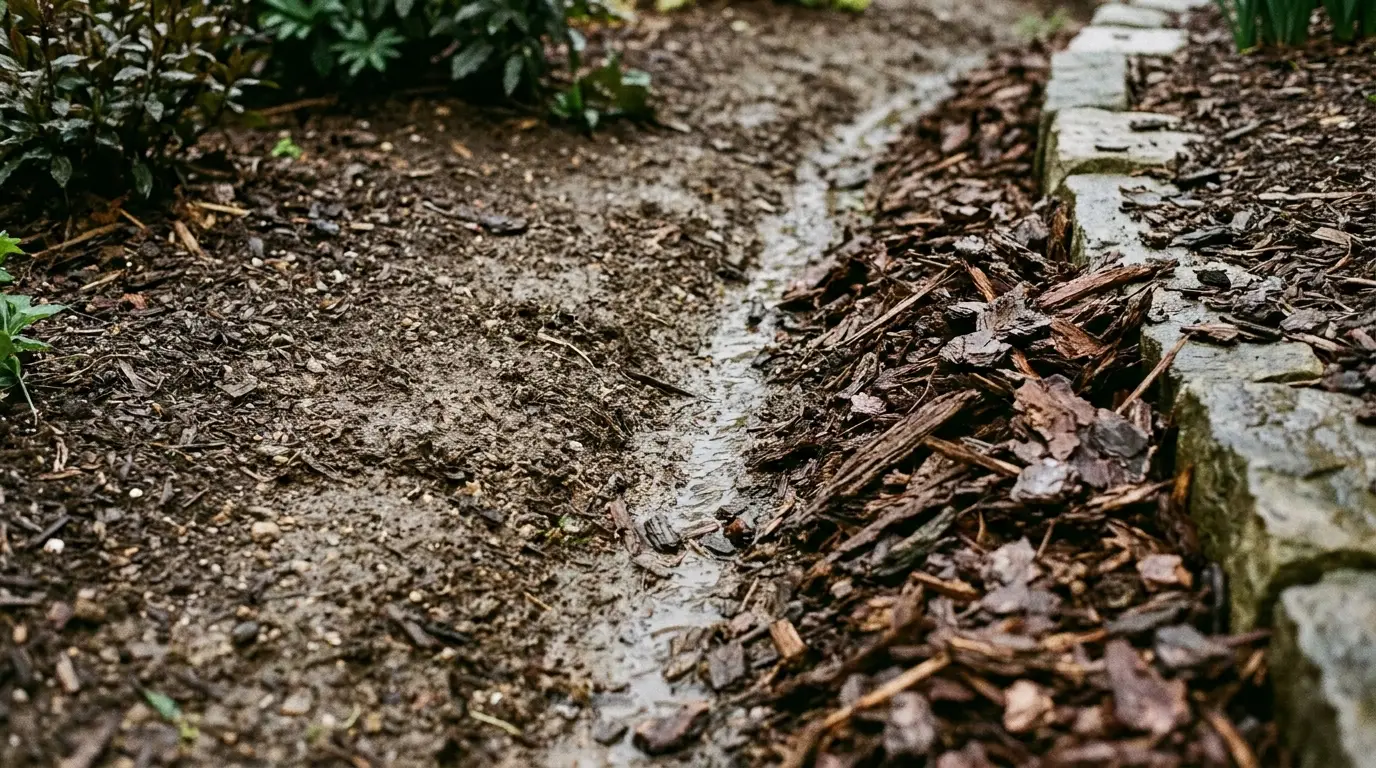
Runoff usually leaves a trail. It drags mulch into strange places, cuts little grooves through loose soil, carries grit onto patios, and gathers leaves against edging or fence boards. The deepest puddle gets the most attention, but the trail leading to it often tells you more.
Start near downspouts, paved areas, sloped beds, and compacted paths. Water that rushes off a hard surface can pull soil with it, especially if it lands at the edge of a bed or crosses a bare patch of ground. When the same line appears after every storm, that area may need a softer landing spot, denser planting, sturdier edging, or one of these erosion control solutions for your yard.
Tiny runoff channels are easier to fix than washed-out beds. Catching them early can save a lot of shoveling later.
Notice How Different Regions Handle Rain
A post-storm garden check looks different from one part of the country to another. In parts of the Southwest, a short burst of rain can show where dry ground sheds water instead of soaking it in. In the Midwest, spring storms often leave lawns soft around gates, paths, and busy storage areas. Along the Gulf Coast, damp air can make enclosed spaces slower to dry.
Across the Mid-Atlantic, including parts of Maryland, Virginia, and Pennsylvania, rain often reveals a mix of muddy paths, shaded corners, damp storage areas, and older backyard structures that deserve a closer look.
Adams County, PA, fits within that broader Mid-Atlantic mix, where backyard sheds often serve as everyday storage for tools, trays, soil bags, pots, and seasonal supplies. When wet weather keeps exposing the same swollen door, damp floor, roof drip, or soft corner, homeowners may start looking into shed repair in Adams County, PA, before relying on the space for another gardening season.
Check Where Roof Water Lands
Downspouts, patios, walkways, and driveways can send water into the garden faster than soil can absorb it. Once the rain stops, look at where the roof water lands and where it travels from there. A line of grit, leaves, or shifted mulch often marks the route clearly.
Watch for water crossing a bed, gathering near a foundation, or cutting through bare soil. If the same area collects runoff again and again, a planted catchment area can help slow the flow. The EPA notes that rain gardens can help absorb runoff from roofs, driveways, and other hard surfaces by giving water a place to soak into the ground.
Even small adjustments can change how the next storm behaves. A splash block, thicker planting, fresh mulch, or a small shift in where water lands can keep soil from moving every time the forecast turns wet.
Deal With Wet Tools Before They Spread the Mess
Rainy garden work rarely stays outside. Mud clings to trowels, pruners get sticky, and gloves left in a pile can stay damp for hours. Seed trays and pots that touched wet soil can also end up mixed with clean supplies, leaving the whole storage area messier and less inviting the next time you reach for your tools.
Take a few minutes to reset the tools you used. Rinse off mud, dry metal parts, and leave gloves somewhere with airflow. If pots, buckets, or trays were sitting outside, separate the clean pieces from anything that touched wet soil.
The goal is simple: keep moisture from moving into the places where you store the things you want dry, sharp, and ready to use.
Keep the Fix List Small
A good audit should make the garden feel more manageable, not more exhausting. You don’t need to solve every muddy path, damp corner, and runoff trail in one afternoon.
Write down the spots that stood out: one path that needs better footing, one bed that lost soil, one storage area that stayed damp, or one place where water keeps moving too fast. A short list based on real evidence is more useful than a vague plan to “work on the yard” later.
By the next dry weekend, you’ll know where to start. The rain already did the pointing.