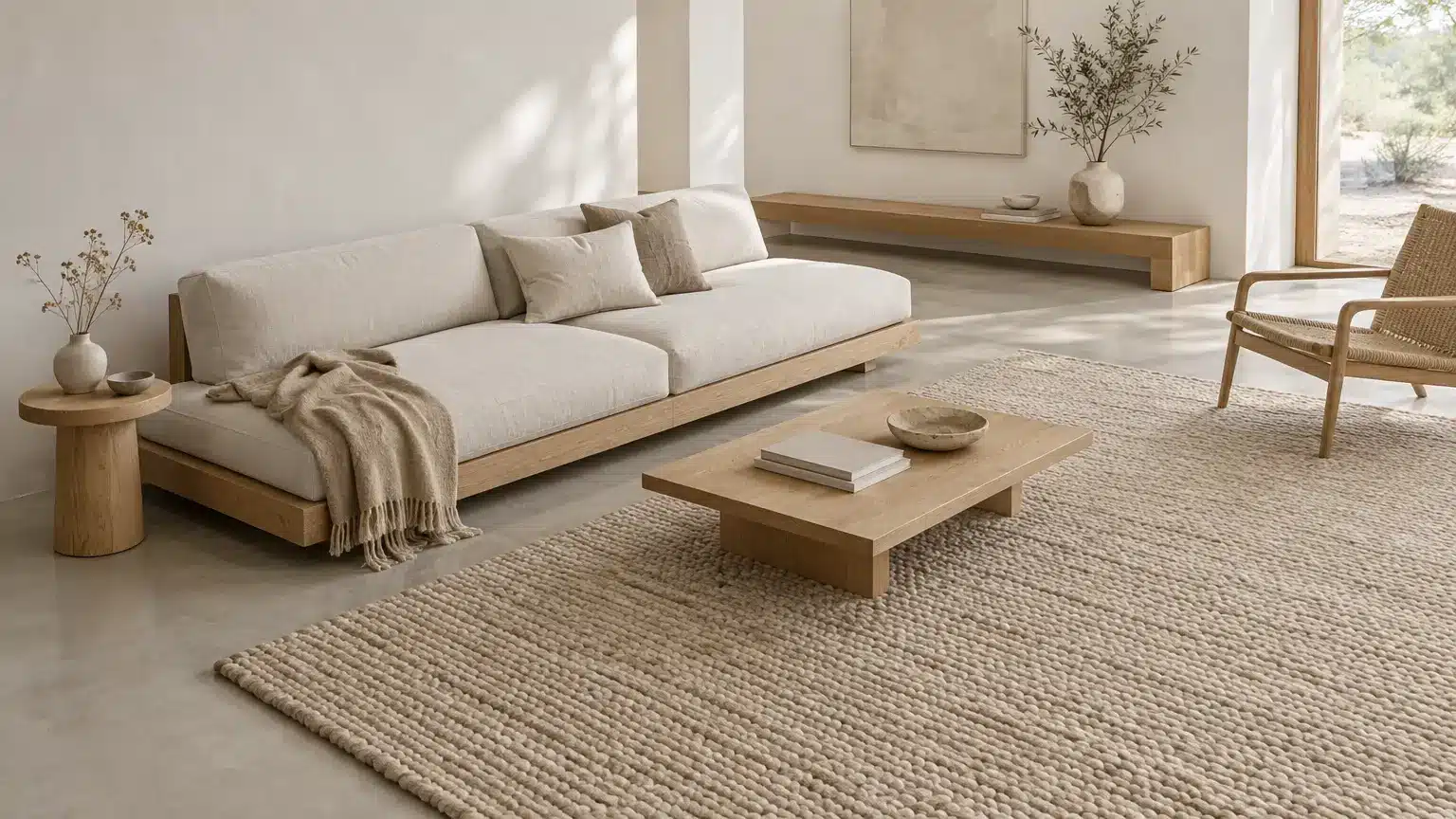
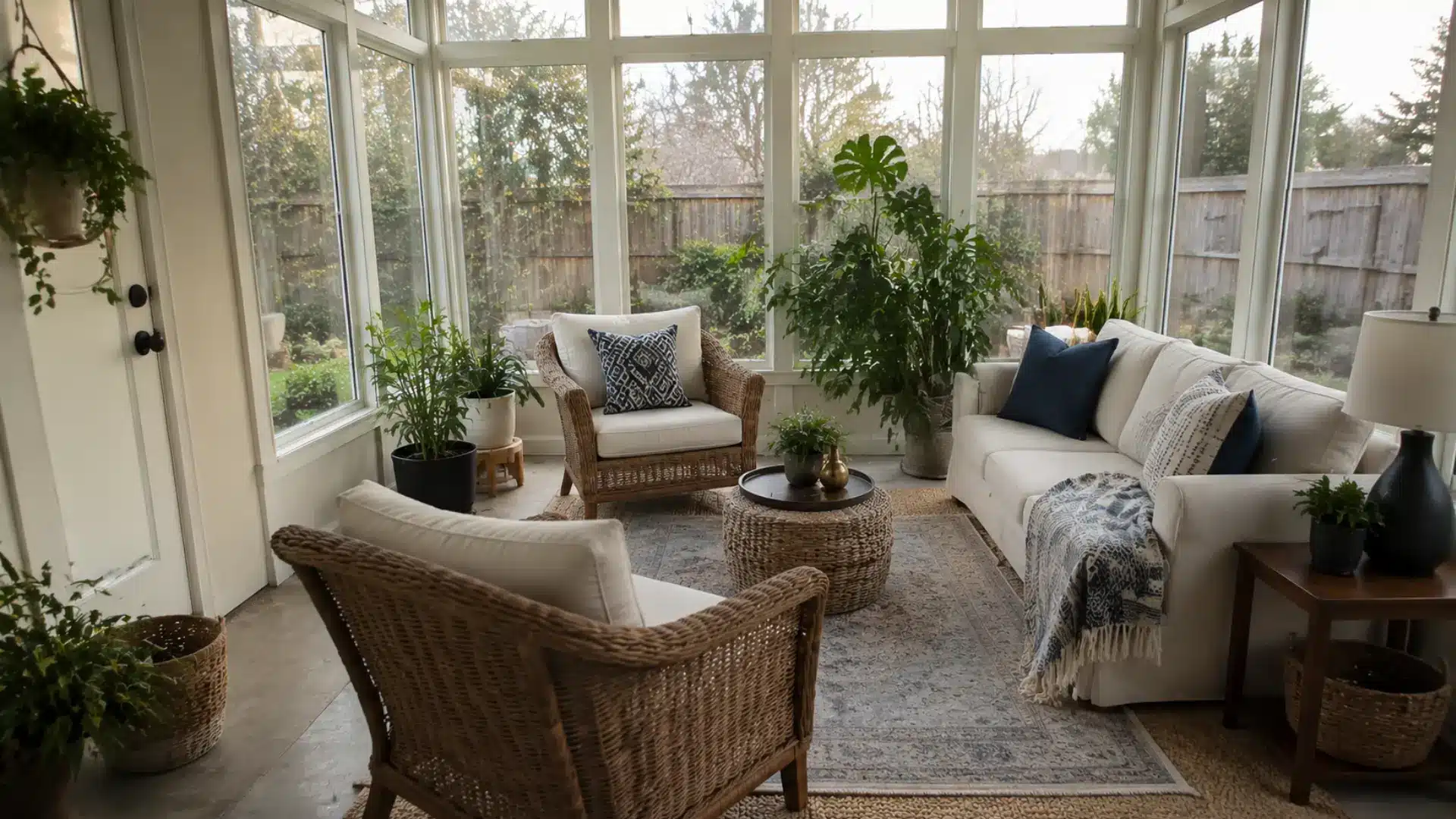
Some sunrooms end up feeling like greenhouses nobody wanted, while others become the best seat in the house.
The difference usually comes down to a handful of smart choices: light, seating, plants, texture.
That gap is exactly where good sunroom ideas step in.
Whether the space catches blazing afternoon sun or a soft morning glow, a layout, palette, and furniture pairing exist to match it.
Below are the best ways to shape that room into something worth using every day.
Start With the Purpose of Your Sunroom
Before picking a single chair or paint swatch, decide what the room is actually for.
A sunroom used mainly for morning coffee needs a different setup than one meant for hosting weekend guests or running a small home business. Write down the top two or three activities planned for the space.
That short list becomes the filter for every decision that follows, from furniture scale to storage needs.
Skipping this step often leads to a room that looks nice but never quite fits daily habits.
Choose the Right Layout Before Buying Furniture
A layout decided in advance saves money and prevents a cramped, awkward final result.
| Step | What to Check |
|---|---|
| Traffic flow | Map the paths people will walk through the room |
| Focal point | Decide what the eye should land on first |
| Furniture scale | Measure the space before shopping for pieces |
| Window placement | Note where glare falls at different times of day |
| Zoning | Separate seating, dining, or work areas if the room serves more than one purpose |
| Clearance | Leave enough walking space between pieces, especially near doors |
Sunroom Ideas for a Bright, Cozy Escape
From full-glass walls to small styling swaps, these sunroom ideas suit every budget and floor plan. Mix a few together to build a room that feels bright, personal, and easy to relax in.
1. Floor-to-Ceiling Glass Walls
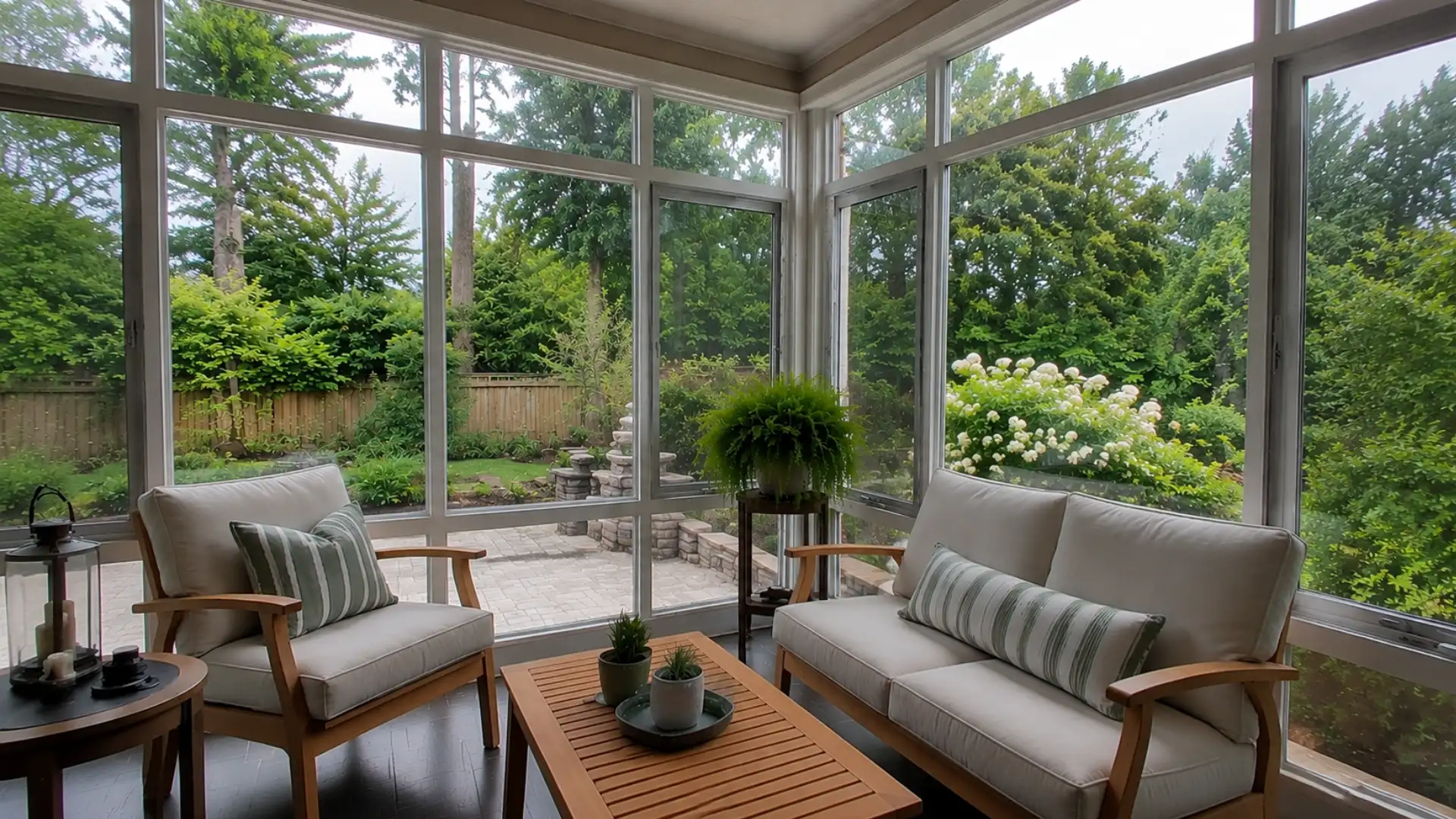
Full-height glass panels turn a sunroom into an open, panoramic space where the view becomes part of the decor.
Natural light reaches every corner throughout the day, reducing lamp use and keeping the room connected to the yard or garden outside.
This layout suits new builds or additions where structural framing can support wide glass sections without heavy support beams.
2. Skylight Installation
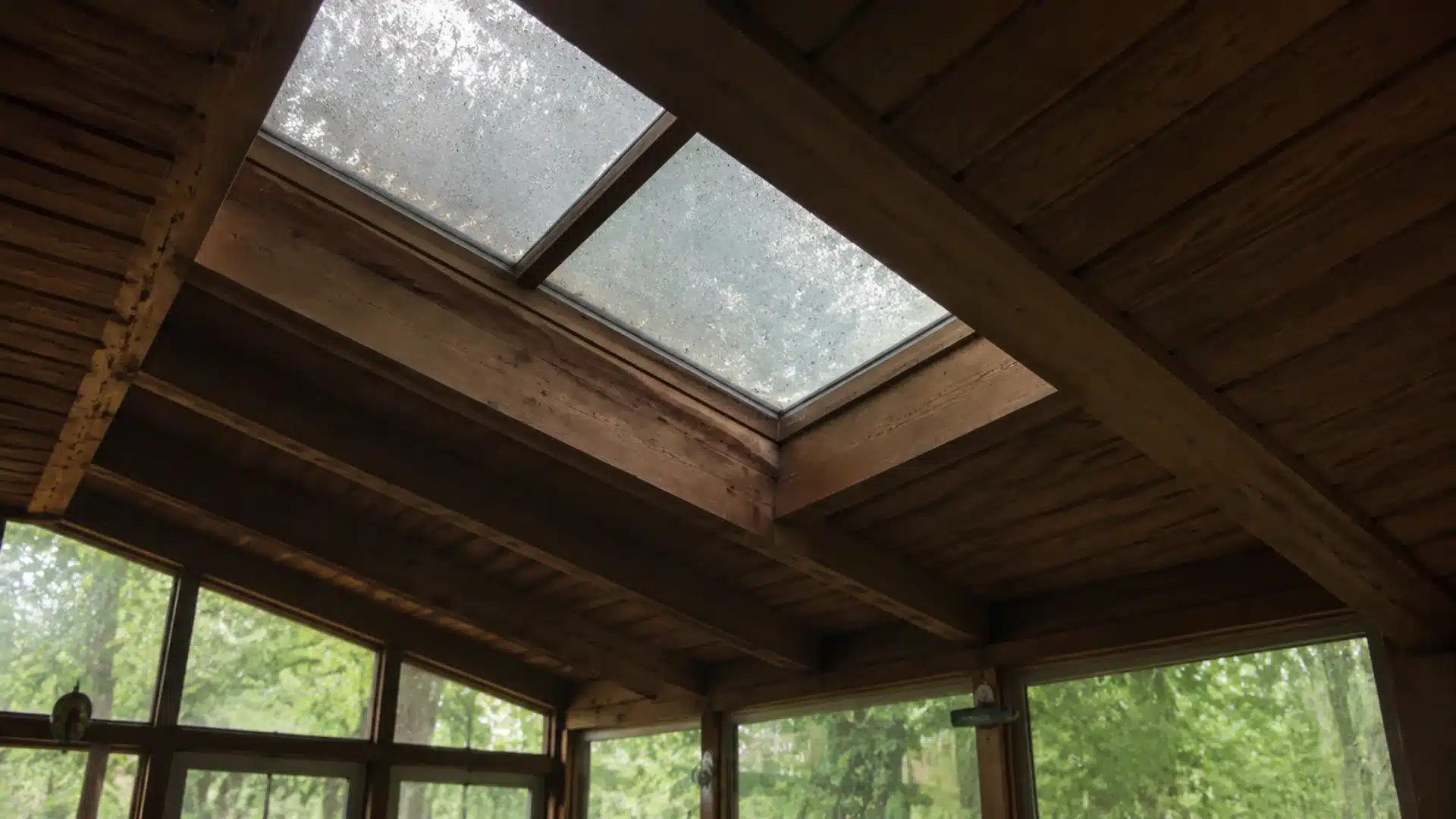
Overhead glazing works well when wall space is tight or when the space is partially shaded by trees and neighboring structures.
Skylights pull direct sunlight into the center of the room, brightening reading corners and plant displays that sit away from windows.
Paired with light wall colors, this feature can make even a narrow sunroom feel taller and far less closed in.
3. Neutral Linen Sofa With Layered Textures
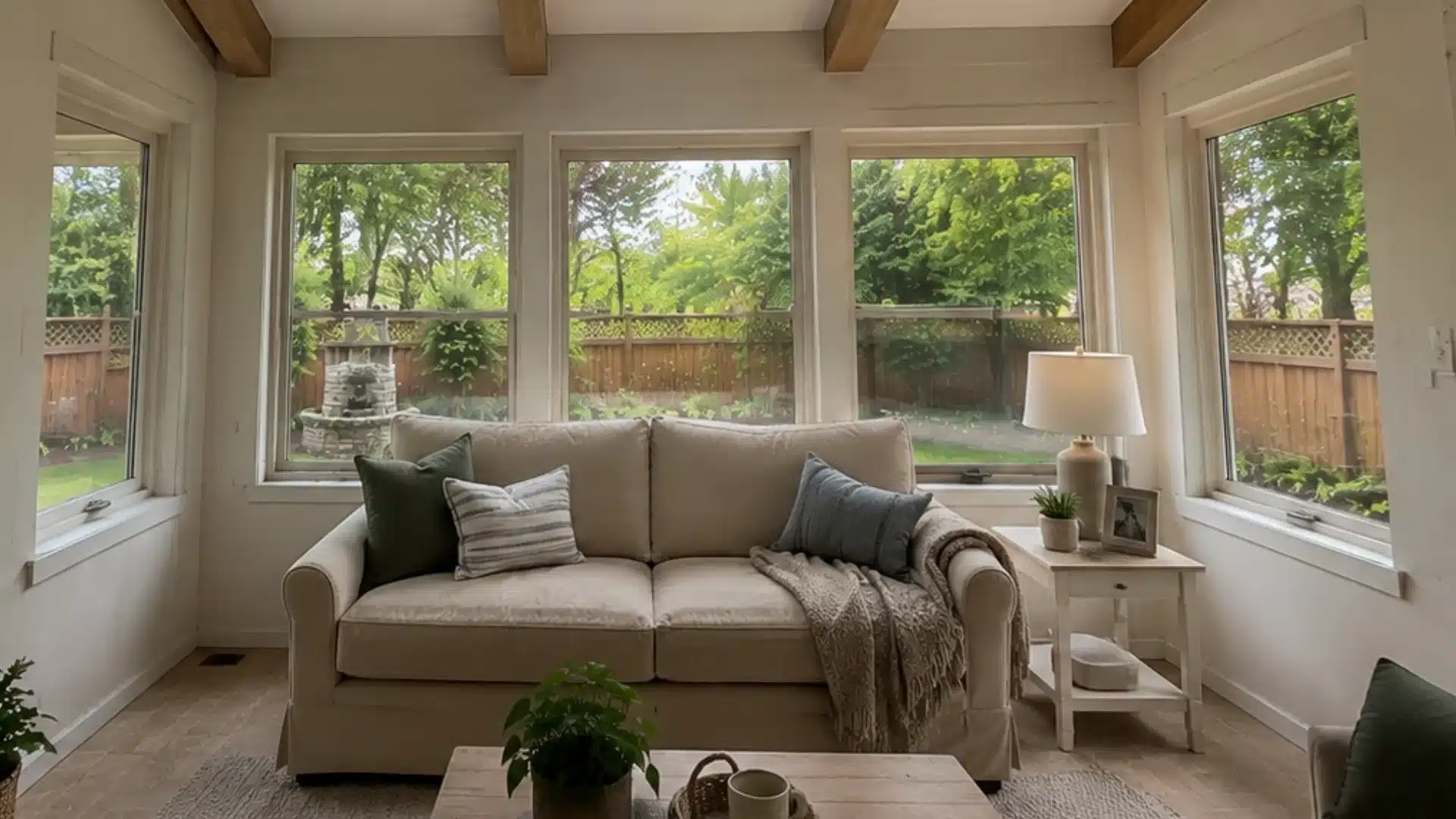
A soft, neutral linen sofa keeps a sunroom from feeling overheated by color while still offering a comfortable place to sit.
Layer in textured cushions, a woven throw, and a patterned accent pillow to add depth without clutter.
This approach works particularly well in rooms with strong afternoon sun, where bold upholstery colors tend to fade faster.
4. Rattan Furniture Set
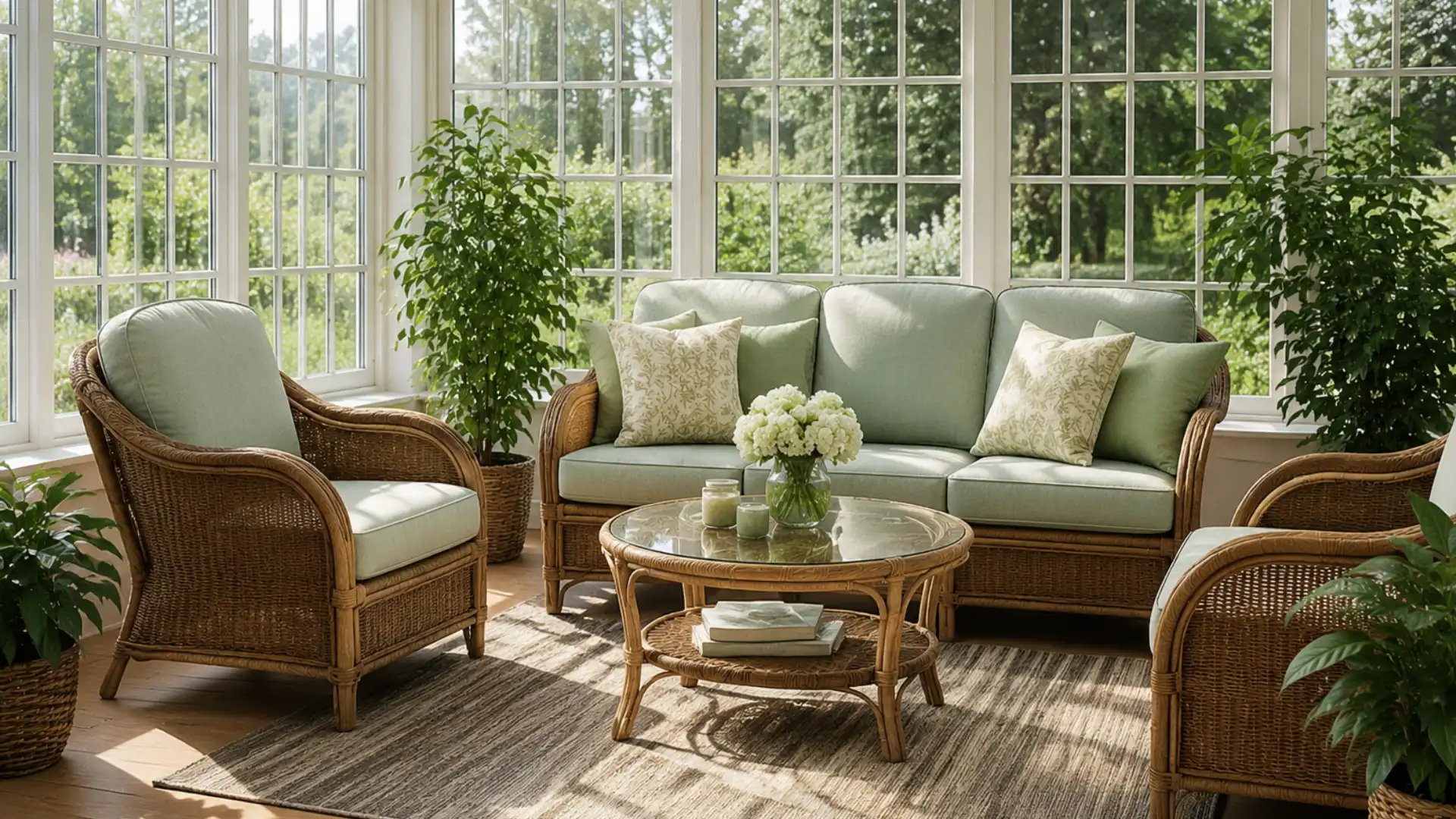
Woven rattan chairs and tables bring a relaxed, coastal feel that suits sunrooms surrounded by greenery or facing a garden view.
The natural material handles humidity and temperature swings better than many upholstered pieces, making it a practical choice for rooms with limited climate control.
Pair with light cushions for a softer, more finished look.
5. Hanging Egg Chair
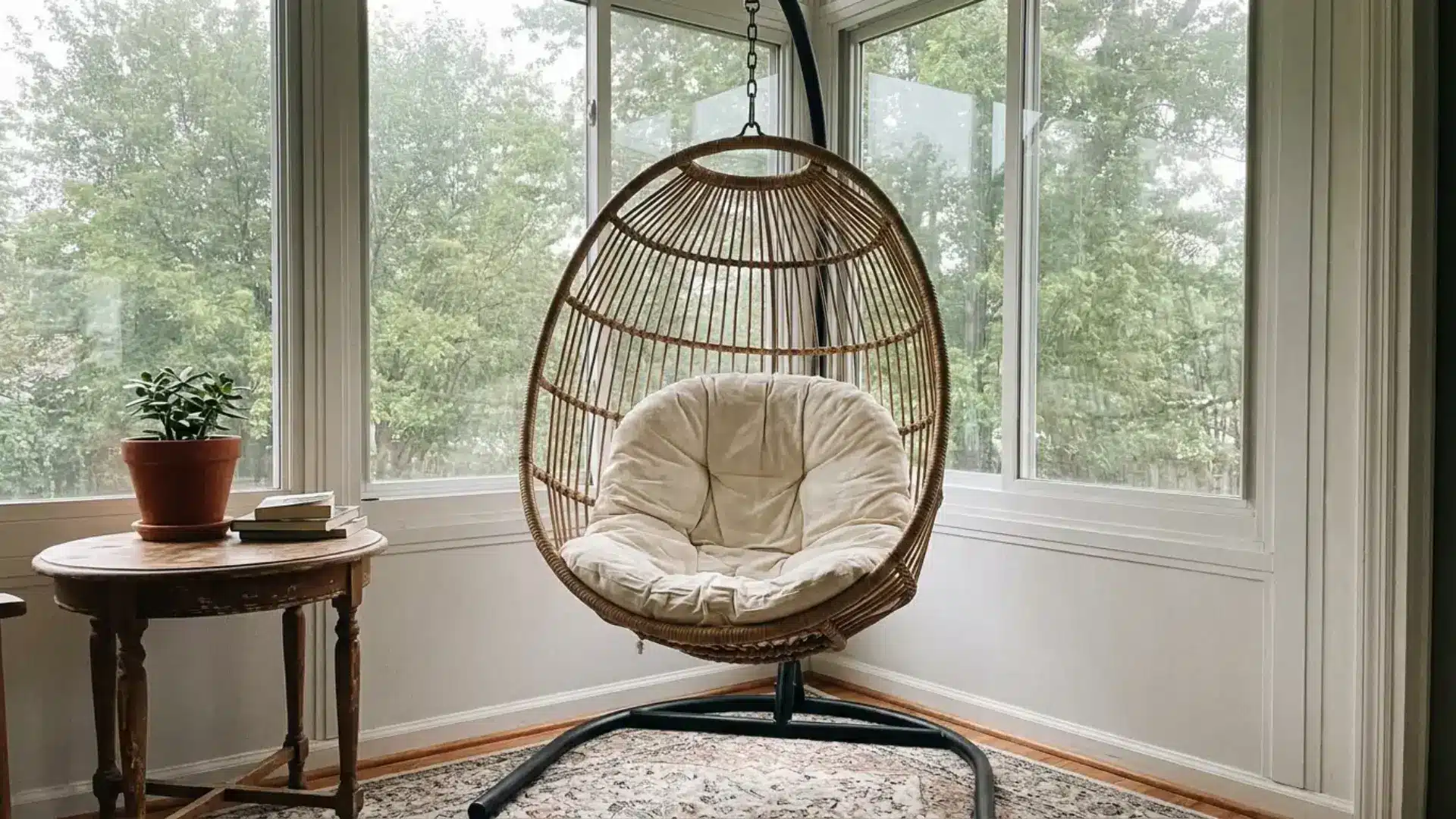
A hanging egg chair adds a playful focal point while taking up less floor space than a standard armchair.
Suspended from a reinforced ceiling beam or freestanding frame, it creates a cozy spot for reading or afternoon naps.
This piece works especially well in sunrooms with higher ceilings, where a floor-bound chair might feel visually heavy.
6. Indoor Hammock
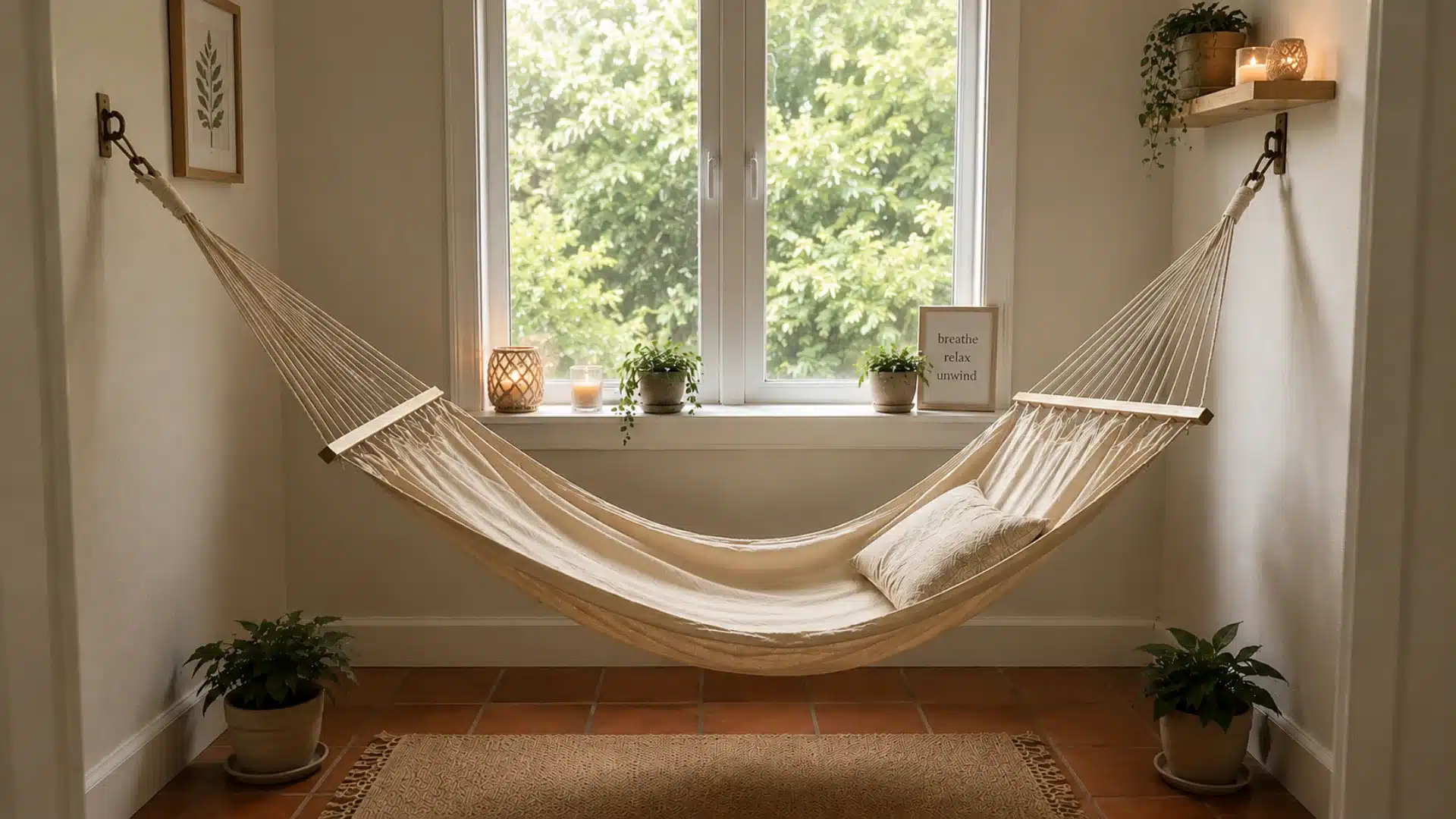
Swapping a bulky armchair for an indoor hammock frees up floor space in a smaller sunroom while still giving the room a dedicated lounging spot.
Choose a cotton or canvas hammock in a neutral shade so it blends with the rest of the furniture.
Check mounting hardware against the ceiling or wall support before installation.
7. Botanical Wallpaper Accent Wall
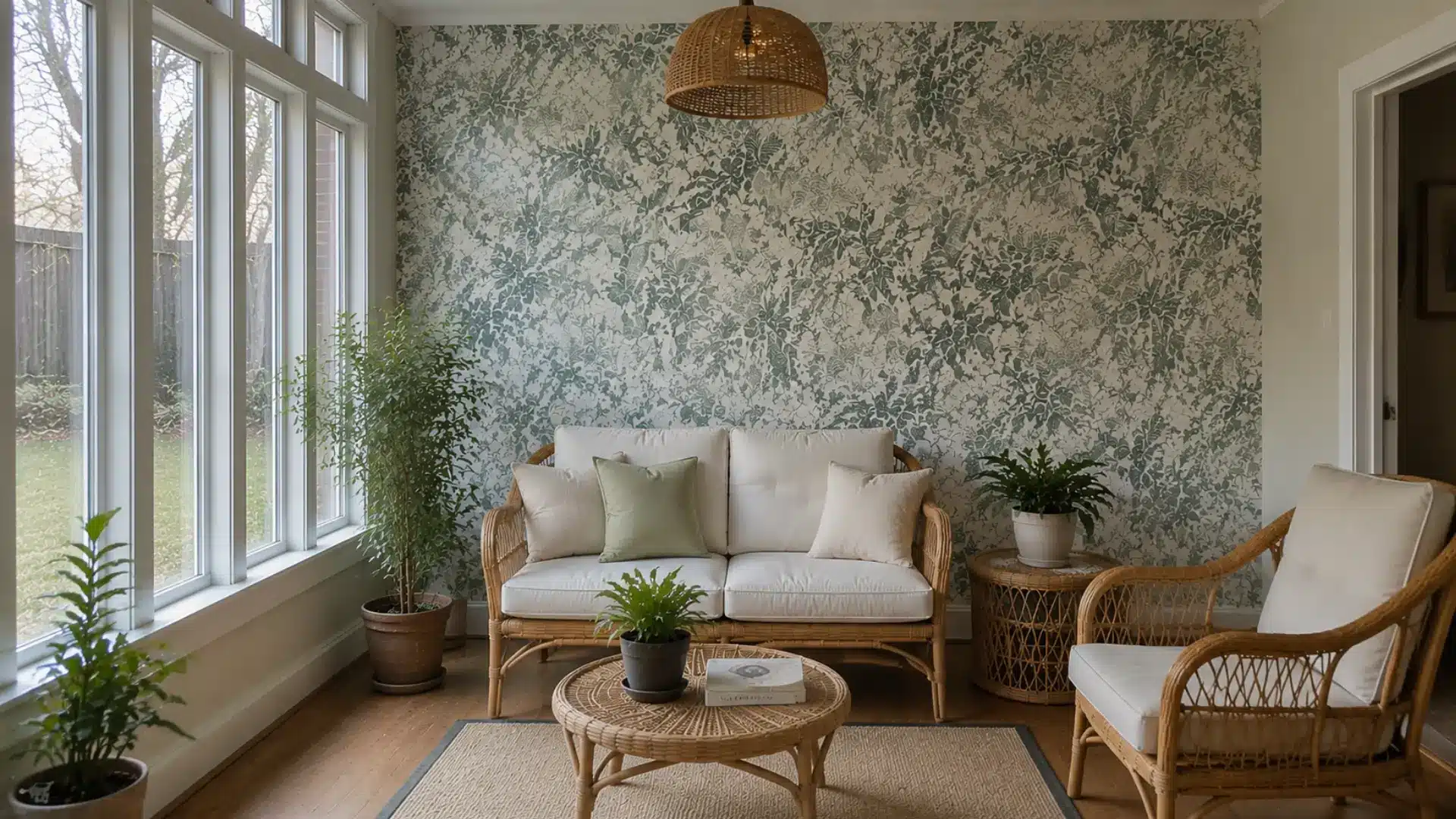
A single wall of botanical print wallpaper brings the outdoors in without competing with actual plants or window views.
Choose a print with a light background so the wall still reflects sunlight rather than absorbing it.
This works well as a backdrop behind a sofa or daybed, giving the seating area a defined edge.
8. Statement Pendant Light in Natural Fiber
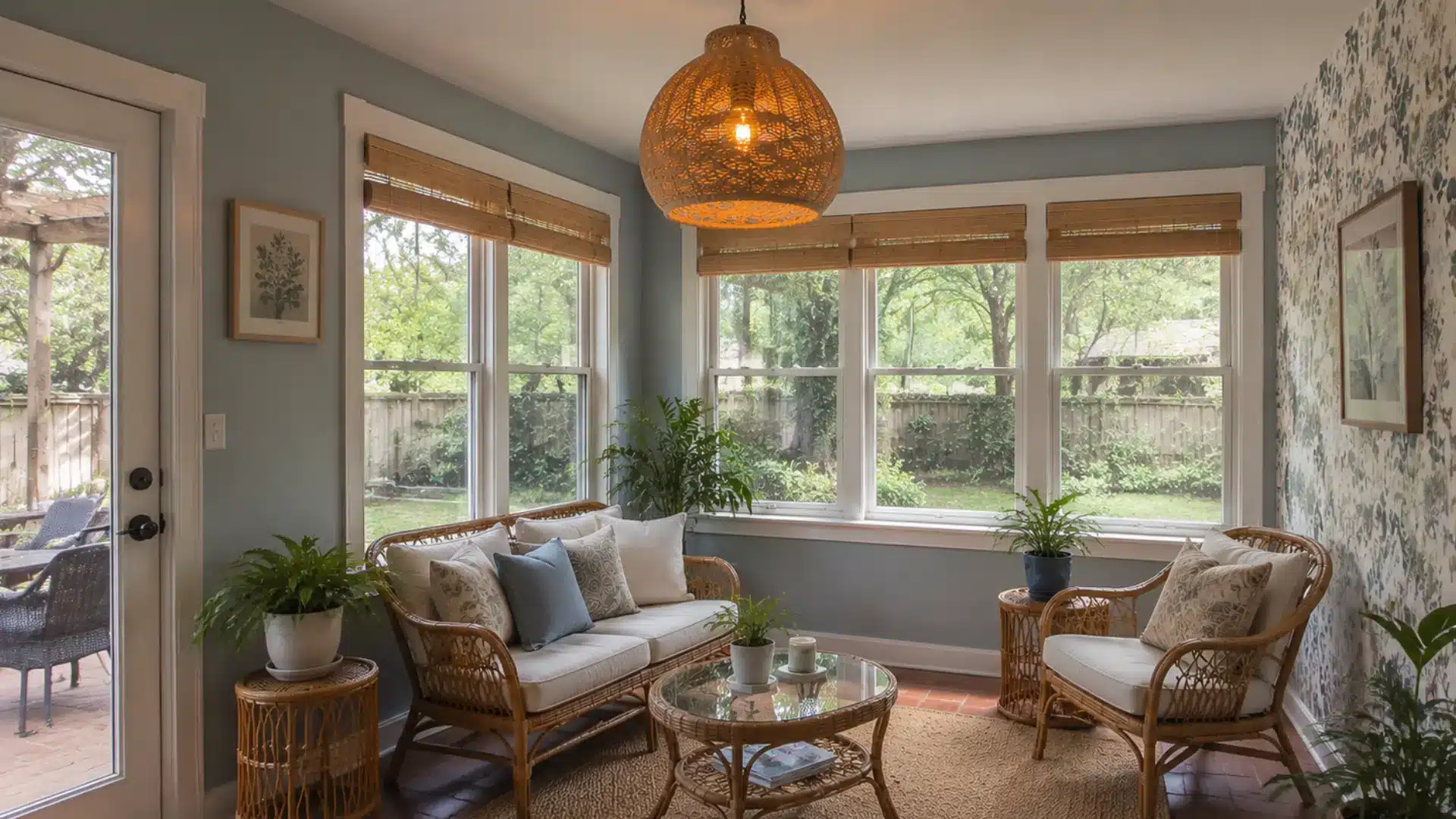
A woven rattan or paper pendant fixture adds warmth to overhead lighting without introducing a harsh, modern glow.
The natural material filters light into soft patterns across the ceiling and walls, especially appealing in the evening once direct sunlight fades.
Hang it low over a seating group or dining table for the most visual impact.
9. Sheer Curtains
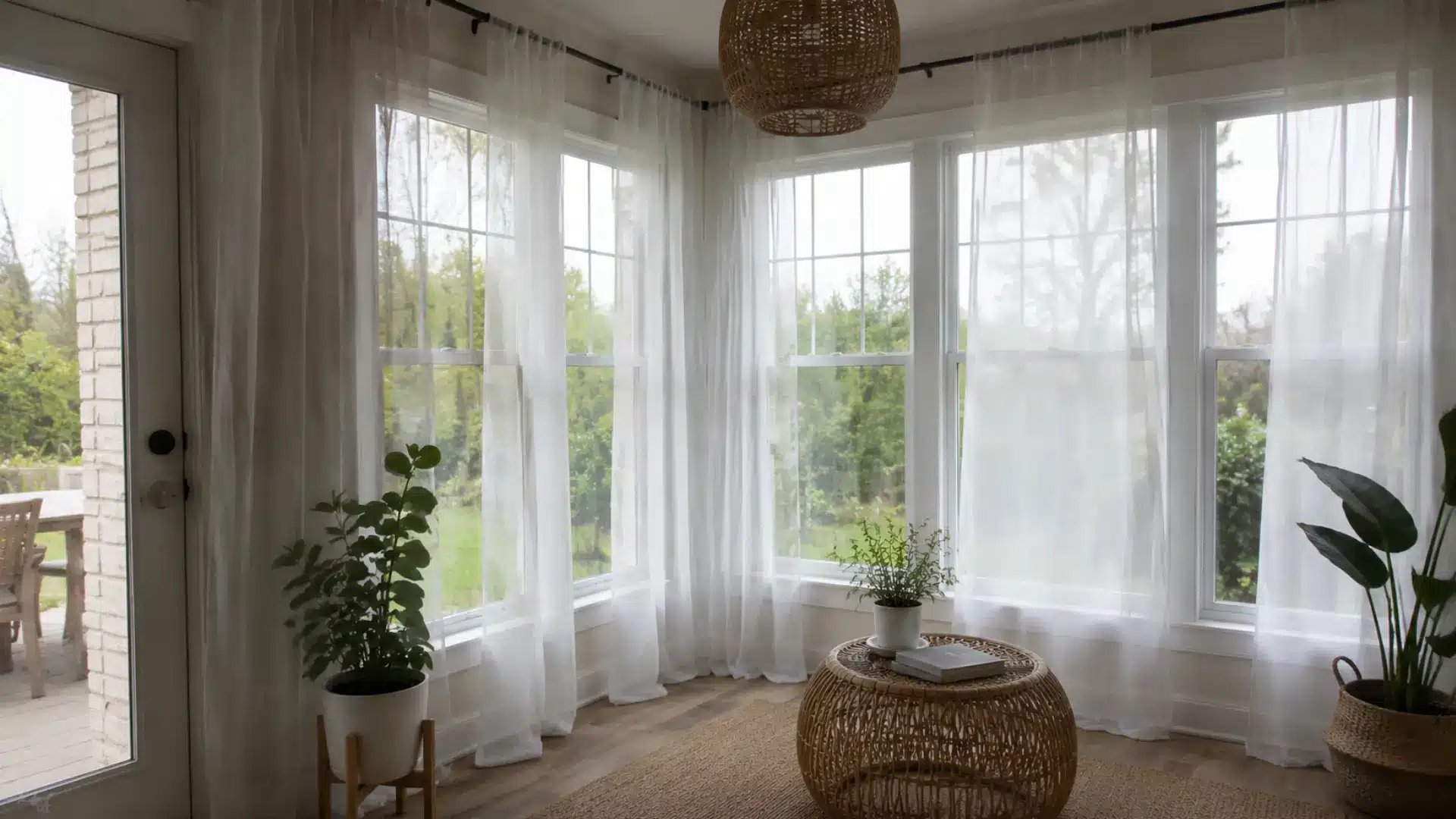
Sheer curtains soften strong midday sun while still letting plenty of light filter through the fabric.
They offer a layer of privacy without blocking the view entirely, which matters in sunrooms facing a street or a close neighboring property.
Choose a lightweight linen or cotton blend so the curtains move gently with airflow from open windows.
10. Bold Geometric Area Rug
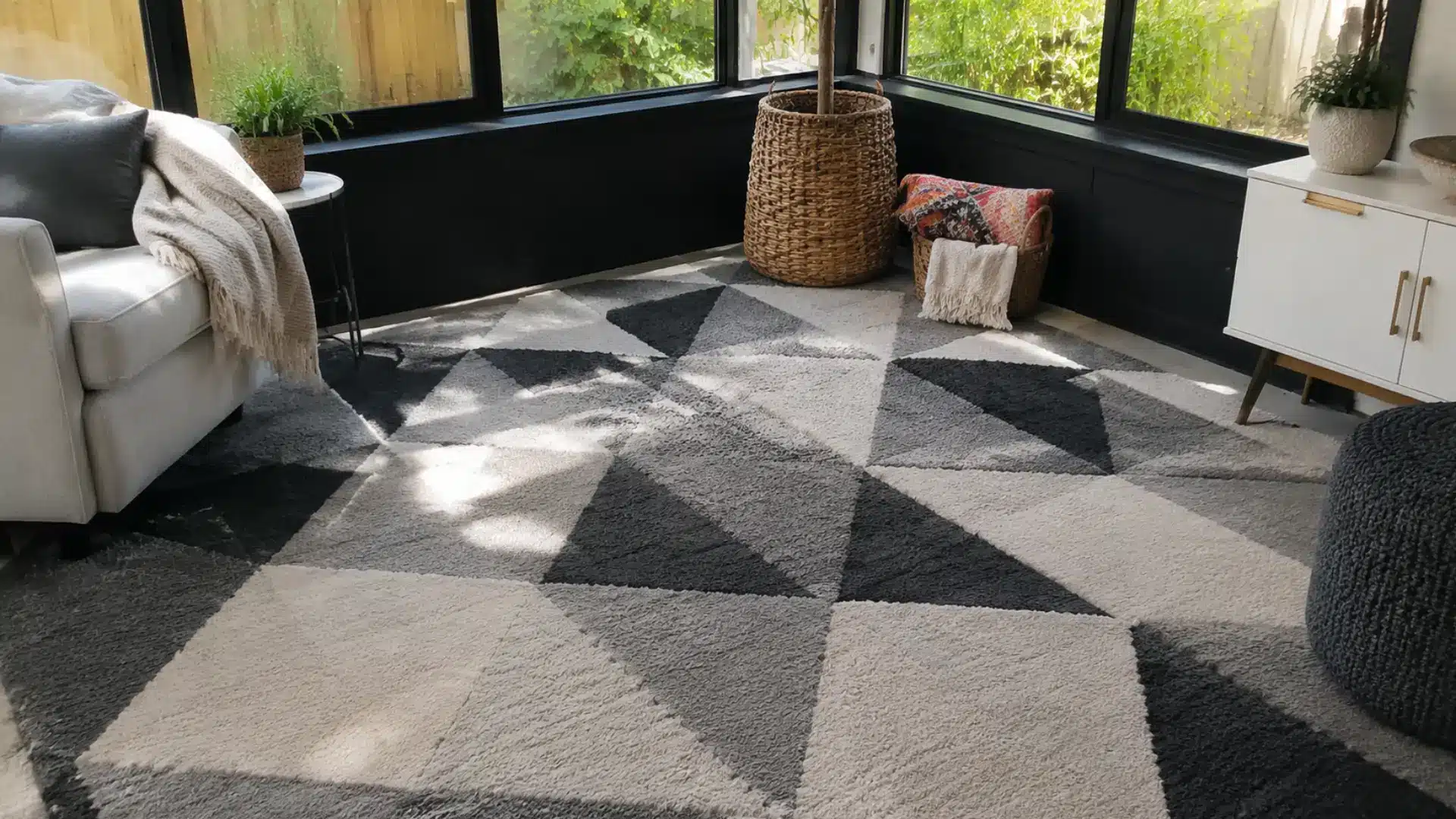
A patterned rug anchors a sunroom’s seating area and adds visual interest to a space that often skews toward glass and neutral tones.
Geometric prints in particular help balance the straight lines of window frames and furniture.
Choose a rug in a durable, fade-resistant material since sunrooms see more direct light than most rooms.
11. Mirrored Accent Wall
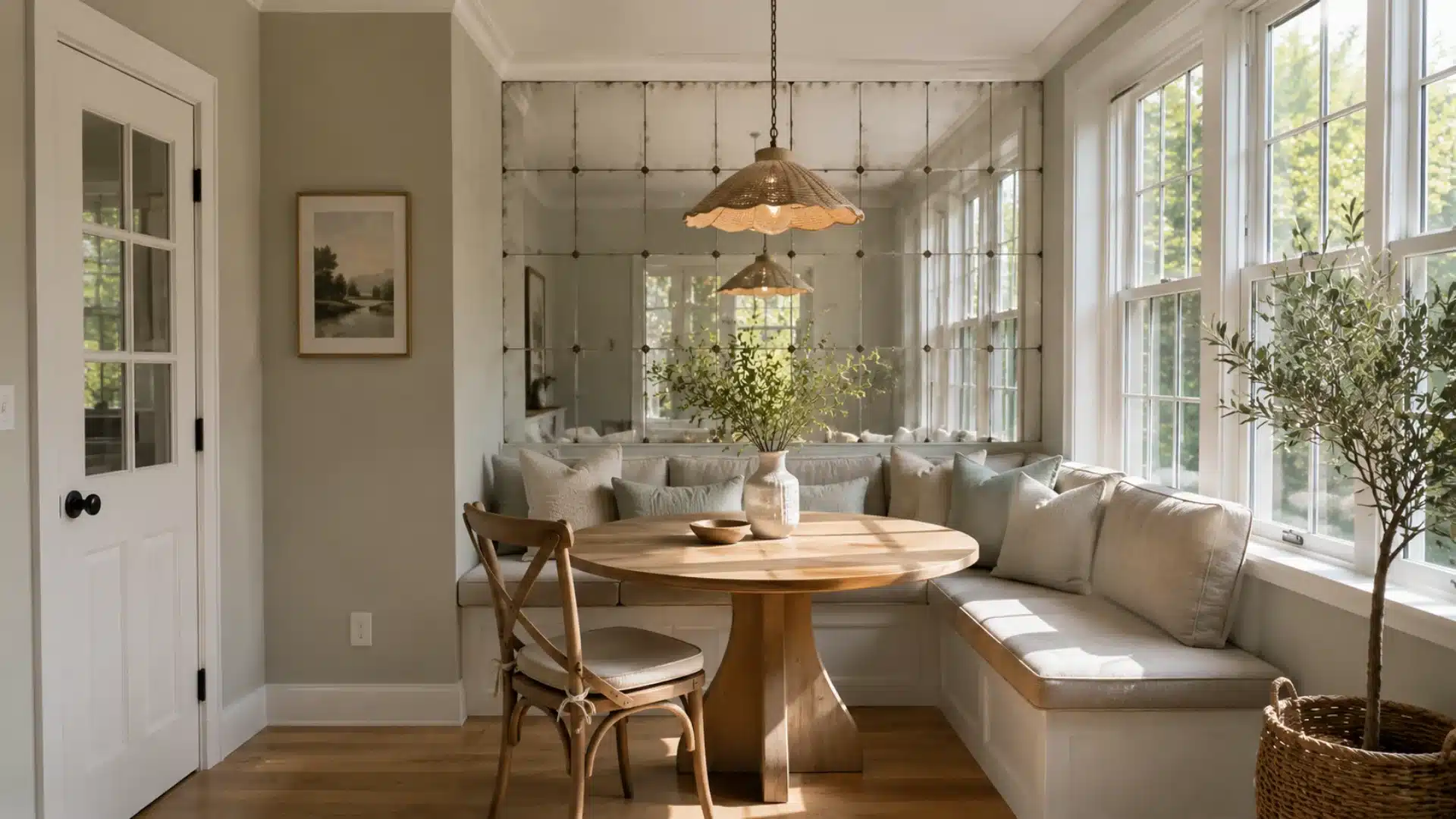
A mirrored panel or gallery of mirrors placed opposite a window bounces natural light deeper into the room, brightening corners that windows alone cannot reach.
This trick works particularly well in narrow or long sunrooms, where light tends to fall off toward the far end.
Frame the mirrors in a warm wood tone to soften the reflective surface.
12. Vertical Garden Wall
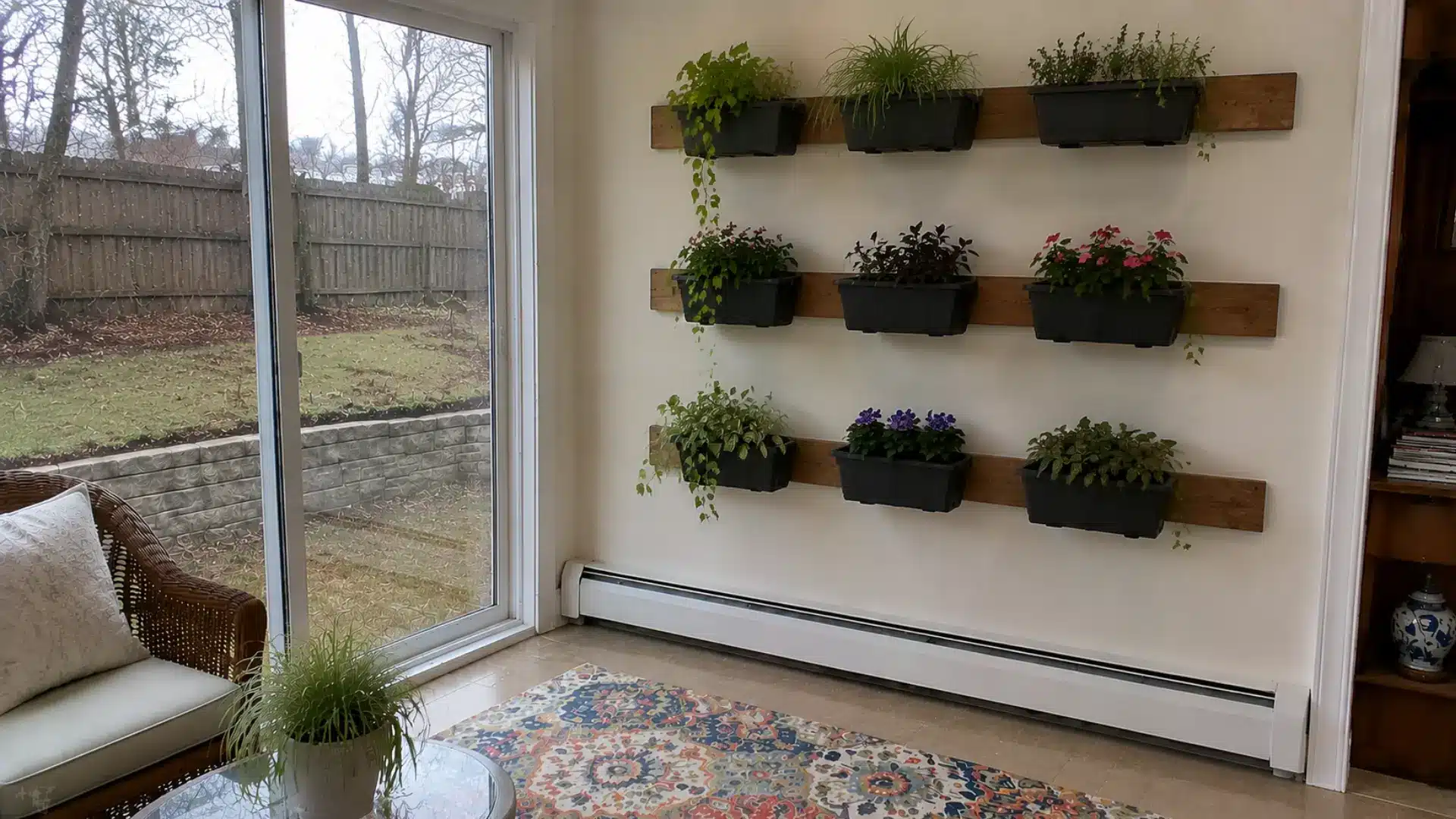
A vertical planting system lets a sunroom hold a large collection of greenery without sacrificing any floor space for pots or stands.
Mounted planters or a modular wall system work well against a blank interior wall that does not face direct window glare.
This setup suits sunrooms used for growing herbs or smaller trailing plants.
13. Tall Potted Plant as a Focal Point
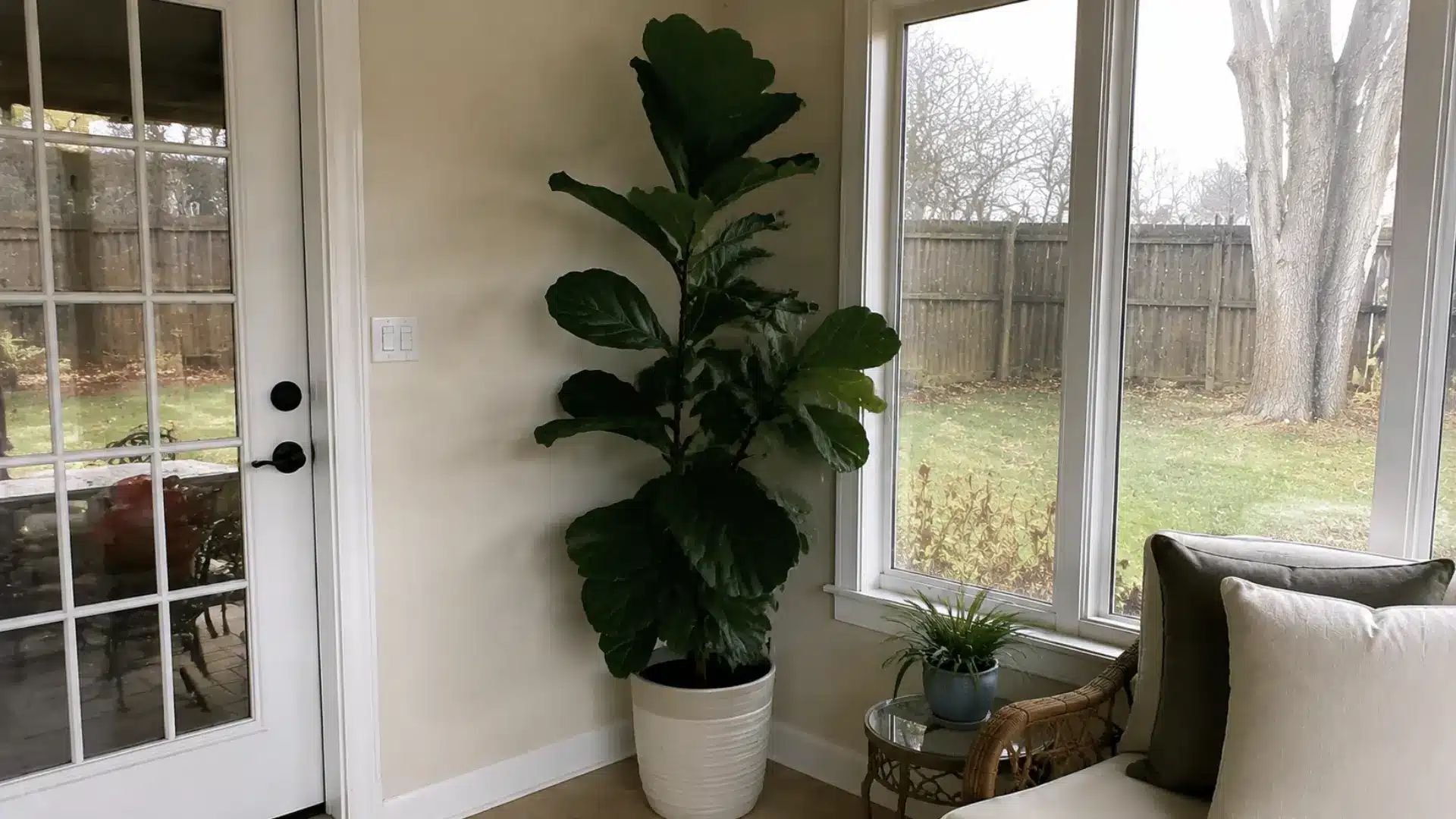
A single large plant, such as a fiddle leaf fig or bird of paradise, can serve as the sunroom’s main decorative feature instead of scattering several smaller plants around the room.
Position it near a window with filtered light, and rotate it occasionally to keep growth even.
This approach keeps the room feeling curated rather than cluttered.
14. Terracotta Pots Along the Windowsill
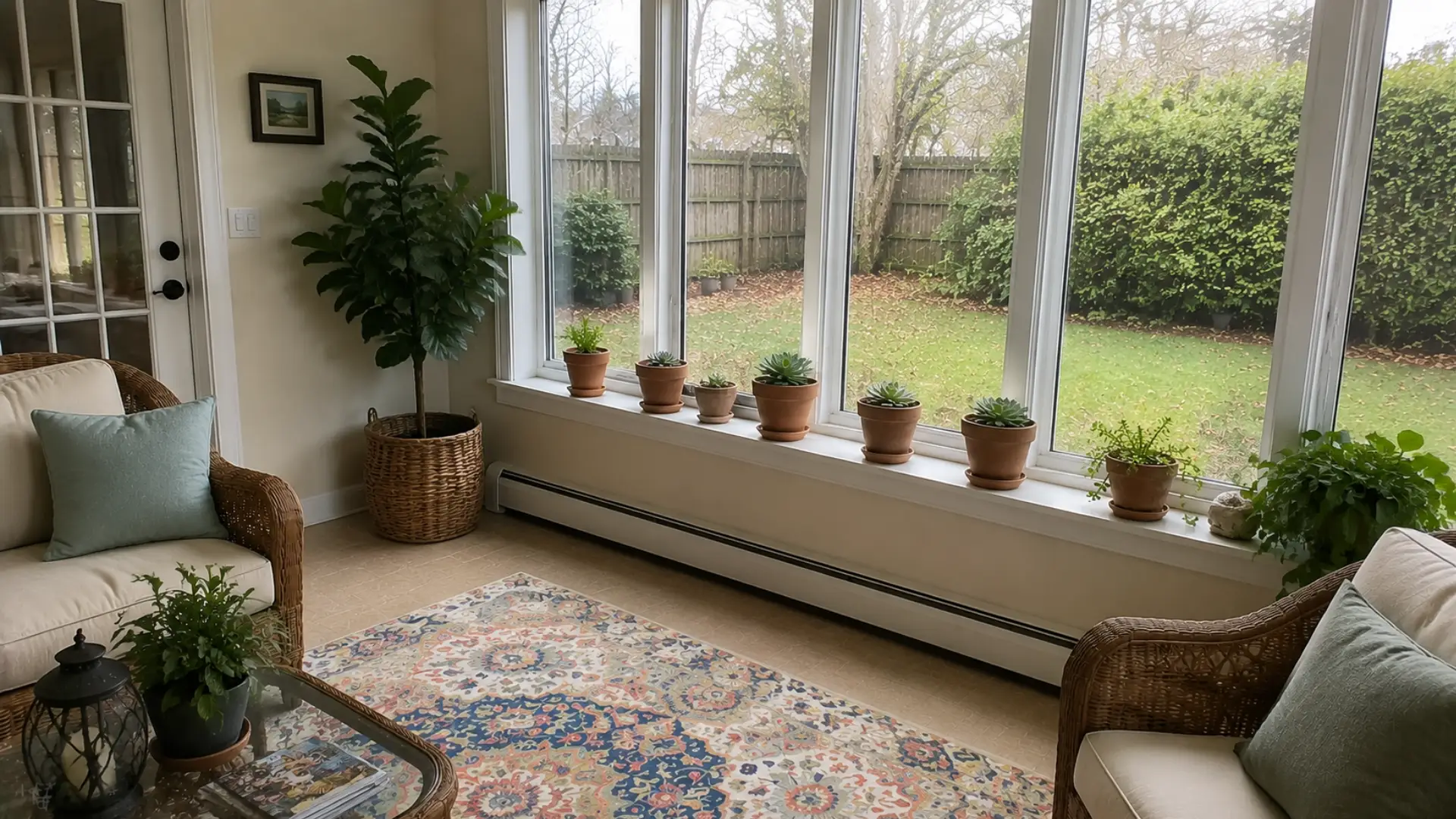
Lining a windowsill with terracotta pots filled with herbs or small succulents adds texture and color at eye level without taking up floor space.
The unglazed clay also helps regulate soil moisture, which suits plants that prefer drier conditions.
Group pots in varying heights to keep the display from looking too uniform or flat.
15. French Doors to the Patio
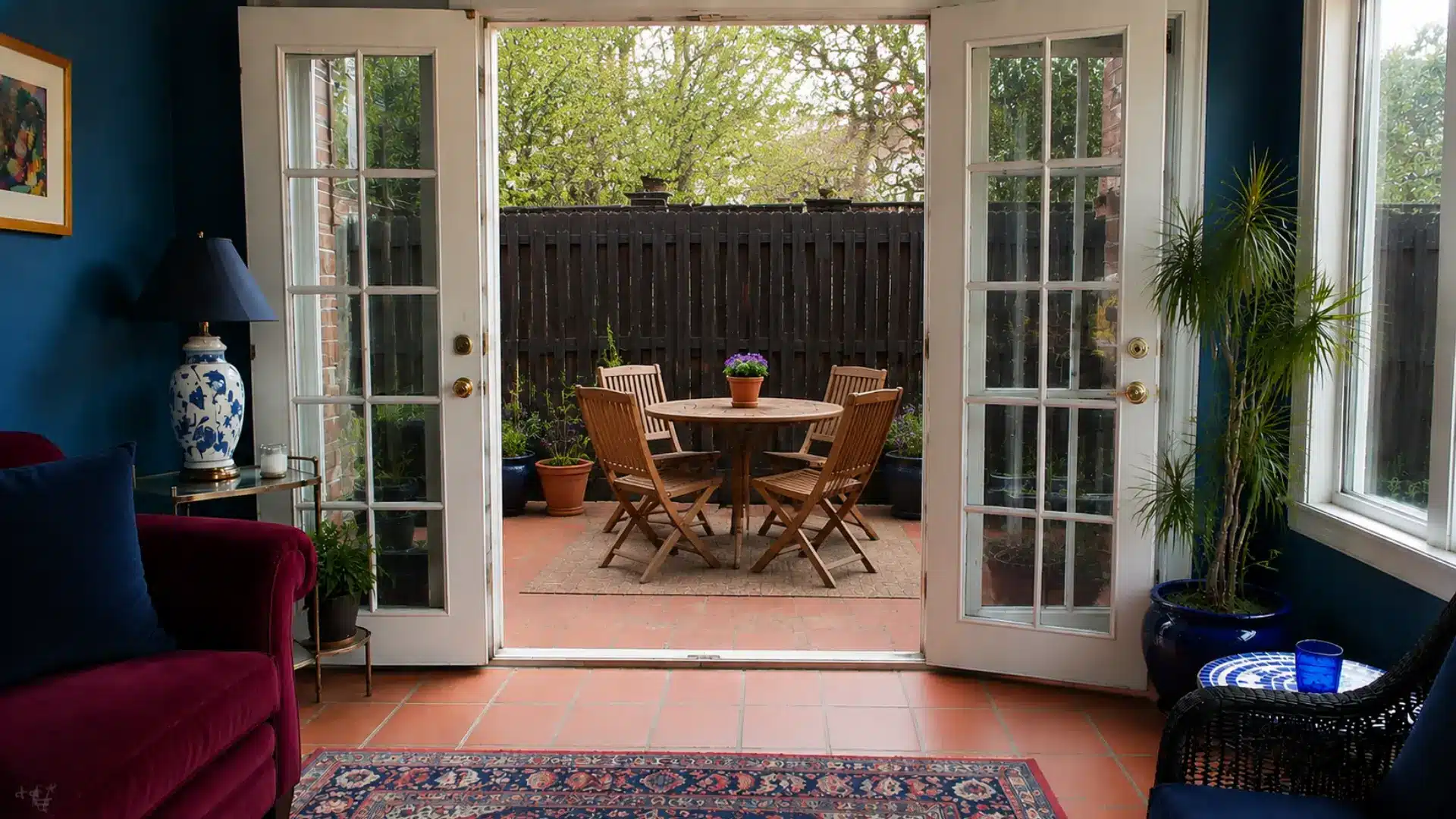
French doors connect a sunroom directly to an outdoor patio, making the transition between indoor and outdoor living feel seamless during warmer months.
Glass panels keep the light-filled feel of the room intact even when the doors stay closed.
This layout also allows for easy furniture flow between the two spaces during gatherings.
16. Bay Window Nook With a Cushioned Bench
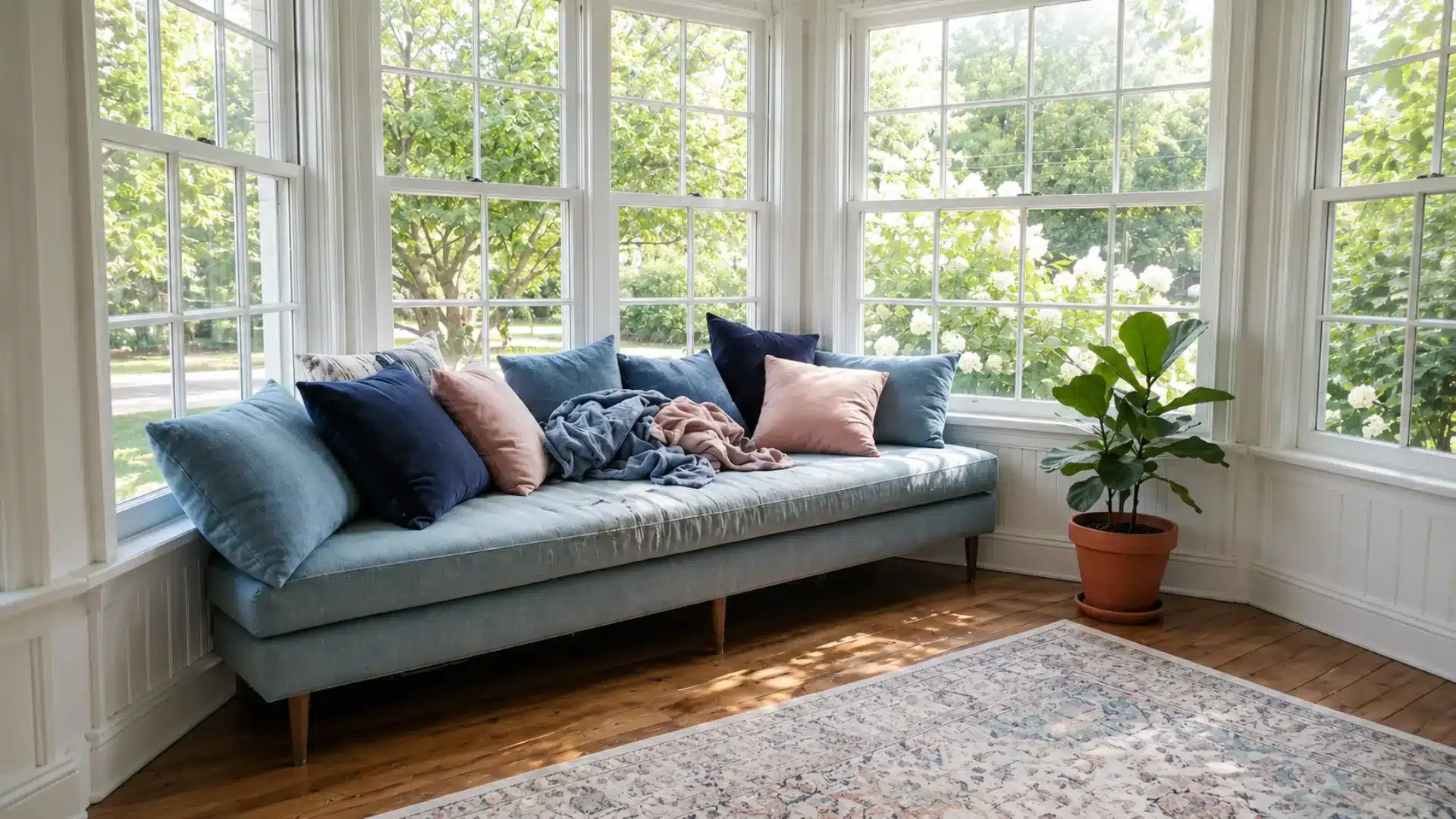
A bay window creates a natural spot for a cushioned bench, giving the sunroom a defined reading or lounging corner.
The angled window shape often lets in light from multiple directions throughout the day.
Add a few floor cushions or a small side table to round out the nook without overcrowding the window area.
17. Scandinavian Palette With Light Wood Tones
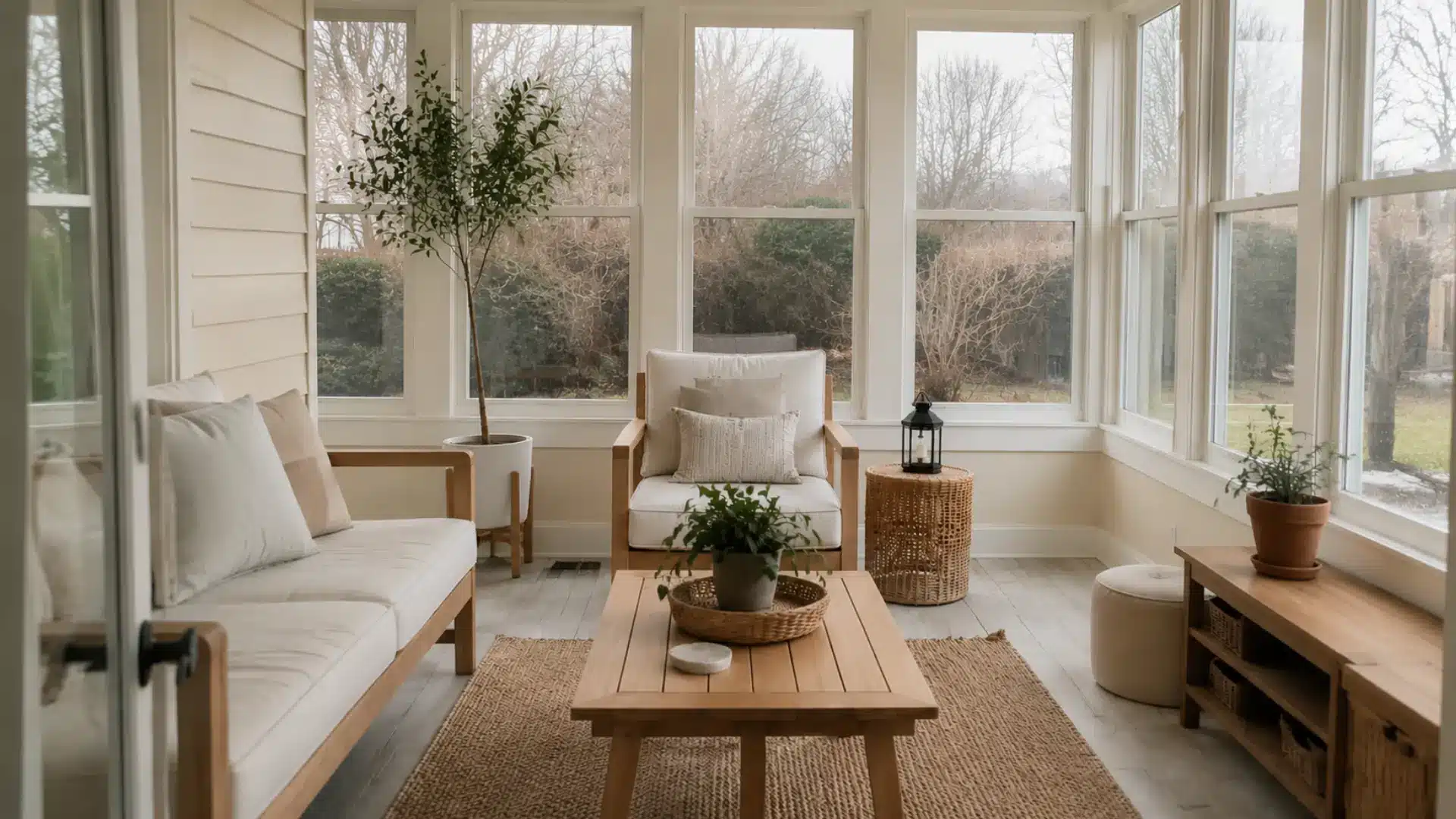
A Scandinavian-inspired sunroom relies on pale wood furniture, white or cream walls, and minimal clutter to keep the space feeling calm and open.
This palette reflects light well, which suits rooms that already get strong sun exposure.
Add texture through wool throws or a simple woven rug rather than a bold pattern or color.
18. Industrial Style With Black Metal Frames
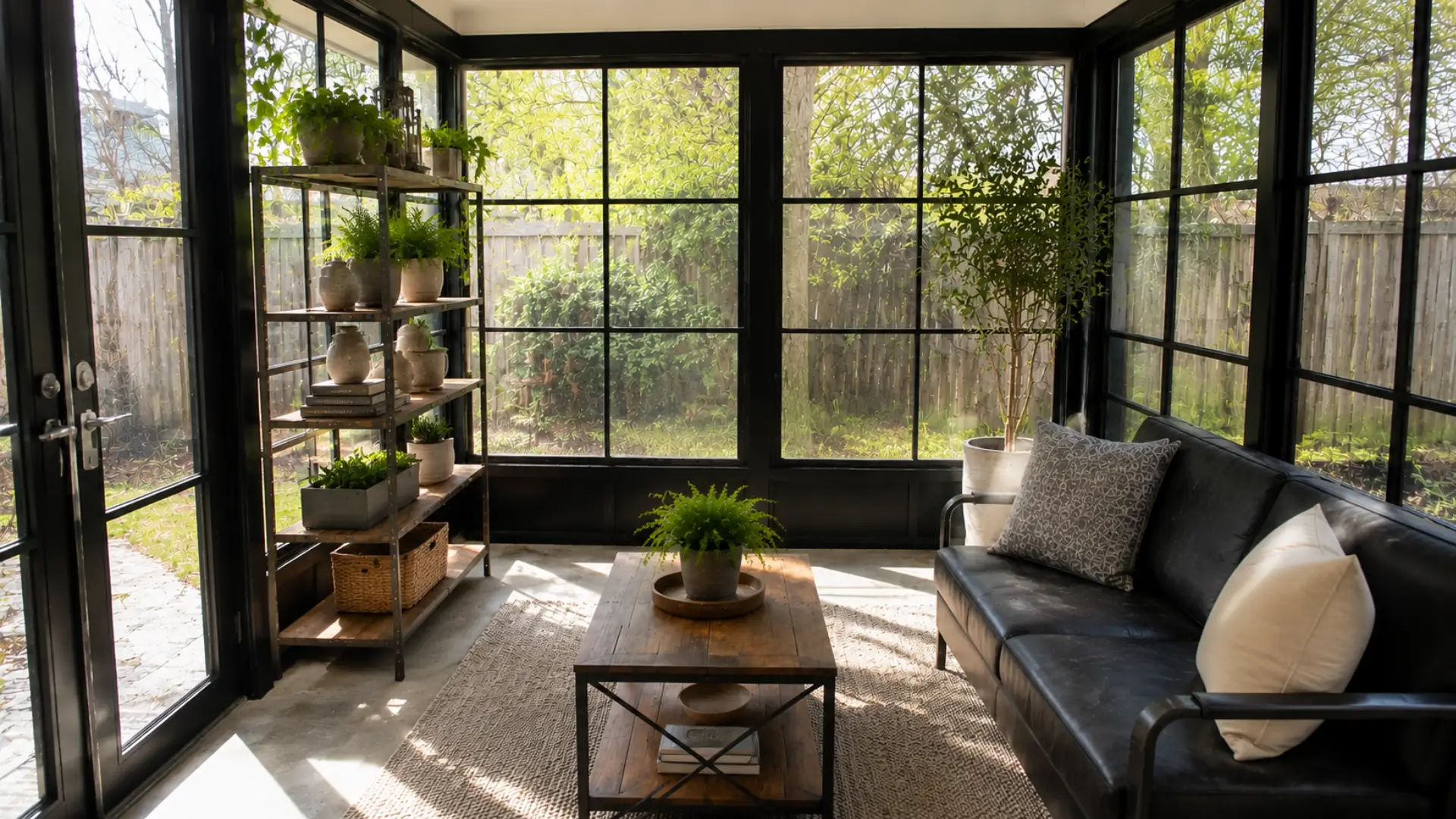
Black metal window frames and furniture accents create contrast against bright glass walls, giving a sunroom a more structured, modern edge.
This style pairs well with concrete or stone flooring and simple, unfussy furniture shapes.
Keep the rest of the palette neutral so the dark metal reads as an accent rather than overwhelming the room.
19. Mid-Century Furniture Pairing
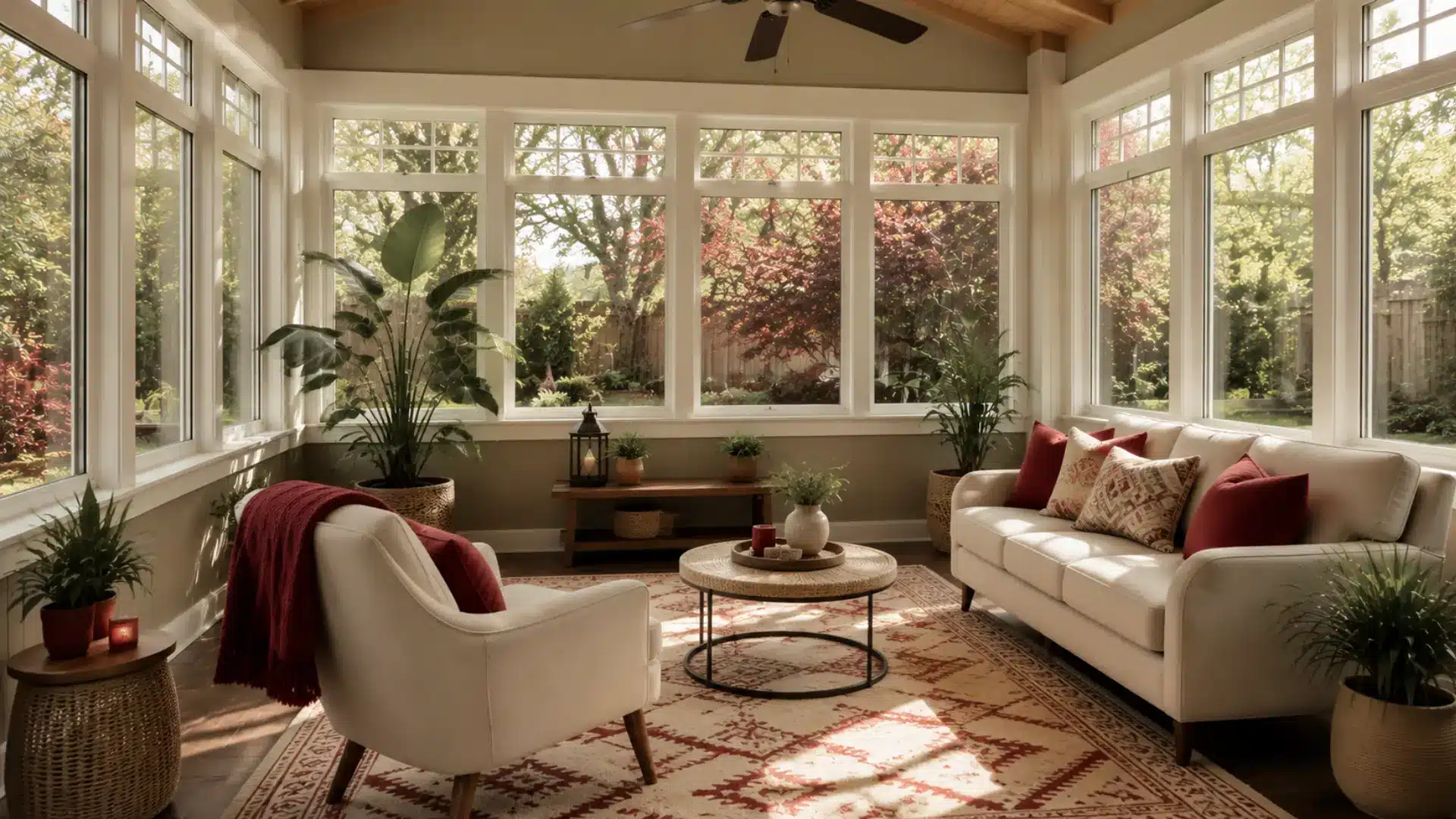
Tapered wood legs, warm walnut tones, and simple upholstered shapes bring a mid-century feel into a sunroom without clashing with its typically bright, glass-heavy setting.
This style favors function over ornamentation, which suits smaller rooms where every piece needs to earn its place.
Pair with a single statement light fixture for period-appropriate detail.
20. Boho Macrame Wall Hangings
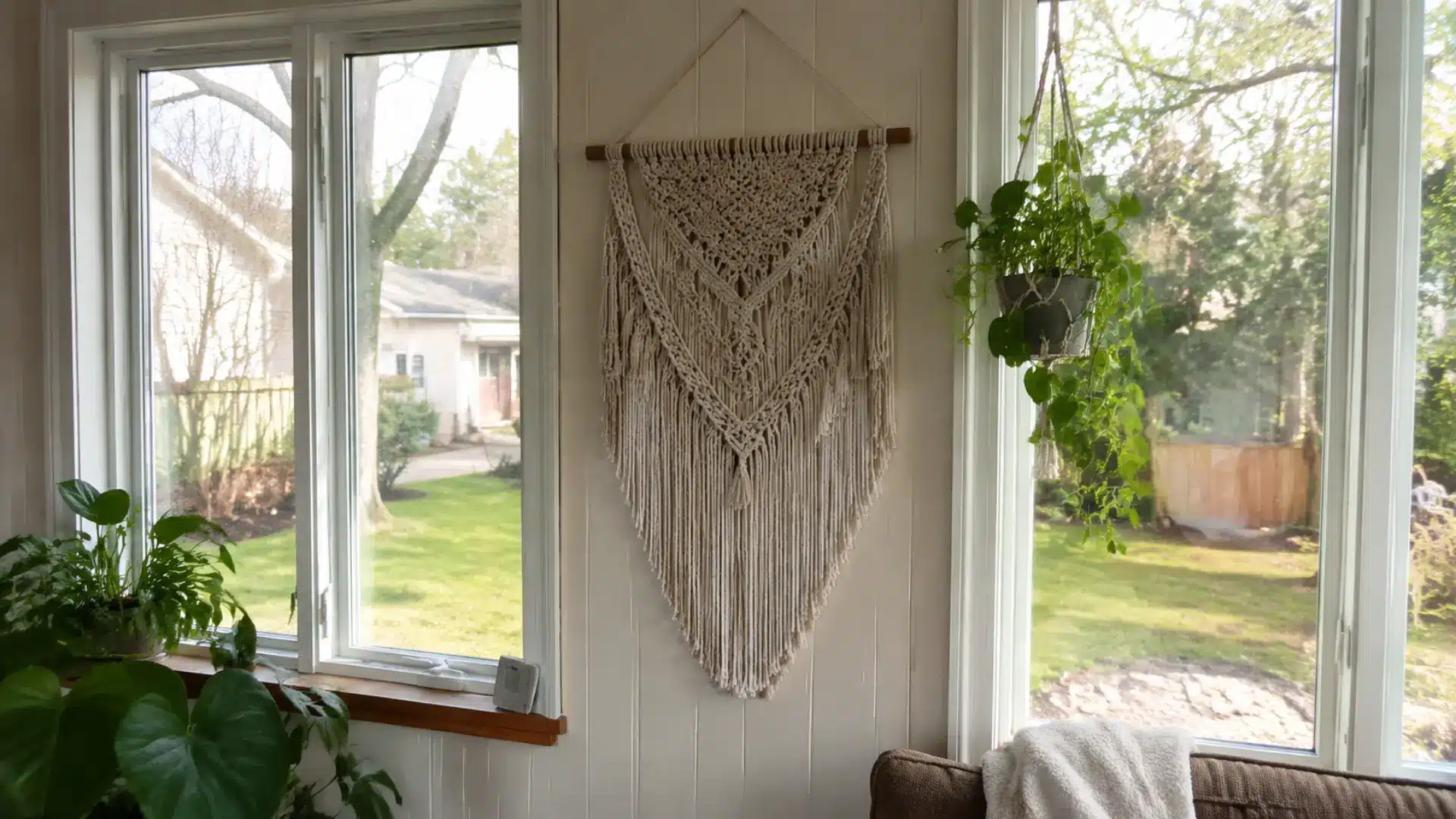
Macrame panels add texture to bare wall space between windows, filling gaps that plants or artwork might otherwise leave empty.
The natural cotton or jute material suits a sunroom’s casual, relaxed feel better than framed art in many cases.
Layer a few different sizes together for a more collected, lived-in look.
21. Layered Jute and Cotton Rugs
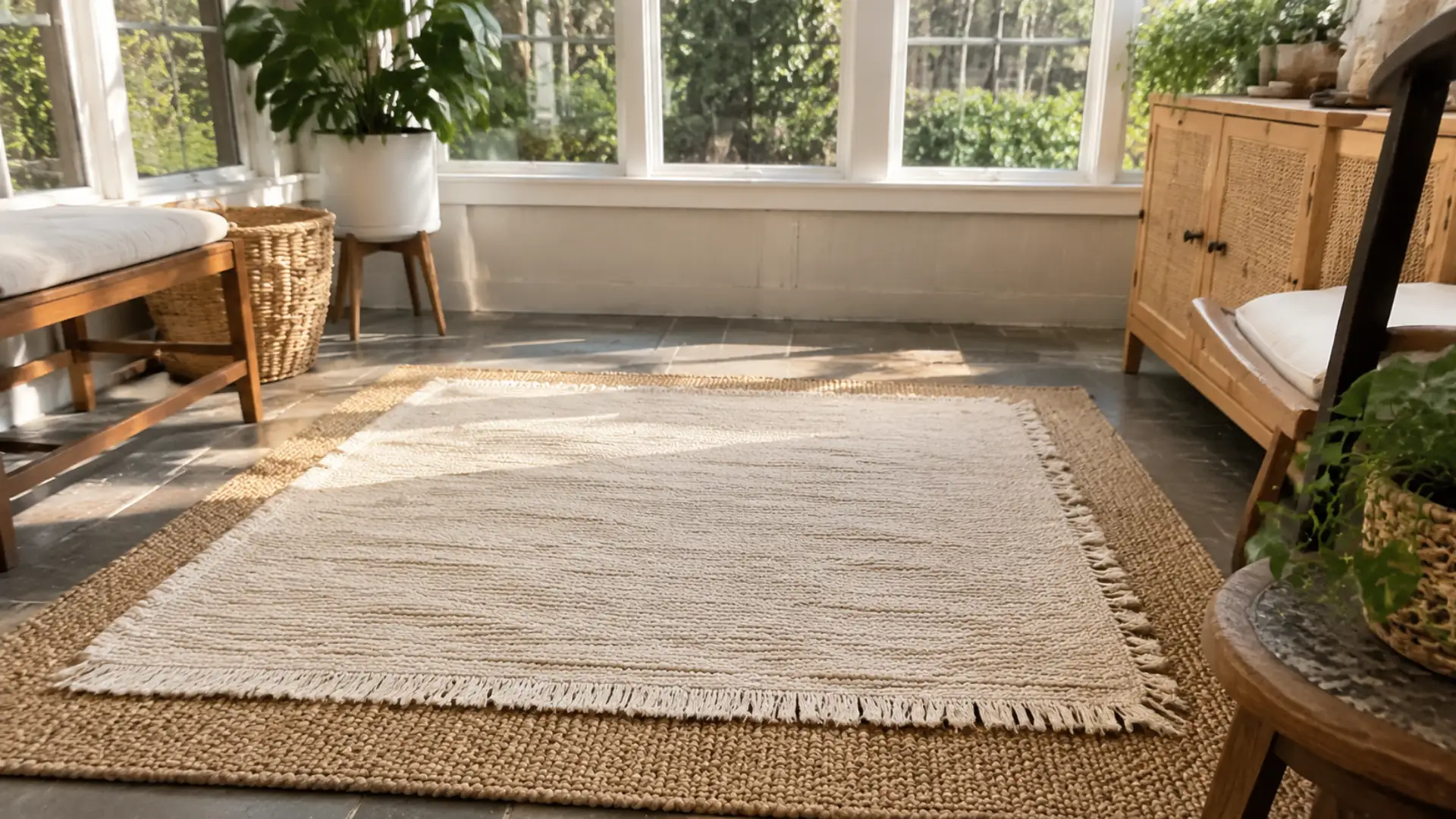
Combining a jute base rug with a smaller cotton accent rug on top adds warmth and texture underfoot without introducing a heavy pattern.
This layered approach works well in sunrooms with hard flooring like tile or concrete, where a single rug can feel thin or out of place.
Keep both rugs in similar tones for a cohesive look.
22. Wood Blade Ceiling Fan
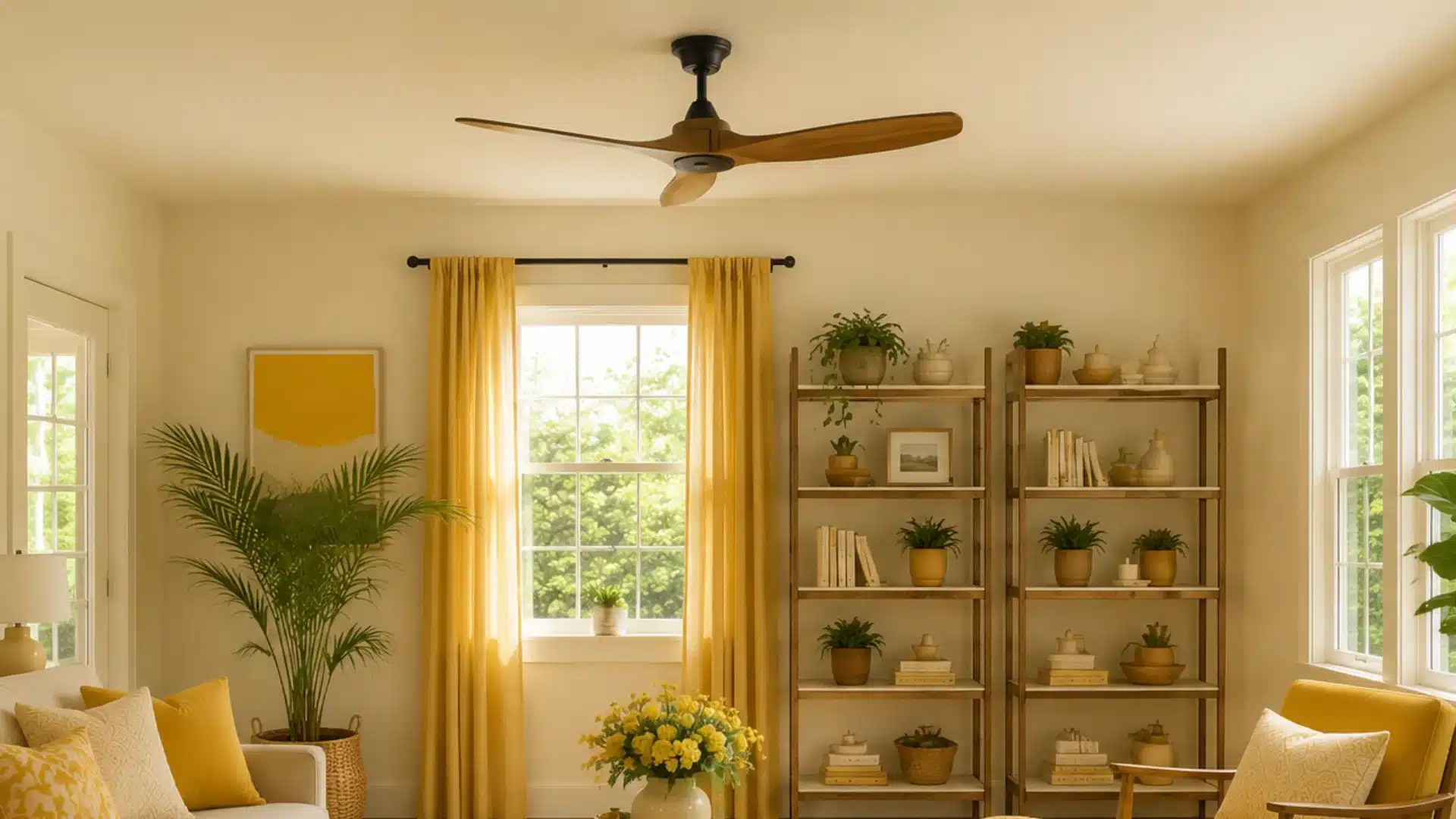
A ceiling fan with natural wood blades keeps air circulating on warmer days while adding a material accent that suits a sunroom’s typically light, airy palette.
This fixture works especially well in rooms with high ceilings, where airflow tends to pool near the top.
Choose a finish that matches nearby furniture for a more unified look.
23. Woven Pendant Lanterns
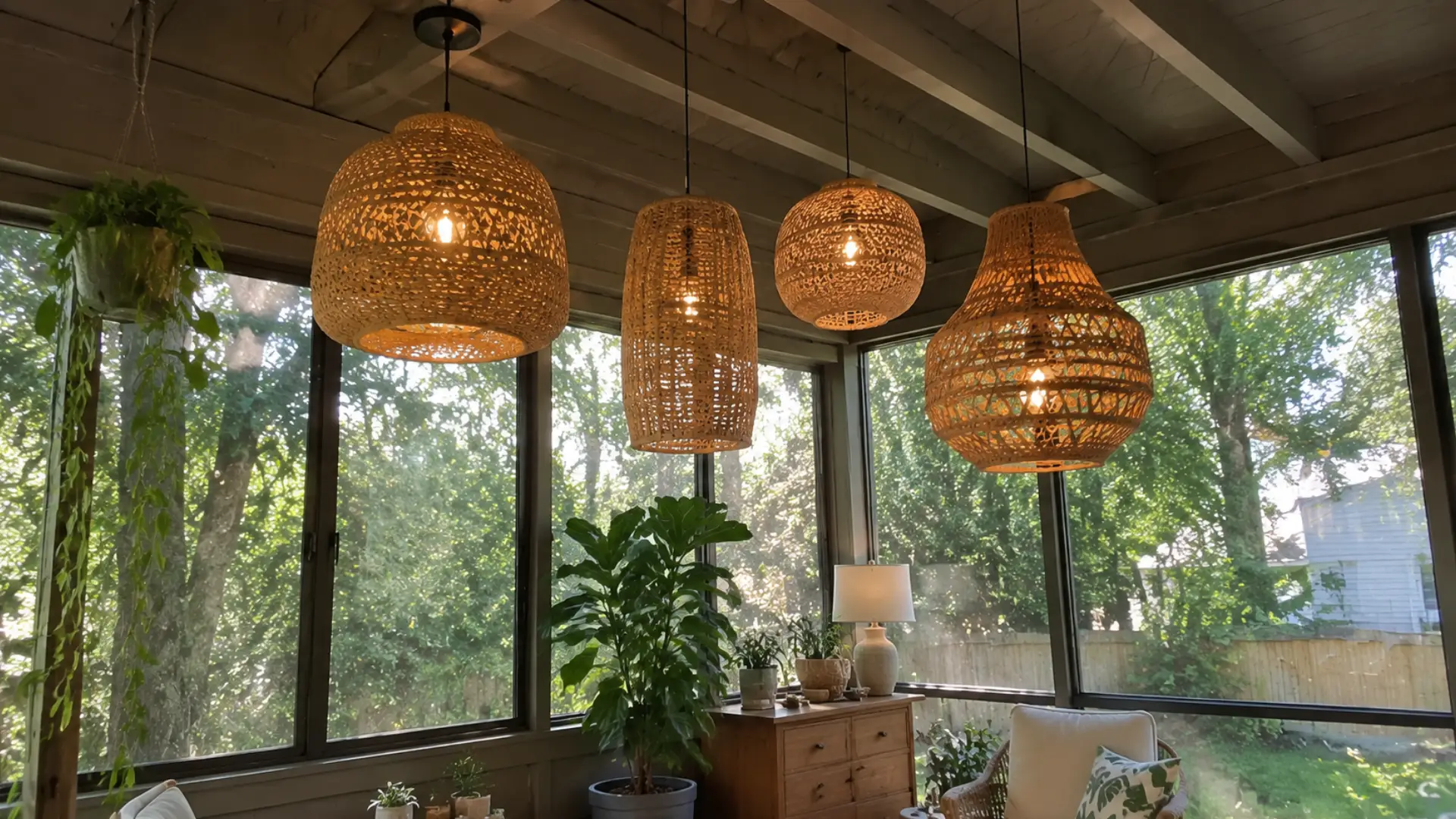
A cluster of small woven pendant lights, hung at varying heights, creates a softer alternative to a single large overhead fixture.
The natural material gently filters light, making it suitable for evening use once the sun goes down.
This works particularly well over a dining nook or a grouped seating area in a larger sunroom.
24. Daybed for Multi-Use Lounging
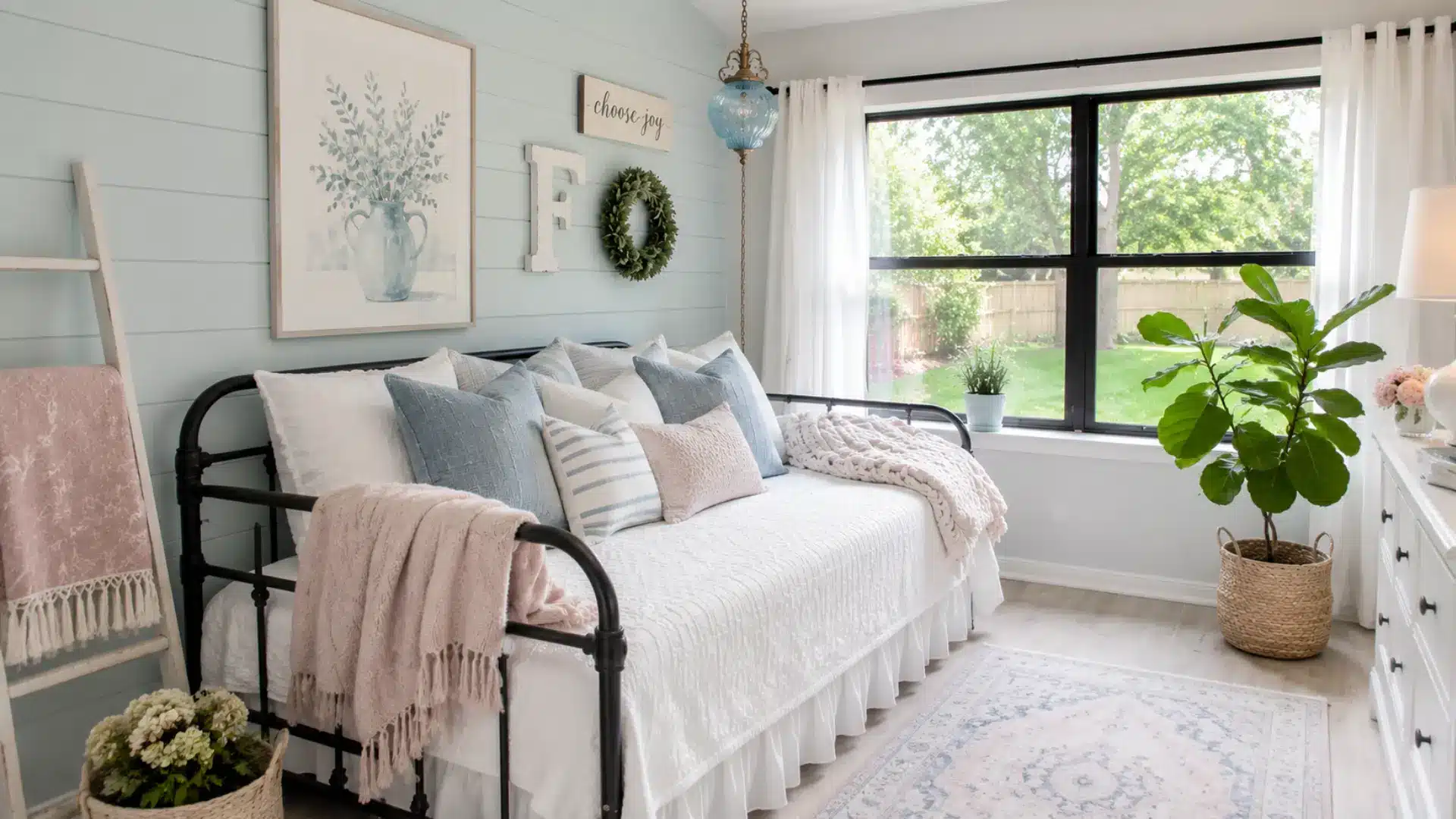
A daybed gives a sunroom flexibility, working as a spot to nap during the day and as extra sleeping space for guests when needed.
Choose a frame with a simple silhouette so it does not compete with nearby window views or plant displays.
Add a bolster and a few throw pillows to soften the look.
25. Convertible Home Office Corner
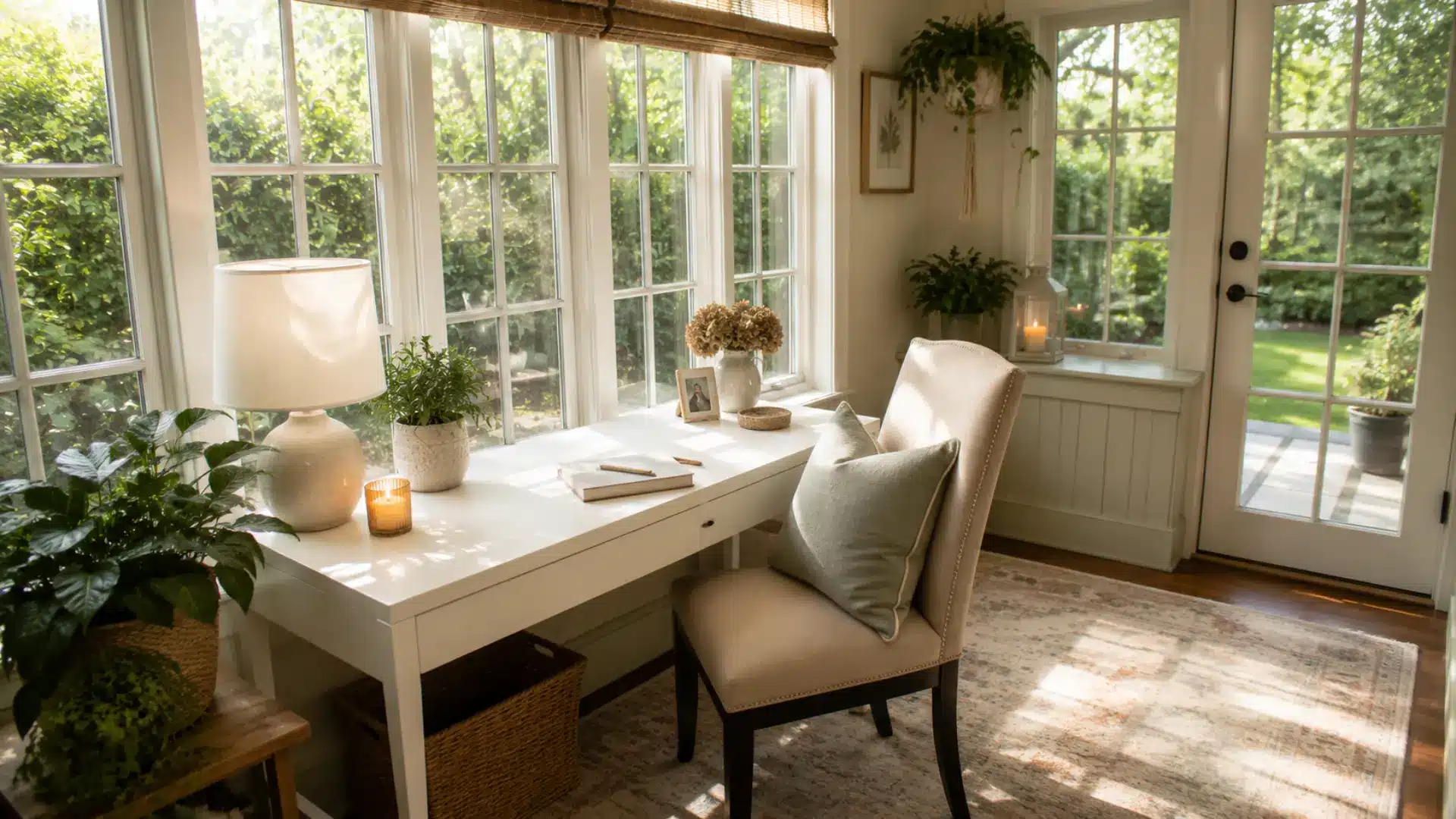
A small desk tucked into an underused corner turns part of a sunroom into a functional workspace without the need for a dedicated room.
Natural light reduces the need for a desk lamp during the day, which suits focused work.
Choose a slim desk profile so the corner still feels open, not boxed in.
26. Small Bistro Table for a Breakfast Nook
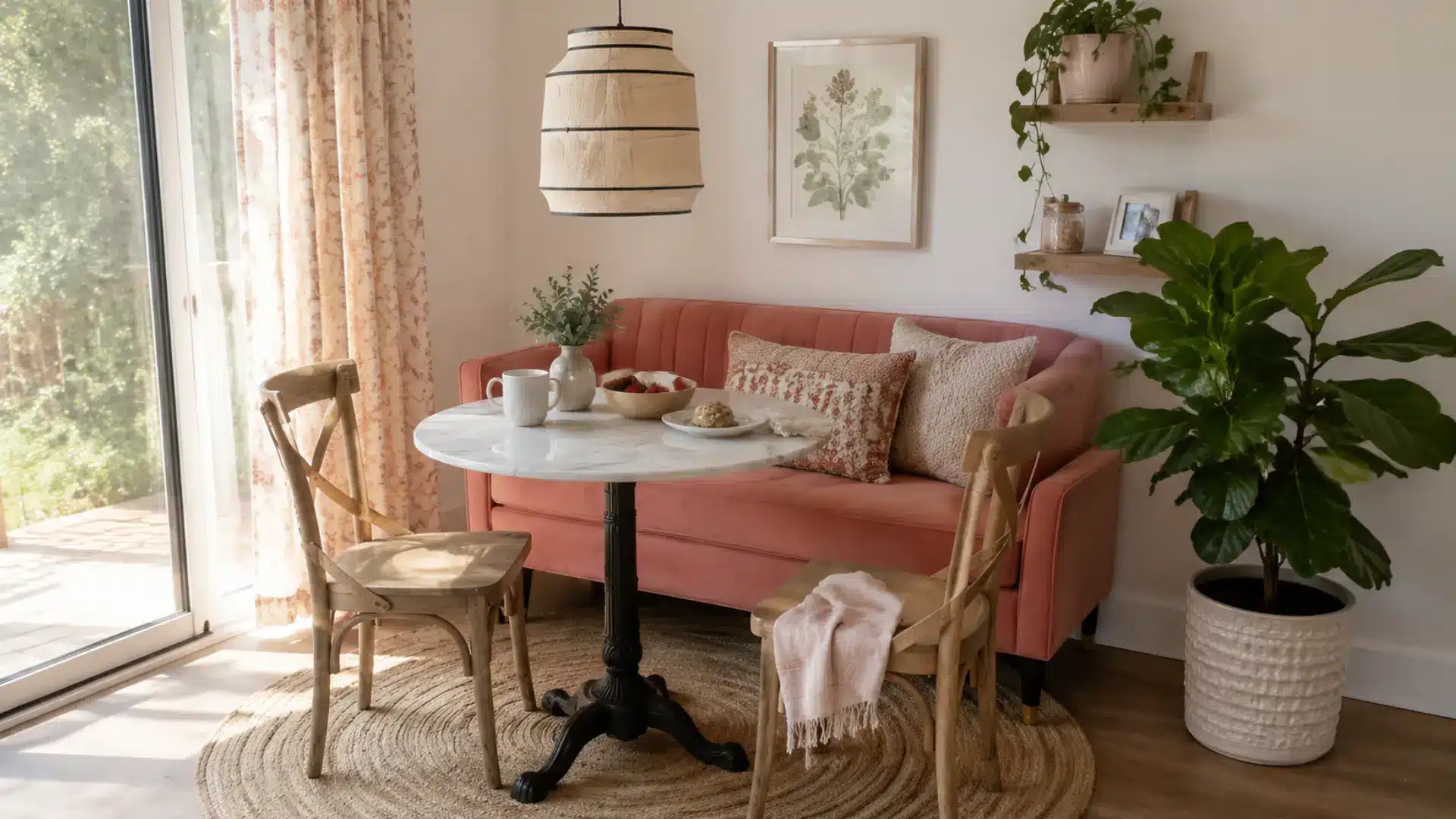
A compact bistro table and two chairs create a dedicated breakfast spot inside a sunroom, taking advantage of morning light for the first meal of the day.
This setup suits smaller rooms where a full dining table would feel oversized.
Choose a round table shape to keep the footprint as small as possible.
27. Foldable or Stackable Furniture
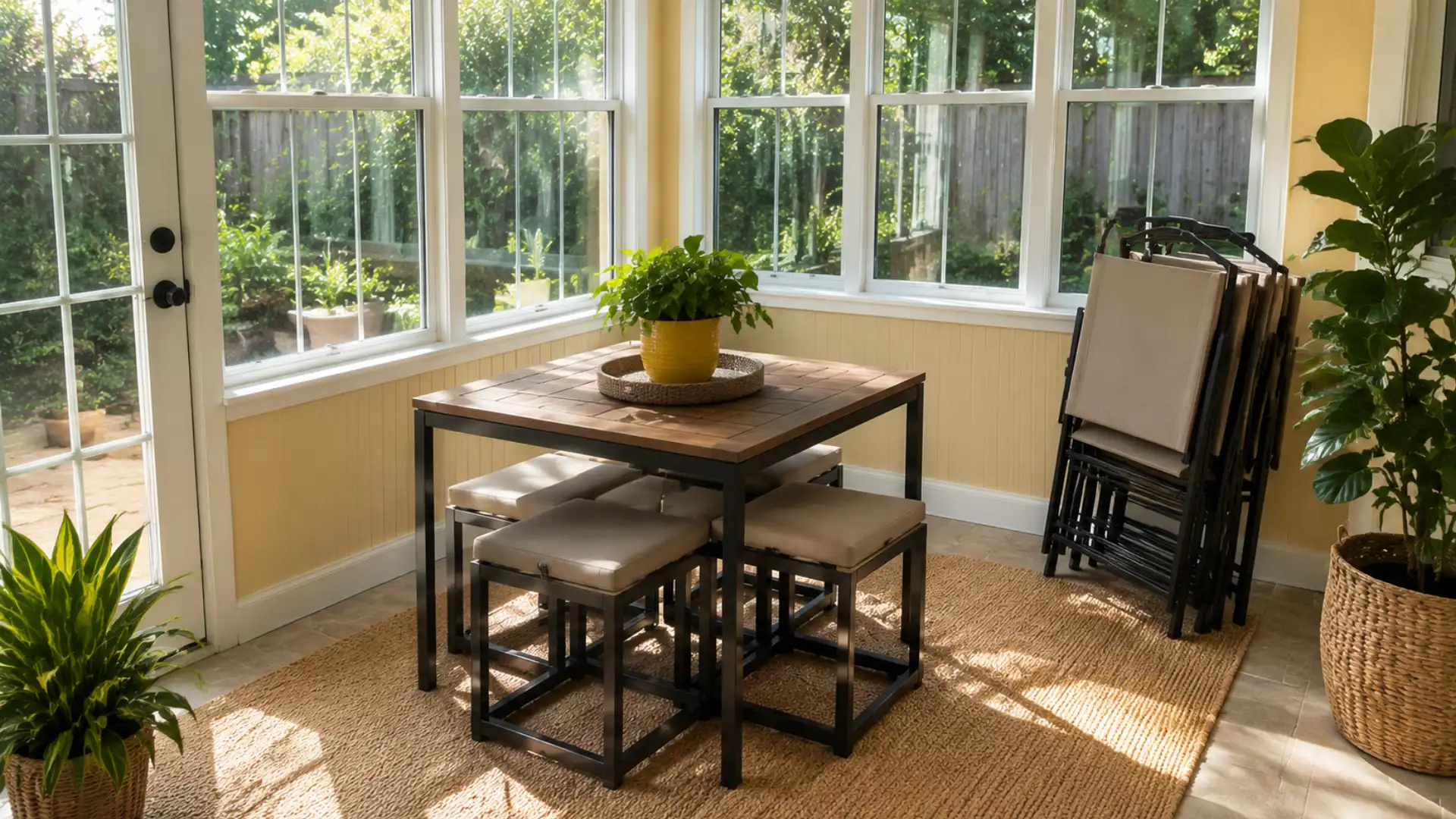
Foldable chairs and stackable side tables let a compact sunroom shift between everyday use and a more open layout for gatherings.
This furniture style suits rooms that double as entertaining spaces during warmer months.
Store extra pieces in a nearby closet or under a bench when they are not in active use.
28. Corner Bookshelf Reading Nook
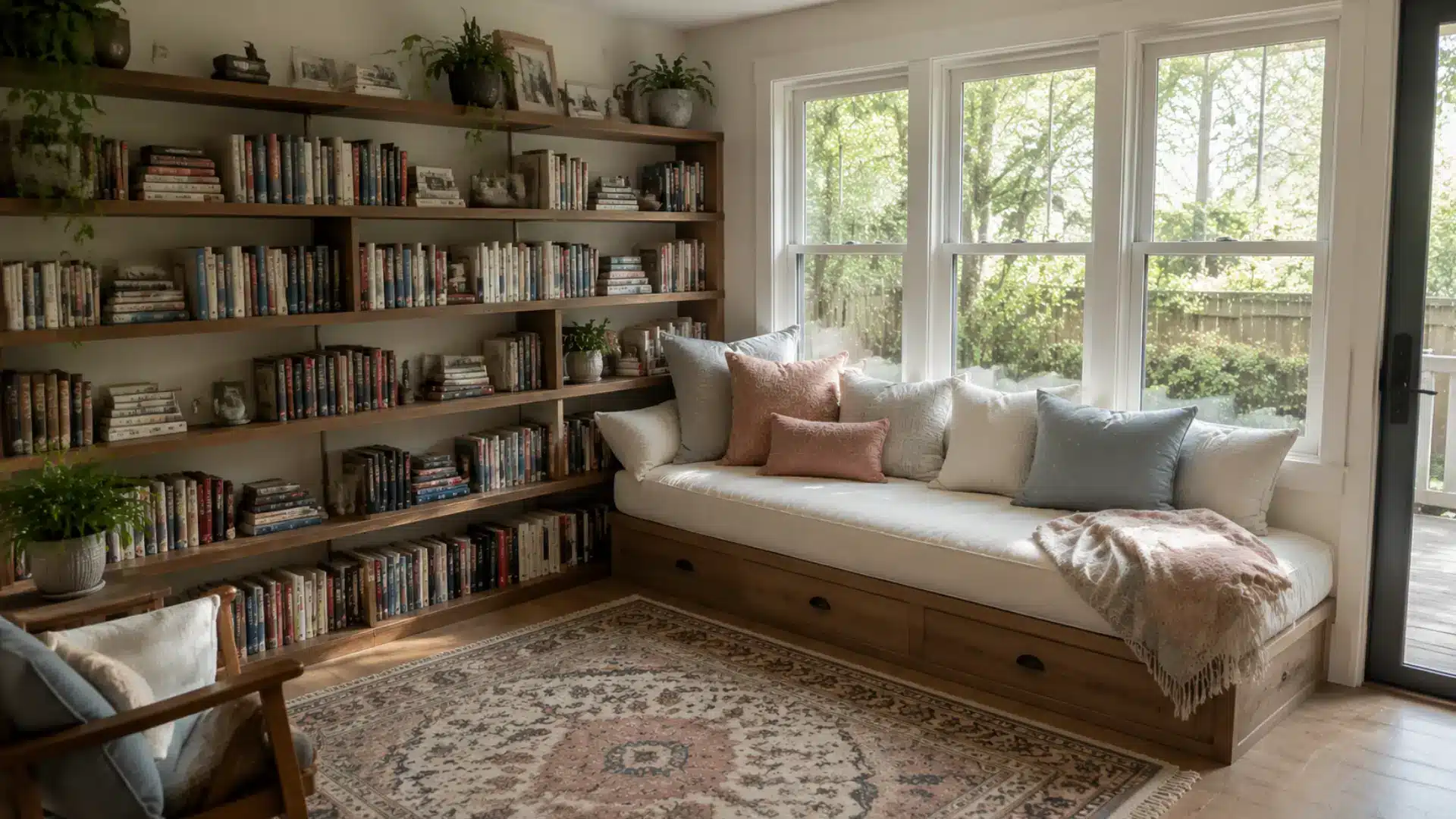
Pairing a corner bookshelf with a single armchair creates a quiet reading spot without requiring much floor space.
Natural light from a nearby window reduces the need for additional lamps during the day.
This layout works well in sunrooms that also serve another purpose, since the nook stays visually contained to one corner.
29. Multi-Tier Plant Stand
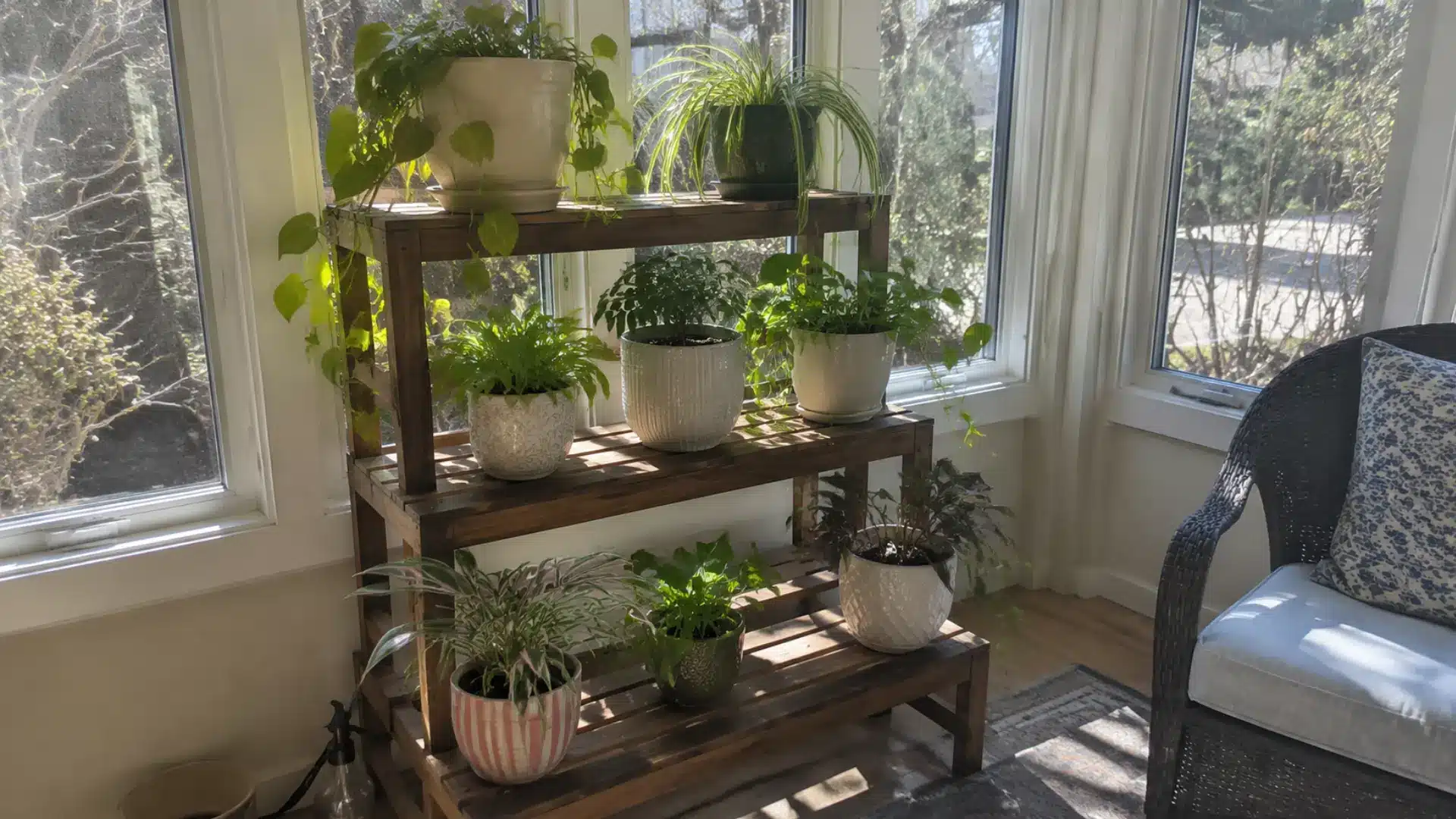
A tiered plant stand fits several pots within a small footprint, making it a practical option for sunrooms with limited extra floor space.
Arranging plants by height on each tier keeps the display organized rather than cluttered.
This works well when positioned near a window where every tier can still catch some natural light.
30. Built-in Bench Seating Along the Walls
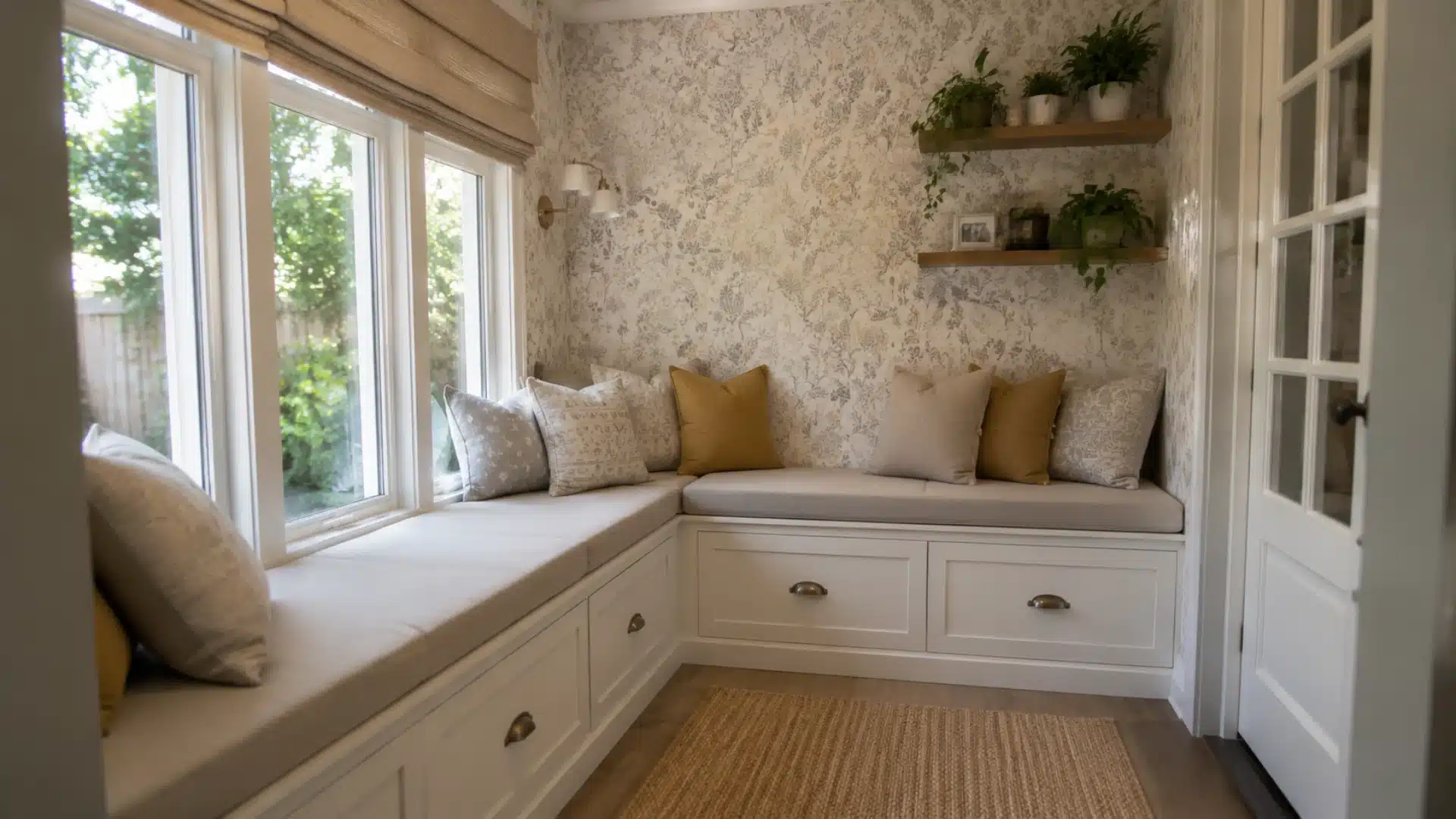
Built-in benches running along one or more walls save floor space compared to freestanding sofas and chairs, which matters in smaller sunrooms.
This layout also creates a defined seating area without arranging multiple separate pieces.
Add cushions and a low table in the center to complete the setup.
31. Airy Color Palette
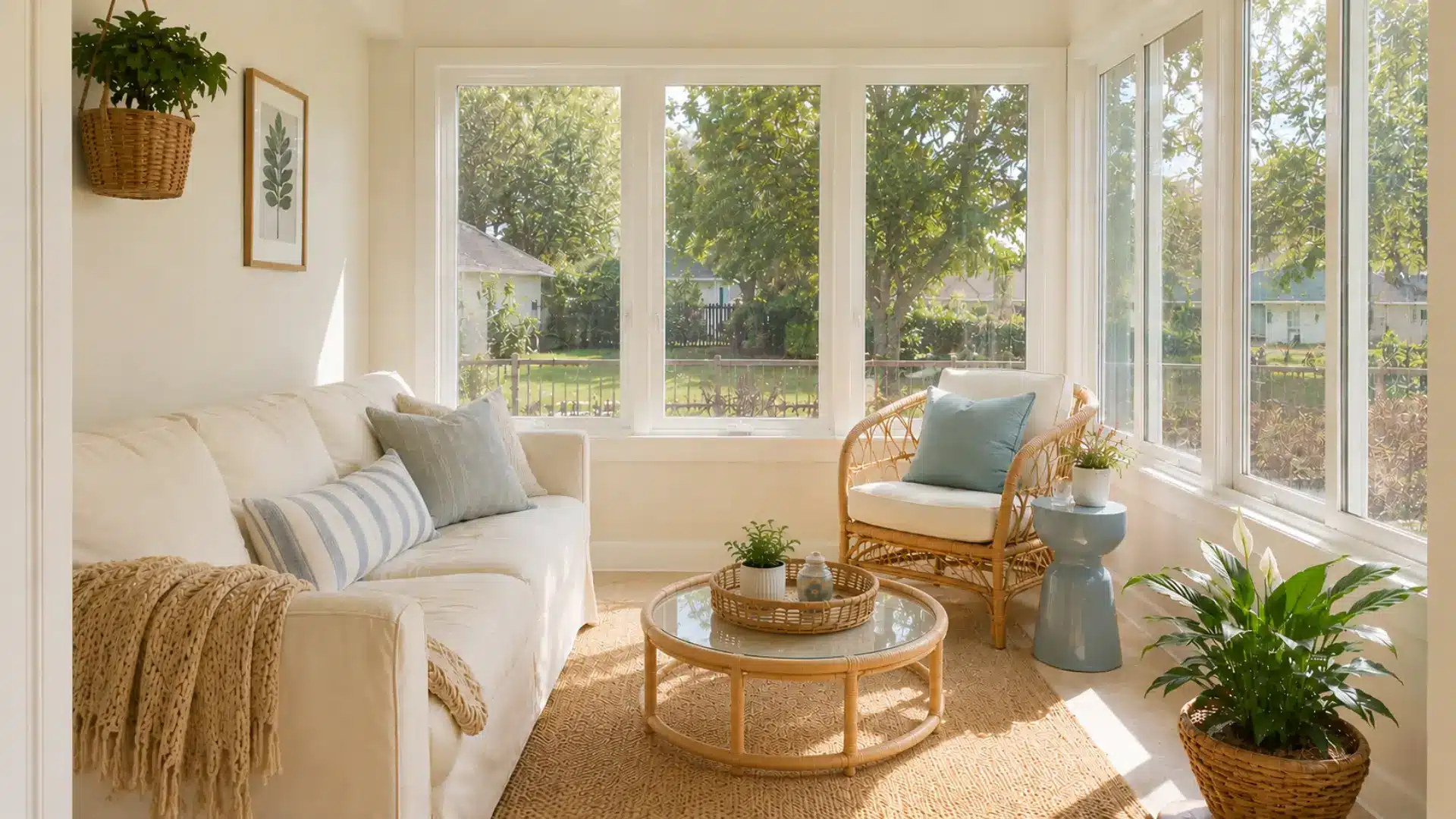
Sticking to white, cream, and pale blue tones throughout a sunroom keeps the space feeling open and connected to natural light.
This palette suits rooms with strong sun exposure, since darker colors can absorb heat, making a space feel warmer than intended.
Add texture through fabric and natural materials rather than bold color.
32. Pastel Accent Pillows
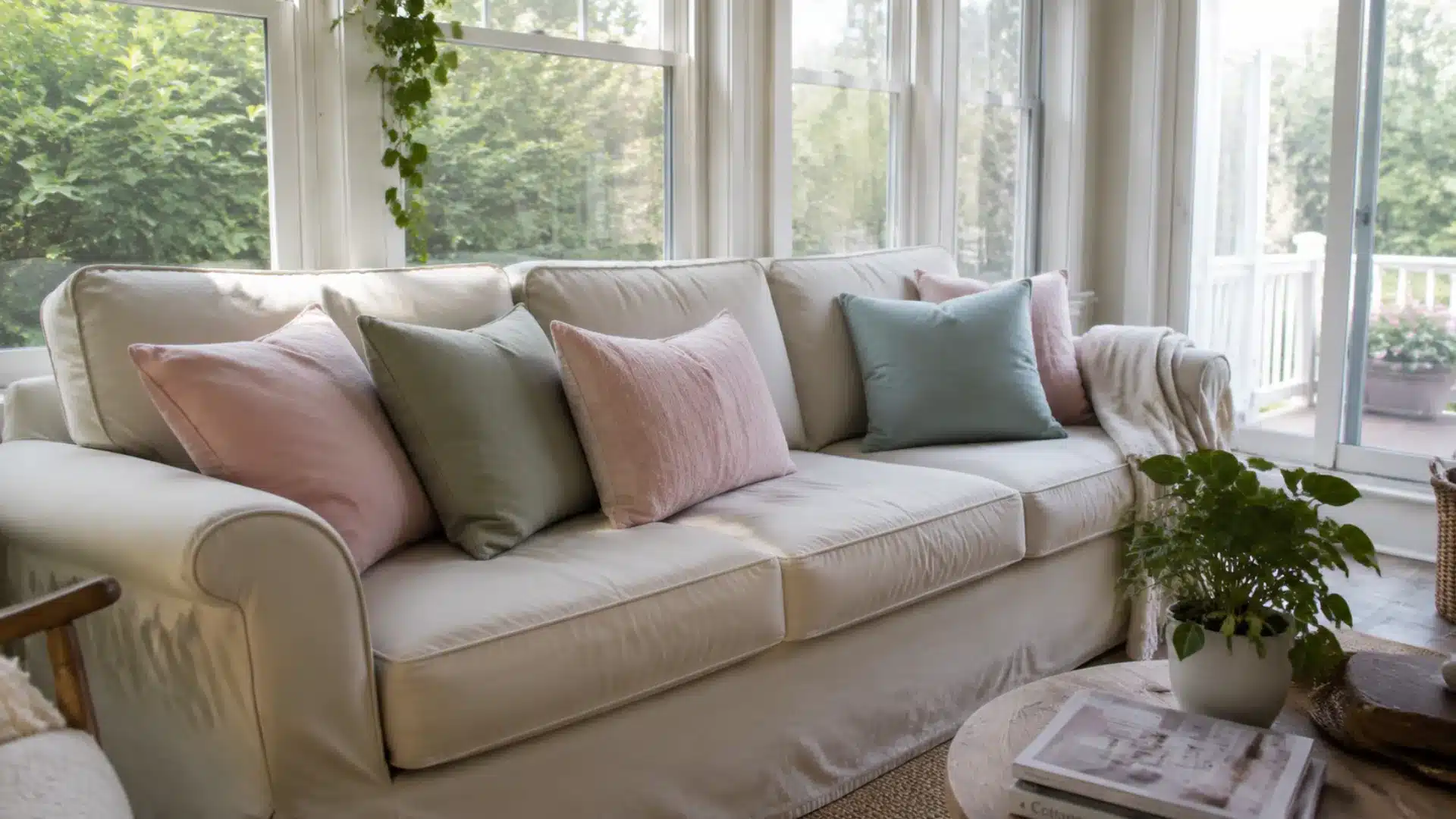
Swapping in pastel throw pillows offers a low-cost way to refresh a sunroom’s look between seasons without changing any major furniture pieces.
Soft pink, mint, or pale yellow tones work particularly well against a neutral sofa or daybed.
This small update also gives a quick way to test a new color direction before committing further.
33. Wicker Storage Baskets
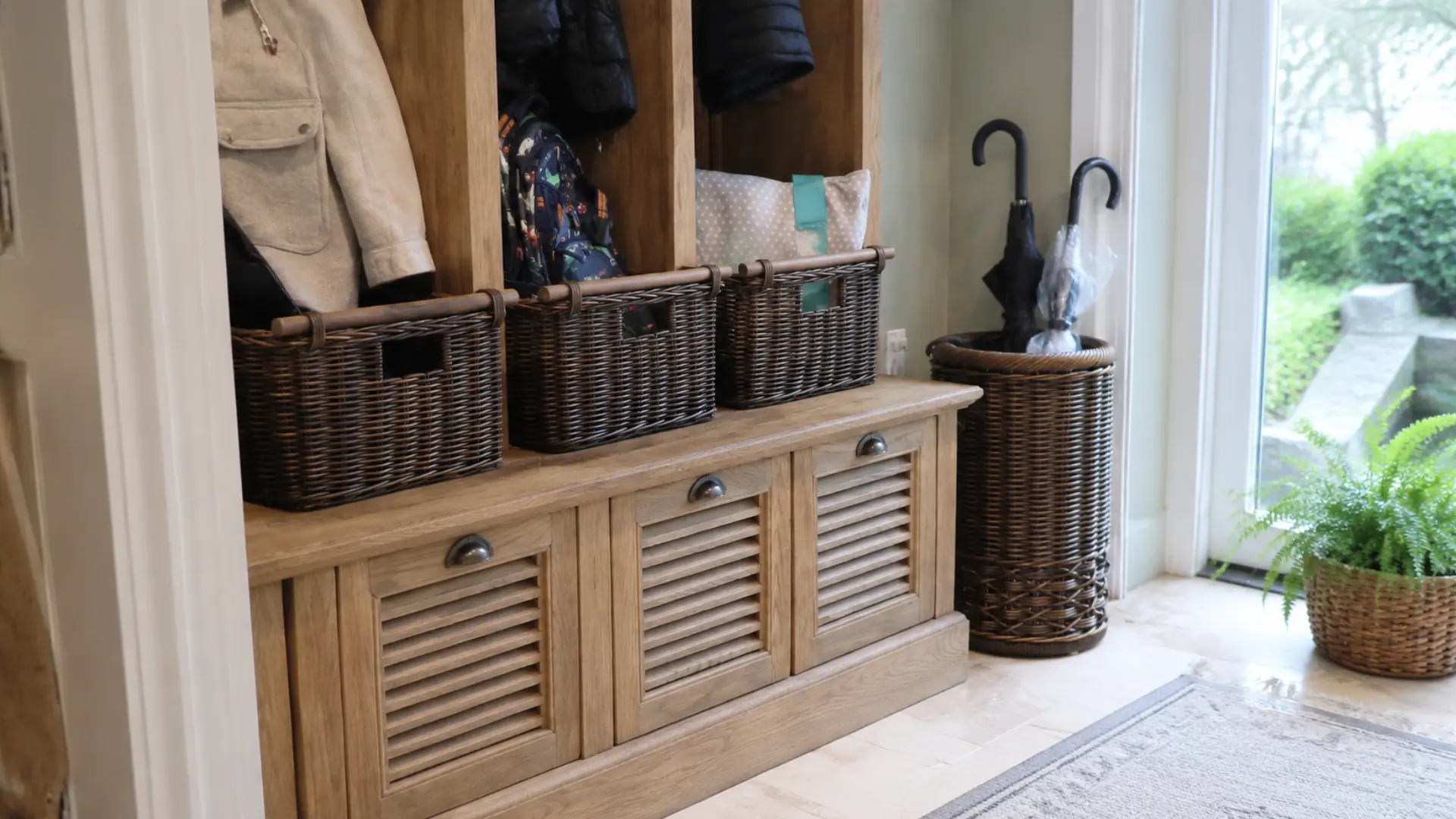
Wicker baskets combine practical storage with the natural texture that suits a sunroom’s casual feel.
Use them to corral throws, plant supplies, or seasonal items that would otherwise clutter open shelving.
Stacking a few different sizes together also adds visual interest to an otherwise plain corner or to the space under a console table.
34. Faux Fur Throws
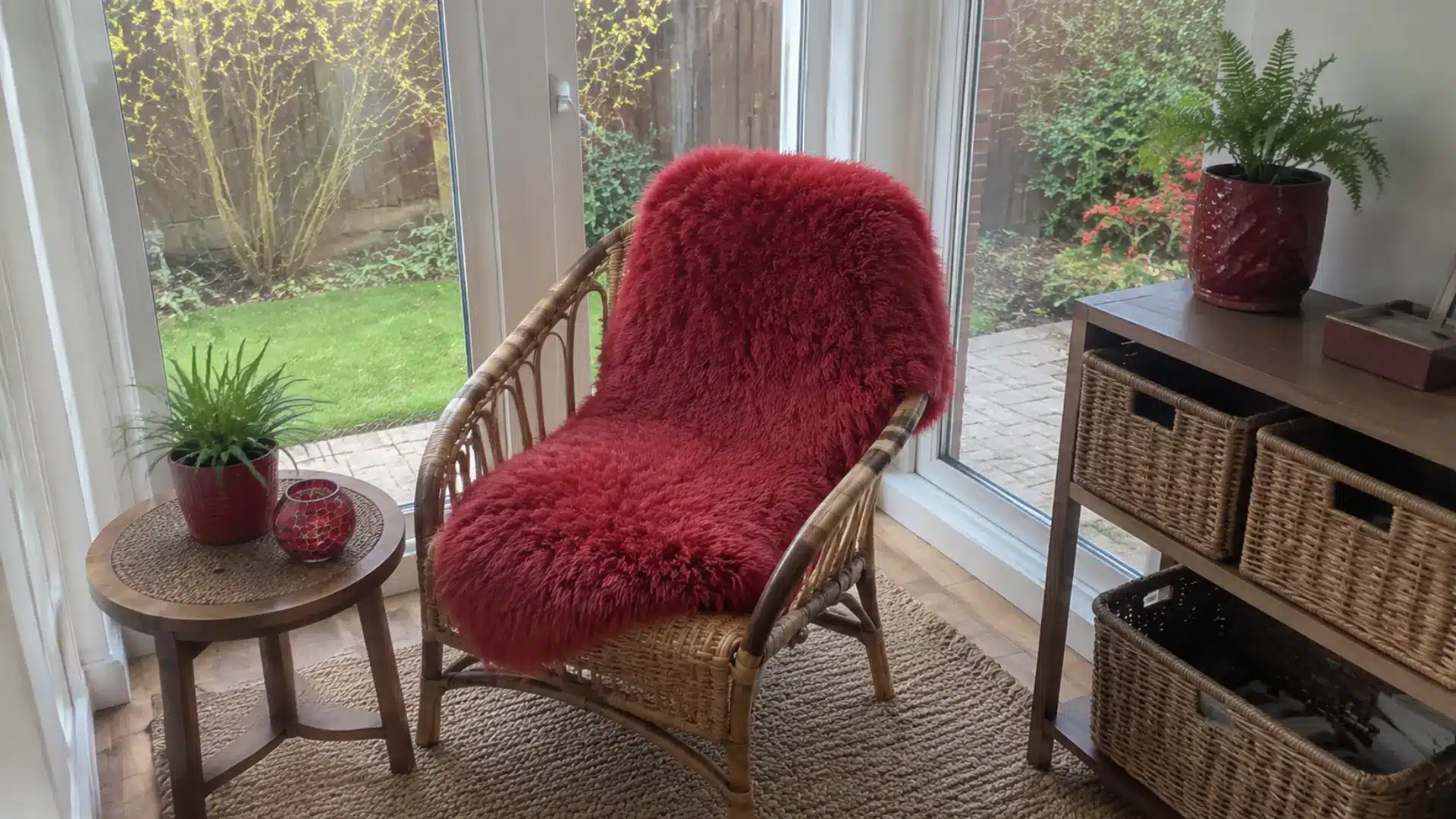
A faux-fur throw draped over a chair or daybed adds coziness during the cooler months without requiring heavier furniture or permanent changes.
This small addition works well in sunrooms used year-round, since temperatures can shift more than in interior rooms.
Choose a neutral tone so the throw pairs easily with existing cushions.
35. Natural Stone or Slate Flooring
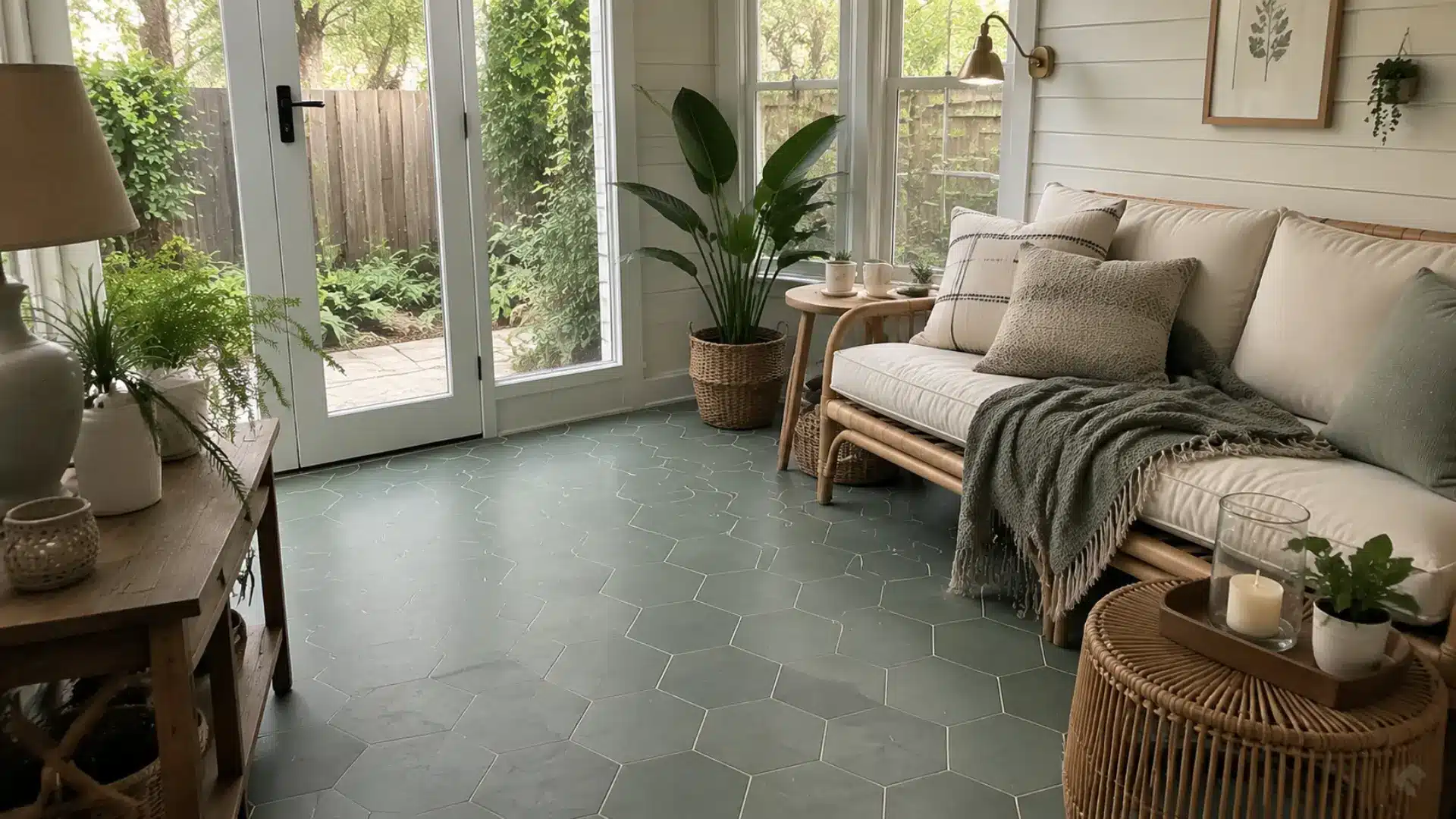
Stone or slate flooring holds up well against the temperature swings and direct sun exposure common in sunrooms, resisting fading and wear better than some softer materials.
This flooring choice also pairs naturally with indoor plants and rattan furniture.
A honed rather than polished finish helps reduce glare on especially bright days.
36. Painted Concrete Floor
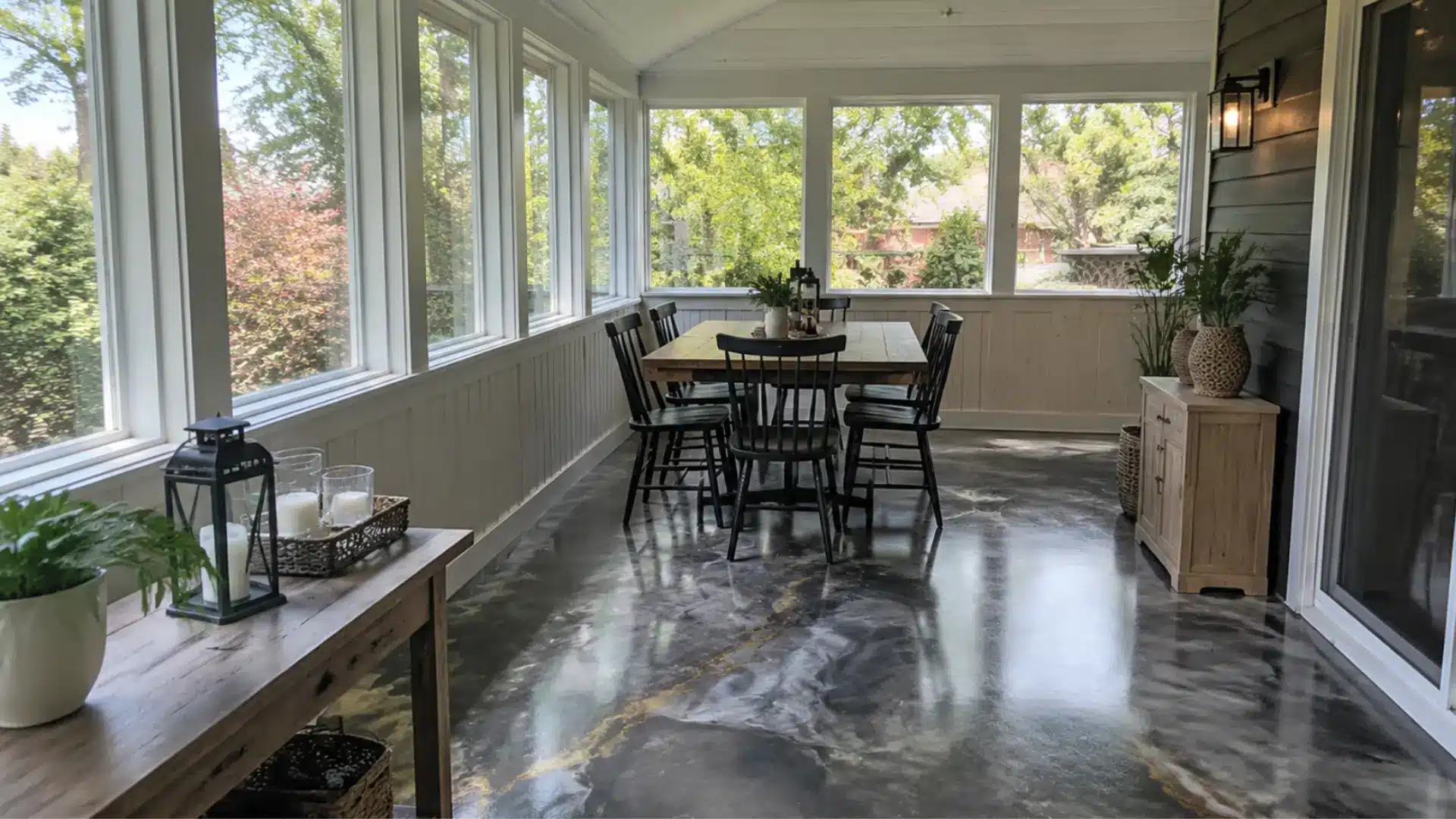
A painted concrete floor gives a sunroom a modern, industrial base that is simple to clean and maintain over time.
This option suits rooms with heavy plant use, since spills and soil are easy to wipe away.
Choose a light paint tone to keep the floor from absorbing too much heat during peak sun hours.
37. Patterned Encaustic Tile
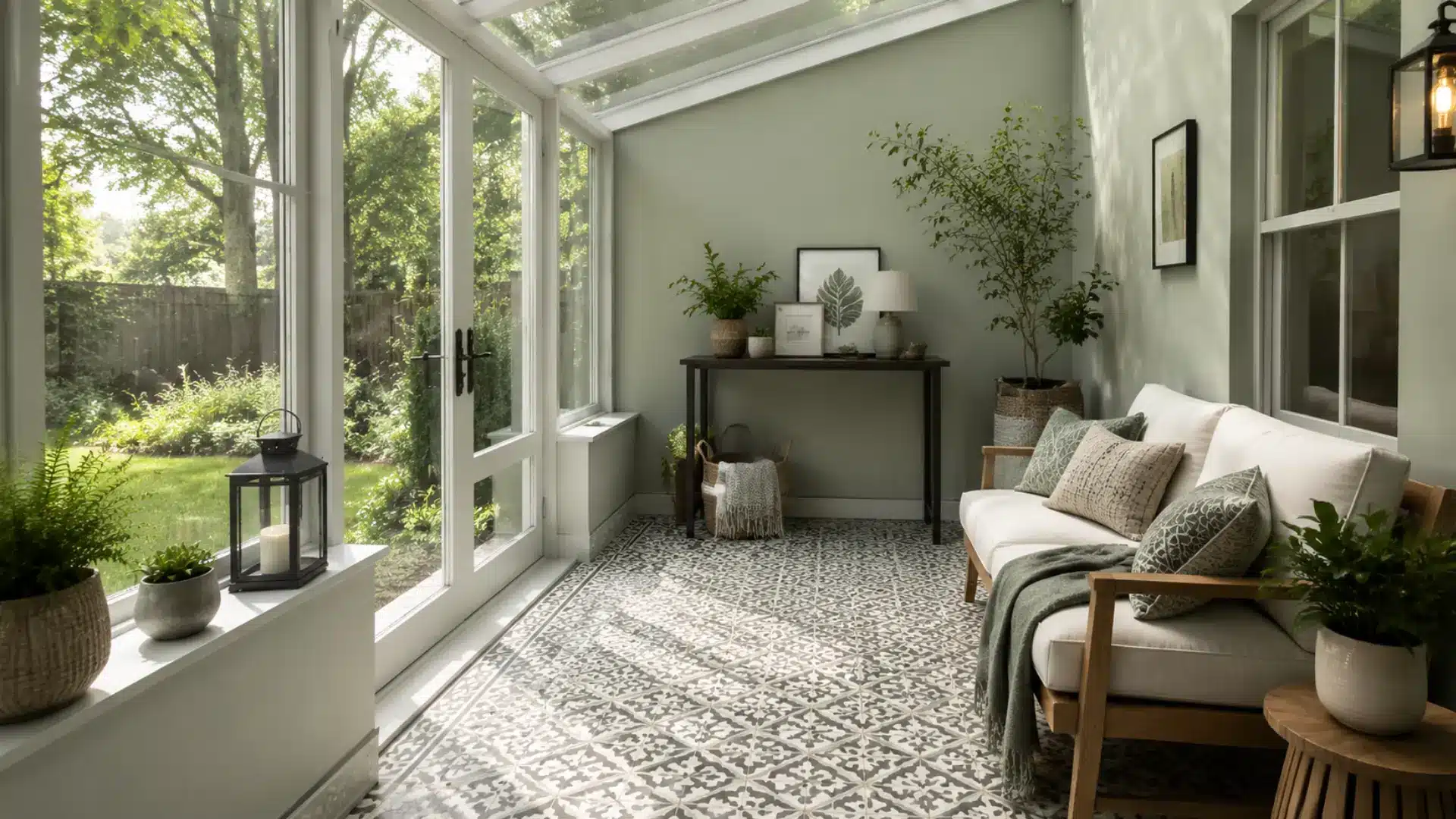
Patterned tile flooring provides a strong design anchor for a sunroom, especially in rooms where furniture and walls remain fairly neutral.
This flooring style works well near an entryway or as a border around a seating area.
Choose a tile with a matte finish to help manage glare from direct overhead sunlight.
38. Sisal or Seagrass Rug
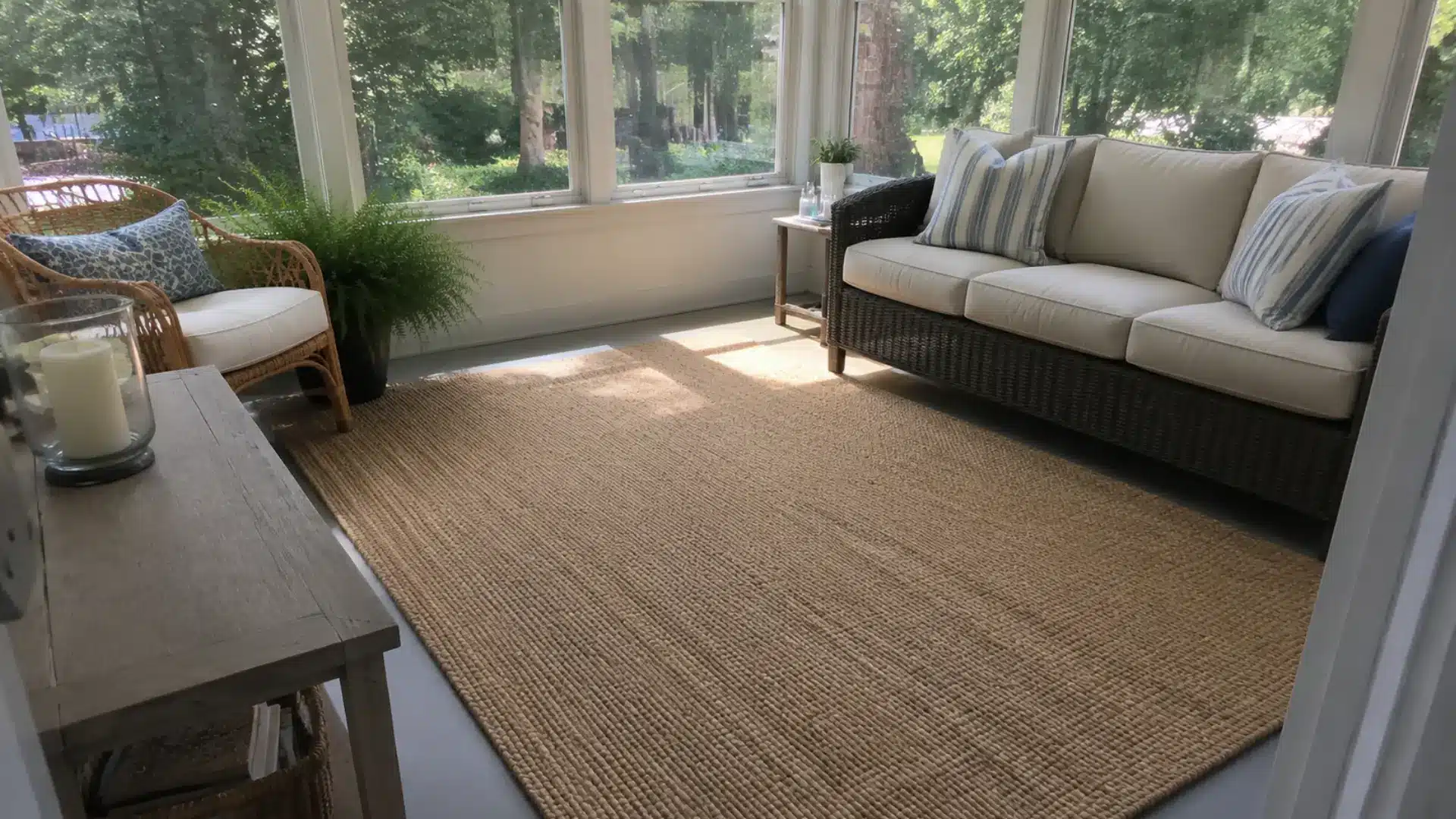
Natural fiber rugs like sisal or seagrass suit a sunroom’s casual, sunlit setting better than plush pile rugs, which can trap heat and show wear from foot traffic near doors.
These materials also resist fading better than many synthetic options.
Layer a smaller printed rug on top for added softness underfoot.
39. Smart Blinds
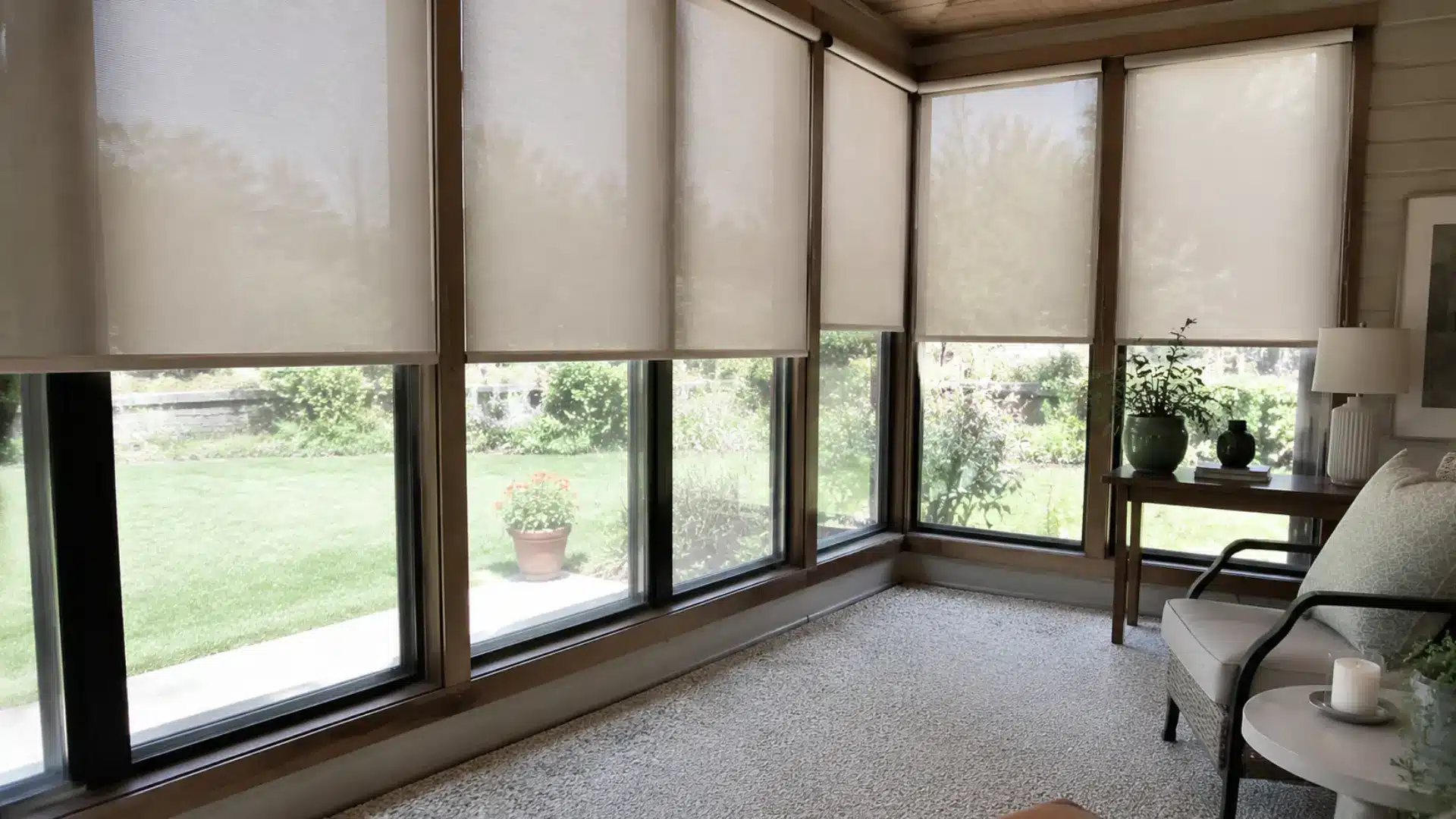
Automated blinds let a sunroom’s light levels adjust throughout the day without manual effort, which helps manage both glare and temperature swings.
This feature suits rooms used for work or reading, where consistent lighting matters more than in a purely decorative space.
Many systems can also be scheduled to open and close automatically.
40. Exposed Ceiling Beams
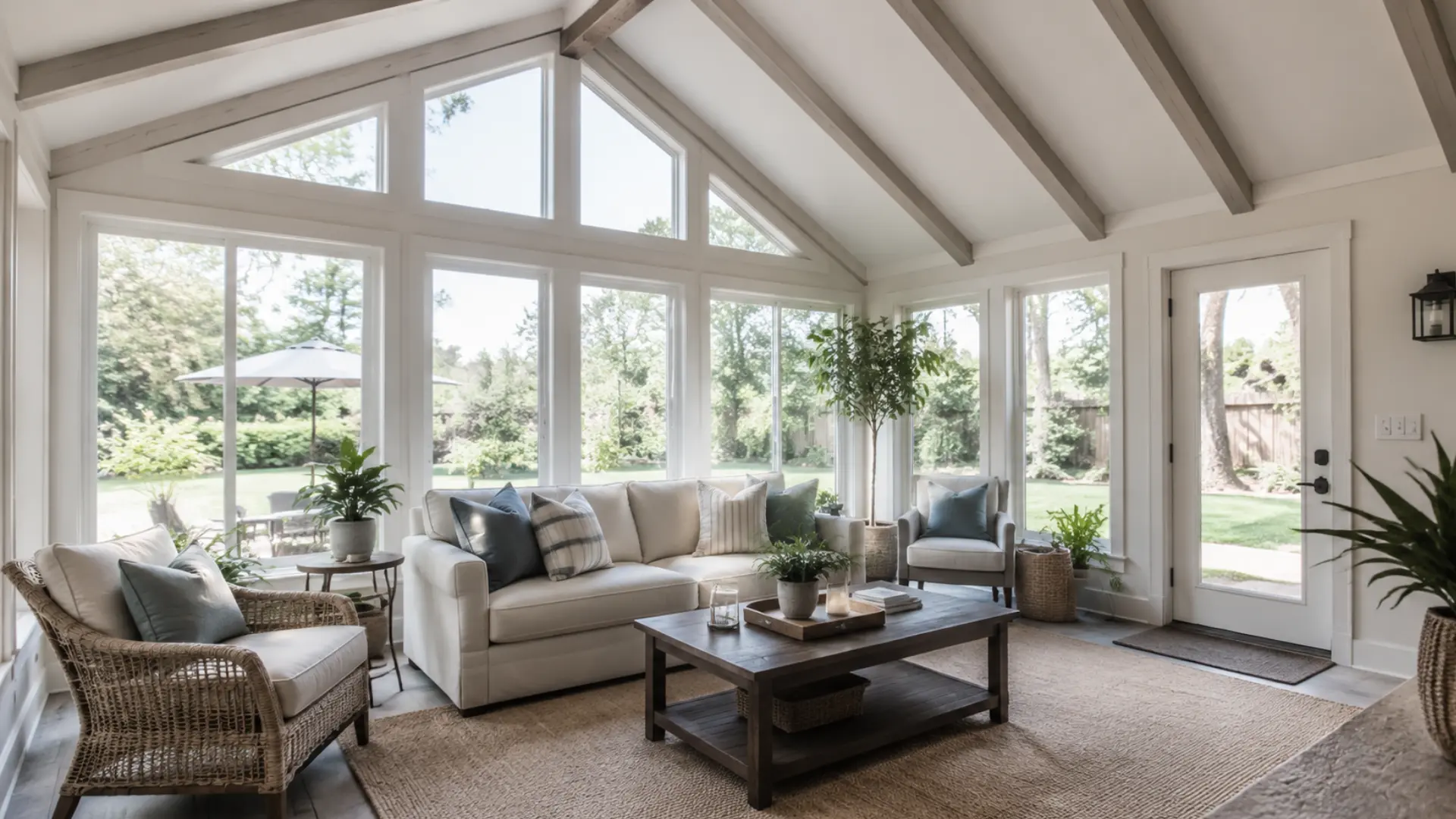
Leaving structural beams exposed rather than covering them highlights a sunroom’s architectural character and adds visual interest to an otherwise flat ceiling.
This works particularly well in additions built onto older homes, where beam material often matches existing trim.
A light stain keeps the beams from darkening the room too much.
41. Skylight Shades
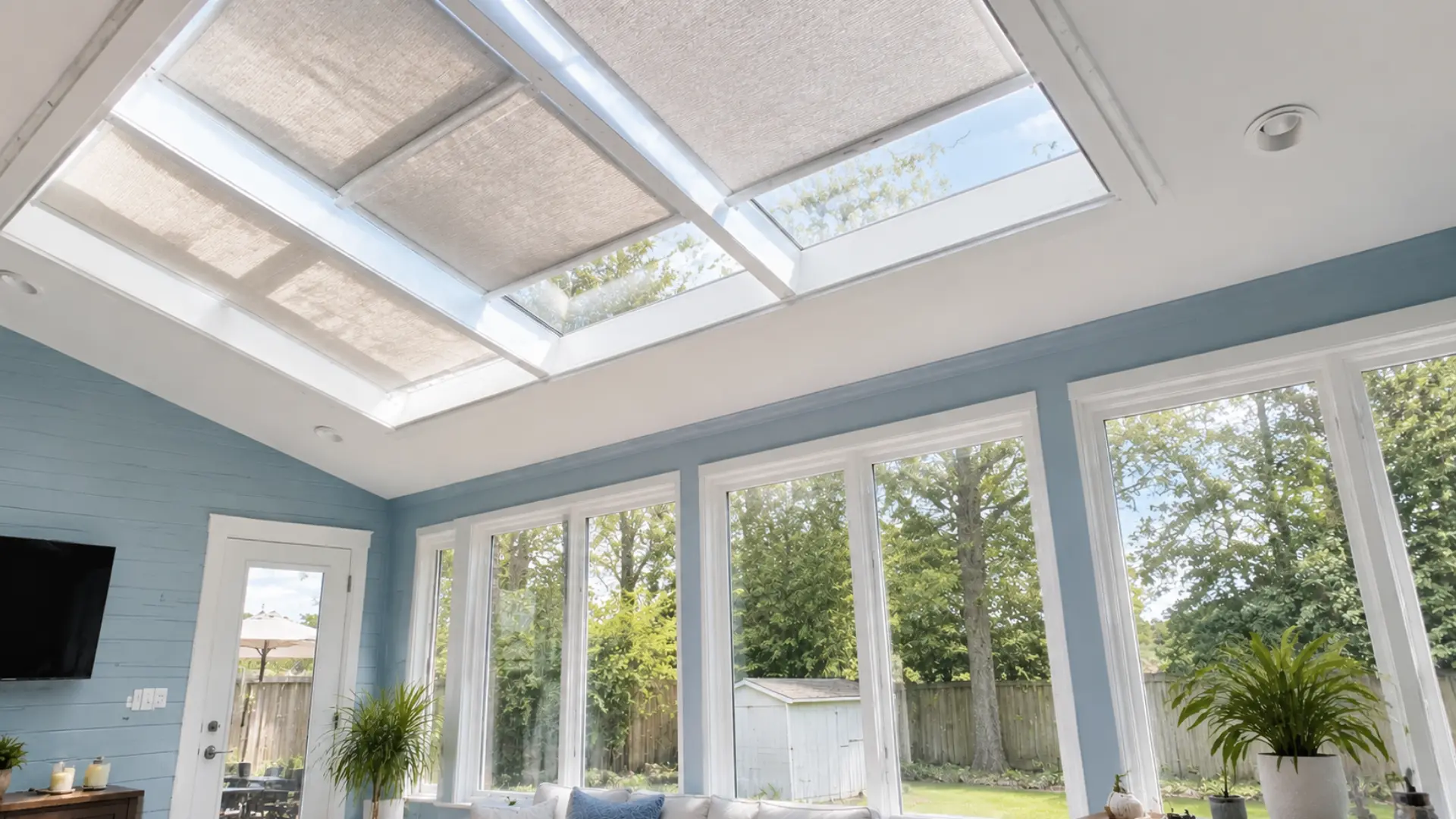
Fitted shades for overhead skylights help manage heat and glare on the sunniest days without blocking the benefit of overhead light entirely.
This addition suits sunrooms used for reading or work, where direct glare can make screens or pages hard to see.
Many shades can be adjusted or removed seasonally as needed.
42. Cozy Reading Corner With a Floor Lamp
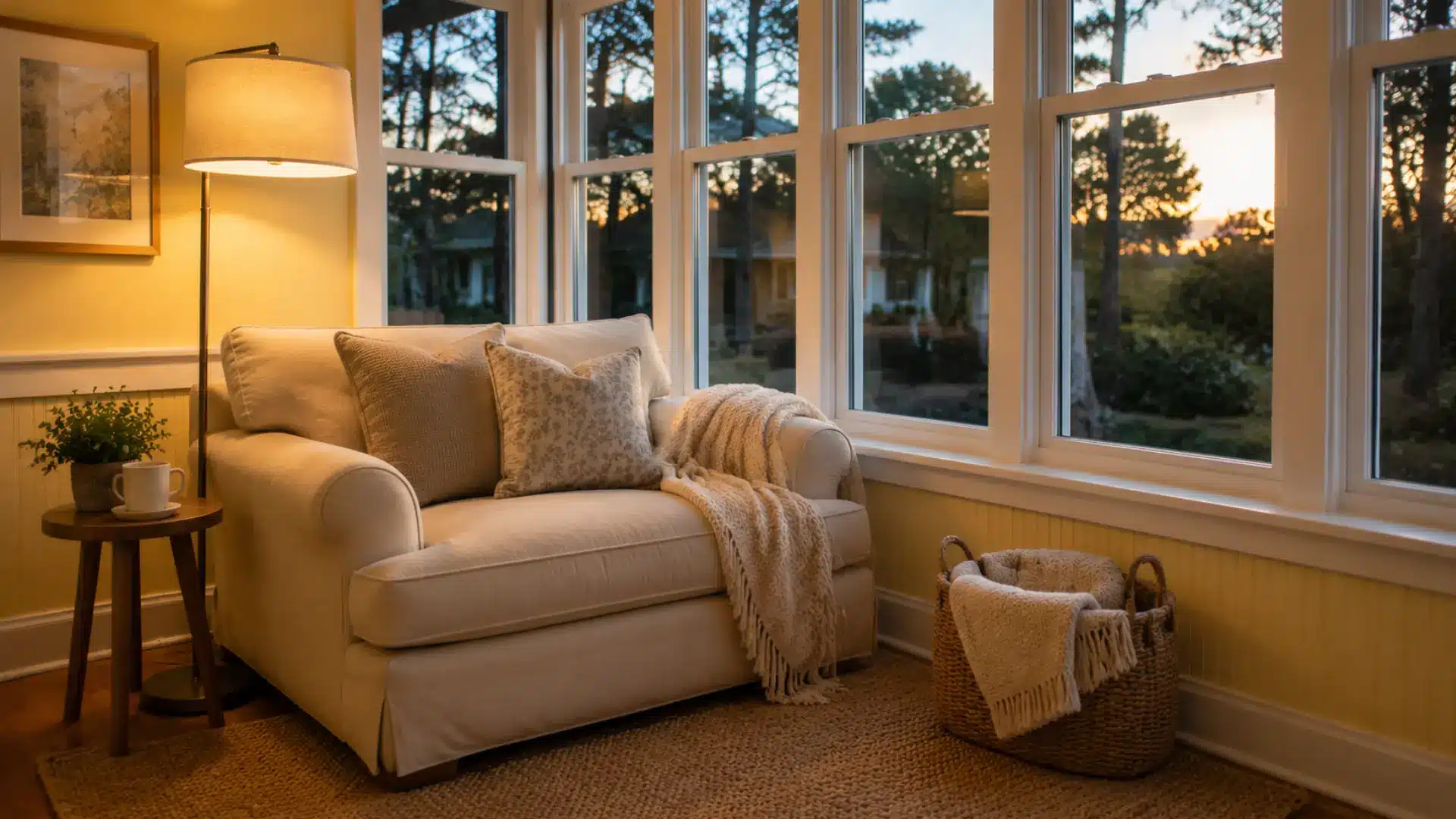
Pairing a single armchair with a floor lamp and a small side table creates a dedicated reading corner that requires little space.
A blanket basket nearby keeps throws accessible without cluttering the seating area.
This setup works especially well tucked beside a window with softer, filtered light.
43. Meditation Corner With a Floor Cushion
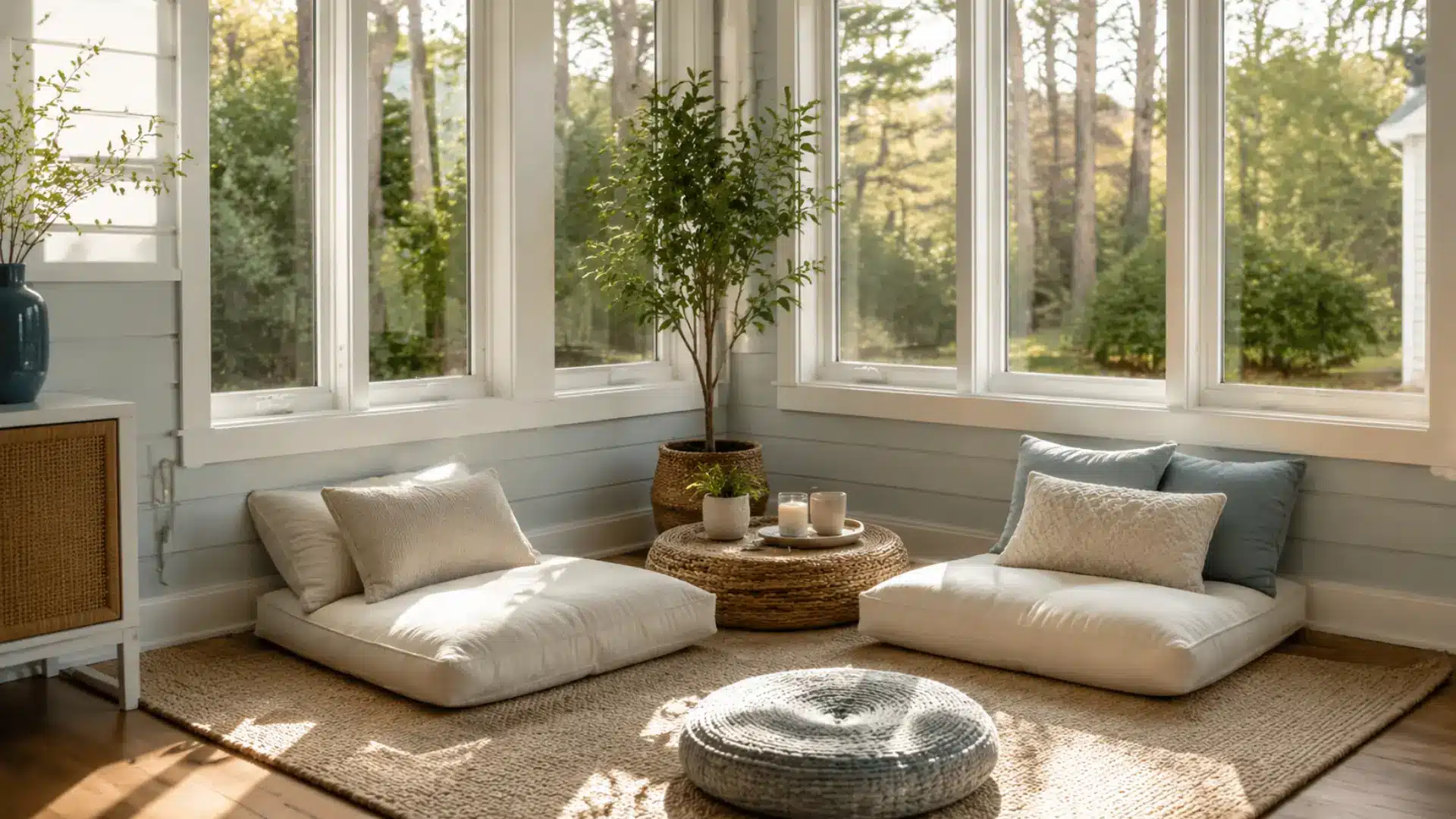
A low floor cushion paired with a small plant or simple wall hanging creates a quiet corner for meditation or quiet reflection.
Keeping this area free of extra furniture helps it feel separate from the rest of the sunroom’s activity.
Morning light in particular suits this kind of calm, low-key setup.
44. Bar Cart Nook
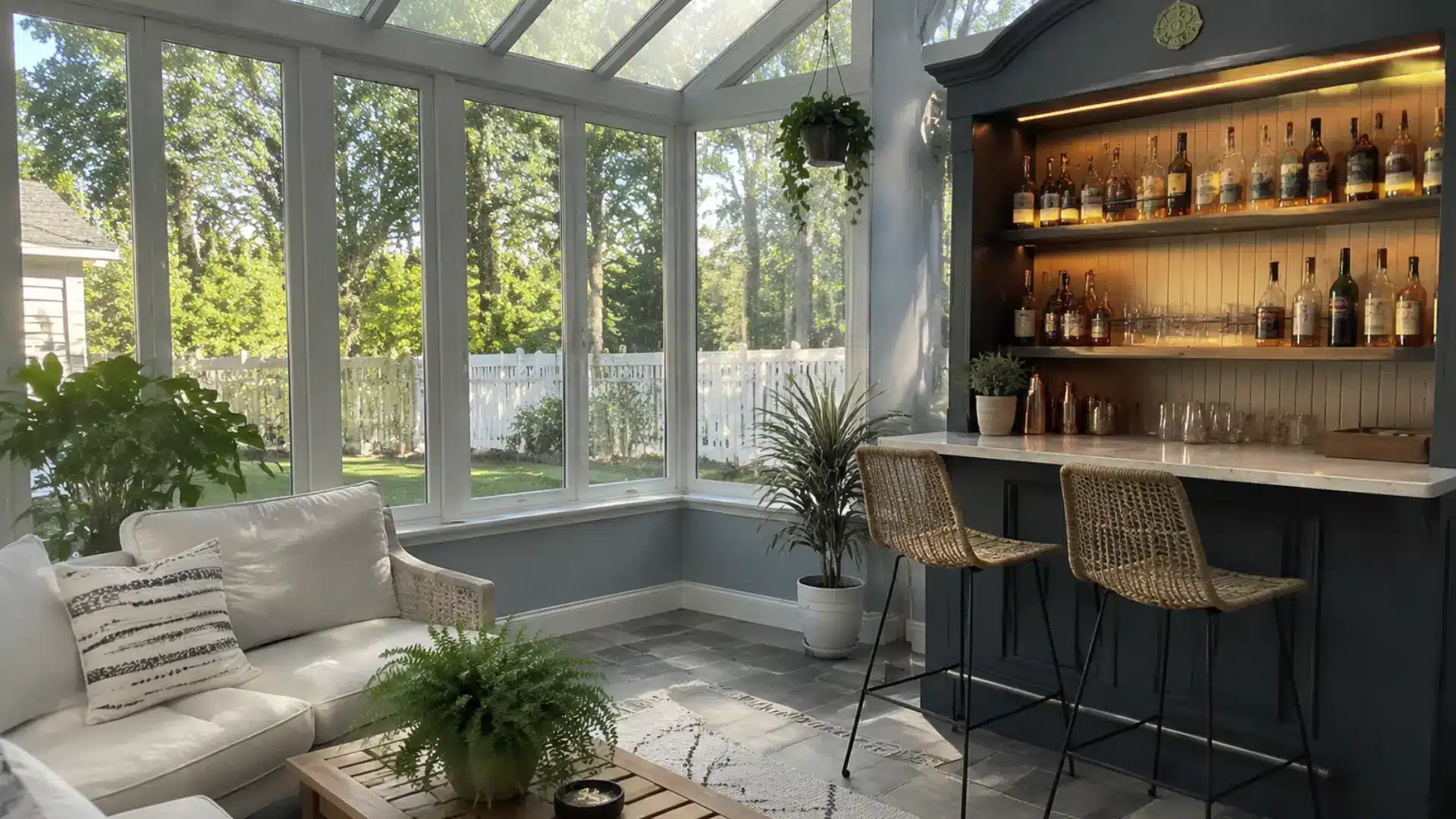
A small bar cart tucked into a corner gives a sunroom a spot for evening drinks without requiring a full built-in bar setup.
This works especially well in rooms with a view, turning the nook into a natural gathering spot during warmer evenings.
Choose a wheeled cart so it can be moved for cleaning or gatherings.
45. Gallery Wall of Botanical Prints
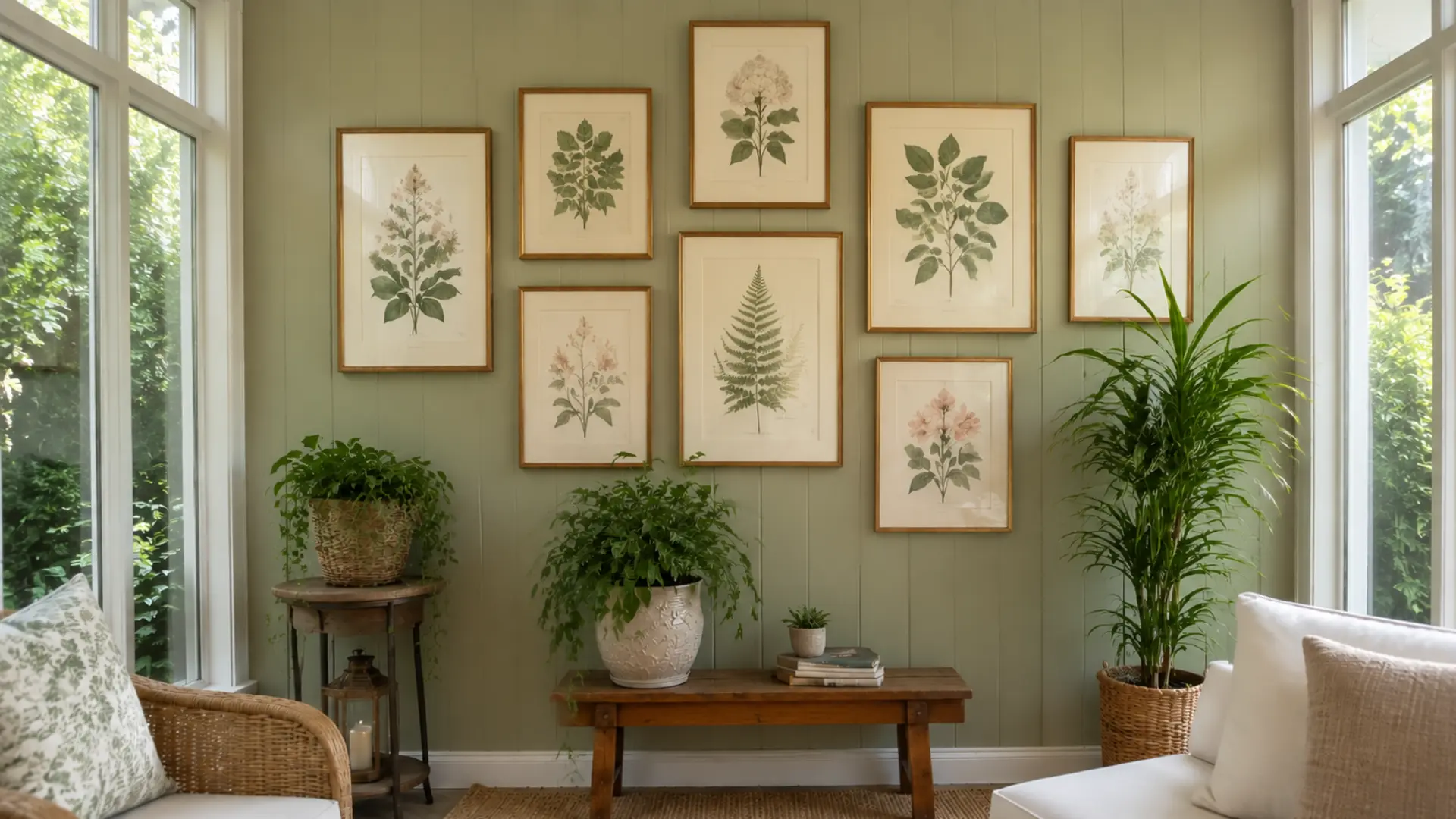
A cluster of framed botanical prints fills blank wall space between windows, adding personality without competing with the room’s natural light.
Mixing frame sizes and slightly varied print styles keeps the arrangement from feeling too formal.
This works well on the one wall in a sunroom that does not face outdoor views.
46. Catio-Style Pet Lounging Spot
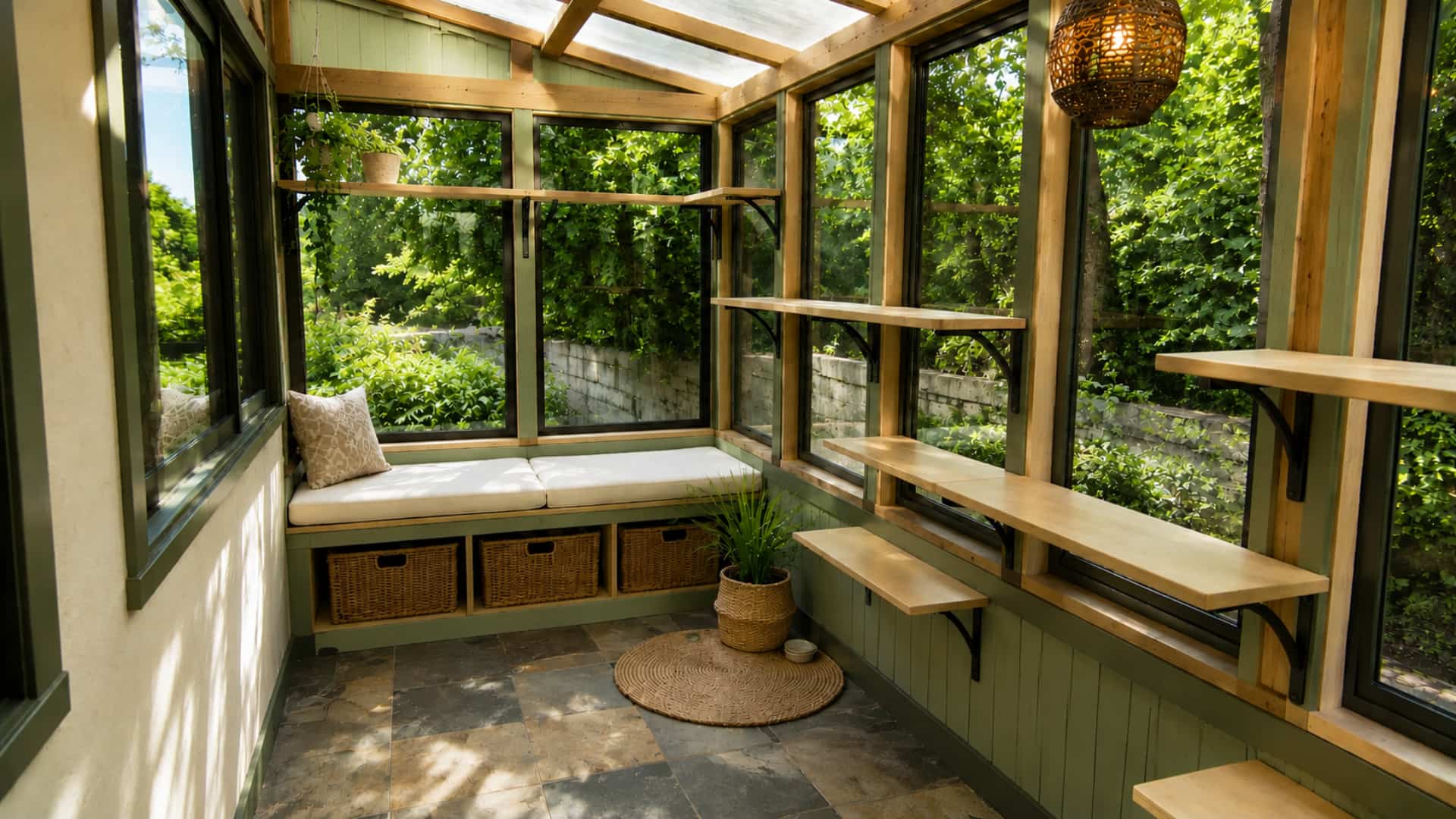
A dedicated perch or low platform near a window gives pets their own sunny spot to rest, separate from human seating areas.
This addition suits sunrooms that already double as family gathering spaces, giving pets a defined zone rather than free rein on the furniture. A washable cushion makes upkeep simple.
47. Suspended Platform Daybed Swing
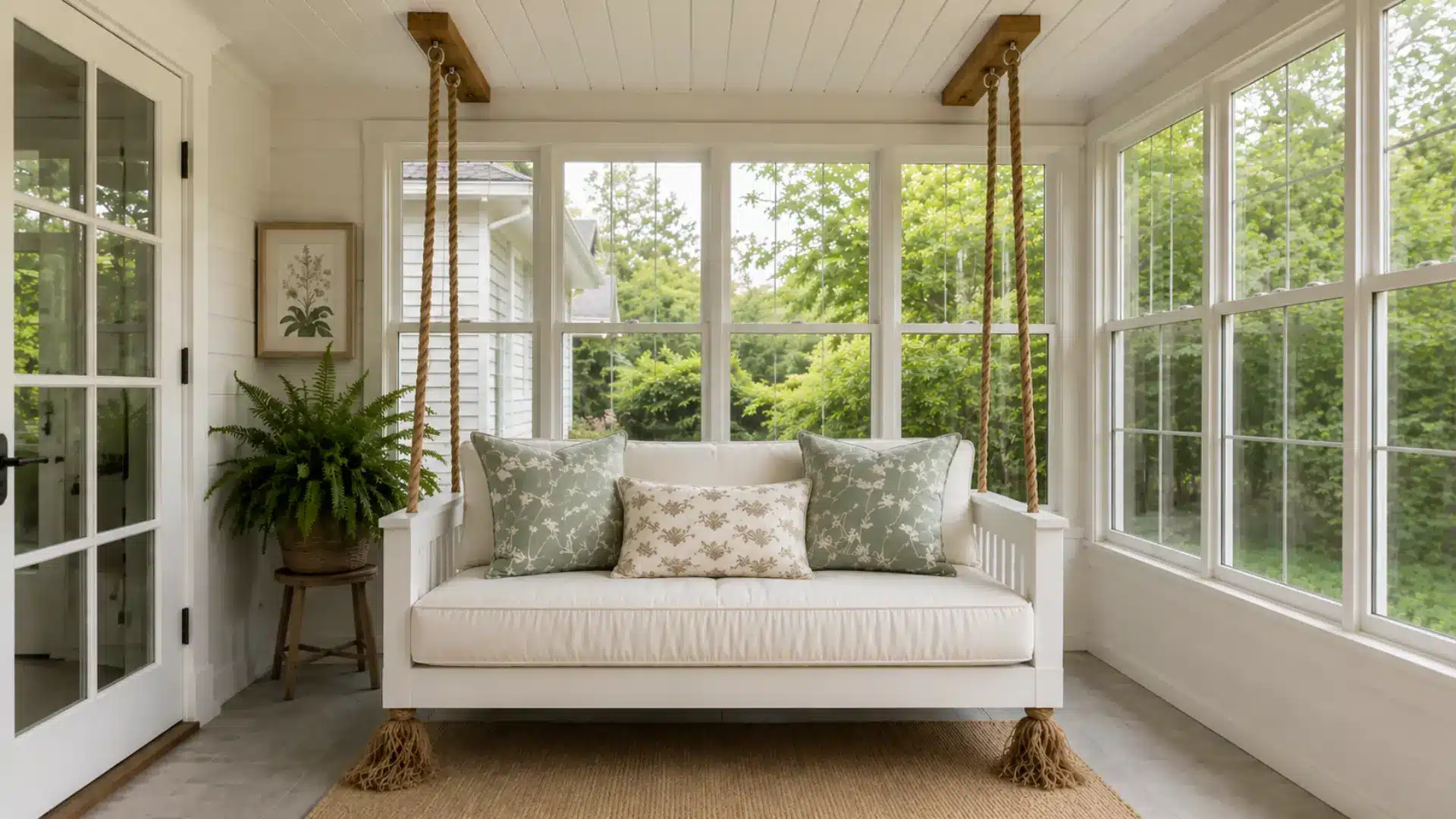
A wide platform daybed hung from ceiling chains gives a sunroom a lounging spot big enough for stretching out, going beyond what a hammock or hanging chair can offer.
The gentle sway adds a playful element while still reading as furniture rather than a novelty piece.
This works best in rooms with reinforced ceiling joists and enough clearance on all sides, since the swing needs room to move without hitting nearby walls or windows.
48. Freestanding Fireplace or Heater
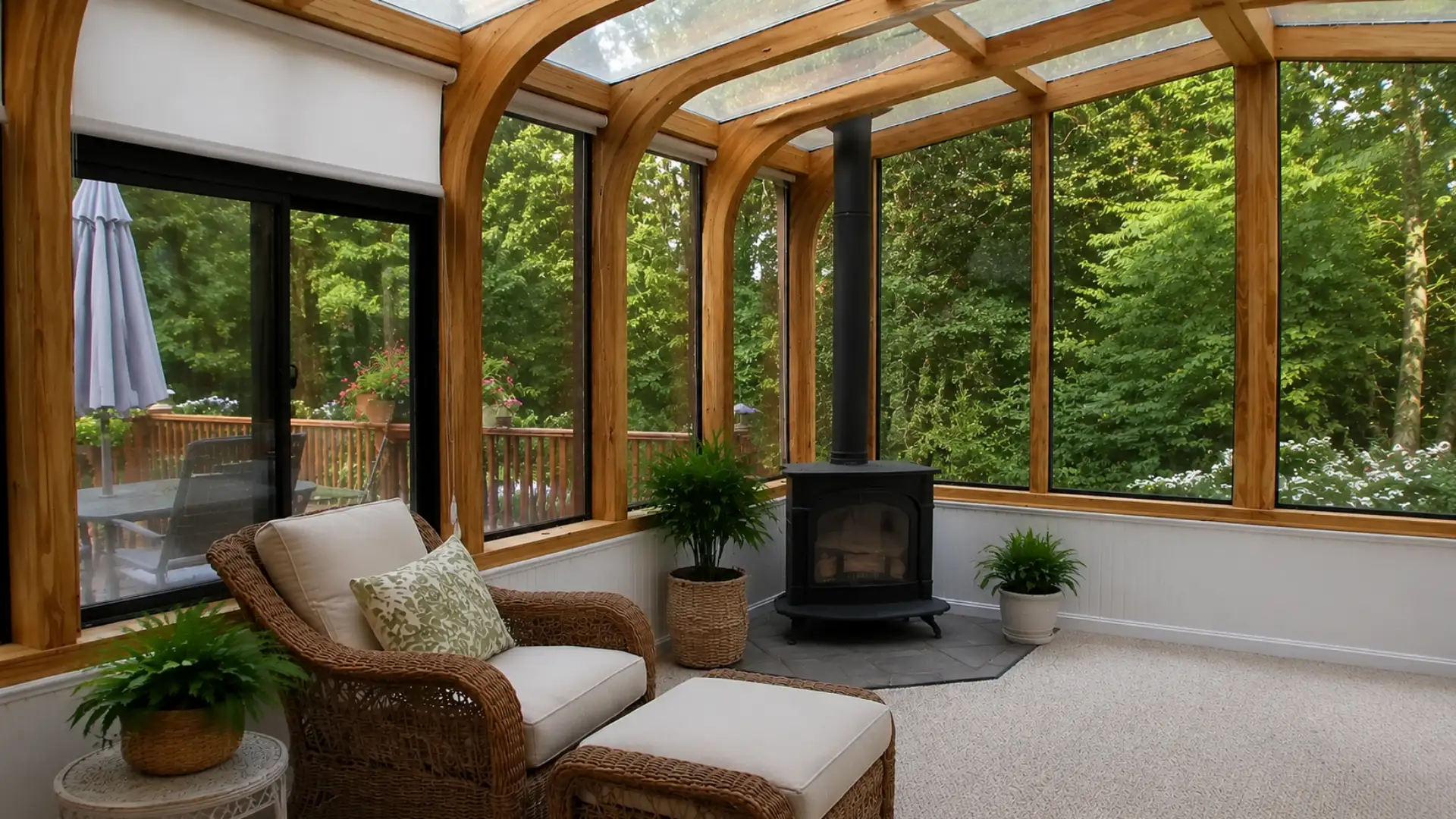
A freestanding fireplace or portable heater extends a sunroom’s usefulness into cooler months, turning what might otherwise be a warm-weather-only room into year-round living space.
This addition suits rooms with good ventilation and enough floor space to keep furniture at a safe distance.
Check local codes before installing any fuel-burning unit.
49. Panoramic Sliding Glass Doors
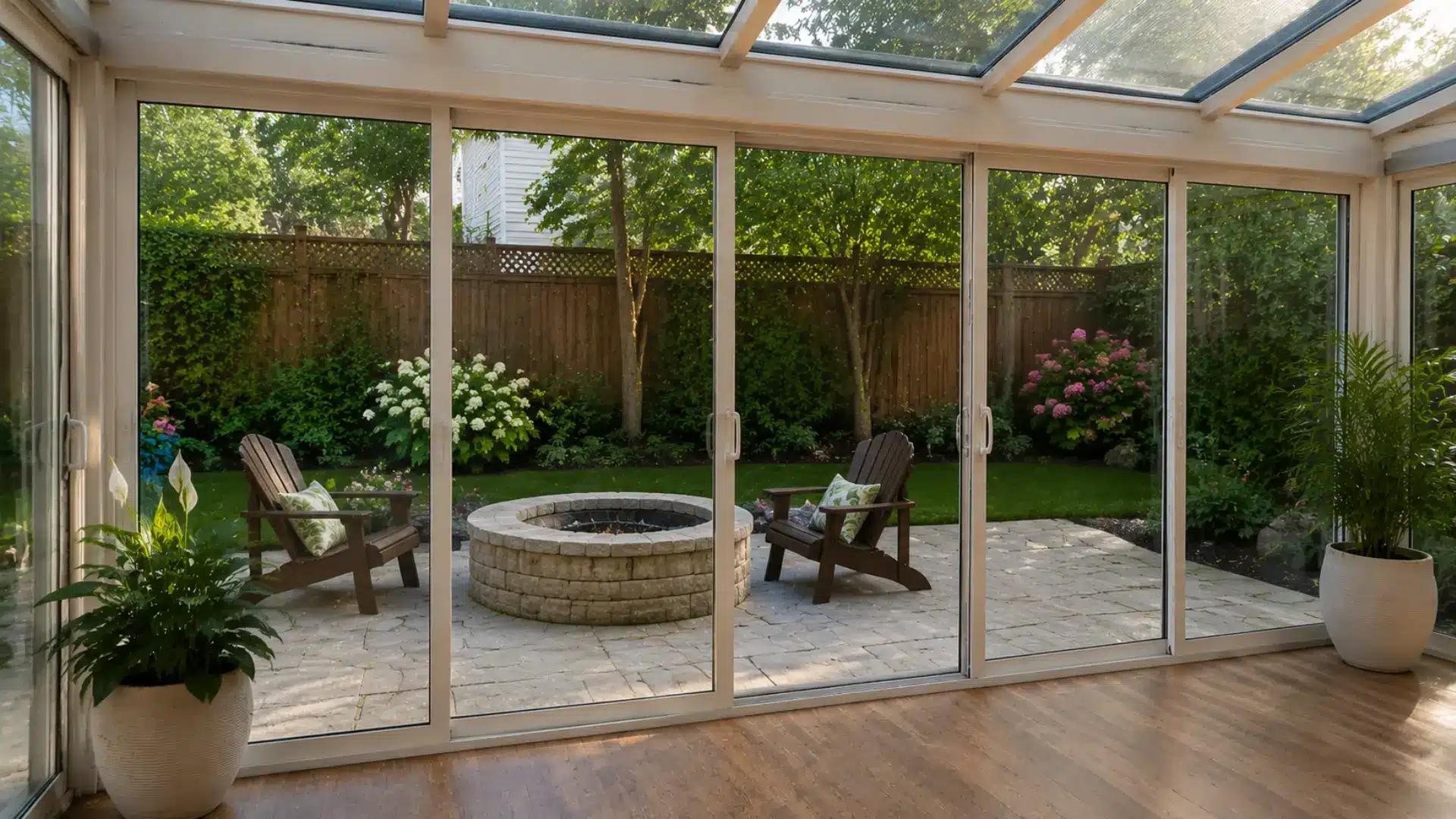
Wide sliding glass doors connect a sunroom’s indoor seating directly to an outdoor patio or deck, making the two spaces feel like one continuous area during gatherings.
This layout suits homes where entertaining regularly spills outside.
Closed, the doors still preserve the room’s bright, glass-heavy feel without blocking the outdoor view.
Common Mistakes that Make a Sunroom Less Comfortable
A little planning on light, materials, and airflow keeps a space comfortable year-round.
Avoiding these ensures the space remains comfortable and durable.
- Overcrowding the room with too much bulky furniture leaves little space to move or relax.
- Skipping fade-resistant fabrics and flooring leads to faster wear from daily sun exposure.
- Hanging heavy, opaque curtains blocks the natural light a sunroom is meant to showcase.
- Ignoring ventilation or airflow makes the room uncomfortably hot during peak sun hours.
- Choosing plants that need low light causes them to struggle in a naturally bright room.
End Note!
Choosing a sunroom style comes down to how the space gets used and how much sun it takes on through the year.
A room built for quiet mornings needs a different setup than one meant for dinner parties or plant collections.
Mixing a few sunroom ideas together usually works better than committing to just one.
Try pairing bold flooring with a statement fabric, then balance strong colors with natural fiber textures. Leave room to adjust the space as the seasons shift.
Small swaps like new cushions or a rotated plant collection keep the room feeling fresh without a full overhaul.
Drop in the comments below which idea you like the most and are thinking of implementing!
Frequently Asked Questions (FAQ’s)
What is the Ideal Direction For a Sunroom to Face?
South-facing allows consistent light; east-facing offers gentle morning sun and less afternoon heat.
What is the Difference Between a Sunroom and a Conservatory?
A sunroom has an insulated roof, while a conservatory usually has a glass or polycarbonate roof with more glazing.
Do Sunrooms Need Insulation?
Yes, insulated walls, floors, and roofing keep a sunroom comfortable year-round, not just in mild weather.