
One day, your home is fine, and the next, you’re swatting at a tiny swarm that seemed to appear out of nowhere.
Frustrating doesn’t even begin to cover it.
But before you spiral, know that this is actually one of the most solvable home nuisances out there.
Flies don’t just appear randomly. They’re almost always pointing you toward a hidden breeding source nearby.
Once you know what you’re dealing with, the fix comes faster than you’d expect. Let’s figure out exactly what’s going on and get your home back.
Why Tiny Flies Seem to Appear Overnight?
One day, there are none, and the next, your kitchen feels like a different ecosystem. What’s actually happening is that by the time you spot adult flies, the breeding cycle is already well underway.
Most tiny flies reproduce rapidly, going from egg to adult in just days under the right conditions.
And those right conditions? They’re almost always hidden: inside a drain, beneath a houseplant, behind a trash can.
Swatting the adults only addresses what’s visible.
The source keeps producing more. Understanding where gnats lay eggs is what makes solving this actually possible.
How to Identify the Tiny Flies Taking Over Your Home?
Not all tiny flies are the same, and telling them apart is honestly half the battle. Fruit flies and fungus gnats in particular are easy to mix up, and telling them apart changes the fix entirely.
Here’s a side-by-side look at the most common culprits so you can spot yours quickly.
| Fly Type | Color | Size | Where You’ll Find Them |
|---|---|---|---|
| Fruit Flies | Tan to light brown with red eyes | 3 to 4 mm | Near produce, trash cans, recycling bins, or anywhere with fermenting residue |
| Fungus Gnats | Dark gray to black | 2 to 5 mm | Around houseplants and consistently damp or overwatered soil |
| Drain Flies | Gray to brown, dusty moth-like wings | 1.5 to 5 mm | Near bathroom sinks, shower drains, and slow or buildup-heavy pipes |
| Phorid Flies | Yellowish-brown to dark brown | 0.5 to 6 mm | Around hidden plumbing leaks, decaying matter, or drainage issues inside walls |
What’s Really Behind a Sudden Swarm of Tiny Flies?
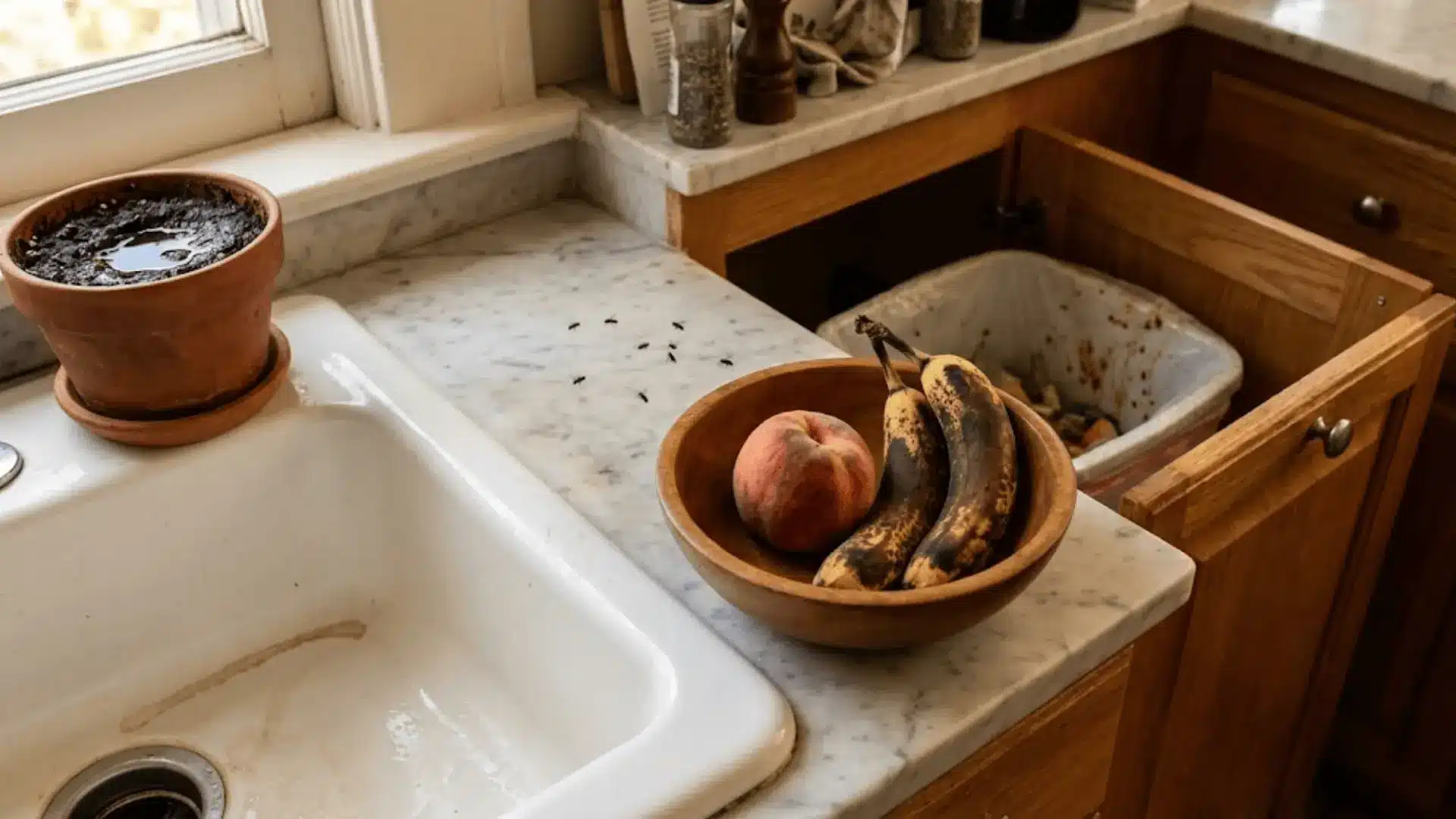
Flies don’t appear without reason. Behind every swarm is a condition your home has quietly been building, and once you spot the pattern, it becomes a lot easier to address at the root.
1. Hidden Moisture Issues
Leaky pipes, standing water, and AC drip pans create exactly the kind of damp, undisturbed environment flies need to breed. The tricky part is that these spots are often out of sight, tucked under sinks or behind appliances.
If you’re seeing flies but can’t find an obvious source, moisture hiding somewhere in your home is usually the first place worth investigating.
2. Overripe Produce or Forgotten Food
A single overripe peach or a small spill at the back of your pantry is enough to sustain a fruit fly population for days.
Garbage disposals are another overlooked source, since food residue clings to the interior and ferments over time. It doesn’t take much, which is why the kitchen is almost always ground zero.
3. Overwatered Houseplants
Constantly damp soil is a fungus gnat’s ideal breeding ground. When soil stays wet between waterings, it starts to break down organically, giving gnats both a place to lay eggs and a food source for larvae.
If your plants have been getting a little extra love lately, pulling back on watering can make a noticeable difference quickly.
4. Clogged or Dirty Drains
Biofilm, soap scum, and hair buildup inside drains create a layer of organic matter that drain flies find incredibly hospitable.
The flies aren’t coming from the water itself but from the grimy lining of your pipes. A drain that looks clean on the surface can still be harboring enough buildup to support a steady population.
5. Trash and Recycling Bins
Fermenting residue and sticky spills at the bottom of bins are easy to overlook, especially in recycling containers where rinsing doesn’t always happen thoroughly.
Even a thin layer of old juice or food residue is enough to attract flies and keep them coming back. Lining and regularly washing your bins goes further than most people expect.
6. Seasonal and Weather Triggers
Warm weather accelerates fly reproduction cycles significantly, which is why swarms seem to spike in summer almost overnight.
Rain can also drive flies indoors as they seek shelter and new breeding spots. If the timing of your swarm lines up with a weather shift, that context matters and can help you stay a step ahead next season.
How to Get Rid of Tiny Flies Fast: Fixes That Actually Work
Now that you know what you’re dealing with, it’s time to act. These fixes are straightforward, and most of them can be done today with what you already have at home.
If They’re Near Drains
Drains are one of the most common and most overlooked breeding spots. A quick flush isn’t always enough; you need to break down the buildup lining the pipe walls.
- Flush with boiling water to loosen organic buildup
- Follow up with an enzyme drain cleaner for a deeper clean
- Scrub pipe walls with a long-handled drain brush
If They’re Around Plants
The goal here is to make the soil inhospitable for larvae. Moisture control is everything.
- Let the soil dry out completely before watering again
- Remove the top inch of soil where eggs are typically laid
- Place yellow sticky traps near the base of the plant
If They’re In The Kitchen
The kitchen needs a thorough reset, not just a surface wipe. Removing the source is what stops the cycle.
- Discard any overripe or questionable produce immediately
- Deep-clean trash and recycling bins, including the bottom and lid
- Scrub the garbage disposal with a brush and degreasing cleaner
Whole-Home Reset
If the swarm feels widespread, a full home sweep helps you catch anything you might have missed.
- Vacuum up visible adults to reduce the active population quickly
- Clean under appliances where spills and moisture quietly accumulate
- Check hidden moisture spots like under-sink cabinets and AC drip pans
Keep Tiny Flies from Coming Back
Getting rid of flies is one thing; keeping them gone is another. These simple habits, when done consistently, make your home a lot less inviting for future swarms.
| Prevention Area | Action | Frequency |
|---|---|---|
| Plumbing and Leaks | Inspect and fix leaks promptly | Monthly |
| Ventilation | Improve airflow in bathrooms and kitchens | Ongoing |
| Produce Storage | Store fruits and vegetables in the fridge | Always |
| Drain Hygiene | Flush drains with enzyme cleaner | Weekly |
| Plant Watering | Water only when the top inch of soil is dry | As needed |
Final Thoughts
A sudden swarm of tiny home flies is frustrating, but it’s also very fixable once you know where to look.
Now that you have the full picture, from identifying the culprit to cutting off what’s feeding the cycle, keeping your home fly-free is mostly about staying consistent with a few small habits.
Small changes genuinely do add up.
If this guide helped you figure out what’s going on at home, drop a comment below and let us know which fly was the culprit. Someone else reading this might find your experience just as helpful.