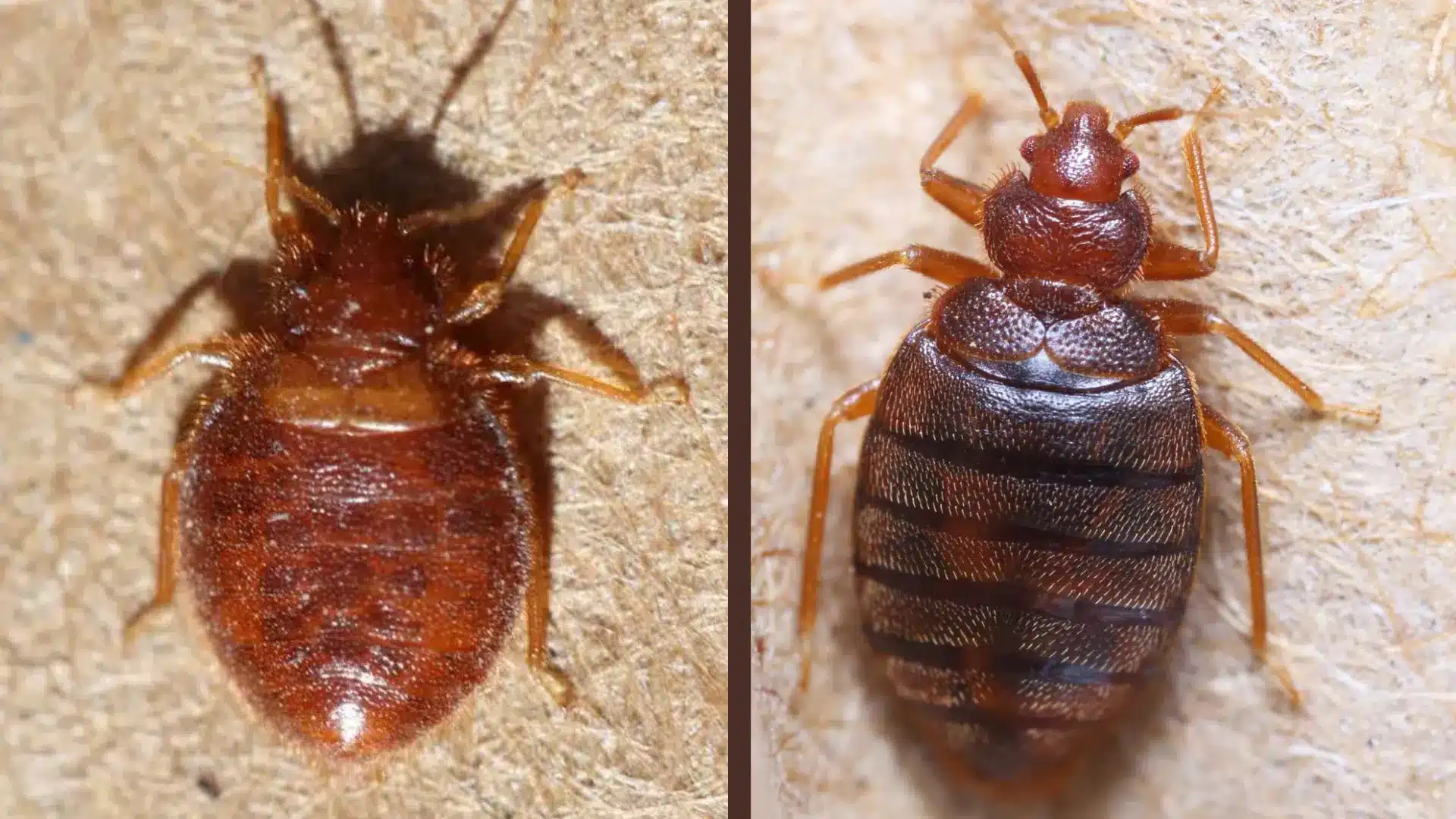
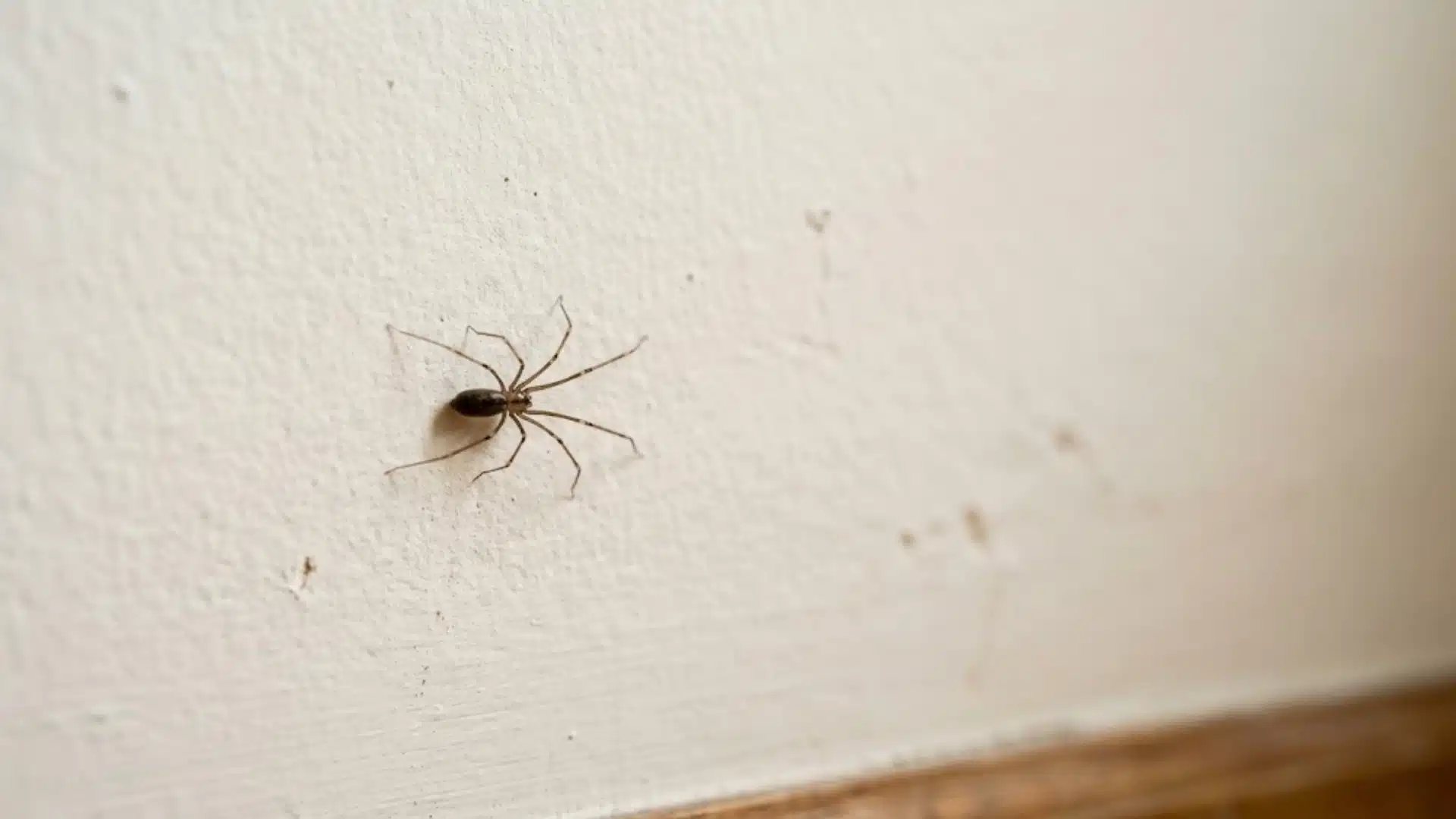
Spiders weaving webs in your corners? While most are harmless helpers keeping other pests at bay, finding eight-legged visitors in your living space isn’t exactly comforting.
I’ve walked into my basements with the same fear that a black widow or brown recluse might be hiding nearby.
Finding the right spider pest control approach is not just about removing what you see, but understanding what attracts spiders in the first place.
With the right steps, you can create a cleaner, calmer environment where spiders have fewer reasons to stay and settle in.
Why Do Spiders Enter Homes?
Spiders aren’t drawn to your home by accident. They follow their food source, mainly insects like flies, mosquitoes, and ants that have already made their way inside.
Beyond hunting grounds, spiders seek shelter from extreme weather and appreciate the consistent humidity found in basements, bathrooms, and closets.
Most household visitors are harmless species like common house spiders or daddy longlegs, content to stay hidden in corners.
However, you might encounter potentially dangerous species such as black widows or brown recluses, depending on your region.
Understanding what brings them indoors is your first step toward effective spider pest control and keeping your space comfortably web-free.
Common Types of House Spiders
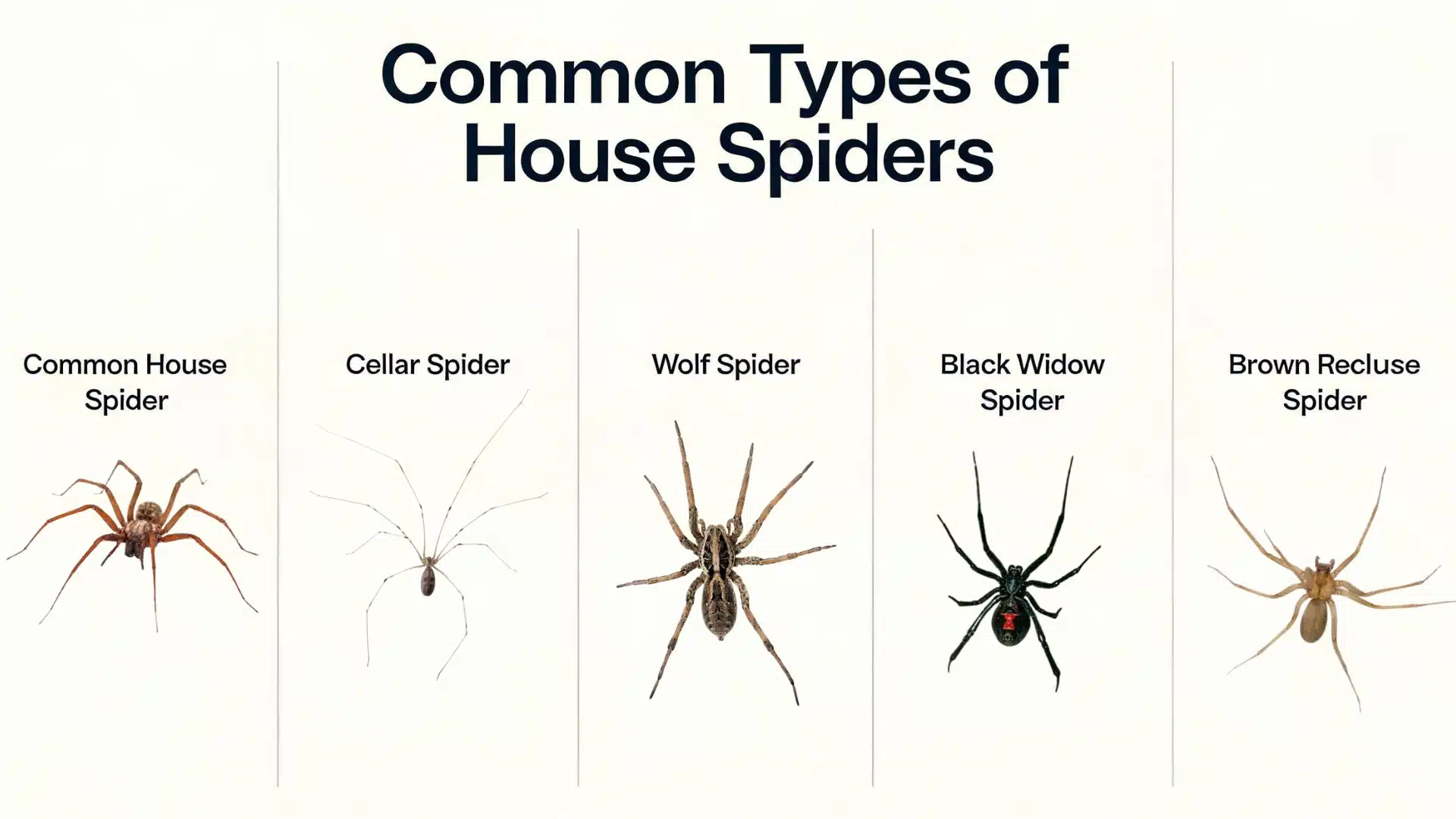
House spiders vary in appearance, behavior, and preferred hiding spots, but most enter homes in search of food and shelter.
- Common House Spider: Small brown spiders with rounded bodies that usually build tangled webs in corners, windows, basements, and other quiet areas of homes.
- Cellar Spider: Recognized by their extremely long, thin legs, these spiders prefer dark, damp places like basements, garages, and storage areas.
- Wolf Spider: Larger ground-dwelling spiders that do not build webs and are often found hiding under furniture, in cracks, or near outdoor entry points.
- Black Widow Spider: A venomous spider with a dark body and red marking that typically stays in undisturbed areas such as sheds, garages, and outdoor spaces.
- Brown Recluse Spider: A shy brown spider with a violin-shaped marking that hides in warm, dry, and rarely disturbed locations like closets and storage boxes.
Spider Pest Control Methods: Chemical vs Natural
For spider pest control, choose between quick chemical solutions or safe natural options. Each approach suits different household needs, spider severity, and comfort levels with products.
|
Method |
How It Works |
Pros |
Cons |
|---|---|---|---|
|
Chemical Sprays |
Kill on contact or create residual barriers at entry points |
Fast-acting; long-lasting protection |
Safety risks for pets/children; strong odors |
|
Essential Oil Repellents |
Scents like peppermint and citrus repel spiders |
Safe; pleasant fragrance; non-toxic |
Needs frequent reapplication; better for prevention |
|
Vinegar Sprays |
Acetic acid disrupts senses and destroys webs |
Inexpensive; readily available |
Temporary; strong smell |
|
Diatomaceous Earth |
Powder damages exoskeletons, causes dehydration |
Long-lasting, pet-safe options |
Slower results; ineffective when wet |
Best Spider Pest Control Products to Buy
Finding the right spider pest control product depends on your specific needs, from powerful barrier sprays to gentle natural repellents.
Here are the top-rated options that actually deliver results.
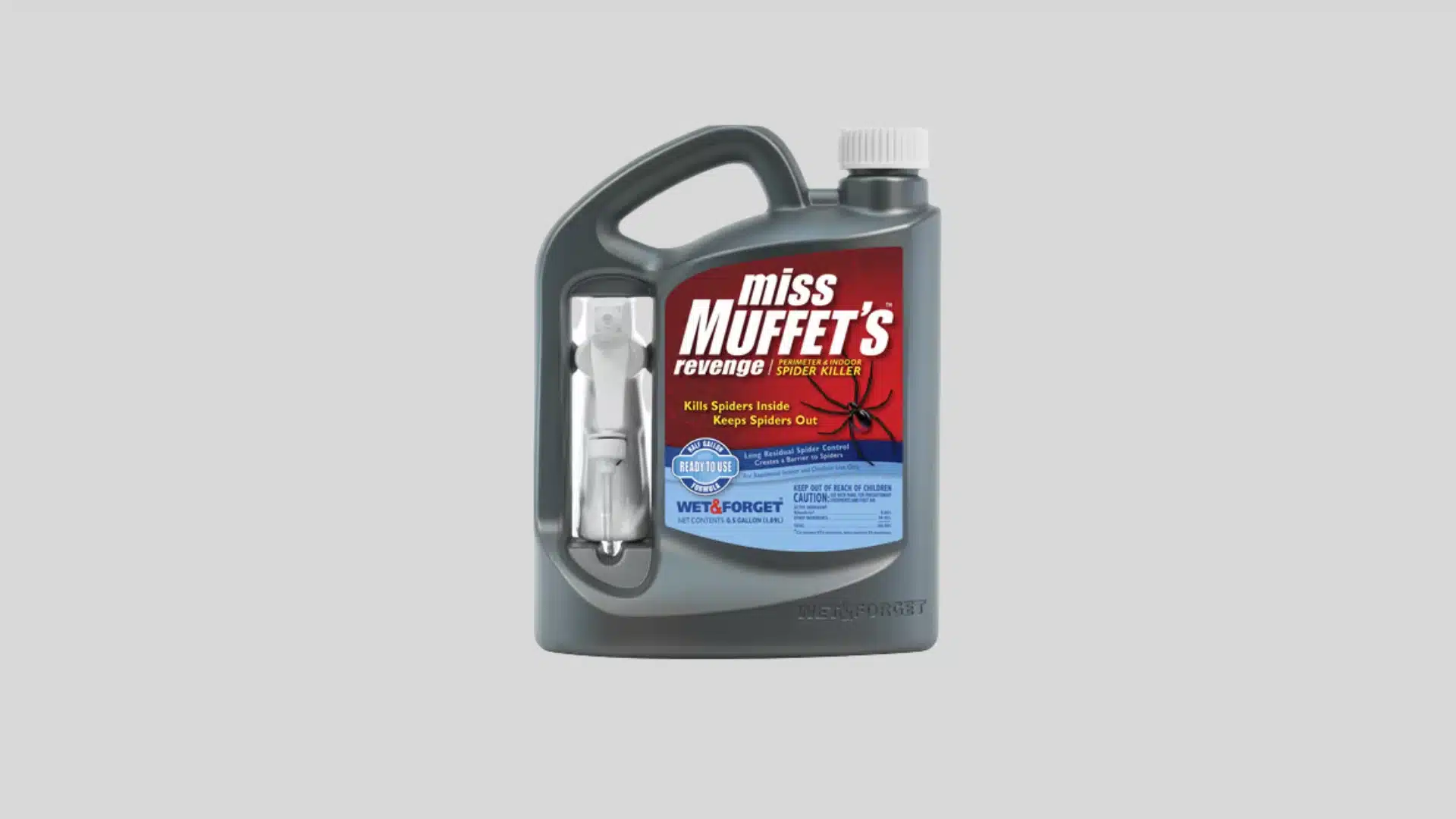
1. Wet & Forget Miss Muffet’s Revenge Indoor & Outdoor Spider Killer
Best for: Long-term protection with minimal reapplication
Shop Now: Miss Muffet’s Revenge on Amazon
A top-rated, long-lasting solution frequently recommended by pest-control experts.
This spray kills spiders on contact and creates a protective barrier lasting up to 12 months, making it ideal for indoor use and exterior applications like eaves, siding, and foundations.
Homeowners appreciate the extended coverage that reduces the need for frequent treatments throughout the year.
2. Ortho Home Defense Insect Killer with Wand
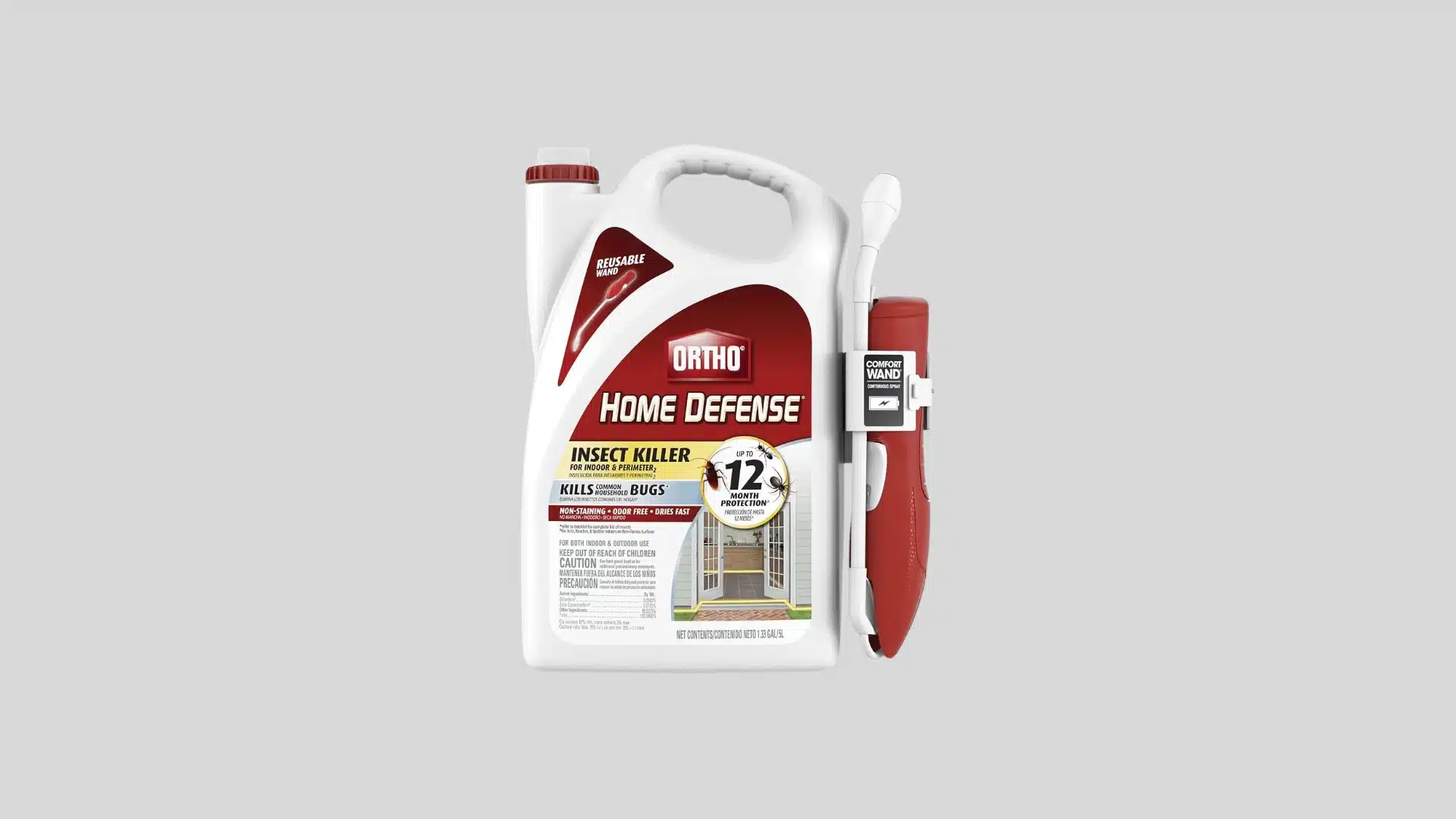
Best for: Preventing spiders from entering your home
Shop Now: Ortho Home Defense on Amazon
One of the most popular perimeter sprays in the U.S. targets spiders along with ants, roaches, and other crawling insects.
The built-in wand applicator makes treating baseboards, door frames, garages, and exterior foundations effortless.
This trusted formula creates a protective barrier around your entire home, stopping pests before they cross your threshold.
3. Zevo Ant, Roach & Spider Insect Killer Spray
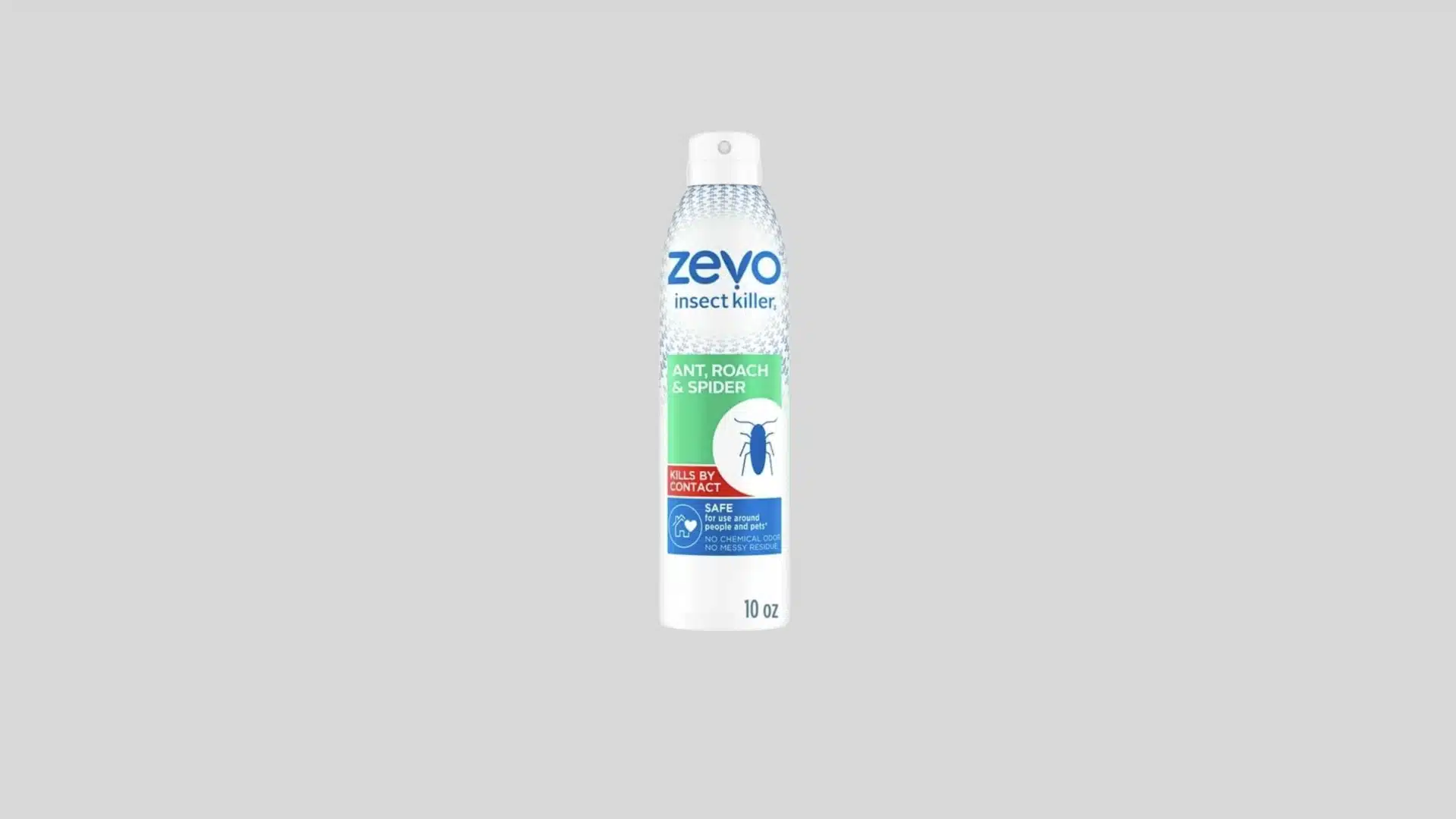
Best for: Kitchens, bedrooms, and homes avoiding harsh chemicals
Shop Now: Zevo Spider Killer on Amazon
Powered by plant-based active ingredients, Zevo offers a natural alternative without sacrificing effectiveness.
It works well for light to moderate spider activity and is safer for households with pets and children once dry.
The formula targets spiders while staying family-friendly, making it perfect for high-traffic living spaces where safety is paramount.
4. Nisus Web Out Cobweb Eliminator & Spider Repellent
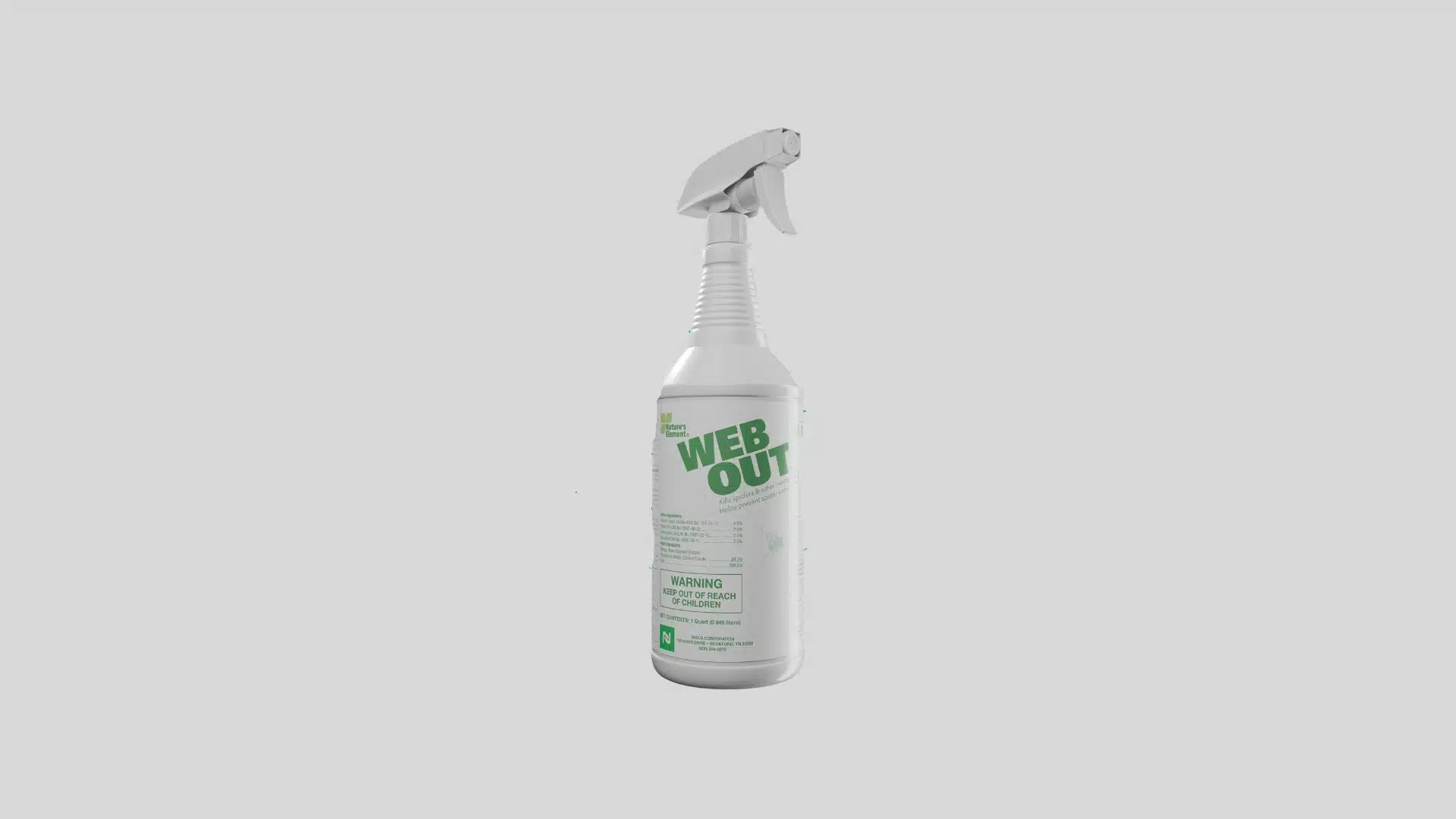
Best for: Visible webs and ongoing spider cleanup
Shop Now: Nisus Web Out on Amazon
Designed specifically to break down spider webs while leaving behind a light repellent residue.
This companion product excels at regular maintenance in corners, ceilings, basements, and outdoor structures.
The dual-action formula eliminates existing webs on contact and discourages spiders from rebuilding in the same spots, keeping your spaces consistently clean.
5. TERRO Spider and Ant Killer Aerosol Spray
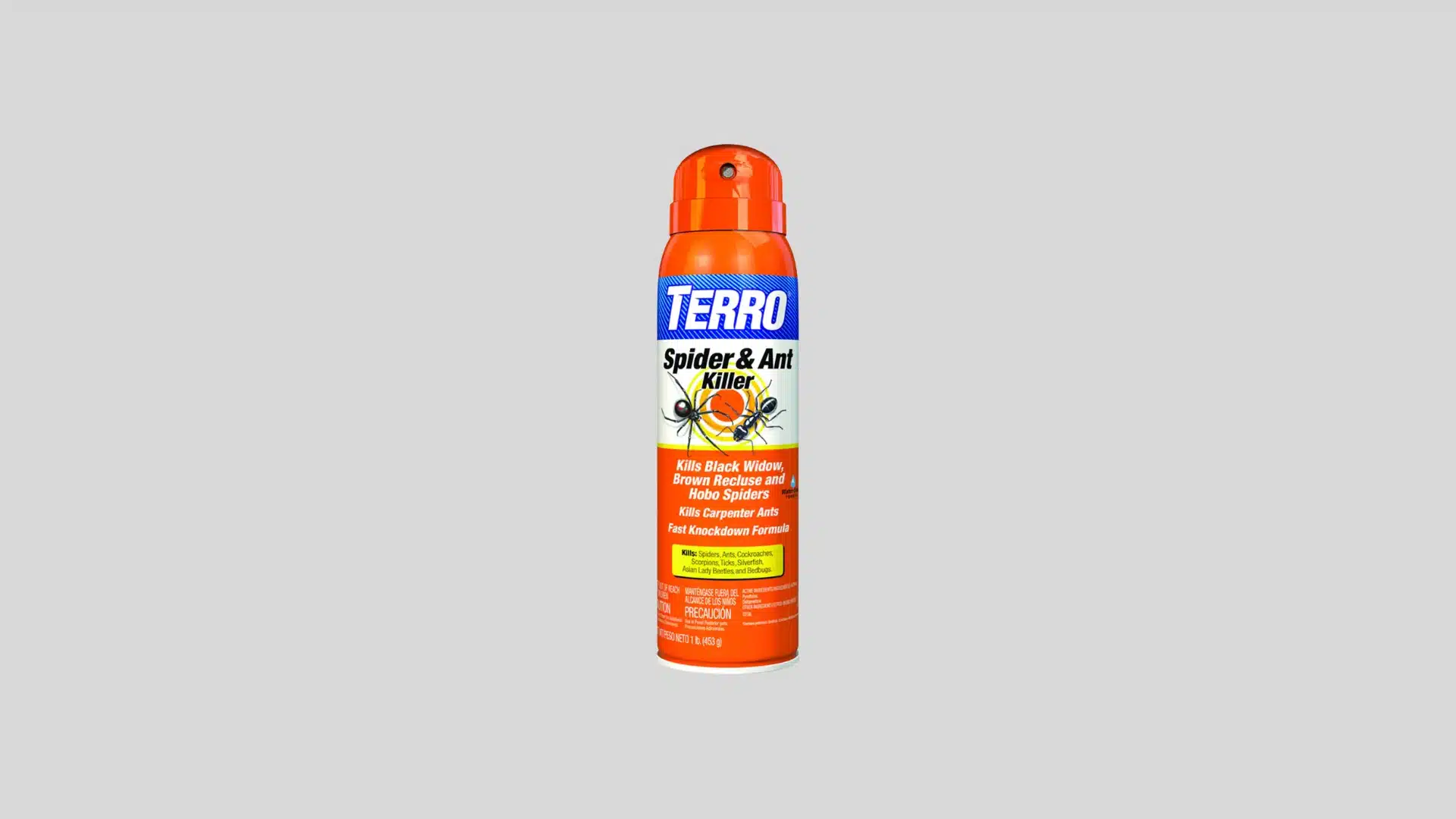
Best for: Quick spider removal in indoor and outdoor areas with visible infestations
Shop Now: TERRO Spider and Ant Killer Aerosol Spray on Amazon
Designed for fast action against spiders and other crawling pests, TERRO Spider and Ant Killer Aerosol Spray helps eliminate unwanted pests on contact.
Its easy-to-use aerosol format makes it convenient for treating cracks, corners, entry points, and other areas where spiders commonly hide.
The spray is a practical choice for homeowners looking for a quick solution to manage spider activity while keeping common problem areas under control.
Sticky Traps & Physical Barriers for Spider Pest Control
Sticky traps offer a simple, chemical-free way to monitor and gradually reduce spider populations.
These adhesive boards capture spiders as they walk across surfaces, making them ideal for tracking activity levels and catching wandering spiders before they settle in.
Place traps in high-traffic spider zones like dark corners, along baseboards, behind furniture, near windows and doors, and in basements or garages where spiders typically hide.
Check traps weekly and replace them when full or dusty.
While sticky traps won’t eliminate an entire infestation alone, they’re excellent for ongoing monitoring and work beautifully alongside other spider pest control methods for comprehensive protection.
Natural Repellents & DIY Solutions: Eco-Friendly Spider Control
Natural repellents and strategic landscaping offer effective alternatives without harsh chemicals, perfect for eco-conscious households.
The same base ingredients show up across most natural pest repellent recipes for the home, just mixed in different ratios depending on the target bug.
DIY Spray Solutions
Create your own spider deterrents using common household ingredients that are safe, affordable, and surprisingly effective at keeping spiders at bay.
- Vinegar and Water Mixture: Mix equal parts white vinegar and water in a spray bottle; spray entry points and surfaces where spiders frequent.
- Essential Oil Blends: Combine 10-15 drops of peppermint, lemon, or eucalyptus oil with water; spiders dislike these strong scents and will avoid treated areas.
- Saltwater Spray: Dissolve salt in warm water for a natural contact killer that dehydrates spiders on impact.
- Soap and Water Solution: A few drops of dish soap mixed with water create a spray that suffocates spiders when applied directly.
Spider-Repellent Plants
Turn your landscaping into a natural barrier by incorporating plants that spiders naturally avoid around vulnerable entry points.
- Mint Varieties: Plant spearmint or peppermint near doors and windows; their strong aroma creates an invisible barrier spiders won’t cross.
- Lavender: Beautiful and fragrant to humans, but its scent repels spiders while attracting beneficial pollinators to your garden.
- Rosemary: This hardy herb thrives in containers or garden beds near entryways, offering culinary benefits and spider deterrence.
- Citronella: Known for repelling mosquitoes, citronella also keeps spiders away when planted strategically around outdoor living spaces.
Integrated Spider Prevention Strategies
The most effective spider pest control combines multiple strategies working together to create an unwelcoming environment.
|
Strategy |
What to Do |
Why It Works |
|---|---|---|
|
Seal Entry Points |
Caulk cracks around windows, doors, pipes; install weatherstripping; repair screens |
Blocks access routes before spiders enter your home |
|
Declutter & Clean |
Remove clutter; vacuum weekly; clear webs immediately |
Eliminates hiding spots and disrupts spider habitats |
|
Control Food Sources |
Address ant and fly problems; fix leaks; store food properly |
Removes prey insects; spiders leave when food is scarce |
Most of these same fixes- door sweeps, sealed gaps, cleared clutter-double as a season-by-season checklist for keeping the yard itself less inviting to pests in general, not just spiders.
How Seasonal Changes Affect Spider Activity?
Late summer and early fall are peak spider seasons when they actively seek indoor shelter from cooling temperatures, making this the critical window for treatment.
Apply perimeter sprays in August and September to intercept spiders before they move inside.
For year-round protection, establish a quarterly treatment schedule treating your home’s exterior every three months.
Combine seasonal sprays with monthly interior spot treatments in high-activity zones like basements and garages.
This proactive approach maintains continuous barriers, keeping spider populations low throughout the year.
Do You Need Professional Spider Pest Control?
Store-bought sprays and traps handle most spider situations. It’s worth calling a licensed pest control company when:
- You’ve confirmed a black widow or brown recluse indoors.
- Webs and egg sacs keep reappearing in the same spots despite regular treatment.
- The activity is concentrated somewhere hard to reach safely, like a high attic or crawl space.
- A noticeable jump in flies, gnats, or other small insects, since spiders follow their food supply indoors.
- Molted, papery spider skins in closets or basements, which mean a spider has been settled long enough to grow.
Professional treatment costs vary by region and how the provider structures its pricing, and getting a feel for typical service pricing before you call helps you spot a reasonable quote from an inflated one.
Safety Tips When Using Spider Control Products
Using spider pest control products safely protects your household while effectively eliminating unwanted guests.
Follow these essential guidelines for a worry-free application.
- Read all product labels carefully: Follow dosage and application instructions exactly as directed; never mix products or exceed recommended amounts.
- Keep family and pets away: Restrict access to treated areas until sprays have completely dried, typically for several hours.
- Wear protective gear: Use gloves and masks when applying chemical sprays indoors to avoid skin contact and inhalation.
- Ventilate treated spaces: Open windows and doors during and after application to improve air circulation and reduce lingering fumes.
- Store products securely: Keep all pest control products in original containers, locked away from children and pets in cool, dry locations.
Smart application practices ensure your spider pest control efforts remain effective without compromising the safety of those you care about most.
Conclusion
Creating a spider-free home doesn’t require endless worry or constant vigilance.
With the right spider pest control approach, from powerful barrier sprays to natural deterrents and smart prevention habits, you can reclaim every corner of your space.
Mix and match methods that suit your lifestyle, stay consistent with seasonal treatments, and watch those eight-legged visitors disappear for good.
Have questions or favorite products that worked wonders for you? Drop a comment below and share your spider-fighting success stories.
Frequently Asked Questions
Do Ultrasonic Pest Repellers Work On Spiders?
Ultrasonic pest repellers have limited evidence for controlling spiders. They may not provide reliable results, so combine prevention methods like sealing gaps and removing webs.
Does Turning Off Outdoor Lights Help Keep Spiders Away?
Turning off outdoor lights can reduce insects near your home, which may lower spider activity since fewer insects means less available food for spiders.
What Should I Do If I’m Bitten By a Spider?
Clean the bite area with soap and water, apply a cold compress, and seek medical advice if symptoms worsen or the spider may be dangerous.