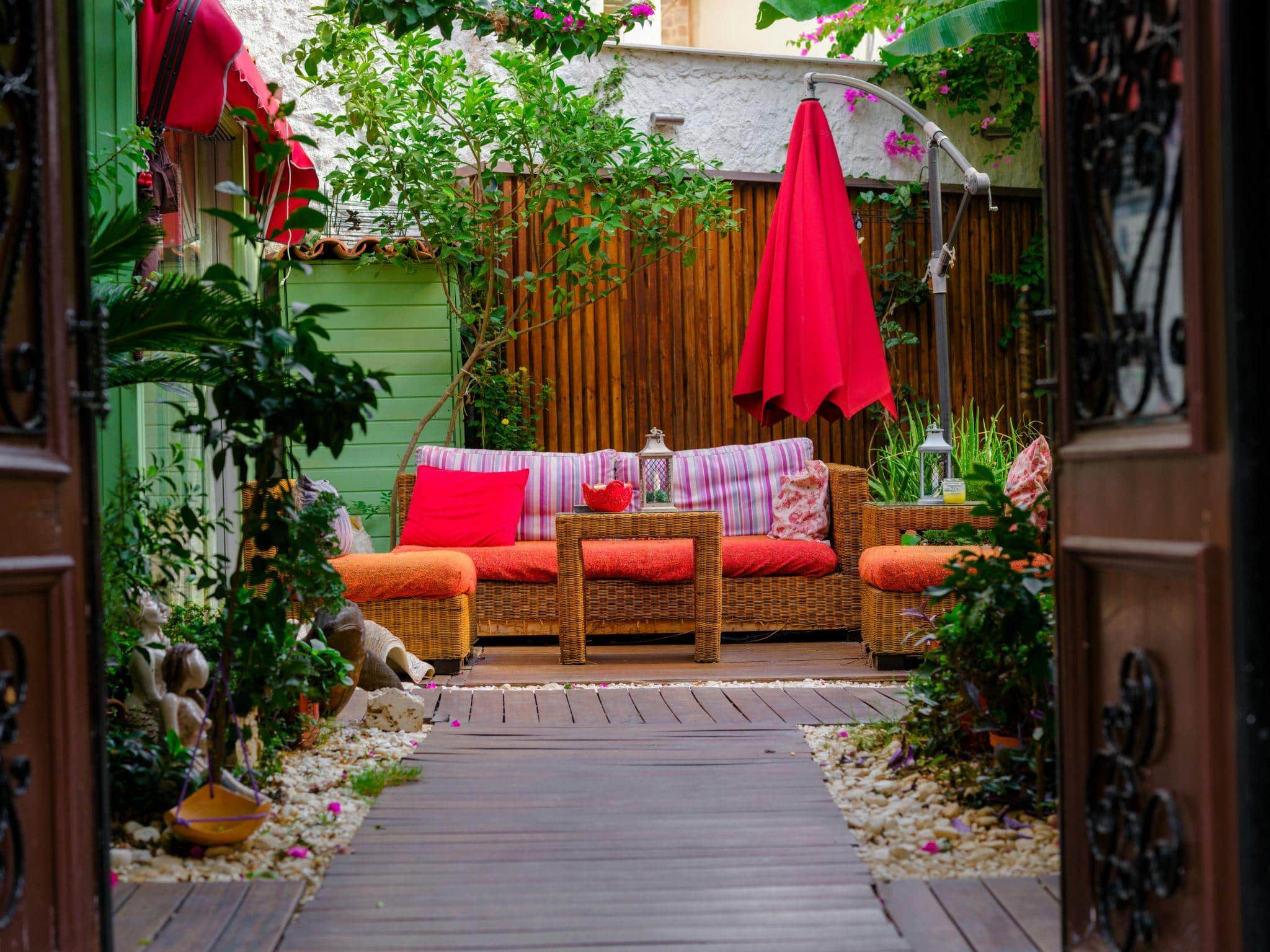
I didn’t go looking for calm, I just needed somewhere to think.
I ended up standing in front of a Japanese rock garden, not knowing why I stayed so long. Nothing moved. Nothing needed fixing. And somehow, that quiet space did more for me than hours of noise ever could. That moment stuck.
If you’ve ever wanted a space that gives you room to breathe, without needing too much space at all, you’ll want to keep reading.
This blog will show you what a Japanese rock garden really is, how it works, and why it’s more than just rocks in sand.
You’ll learn how to bring that same quiet into your own space. And you won’t need much to get started.
Why Japanese Rock Gardens Still Belong Today
In a world that’s always rushing, quiet spaces feel rare. That’s part of why Japanese rock gardens still feel important today. They aren’t just decorations; they’re spaces made with thought and care.
Their design isn’t about filling space. It’s about creating space; space to slow down, focus, or just breathe.
These gardens fit easily into modern homes, even small ones. You don’t need a lot of room to build one. Just a simple corner, a few rocks, and gravel. That’s it. And yet, it can shift the way a space feels.
Unlike regular rock gardens or gravel yards, Japanese rock gardens aren’t meant to just sit there and look nice.
They’re built with meaning. Every part has a purpose. They’re not loud, but they still speak. In a time when everything feels full and fast, these gardens offer something different: space that feels calm, clear, and useful.
The History Behind Japanese Rock Gardens
Japanese rock gardens, also called karesansui or dry landscape gardens, began in Buddhist temples many centuries ago.
They were not made to impress but to create a space for stillness. Monks used them to help focus during meditation. The gravel was shaped to look like water, and the rocks stood for islands or mountains. Every part had meaning.
These gardens first appeared during the Muromachi period in Japan, around the 14th century, when Zen Buddhism was growing.
Zen monks built them as tools to support mindfulness, not as decoration. The layout helped them clear their thoughts and stay present.
Over time, these temple gardens shaped what we now call Zen gardens. They were designed to guide attention and support inner calm.
Today, the same ideas still hold value. The simple lines and thoughtful spaces continue to offer a quiet place to think, even in the middle of modern life.
Cultural Meaning and Philosophy of Zen Gardens
Zen gardens aren’t built to copy nature. They’re built to reflect its ideas. That’s why they don’t have bright flowers, flowing water, or lots of plants.
Instead, they use only what’s needed: gravel, rocks, and maybe some moss. These pieces stand in for things like rivers, mountains, or open space. It’s not about making things look real. It’s about showing the feeling behind them.
This kind of design asks for restraint. Nothing extra. Every rock is placed on purpose. The space around the objects matters just as much as the objects themselves. Emptiness is not a mistake; it’s part of the message.
Zen gardens are meant to be seen, not used. You don’t walk through them. You sit. You look. You think.
The garden becomes a mirror for your thoughts. It doesn’t tell you what to feel. It gives you the space to find out for yourself.
Defining Features of a Japanese Rock Garden
Japanese rock gardens follow clear and thoughtful design rules. Every part is chosen with care. Below are the key features that give these gardens their simple but deep meaning:
Stones and Japanese Garden Rocks
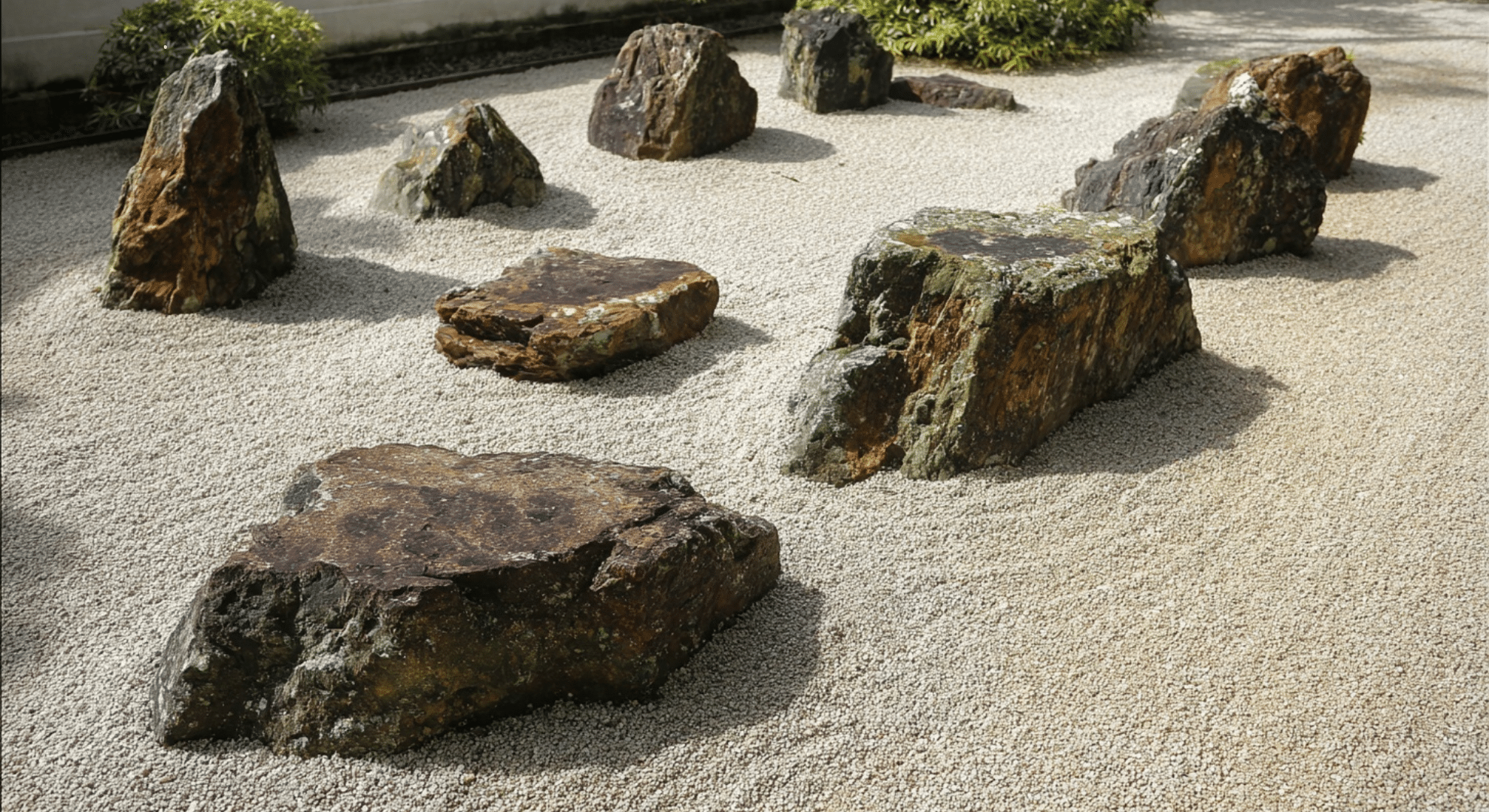
Stones are the heart of a Japanese rock garden. They stand in for mountains, islands, or even animals, depending on their shape and placement.
The stones used are usually natural and uncut. They aren’t meant to look perfect. Instead, they should feel real. Most are partly buried in the ground to make them seem grounded and settled.
Stones are never tossed in randomly. They’re grouped in odd numbers and spaced in ways that create flow and calm. The way they sit with each other helps the garden feel balanced without being too even.
Gravel or Sand Surfaces
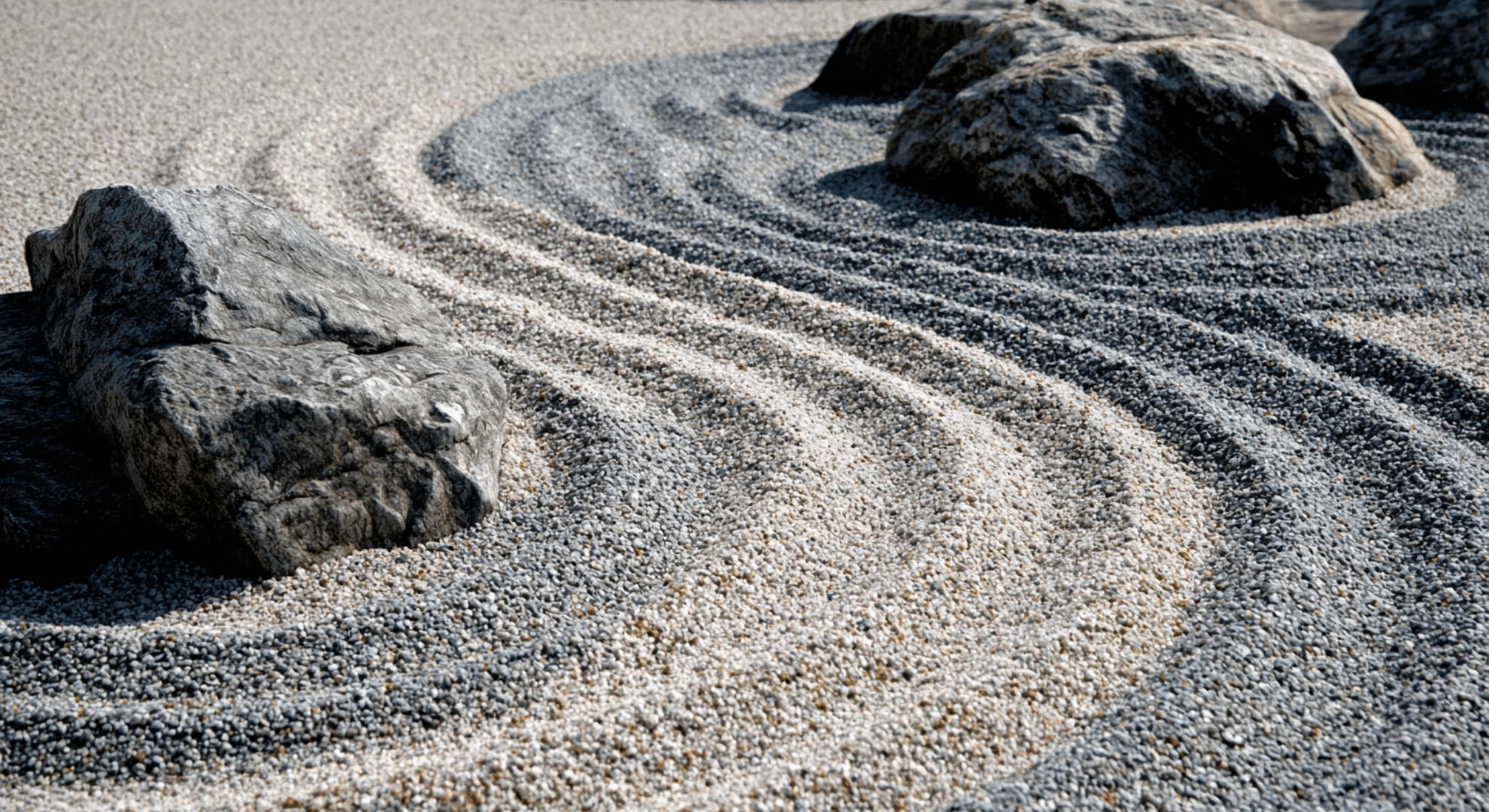
Gravel or sand in a rock garden isn’t just filler. It’s meant to stand for water or empty space. When raked into patterns, it brings movement into the stillness.
Fine gravel is often used because it holds raked lines better. The color is usually light, like white or pale gray, to keep things calm and clean. Texture is smooth, but not too polished.
What matters most is that it stays the same across the garden. It shouldn’t pull focus. The raked designs help tie the space together and guide the eye without needing bright colors or decoration.
Minimal Plant Use
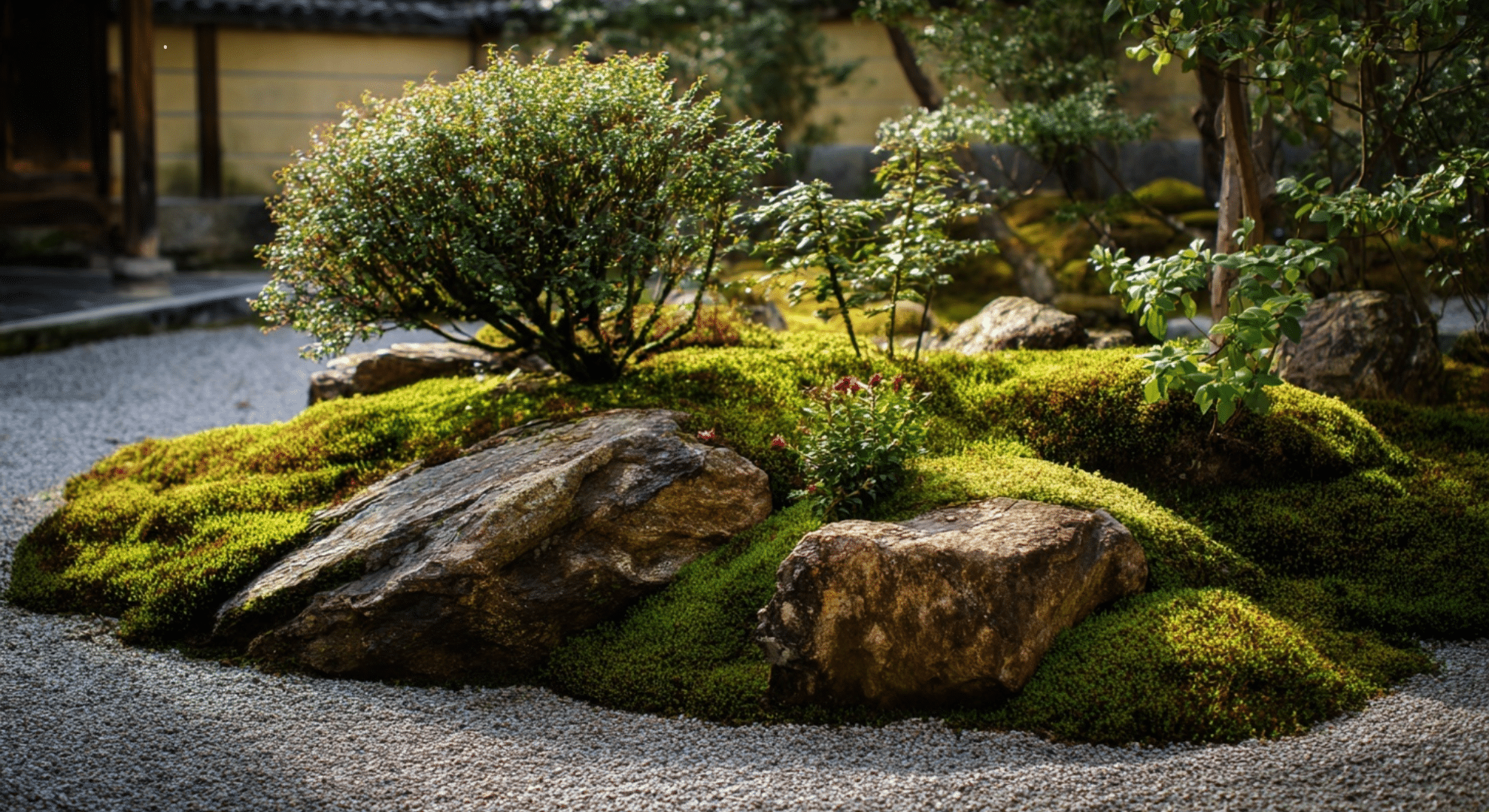
Plants are used in small amounts and only when they help the garden’s shape or meaning. This isn’t a place for colorful flowers or thick bushes.
Moss is the most common plant found here. It grows slowly, stays low, and works well with the rocks. If trees or shrubs are used, they’re trimmed to stay neat and small.
They’re placed to support the shape of the garden, not to stand out. Plants are used more like helpers than stars. They give just enough green to soften the rocks and gravel without taking over.
Empty Space and Visual Balance
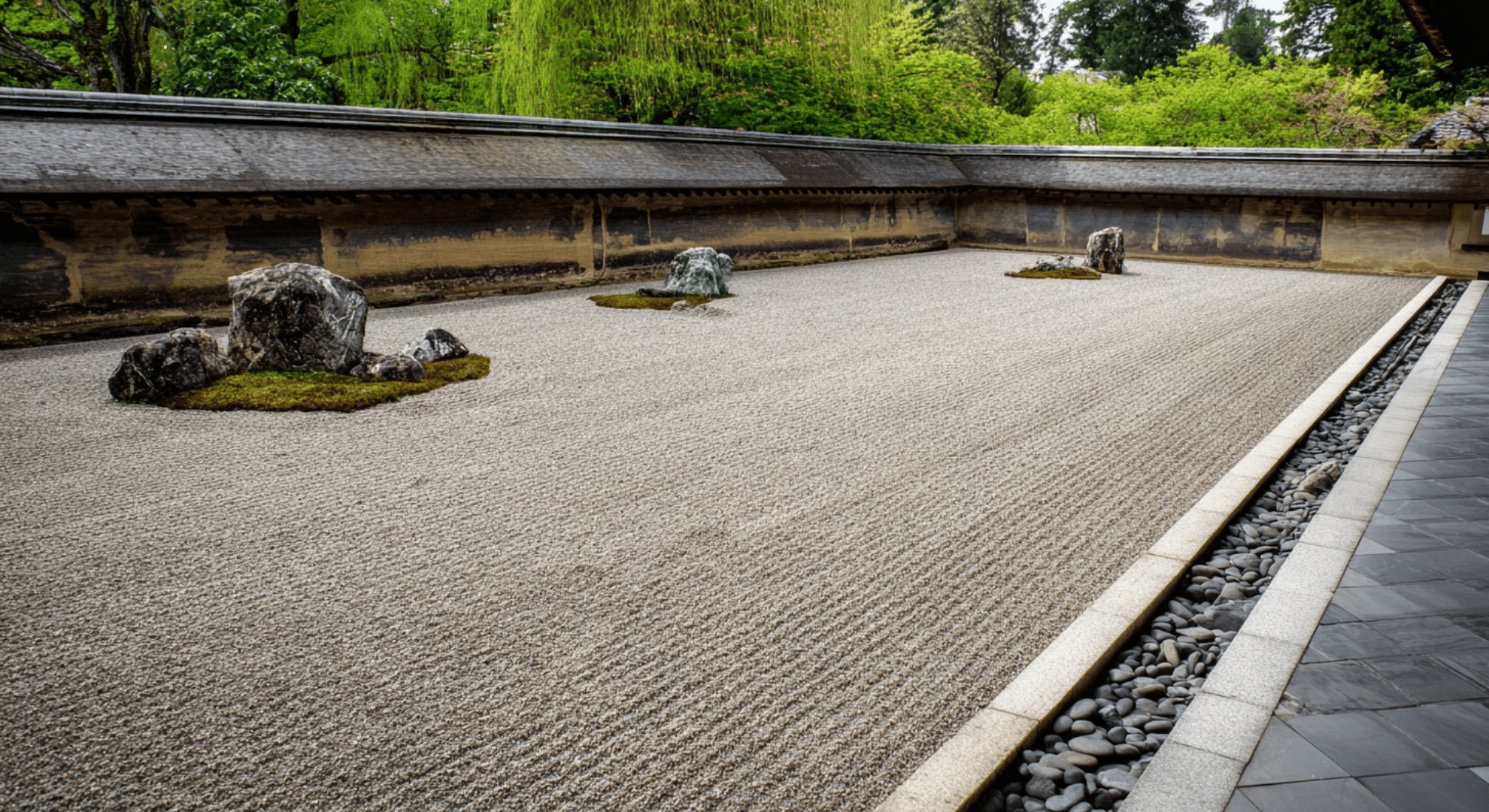
Open space is just as important as the rocks and gravel. In fact, what’s left out says just as much as what’s put in.
This “negative space” lets your eyes rest and makes the other parts feel stronger. It also helps the garden feel larger than it is. Leaving space open takes discipline, but it’s what gives the garden room to breathe.
It draws the eye naturally and makes you slow down as you look. The stillness in the empty space holds just as much weight as the rocks that shape it.
How a Japanese Rock Garden is Meant to Be Viewed
A Japanese rock garden isn’t meant to be walked through like a path or park. Instead, it’s designed to be seen from one fixed place.
That might be a porch, a deck, or a low bench. From that one spot, the layout tells its story. The rocks, gravel, and space all work together to guide your eye and your thoughts.
This is different from other gardens that invite you to move around. In a Zen garden, stillness matters. You sit. You look. You reflect. That’s the whole point.
Key things to keep in mind:
- Most gardens are made to be viewed from a seated position.
- Porches and viewing platforms are part of the layout.
- Rock and gravel patterns are planned to look right from one direction only.
This focus on a single view is what gives the garden its calm and clarity. It’s a space made not to be walked through, but to be understood from where you are.
You’re not supposed to move; the garden does the quiet work.
Planning Your Own Japanese Rock Garden
Start with your reason. What do you want this garden to give you: quiet, focus, or just a break from noise? That answer will shape your choices.
Find a space that feels calm. It could be a corner of your yard, a patio, or even a balcony. Pay attention to light, shadows, and how the space feels during different times of day.
Keep the design simple. Think about where you’ll sit to view the garden. That spot matters most. Plan for open space, stone groupings, and gentle gravel lines.
Choose natural materials that feel grounded. Don’t rush the process. A good plan comes from noticing, waiting, and letting the space speak before you start shaping it.
Step-by-Step Guide to Building a Japanese Rock Garden
Building a Japanese rock garden is more about thought than effort. Each part has meaning, and every step adds to the calm it creates. Here’s a simple, clear guide to help you build one with care and purpose:
Step 1: Clear the Space
Choose a quiet, open spot and remove all plants, grass, and clutter. The goal is to create a clean surface for the garden. Rake the soil smooth and level the ground.
This step sets the foundation, so take time to fully clear and prepare the area before moving on.
Step 2: Plan the Layout
Decide how you want the space to feel and look from one main viewing point. Sketch the layout if needed. Think about where the stones, gravel, and plants will go.
Leave open space on purpose, and aim for calm, balanced flow without using symmetry or placing items evenly across the area.
Step 3: Set the Base Layer
Roll out a weed barrier or landscape fabric across the cleared area. This helps keep the gravel clean and free from mixing with soil.
Cut and shape the fabric to fit the garden outline. Smooth out any folds to make sure the surface is flat and ready for the next layer.
Step 4: Place the Stones
Pick natural stones of different shapes and sizes. Place them in small, odd-numbered groups. Partially bury each stone into the ground so it looks steady and settled.
Arrange them to create balance from the viewing spot, keeping in mind height, weight, and spacing to form a natural-looking composition.
Step 5: Add Gravel or Sand
Spread a layer of light gravel or coarse sand over the entire space. Use a flat board or trowel to even it out. The gravel should fully cover the fabric below.
Choose a consistent color and size, and smooth the surface to prepare for raking patterns around the stones.
Step 6: Rake the Gravel
Use a wooden rake with wide, deep teeth to make patterns in the gravel. Lines should flow naturally around the stones, like water around islands.
Keep the motion smooth and steady. These lines create visual movement and bring calm to the space, even though nothing in the garden moves.
Step 7: Add Minimal Plants
Choose low-maintenance plants like moss or small shrubs. Use them sparingly and only where they support the overall shape and feeling of the garden.
Avoid bright colors or tall growth. Plant them carefully around the stones or edges so they blend in without pulling attention away from the main elements.
Step 8: Add a Simple Feature
You can include a quiet feature such as a bamboo water spout, small bench, or lantern. It should fit the size and feel of the garden. Keep the design simple, natural, and balanced.
The added element should support the peaceful tone and not overpower the stones or gravel pattern.
Tips on Material and Design Selection
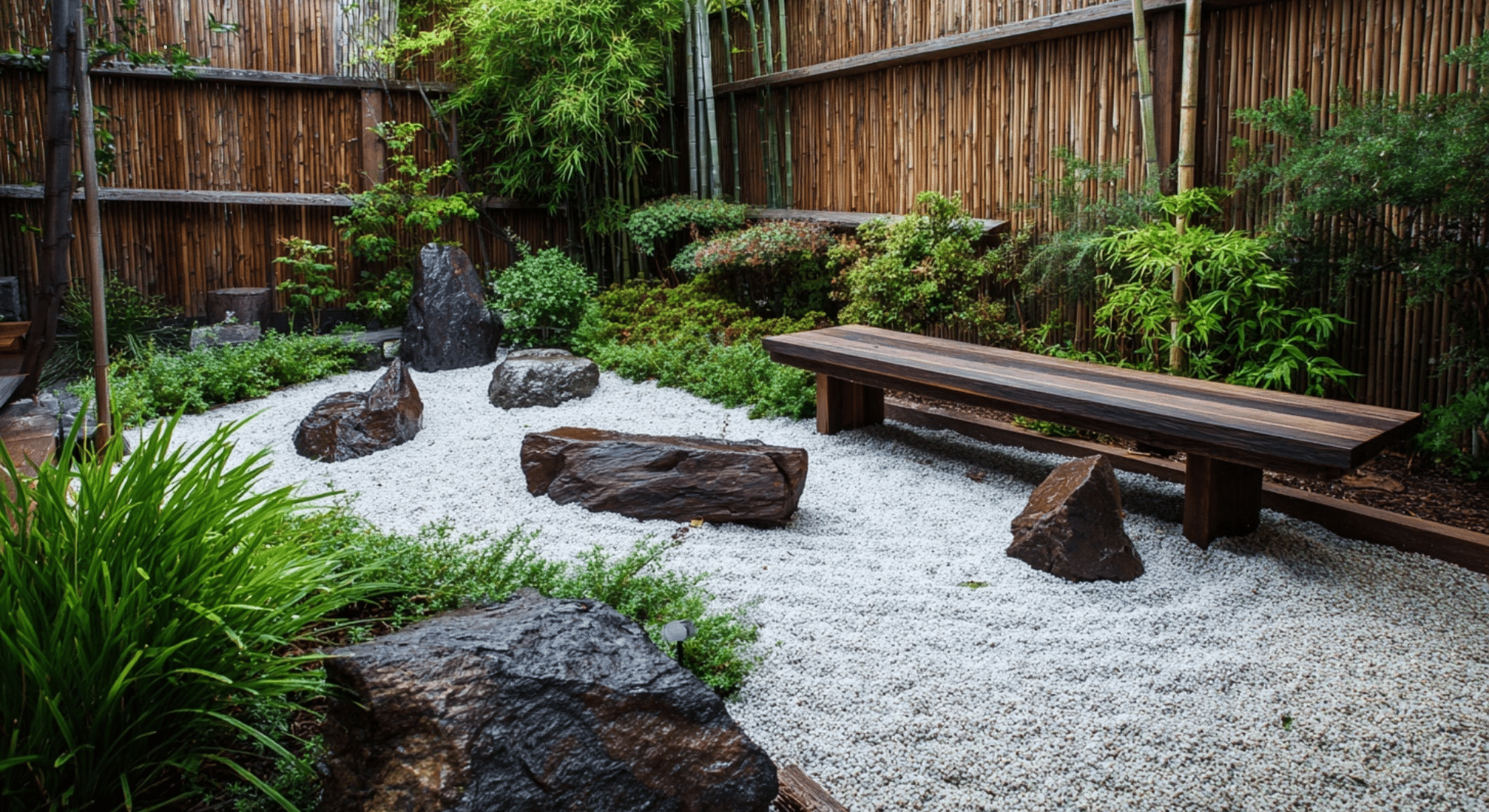
Picking the right materials and design style helps your Zen garden stay calm and easy to take care of. You don’t need fancy stuff. Just make a few smart choices and keep it simple.
- Natural rocks: Choose ones with different shapes and sizes. Avoid smooth or shiny ones.
- Gravel or white pebbles: Good for simple patterns and keeping the garden looking clean.
- Fewer plant types: Three or four kinds are enough. Too many can make the garden look messy.
- Low-growing plants: These keep the space neat and don’t need much care.
- Bamboo or wood features: These fit the natural look and are easy to work with.
- Simple colors: Stick with greens, grays, whites, and browns. These help the space feel calm.
Choosing the right materials makes everything easier. Your garden will look better, stay clean longer, and feel more peaceful.
Simple Design Layout Ideas You Can Copy
You don’t need much space or complex tools to build a calming Japanese rock garden. These layout ideas are simple, thoughtful, and each offers a different way to shape peace into your space:
1. Three-Stone Minimalist Layout
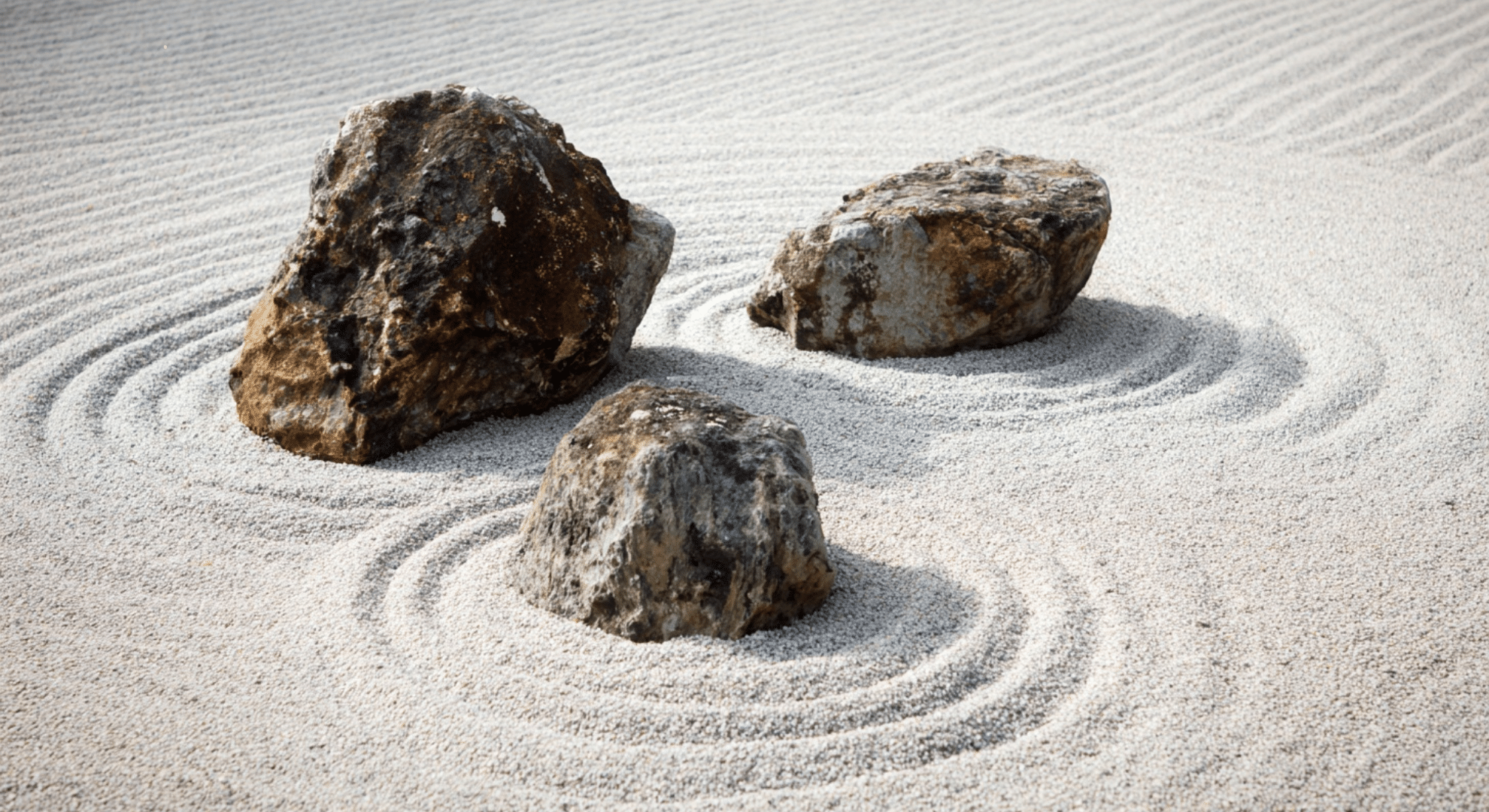
Place three natural stones in a rough triangle, each a different size. Slightly bury them to ground their shape. Leave the rest of the space open with smooth gravel raked in tight rings.
This design creates stillness through space, focusing the eye on balance without needing plants or extras.
2. Split-Scene Design
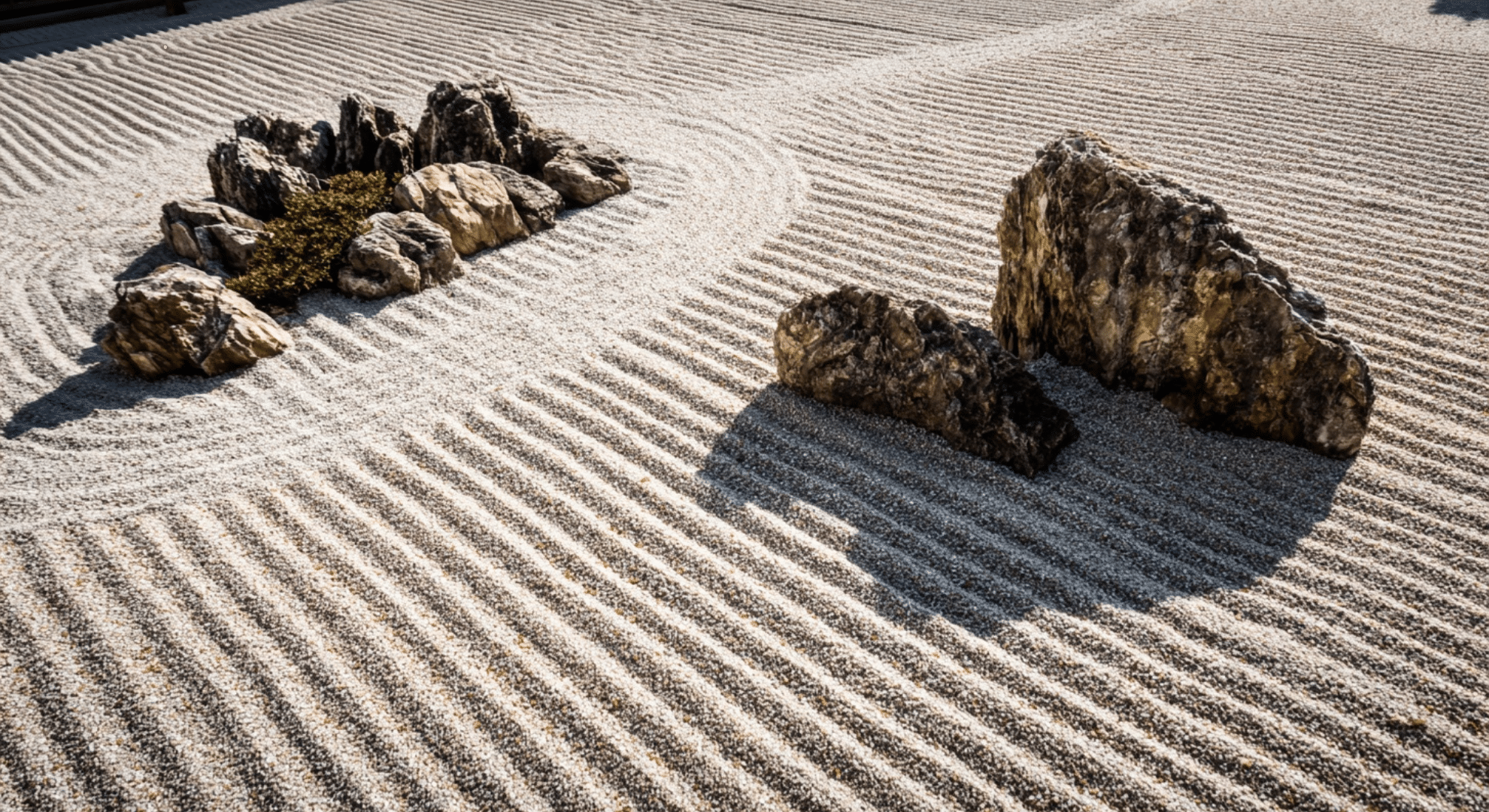
Divide the garden into two zones: one with a rock group and one left open. Use a diagonal line to split the space, then rake each section in a different pattern.
This layout shows contrast and flow. It’s ideal for longer, rectangular spaces that need visual movement and focus.
3. Courtyard Stone Path Layout
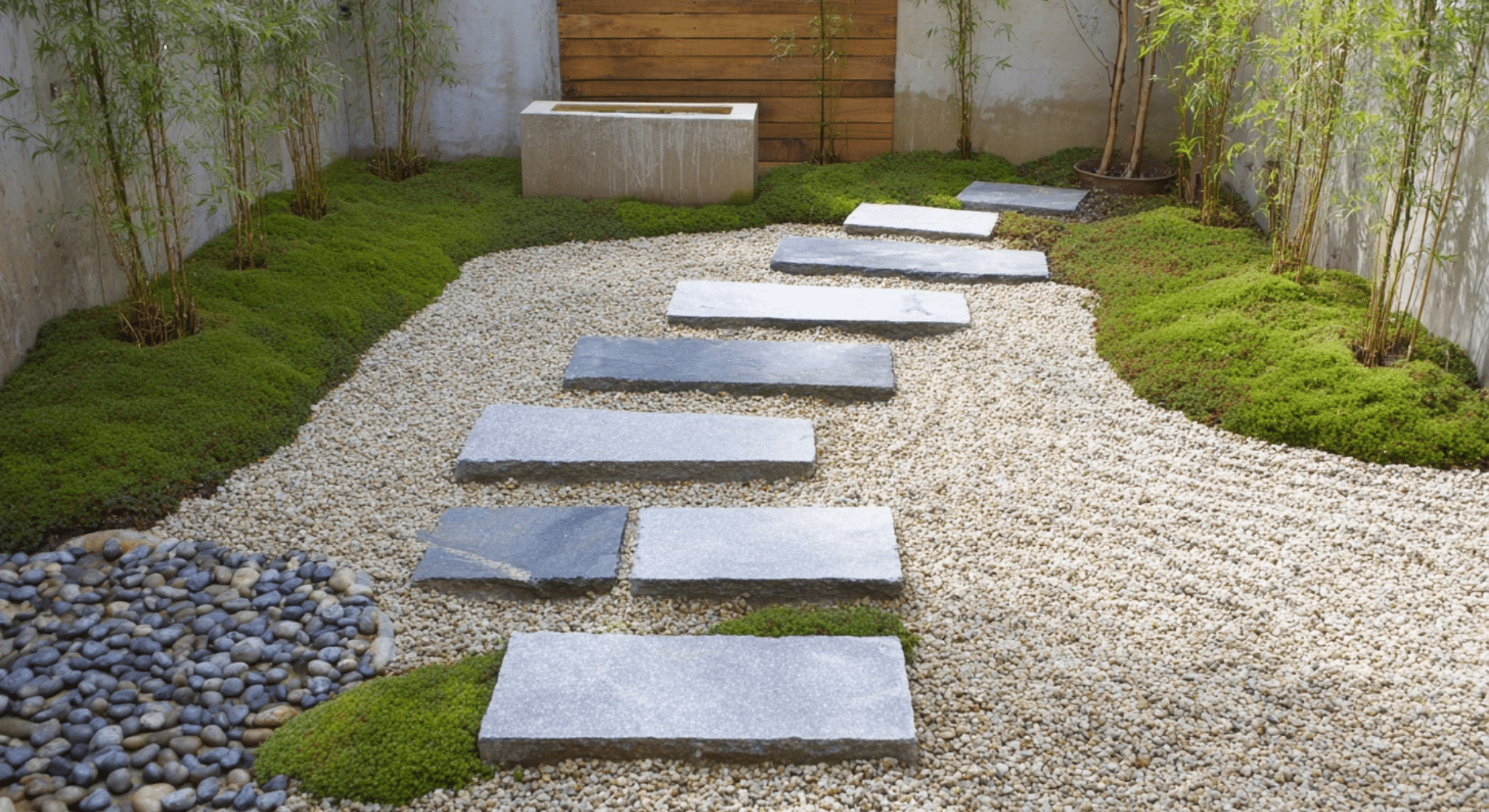
Create a zigzag path of flat stones leading across a square bed of gravel. On either side, leave space clear or add moss.
Rake long, straight lines to echo the direction of the stones. This style works well in modern homes, giving a clean layout with subtle depth and calm.
4. Corner Reflection Garden
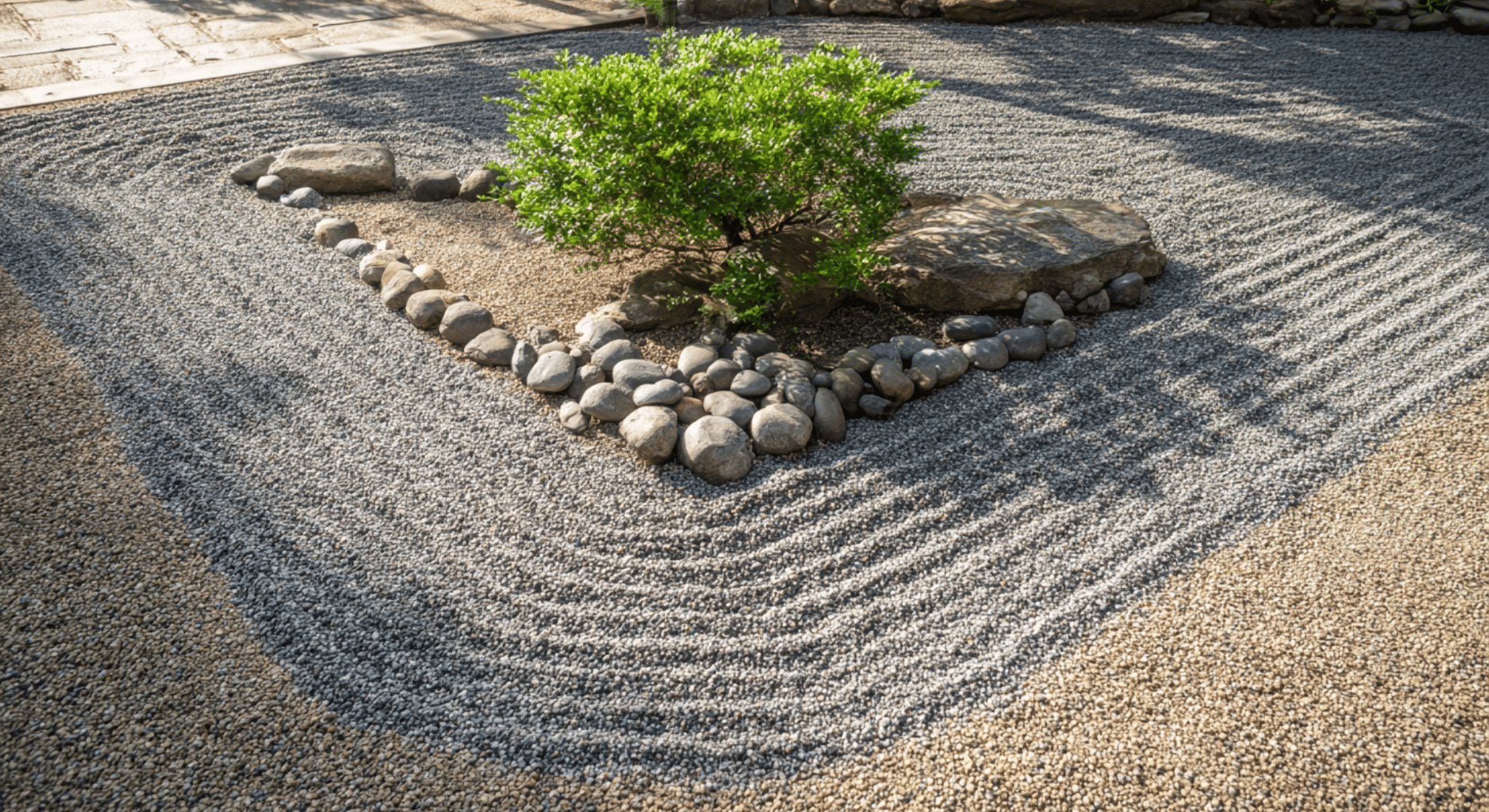
Design the garden to sit in one corner of a space, like a backyard or balcony. Cluster small rocks near the corner and rake wide lines outward.
Add a single, small shrub for shape. This layout draws attention inward, perfect for thinking or sitting still with limited outdoor space.
5. Tabletop Spiral Tray
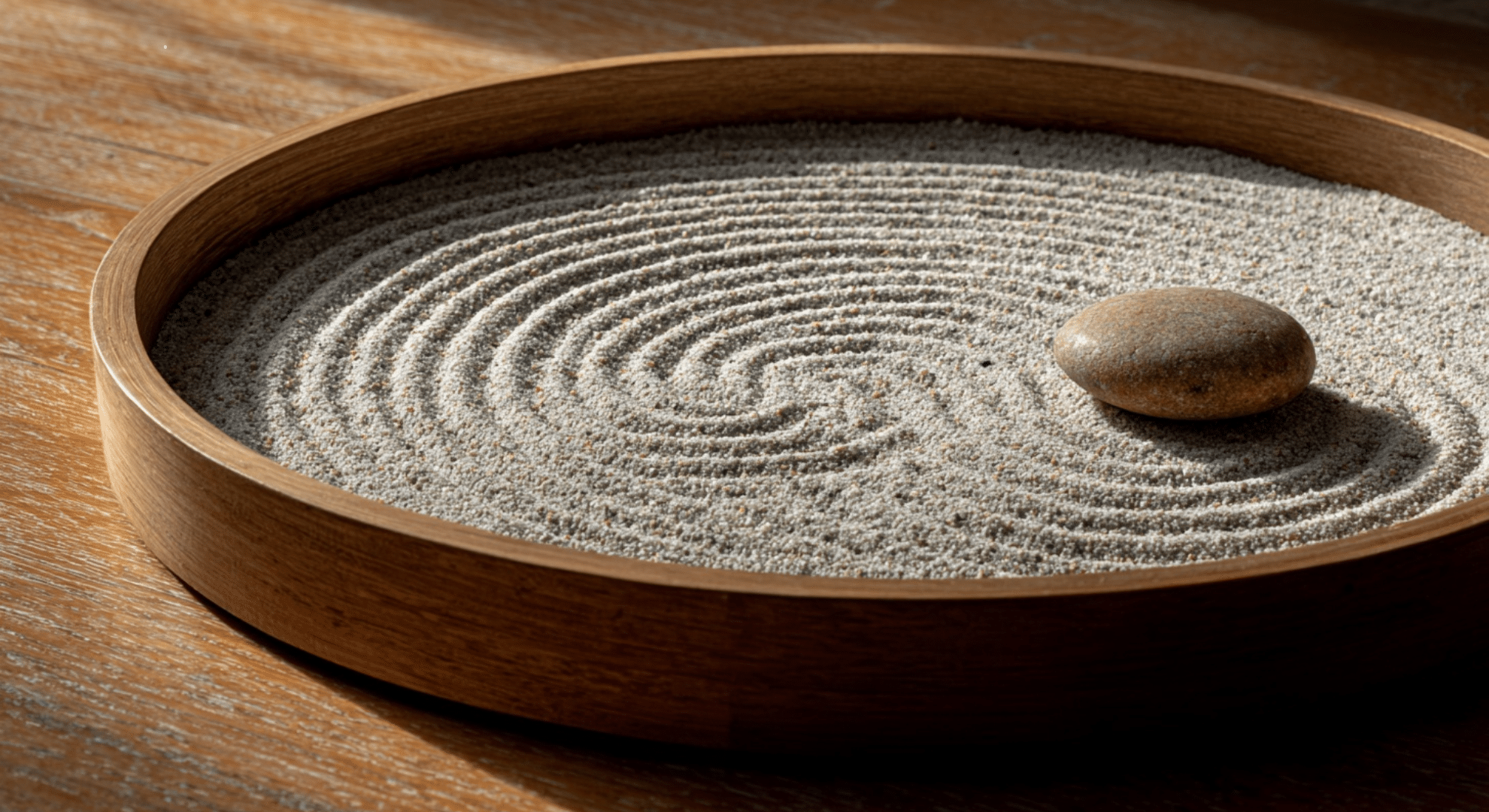
In a round tray, place one stone slightly off-center and rake tight spirals around it. Keep the design simple, using pale gravel and no plants.
The circular shape makes it ideal for desks or quiet corners indoors. It offers a small space to pause, reflect, or reset during the day.
Maintenance and Long-Term Care
A Japanese rock garden may look still, but it needs quiet attention over time. Regular care keeps it clean, clear, and peaceful without taking much effort. Here are a few things to keep in mind as you care for your garden:
- Rake the gravel regularly to refresh lines and patterns.
- Remove fallen leaves, twigs, or debris to keep the space clean.
- Trim moss or plants gently so they stay low and contained.
- Check stone placement occasionally to make sure nothing has shifted.
- Keep the gravel layer even and refill bare spots when needed.
- Watch for weeds poking through and remove them by hand.
- Sweep or wipe nearby edges to keep the garden looking neat.
With small, steady upkeep, your garden will stay calm and clear. The care you give it can become part of the peaceful rhythm it offers you.
Conclusion
I didn’t think a few rocks and some gravel could change how I felt in my own space, but they did. My Japanese rock garden became more than just part of the yard.
It turned into a quiet place where my thoughts could settle without distraction. Building it slowed me down in the best way.
Now think about your space. What if you gave it one calm corner that helped you reset? You don’t need fancy tools or a huge yard. Just start small.
Let the space grow with meaning, not clutter. Keep it simple. Keep it honest. Let the quiet work for you.
Want more ways to bring peace into your day? Take a look at the other blogs, they’re written with the same calm in mind!