The red osier dogwood shrub has earned a special place in gardens across North America, and once you understand why, you’ll probably want one too.
Those brilliant crimson stems light up the winter landscape when everything else looks dormant and dull. But the appeal goes deeper than just good looks.
This native shrub thrives in soggy areas where most plants would drown, provides critical habitat for wildlife, and practically takes care of itself once established.
Restoring a wetland? Creating a rain garden? Simply craving year-round interest in your yard?
Here’s your complete guide to planting, caring for, and designing with red osier dogwood, plus solutions to any challenges you might face along the way.
What is Red Osier Dogwood?
Red osier dogwood goes by several names, including red-twig dogwood and red stem dogwood, but they all refer to the same stunning native.
Scientifically known as Cornus sericea (sometimes listed as Cornus stolonifera), it belongs to the Cornaceae or dogwood family.
This deciduous shrub typically grows 6 to 9 feet tall with an equal spread, though some varieties stay more compact. The growth habit is upright and multi-stemmed, creating a dense, rounded form that fills space nicely.
New stems show off that signature brilliant red color, while the foliage emerges green in spring, shifts through summer, and often turns purple or burgundy before dropping in fall.
Red Osier Dogwood Shrub: Botanical Classification & Identification
Red osier dogwood fits neatly into the plant kingdom’s organizational structure. It belongs to the kingdom Plantae, order Cornales, and family Cornaceae.
Within the genus Cornus, you’ll find it listed as Cornus sericea. This genus includes many popular relatives like flowering dogwood (Cornus florida), kousa dogwood (Cornus kousa), and pagoda dogwood (Cornus alternifolia).
Each brings its own strengths to the garden, but red osier stands out for its cold hardiness and wetland tolerance.
Key Identification Features
Once you know what to look for, identifying red osier dogwood becomes straightforward.
Here are the telltale characteristics that set this shrub apart:
- Leaves: Opposite, simple, ovate to lanceolate with curved veins, turning reddish-purple in fall.
- Stems: Brilliant red bark that intensifies in winter, especially vibrant on younger growth.
- Flowers: Small white blooms in flat-topped clusters appearing in late spring to early summer.
- Fruits: White to pale bluish drupes developing in late summer and fall.
- Branching Pattern: Consistently opposite, with stems emerging in pairs at each node.
- Pith: Rubbery, whitish interior when stems are snapped, a signature dogwood family trait.
These features work together to make identification reliable across seasons, though the red stems remain the most recognizable trait year-round.
Natural Habitat & Geographic Range of Red Osier Dogwood
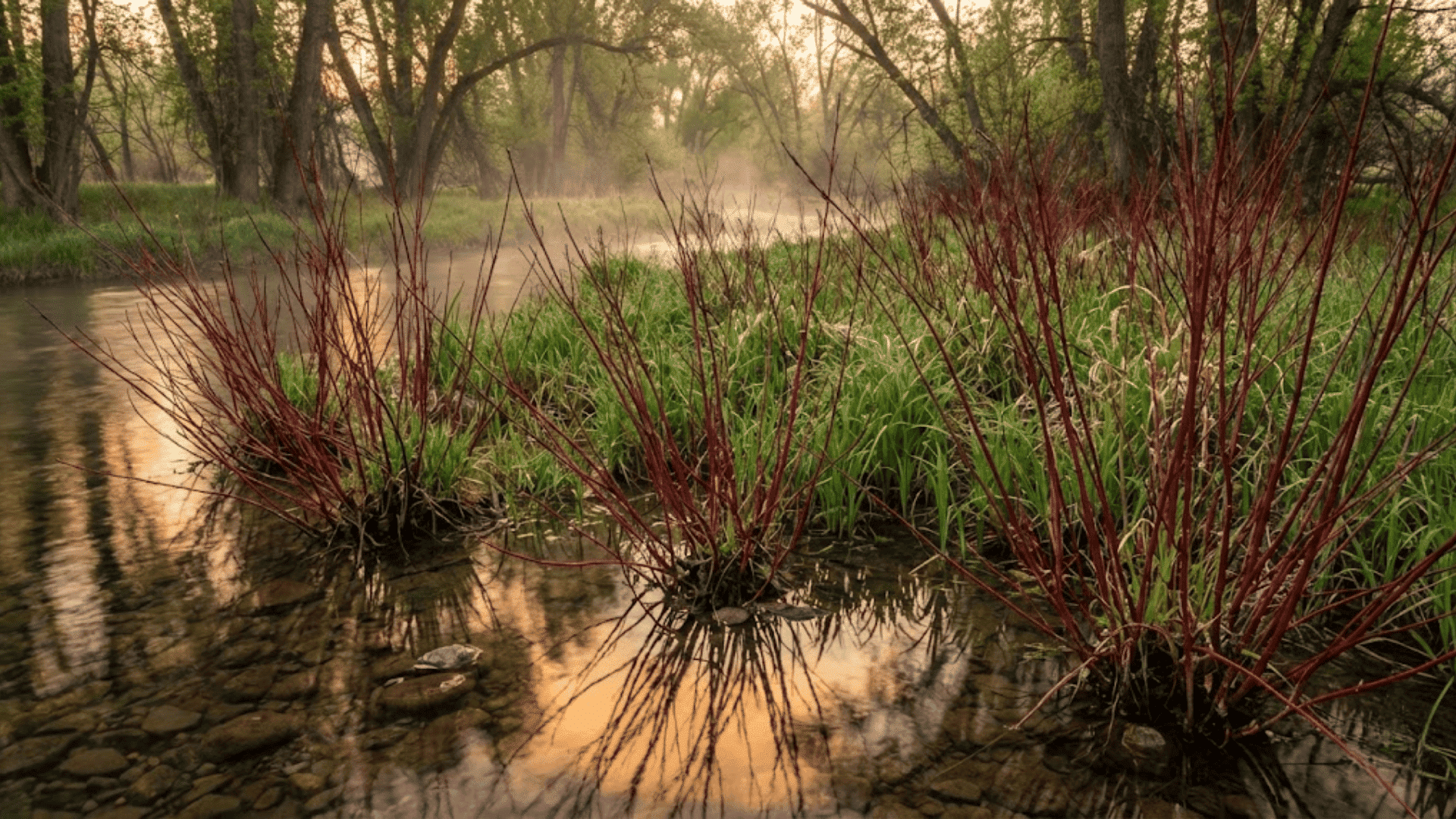
Red osier dogwood thrives across much of North America, from coast to coast and well into Canada.
You’ll find it growing naturally in wetlands, along streambanks, and at floodplain edges where many other woody plants struggle.
This native shrub has claimed its niche in riparian zones, bogs, and wet meadows, places defined by consistently moist to saturated soils.
What makes it so successful in these spots? Exceptional tolerance to flooding and waterlogged conditions that would drown less-adapted species.
It also handles partial shade comfortably, often growing beneath taller trees in these naturally layered ecosystems where moisture and dappled light create ideal conditions.
Red Osier Dogwood: Growth Habit & Life Cycle
Red osier dogwood grows as a multi-stemmed deciduous shrub with a natural tendency to spread through underground stems called stolons, creating dense thickets over time.
This thicket-forming habit makes it invaluable for erosion control and wildlife habitat, though you can manage the spread through pruning in garden settings.
The shrub moves through distinct seasonal phases that keep it interesting year-round.
| Season | Foliage | Flowers/Fruits | Stem Display |
|---|---|---|---|
| Spring | Green leaves unfurl with curved veins | White flower clusters emerge in late spring | New red growth begins |
| Summer | Lush green canopy at full density | White to pale bluish drupes develop | Hidden beneath foliage |
| Fall | Reddish-purple to burgundy change | Fruits mature for wildlife | Color begins intensifying |
| Winter | Bare branches | Dormant | Brilliant red stems steal the show |
The youngest stems always display the most intense red coloration, which is why many gardeners practice renewal pruning to encourage fresh growth and maintain that eye-catching winter display.
Fall Interest: Red Osier Dogwood in Autumn
Red osier dogwood doesn’t fade into the background when autumn arrives. The foliage transitions from summer green into a spectacular palette of red, orange, and purple-red tones that intensifies as temperatures drop.
What makes fall particularly compelling is the layered interest. As leaves change color, those white to pale bluish berries create a striking contrast against burgundy foliage.
Then, as leaves drop, the red stems shift from supporting player to main attraction, previewing the winter spectacle ahead.
Best Landscape Uses for Fall Color
Position red osier dogwood strategically to maximize its autumn impact:
- Place against evergreens or dark structures for dramatic color contrast.
- Plant in masses along property edges to create bold seasonal statements.
- Position near water features where reflections amplify the visual effect.
- Pair with golden ornamental grasses for complementary warm-toned combinations.
- Use as a backdrop for late-blooming perennials like asters and sedums.
- Exploit its wet-soil tolerance to stage fall color in challenging boggy areas.
Landscape & Garden Uses of Red Osier Dogwood
Red osier dogwood earns its keep in the landscape through sheer versatility. This shrub adapts to multiple roles without missing a beat, handling everything from ornamental borders to ecological restoration projects.
Here’s how it delivers value across different landscape applications:
| Landscape Role | Best Locations | Primary Benefits |
|---|---|---|
| Ornamental Display | Borders, mass plantings, mixed beds | Four-season interest with fall color and winter stems |
| Erosion Control | Streambanks, slopes, flood zones | Dense roots stabilize saturated soils |
| Wildlife Support | Native gardens, naturalized areas | Flowers attract pollinators; berries feed birds and mammals |
| Seasonal Focal Point | Foundation plantings, entryways | Brilliant red stems dominate winter landscapes |
| Water Management | Rain gardens, bioswales, drainage areas | Thrives where waterlogged conditions kill other shrubs |
| Living Screens | Property lines, thicket zones | Multi-stemmed growth forms dense barriers |
Red Osier Dogwood Planting & Care Guide
Red osier dogwood asks for very little once you understand its basic needs. Getting the fundamentals right at planting time sets you up for years of low-maintenance enjoyment.
1. Light & Soil Requirements
This shrub performs best in full sun to partial shade, with the most intense stem color developing in sunnier spots. It thrives in moist, well-drained soils but truly shines in consistently wet conditions that challenge other plants.
Clay soils, periodically flooded areas, and poorly drained spots work beautifully. Soil pH flexibility is another bonus, tolerating everything from acidic to slightly alkaline conditions without complaint.
2. Watering & Fertilization
Keep soil consistently moist during the first growing season while roots establish. Once settled, the shrub tolerates short periods of drought but performs best with regular moisture.
In naturally wet sites, supplemental watering becomes unnecessary. Fertilization is rarely needed, especially in rich soils. If growth seems sluggish, apply a balanced slow-release fertilizer in early spring.
Note: Avoid over-fertilizing, which encourages excessive foliage at the expense of that prized red stem color.
3. Pruning & Maintenance
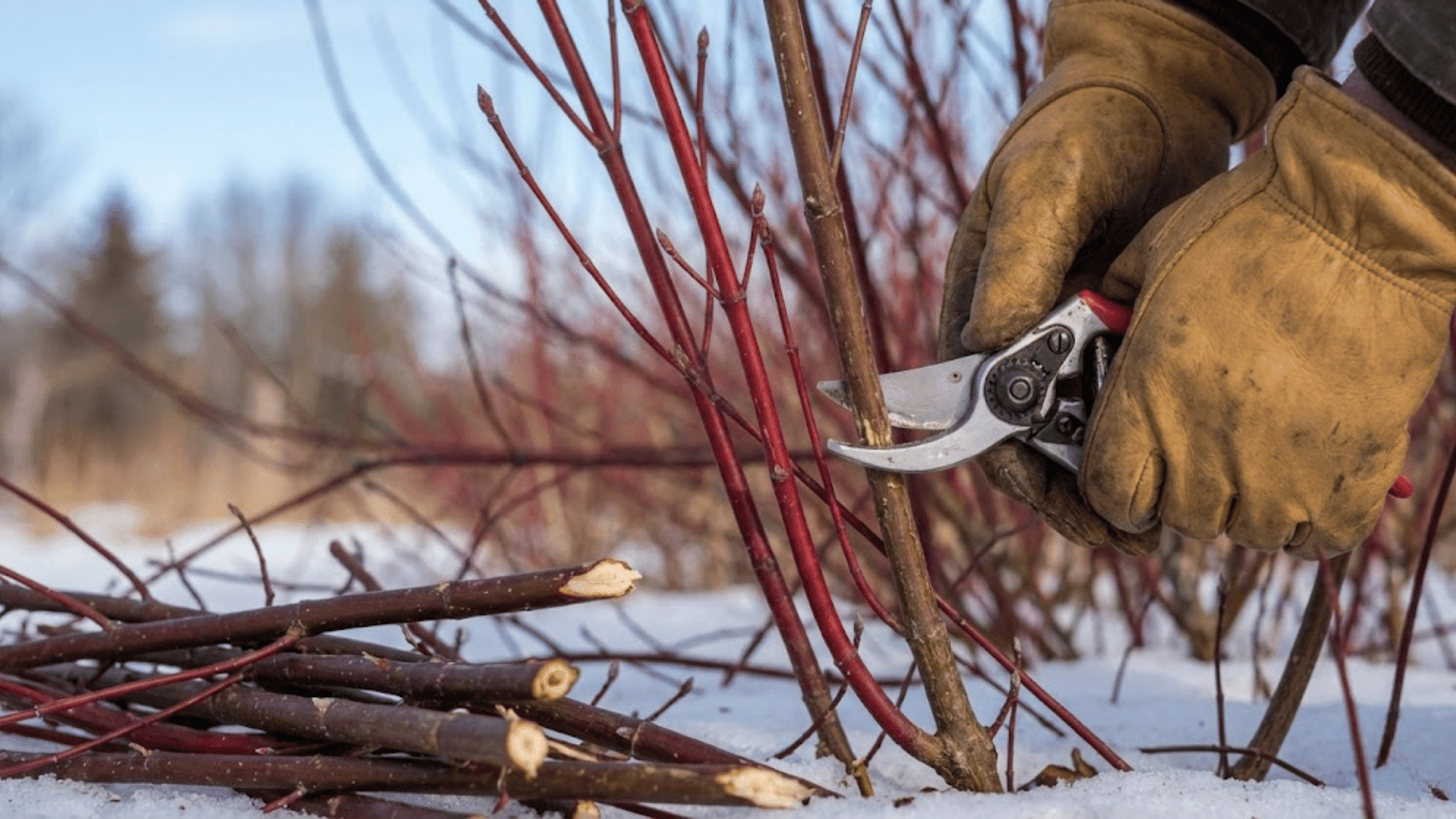
The secret to maintaining brilliant red stems is renewal pruning. Cut one-third of the oldest stems down to ground level each year in late winter or early spring. This stimulates fresh growth with the brightest color.
For overgrown thickets, try hard pruning by cutting the entire shrub to 6 inches above ground in late winter. Manage spread by removing unwanted suckers and severing underground stolons with a sharp spade.
Cultivars & Varieties of the Red Osier Dogwood Shrub
Plant breeders have developed several exceptional cultivars that offer variations on the classic red osier dogwood theme.
These selections solve specific design challenges, from space constraints to color preferences, while maintaining the species’ fundamental toughness.
| Cultivar | Unique Traits | Mature Size | Best Uses |
|---|---|---|---|
| Cardinal | Exceptionally bright red stems in winter | 6–8 ft tall and wide | Large borders, mass plantings, winter focal points |
| Flaviramea | Bright yellow-green stems instead of red | 6–8 ft tall and wide | Color contrast with red-stemmed varieties, mixed plantings |
| Kelseyi | Compact growth habit, dwarf selection | 2–3 ft tall and wide | Small gardens, foundation plantings, containers |
| Arctic Fire | Brilliant red stems, compact form | 3–4 ft tall and wide | Urban gardens, rain gardens, tight spaces |
| Baileyi | Deep red stems with reddish foliage | 6–9 ft tall and wide | Natural areas, screening, wildlife gardens |
| Silver and Gold | Variegated white-edged leaves, yellow stems | 5–7 ft tall and wide | Accent plantings, brightening shady spots |
Must-Try: Mixing cultivars with different stem colors creates stunning winter tapestries. Try pairing ‘Cardinal’ with ‘Flaviramea’ for a red and yellow combination that looks almost painted against snow.
Red Osier Dogwood Wildlife & Ecological Benefits
Red osier dogwood functions as a wildlife magnet throughout the year, supporting numerous species while strengthening local ecosystems. Its ecological contributions extend far beyond simple aesthetics.
- Berry Buffet: White to pale bluish drupes feed over 18 bird species, including robins, waxwings, and woodpeckers.
- Pollinator Support: Late spring flower clusters attract bees, butterflies, and beneficial insects during critical foraging periods.
- Year-Round Shelter: Dense multi-stemmed growth provides nesting sites in summer and protective cover during harsh winters.
- Erosion Control: Extensive root systems stabilize streambanks and prevent soil loss in riparian zones.
- Food Web Foundation: Foliage supports native moth and butterfly larvae, which in turn feed songbird nestlings.
This shrub exemplifies the interconnectedness of native plant ecosystems, where a single species creates cascading benefits that ripple through the entire food web.
Common Pests & Diseases Affecting Red Osier Dogwood
Red osier dogwood stays relatively healthy, but a few issues can pop up.
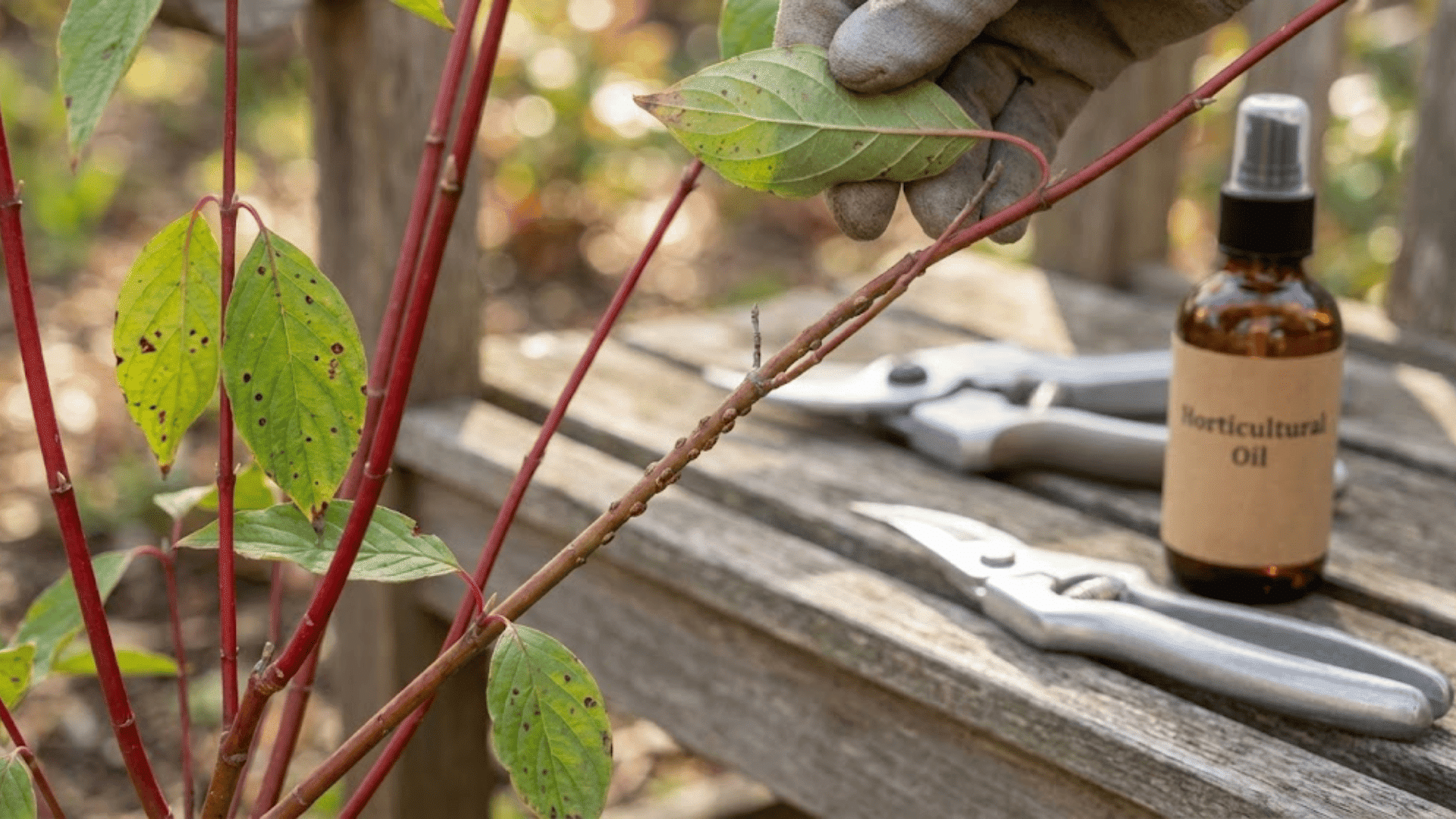
Leaf spots create brown or purple blotches on foliage that look worse than they actually are. More concerning are canker diseases, which cause sunken areas on stems and need immediate pruning to prevent spread.
Twig borers tunnel into branches and weaken the structure, while scale insects appear as small bumps on bark, slowly draining plant vitality.
Prevention beats treatment: ensure good air circulation through proper spacing, avoid overhead watering, and maintain plant vigor through appropriate pruning. Remove and destroy infected plant material promptly.
For severe infestations, horticultural oil or insecticidal soap handles most pest issues effectively without harsh chemicals.
Red Osier Dogwood Through Time: Fun Facts & Cultural History
Red osier dogwood holds deep cultural significance among Indigenous peoples across North America.
Native communities harvested the flexible stems for basketry, weaving them into containers, fish traps, and ceremonial objects.
The bark yielded natural dyes in shades of red and brown, while various parts served medicinal purposes in traditional practices, demonstrating the plant’s value extended far beyond ornamental appeal.
Did You Know?
- The name “osier” refers to the willow-like, flexible stems perfect for weaving work.
- Young stems contain the brightest pigments, which fade as bark ages and thickens.
- Some birds consume the berries despite their bitter taste that most mammals avoid.
- The shrub can live 20+ years and continuously regenerates through underground stolons.
- Ranks among the hardiest ornamental shrubs, surviving temperatures below -40°F.
Final Thoughts
After everything this shrub brings to the table, it’s easy to see why the red osier dogwood shrub has earned its reputation as a garden workhorse.
The brilliant winter stems, vibrant fall color, and wildlife value come together in one remarkably tough package that thrives where other plants quit.
It solves real problems for gardeners dealing with soggy soil while creating habitat that local ecosystems desperately need. Best of all, it delivers this performance year after year with barely any fuss on your part.
Have questions about growing red osier dogwood or stories about how it’s performed in your landscape? Drop a comment below and let’s keep the conversation going.