A pool area can look easy to design at first, yet every surface choice shapes how it actually feels to use. Water, sun exposure, and constant movement all push materials harder than most outdoor spaces ever experience. That is why choosing the right pool pavers is less about style and more about how it performs under pressure.
Why Surface Grip Changes the Whole Experience
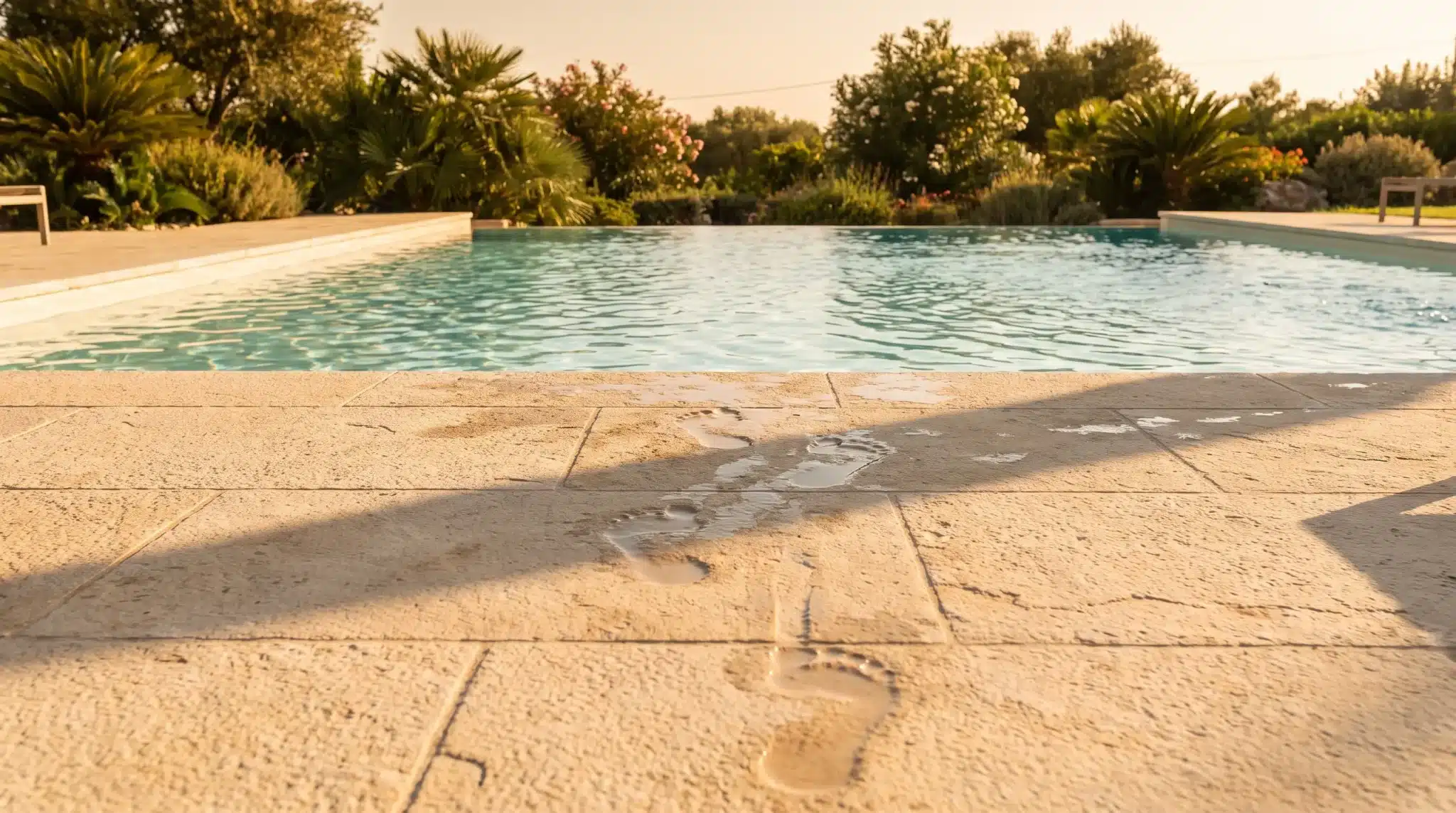
Slip resistance tends to reveal its value in small, repeated moments. Stepping out of the water, turning quickly, or walking barefoot across a damp edge all test the surface in ways that are easy to underestimate at first glance.
Sunscreen residue and fine water film can turn a smooth finish into something unpredictable. A lightly textured surface gives stability without feeling rough, which keeps movement relaxed rather than cautious. A polished finish often hides its risk until it gets wet.
How Saltwater and Chlorine Affect Materials
Salt and chlorine bring different challenges, and both interact with outdoor materials in ways that are not always obvious at installation. Saltwater systems can encourage gradual surface weakening in porous stone, drawing moisture into small openings that expand and contract with temperature changes. That movement can slowly alter the face of the material.
Chlorine behaves differently. It is less about structural pressure and more about visual and surface changes. Some finishes lose depth in colour or develop patchy tones after repeated exposure. Dense, low-absorption materials tend to hold their condition better because there is less opportunity for chemical entry. Even then, sealers can only do so much if the base material is not suited to constant exposure.
What often gets overlooked is how these elements interact with cleaning routines. Strong washdowns, combined with chemical residue, can accelerate wear on weaker surfaces, creating gradual change that feels subtle at first but becomes clearer with use.
Choosing the Right Material for Longevity
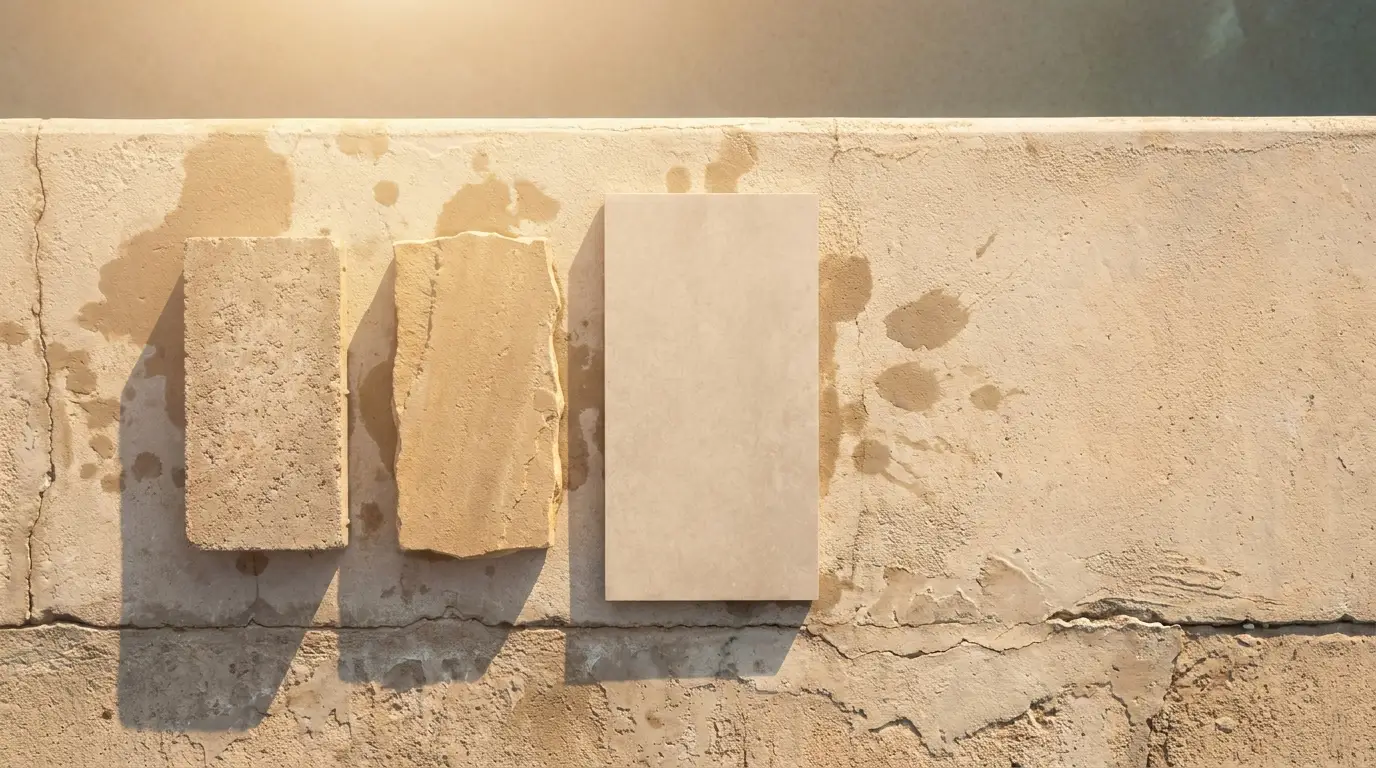
Concrete tends to be the most adaptable option. It can be engineered with different aggregates and surface textures, which allows a balance between grip and visual finish. When properly sealed, it handles both saltwater and chlorine environments with reasonable consistency.
Natural stone brings variation. Some types are dense and stable, while others absorb moisture more freely and need regular sealing to maintain their condition. The choice often comes down to understanding the exact stone rather than assuming uniform performance across the category.
Porcelain sits in a different space altogether. Its low absorption rate gives it an edge in resisting staining and chemical exposure. The surface remains consistent, though texture still needs attention to ensure safe footing around wet zones.
There is no universal answer here, only materials that respond differently depending on how the space is used.
Balancing Comfort, Heat, and Everyday Use
Bare feet change the way a surface is experienced. What feels fine in theory can become uncomfortable under direct sun.
Darker tones tend to absorb heat more quickly, which can make walking across them less pleasant during peak daylight hours. Lighter shades usually reflect more sunlight and stay noticeably cooler.
Texture also plays a quiet role. It should support grip without feeling abrasive against skin. That balance shapes whether the space feels inviting or slightly guarded.
Keeping Appearance Consistent With Minimal Effort
Maintenance often decides how a pool area feels years after installation. Some surfaces hold their look with little intervention, while others demand regular attention to stay consistent.
Materials with low absorption resist staining and tend to shed dirt more easily, which reduces the need for frequent deep cleaning. Sealed surfaces can also help reduce chemical buildup, although the effectiveness depends heavily on the base material.
Visual ageing is another consideration. Certain finishes develop subtle character as they wear, while others are chosen specifically to remain visually stable. Neither approach is wrong, but the preference should be clear from the start because it influences long-term satisfaction.
Final Thoughts
Selecting surfaces around a pool is rarely a quick decision once the practical details come into focus. Safety underfoot, resistance to water chemistry, and daily comfort all sit alongside appearance. When these factors are weighed together, the result is a space that feels reliable without drawing attention to itself.
The right choice supports movement, withstands exposure, and holds its character without constant correction, which is ultimately what most outdoor pool areas are aiming for.