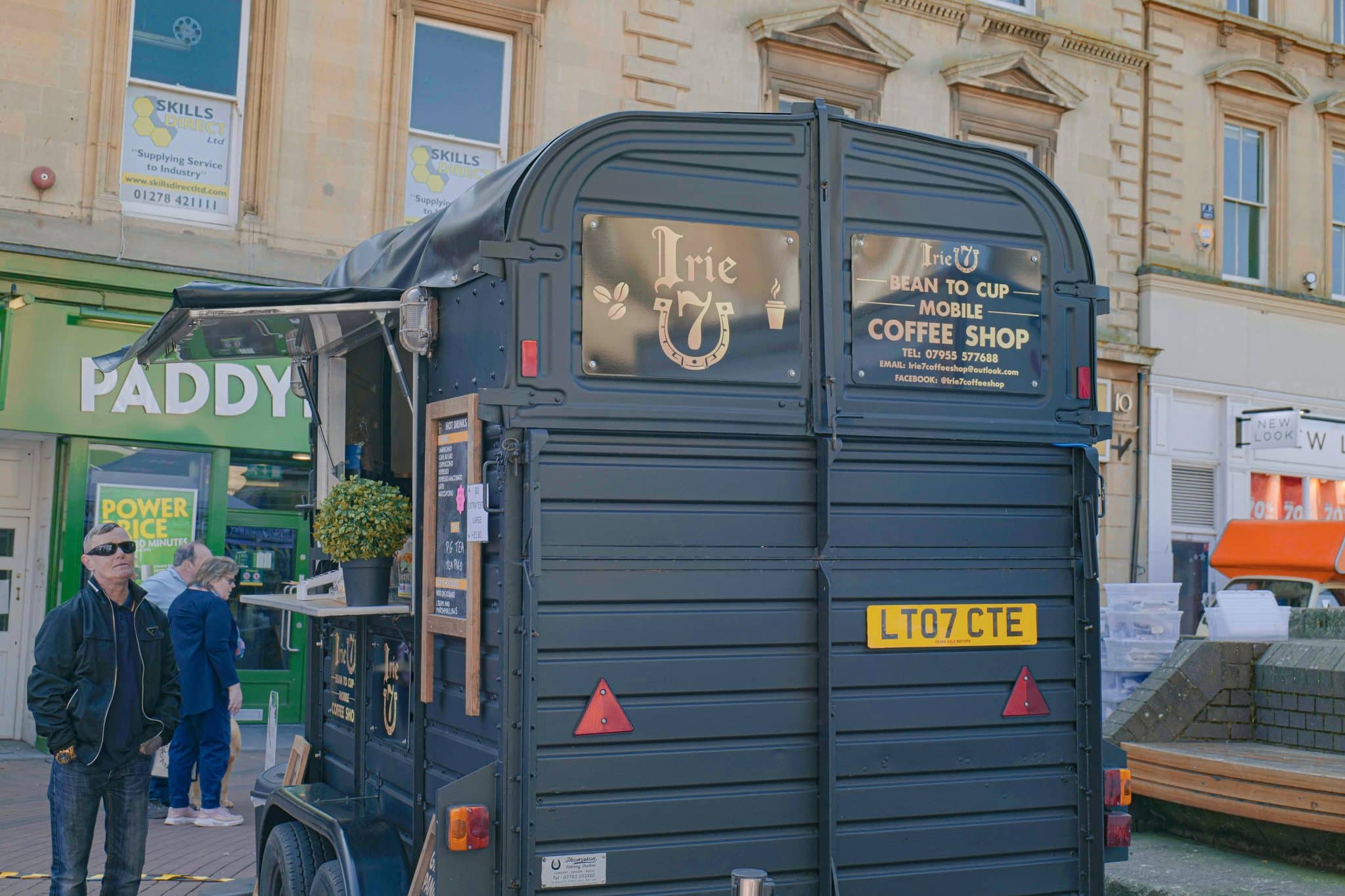
A food truck is a mobile restaurant and an ever-changing engineering space. In contrast to its stationary competitors, a food truck must be able to deal with vibrations, sudden shocks, and temperature changes, all while meeting rigorous hygiene requirements.
All of these challenges demand more from a food truck’s design than simply efficient utilization of the available space. The key here is durability, proper anchoring systems, and last but not least, good shelving in a food truck.
Why Static Equipment Fails on the Road
Fixed kitchen equipment is designed to be used in stationary conditions. As soon as you install it inside a food truck, however, problems will begin cropping up almost immediately.
The core problem resides in motion stress. Any acceleration, pothole, or braking results in micropressure, whose accumulative effect may eventually become a threat to equipment stability. Standard rack systems lack shock-absorption capabilities, and thus seasoned professionals always prefer vibration-resistant racks, which are specially designed to withstand continuous motion effects.
It is also crucial how well storage systems interact with the environment. In other words, effective mobile kitchen storage requires more than simple shelves; the whole system should be secured to create a solid entity that does not allow any horizontal motion. The use of wall-mounted solutions, sturdy brackets, and locks prevents items from moving around and provides the necessary stability.
Another factor to consider is NSF wall shelves. They are specially made to comply with sanitation requirements and can endure mobile storage conditions.
Sanitation and Airflow in Confined Spaces
For kitchens with a confined space, problems associated with sanitation arise due to overlooked features of design rather than visible sanitation problems. One feature that is most commonly neglected in this regard is known as “moisture trapping,” which occurs when condensation develops between shelves and walls, thus providing a perfect breeding ground for mold and bacteria.
How to address common problems:
Allow ventilation between shelves and walls: Shelves must never be placed tight against the walls. There needs to be some space left for proper air circulation.
Select open designs rather than solid materials: Items such as epoxy-coated wire shelving facilitate circulation and allow moisture evaporation.
Raise storage off the ground: Storing items off the floor not only reduces contact with possible spills but also makes sanitation easier. It also avoids the collection of water when cleaning under the equipment.
Do not overcrowd enclosed spaces: Crowding makes it difficult for air to circulate. This makes heat dissipation difficult in the kitchen.
Inspect regularly for moisture in hard-to-reach areas: Despite proper design, regular inspection is necessary. Moisture in inaccessible parts, such as behind and under the shelf, should be checked often.
Finding the good shelving in a food truck is essential; many food trucks have NSF-approved wire shelving, which keeps them free from dust. These are especially made to strike the right balance between ventilation, hygiene, and sturdiness—three elements that can never be neglected in an unstable situation.
When ventilation and hygiene are considered first while designing your kitchen, you have an efficient zone that works well even in tough conditions.
FAQ
How do I secure shelves to food truck walls?
The right way to fix shelves to walls is by mounting them using brackets, which are then bolted into the wall studs. It is always advisable to use anti-vibration bolts and locking nuts to keep them from becoming loose over time. Some trucks even rely on cross-brace systems to reduce pressure on their shelves.
Is chrome or epoxy better for mobile kitchens?
Although chrome shelves might work well in dry areas, epoxy-coated shelves would be preferred when it comes to mobile kitchens. This is because epoxy-coated shelves provide better protection against moisture and corrosion, as well as thermal changes.