You step outside with your morning coffee, ready to admire your green space, and instead find mysterious tunnels crisscrossing the yard.
Before you blame the first furry suspect that comes to mind, let’s pause.
Understanding lawn vole vs. mole damage is where most homeowners get tripped up, leading to treatments that miss the mark entirely. These two culprits might sound similar, but are entirely different with distinct damage patterns.
Knowing who’s actually wreaking havoc on your lawn means you can tackle the problem effectively rather than spinning your wheels with solutions that don’t match the pest.
We’ll walk through the telltale signs of each, so you can become a backyard detective and reclaim your outdoor sanctuary.
Lawn Vole vs. Mole Damage at a Glance
One pest chews your plants to death from the surface, while the other disrupts your soil from below without touching vegetation.
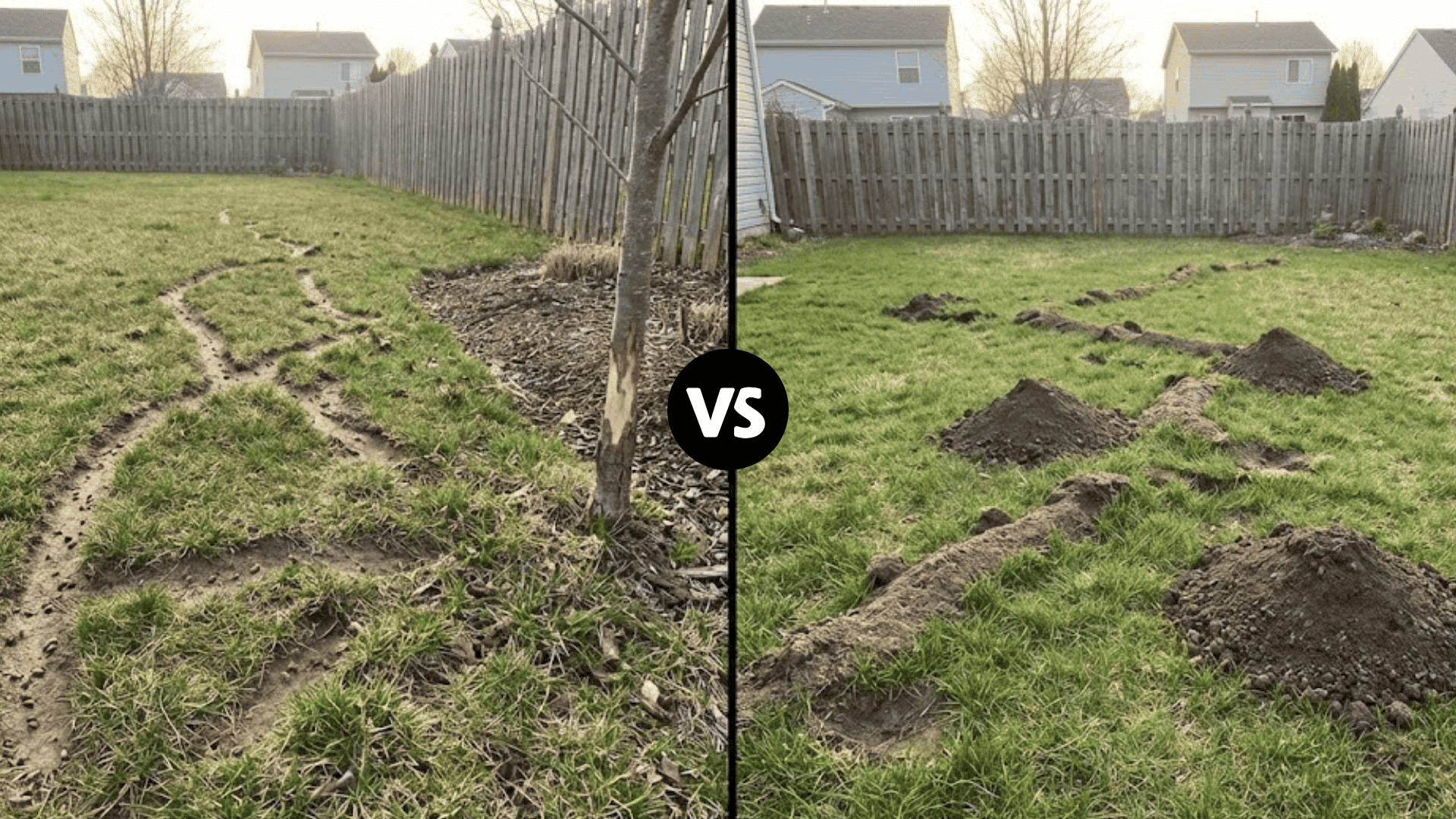
Voles leave flat pathways littered with plant debris and gnawed bark, while moles create raised tunnels and loose soil mounds across otherwise healthy grass.
Correct identification determines everything from which products you buy to where you focus your efforts.
Treating for moles when voles are the problem means your garden continues dying, and vice versa; your lawn stays damaged while you spend money on ineffective solutions.
What is a Vole?
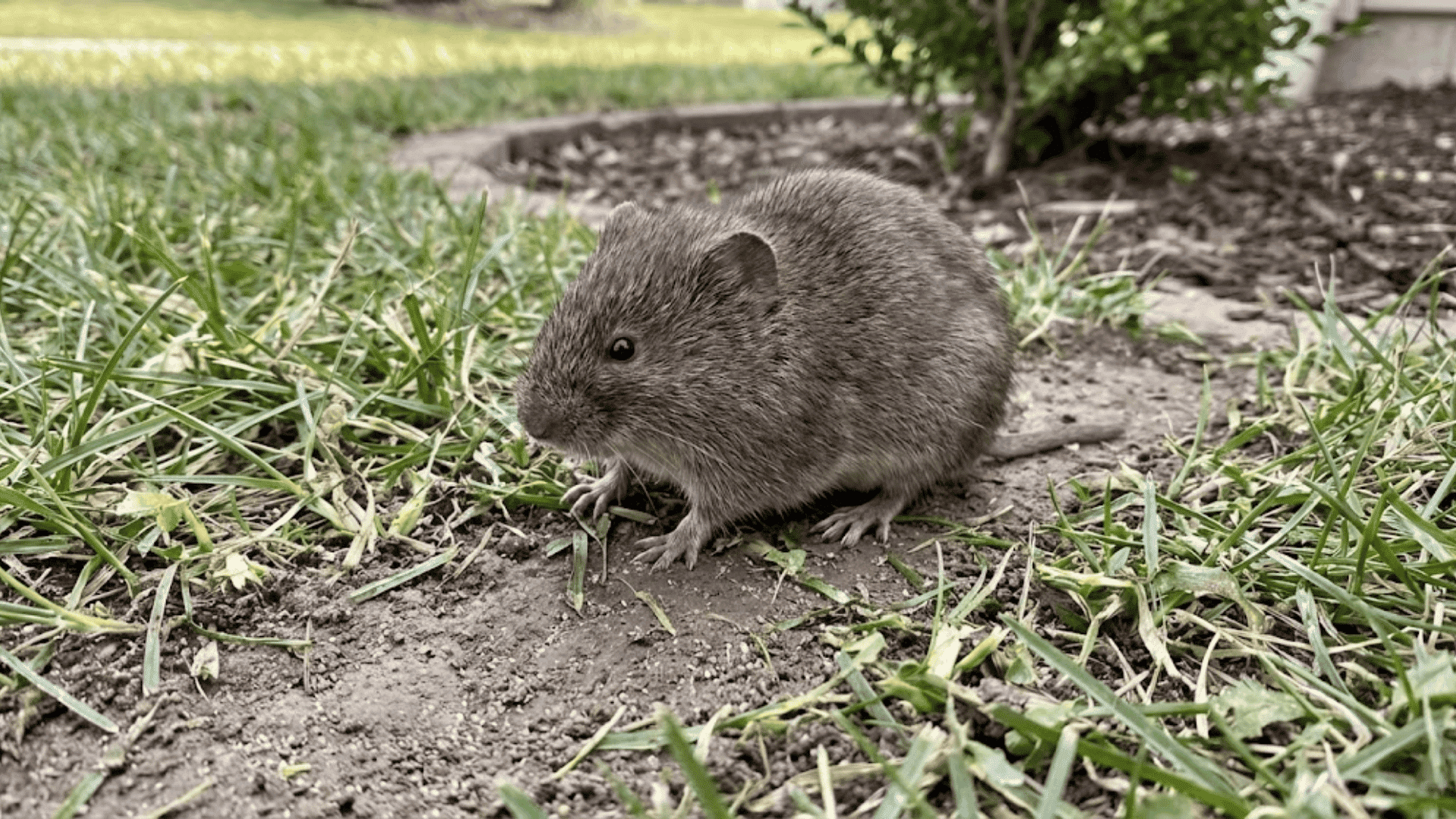
Voles are small, stout rodents with rounded bodies, short tails, and tiny ears barely visible through their brown or gray fur. They measure around 4 to 8 inches long and have a distinctly chunky, blunt appearance compared to mice.
You’ll notice their body shape right away since they lack the pointy nose and sleek build of typical house mice.
These rodents stay active year-round and tend to work close to the surface, carving shallow runways through your grass while feeding on plant roots, bulbs, and tender bark.
They become more visible during cooler months when snow gives them cover, but their gnawing happens continuously regardless of season.
What is a Mole?
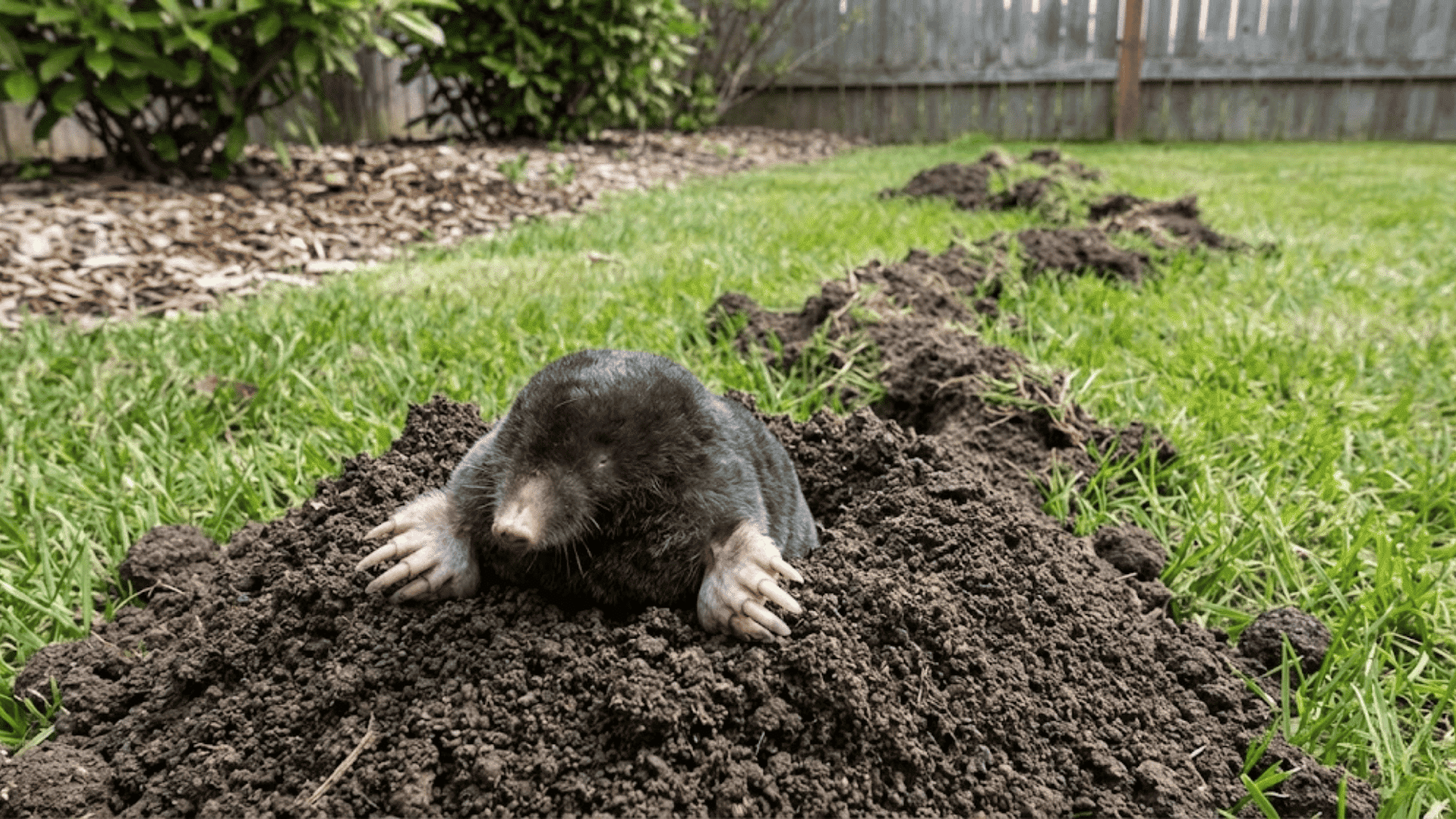
Moles are solitary, underground mammals with velvety fur, paddle-like front paws, and virtually no visible eyes or ears. They grow 6 to 8 inches long and sport a pointed snout perfectly designed for burrowing.
Unlike voles or gophers, moles are insectivores that hunt earthworms, grubs, and soil-dwelling insects rather than plants.
They spend nearly their entire lives deep beneath the surface, creating elaborate tunnel systems that can stretch across your entire yard. They dig year-round, patrolling underground highways for food.
Those raised ridges you see snaking across your lawn are actually their shallow feeding tunnels, while deeper permanent tunnels remain hidden below.
Lawn Vole Damage Explained
Voles work their destruction right where you can see it, leaving telltale signs across your grass and garden beds.
Their feeding habits create visible pathways and patches of dying vegetation that become especially obvious once winter snow melts away.
- Shallow surface runways that weave through grass like tiny highways, often 1 to 2 inches wide with clipped grass along the edges.
- Gnawed bark and roots around young trees and shrubs, particularly during winter when food sources run low.
- Dead patches of lawn where voles have chewed through grass roots just below the surface, leaving brown trails in their wake.
- Damage in mulched areas and ground cover where voles feel protected, especially around garden beds and tree bases.
Mole Damage Explained
Moles leave their mark through the soil itself rather than the plants growing in it.
Their extensive tunnel networks create visual and structural changes across your lawn that feel just as frustrating as any surface damage.
- Raised ridges snaking across the lawn, where moles have pushed up soil while creating their shallow feeding tunnels.
- Cone-shaped molehills scattered throughout the yard, created when moles excavate dirt from deeper permanent tunnels.
- Soft, spongy turf that feels unstable underfoot because tunnel networks have loosened the soil structure beneath.
- Minimal plant damage since moles eat insects rather than vegetation, though roots may dry out in disturbed soil.
Vole vs. Mole Damage: Key Differences
Telling these two pests apart comes down to reading the clues they leave behind. While both create chaos in your yard, their damage signatures are completely distinct once you know what to look for.
1. Surface vs. Underground Damage
The most obvious way to distinguish between these pests is by observing where and how the damage appears in your lawn.
| Vole Damage | Mole Damage |
|---|---|
| 1 to 2 inch wide surface runways through grass | Raised ridges 2 to 3 inches high across the lawn |
| Visible gnaw marks on bark and roots | Cone-shaped molehills with loose soil |
| Dead grass trails where roots are chewed | Spongy, unstable turf from tunnel networks |
| Droppings and debris along pathways | Rarely seen, works entirely underground |
2. Plant Damage vs. Turf Disturbance
Voles attack your plants directly by gnawing through roots, bulbs, and bark, leaving dead vegetation and stripped tree trunks in their path.
Moles rarely harm plants since they’re hunting insects, not greenery. Their tunnels may disturb root systems and create air pockets that dry out soil, but the plants themselves remain untouched.
Your grass dies from vole feeding, while mole damage shows up as cosmetic disruption and uneven ground rather than killed vegetation.
3. Seasonal Damage Patterns
Different times of year reveal which pest you’re dealing with based on when and how damage appears around your property.
- Vole damage peaks in winter when they work beneath snow cover, with the full extent visible once snow melts in early spring.
- Mole activity continues year-round since they stay active in underground tunnels regardless of weather or temperature.
- Spring reveals vole runways as dormant grass fails to green up along their well-worn feeding paths.
- Summer mole tunneling intensifies when soil moisture brings grubs and earthworms closer to the surface.
How to Identify Whether You Have Voles or Moles?
Once you know what to look for, identifying your yard invader becomes straightforward.
These specific signs will confirm exactly which pest is causing problems, so you can move forward with the right solution.
Signs That Point to Voles
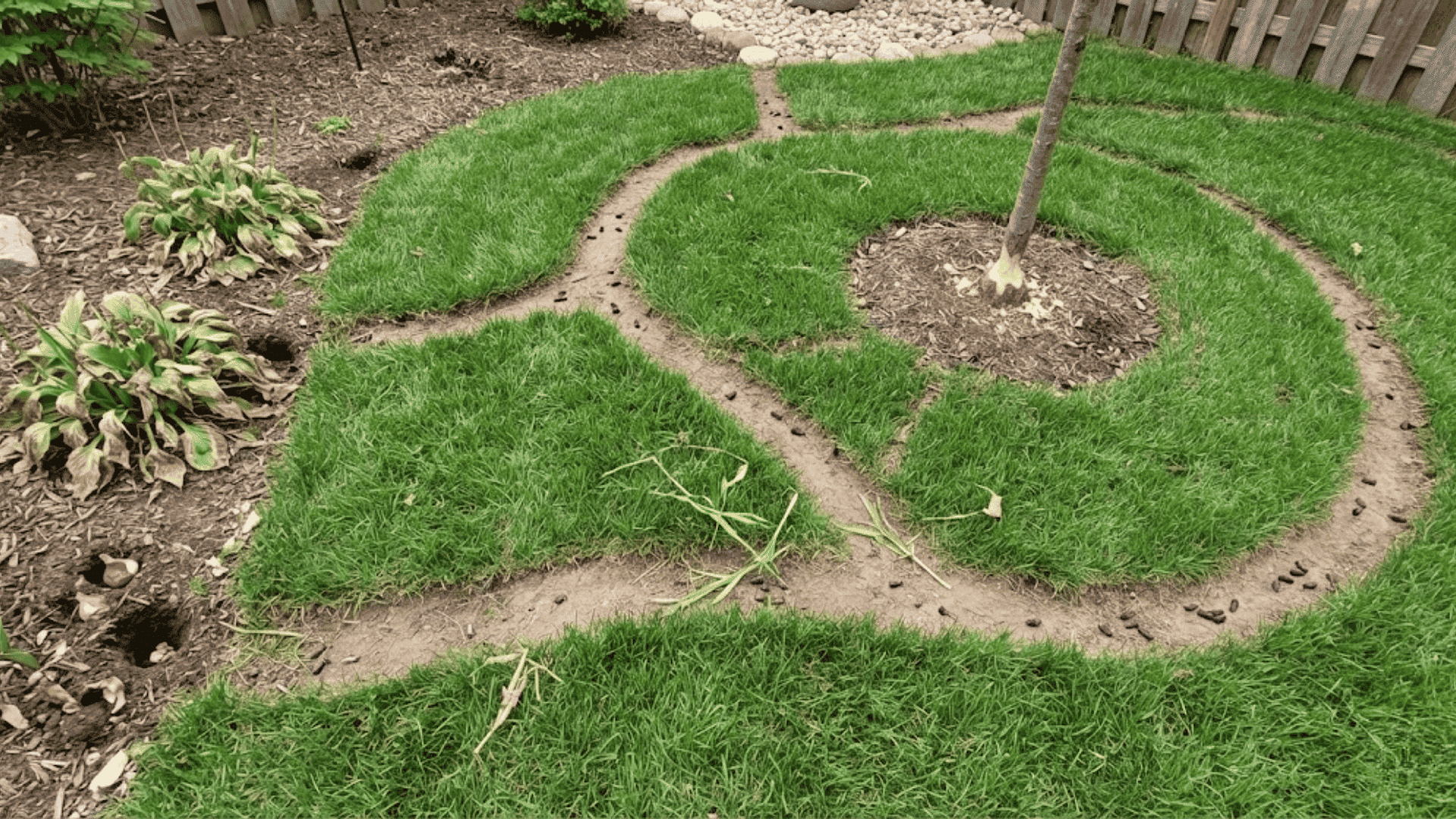
Check for these telltale markers that indicate voles have taken up residence in your lawn and garden areas.
- Gnawed bark at the soil line on young trees and shrubs, often girdling the trunk in a complete ring.
- Surface runways without soil mounds, just flattened grass trails about 1 to 2 inches wide.
- Clipped grass and visible droppings are scattered along the pathways they use repeatedly.
- Missing bulbs and severed roots in garden beds where plants suddenly wilt or die.
Signs That Point to Moles
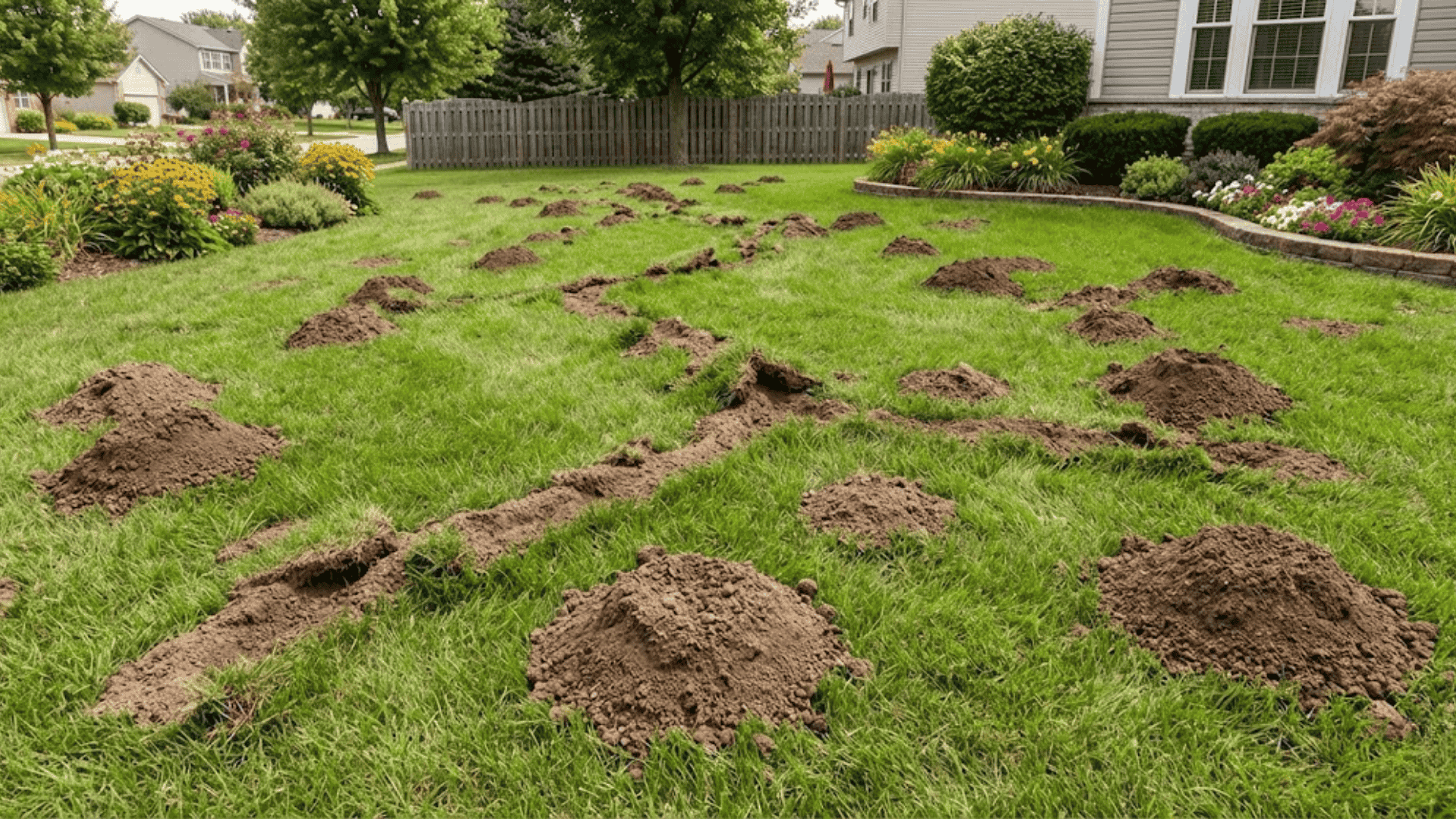
Look for these distinctive features that confirm moles are tunneling beneath your property.
- Fresh cone-shaped molehills with loose, finely textured soil piled 4 to 8 inches high.
- Raised surface ridges that run across your lawn in irregular patterns, soft to the touch.
- Collapsing tunnels when you press down on the raised areas, indicating shallow feeding runs.
- No visible plant damage since moles ignore vegetation and focus solely on soil-dwelling insects.
Voles vs. Moles: Diet and Feeding Habits
Voles are herbivores that feast on plant roots, bulbs, seeds, and tender bark, which explains why your vegetation dies along their pathways.
They’ll strip bark from trees during winter when other food runs scarce, often killing young saplings entirely.
Moles, on the other hand, are carnivorous insectivores hunting earthworms, grubs, and soil-dwelling insects.
They tunnel relentlessly in search of prey, which is why your lawn develops those raised ridges and spongy patches.
While moles rarely harm plants directly, their constant digging disrupts root systems and creates the cosmetic damage that frustrates homeowners.
Why Lawn Vole vs. Mole Damage is Often Confused?
Even experienced homeowners mix up these pests because they share overlapping characteristics that blur the lines between them.
Understanding why the confusion happens helps you look past the similarities and focus on the distinct differences.
| Confusion Factor | What Seems Similar | Why It’s Misleading |
|---|---|---|
| Shared habitats | Both prefer healthy, moist lawns | Voles stay on the surface while moles work underground |
| Similar timing | Damage peaks in early spring | Voles hide under snow, moles tunnel year-round |
| Tunnel appearance | Runways and ridges look alike | Vole paths are flat, mole ridges are raised |
| Common assumptions | All lawn pests dig tunnels | Voles create pathways, not true tunnels |
How to Fix Lawn Damage Caused by Voles?
Repairing vole damage takes a multi-step approach that addresses both the immediate destruction and prevents these rodents from returning to your yard.
- Step 1: Clear away dead vegetation by raking up damaged grass, removing gnawed plant material, and exposing bare soil along vole runways.
- Step 2: Reseed affected areas with grass seed appropriate for your climate, keeping soil moist until new growth establishes.
- Step 3: Protect tree trunks with hardware cloth or plastic guards installed 18 to 24 inches high and buried 6 inches below soil level.
- Step 4: Remove ground cover like thick mulch and dense vegetation near vulnerable plants where voles feel protected.
- Step 5: Set up barriers and traps around garden beds and high-value plants to catch remaining voles and deter new arrivals.
How to Fix Lawn Damage Caused by Moles?
Fixing mole damage focuses on restoring your lawn’s structure and appearance while addressing the conditions that attracted them in the first place.
- Step 1: Flatten molehills by breaking up soil clumps and spreading the loose dirt evenly across your lawn with a rake.
- Step 2: Collapse surface tunnels by walking over raised ridges or using a lawn roller to press down affected areas firmly.
- Step 3: Fill sunken spots with topsoil to level out depressions left by collapsed tunnels, then compact gently.
- Step 4: Reseed bare patches where grass has died from root disturbance, watering consistently until new growth takes hold.
- Step 5: Reduce grub populations with beneficial nematodes or targeted treatments to eliminate the mole’s primary food source.
Prevention Tips for Voles and Moles
Keeping these pests away requires creating conditions they find uninviting while maintaining a healthy lawn. A combination of universal deterrents and pest-specific strategies gives you the best defense against future invasions.
Prevention Strategies Specific to Voles
Target the conditions and access points that make your property appealing to these herbivorous rodents.
| Strategy | What to Use | Application |
|---|---|---|
| Tree guards | Hardware cloth | 18 to 24 inches high, 6 inches buried |
| Mulch control | Thin layers | 2 to 3 inches max, 6 inches from trunks |
| Ground cover removal | Clear dense vegetation | Eliminate ivy and pachysandra hiding spots |
| Gravel barriers | Coarse gravel | 12-inch wide rings around plants |
Prevention Strategies Specific to Moles
Address the underground conditions and food sources that draw moles to your lawn in the first place.
| Strategy | Method | Timing |
|---|---|---|
| Soil moisture | Deep, infrequent watering | Year-round maintenance |
| Grub reduction | Beneficial nematodes | Spring and fall applications |
| Castor oil repellents | Liquid spray treatments | Monthly during the active season |
| Underground barriers | Hardware cloth 24 inches deep | Install around garden perimeters |
When to Call a Professional?
If you’ve tried multiple control methods over several weeks without reducing activity, it’s time to bring in expertise.
Professional pest control specialists become necessary when vole populations explode beyond manageable levels or when mole tunnel networks spread across your entire property.
They assess soil conditions, identify entry points, and determine population density using tools homeowners don’t typically have access to.
Professionals also handle situations where damage threatens expensive landscaping or structural foundations.
When infestations persist despite your best efforts, or when you’re dealing with protected wildlife regulations in your area, expert intervention saves time, money, and your sanity.
Wrapping Up Your Pest Detective Work
Now that you can distinguish lawn vole vs mole damage, you’re equipped to tackle whatever’s disrupting your outdoor space with confidence.
Those mysterious tunnels and dead patches finally make sense, and you know exactly which prevention strategies will actually work for your situation.
Surface-loving voles munching through your garden or underground moles rearranging your turf both require targeted solutions that beat guesswork every time.
Have questions about the damage you’re seeing or tips that worked wonders in your yard? Drop a comment below and share your experience with fellow homeowners navigating the same challenges.