Most of the work that goes into a great-looking lawn happens at very specific points in the year. Miss the fall fertilizer window by a few weeks and you’re fighting the same bare patches next spring. Skip pre-emergent in early spring and crabgrass fills in before you notice it’s even a problem.
A solid lawn care schedule doesn’t mean spending every weekend outside. It means knowing which tasks to do, when to do them, and how long each window actually lasts. Whether you’re growing cool-season grass like Kentucky bluegrass or tall fescue in the North, or warm-season varieties like bermudagrass or zoysia in the South, the timing shifts, but the principle is the same: work with the grass growth cycle, not against it.
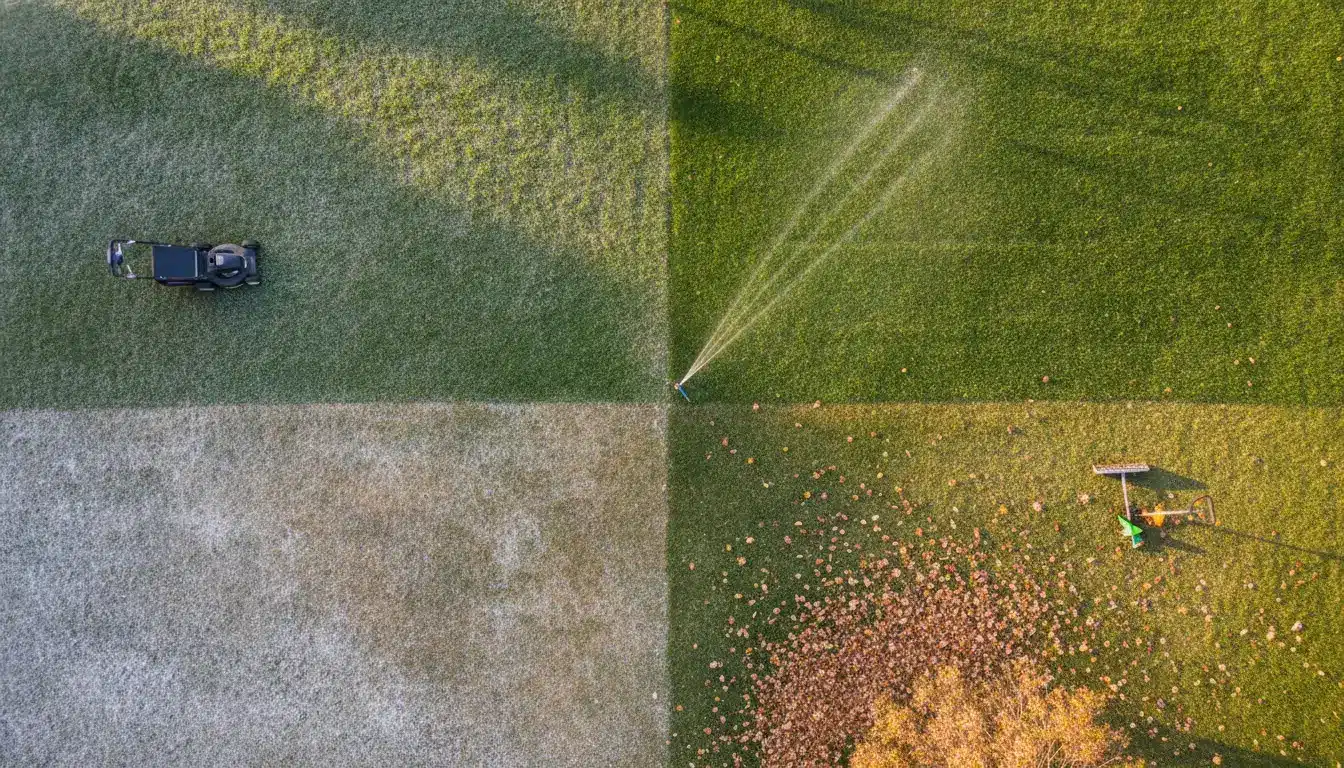
Quick Answer: A year-round lawn care schedule breaks into four seasonal windows. Spring (March to May): fertilize, control weeds, and mow regularly. Summer (June to August): water deeply and reduce stress on warm-season or cool-season grass based on your region. Fall (September to November): overseed, aerate, and apply a final fertilizer. Winter (December to February): let the lawn rest and prep your equipment. Your grass type determines the exact timing, so cool-season and warm-season lawns follow different rhythms.
Your Month-by-Month Lawn Care Calendar
The table below gives a quick-reference overview. Each season gets its own section below with more detail.
|
Month |
Key Task |
Notes |
|---|---|---|
|
January |
Rest period |
Avoid foot traffic on frozen turf |
|
February |
Equipment maintenance |
Sharpen mower blades, change oil, check spreader |
|
March |
Pre-emergent application |
Apply when soil temps reach 50°F for cool-season lawns |
|
April |
First fertilizer application |
Wait until after the second mowing of the season |
|
May |
Regular mowing begins |
Never remove more than 1/3 of blade height per cut |
|
June |
Deep watering routine |
1 inch per week; water early in the morning |
|
July |
Monitor for grubs and drought stress |
Check lawn edges where brown meets green |
|
August |
Prep for overseeding |
Late August is the ideal prep window for cool-season grass |
|
September |
Overseed + aerate + fertilize |
The most important month for cool-season lawns |
|
October |
Mow until dormancy |
Final mow slightly shorter than normal height |
|
November |
Leaf removal + equipment storage |
Clear leaves before snow; winterize mower and sprinklers |
|
December |
Rest period |
Avoid walking on dormant or frozen grass |
Spring Lawn Care: March to May
Spring is the first major growth push of the year for cool-season grasses, and it sets the tone for how the lawn performs through summer. It is also when crabgrass seeds start waking up, which means timing is everything in these first months.
Pre-emergent application (March to early April) is the first real task of the season, but only if crabgrass was a problem the previous year. Apply when soil temperatures hold near 50 degrees Fahrenheit for several consecutive days. A reliable natural signal: forsythia shrubs beginning to bloom in your area usually marks that the window is open. One important note: do not apply pre-emergent if you plan to overseed bare spots that same spring, since it will stop grass seed from germinating along with the crabgrass.
Fertilizing should wait until after the second mowing of the season, not the first. Fertilizing too early pushes fast top growth at the expense of root development. Apply about 1 pound of actual nitrogen per 1,000 square feet of lawn, using a controlled-release formula. If you return grass clippings while mowing, you can reduce this rate slightly, since clippings recycle nitrogen back into the soil as they decompose.
Mowing in spring should be at about 3 inches throughout the season. Never remove more than one-third of the leaf blade in a single cut. In USDA hardiness zones 4 to 7, this usually means mowing weekly from April through June.
For warm-season grasses like bermudagrass and St. Augustine grass, spring activity picks up later, usually from May into June once soil temperatures climb consistently above 65 degrees Fahrenheit. Hold off fertilizing warm-season turf until it has fully greened up after winter dormancy.
Dethatching and core aeration can be done in spring if there is a compaction or thatch problem, but they are more effective in fall. Avoid dethatching or aerating cool-season grass in late spring when summer heat is approaching, since the lawn needs time to recover before stress sets in.
Summer Lawn Care: June to August
Summer is the most stressful season for cool-season grasses. Kentucky bluegrass, tall fescue, and perennial ryegrass slow their growth when temperatures rise above 85 degrees Fahrenheit. The main goals are keeping the lawn hydrated and avoiding practices that add extra stress during the hottest weeks.
Watering deeply rather than frequently is the most important summer principle. Most lawns need about 1 inch of water per week to stay green. Applying that inch in one or two longer sessions encourages roots to grow deeper into the soil. Watering lightly every day does the opposite, keeping roots shallow and making the grass more vulnerable to heat and drought. Water in the early morning to minimize evaporation and reduce fungal disease risk.
Cool-season lawns in the Midwest and Northeast often go partially dormant in July and August. A lawn that turns straw-brown in midsummer is not dead. Kentucky bluegrass in particular has the ability to survive several weeks of dormancy and will green up again when temperatures drop and rainfall returns. Avoid aerating, overseeding, or dethatching during this period. Disturbing a dormant cool-season lawn in summer gives weeds an open invitation and slows recovery considerably.
For warm-season grasses, summer is the opposite of cool-season summer: this is peak growing season. Bermudagrass, zoysia, and centipede grass thrive from June through August and can handle more frequent mowing and fertilizer applications during this window. Fertilize warm-season lawns every four to eight weeks during active summer growth, using a controlled-release nitrogen fertilizer.
Grub monitoring in late summer (late July into August) is worth a few minutes of attention. White grubs, the larval stage of Japanese beetles and other beetles, feed on grass roots in late summer and can cause irregular brown patches that lift away from the soil like a mat. Check lawn edges where brown meets green by peeling back a small section of turf. Treat only if you find several grubs per square foot of soil, since low numbers rarely cause significant damage on their own.
Fall Lawn Care: September to November
Fall is the most important season for cool-season grass owners. This is the window for your highest-impact tasks, and the combination of warm soil, cool air temperatures, and reduced weed pressure gives grass seed and fertilizer the best possible conditions to work.
Overseeding thin or bare areas works best from late August into mid-September in most of the US. A slit seeder gives the best results because it places seed directly into the soil rather than scattering it on top of thatch and debris. Seed needs good soil contact to germinate consistently, and broadcasting by hand over an established lawn often leaves too many seeds on the surface.
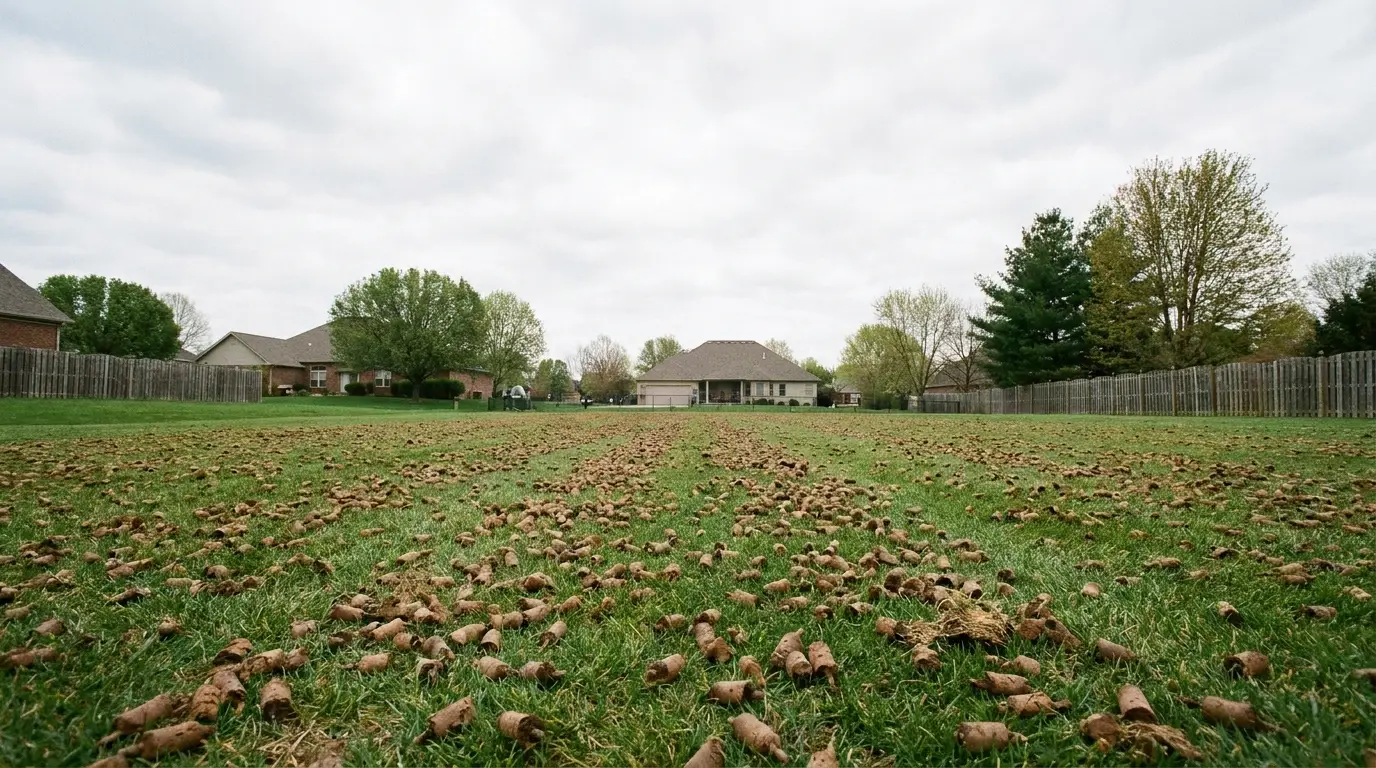
Core aeration in early fall relieves soil compaction and improves how well fertilizer and water actually penetrate the root zone. After removing cores, leave them on the lawn surface to break down and return organic matter to the soil. Aerating before overseeding is especially effective, since the holes give seed direct access to soil without additional prep.
Fall fertilization is the application that matters most for long-term lawn health. For cool-season lawns in USDA hardiness zones 4 to 6, target early September. For lawns in zones 7 and 8, mid-September to mid-October is the right window. Apply about 1 pound of nitrogen per 1,000 square feet using a slow-release formula. This fall feeding fuels root growth through winter and sets up a strong spring green-up, without triggering the kind of late-season top growth that can promote snow mold under winter snow.
Continue mowing throughout fall until the grass stops actively growing. Letting grass go into winter too long creates an environment for vole activity and fungal disease under snow. A final mow cut about half an inch shorter than your usual height improves air circulation and reduces the risk of Typhula blight and other snow mold diseases.
Broadleaf weed control in early to mid-fall is more effective than spring treatment for many perennial weeds, including dandelions and plantain. Spot treat with a liquid-applied broadleaf herbicide while weeds are still actively growing, rather than broadcasting across the entire lawn.
Winter Lawn Care: December to February
For most lawns across the continental US, winter is a rest period. The main rule is simple: stay off frozen or snow-covered turf. Foot traffic on frozen grass crushes the crowns, which are the main growth points, and the resulting damage shows up as dead patches in spring that need repair.
Use winter to prepare for the next growing season. Sharpen or replace mower blades, since a dull blade tears grass rather than cutting it cleanly and increases disease vulnerability. Change the oil, clean the air filter, and check your fertilizer spreader for wear. If you have a sprinkler system in a region where pipes can freeze, confirm it was properly winterized before the first hard freeze, since a burst line in a sprinkler manifold is an expensive spring surprise.
Do not use fertilizer to melt ice on lawns or driveways. Applying fertilizer to frozen or snow-covered turf has no effect on the grass and risks nutrient runoff into nearby waterways once the ground thaws.
In the deep South (USDA hardiness zones 8 to 10), warm-season lawns stay active much longer and may not go fully dormant at all, but they still slow in December and January and should not be fertilized during that window.
When Should You Hire a Lawn Care Pro?
Mowing, raking, and basic watering are well within the DIY range for most homeowners. But a few situations benefit from professional help: large-scale overseeding projects, grub infestations that need accurate product timing, lawn renovation after disease damage, or getting the fertilizer program calibrated for your specific soil test results.
If your schedule slips or a problem gets ahead of what DIY products can handle, LawnGuru makes it straightforward to find vetted local lawn care providers for one-off jobs or full seasonal programs, without committing to a long-term contract.
Frequently Asked Questions
What Is the Single Most Important Month for Lawn Care?
For cool-season grass owners, September. Overseeding, core aeration, and fall fertilization done together in early September deliver the highest return of any single month. Fall fertilizer feeds roots through winter and sets up spring green-up, while fall overseeding succeeds at a much higher rate than spring seeding because soil is warm, air is cool, and crabgrass pressure is gone.
How Many Times a Year Should I Fertilize My Lawn?
Most cool-season lawns do well with two to three applications: once in early spring (after the second mowing), once in early fall (September), and optionally a late-fall application before the ground freezes. Warm-season lawns should be fertilized during active summer growth, typically every four to eight weeks from May through August depending on grass type.
Can I Skip Lawn Care During Summer?
For cool-season lawns, summer is the season to keep intervention minimal. Aerating, dethatching, or heavy seeding in summer adds stress to grass that is already under heat stress. Consistent watering and regular mowing are all that most cool-season lawns need from June through August. For warm-season lawns, summer is the active season and skipping it means missing your main fertilizer and mowing window.
What Should I Do First in Spring?
Wait for soils to thaw and the lawn to start active growth before doing anything. The first spring tasks are raking out winter debris, assessing any snow mold or vole damage, and applying pre-emergent if crabgrass has been a recurring problem. Fertilizing comes after the second mowing, not the first.
Does grass type change the entire schedule?
Yes, significantly. Cool-season grasses, including Kentucky bluegrass, tall fescue, perennial ryegrass, and fine fescues, peak in spring and fall and slow in summer heat. Warm-season grasses, including bermudagrass, zoysia, St. Augustine grass, and centipede grass, thrive in summer and go dormant in winter. The windows for seeding, fertilizing, and aeration are almost reversed between the two groups.
The Bottom Line
A good lawn care schedule does not require expertise. It requires doing the right things in the right months. For cool-season lawns, fall is your highest-impact window. For warm-season lawns, summer is when your effort pays off most. The month-by-month calendar above gives you a checklist to follow without needing to track soil temperature sensors or count weeks from the last frost. Start with knowing your grass type, match your region to the general seasonal windows, and adjust if your spring runs late or your summer starts early.