How to Repel Wasps: 7 Natural Tricks That Work

Something’s eating the leaves. Something’s leaving spots. These notes help you figure out what’s going on.

They show what to look for, what it means, and what to do. Easy signs. Straight answers. Steps that make and work.

Published On: July 28, 2026

how-to-repel-wasps-naturally-easy-home-tips

Table of Contents

Nothing ruins time outdoors faster than a wasp that refuses to leave. One minute you’re relaxing, and the next you’re watching every sip and every bite.

If you’re looking for how to repel wasps naturally, you don’t need to reach for harsh chemicals first. I’ve tried most of the tricks below in my own yard over a few summers, and some hold up a lot better than others. 

A few simple changes around your yard and some easy DIY solutions can make your space far less inviting.

In this blog, you’ll learn what attracts wasps, which natural methods actually help, how to tell one wasp species from another, and how to keep them from coming back throughout the season.

Why are Wasps Attracted to Your Yard?

Wasps show up for a reason: easy access to food, water, or a sheltered place to nest. 

Sugary spills, ripe fruit, uncovered trash, pet food, and standing water all attract foraging wasps. They also look for sheltered places such as roof eaves, sheds, wall gaps, and decks to build nests.

During late summer, larger colonies increase foraging activity, making wasps more noticeable around homes.

Once you understand what’s drawing them in, the right natural repellent becomes much easier to choose.

Types of Wasps You’re Likely Dealing With

Not every wasp behaves the same way, and knowing which one you’re dealing with changes what’s worth trying. 

I’ve found that the fake nest trick and essential oil sprays work better on paper wasps than on ground-nesting yellow jackets, which barely notice a hanging decoy.

Wasp Type Typical Nest Location Aggression Level What Helps Most
Paper wasps Umbrella-shaped, open nests under eaves and railings Low unless provoked Decoy nests, essential oil sprays
Yellow jackets Enclosed nests underground or in wall voids High, especially near the nest Sealing entry points, professional removal for larger colonies
Mud daubers Small mud tubes on walls or under overhangs Very low, rarely sting Usually safe to leave alone
Hornets Large gray paper nests in trees or on structures High Distance and, for active nests, professional removal

I’m not certain how these behaviors vary by region or climate, so if you’re trying to identify a specific nest, a local extension office or pest control service can confirm the species before you decide how to handle it.

Fast DIY Tricks People Are Trying to Repel Wasps Right Now

Social media is full of quick wasp hacks promising instant results, and it’s easy to see the appeal – most use items already sitting in your kitchen.

Some tricks are backed by real wasp behavior, while others work only temporarily or in specific situations.

Let’s break down the most popular ones people are trying right now.

1. The Fake Nest Trick (Does It Actually Work?)

brown paper fake wasp nest hanging beneath a porch roof to discourage new nesting activity

Wasps are territorial insects and generally avoid building nests near an existing colony. A fake nest, often a crumpled brown paper bag shaped like a hive, is meant to trick wasps into believing the area is already claimed.

How to try it:

  • Crumple a brown paper bag into a rounded, nest-like shape
  • Hang it in problem areas like porches or eaves
  • Replace it if it gets wet or damaged

It won’t eliminate an active nest, but it may discourage new ones from forming.

2. Soda Can and Sugar-Water Traps

homemade sugar water wasp trap placed beside a backyard fence in natural daylight outdoors

This trap uses sugary bait to lure wasps into a container they can’t easily escape. It’s simple, inexpensive, and uses items already found at home.

Steps to make one:

  • Mix sugar water or leftover soda in a bottle or can
  • Add a few drops of dish soap to break surface tension
  • Cut small entry holes and place traps away from seating areas
  • Empty and refresh weekly

Effective for reducing numbers, though it works best alongside other prevention methods.

3. Essential Oil Sprays People Swear By

essential oil spray bottle with peppermint and herbs for <echighlighted data-lazy-src=

While no homemade solution guarantees complete removal, several ingredients create scents or conditions that many wasps avoid.

These methods work best when used consistently and combined with simple prevention, such as removing food scraps and checking for early nest activity.

Start with the option that suits the supplies you already have.

4. Peppermint and Clove Oil

Peppermint and clove oils produce strong aromas that many people use as natural wasp repellents around outdoor living spaces.

Their scent can make common nesting spots less inviting, especially during the early part of the season.

These oils are best used to discourage new activity rather than to deal with an established nest.

Best Application Method

  • Mix 10–15 drops of each oil with water and a small amount of mild liquid soap.
  • Pour into a spray bottle and shake well before each use.
  • Spray around eaves, railings, fences, window frames, and patio furniture.
  • Reapply every few days or after rainfall.

5. Vinegar-Based Sprays

A vinegar spray is a simple household mixture often used to discourage wasps from returning to areas where they frequently gather.

The sharp smell fades quickly for people, but it can make surfaces less appealing.

It works well for routine outdoor maintenance and is suitable for treating spots where food or sugary drinks are commonly served.

Best Application Method

  • Combine equal parts white vinegar and water in a spray bottle.
  • Lightly coat tables, deck railings, trash bin lids, and outdoor dining areas.
  • Let the solution air dry naturally.
  • Refresh the treatment every few days for continued coverage.

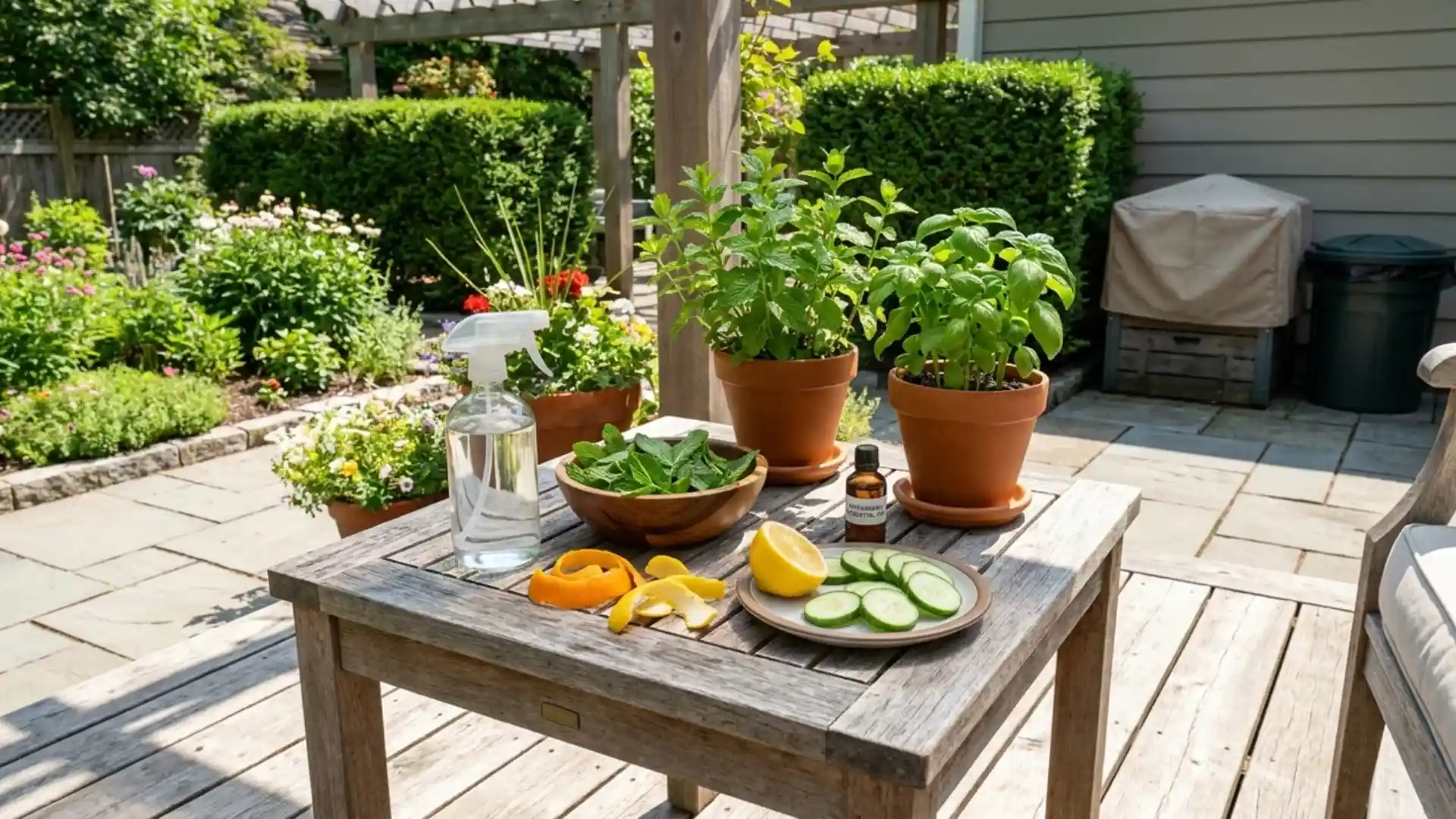
6. Citrus Peels and Cucumber Slices

Fresh citrus peels and cucumber slices are popular DIY options because they are easy to place around outdoor spaces.

Their natural scent may help reduce wasp interest in small gathering areas, making them useful during picnics or backyard meals.

Since they dry out over time, replacing them regularly helps maintain their effect.

Best Application Method

  • Place fresh lemon, orange, or grapefruit peels near seating areas.
  • Add cucumber slices around serving tables or window ledges.
  • Replace with fresh pieces every one to two days.
  • Remove old peels before adding new ones.

7. Herbs and Plants That Discourage Nesting

Some aromatic plants can make outdoor spaces less attractive to wandering wasps while adding greenery to your yard or patio.

Although they will not stop every wasp, they can support other prevention methods when placed near areas where people spend time.

Growing these plants also provides long-term seasonal value beyond pest control.

Best Application Method

  • Grow mint, basil, thyme, or lemongrass in containers.
  • Position pots near patios, decks, doors, and windows.
  • Trim plants regularly to keep their fragrance noticeable.
  • Group several pots together for broader coverage.

How Often to Reapply for Best Results?

Natural repellents do not last as long as commercial chemical products, so regular reapplication is important for consistent protection.

Weather, sunlight, and outdoor moisture can reduce their effectiveness over time.

Following a simple schedule helps maintain the scent barrier that discourages wasps from settling near your home.

  • Most homemade sprays and essential oil mixtures should be reapplied every two to three days during active wasp season.
  • Fresh citrus peels, cucumber slices, and similar natural materials should be replaced every one to two days before they dry out.

A steady routine delivers better results than occasional treatments.

Pair regular reapplication with good outdoor hygiene and seasonal inspections to make natural wasp repellent methods more effective throughout the season.

Seasonal Prevention Tips

The time of year significantly affects wasp behavior, so your prevention strategy should change with the seasons.

A few simple actions at the right time can lower the chances of nests forming near your home and reduce unwanted encounters later.

Instead of reacting only when wasps appear, following a seasonal routine helps keep outdoor spaces more comfortable.

Here’s what to focus on throughout the year for better long-term results.

Season Wasps Behaviour What You Should Do Why It Helps
Early Spring Queens search for places to build new nests. Inspect eaves, sheds, and rooflines. Seal small gaps, remove old nests, and apply natural wasp repellent. Prevents nests from becoming established.
Summer Colonies are at their largest and most active. Clean outdoor eating areas, cover food and drinks, empty trash often, and refresh natural repellents. Reduces food sources and discourages wasps from gathering.
Off-Season Nesting activity has ended. Check for entry points, repair cracks, remove leftover nests, and inspect outdoor structures. Makes your property less attractive for nesting next spring.

Protecting Outdoor Spaces: Patios, Decks, and Picnic Areas

Wasps are most likely to gather where food, drinks, and waste are readily accessible. A few simple habits can make outdoor spaces less attractive without using harsh treatments.

Focus on the areas that naturally attract wasps, then adjust your management you improve everyday prevention.

  • Covering Food and Drinks Properly: Keep food covered until serving, use lids on drinks, wipe up spills quickly, and remove leftovers immediately. This limits food scents that attract hungry wasps.
  • Placement of Trash Bins and Compost: Keep trash bins and compost containers away from seating areas. Close lids tightly, clean spills regularly, and empty waste often to reduce odors that attract wasps.
  • Outdoor Lighting and Wasp Attraction: Choose warm-colored LED bulbs and switch off unnecessary outdoor lights at night. Fewer insects gather around the lights, making the area less appealing to wasps.

Signs You May Have a Nest Nearby

wasps repeatedly flying toward roof eave suggesting a nearby hidden nest around the home area

A few wasps passing through your yard are usually nothing to worry about, but repeated sightings in the same area may point to a nearby nest.

Watch for wasps flying to and from a single location, especially around roof eaves, attic vents, gaps in walls, sheds, decks, fences, or dense shrubs.

Increased activity during the day often indicates that a colony is growing. You may also notice buzzing near hidden spaces or wasps gathering around one entry point.

Spotting these signs early makes it easier to take preventive action before the nest becomes larger and more difficult to manage.

When to Call a Professional?

This section touches on stings and allergic reactions. It’s for general awareness only, not medical advice; if you or someone in your household has a known allergy to wasp stings, talk to a doctor or allergist about an action plan before wasp season starts.

Some wasp problems are too risky to handle with natural methods or DIY solutions. Contact a licensed pest control professional if you notice any of the following:

  • The nest is large or continues to grow
  • Wasps have nested inside walls, attics, or roof spaces
  • Multiple nests are found around your property
  • Wasps become aggressive when you approach
  • Does anyone in your household have a wasp sting allergy?
  • Natural repellents and prevention methods are no longer working

If You Get Stung: Basic First Aid

Most wasp stings cause pain, swelling, and redness that fade within a day or two. Wash the area with soap and water, apply a cold pack to reduce swelling, and take an over-the-counter pain reliever or antihistamine if needed.

Seek emergency care immediately for difficulty breathing, swelling of the face or throat, dizziness, or hives spreading beyond the sting site, since these can signal a serious allergic reaction.

Taking action at the right time is safer than attempting to remove an active nest yourself. Professional treatment can eliminate the problem while reducing the risk of future nesting.

Final Thoughts

Repelling wasps naturally isn’t about finding one perfect trick. It’s about building habits that keep them away: using natural scents, removing food sources, checking for nesting spots, and staying ahead of seasonal activity.

I’ve found the combination approach works best in my own yard: a spray here, a decoy there, and a lot of consistency.

Keep at it, and your outdoor spaces will be a lot less appealing to wasps over time.

Have a wasp trick that’s worked for you, or one that flopped? Share it in the comments; it might save someone else’s summer.

Frequently Asked Questions (FAQs)

What Smells Do Wasps Hate the Most?

Many people find peppermint, clove, lemongrass, and citronella scents useful because their strong aromas can make treated areas less inviting to wasps.

What Time of Day Are Wasps Least Active?

Wasps are generally less active during the early morning and after sunset, making these times safer for inspections and preventive maintenance.

Can Coffee Grounds Repel Wasps?

Burning dry coffee grounds creates smoke and a strong smell that may temporarily drive wasps away from small outdoor areas during gatherings.

Mask group

About Author

Marcus Chen has been dealing with garden pests since 2015, like aphids, beetles, and whatever's chewing holes in your tomatoes. A certified integrated pest management specialist, he teaches workshops and writes for gardening publications, helping people manage pest problems. Marcus shares practical solutions that work, helping growers protect their plants and actually enjoy the process.

Drop a comment

Leave a Reply

Your email address will not be published. Required fields are marked *

Mask group

About Author

Marcus Chen has been dealing with garden pests since 2015, like aphids, beetles, and whatever's chewing holes in your tomatoes. A certified integrated pest management specialist, he teaches workshops and writes for gardening publications, helping people manage pest problems. Marcus shares practical solutions that work, helping growers protect their plants and actually enjoy the process.

Table of Contents

related posts

How to Get Rid of Mealybugs on Plants?

Mealybugs often hide in plain sight, and by the time you notice their white, cotton-like

Simple Ways to Keep Wildlife Out of Your Home

Wildlife has a funny way of acting like your house is part of the neighborhood