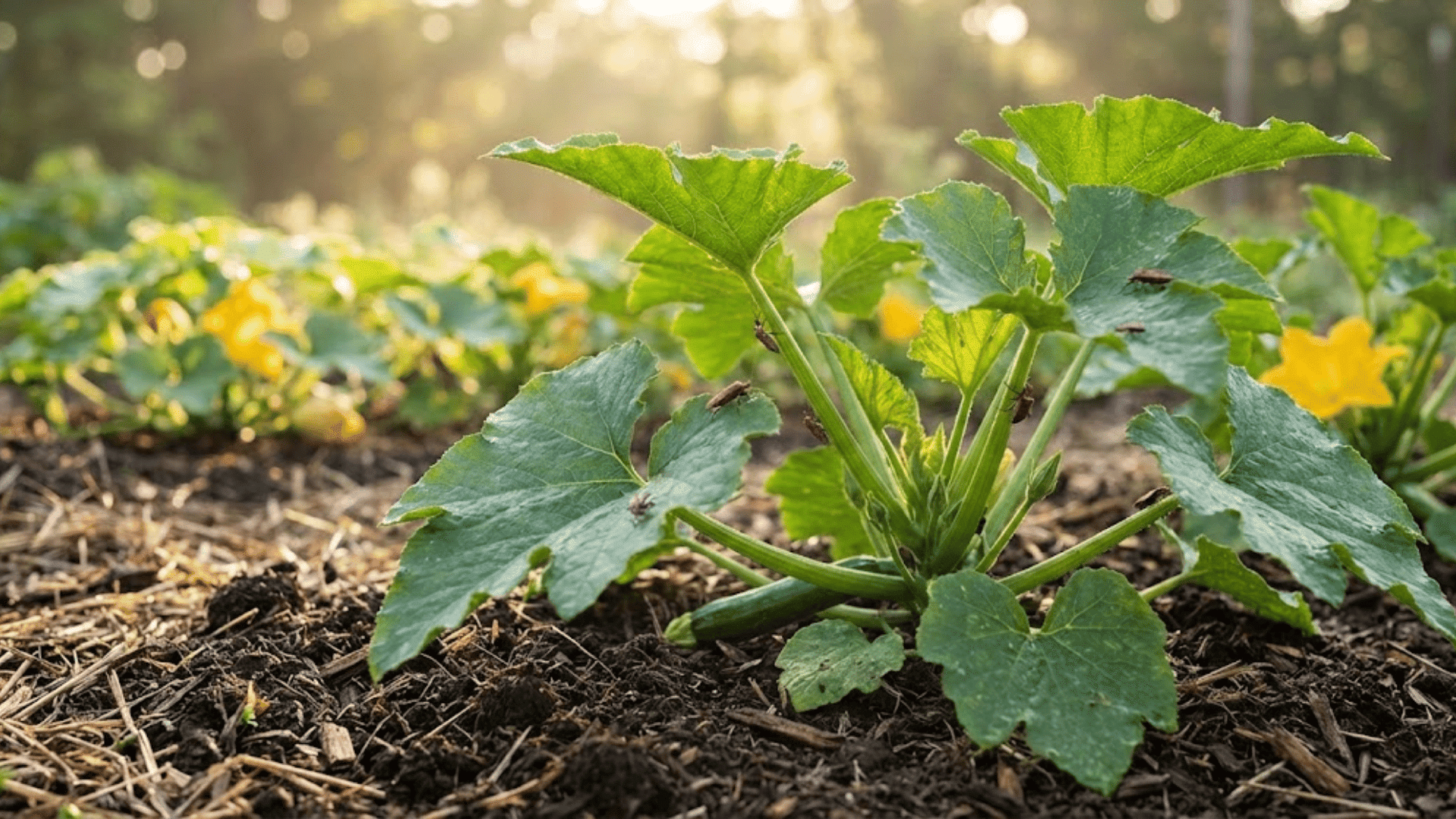
I’ll never forget the first time I spotted squash bugs destroying my zucchini plants.
These little pests are incredibly stubborn, feeding on squash, pumpkins, and cucumbers until the leaves wilt and brown.
What makes them so challenging is how fast they spread and how tough they are to eliminate once they settle in. Catching them early is honestly the best defense I’ve found.
In this guide, I’m walking you through simple, effective ways to get rid of squash bugs, including natural tricks and stronger options when you need them.
Identifying Squash Bugs and Squash Bug Damage
Knowing what you’re dealing with makes all the difference. Adult squash bugs are about half an inch long with flat, grayish-brown bodies that blend right into the stems.
The nymphs are smaller and lighter, often gray or green with darker legs. But the real telltale sign? Their eggs. Squash bug eggs are tiny, oval, and bronze or copper-colored, laid in neat clusters on the undersides of leaves.
Signs of damage include:
- Leaves are turning yellow or wilting even when the soil is moist
- Brown, crispy spots are spreading across the foliage
- Entire vines suddenly collapsing or dying back
Spotting these early helps you act fast.
Squash Bug Life Cycle
Understanding the squash bug life cycle helps you strike at the right moment. These pests move through three distinct stages, and catching them early can save your entire harvest.
| Stage | What It Looks Like | Duration | Best Control Window |
|---|---|---|---|
| Egg | Tiny bronze or copper ovals in clusters under leaves | 7-10 days | Easiest to remove – scrape off before hatching |
| Nymph | Small, gray or green with darker legs; wingless | 4-6 weeks | Still manageable with hand-picking and sprays |
| Adult | Flat, grayish-brown body, about ½ inch long | All season | Hardest to kill; focus on prevention |
The takeaway? Squash bugs multiply incredibly fast. A single female can lay hundreds of eggs, so the earlier you catch them, the better your chances of stopping an infestation before it takes over.
Natural & Organic Ways to Kill Squash Bugs
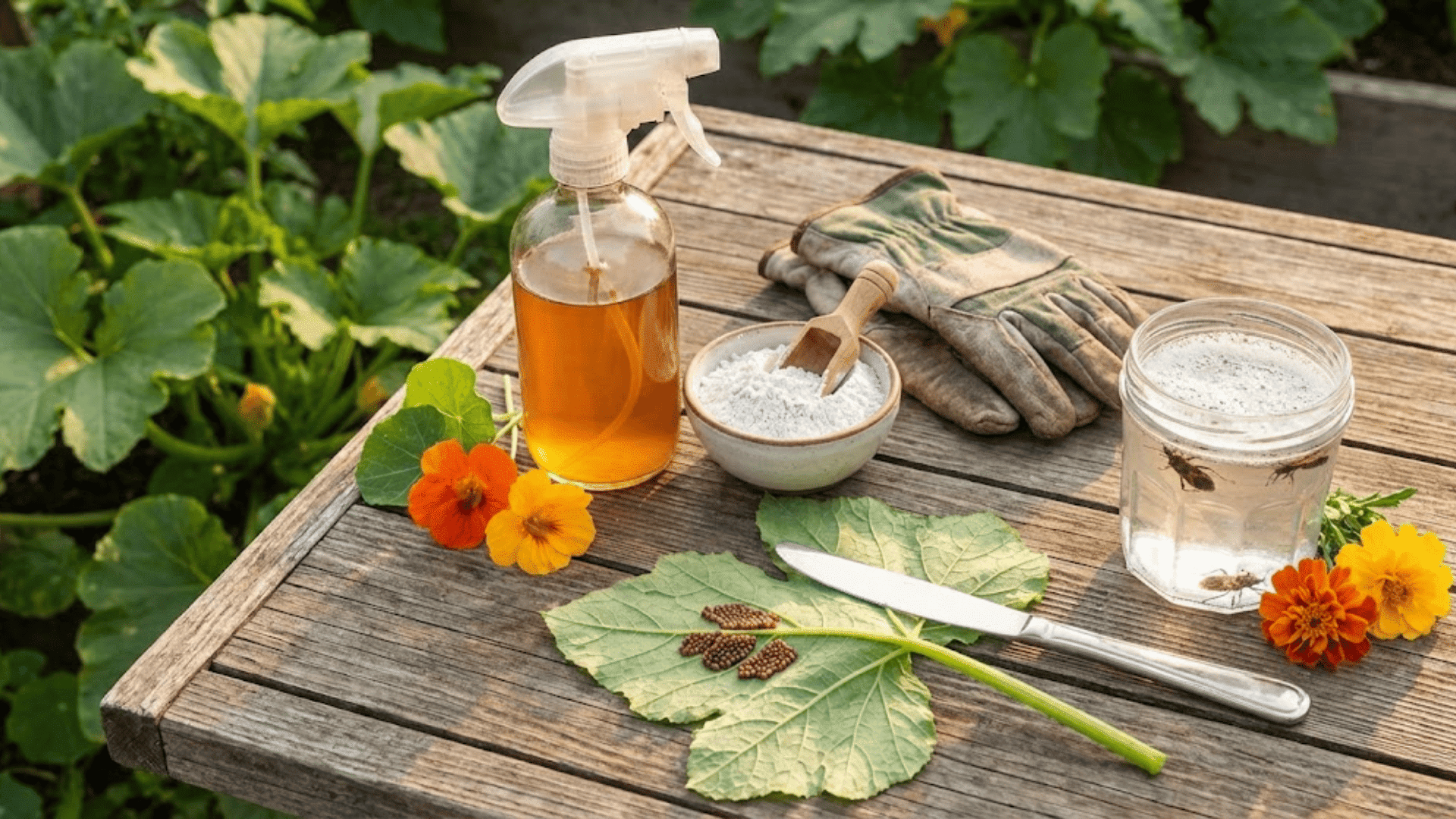
If you prefer keeping things chemical-free, there are plenty of effective natural methods for squash bug control. These approaches work best when used consistently and at the right stage of the bug’s life cycle.
1. Handpicking & Egg Removal
The simplest method is often the most effective. Manually removing squash bugs and their eggs takes patience, but gives you immediate results without any products.
- Step 1: Check plants early morning or evening when bugs are most active and visible
- Step 2: Wear gloves and pick adults off by hand, dropping them into soapy water
- Step 3: Flip the leaves over to find egg clusters on the undersides
- Step 4: Scrape eggs off with a butter knife or your fingernail
- Step 5: Crush eggs or seal them in a bag before disposing of them
2. Neem Oil & Insecticidal Soap
These natural sprays disrupt the bug’s feeding and growth without harsh chemicals. They work best on nymphs and eggs rather than tough adult shells.
- Step 1: Choose a pure neem oil or insecticidal soap labeled for squash bugs
- Step 2: Mix according to package directions, usually in a spray bottle
- Step 3: Spray directly on bugs, eggs, and both sides of leaves
- Step 4: Apply in the early morning or late evening to avoid harming pollinators
- Step 5: Reapply every five to seven days until bugs are gone
3. Diatomaceous Earth
This powdery substance cuts through the bug’s outer shell and dehydrates it. It’s safe for plants but needs careful application around beneficial insects.
- Step 1: Buy food-grade diatomaceous earth for garden use
- Step 2: Lightly dust the base of plants and on leaves when dry
- Step 3: Apply early morning before pollinators arrive, or late evening
- Step 4: Reapply after rain or heavy watering
- Step 5: Avoid breathing it in and keep it away from blooming flowers
4. Companion Planting & Trap Crops
Certain plants naturally repel squash bugs or draw them away from your main crop. Try planting nasturtiums, marigolds, or radishes nearby as companion plants.
You can also use a trap crop strategy by planting a row of blue hubbard squash along the garden edge. Squash bugs prefer it over other varieties, so they’ll gather there instead.
Check your trap crop daily and destroy any bugs you find.
Homemade Squash Bug Sprays (DIY Solutions)
Sometimes the best remedies are already sitting in your kitchen. Homemade sprays can be surprisingly effective against squash bugs, especially when applied consistently to nymphs and eggs.
5. Soap and Water Spray
This classic spray suffocates bugs on contact by breaking down their protective outer coating. It’s gentle on plants but tough on pests.
- Step 1: Mix one tablespoon of pure liquid castile soap or dish soap with one quart of water
- Step 2: Pour into a spray bottle and shake gently
- Step 3: Spray directly on bugs, focusing on the undersides of leaves
- Step 4: Apply in the morning or evening to prevent leaf burn
- Step 5: Rinse plants lightly after a few hours if temperatures are high
6. Garlic or Pepper Sprays
The strong scent and spicy compounds repel squash bugs and discourage them from feeding. These work best as preventative sprays.
- Step 1: Blend two cloves of garlic or two hot peppers with two cups of water
- Step 2: Let the mixture steep overnight, then strain out solids
- Step 3: Add a few drops of dish soap to help it stick to leaves
- Step 4: Spray generously on plants every few days
- Step 5: Reapply after rain and avoid spraying open flowers
7. Vinegar Spray (Use With Caution)
Vinegar can kill squash bugs on contact, but may also damage delicate plant tissue if used incorrectly.
- Step 1: Mix equal parts white vinegar and water in a spray bottle
- Step 2: Test on a single leaf first and wait a day to check for damage
- Step 3: Spray directly on bugs, avoiding healthy foliage as much as possible
- Step 4: Use sparingly and only as a spot treatment
- Step 5: Never apply in full sun or on stressed plants
Quick Tip: Too much soap or midday spraying will burn your leaves. Always test vinegar sprays on one leaf first. Start with gentler mixtures and increase strength only if needed.
Step-by-Step: How to Kill Squash Bug Eggs?
Squash bug eggs are your best opportunity to stop an infestation before it starts. Catching them early prevents hundreds of nymphs from hatching and devouring your plants.
Step 1: Know Where to Look
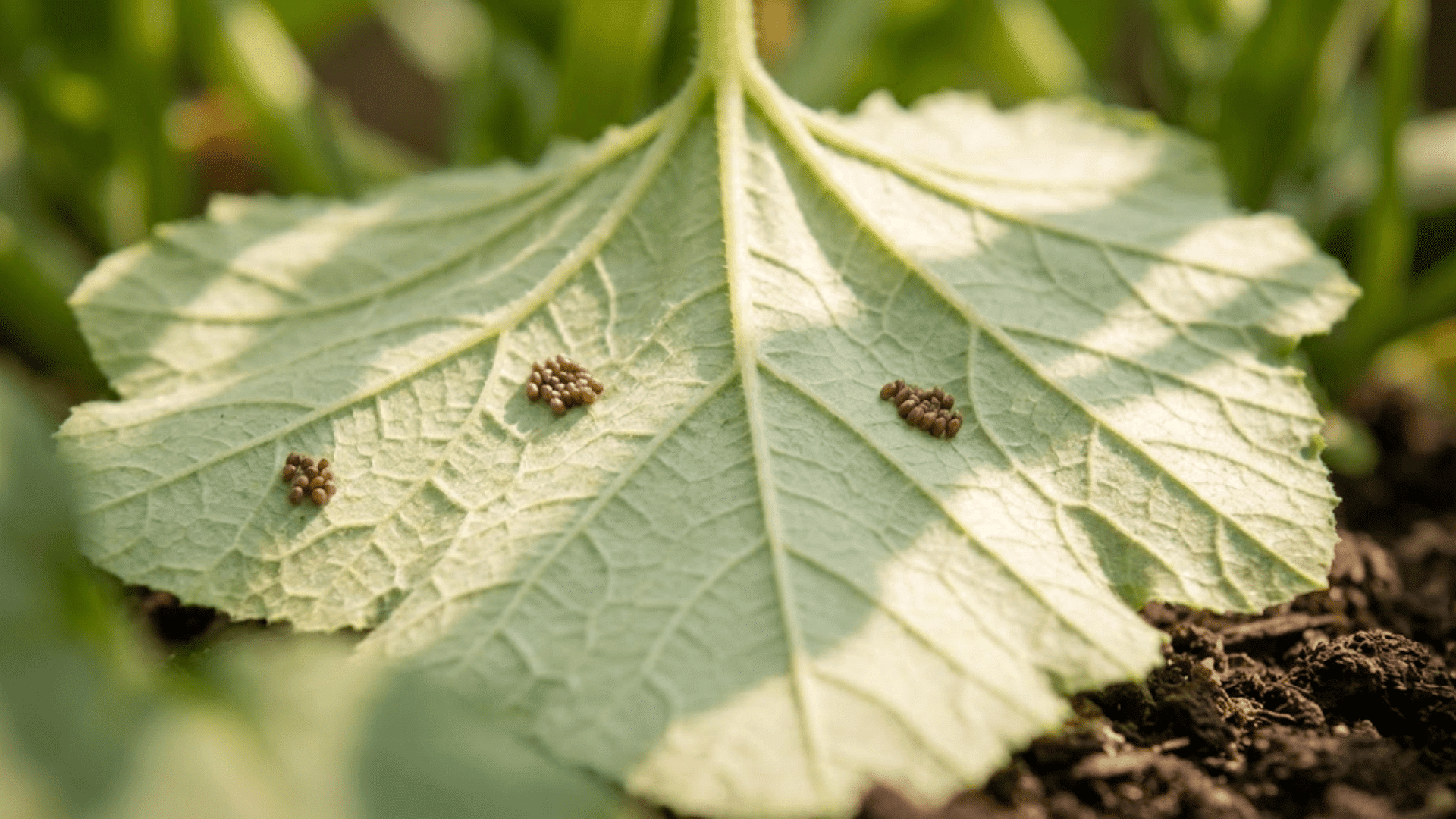
Squash bug eggs are almost always hidden on the undersides of leaves, especially near the base of the plant where stems meet the main vine. They prefer older, larger leaves that provide good cover.
Check between the leaf veins where the bronze or copper-colored clusters blend in with shadows. Adult females lay eggs in neat groups, often along the center vein. Make it a habit to flip every leaf during your morning garden walk.
Step 2: Inspect Plants Daily
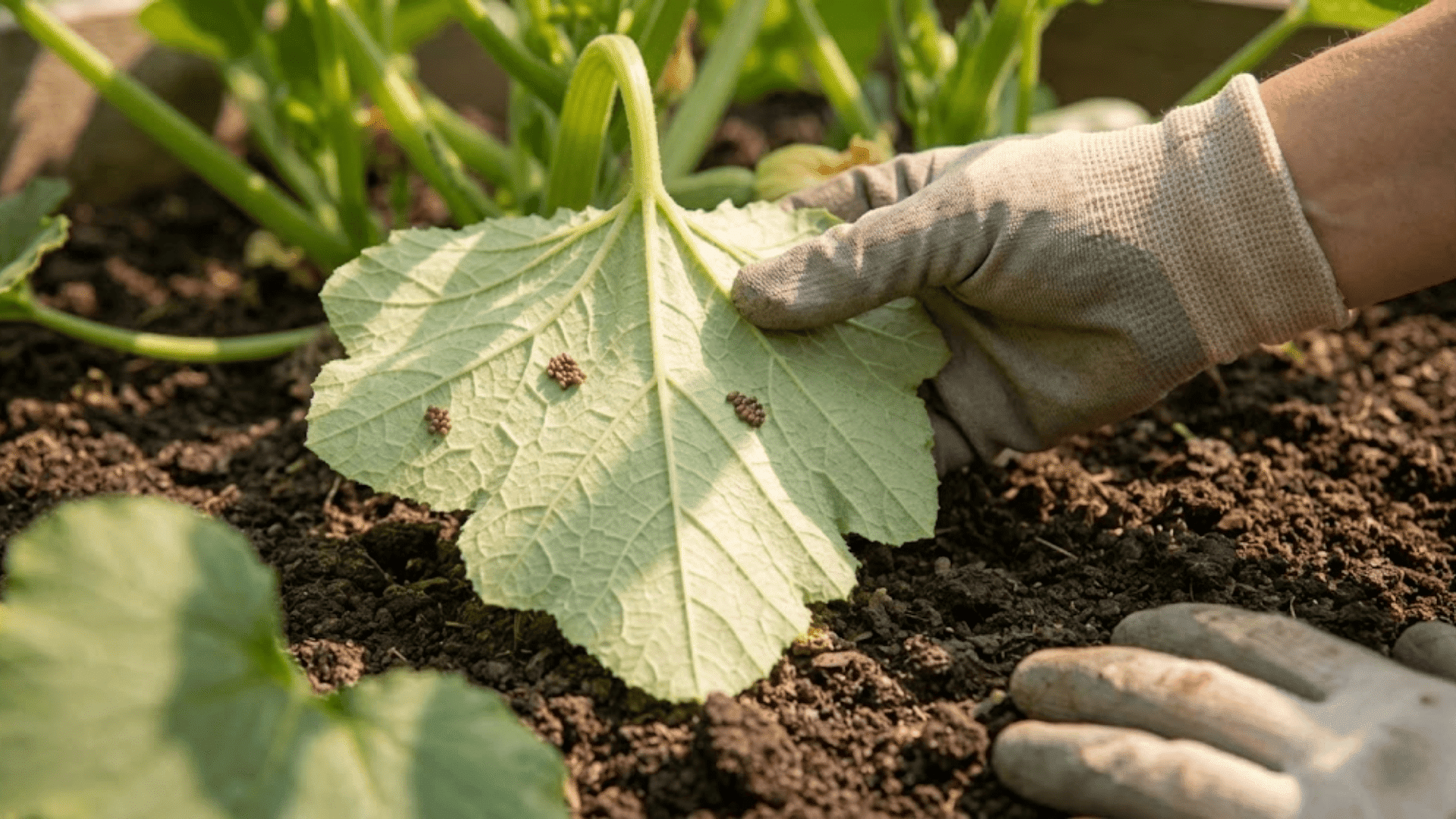
Timing is everything when dealing with squash bug eggs. They hatch in seven to ten days, so daily checks give you a narrow window to act. Focus on your squash, zucchini, and pumpkin plants first since these are their favorites.
Early morning is ideal because the bugs are less active and eggs are easier to spot in soft light. Even missing one day can mean dozens of nymphs emerging.
Step 3: Remove Eggs Carefully
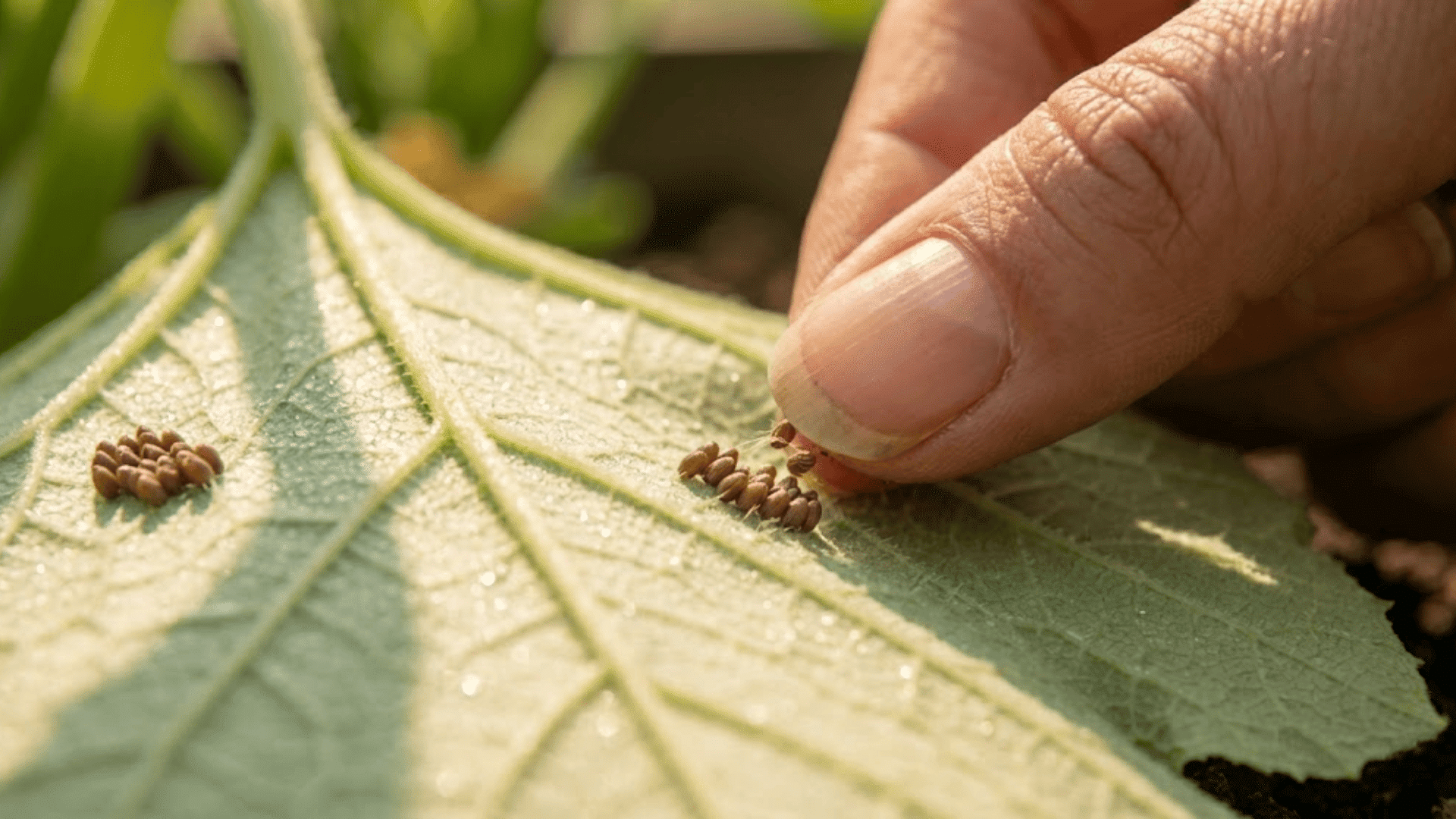
Use your fingernail, a butter knife, or even a piece of duct tape to scrape egg clusters off leaves. Work gently so you don’t tear the leaf tissue. Drop the eggs into a container of soapy water or crush them immediately between your fingers.
Some gardeners prefer using tape because it lifts entire clusters cleanly without leaving any behind. Whatever method you choose, be thorough since even a few surviving eggs can restart the cycle.
Step 4: Destroy Eggs Properly
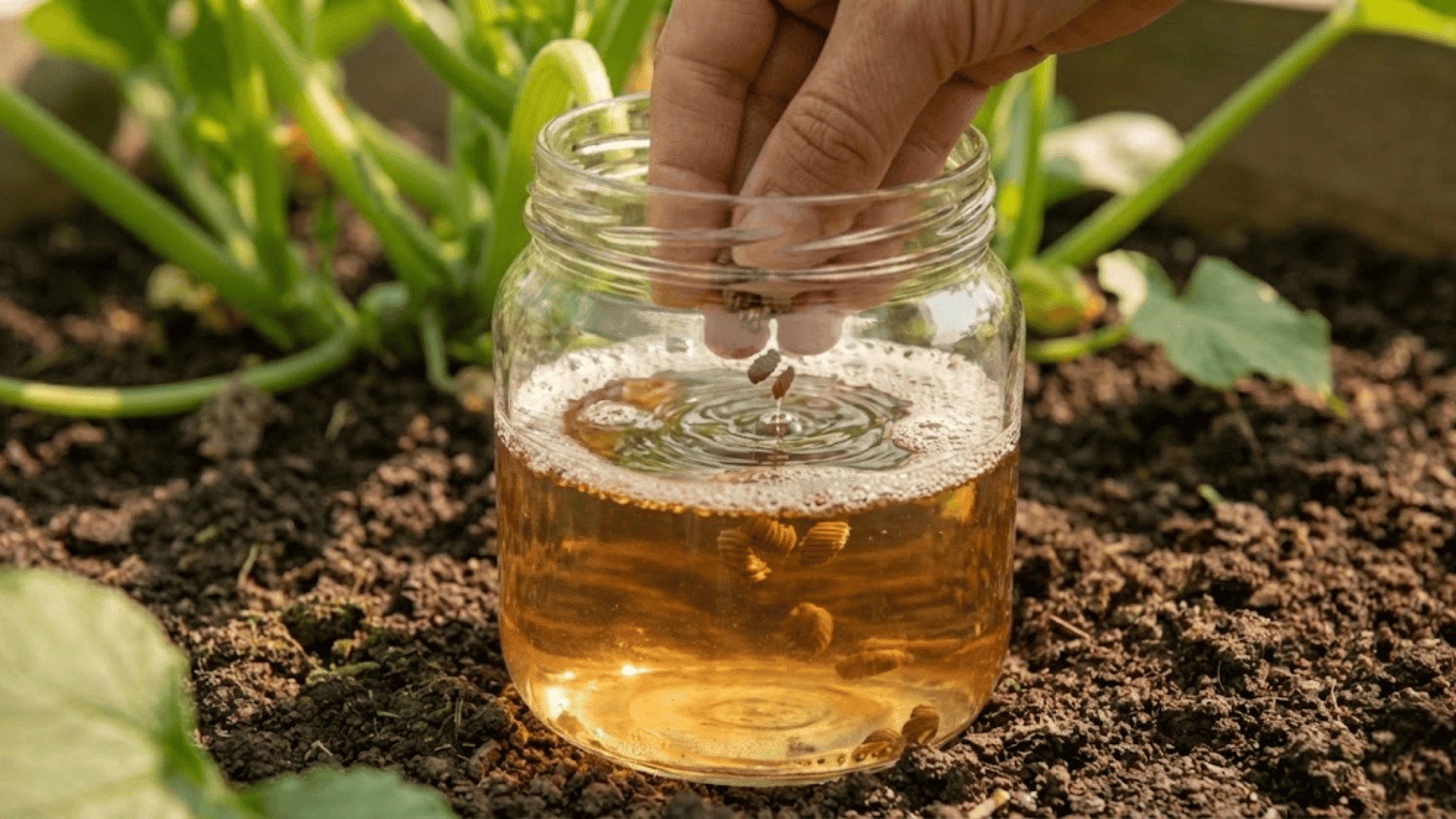
Simply flicking eggs onto the ground won’t kill them. They need to be crushed, drowned in soapy water, or sealed in a bag and thrown away. I like keeping a small jar of soapy water right in the garden so I can drop eggs in as I find them.
This ensures they’re dead before I move to the next plant. Leaving eggs anywhere near your garden risks them hatching and crawling right back.
Understand Why Sprays Often Fail
Most sprays don’t penetrate the tough outer shell of squash bug eggs, which is why physical removal works better. Neem oil and insecticidal soaps can sometimes soften eggs or prevent hatching, but they’re not reliable.
The egg coating protects developing nymphs too well. Your hands are honestly the most effective tool here. Save sprays for the nymphs and adults instead.
Squash Bug Eggs: Chemical Control Options
Sometimes, despite your best efforts, squash bugs multiply faster than you can manage naturally. Chemical treatments become necessary when infestations are severe and threatening your entire harvest.
These products work quickly but require careful handling to protect beneficial insects and pollinators.
| Product Type | Active Ingredient | How It Works | Application Tips |
|---|---|---|---|
| Pyrethrin sprays | Pyrethrum or pyrethroids | Attacks the nervous system on contact | Spray directly on bugs; reapply every 5-7 days |
| Carbaryl (Sevin) | Carbaryl | Disrupts nerve function quickly | Dust or spray on plants; wear gloves |
| Permethrin | Synthetic pyrethroid | Fast-acting contact killer | Mix per label; apply to all surfaces |
| Sabadilla dust | Natural plant extract | Causes paralysis through contact | Dust lightly when dry |
Important Reminders:
- Use chemicals only when natural methods fail.
- Wear protective gear and avoid spraying on windy days.
- Never apply when flowers are open or bees are present.
- Keep children and pets away for at least 24 hours after application.
Preventing Squash Bugs From Coming Back
The best defense is stopping squash bugs before they even arrive. Start by rotating your squash crops to different garden spots each year, since adults overwinter in old plant debris and soil.
When fall arrives, clear away all spent vines, leaves, and plant material where bugs love to hide through winter.
Adding straw mulch around your plants creates a physical barrier that makes it harder for bugs to reach stems. Early in the season, cover young plants with floating row covers until they flower and need pollinators.
Finally, choose resistant varieties like butternut or royal acorn squash, which naturally attract fewer bugs than zucchini.
Common Squash Bug Control Mistakes to Avoid
Even with the best intentions, it’s easy to make mistakes that let squash bugs take over your garden. Knowing what not to do is just as important as knowing the right steps to take.
- Waiting until plants are visibly damaged before checking for bugs, which gives them time to multiply out of control.
- Focusing only on adult bugs while ignoring the bronze egg clusters hidden under the leaves, where infestations actually start.
- Spraying chemicals or homemade solutions daily without giving plants time to recover, leading to leaf burn and stressed plants
- Planting squash in the same garden spot year after year, creating a permanent home for overwintering bugs
- Leaving dead vines and plant debris in the garden through fall and winter, providing perfect shelter for adults to survive
The truth is, most squash bug problems get worse because we catch them too late or don’t stay consistent with prevention.
The Bottom Line
Learning how to kill squash bugs doesn’t have to feel overwhelming once you understand their patterns and weaknesses.
The key is finding what works for your garden and sticking with it, whether that’s handpicking, homemade sprays, or stronger treatments when necessary.
I’ve found that staying ahead of these pests through daily checks and preventive care makes gardening so much more enjoyable.
What methods have worked best in your garden? I’d love to hear your experiences and tips in the comments below. Let’s help each other grow healthier, happier gardens this season.