Stepping into your garden and plucking a bright, fragrant lemon straight from your own tree feels like bringing a little piece of the Mediterranean home.
Growing citrus at home works beautifully in backyards, on sunny patios, or even beside a bright window. Lemon trees offer more than just fruit.
They fill your space with glossy green leaves, soft white blooms, and that unmistakable citrus scent.
You’ll learn how to grow a lemon tree successfully, from selecting your variety and getting it planted to nurturing it through the seasons, keeping it healthy, and troubleshooting when things don’t go quite as planned.
Can You Grow a Lemon Tree at Home?
Absolutely. Lemon trees thrive in USDA zones 9 through 11, where winters stay mild, and frost is rare. If you live outside these zones, container growing lets you bring your tree indoors when temperatures drop.
You can start from seed, but grafted trees produce fruit much faster, often within two to three years, compared to five or more for seedlings.
Grafted varieties also tend to be hardier and more reliable.
A sunny backyard or a bright spot by a window both work beautifully for growing lemons at home. Success comes down to the right setup and a little attention to their needs.
Best Lemon Tree Varieties to Grow
Not all lemon trees are created equal. Some handle cold better, others stay compact for containers, and a few are simply more forgiving for first-time growers.
Picking the right variety makes all the difference in how well your tree adapts to your space and climate.
| Variety | Best For | Key Features |
|---|---|---|
| Meyer Lemon | Containers & beginners | Compact size, cold-hardy, sweeter fruit with thin skin, produces year-round |
| Eureka Lemon | Warm climates & outdoor growing | Classic tart lemons, few thorns, bear fruit most of the year |
| Lisbon Lemon | Hot climates & full sun | Heat-tolerant, thorny branches, very productive, similar to Eureka |
| Dwarf Varieties | Patios & indoor growing | Stay under 6 feet, ideal for pots, includes dwarf Meyer and Improved Meyer |
Choose based on your climate zone, available space, and how much maintenance you’re ready to handle. Meyer lemons are the go-to for most home growers thanks to their adaptability and sweeter taste.
Where to Plant a Lemon Tree?
Location matters more than you might think. Lemon trees are surprisingly particular about their spot, and getting it right from the start saves you headaches down the road.
- Full sun is non-negotiable. Aim for at least 6 to 8 hours of direct sunlight daily, ideally in a south-facing spot for maximum exposure.
- Soil needs to drain quickly. Lemon roots hate sitting in water, so choose well-draining soil with a pH between 5.5 and 6.5, slightly acidic and loamy.
- Amend problem soils before planting. Mix compost into heavy clay to improve drainage, or add organic matter to sandy soil to help it retain moisture.
- Space trees at least 12 to 15 feet apart if planting multiple, or position containers where air flows freely around the canopy.
- Avoid low-lying areas where cold air settles. Frost pockets and poorly ventilated spaces invite fungal issues and stress the tree.
Getting these basics right means your lemon tree can focus its energy on growing strong and producing fruit instead of struggling to survive.
Step-by-Step: How to Grow a Lemon Tree?

Planting a lemon tree properly sets the foundation for years of healthy growth and fruit production. Follow these steps to give your tree the best possible start.
Step 1: Choose a Healthy Tree
Look for a tree with vibrant green leaves, no yellowing or browning, and a sturdy trunk. Check the roots if possible. They should be firm, white, and spread evenly without circling the pot.
Avoid plants with wilted foliage, visible pests, or damaged bark. Grafted trees from reputable nurseries give you the best chance of success and faster fruiting.
Step 2: Prepare the Planting Hole
Dig a hole twice as wide as the root ball but no deeper than the container height. Lemon trees don’t like being planted too deeply.
Loosen the soil at the bottom and sides to help roots spread easily. Mix in compost or aged manure to boost drainage and add nutrients, especially if your soil is heavy clay or too sandy.
Step 3: Planting the Lemon Tree
Getting the tree settled correctly prevents future problems with drainage and stability.
- Gently remove the tree from its container and loosen any circling roots with your fingers.
- Place the tree in the hole so the top of the root ball sits level with or slightly above the surrounding soil.
- Backfill with the amended soil, pressing gently to eliminate air pockets without compacting too hard.
- Avoid burying the graft union, which should remain a few inches above ground level.
Step 4: Water Thoroughly
Water deeply right after planting to settle the soil around the roots and remove any remaining air gaps. Let the water soak in slowly rather than flooding the area.
The soil should feel moist several inches down but not waterlogged. This initial watering helps the roots establish contact with the surrounding soil and reduces transplant shock.
Step 5: Mulch and Protect
Spread a 2 to 3-inch layer of organic mulch around the base, keeping it a few inches away from the trunk to prevent rot. Mulch conserves moisture, regulates soil temperature, and suppresses weeds.
In cooler climates, consider frost cloth or temporary covers during unexpected cold snaps. Young trees are especially vulnerable to temperature swings in their first year.
How to Grow a Lemon Tree in a Pot?
Container growing opens up lemon cultivation to anyone with a sunny spot, regardless of climate. Pots give you control over soil quality and let you move trees indoors when cold weather hits.
- Step 1: Start with a container at least 15 to 20 gallons with multiple drainage holes at the bottom to prevent waterlogging and root rot.
- Step 2: Use a well-draining citrus or cactus potting mix that’s lightweight, slightly acidic, and allows excess moisture to escape quickly.
- Step 3: Repot every two to three years in spring before new growth starts, moving up one container size to give roots room to expand.
- Step 4: Water when the top two inches of soil feel dry since potted trees dry out faster than in-ground plants and need consistent moisture.
- Step 5: Bring containers indoors before the first frost and place them near a bright south-facing window, reducing watering frequency during dormancy.
Potted lemon trees need a bit more attention than their in-ground counterparts, but the flexibility and year-round accessibility make it worth the effort.
Essential Lemon Tree Care Tips
Keeping your lemon tree healthy goes beyond just planting it in the right spot. Regular maintenance ensures strong growth, abundant blooms, and a steady harvest.
1. Watering Schedule
Lemon trees need consistent moisture but hate soggy roots. Water deeply when the top 2 to 3 inches of soil feel dry, usually once or twice weekly during warm months and less often in winter.
Overwatered trees show yellowing leaves and droopy branches, while underwatered ones develop crispy, curling leaves and dropping fruit. Adjust based on your climate, container size, and season.
2. Fertilizing Lemon Trees
Feed your tree regularly to support vigorous growth and fruit production. Use a balanced citrus fertilizer with micronutrients included.
| Season | Frequency | Notes |
|---|---|---|
| Spring | Every 4–6 weeks | Active growth period, increase nitrogen |
| Summer | Every 4–6 weeks | Continue regular feeding through fruiting |
| Fall | Every 6–8 weeks | Slow down as growth decreases |
| Winter | Every 8–10 weeks or pause | Minimal feeding during dormancy |
Watch for yellowing between leaf veins, which signals iron or magnesium deficiency. Apply chelated iron or Epsom salt spray to correct these issues quickly.
3. Pruning Lemon Trees
Prune in late winter or early spring before new growth emerges. Remove dead, damaged, or crossing branches to improve airflow and light penetration throughout the canopy.
- Cut away suckers growing below the graft union since they drain energy from the main tree.
- Thin out crowded interior branches to reduce disease risk and encourage fruiting wood.
- Shape the canopy to maintain an open center, allowing sunlight to reach all parts of the tree.
- Avoid heavy pruning during active fruiting, as it can reduce your harvest.
4. Pollination
Lemon trees are self-pollinating, meaning each flower contains both male and female parts and doesn’t need another tree nearby.
Outdoors, bees and wind handle pollination naturally. Indoors, gently shake branches when flowers bloom or use a small brush to transfer pollen between blossoms. This hand-pollination boosts fruit set without natural pollinators.
Common Lemon Tree Problems and Solutions
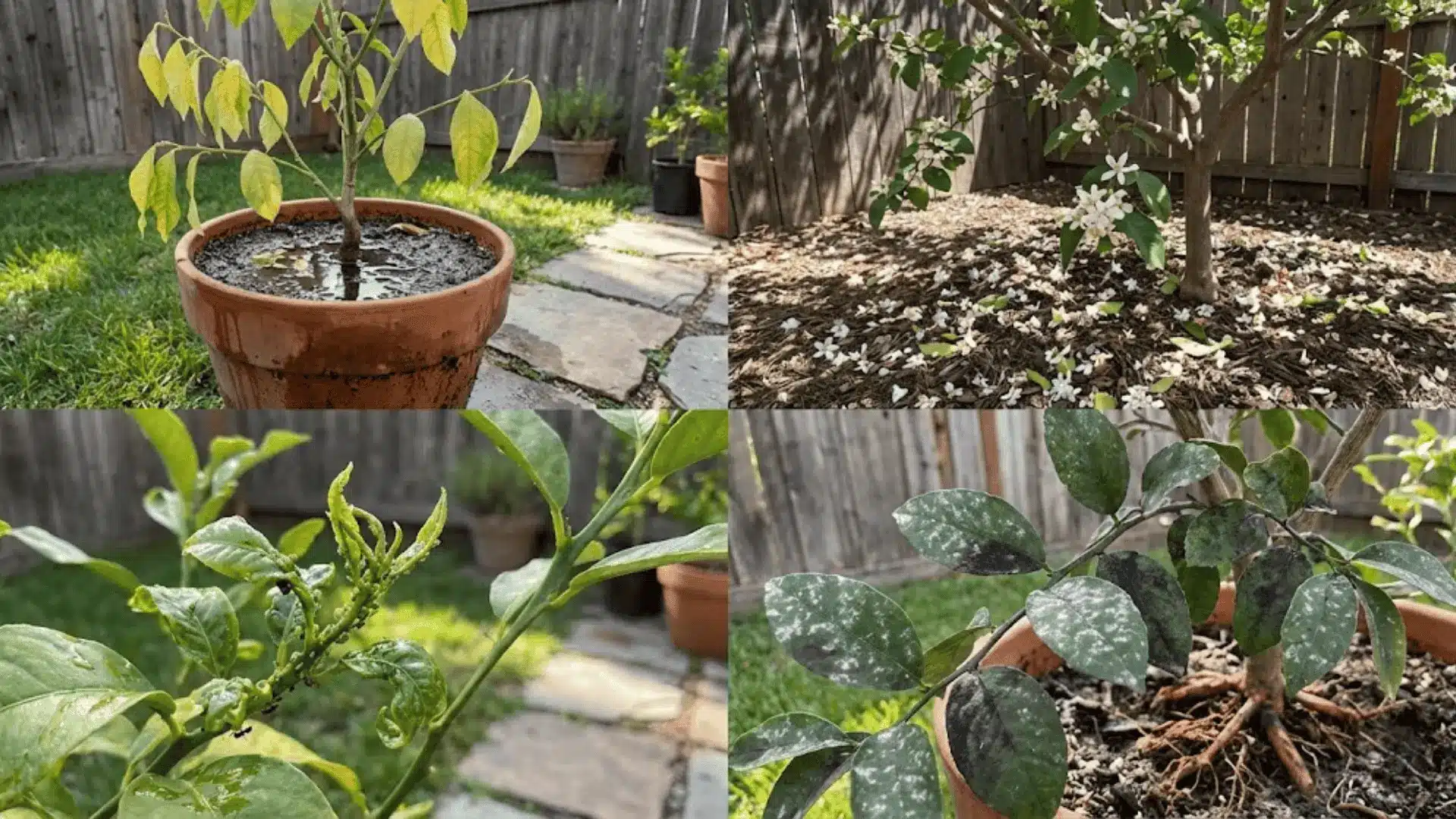
Even healthy lemon trees run into occasional issues. Catching problems early and knowing how to fix them keeps your tree productive and thriving.
Problem 1: Yellowing leaves with soft, droopy foliage and constantly wet soil.
Solution: Your tree is getting too much water, leading to root suffocation and nutrient lockout. Let the soil dry out completely, check drainage holes, and reduce watering frequency.
Problem 2: Tree blooms beautifully but drops flowers without setting fruit.
Solution: Lack of pollination or insufficient sunlight is preventing fruit development. Move your tree to a spot with 6 to 8 hours of direct sun and hand-pollinate indoor blooms with a small brush.
Problem 3: Insects cluster on new growth, leaves curl, and sticky residue appears.
Solution: Aphids, spider mites, or scale insects are feeding on your tree and weakening it. Spray pests off with water, apply insecticidal soap or neem oil, and encourage beneficial insects like ladybugs.
Problem 4: Powdery white spots, sooty mold, or wilting branches with mushy roots.
Solution: Fungal infections or root rot from poor drainage are attacking your tree. Trim infected leaves and mushy roots, repot in fresh, well-draining soil, improve airflow, and apply copper fungicide.
Seasonal Lemon Tree Care Guide
Lemon trees have different needs throughout the year as they move through growth cycles, flowering, and dormancy.
Adjusting your care routine with the seasons keeps your tree healthy and maximizes fruit production.
| Season | What’s Happening | Care Tasks |
|---|---|---|
| Spring | Active growth and flowering | Increase watering, fertilize every 4–6 weeks, and prune dead branches |
| Summer | Peak growth and fruit development | Water frequently, continue fertilizing, and apply mulch for moisture retention |
| Fall | Growth slows, fruit ripens | Reduce fertilization to every 6–8 weeks, cut back watering, and harvest ripe fruit |
| Winter | Dormancy and frost risk | Water sparingly, pause fertilizing, protect from frost, or move indoors |
How Long Does It Take for a Lemon Tree to Bear Fruit?
Grafted lemon trees typically produce fruit within 2 to 3 years, while seed-grown trees can take 5 to 7 years or longer to mature.
Grafted varieties are faster and more reliable because they’re already partially mature when planted.
Fruiting speed depends on sunlight exposure, consistent watering, proper fertilization, and tree health.
To encourage faster production, ensure your tree gets at least 6 to 8 hours of direct sun daily, feed it regularly with citrus fertilizer during the growing season, and avoid over-pruning young trees.
Patience pays off as established trees produce fruit year-round.
Harvesting and Storing Lemons
Knowing when and how to harvest makes all the difference in flavor and shelf life. Proper handling keeps your lemons fresh for weeks.
Harvesting Lemons
Lemons are ready when they’ve turned fully yellow and feel firm with a slight give when gently squeezed. Follow these steps to pick them without harming your tree.
- Step 1: Wait until lemons reach full color and have been yellow for at least a week, as they don’t ripen further once picked.
- Step 2: Use pruning shears or scissors to cut the stem close to the fruit rather than pulling or twisting, which can damage branches.
- Step 3: Leave a small piece of stem attached to the lemon to help prevent moisture loss and extend storage life.
- Step 4: Handle fruit gently to avoid bruising, and harvest in the morning when temperatures are cooler for the best quality.
Storing Fresh Lemons
Proper storage extends freshness and prevents your harvest from spoiling too quickly.
- Step 1: Store whole lemons at room temperature for up to a week if you plan to use them soon, keeping them in a well-ventilated bowl.
- Step 2: Refrigerate lemons in a plastic bag or sealed container for 3 to 4 weeks to maintain freshness and prevent moisture loss.
- Step 3: Freeze lemon juice in ice cube trays for long-term storage, popping out cubes as needed for cooking and drinks.
- Step 4: Avoid washing lemons before storage, as excess moisture encourages mold growth and shortens shelf life significantly.
Indoor Lemon Tree Care Checklist
Growing lemon trees indoors takes a bit more attention than outdoor cultivation, but it’s completely manageable with the right setup.
These essentials keep your indoor tree thriving through every season.
| Care Element | Requirements | Tips |
|---|---|---|
| Light | 6 to 8 hours of direct sun daily | Use south-facing windows, rotate weekly |
| Humidity | 50% to 60% relative humidity | Mist leaves, use pebble trays or humidifiers |
| Grow Lights | Full-spectrum LED if natural light is lacking | Position 6 to 12 inches above, run 12 to 14 hours daily |
| Preventing Leaf Drop | Stable temps and consistent watering | Avoid drafts, temperature swings, and heating vents |
That’s a Wrap
Growing your own lemon tree at home brings something productive and beautiful into your space.
You now have everything you need to succeed with how to grow a lemon tree, whether you’re working with containers on a balcony or planting in your backyard.
The real reward comes months down the line when you pick that first glossy lemon straight from your own tree.
Start small, stay consistent with care, and watch your tree flourish season after season.
Have questions or tips about your own lemon-growing experience? Drop a comment below and share what’s worked for you.