Thistles have this infuriating superpower: you pull one out, and three more seem to appear overnight. I learned this the hard way when a single thistle plant turned into a full-blown invasion across my garden.
These purple-flowered troublemakers don’t play fair, with root systems that dig deep and seeds that travel on the wind like tiny paratroopers.
Learning how to get rid of thistle weeds upgraded my yard from a prickly nightmare back into a space I actually wanted to spend time in.
The game-changer wasn’t just removing what I could see, it was understanding their growth cycle and weak points.
You’ll learn proven techniques that attack thistles at every stage, natural solutions that won’t harm your other plants, and timing tricks that make elimination ten times easier.
Why Thistles Are Such Stubborn Garden Invaders
Thistle weeds belong to a family of aggressive plants armed with spiny leaves and a survival strategy that makes them incredibly tough to eliminate.
Their difficulty comes down to biology; these plants invest heavily in either deep taproots or sprawling underground rhizomes that regenerate even when you think you’ve won the battle.
You’re dealing with two distinct adversaries here. Biennial thistles live for two years, spending their first season building root strength before flowering and setting seed in year two.
Perennial thistles, however, are the marathon runners of the weed world, returning year after year from extensive root networks that can spread laterally for feet underground.
What makes control so frustrating? A single mature thistle produces thousands of wind-dispersed seeds, and their roots can penetrate several feet deep, making complete removal nearly impossible with surface-level efforts alone.
Your soil type, local climate, and even recent rainfall dramatically influence which removal methods will actually succeed versus which will just temporarily set them back.
Effective Methods for Removing Thistle Weeds
Getting rid of thistles requires choosing the right approach for your situation, no matter if you prefer hands-on removal, targeted treatments, or passive suppression methods.
Each technique has its sweet spot depending on the thistle type, infestation size, and how quickly you need results:
Manual Removal
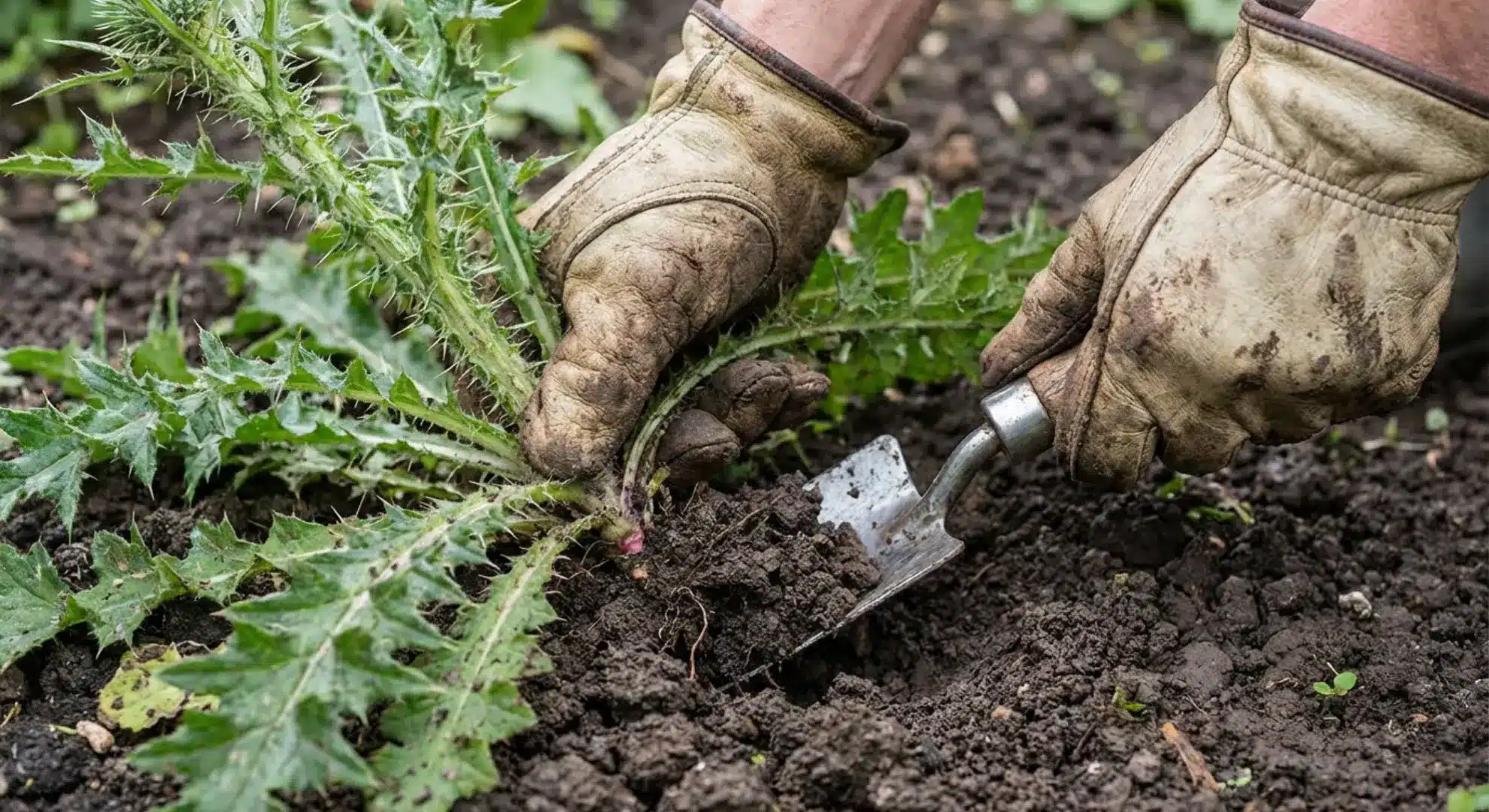
Grab a dandelion digger, garden fork, or sharp spade and get ready for some satisfying (if slightly tedious) work. Insert your tool at least 6-8 inches from the thistle’s base, angling it downward to get beneath the taproot.
Rock the tool back gently to loosen the soil, then pull upward with steady pressure while gripping the base of the plant. The best timing? Right after a good rain, when the soil is moist but not waterlogged. Roots slide out much more easily.
You absolutely must extract the entire root system; even a small fragment left behind will regenerate into a new plant within weeks.
Chemical Control
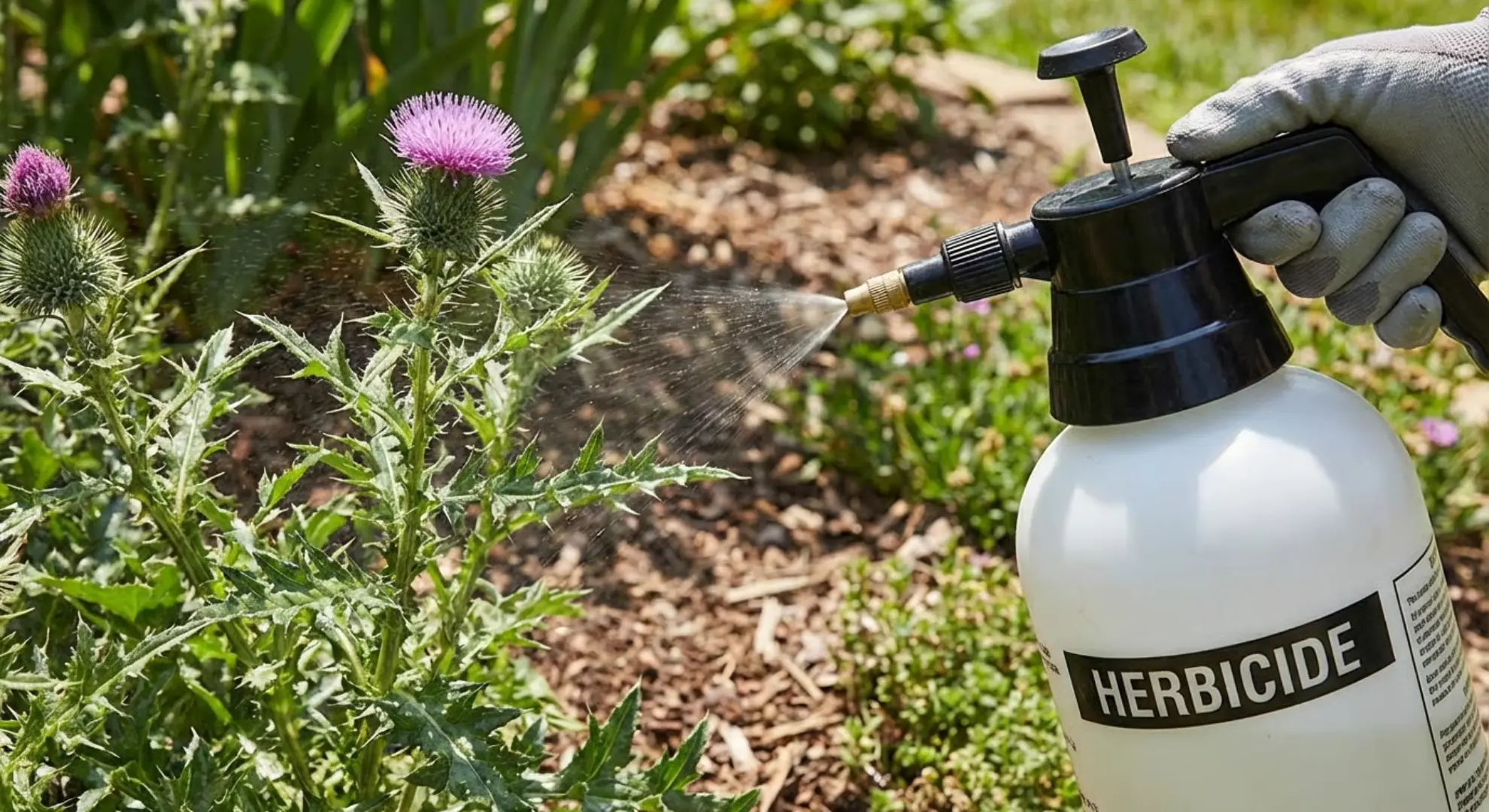
Systemic herbicides like glyphosate work by traveling through the plant’s vascular system down to the roots, killing the entire organism from within.
Apply in early fall when thistles are actively transporting nutrients to their roots for winter, or in spring during active growth before flowering.
For spot treatment, use a pump sprayer with a focused nozzle or apply directly with a sponge applicator to avoid drifting onto desirable plants. Two applications spaced 3-4 weeks apart typically handle even stubborn perennial varieties.
Organic and Natural Methods
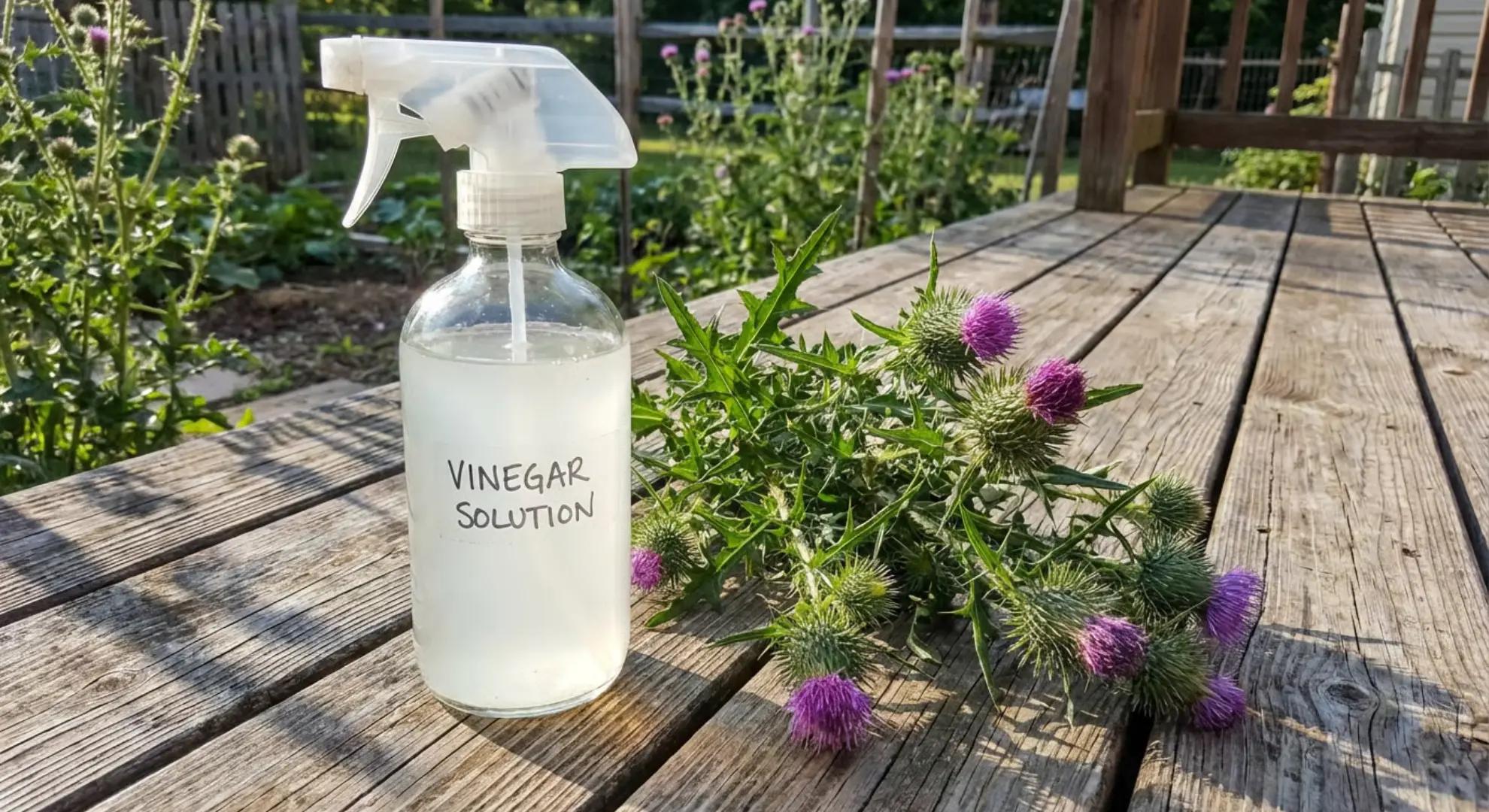
A 30% horticultural vinegar solution mixed with a few drops of dish soap creates an effective organic burn-down treatment. Spray directly onto thistle foliage on a sunny, calm day, the acetic acid desiccates leaves and disrupts the plant’s ability to photosynthesize.
The downside? Vinegar is non-selective (it damages whatever it touches) and only kills top growth, meaning perennial thistles with deep roots often bounce back.
Horticultural oils and concentrated citrus-based herbicides offer similar spot-treatment options with varying degrees of root penetration.
Smothering and Mulching
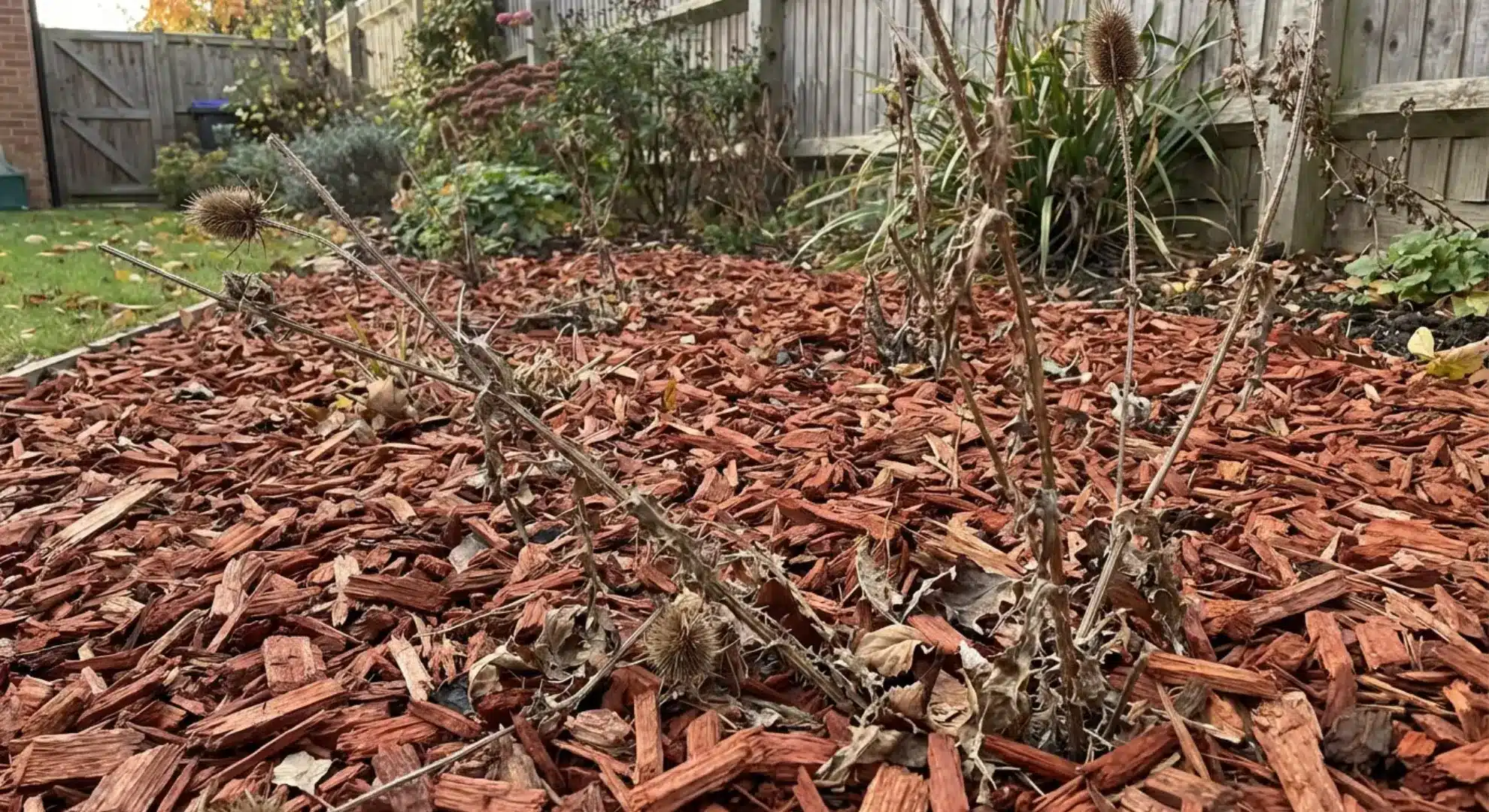
Pile 5-6 inches of organic mulch over thistle-infested areas, or lay down cardboard sheets topped with wood chips for even better suppression. This method starves thistles of sunlight, preventing photosynthesis and seed germination while gradually weakening root reserves.
It’s particularly effective for long-term prevention in garden beds and landscape areas where you’re not planning to plant immediately. Just be patient, as complete suppression can take an entire growing season.
Maintenance and Prevention: The Key to Long-Term Control
Winning the thistle battle once is great; keeping them from returning is where the real victory happens. A solid prevention strategy saves you countless hours of future removal work.
Mow your lawn regularly during thistle season, cutting before those purple flowers mature into seed heads. Each mowing session interrupts their reproductive cycle, preventing thousands of airborne seeds from spreading across your property and beyond.
For isolated thistle patches in non-lawn areas, simply snipping off flower heads before they go to seed drastically reduces next year’s population.
Build a lawn so thick and healthy that thistles can’t find a foothold. Fertilize according to your grass type’s needs, overseed thin areas each fall, and water deeply but infrequently to encourage strong root development. Dense, vigorous turf crowds out thistle seedlings before they establish.
Walk your property every few weeks during growing season, scanning for new thistle rosettes. Catching them early, when they’re small, and roots are shallow, makes removal exponentially easier.
Keep a small weeding tool handy during these patrols so you can dig out stragglers immediately rather than letting them mature into the next generation of problems.
Sharing Experiences and Seeking Help in Forums and Social Media

You don’t have to fight thistles alone; thousands of gardeners are battling the same spiky invaders and sharing what’s actually working in their yards.
Tapping into these communities gives you access to tested strategies, regional insights, and the kind of honest feedback you won’t find in product descriptions.
Personal Experiences
Gardening communities online have become goldmines for real-world thistle control wisdom.
On platforms like Reddit’s r/gardening and r/lawncare, you’ll find countless threads where homeowners share their thistle victories and defeats with refreshing honesty.
Facebook groups like Garden Enthusiasts and regional gardening communities offer localized advice that accounts for your specific climate challenges.
These spaces let you see what actually works in the trenches, not just textbook solutions, but the messy reality of thistle warfare, complete with photo documentation and timeline updates.
Advice from Fellow Gardeners
The beauty of community gardening forums lies in their collective troubleshooting power. Someone in your exact situation, same soil type, same thistle variety, same climate zone has probably already fought this battle and documented what worked.
Users freely exchange DIY concoctions, application timing strategies, and cost-effective alternatives to expensive treatments.
When you post photos of your specific thistle problem, experienced gardeners can identify if you’re dealing with Canada thistle versus bull thistle and adjust recommendations accordingly.
This crowdsourced wisdom often reveals creative solutions and product combinations you’d never find in standard gardening guides.
Common Mistakes to Avoid in Thistle Removal
Most thistle removal failures happen not because the methods don’t work, but because of timing errors and incomplete execution.
Recognizing these common pitfalls before you start can save you months of frustration and wasted effort:
- Pulling thistles when the soil is dry: The roots break off instead of coming out whole, guaranteeing regrowth from fragments left underground.
- Only removing the top growth: Cutting thistles at ground level feels productive, but you’re just giving the root system a haircut while it prepares to send up new shoots.
- Letting them flower before removal: Once those purple blooms appear, you’re on borrowed time before thousands of seeds launch into the wind and spread across your entire property.
- Using weak vinegar concentrations: Household 5% vinegar barely irritates thistles; you need 20-30% horticultural vinegar to make any real impact on established plants.
- Applying herbicides at the wrong time: Spraying during dormancy or extreme heat wastes product since thistles aren’t actively moving nutrients through their systems.
- Ignoring small rosettes: Those innocent-looking first-year thistle babies seem harmless, but they’re building massive root systems underground that’ll explode into full-sized plants next season.
- Forgetting to monitor after treatment: Assuming one removal session solved everything means you’ll miss the inevitable stragglers that pop up from dormant seeds or root fragments.
The difference between temporary relief and actual elimination often comes down to avoiding these pitfalls. Thistle control demands patience and consistency; shortcuts almost always backfire.
Conclusion
I won’t pretend thistles are easy to beat, but understanding how to get rid of thistle weeds systematically instead of just reacting to them changed everything for my garden.
The combination of timing, persistence, and choosing methods that actually target their root systems made what felt impossible finally achievable.
You’ve got multiple strategies now: manual, chemical, organic, and preventive, so you can match your approach to your comfort level and garden goals.
Each removal session weakens their hold.
For more practical solutions to common yard challenges, from soil health to seasonal maintenance, check out other gardening guides on the website that break down complex problems into actionable steps!