I killed my first lawn by overwatering grass seed into a muddy mess.
The second time, I underwatered and watched it shrivel in the sun. Finding the right balance felt impossible until I understood the actual science behind it.
How often to water grass seed depends on keeping the top inch of soil consistently moist without creating puddles; usually 2-3 light waterings daily during germination.
But your specific schedule changes based on temperature, sun exposure, and soil drainage.
You’ll learn exactly when to water throughout each growth stage, how to adjust for your climate, and the simple touch test that tells you if your seed needs water right now.
The Grass Seed Germination Process: What Happens Underground
Grass seed germination happens in three stages that determine whether you’ll have a thick lawn or patchy disappointment. First, the seed absorbs water and swells up over 24-48 hours.
Then the tiny root breaks through and pushes down while a shoot grows upward; you’ll see those first green blades within 5-21 days depending on the grass type. Finally, the seedling develops more roots and leaves to sustain itself.
Here’s the critical part: if your seed dries out even once during these stages, it dies permanently. Water kickstarts every process from softening the seed coat to fueling root growth and helping shoots break through the soil.
It also carries nutrients to developing plants and keeps the soil from forming a hard crust that traps seedlings.
Consistent moisture matters more than heavy watering because your grass needs steady hydration until roots grow deep enough to find water on their own.
Watering Schedule for Each Stage of Grass Growth
Your watering strategy needs to evolve as your grass seed matures. What works during germination will actually harm established seedlings, so adjusting your schedule based on growth stage like this is essential for success:
Weeks 1-2: Germination Phase
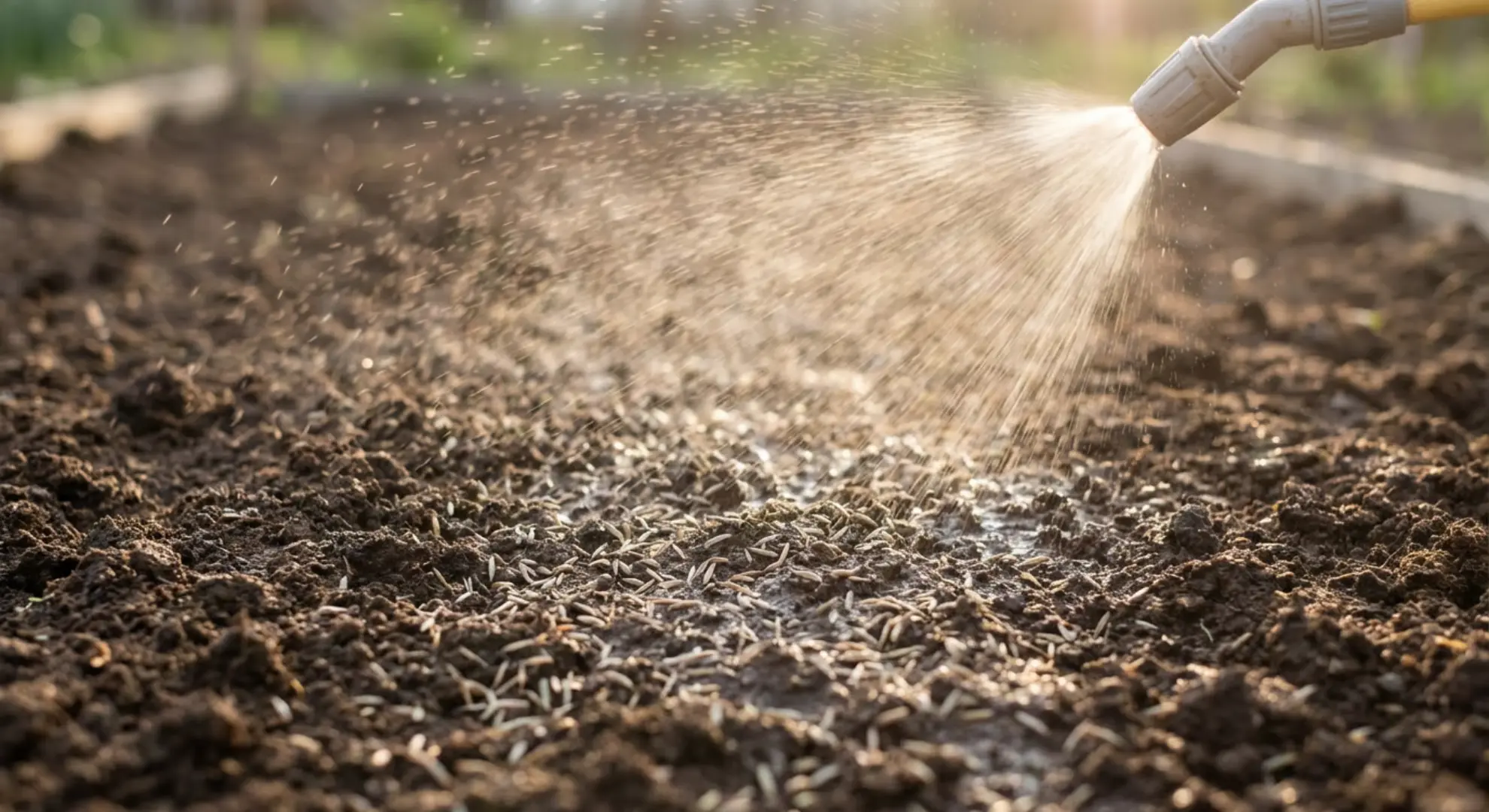
During these critical first two weeks, water 2-3 times per day for 5-10 minutes each session to keep the soil moist but not soaked. The goal is maintaining consistent surface moisture without creating puddles or runoff.
Early morning is your best first watering, followed by midday and possibly late afternoon if conditions are hot and dry.
Avoid watering at night to prevent fungal growth, grass seed sitting in moisture overnight becomes vulnerable to disease before it even sprouts.
Weeks 3-4: Seedling Growth
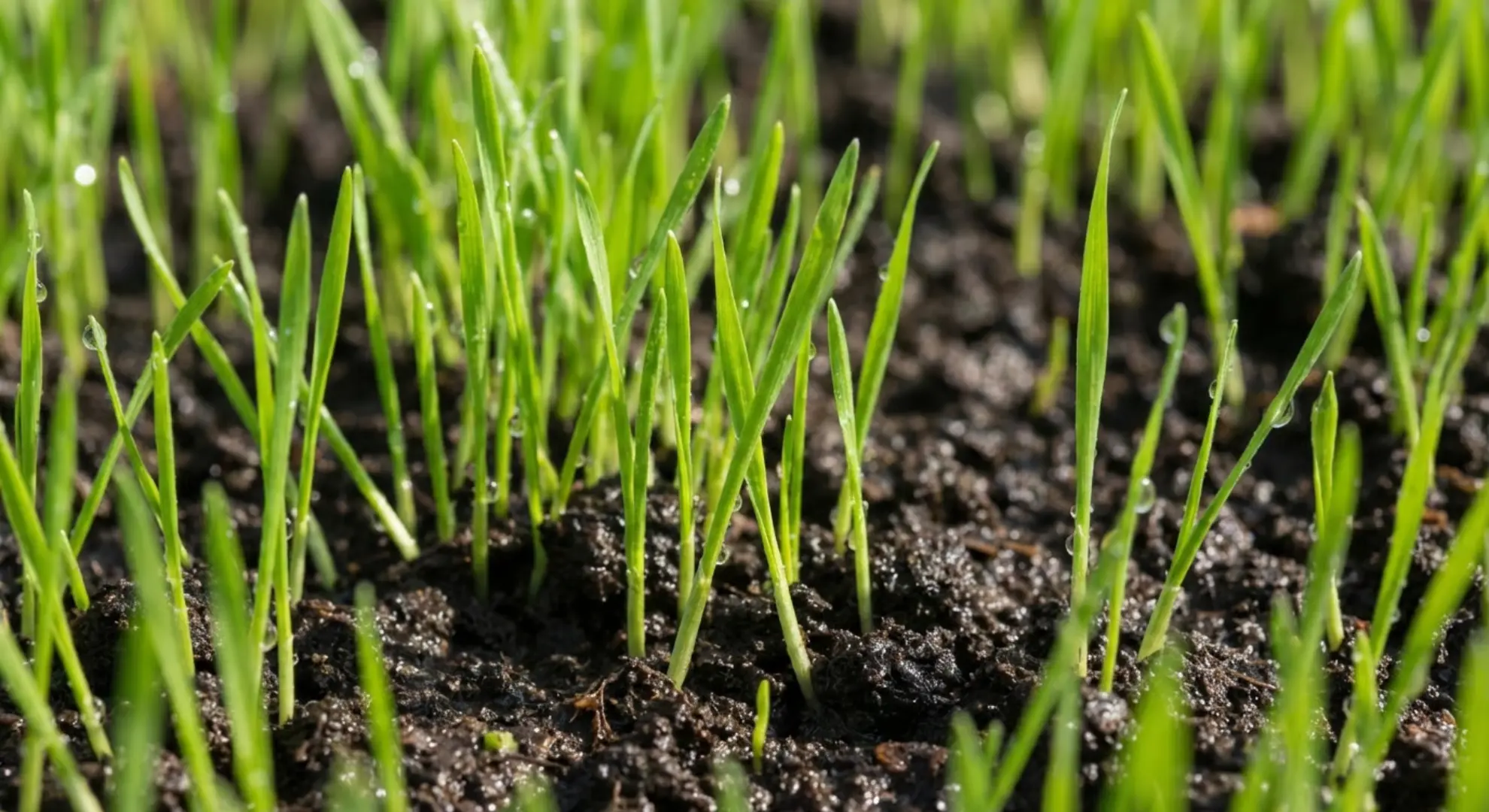
Once those green blades appear, reduce frequency to once or twice daily while transitioning to deeper watering sessions of 10-15 minutes.
Your seedlings now have roots extending below the surface, so focus on soaking the soil at a deeper level to promote strong root systems rather than keeping just the top layer wet.
This encourages roots to grow downward seeking moisture instead of staying shallow.
Weeks 5+: Establishment Phase
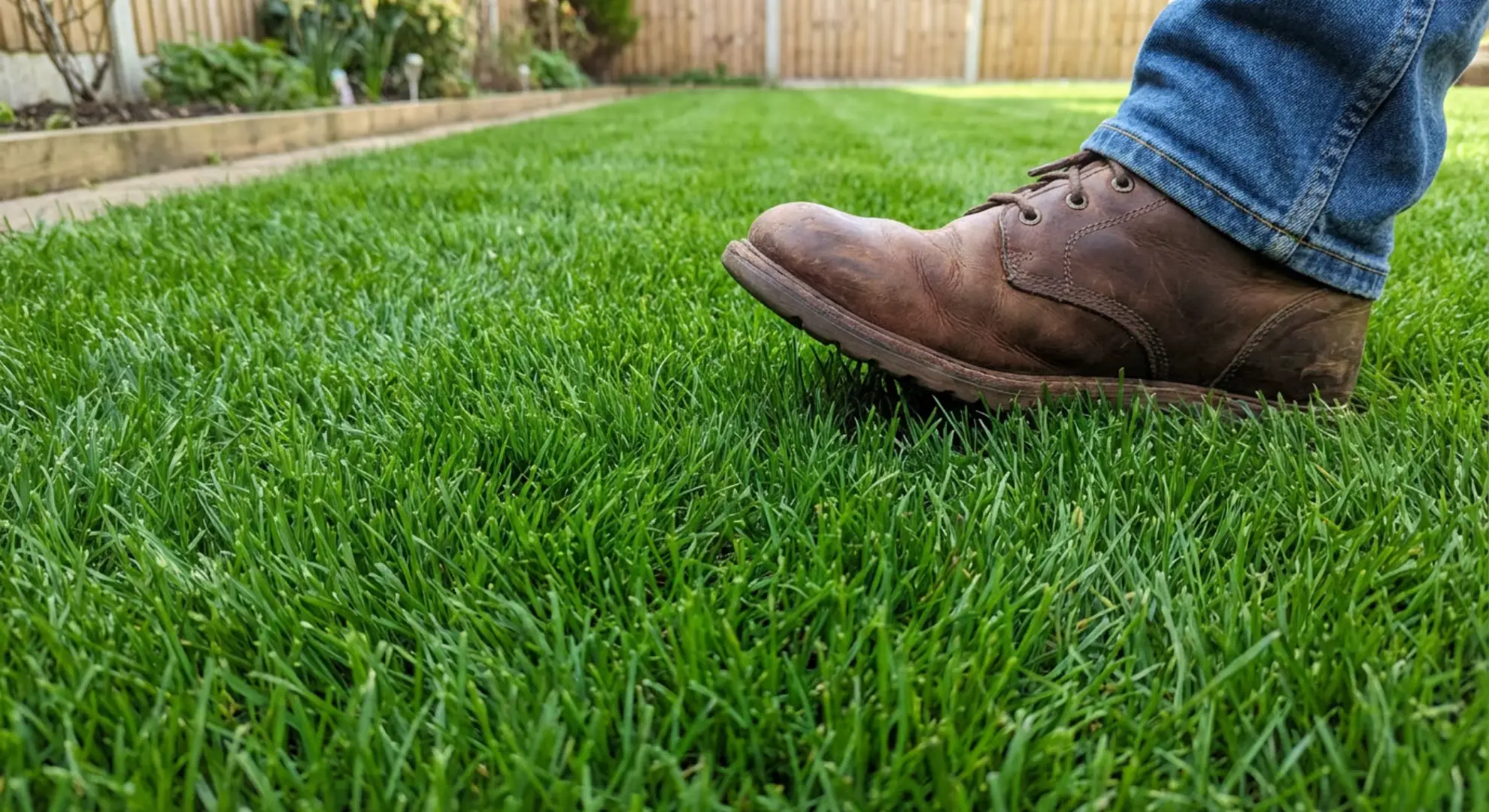
After a month, your grass can handle a mature watering schedule of 2-3 times per week, aiming for 1 inch of water total each week.
Water deeply and infrequently now, this trains roots to dive deep into the soil, creating drought-resistant grass.
Adjust based on rainfall and temperature, and use the screwdriver test: if you can easily push a screwdriver 6 inches into the soil, you’ve watered enough.
Key Factors That Affect Your Watering Schedule
Sticking to a rigid watering schedule ignores the reality that conditions change daily. Your grass seed’s moisture needs fluctuate based on weather, soil composition, and timing. Understanding these variables helps you water smarter instead of just more.
Weather and Temperature Considerations
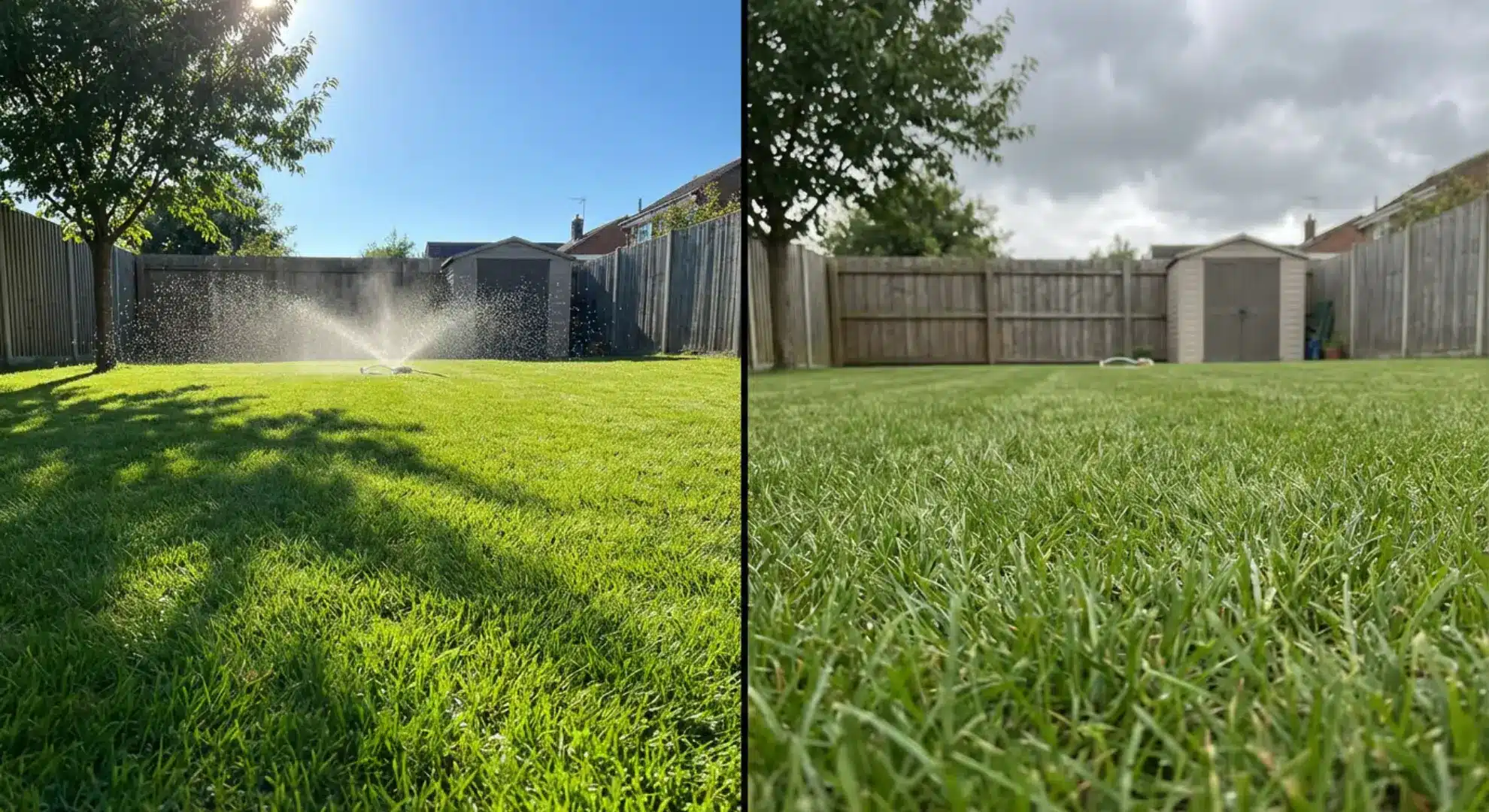
Hot, dry, or windy weather can suck moisture from your soil within hours, potentially requiring an extra watering session to keep seeds from drying out. Temperatures above 80°F increase evaporation dramatically, while wind acts like a hairdryer on your lawn.
Conversely, cooler temperatures below 70°F and overcast skies slow evaporation, meaning you might skip an afternoon watering without consequences.
Rain changes everything, if you receive a quarter-inch or more, cancel your next scheduled watering and check soil moisture before resuming.
During heatwaves, consider adding a fourth light watering during the germination phase. In cool, damp periods, reduce frequency to prevent waterlogging and fungal issues that thrive in consistently wet conditions.
Soil Type and Drainage
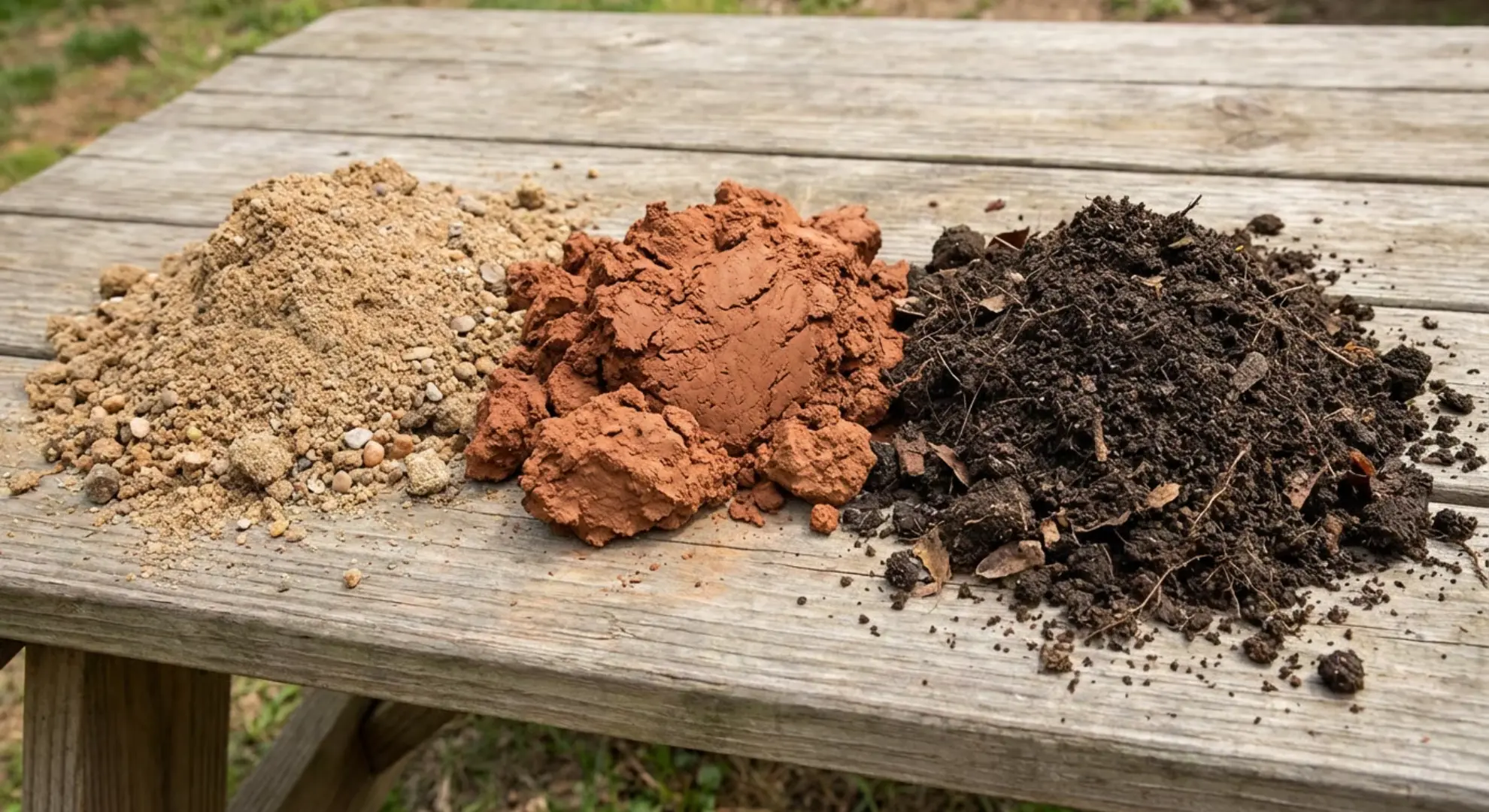
Sandy soil drains quickly and dries out faster, often requiring 3-4 waterings daily during germination compared to 2-3 for loam. Water passes through sandy soil rapidly, taking nutrients with it and leaving little moisture for seeds to absorb.
Clay soil holds water much longer, but creates its own challenges; it’s prone to puddling and runoff, meaning you’ll need shorter, more frequent sessions to avoid waste. Loamy soil offers the ideal middle ground with balanced drainage and retention.
Test your soil by squeezing a handful: sandy soil falls apart immediately, clay forms a tight ball, and loam holds shape but crumbles with light pressure.
Adjust your watering duration accordingly, sandy soils need frequent short bursts, while clay benefits from slightly longer intervals with breaks between to allow absorption.
Time of Day for Watering
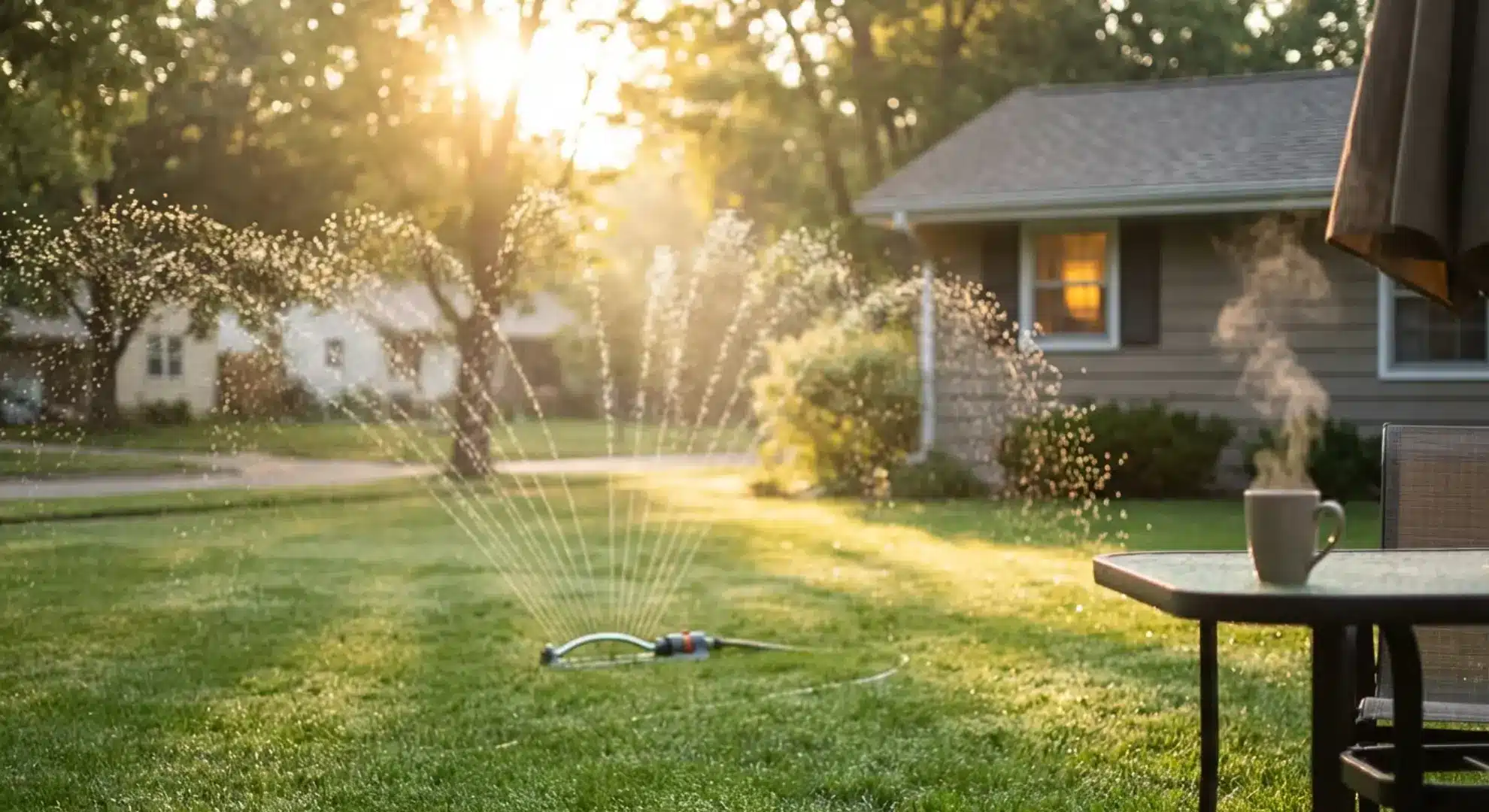
Early morning between 6-10 AM is hands-down the best time to water grass seed.
Temperatures are cooler, wind is minimal, and grass blades dry quickly as the day warms, preventing fungal diseases.
Your second watering should happen around midday when the sun is strongest and evaporation peaks. If a third session is necessary, aim for late afternoon between 2-4 PM, which gives the grass time to dry before nightfall.
Never water after 6 PM unless absolutely necessary during extreme heat, as moisture sitting overnight invites fungus, mold, and disease.
Morning watering also means less water loss to evaporation, so you’re actually hydrating the seed rather than feeding the atmosphere.
Mistakes to Avoid When Watering Grass Seed
Even experienced gardeners make watering errors that sabotage grass seed germination. Recognizing these common pitfalls helps you avoid wasted time, money, and effort on a lawn that never reaches its potential.
- Overwatering and creating puddles: Saturated soil drowns seeds by cutting off oxygen to the embryo, leading to rot instead of roots. If you see standing water or muddy patches, you’ve gone too far.
- Letting the soil dry out completely: One dry spell during germination kills the seed permanently. The embryo can’t restart once it dies, meaning that expensive seed becomes bird food.
- Watering too heavily in one session: Blasting the area with a strong stream washes seeds away and creates uneven coverage. Light, gentle watering keeps seeds in place while providing moisture.
- Ignoring weather changes: Watering on the same schedule during a rainy week wastes water and promotes disease. Check the forecast and soil moisture daily, not just your watch.
- Using the wrong sprinkler type: Oscillating sprinklers that create large water droplets can displace seeds, while impact sprinklers are too harsh. A fine mist or gentle spray works best for new seed.
- Skipping the finger test: Your schedule means nothing if the soil tells a different story. Stick your finger into the top inch of soil before each watering, if it’s moist, wait.
- Watering established grass and new seed identically: Mature grass needs deep, infrequent watering while new seed requires frequent, shallow moisture. Mixing both on the same schedule fails one or both areas.
These mistakes seem minor individually, but any single one can derail your entire seeding project. The good news is they’re all completely preventable once you know what to watch for and adjust your approach accordingly.
Seasonal Adjustments: How Often to Water Grass Seed in Different Weather
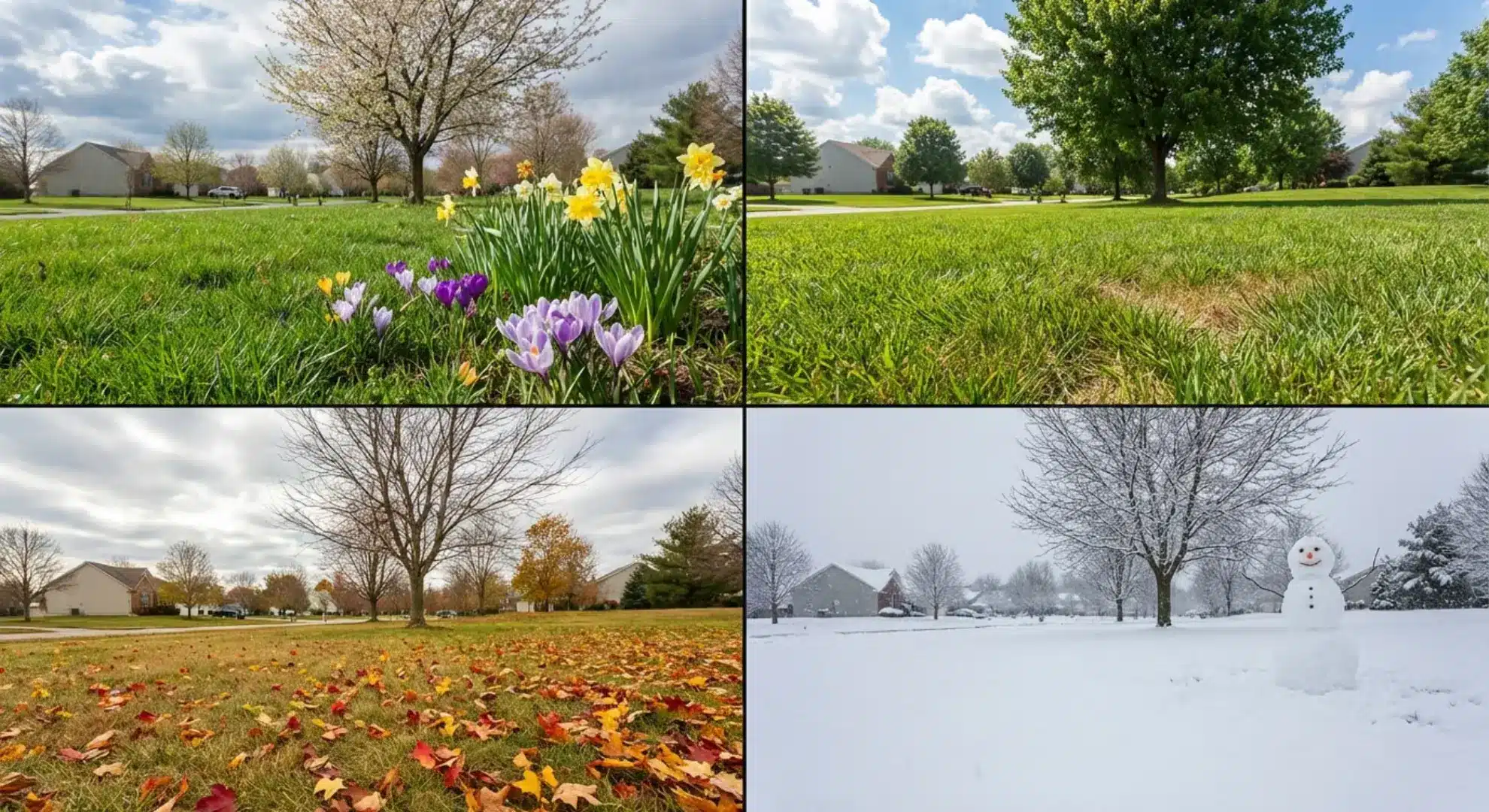
The season you plant determines how aggressively you need to water. Temperature, humidity, and daylight hours all shift your watering requirements dramatically throughout the year.
| Season | Watering Frequency (Weeks 1-2) | Key Adjustments |
|---|---|---|
| Spring | 2-3 times daily | Ideal germination conditions with moderate temperatures (60-75°F) and natural rainfall. Monitor for unexpected cold snaps that slow growth. |
| Summer | 3-4 times daily | High heat and evaporation demand extra sessions. Water early morning, midday, and late afternoon. Avoid planting in extreme heat above 90°F if possible. |
| Fall | 2 times daily | Cooler temperatures and morning dew reduce evaporation. Best season for seeding cool-season grasses. May need only morning and early afternoon watering. |
| Winter | 1-2 times daily (mild climates only) | Only viable in regions without frost. Slow germination means less frequent watering. Avoid seeding if temperatures drop below 50°F consistently. |
Summer seeding requires the most attention and water, while fall offers the easiest conditions with nature doing half the work for you.
Spring sits comfortably in the middle, though unpredictable weather means you’ll need to stay flexible and adjust daily based on actual conditions rather than calendar dates alone.
Advanced Tips for Maintaining Healthy Grass
Once your grass seed germinates successfully, transitioning to long-term maintenance practices ensures your lawn stays thick, healthy, and resilient. These strategies go beyond basic watering to create a truly thriving yard.
- Deep watering over frequent shallow watering: Train roots to grow 6-8 inches deep by watering thoroughly 2-3 times per week rather than lightly every day. Deep roots create drought-resistant grass that survives heat waves.
- Morning watering to reduce disease risk: Watering between 6-10 AM allows grass blades to dry before evening, preventing fungal diseases that thrive in prolonged moisture and darkness.
- Mow at the right height for your grass type: Cool-season grasses like fescue thrive at 3-4 inches, while warm-season varieties like Bermuda prefer 1-2 inches. Taller grass shades soil and reduces water evaporation.
- Leave grass clippings on the lawn: Clippings decompose quickly and return nitrogen to the soil, reducing fertilizer needs by up to 25% while adding organic matter that improves moisture retention.
- Aerate compacted soil annually: Core aeration creates channels for water, oxygen, and nutrients to reach roots more effectively, especially crucial for clay soils and high-traffic areas.
- Fertilize based on grass type and season: Cool-season grasses need feeding in early fall and spring, while warm-season varieties benefit from late spring and summer fertilization. Avoid fertilizing during dormancy.
- Water based on grass needs, not your schedule: Use the screwdriver test or simply watch your grass. If footprints remain visible after walking across the lawn, it’s time to water.
- Overseed thin areas every 2-3 years: Even healthy lawns benefit from overseeding to fill bare spots, introduce improved grass varieties, and maintain density that crowds out weeds naturally.
These advanced techniques separate mediocre lawns from exceptional ones. Implementing even a few of these practices will noticeably improve your grass’s appearance, health, and ability to withstand environmental stress throughout the year.
Conclusion
I stopped stressing about my lawn once I realized how often to water grass seed is about consistency during those critical first weeks.
The 2-3 times-daily routine feels intense at first, but watching green blades emerge makes every session worth it.
You’ve got the knowledge to adjust for your specific weather, soil, and grass type instead of blindly following generic advice. That simple finger test eliminates guesswork completely.
Your lawn’s success now depends on applying these timing strategies and trusting the process as roots establish themselves underground.
Want to maximize your results even further? Other blogs on the website cover everything from soil preparation to dealing with stubborn bare patches that need special attention.