I once sat down on my couch and realized I was more surrounded by pillows than actual seat space.
That’s when it hit me: maybe there is such a thing as too many.
Figuring out how many pillows to put on a couch became a small mission of mine. Not just for looks, but for comfort too.
After trying out different setups, moving things around, and seeing what actually worked day-to-day, I found patterns that made sense and didn’t feel overdone or stiff.
Now it’s your turn. You’re here because you want your couch to feel right, not overloaded, not bare, just balanced.
I’ll help you figure out the right number based on your couch, your space, and how you actually use it. Let’s make it work for you.
How the Right Pillow Count Changes the Feel of Your Space
Before we start counting pillows, it helps to understand why the number matters at all. Pillows aren’t just decoration.
They change how your couch feels and how your whole room looks. The right amount can make your space feel welcoming and put-together. The wrong amount? It can feel bare or way too busy.
Too few pillows can leave your couch looking plain and unfinished, like something’s missing. But pack on too many, and suddenly there’s no room to sit comfortably. You’re always tossing them aside or trying to find a place to relax.
The key is finding that middle ground, a setup that looks good but still works for real life. Every home is different. What works in a small apartment won’t work the same in a bigger living room.
That’s why choosing the right number depends on your space, how you use it, and what feels right to you.
How Many Pillows To Put on a Couch?

If you’re just looking for quick numbers, here’s the short version.
These are general ranges that work well for most spaces. You can adjust a little based on your room size, how much you use the couch, and what feels right to you.
Here’s a quick breakdown to give you a clear starting point. These ranges help keep things simple without overthinking it:
| Couch Type | Recommended Pillow Count |
|---|---|
| Standard Sofa | 3–5 pillows |
| Loveseat | 2–3 pillows |
| Sectional | 5–7 pillows (depends on size) |
| Deep Sofa | 5–7 pillows (use larger sizes) |
These numbers keep your couch looking balanced: not too bare, not too packed. Keep reading to learn how to make it work for your space.
How Pillow Count Changes by Sofa Type
Not every couch is built the same, so the number of pillows that works for one might not work for another.
The size, shape, and depth of your sofa all play a part in how many pillows feel right. Here’s how to adjust your pillow setup based on the kind of couch you have:
Standard 3‑Seat Sofa
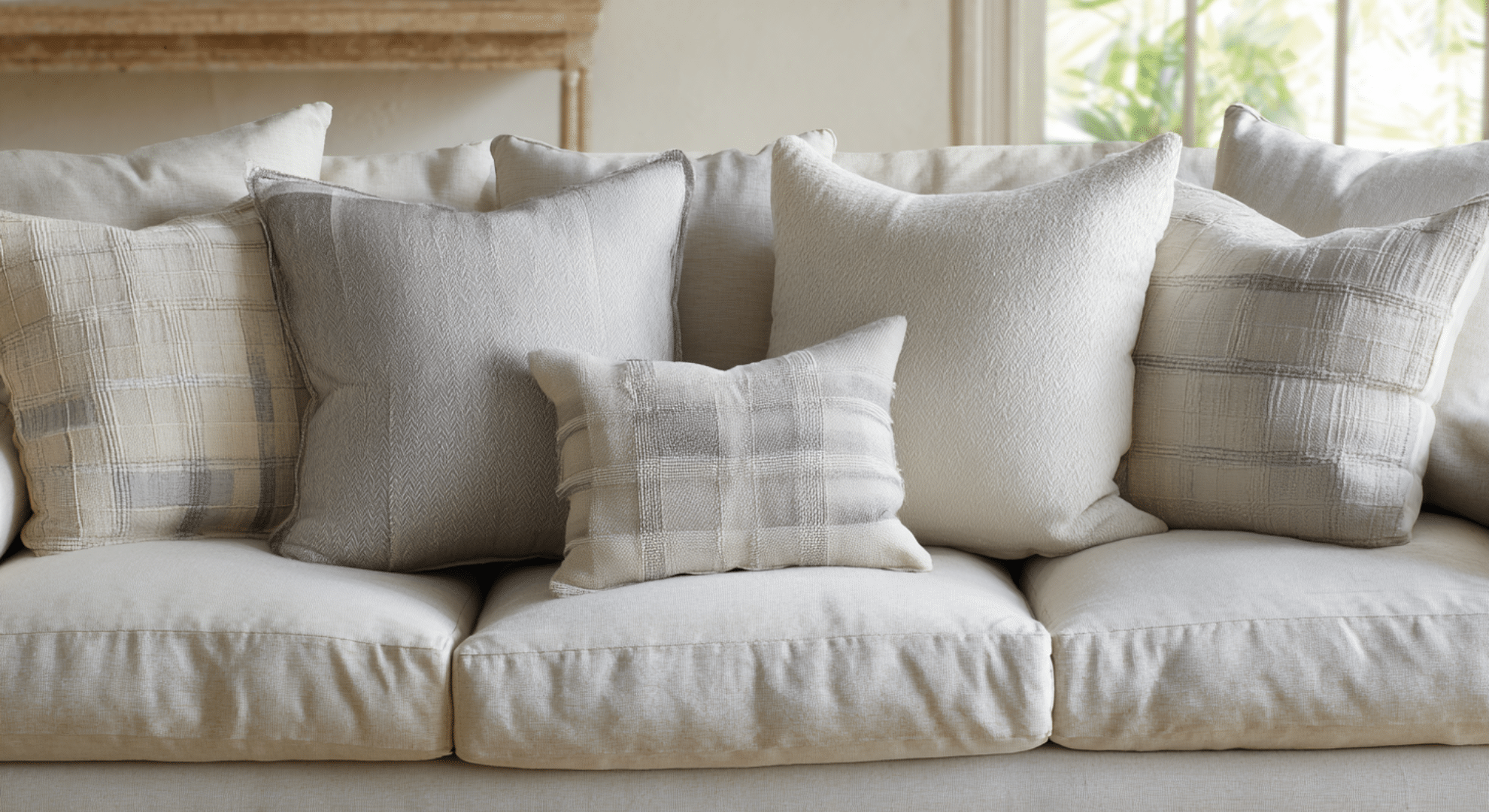
A standard sofa is the easiest place to start because it gives you enough room to work with without feeling crowded. The goal here is to keep things balanced so people can sit comfortably without moving pillows every time.
Best range: 3–5 pillows
Simple setups:
- 3 pillows: one on each end and one in the center
- 4 pillows: two on each end
- 5 pillows: two on each end with one smaller pillow in the middle
Comfort notes: Leave space between pillows so the seating area stays usable
Loveseat
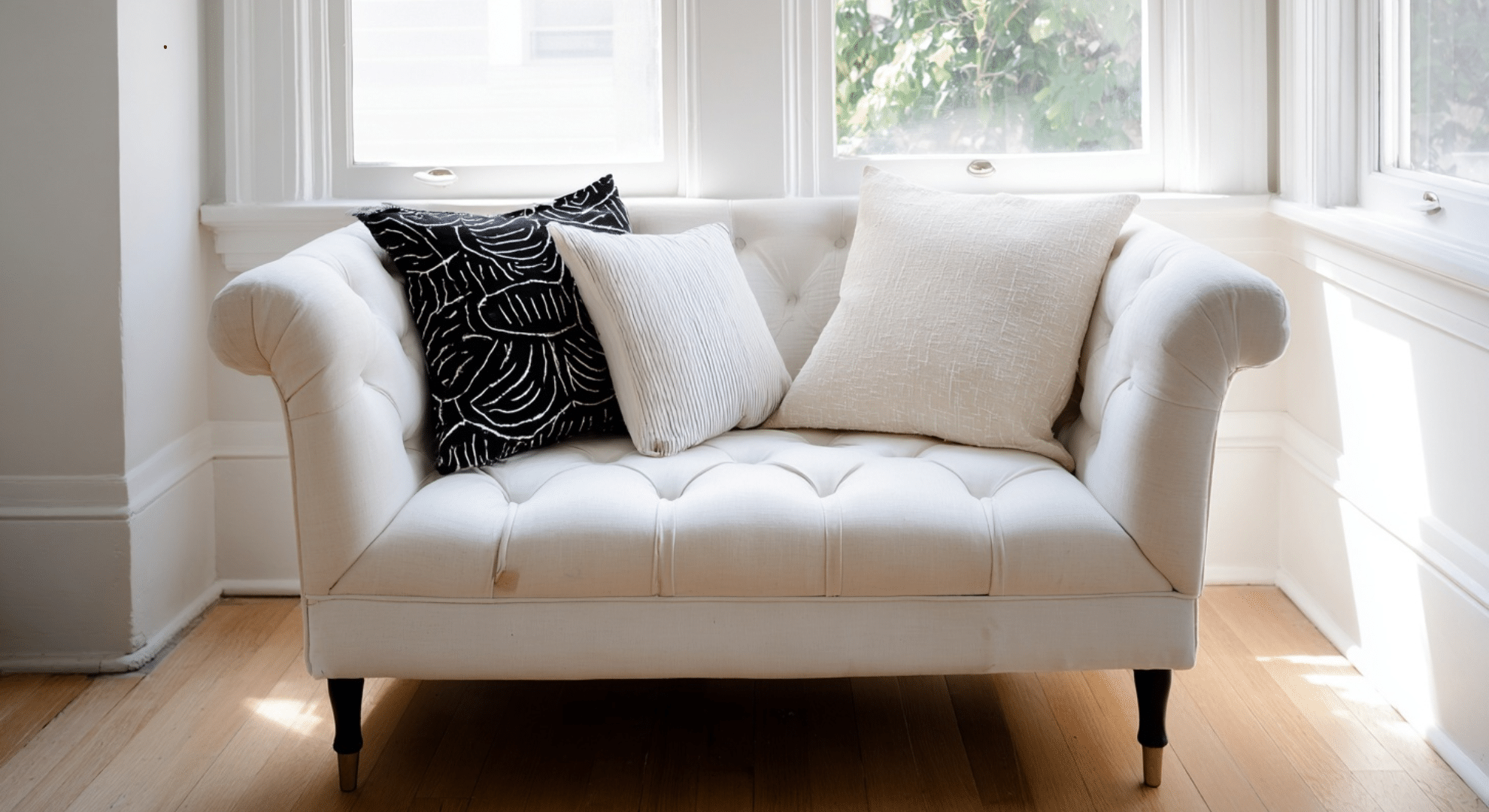
Loveseats are smaller, so pillow count matters even more. Too many pillows can quickly take over the whole seat, making it hard to relax.
- Why fewer works better: Less space means each pillow has more impact
- 2‑pillow setup: One pillow on each side for a clean, open look
- 3‑pillow setup: Two on one side, one on the other for a casual feel
Sectional Sofa

Sectionals need a bit more planning because of their shape. The corner is the key area that helps everything feel connected instead of scattered.
- Anchor the corner: Use 2 pillows in the corner to ground the layout
- Per end: 1–2 pillows on each open end
- Placement idea: Corner first, ends second, then adjust for comfort
Oversized or Deep Sofas
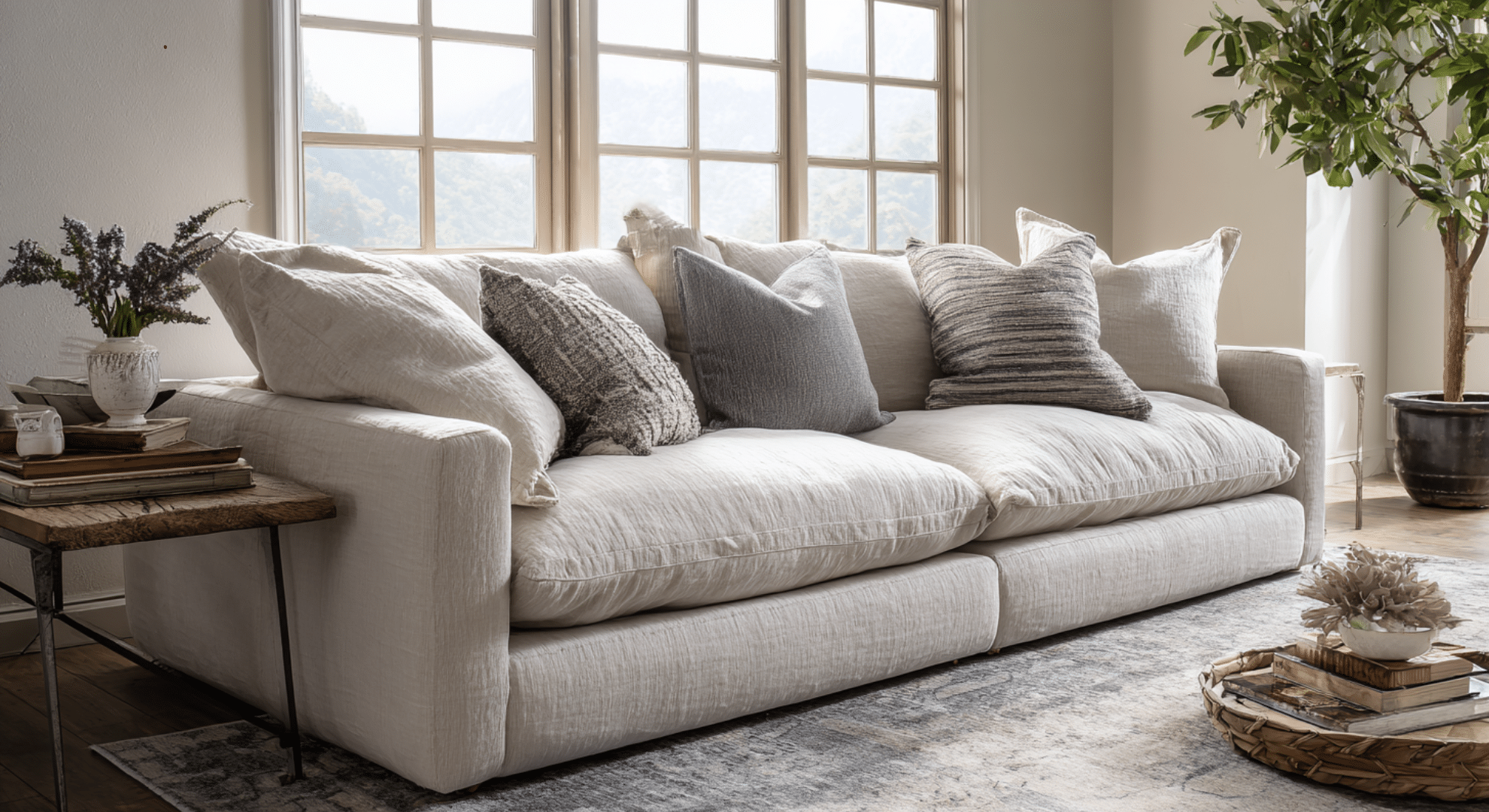
Bigger sofas need pillows that match their size. Small pillows can look lost and won’t offer much support.
- Why size matters: Larger seats need fuller pillows to feel balanced
- Recommended sizes: 20–24 inch pillows work best
- Best count: 5–7 pillows spread evenly without blocking seating
Pillow Formulas You Can Copy
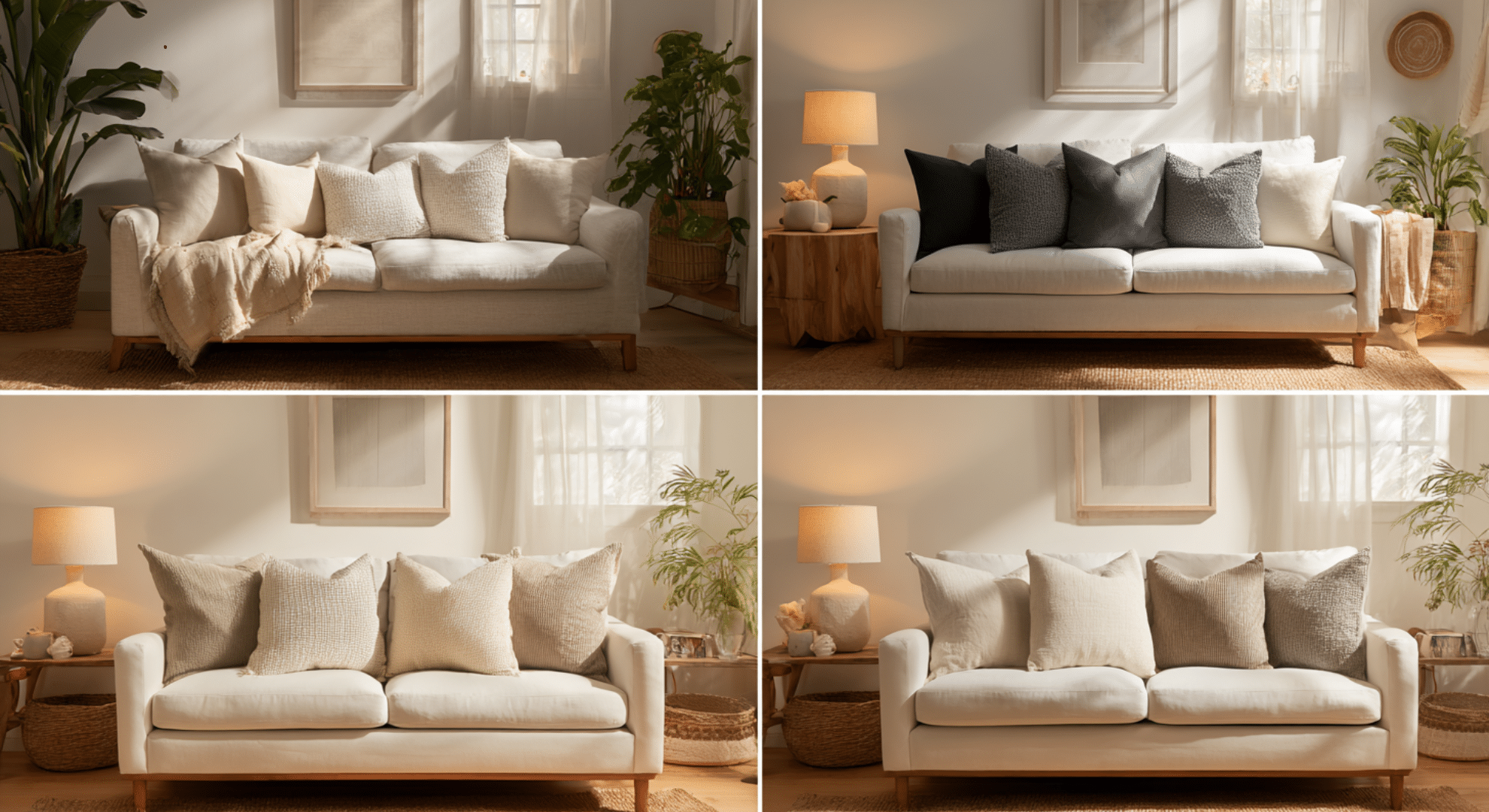
If you’re not sure where to start, using a basic formula makes it easier. These setups are simple, repeatable, and work on most types of couches.
You don’t have to guess what looks good, just follow these combinations based on how many pillows you want and how your space feels:
3‑Pillow Balanced Formula
This setup works great for standard sofas and small spaces. Use two 20-inch square pillows on each end and one 18-inch lumbar pillow in the middle.
Keep the shapes simple; squares for structure, a lumbar for variety. Place the squares in the corners and center the lumbar. This is best for a tidy, balanced look that still feels cozy.
4‑Pillow Symmetrical Formula
Perfect for clean, even layouts. Use four square pillows: two 22-inch and two 20-inch. Put the larger ones on the outside corners and the smaller ones just inside.
Stick to the same shape but vary texture or color slightly. This setup suits formal spaces or when you want a neat, equal-sided look without crowding the couch.
5‑Pillow Layered Formula
Use this for bigger sofas or a fuller look. Start with two 22-inch pillows in each corner, layer two 20-inch ones slightly in front, and finish with a small lumbar in the middle.
Mix textures or patterns, but keep colors coordinated. This works well in larger rooms or when you want extra comfort and style without going overboard.
Minimalist 1–2 Pillow Formula
Best for small couches, tight spaces, or when you like things simple. Use one or two 20 to 22-inch square pillows. Stick to clean lines and solid colors or subtle patterns.
Place one pillow on each end or both on one side for an easy, laid-back feel. This setup keeps things uncluttered and works well in busy homes.
Choosing the Right Pillow Sizes for Your Sofa
Pillow size can affect how natural your couch feels in the room. A good fit helps everything feel balanced. Instead of grabbing whatever size looks nice, think about how the pillows work with the shape of the couch and the room around it.
Larger pillows often fill empty wall space behind a low-backed sofa or wide seating area. Smaller ones help break up long couches or soften corners without blocking the view across the room.
Using just one size can make things feel flat, but using too many random sizes can feel messy. Stick to two main sizes that work well together.
Pay attention to how the pillow fills the space behind and around it when it’s sitting still, not just when someone’s using it.
When the sizes feel like they belong, the whole setup looks more natural without trying too hard. That’s the real trick.
How to Mix Colors, Patterns, and Textures
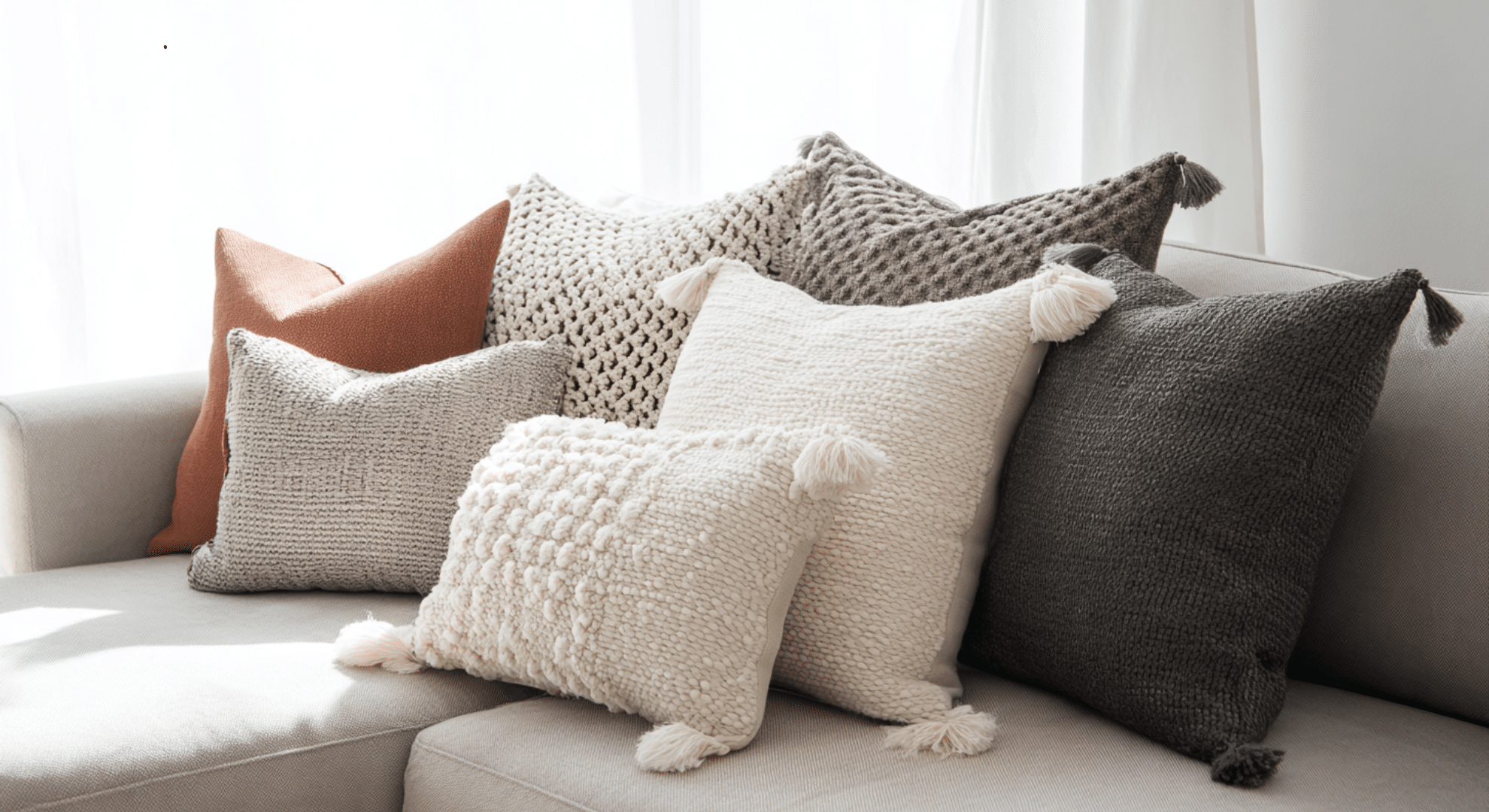
Making your pillows look good together isn’t just about picking nice colors. It’s about mixing them in a way that feels natural. You want things to feel pulled together but not too matchy.
If everything’s the same, it can feel flat. If everything’s different, it can feel messy. The trick is to keep one or two things steady while letting the rest add interest.
Here are a few ways to do that:
- Stick to a color palette with 2–3 main colors
- Mix one bold pattern with two simpler ones
- Use different textures like cotton, linen, or knit to add depth
Once you’ve picked your base colors, repeat them in small ways across the pillows. If one pillow has a bold pattern, let the others be quiet.
Texture helps too: something soft next to something rough can make the space feel more alive without needing more color or design. Balance is the goal.
Lifestyle Factors That Affect Pillow Count
How many pillows you should use isn’t just about looks or furniture size. Your daily habits play a big role too. A couch in a busy family room needs a different setup than one in a quiet reading spot.
Think about how you actually use your space, not just how it looks in photos. Your lifestyle will shape what works best without turning your couch into a place you constantly have to rearrange.
- Kids or pets? Fewer pillows make cleanup easier and reduce mess
- Do you nap on the couch? Keep extras for comfort, but make them easy to move
- Is it a formal space or casual? Casual rooms can feel cozier with more pillows
- Need more room for guests? Don’t overfill, leave open spots for sitting
The right number fits how you live, not just how it looks.
Conclusion
I used to pile on pillows thinking more meant better, until I kept tossing half of them on the floor just to sit down.
That’s when I realized it’s not about how many you have, but how many actually work for your space. Now, I keep it simple, and my couch feels like something I want to come home to.
You’ve got a better feel now for how many pillows on a couch make sense: not too few, not too many, just what fits your style and daily life.
Try a setup that suits how you use your couch, not just how it looks. Trust what feels right.
And if you want more no-fuss home tips like this, go find other blogs on the website. There’s plenty more to make your space feel like yours!