“How long will this take?” It’s one of the first questions any business owner asks when they plan a renovation or a new build-out.
It’s also one of the hardest to get a straight answer to. Search online and you’ll find broad ranges, but those rarely hold up once permits, procurement and inspections enter the picture. This article breaks down what drives a commercial design timeline, so you know what questions to ask before you sign off on one.
More Than Just Square Footage
There’s no single number, because a commercial interior project is really a chain of separate decisions, and each one can add or cut weeks on its own. Here’s what tends to matter most:
|
Factor |
Moves faster when |
Runs longer when |
|
Scope |
The work is a cosmetic refresh, like new paint or updated furniture |
The project is a full renovation or a ground-up build |
|
Sector |
The space is a retail shop or general office |
The space is a medical practice or veterinary clinic, where the health department reviews and equipment-specific codes add extra steps |
|
Procurement |
Furniture and finishes are already in stock and can arrive in days |
Pieces are custom-built or made to spec, which can take months to arrive |
|
Space condition |
The space is a vacant shell, free of existing tenants |
The space is occupied and has to stay partly open while work is underway |
|
Decision-makers |
A single owner can sign off on a decision the same day it’s proposed |
A franchise brand or outside investors need several rounds of review before a final decision is made |
None of these factors act alone, either. A custom furniture order tied to a multi-stakeholder healthcare project doesn’t just add procurement time. It also triggers another round of approvals once samples come back for review. Delays tend to stack on top of each other rather than happen one at a time.
Why Can a Small Space Take Longer Than a Big One to Design?
This surprises a lot of business owners. It’s natural to assume a bigger space just means a bigger, longer job. In practice, the type of work matters far more than the amount of floor space involved. A small medical office or veterinary clinic can easily take longer to finish than a general retail space several times its size, and the reason has nothing to do with square footage.
Here’s what can usually add time:
- Regulatory review: health department sign-off and other compliance checks add steps a general-purpose space never faces.
- Specialized systems: plumbing, electrical and HVAC built around clinical-grade equipment have to meet a different standard than a standard commercial buildout.
- Equipment lead times: exam chairs, imaging equipment, and sterilization systems often come from specialized vendors, and some need their own licensed installers.
- Accessibility requirements: exam rooms, hallways and doorways often need wider clearances than a standard retail or office layout.
- Multiple layers of sign-off: a practice owner, a landlord, a health authority, and sometimes a state licensing board all have to approve the same decisions before work can continue.
- Extra inspections: beyond the standard building inspection, many medical spaces need a separate health department or state inspection before they can open.
A retail space or a salon moves through far fewer of these checkpoints, even at a similar size, which is a big part of why a small, compliance-heavy space can take several times longer than a much bigger, straightforward one.
That’s exactly why experience across sectors matters. A firm that has handled both a straightforward retail build-out and a compliance-heavy medical space, like TNT Commercial, knows which of these checkpoints apply to a given project instead of guessing.
The Phases Behind Every Interior Design Project Timeline
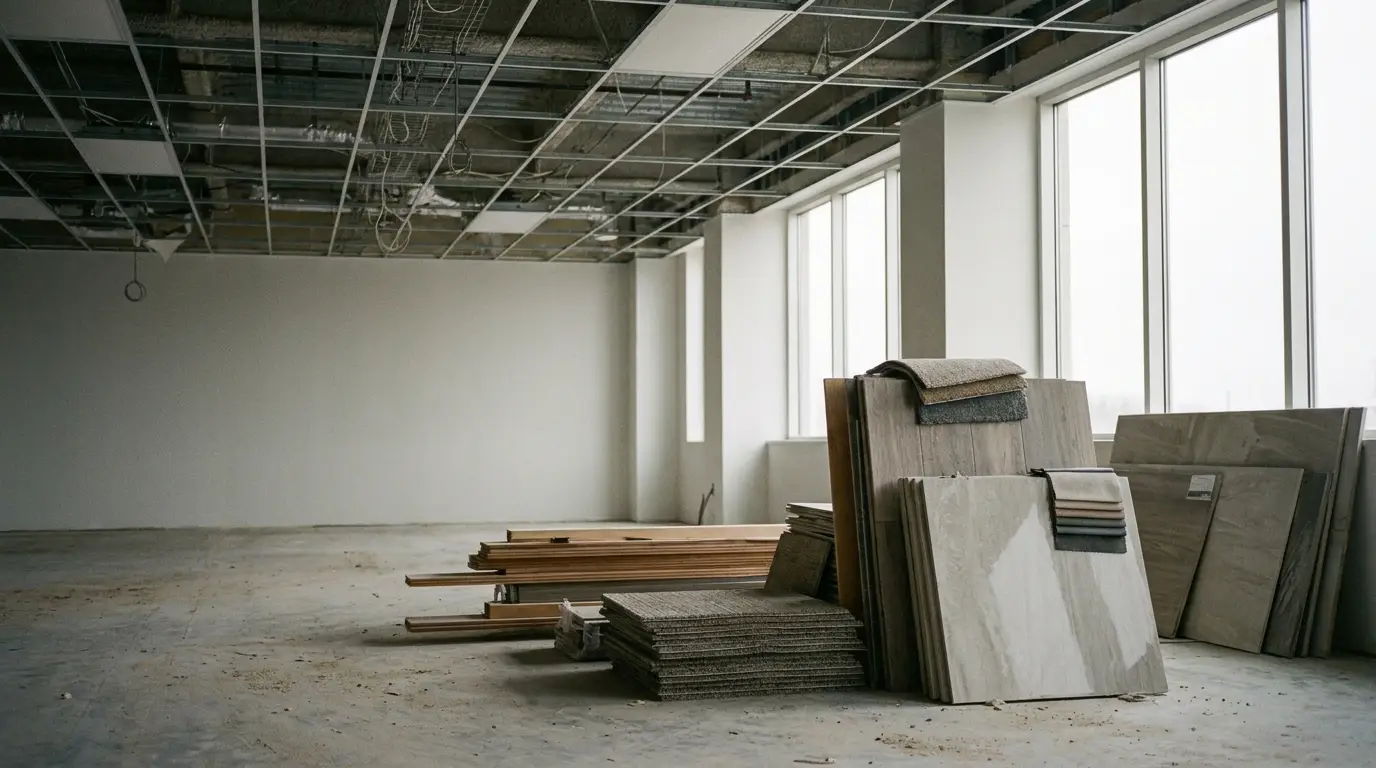
Every commercial interior project, no matter the sector, moves through the same broad phases. What changes is how long each one takes.
- Design and space planning: layout, materials and the overall concept the rest of the project is built around.
- Permitting and approvals: usually the phase most likely to stretch a project, especially in a regulated industry.
- Furniture and material procurement: this is where in-stock and custom orders can differ by months, not days.
- Construction and installation: the build-out, delivery and final setup that bring everything together into a finished space.
These phases don’t always run one after another. Design and procurement often overlap, especially when a firm orders long-lead custom pieces before construction even finishes. Permitting, though, is usually the one phase that has to fully clear before construction can legally start, which is exactly why it causes the most schedule slippage.
Find a Timeline You Can Trust
Industry averages don’t tell you much. They’re often too broad to be useful. It’s real, completed work close to your own scope and sector.
Before you say yes to a timeline someone hands you, ask a firm to show you finished projects similar to yours in sector and size, not just square footage. Ask what the timeline actually includes, too. Some quotes only cover design. Others carry a project through procurement and installation.
If your space needs permits or inspections (healthcare, food service, that kind of thing) tack on extra time, because that process rarely moves fast.
It also helps to ask how a firm handles delays when they happen. A vague answer here is often a bigger red flag than an aggressive timeline, since delays are common enough that any experienced firm should have a clear process for handling them.
This is also why you should check your lease timing twice. If your lease starts the day you expect to open, but the real timeline runs eight or ten weeks longer, that gap turns into months of rent on a space that doesn’t earn money yet. Build a buffer into your lease start date, based on a realistic timeline instead of a hopeful one. That’s one of the simplest ways to avoid that cost.