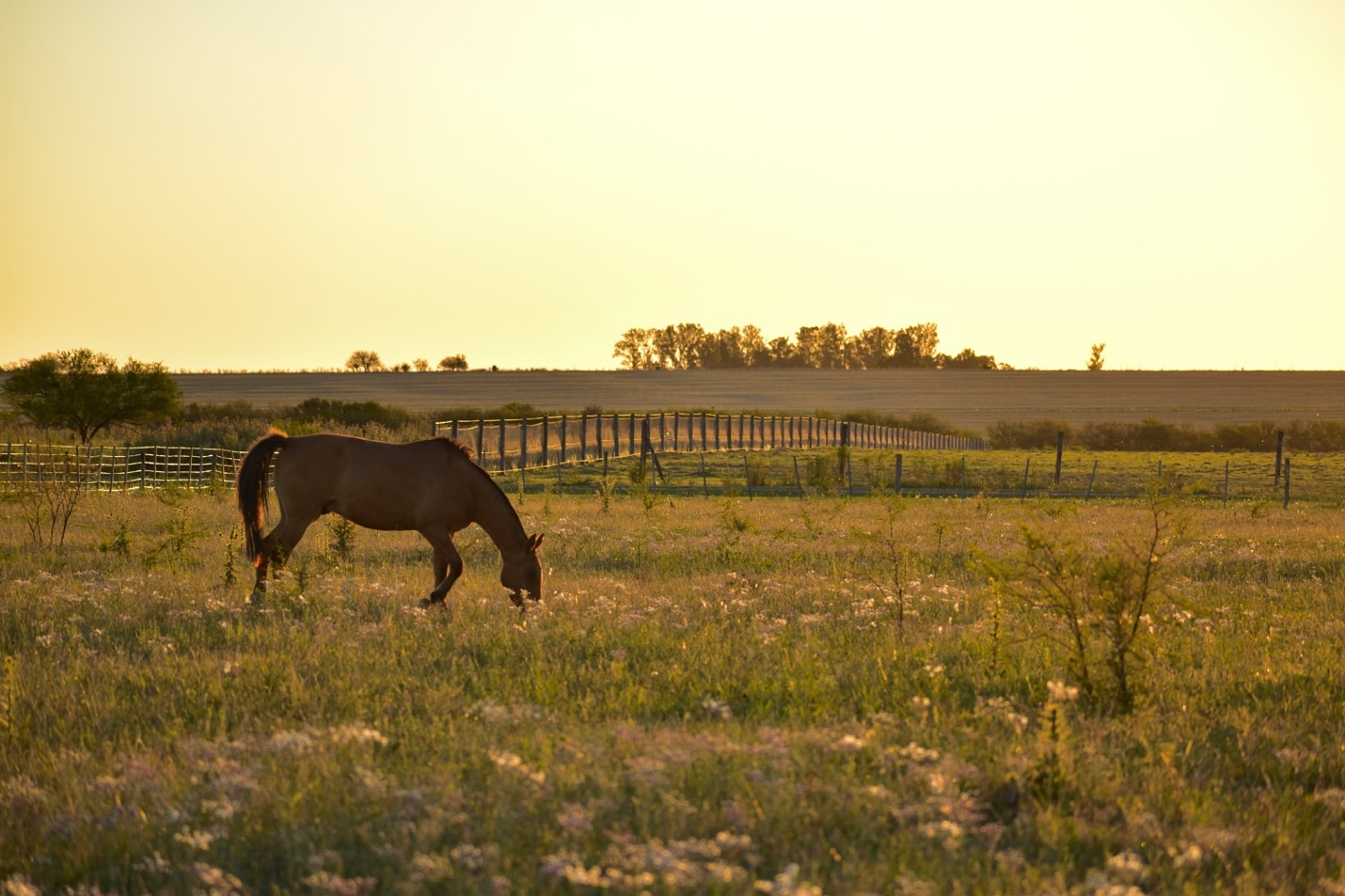
Have you ever been to or even walked by a well-run horse farm? Everything looks clean and structured, and there is absolutely no waste. It feels that in these farms, even the waste isn’t going to waste.
Hay gets reused, manure gets collected, and bedding gets repurposed. After all, we’re talking about a place that is usually outside of towns and in nature, so everything must be in tune with it.
So, long before organic gardening became a trend, horse farms were already operating in a way that fit perfectly in that system. On the surface, it might look like basic farm management, but if you get involved, you quickly realize the number of operations and the sync between each of them, making it sound ultra-complex.
This brings us to the next question: how do horse farms actually contribute to organic gardening? Let’s find out.
Manure Is the Obvious Starting Point (But It’s Not That Simple)
When we’re talking about fertilizer, people working in horse farms already know that horse manure is often described as the “gold standard.” But that’s only part of the story.
Most people don’t know that fresh manure isn’t something you just throw into a garden and hope for the best. First of all, it contains high levels of nitrogen, but also ammonia, pathogens, and weed seeds, especially if the horse’s feed includes untreated hay.
This is the exact reason why composting matters. So, once manure is properly composed, it transforms and becomes much more useful. Microbial activity breaks down all the harmful components, stabilizes nutrients, and turns the material into something that can be spread across the land.
So, if the manure is not composed, it will burn plants. But if the job is done correctly, it starts feeding soil life.
Well-composed horse manure not only improves soil structure but also increases water retention and supports microbial diversity.
Even on big horse racing events like the Kentucky Derby, horse manure is collected, composted, and reused. And this proves that the sport is all about organic practices. Maybe betting is the main attraction, and people are already using the TwinSpires horse betting payout calculator to figure out their potential win, but the deep operations that make this event possible have to be appreciated.
Bedding Turns Waste Into a Soil-Building Resource
Manure is never the only thing that’s managed. Most horse farms mix it with bedding. We’re talking about the wood shavings, straw, or sometimes pellets. Yeah, this mind sounds weird and looks like producing extra waste, but in reality, it’s one of the reasons horse manure composts works so well.
You have carbon from bedding that balances the nitrogen from the manure. That carbon-to-nitrogen ratio is the secret to effective composing. Too much nitrogen, and you’ll get an intolerable odor and massive nutrient loss. On the other hand, too much carbon and decomposition may slow down.
So, horse farm waste naturally lands in a range that’s close to ideal, especially when merged properly.
Composting on Horse Farms Is Complex
We have to agree that backyard compost piles are usually inconsistent. People don’t know what they’re doing; some are too dry, some are too wet, and some never heat up enough to fully break down material.
Horse farms, on the other hand, deal with massive volume. And volume is their partner.
Larger compost piles retain heat better, which is one of the most important things. When internal temperatures reach 55-65°C (131-149°F), pathogens and most weed seeds are destroyed.
But piles also have to be turned regularly just to monitor moisture and to allow enough time for the process to finish. So, if you’re a gardener, it is much easier to source compost from a good horse farm since it will be more reliable than producing some at a small scale.
Soil Structure Improves in Ways Fertilizers Can’t Replicate
One of the biggest misconceptions in gardening is that fertility is just about nutrients.
It’s not.
You can add nitrogen, phosphorus, and potassium through commercial fertilizers, but that doesn’t fix soil structure. Horse manure compost does.
The organic matter helps soil form aggregates, small clumps that create space for air and water. This improves drainage in heavy soils and water retention in sandy soils at the same time.
That balance is hard to achieve artificially. Once soil structure improves, everything else becomes easier. Roots grow deeper, microbes become more active, and plants become more resilient.
Microbial Life Is the Real Benefit
We have to understand that in organic farming, healthy soil isn’t just dirt. It’s a living system. The soil contains bacteria, fungi, and other microorganisms that break down organic material, release nutrients, and interact with plant roots, which can directly affect growth.
Horse manure compost directly feeds that system. It introduces organic material that microbes actually use as energy. The result? Well, this increases their activity, and over time, that creates a more stable environment where nutrients cycle naturally.
Final Thoughts
Horse farms aren’t trying to support organic gardening, but accidentally, they happen to produce one of its most valuable inputs. Horse manure and bedding, when managed correctly, create a compost that improves soil structure, supports microbial life, and provides a steady supply of nutrients.
Exactly that thing that every organic garden needs. After all, there are no quick fixes in organic gardening, and building healthy soil requires a long and calculated approach, but it is well worth it in the end.