
The first time I stood under a date palm during hand-pollination season, I remember being surprised by how little the tree looks like the fruit it eventually holds.
No sign of a single date anywhere, just fronds and a few pale flower stalks.
And it took another full season of visits before I saw those same stalks turn into the heavy, honey-colored clusters I would only ever know from a grocery shelf.
So, that gap between “flower” and “fruit” and how dates grow is most of what I want to walk you through here.
How Do Dates Grow?
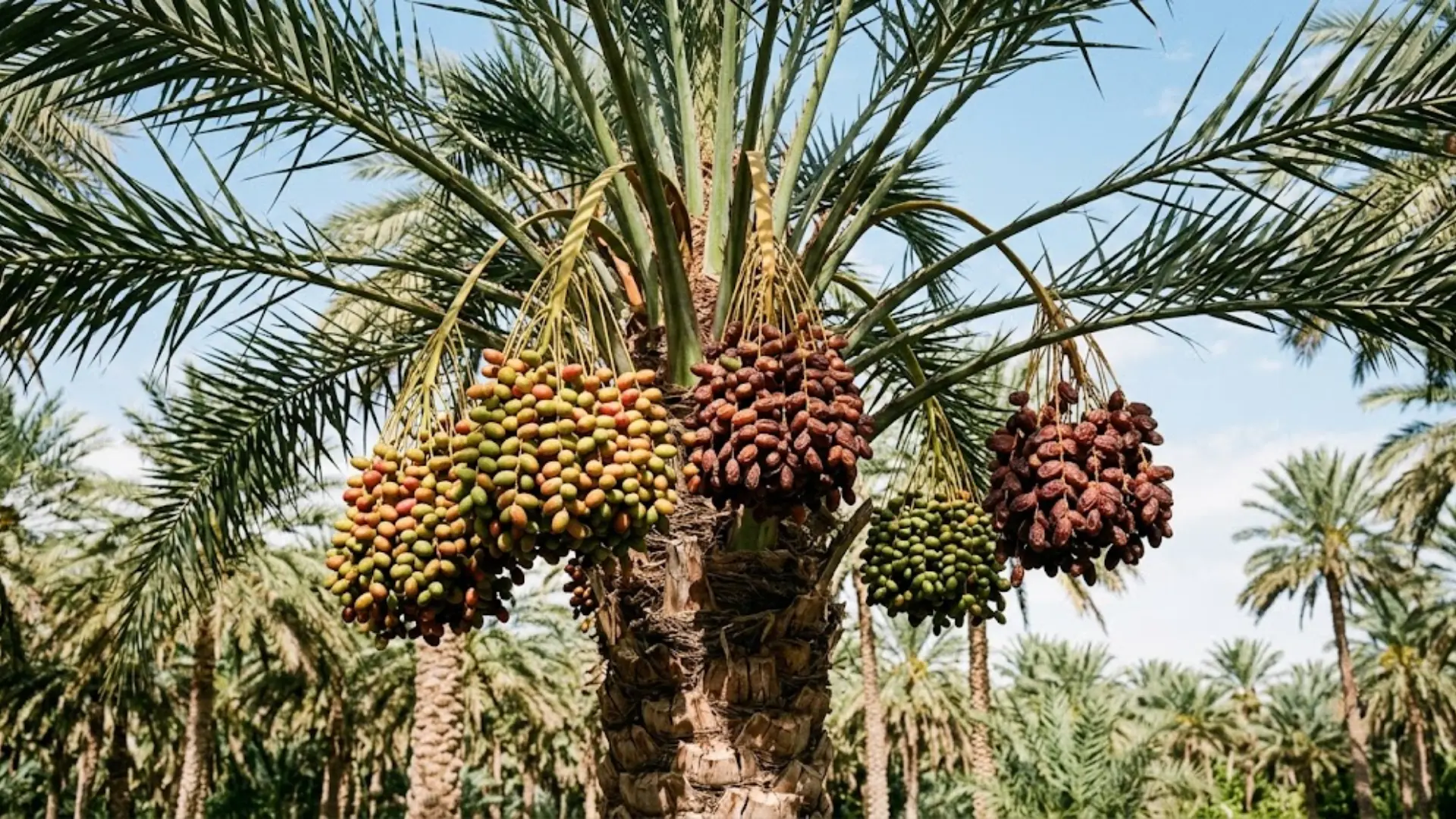
Dates grow on tall date palm trees, developing in heavy, hanging clusters tucked beneath the canopy of fronds.
These palms thrive in hot, dry climates, where long stretches of sun coax the fruit from firm and green to soft and deeply sweet.
Getting there takes patience, as each cluster matures over several months before it’s ready for harvest.
So do dates grow on trees? Yes, and specifically on palms, never on shrubs or vines like so many other fruits people picture when they think of orchards.
Where Dates Actually Come From?
Every date starts its story on the same living structure, one that looks nothing like the fruit trees most gardeners are used to picturing.
Once you know what to look for, the whole plant starts to make a lot more sense, and it comes down to these key parts.
The Date Palm Tree
The date palm, known botanically as Phoenix dactylifera, is a slow, steady grower that can live for well over a century when tended properly.
Mature trees often reach heights of 70 to 80 feet, towering over most backyard landscapes.
One detail catches many new growers off guard: date palms are either male or female, and only the female trees produce fruit, though they need a nearby male for pollination to happen at all.
Parts of the Tree You Should Know
Once you know what to look for, the whole plant starts to make a lot more sense, and it comes down to these parts:
- Trunk: Tall, rough, and ringed with the scars of old fronds.
- Fronds: Long, feathery leaves that fan out from the crown.
- Flower Stalks: Emerge from the crown and eventually give way to fruit.
- Fruit Clusters: Heavy bunches that hang low once pollination takes hold.
- Root System: Deep and wide-reaching, built to pull moisture from dry, sandy soil.
The Full Process Behind How Dates Grow
A date palm moves through a handful of distinct stages before any fruit is ready to eat, each one shaping the final harvest in its own way.
Here’s how the process actually unfolds.
Stage 1: Date Palms Produce Flowers
A date palm doesn’t fruit overnight. It takes years of growth before the tree matures enough to flower, usually somewhere between four and eight years depending on growing conditions.
When it finally happens, clusters of small, pale flowers push out from the crown, tucked among the base of the fronds.
Female flowers show up creamy white and slightly waxy, packed tightly along a stalk called a spathe, while male flowers open looser and carry the pollen that starts everything off.
Stage 2: Pollination Begins
Pollination is where the tree’s sex actually matters, and it’s a detail that surprises a lot of new growers:
- Female flowers can’t set fruit without pollen from a separate male tree, since date palmsdon’t self-pollinate.
- In the wild, wind does the job, though it’s inconsistent and often results in patchy, uneven clusters.
- Commercial growers rely on hand pollination instead, collecting pollen from male trees and applying it directly to female flowers for a much higher, more predictable yield.
- Timing matters too, since pollen only takes when female flowers are fully open, a narrow window of just a few days each season.
The one time I helped with hand pollination on a small grove, the difference in how full and even the clusters turned out was obvious almost immediately.
Stage 3: Fruit Begins Forming
Once pollination succeeds, tiny green fruits start showing up along the flower stalks, barely bigger than a grain of rice. These young fruits cling together in dense clusters, drawing sugars and water from the tree as they slowly bulk up.
A single cluster can hold anywhere from a few hundred to over a thousand individual dates, depending on the palm variety and pollination success.
There’s little visible change week to week, but underneath the surface, the fruit is steadily building the structure it needs before ripening starts.
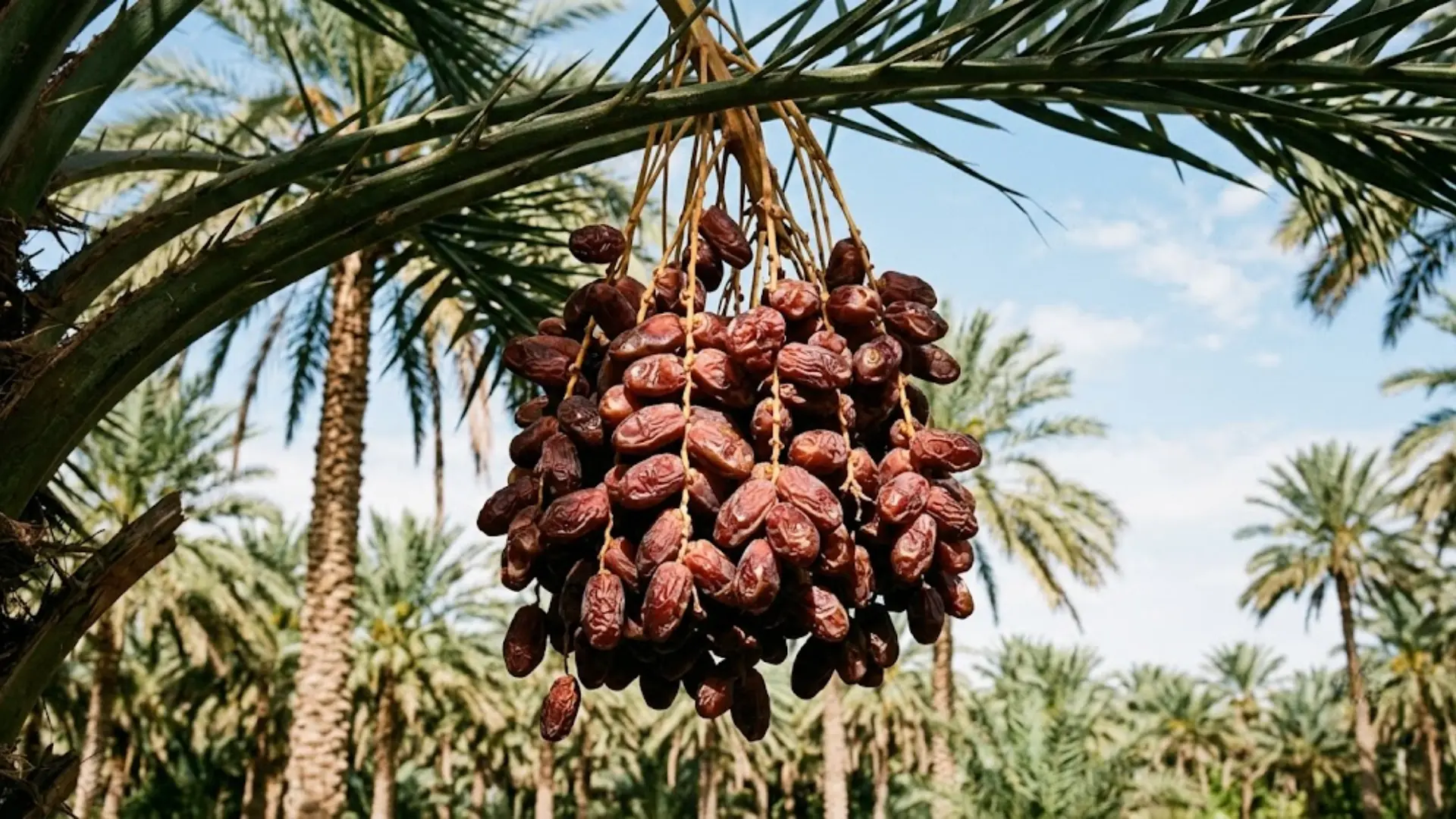
Stage 4: Dates Mature Through Four Growth Stages
Every date works through four distinct stages before it’s ready to eat, and each one changes the fruit’s color, texture, and sweetness in its own way.
Growers and date sellers across the Middle East and North Africa still use these traditional Arabic names, since they map directly to how a date is harvested and sold, whether fresh, semi-dried, or fully dried.
| Stage | Appearance | Texture | Sweetness | Duration | Best Used For |
|---|---|---|---|---|---|
| Kimri | Green | Hard | Low | 4-5 weeks | Not eaten, still developing |
| Khalal | Yellow/Red | Crisp | Moderate | 3-4 weeks | Fresh eating, salads |
| Rutab | Brown | Soft | High | 1-2 weeks | Fresh eating, quick spoilage |
| Tamar | Dark Brown | Wrinkled | Very Sweet | Stable once dried | Dried dates, storage, baking |
How Long Does It Take Dates to Grow?
Growing a date palm from seed to full production is a long game, and one that tests patience more than any other widely grown fruit tree.
On the farms where hand pollination is standard practice, growers track this timeline closely since it determines when a tree starts paying for itself.
- Germination: 1-3 months
- Juvenile Growth: 3-7 years
- Flowering: Years 4-8
- Fruit Development: 5-7 months post-pollination
- Harvest Season: Late summer to fall
- First Real Harvests: Year 8-10
- Peak Production: Year 30-35, tapering off gradually after year 60
A palm’s first crop and its best crop are two different milestones. Fruiting can start around year 8 to 10, but yields keep climbing for decades before a tree hits its peak.
Once a palm reaches maturity, it settles into a reliable annual rhythm, flowering each spring and carrying fruit through to harvest without needing to repeat those early growth stages again.
Where Do Date Palms Grow Best?
Date palms are particular about where they’ll thrive, and getting the growing conditions right makes all the difference between a struggling tree and one loaded with fruit.
Here’s what these palms actually need to do well.
Heat, Sun, and Long Summers
Date palms need long, hot summers with temperatures regularly climbing past 100°F for fruit to ripen properly, paired with mild winters that stay well above freezing.
A long growing season matters just as much as the heat itself, since the fruit needs months of consistent warmth to move through its full ripening cycle.
This is exactly why desert regions like the Middle East, North Africa, and parts of the American Southwest have become the natural home for commercial date farming.
Sandy, Salt-Tolerant Soil
Date palms do best in soil that mirrors their desert origins:
- Sandy, loose soil that mimics natural desert conditions.
- Well-draining ground, since standing water quickly leads to root rot.
- Notably high salt tolerance, letting palms grow in soil many other fruit trees can’t handle.
- Minimal need for rich organic matter compared to most fruit-bearing trees.
Deep Roots, Low Water Once Grown
Young date palms need deep, consistent irrigation to establish strong root systems, since shallow watering encourages roots to stay near the surface where they’re vulnerable to heat and drought.
Once established, though, these trees show remarkable drought tolerance, drawing on root systems that can reach far below the surface to find moisture other plants can’t access.
Growers still irrigate mature palms during fruit development, since water stress at the wrong time can shrink cluster size and cut into yield.
Where are Most Dates Grown Around the World?
Dates are grown commercially across roughly forty countries, though production is heavily concentrated in a handful of hot, arid regions.
Here’s how the major growing countries stack up.
| Country | Known For | Approx. Annual Production |
|---|---|---|
| Egypt | Largest global producer | 1.87 million tonnes |
| Saudi Arabia | Premium dates | 1.64 million tonnes |
| Algeria | Export production, Deglet Noor | 1.32 million tonnes |
| Iran | Diverse varieties, Piarom dates | Approx. 1 million tonnes |
| United Arab Emirates | Medjool cultivation | Top 10 global producer |
| Tunisia | Deglet Noor, high-value exports | Top 10 global producer |
|
United States |
Medjool and Deglet Noor | Leading non-Middle East producer |
Growing Date Palms at Home
Growing your own date palm is possible outside the desert, but it takes the right zone, setup, and patience to get anywhere close to real fruit.
Here’s what actually matters if you’re considering one at home.
- Date palms grow best in USDA hardiness zones 9 through 11, where winters stay mild.
- Outdoors is ideal for fruiting, but younger and dwarf varieties can survive indoors near a bright, south-facing window.
- Container growing works well for years, though palms eventually need a large pot or in-ground space to fruit properly.
- Young trees need deep, regular watering to build a strong root system before drought tolerance kicks in.
- Full sun, at least 6 to 8 hours daily, is non-negotiable for healthy growth and any real shot at fruit.
Spacing matters just as much as sun once a palm outgrows its container. A mature date palm needs several feet of clearance on every side, similar to the layout thinking behind planning bed spacing for a vegetable garden.
Are Dates Picked Fresh or Dried?
Most people assume dates come dried straight out of a package, but they actually dry naturally on the tree, and how long they’re left determines what ends up in your hands.
Some are picked at the Rutab stage for a soft, fresh bite, while most are left longer to reach Tamar, where sun and time pull out the moisture on their own.
What people call “dried dates” have simply gone further along this natural path.
Moisture content is really the whole story here, shaping texture, shelf life, and sweetness all at once, from the soft, high-moisture fruit picked early to the wrinkled, long-lasting dates left to fully ripen.
Popular Types of Dates You Can Buy
Walk down any grocery aisle, and you’ll spot a handful of date varieties, each with its own texture, flavor, and best use in the kitchen.
Here’s how the most common types compare.
| Variety | Texture | Flavor | Best Uses | Sweetness |
|---|---|---|---|---|
| Medjool | Large, soft, chewy | Rich, caramel-like | Snacking, stuffing, baking | Very sweet |
| Deglet Noor | Firm, semi-dry | Mild, nutty | Baking, chopping into dishes | Moderate |
| Barhi | Soft, almost creamy when ripe | Buttery, honeyed | Eating fresh at the Khalal or Rutab stage | High |
| Zahidi | Firm, drier | Mild, subtly sweet | Cooking, savory dishes | Low to moderate |
| Halawy | Soft, tender | Sweet, syrupy | Snacking, desserts | Very sweet |
| Khadrawy | Soft, moist | Rich, smooth | Fresh eating | High |
| Ajwa | Soft, dense | Deep, slightly smoky | Snacking, traditional and religious use | High |
Common Myths About How Dates Grow
Dates come with more misconceptions than most fruits, partly because so few people ever see the tree they grow on.
Here’s where the confusion usually comes from, and what’s actually true.
- Dates grow underground. They grow high up in the crown of a date palm, in hanging clusters, likely confused with root vegetables or tubers.
- Dates are just dried grapes. They come from entirely different plants; both just happen to look wrinkled once dried.
- Dates grow on coconut trees. Coconut and date palms are different species, and the fruit they bear looks nothing alike.
- Dates are artificially dried. Most dry naturally on the tree from heat and low humidity, much like how pistachios grow underground is a myth people assume, when they actually form in tree clusters.
- Every palm tree produces dates. Only Phoenix dactylifera produces edible dates; ornamental palms look similar but never bear fruit.
The Bottom Line
Every date I eat now tastes different since that first grove visit.
I can picture the years of patient growth behind it, the hand-pollinated blooms, and the thinned clusters.
That’s the whole story of how dates grow: a tiny flower becoming fruit, then in the sun long enough to sweeten and dry into what lands on your shelf.
None of it happens on anyone’s schedule but the palm’s own.
Have you grown a date palm, or tasted one straight off the tree? Tell me in the comments.
Frequently Asked Questions (FAQs)
How Tall Do Date Palm Trees Grow?
Date palms typically reach 70 to 80 feet at full maturity, sometimes even taller under ideal conditions. That height is part of why harvesting has traditionally required skilled climbers or specialized lifting equipment.
How Many Dates Does One Tree Produce?
A mature, well-pollinated palm can yield anywhere from 100 to 250 pounds of dates in a single year. Output depends heavily on the tree’s age, variety, and how consistently it’s watered during fruit development.
How Long Does a Date Palm Live?
Date palms are remarkably long-lived, often reaching 100 to 200 years of age under good care. Peak fruit production usually happens between 30 and 35 years, tapering off gradually after 60.
Are Date Palms Difficult to Grow?
Date palms aren’t difficult to grow, but they need the right climate, plenty of space, and patience. Most take 4–8 years to produce fruit, making them a long-term commitment.



3 Responses
I was wondering how to identify male and female seeds
Thanks for the information , I have already soaked the seeds patiently waiting for the results.
Planted a couple of seeds, two sprouts have emerged, the first one has now curled up into a stem? The second one is still a flat leaf. We will see what happens next.