
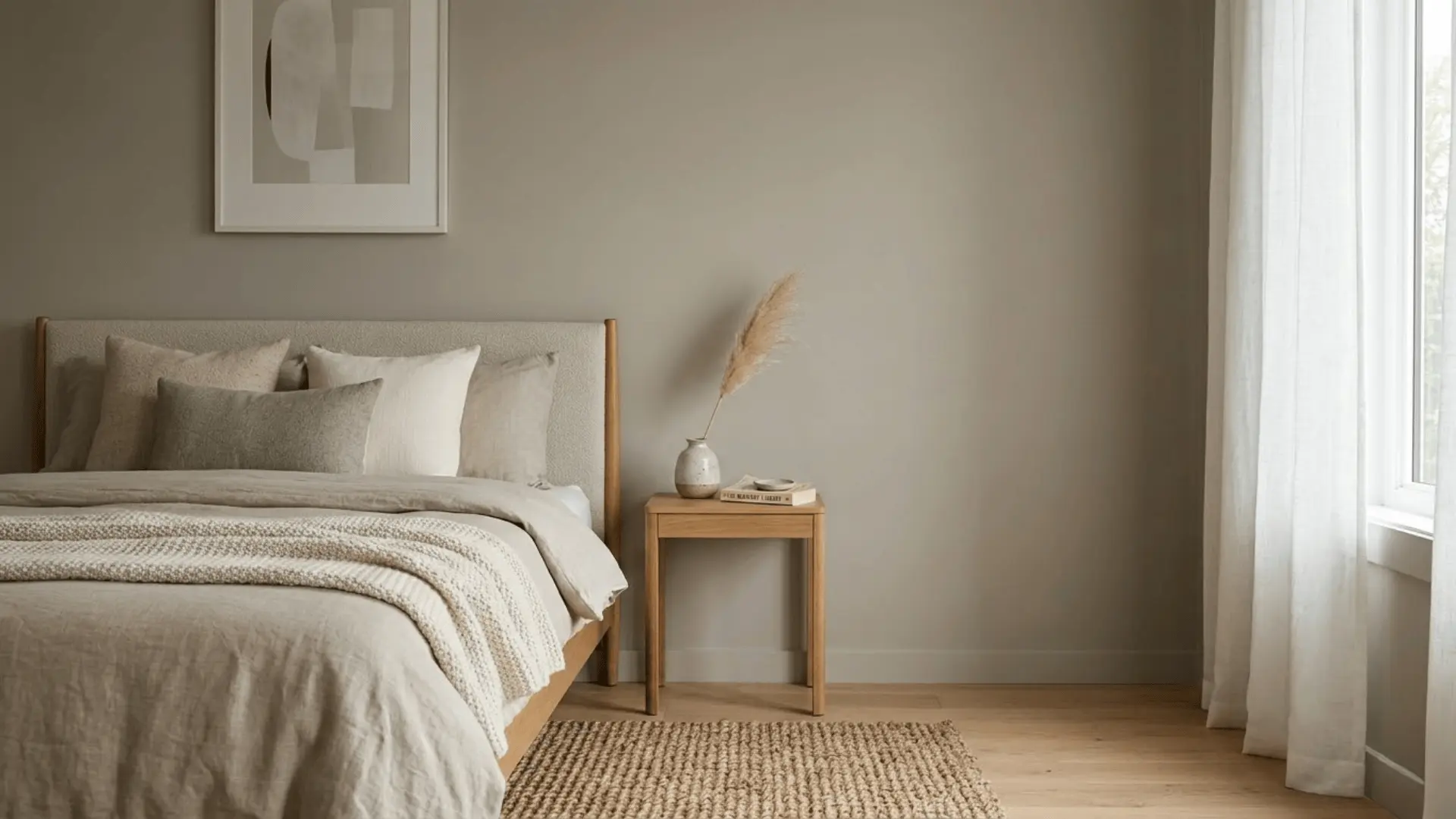
Flat paint has a quiet kind of beauty to it, the sort that makes a room feel collected, calm, and intentionally designed.
With its non-reflective, matte finish, it absorbs light rather than bouncing it around, which is exactly why so many designers reach for it when they want a space to feel cozy and grounded.
It reads well in bedrooms, accent walls, and moody living rooms. And yet, not everyone is sold on it.
Some people swear by it, others have had a not-so-great experience and never looked back. So what is it really like to live with flat paint on your walls?
Let’s get into the honest, unfiltered version.
What is Flat Paint on Walls?
Flat paint is a zero-sheen, matte finish that sits at the lowest end of the sheen spectrum.
Unlike eggshell, satin, or semi-gloss, it contains no reflective properties, so light simply sinks into it rather than bouncing off the surface.
Eggshell gives you a faint glow, satin adds a soft sheen, and semi-gloss is noticeably shiny and scrubbable.
Flat paint skips all of that in favor of a smooth, velvety appearance that feels very editorial and still.
It’s most commonly used on ceilings, formal dining rooms, bedrooms, and other low-traffic areas where durability isn’t the top priority but aesthetics absolutely are.
Why Flat Paint on Walls is Popular?
Flat paint has built a loyal following for good reason. Its biggest selling point is that it hides wall imperfections really well, think minor cracks, dents, and uneven textures that shinier finishes would only highlight further.
It also sits beautifully under lighting because there’s no glare or reflection pulling your eye away from the overall look of the room.
Aesthetically, it leans soft and modern, the kind of finish that photographs well and feels very curated.
For older walls, especially, flat paint is often the most forgiving and flattering choice you can make without committing to a full skim coat.
Why Some People Dislike Flat Paint on Walls?
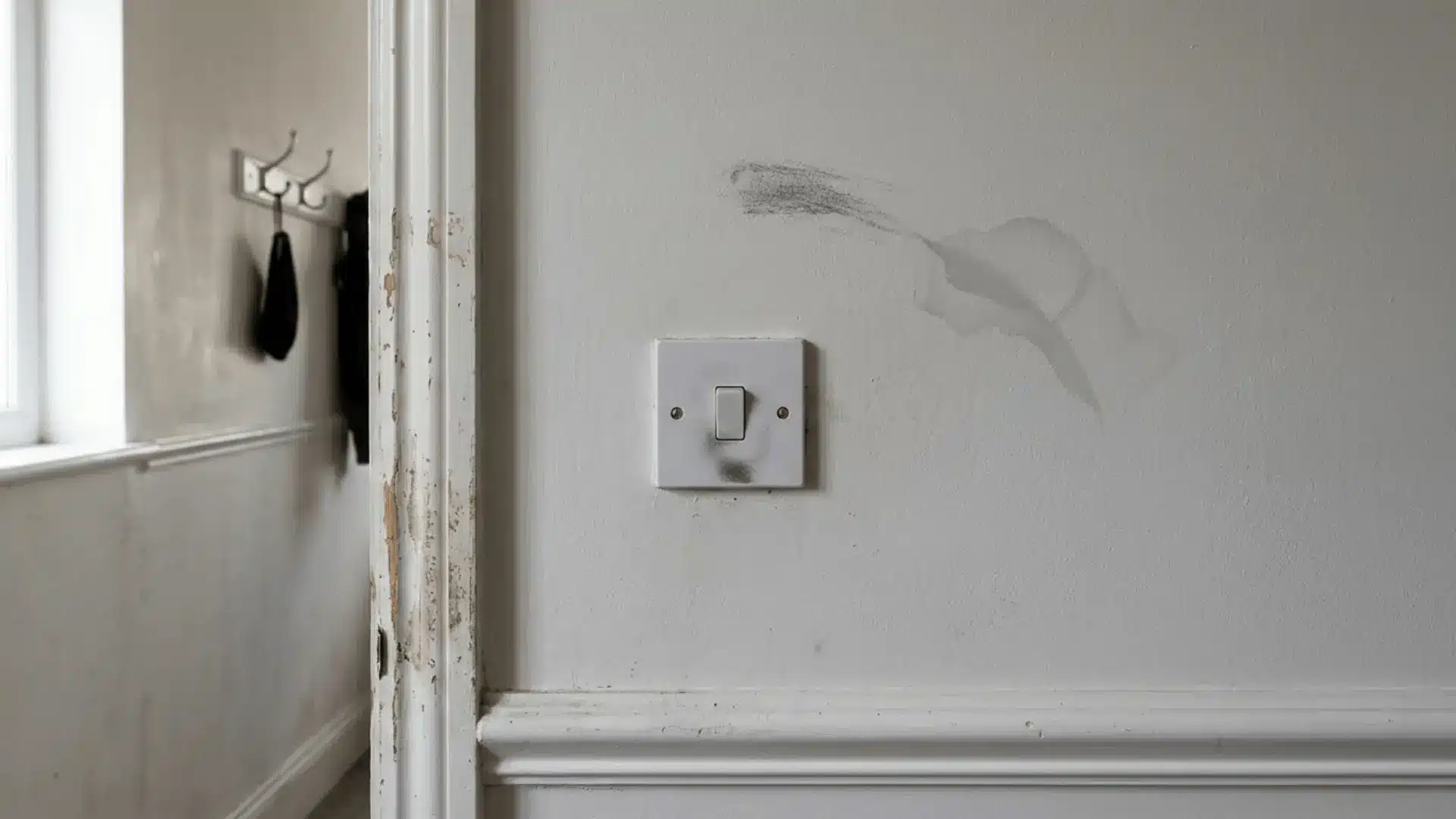
As much as flat paint has its fans, it does come with a set of trade-offs that are worth knowing before you commit.
Here’s where things get a little less dreamy and a lot more practical.
1. Difficult to Clean
Flat paint doesn’t repel stains; it absorbs them. So when something splashes or smudges on the wall, wiping it down isn’t always straightforward.
Scrubbing too hard can actually lift or dull the finish, leaving you with a patch that looks worse than the original stain. It’s the kind of finish that asks you to be a little more careful with it.
2. Prone to Scuffs and Marks
Fingerprints, smudges, and light scratches show up on flat paint more readily than on shinier finishes. In high-traffic areas like hallways, entryways, or stairwells, this becomes very noticeable very quickly.
The surface just doesn’t have the resilience to brush off everyday contact the way eggshell or satin would.
3. Not Moisture-Resistant
Flat paint and humid spaces are not a good pairing. In bathrooms and kitchens, where moisture lingers in the air, flat paint can absorb that humidity over time and develop stains or even bubbling.
It simply wasn’t made for wet environments, and pushing it into those spaces tends to show.
4. Harder to Maintain Over Time
Touch-ups are where flat paint gets tricky. Even with the same color, a freshly painted patch rarely blends seamlessly into the surrounding wall, so it can look visibly patchy.
Over time, this means you may end up repainting entire walls rather than just fixing small areas, which adds up in both effort and cost.
5. Limited Durability
Compared to glossier finishes, flat paint simply wears down faster. It’s less resistant to everyday friction and general wear, which makes it a tough choice for homes with kids, pets, or just a lot of daily activity.
Where life happens loudly and often, flat paint tends to show every bit of it.
Flat Paint vs. Other Finishes
When you’re standing in the paint aisle second-guessing your finish, a quick side-by-side look makes the decision a whole lot easier.
Here’s how flat paint stacks up against the rest.
| Finish | Sheen Level | Durability | Washability | Best For |
|---|---|---|---|---|
| Flat | None | Low | Poor | Ceilings, bedrooms, low-traffic walls |
| Eggshell | Very low | Moderate | Fair | Living rooms, dining rooms |
| Satin | Soft glow | Good | Good | Hallways, kids’ rooms, family spaces |
| Semi-Gloss | Noticeably shiny | High | Excellent | Kitchens, bathrooms, trim, doors |
When is Flat Paint on Walls a Good Choice?
Flat paint really shines when it’s placed in the right setting.
Low-traffic rooms like bedrooms and home offices are where it feels most at home, quiet spaces that don’t see a lot of wear.
It’s also a go-to for ceilings and accent walls where you want depth without distraction.
Older walls with visible imperfections benefit greatly from its forgiving, light-absorbing finish. And in spaces where you’re prioritizing mood and visual softness over practicality, flat paint simply delivers.
When the goal is a refined, editorial aesthetic, this finish earns its place without question.
When to Avoid Flat Paint on Walls?
As beautiful as flat paint is, there are spaces where it’s just setting itself up to fail.
High-traffic areas like hallways, entryways, and busy living rooms will show wear quickly and become difficult to maintain.
Homes with children or pets are another story entirely, where scuffs, smudges, and spills are part of daily life and flat paint simply can’t keep up.
Kitchens and bathrooms, with their moisture and grease, will wear it down even faster.
If a space sees a lot of action or humidity, a more durable, washable finish will always serve you better in the long run.
Tips for Using Flat Paint Successfully
Flat paint works best when you set it up for success from the start. A few simple choices can make all the difference.
- Invest in a high-quality, washable flat paint so you get the matte look without completely sacrificing cleanability.
- Reserve it for low-traffic, low-moisture rooms where it can truly shine without taking a beating.
- Pair it with a semi-gloss or satin finish on trim and doors to balance softness with durability throughout the space.
- Always prime your walls properly beforehand for a smoother, longer-lasting finish that touches up more evenly.
The finish itself isn’t the problem; it’s all about placing it where it belongs and giving it the right foundation to work from.
Alternatives to Flat Paint on Walls
If flat paint isn’t quite the right fit for your space, there are some really good alternatives that give you a similar softness without the upkeep concerns.
| Finish | Sheen Level | Durability | Washability | Best For |
|---|---|---|---|---|
| Eggshell | Very low, subtle glow | Moderate | Fair to good | Living rooms, dining rooms, moderate-traffic walls |
| Satin | Soft, noticeable sheen | Good | Good to excellent | Hallways, kids’ rooms, busier spaces |
| Matte Washable | Flat, zero sheen | Moderate to good | Good | Families wanting the matte look without the maintenance |
That’s a Wrap
Flat paint on walls is one of those choices that rewards you when it’s used thoughtfully. It brings a calm, considered quality to a room that other finishes rarely replicate.
But like anything beautiful, it asks for a little intention around where and how you use it.
Place it well, and it genuinely upgrades a space. Push it into the wrong room, and it shows. Now that you know both sides, you’re in a great spot to decide.
Tried flat paint in your home? Drop your experience in the comments, would love to hear how it worked out for your space.