Lavender is one of those rare plants that practically begs you to leave it alone.
But somewhere between “it loves neglect” and “feed it regularly,” most gardeners end up completely lost, and honestly, that confusion is valid.
The advice online is all over the place.
What lavender actually needs is pretty simple once you understand how it grows best, starting with the soil it prefers.
Unlike most garden plants, lavender genuinely thrives in poor to moderately fertile soil, which means your fertilizing approach needs to look a little different than usual.
Do Lavender Plants Need Fertilizer?
Rarely, and that’s not a bad thing. Lavender is native to the Mediterranean, where it grows in dry, low-nutrient soil with little fuss.
That’s just its nature.
When you start overfeeding it, the plant responds in the worst way possible by pushing out a lot of leafy growth while the blooms and fragrance quietly take a backseat.
So if you’ve been generous with fertilizer, thinking it would help, it likely did the opposite. Lavender performs best when the soil stays lean and well-draining, not rich and overly amended.
Best Fertilizer for Lavender
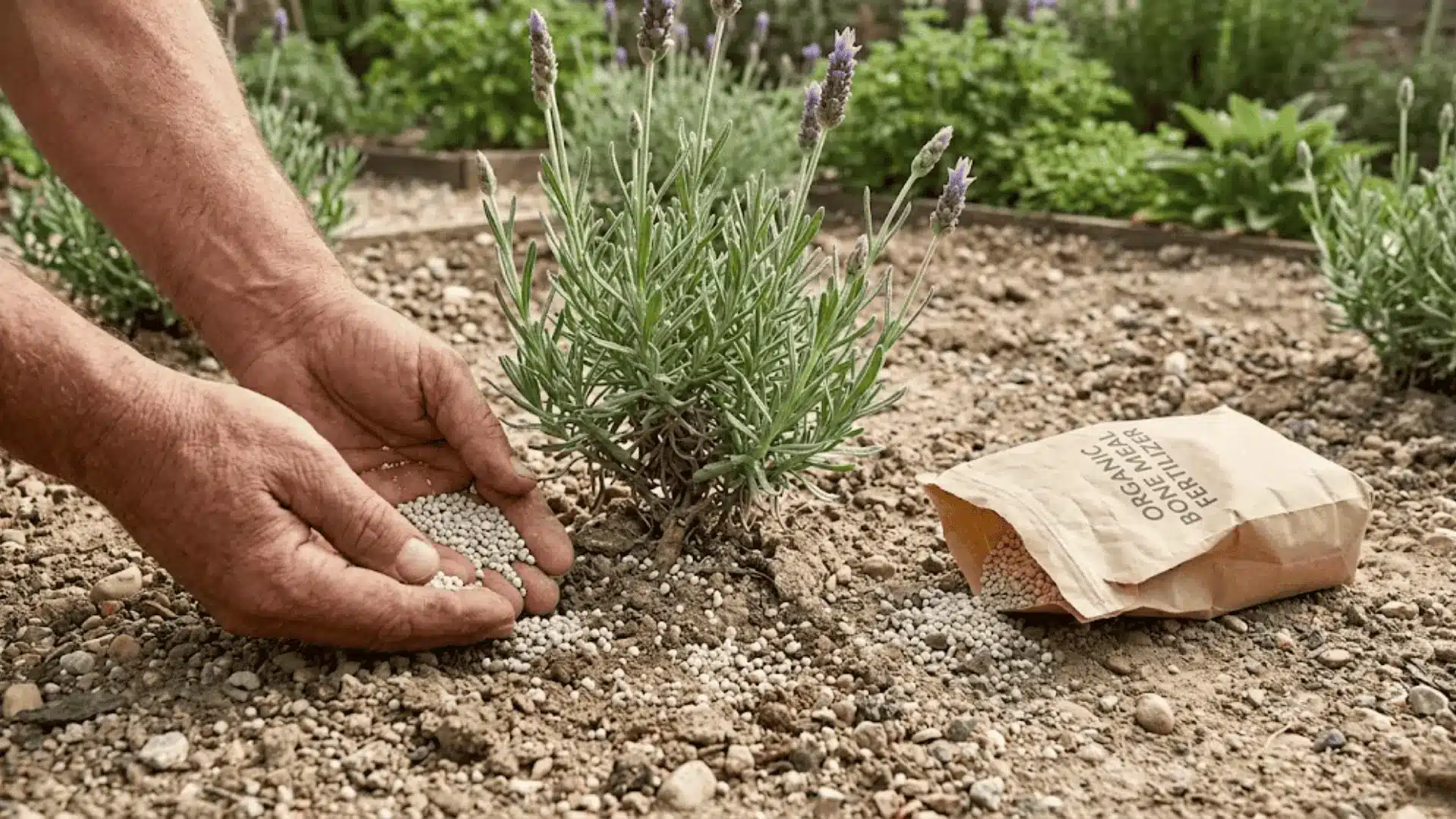
Choosing the right fertilizer for lavender is less about finding the most powerful option and more about finding the most balanced one.
Since lavender prefers lean soil, the goal is to give it just enough to support healthy blooms without overdoing it.
1. Low-Nitrogen Fertilizers (Best Choice)
Lavender responds really well to fertilizers where nitrogen takes a back seat. A low-nitrogen formula keeps the plant focused on what you actually want: flowers and fragrance, not excessive leafy growth.
- Look for balanced or low-nitrogen formulas like a 5-10-10 ratio.
- Higher phosphorus supports stronger root development and more blooms.
- Avoid anything with a high first number, as those are nitrogen-heavy formulas.
Recommended Product:Jobe’s Organics Bone Meal Fertilizer (naturally low in nitrogen, great for encouraging blooms)
2. Organic Options
If you prefer keeping things natural, organic fertilizers are a genuinely great fit for lavender. They release nutrients slowly, which makes it much harder to accidentally overfeed your plant.
- Compost: Apply a light top dressing around the base, not directly against the stems.
- Worm Castings: Gentle, nutrient-rich, and nearly impossible to overuse.
- Fish Emulsion: Always dilute before applying, as it can be quite concentrated.
Recommended Products:
3. Slow-Release Fertilizers
For gardeners who don’t want to think about feeding schedules too much, slow-release fertilizers are a low-effort, low-risk option that works really well with lavender’s laid-back nature.
- A single application per season is usually all lavender needs.
- Slow-release granules break down gradually, preventing any sudden nutrient overload.
- Work lightly into the soil surface without disturbing the roots.
Recommended Product:Osmocote Smart-Release Plant Food (one application carries your plant through the growing season)
Fertilizers to Avoid for Lavender
Not every fertilizer that works beautifully for other plants belongs anywhere near your lavender.
Knowing what to skip is honestly just as important as knowing what to use, and these three are the biggest culprits behind struggling, underperforming plants.
- High-Nitrogen Fertilizers: These push the plant into overdrive on leaf production, which sounds like growth but actually works against you. Fewer blooms, less fragrance, and a plant that looks lush but feels off.
- Frequent Feeding Schedules: Lavender is not a plant that rewards attention in this way. Feeding it too often disrupts its natural rhythm and can lead to weak, floppy growth over time.
- Rich Manure: It might seem like a wholesome, organic choice, but it is far too nutrient-dense for lavender. The concentration can overwhelm a plant that genuinely thrives in leaner conditions.
When in doubt, pull back rather than add more. Lavender is one of those plants that quietly rewards restraint, and keeping your fertilizing approach minimal is almost always the right call.
When to Fertilize Lavender?
Timing matters more than most people realize with lavender.
The best window is early spring, right as the plant starts coming out of dormancy and new growth begins to show. This gives it a gentle nutrient boost exactly when it can actually use one.
A light, optional feeding mid-season works fine if your soil is particularly poor, but that’s really as far as it needs to go.
Fertilizing late in the season is worth avoiding entirely, as it encourages soft new growth that simply won’t hold up going into winter.
How to Fertilize Lavender Properly?
Applying fertilizer the right way makes just as much difference as choosing the right one. Lavender is low-maintenance by nature, and your application method should match that energy.
- Step 1: Choose a low-nitrogen or slow-release fertilizer suited for lavender.
- Step 2: Apply sparingly; a little genuinely goes a long way with this plant.
- Step 3: Keep the fertilizer away from the base to avoid root stress.
- Step 4: Work it lightly into the top layer of soil without disturbing the roots.
- Step 5: Water gently after application to help nutrients settle in.
Done right, fertilizing lavender takes barely any time at all, and your plant will quietly reward you come blooming season.
Container vs. Ground Plants
Where your lavender lives actually changes how you approach feeding. Container plants and in-ground plants have different needs, and it helps to know which side yours falls on.
| Factor | Container Lavender | In-Ground Lavender |
|---|---|---|
| Feeding Needs | Slightly more frequent | Rarely needs feeding |
| Why | Nutrients deplete faster in pots | Natural soil provides enough |
| Recommended Frequency | Once per season | Little to no |
| Risk of Overfeeding | Moderate | Higher |
Is Your Lavender Underfed or Overfed: Here is How to Tell
Lavender is pretty good at telling you when something is off; you just have to know what to look for. Both underfeeding and overfeeding show up in the plant, and the signs are more distinct than you might expect.
Signs Your Lavender Needs Fertilizer
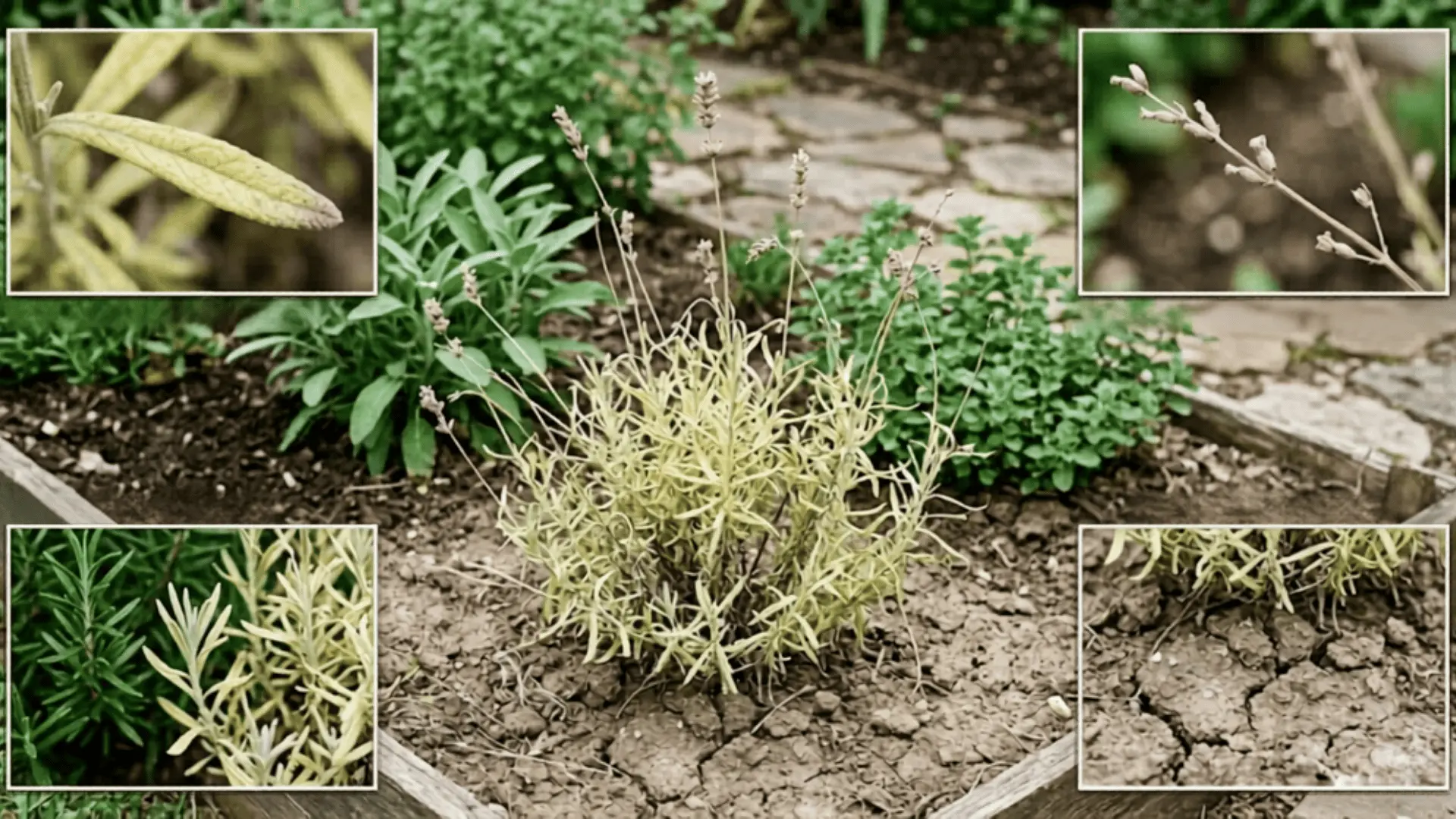
These are gentle nudges from your plant that it could use a little support, though it’s always worth ruling out watering or soil issues first.
- Slow or noticeably stunted growth despite good conditions.
- Leaves looking pale or washed out in color.
- Poor blooming even during peak season.
- Overall lack of vigor and dull appearance.
Signs You’ve Over-Fertilized
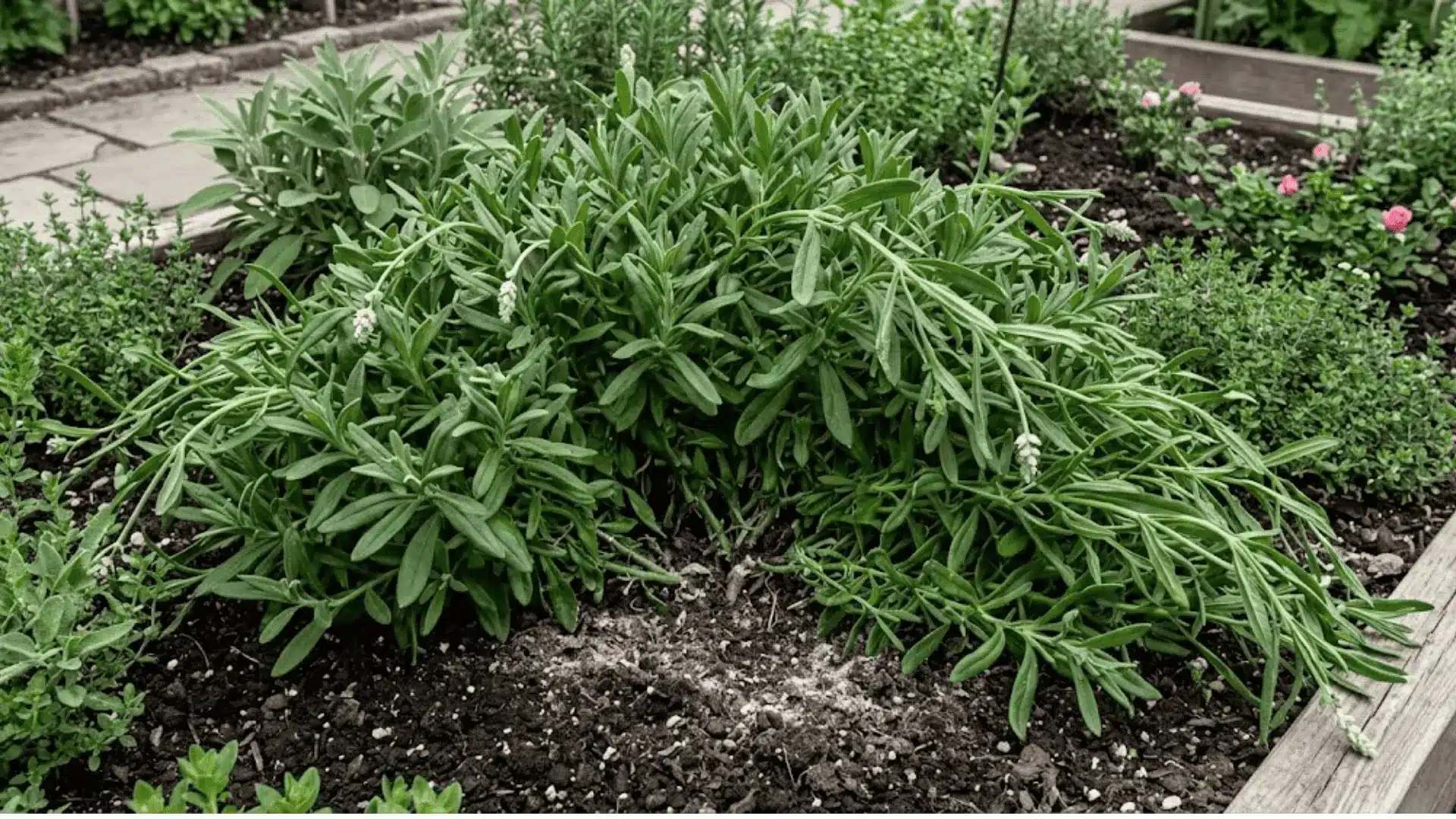
Overfeeding is actually the more common problem with lavender, and the signs tend to show up faster than you’d expect.
- Lots of leafy growth but barely any flowers.
- Stems growing weak, floppy, and stretched out.
- Fragrance is noticeably reduced or almost absent.
- Soft, lush growth that looks healthy but isn’t.
Soil Matters More Than Fertilizer
If there is one thing worth investing your attention in, it is the soil.
Lavender genuinely thrives in well-draining soil with a slightly alkaline pH, and getting that right does more for your plant than any fertilizer ever could.
Heavy or waterlogged soil is where most lavender problems actually begin. Mixing in sand or gravel improves drainage significantly and brings the growing conditions closer to what lavender naturally loves.
When the soil is right, the need for fertilizer drops to almost nothing.
Forum-Style Tips from Gardeners
Spend a little time in any gardening community, and you’ll notice that experienced lavender growers tend to say the same things. The consensus is pretty consistent across the board.
- The “less is more” approach comes up again and again, with most gardeners agreeing that pulling back on feeding almost always leads to better results.
- A surprising number of gardeners skip fertilizer entirely and report that their lavender blooms beautifully without it.
- The recurring advice is to prioritize sunlight and drainage over any feeding routine, since those two things do more for lavender than any fertilizer ever will.
Want to see real gardener experiences? This thread on Garden.org captures exactly the kind of honest, practical advice the lavender growing community swears by.
Growing Lavender in Pots
Container lavender plays by slightly different rules. Because nutrients naturally wash out of potting mix over time, a very light, occasional feed can actually be helpful here, unlike with in-ground plants.
A diluted fertilizer applied sparingly during the growing season is usually enough to keep things balanced. That said, drainage still takes priority over everything else.
Soggy roots in a pot are just as damaging as overfeeding, so making sure your container drains well is non-negotiable.
Get those two things right and your potted lavender will do just fine.
The Closing Note
Growing lavender well really comes down to understanding what it actually wants, and most of the time, that means stepping back.
The right fertilizer for lavender is less about what you add and more about how little you use.
Good drainage, the right soil, and a light hand with feeding will take you further than any elaborate routine ever could.
If you have tried a particular fertilizer that worked beautifully for your lavender, or have a tip worth sharing, drop it in the comments below. Someone out there is probably growing the same plant and could use exactly what you know.