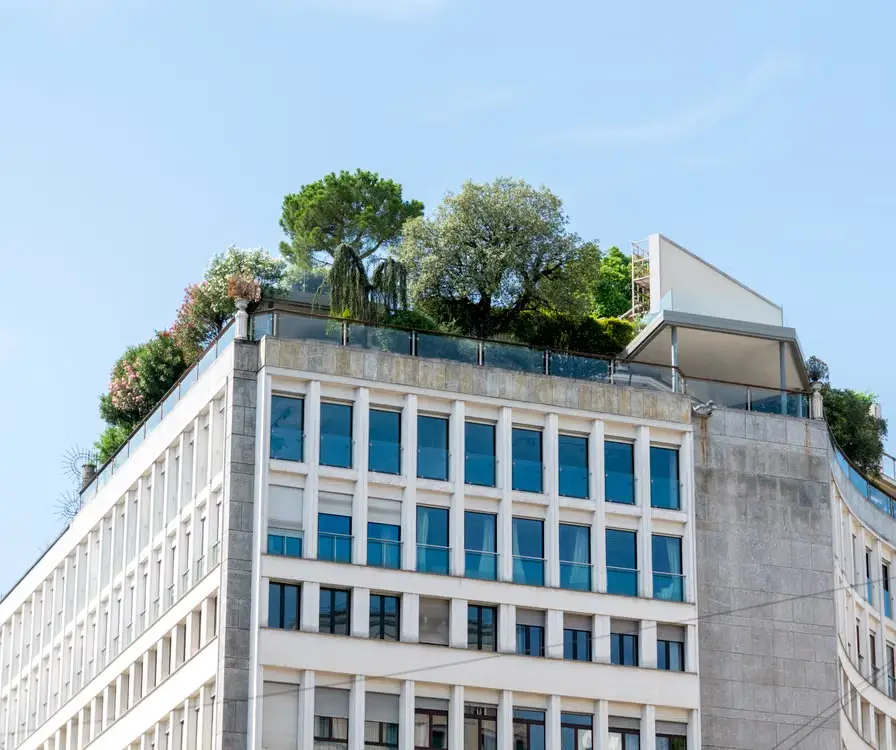
The right roof can do far more than keep rain out. Some studies from the United States Environmental Protection Agency show that innovations these days, like green roofs, can be more effective at reducing stormwater runoff, lowering rooftop temperatures, and supporting better urban environments.
If you want a long-term investment that benefits both your property and the surrounding community, eco-friendly roofing deserves a closer look.
Why More Commercial Buildings Are Choosing Eco Green Roofing
Operating a commercial property often means you have a tight balance between energy costs, maintenance activities, and sustainability initiatives. A growing solution that is drawing more and more attention is eco green roofing.
This includes professionally designed eco green roofing systems that combine waterproofing membranes, drainage layers, engineered growing media, and vegetation to improve building performance while creating functional green space. If you’re evaluating whether this approach is right for your property, this guide to eco green roofing explains how these systems are built, where they’re most effective, and the long-term benefits they can provide. Compared with conventional roofing systems, green roofs help reduce rooftop heat buildup during warmer months, contributing to improved building performance and occupant comfort.
Even the U.S. Environmental Protection Agency stated that installations like vegetated roofs help with the management of stormwater while at the same time reducing urban heat island effects. This makes them particularly useful for the expanding metropolitan areas in North America, Europe, and other parts of the world.
Lower Energy Bills Begin at the Top
A roof is exposed continuously to sunlight. In standard roofing, most of that heat is conducted and transferred inside your building, so your AC or cooling system has to work harder to provide a more comfortable temperature in your living or working spaces.
Green roofs create an additional layer of insulation while reducing rooftop heat absorption through vegetation and growing media. Combined, these features can lower cooling demands during warmer months and improve year-round energy performance, making them an attractive option for commercial buildings seeking long-term operating savings. Some EPA studies indicate that well-planned rooftop gardens can save energy consumption in cooling your summers and at the same time raise the level of building energy performance by providing insulation year-round. Gradually, those savings could balance the first cost for installation, especially in office buildings, educational institutions, hospitals, healthcare facilities, and mixed-use developments.
Stronger Communities Through Smarter Roof Design
The main benefits of implementing a green roof aren’t only confined to the property owner alone. When a group of buildings in one city decides to get green roofs (living roofs) together, the neighborhood can see significant environmental benefits and, at the same time, save money on roof planning, inspections, and maintenance.
On an individual level, vegetation is a great solution for collecting rainwater naturally, which can help minimize the pressure on the city’s drainage system, particularly during heavy storms. Apart from this, green roofs are effective refuges for pollinators that can greatly enhance urban biodiversity. These laudable examples from cities have made the World Green Infrastructure Network consistently emphasize the environmental advantages of green roofs as climate-resilient strategies through nature-based infrastructure.
Long-Term Value Often Beats Short-Term Costs
Many business owners these days focus first on installation expenses. That is quite understandable, but more often, lifetime performance tells a different story.
A well-maintained green roof helps protect waterproof membranes from ultraviolet exposure and temperature extremes, which can lead to extended roof service life. Research spearheaded by the National Research Council Canada found that green or vegetated roof assemblies nowadays can significantly scale down membrane aging under normal use. So, when replacement cycles become less frequent, long-term ownership costs can be quite beneficial to your wallet.
Build Today With Tomorrow in Mind
Every building decision you make these days can shape your future operating costs and your community’s environmental health. That is why opting for eco-green roofing is more than style and aesthetics.
Your building and business can benefit from improved energy efficiency, stormwater management, and longer-lasting roof protection. When planning a renovation or new construction project, compare sustainable roofing options based on long-term performance, maintenance requirements, stormwater management, and energy efficiency. Understanding how modern eco green roofing systems perform over their full life cycle can help property owners make more informed investment decisions. They are today’s thoughtful designs that can help strengthen your property, support your local community, and position your organization as a mover for a more sustainable future.