That small pile of what looks like sawdust near a window frame can be easy to ignore. Many homeowners brush it off as dust, dirt, or old wood debris. But in California homes, especially in older properties throughout Los Angeles, that small pile can be one of the first visible signs of termite activity.
Drywood and subterranean termites are the two termite types homeowners most commonly deal with in Southern California. They both damage wood, but they live differently, leave different warning signs, and require completely different treatments. Treating the wrong type can waste time, money, and allow the infestation to keep spreading.
That is why proper identification matters before any treatment begins. A licensed termite inspection from My Termite Company can confirm whether the activity is drywood, subterranean, or in some cases, both.
Why the Type of Termite Matters Before You Do Anything
Termite treatment is not one-size-fits-all. Drywood termite treatments target colonies living inside the wood itself, such as attic beams, fascia boards, window frames, door frames, and exposed trim. These treatments do not reach colonies living underground.
Subterranean termites work differently. They live in the soil and travel into a structure through mud tubes, cracks, crawlspaces, foundation gaps, or wood-to-soil contact. If a homeowner treats only the visible wood damage, the underground colony can continue feeding and causing structural damage.
The same problem happens in reverse. Soil treatments and bait systems can help control subterranean termite colonies, but they will not solve a drywood termite infestation hidden inside attic framing, furniture, or upper wood members.
In Los Angeles-area homes, both termite types are active and sometimes appear on the same property. For example, during inspections of older Craftsman homes in Highland Park and Pasadena, we frequently find drywood termite activity in attic framing, fascia boards, and window trim, while subterranean activity is often discovered around raised foundations and crawlspaces. This is one reason proper identification is so important before selecting a treatment method. Many homeowners assume all termite damage comes from the same source, but the treatment approach can be completely different depending on the species involved.
During inspections, drywood activity is often found around attic framing, fascia boards, and window trim, while subterranean activity is more commonly found near crawlspaces, raised foundations, and areas where wood sits close to soil. Correct identification is what determines the right treatment plan.
What Drywood Termites Look Like and Where They Live
Appearance
Drywood termites are generally larger than subterranean termites and are one of the most common termite species found in Southern California homes. Workers and soldiers typically measure between 3/8 and 1 inch long and have a harder outer shell than their subterranean counterparts. During swarming season, homeowners may notice winged reproductive termites with brown bodies, reddish heads, and smoky translucent wings.
In Los Angeles and surrounding communities, drywood termite swarmers are most commonly seen during the fall months, usually between September and November. Homeowners often mistake them for flying ants, especially when they appear around windows, doors, or light fixtures. If you notice winged insects indoors during this time of year, it is worth investigating further rather than assuming they are harmless.
Where They Nest
Unlike subterranean termites, drywood termites do not need soil contact to survive. They live entirely inside the wood they consume, making them particularly well-suited to Southern California’s warm, dry climate.
During inspections throughout Los Angeles County, drywood termite activity is commonly found in attic framing, fascia boards, eaves, window frames, door frames, exposed beams, and decorative wood trim. They can also infest outdoor structures such as patio covers, pergolas, fences, and detached garages.
One of the challenges with drywood termites is that they often remain hidden for years. A colony can quietly expand inside wood members while showing little or no visible damage on the surface. By the time homeowners notice signs of activity, the infestation may already be well established.
The Sign That Gives Them Away
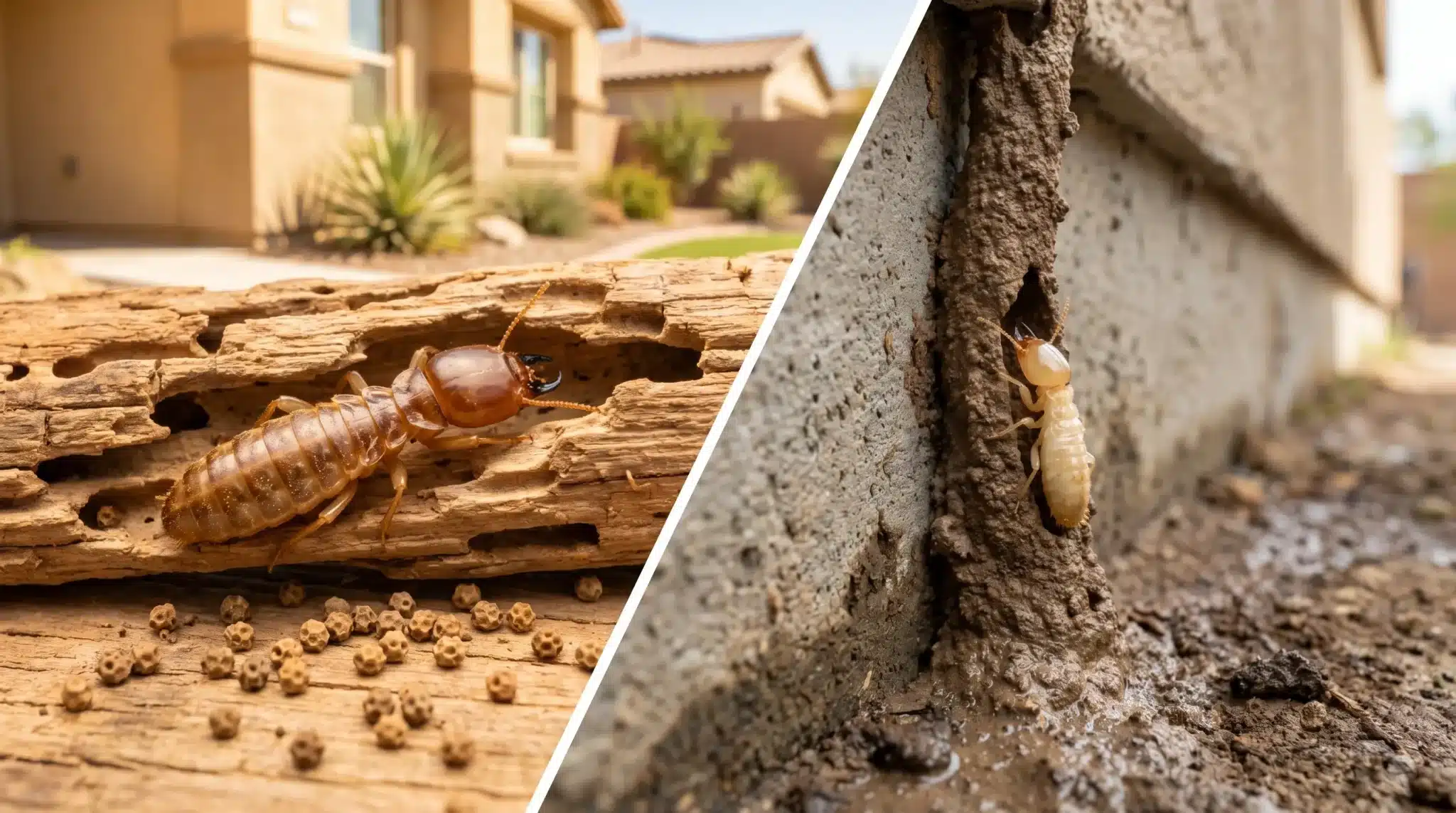
One of the most recognizable signs of drywood termite activity is frass, which is the termite’s droppings. As the colony tunnels through the wood, termites push these pellets out through tiny kick-out holes, creating small piles beneath the infested area.
Frass is often mistaken for sawdust, coffee grounds, or dirt. However, drywood termite pellets have a distinctive appearance. They are approximately 1 millimeter long, six-sided, and have rounded ends. These characteristics allow experienced inspectors to identify drywood termite activity quickly.
If you discover small piles of pellets beneath a window frame, door frame, exposed beam, or attic wood member, there is a strong possibility that an active drywood termite colony is located directly above or nearby.
What Subterranean Termites Look Like and Where They Come From
Subterranean termites are smaller than drywood termites and are responsible for a significant portion
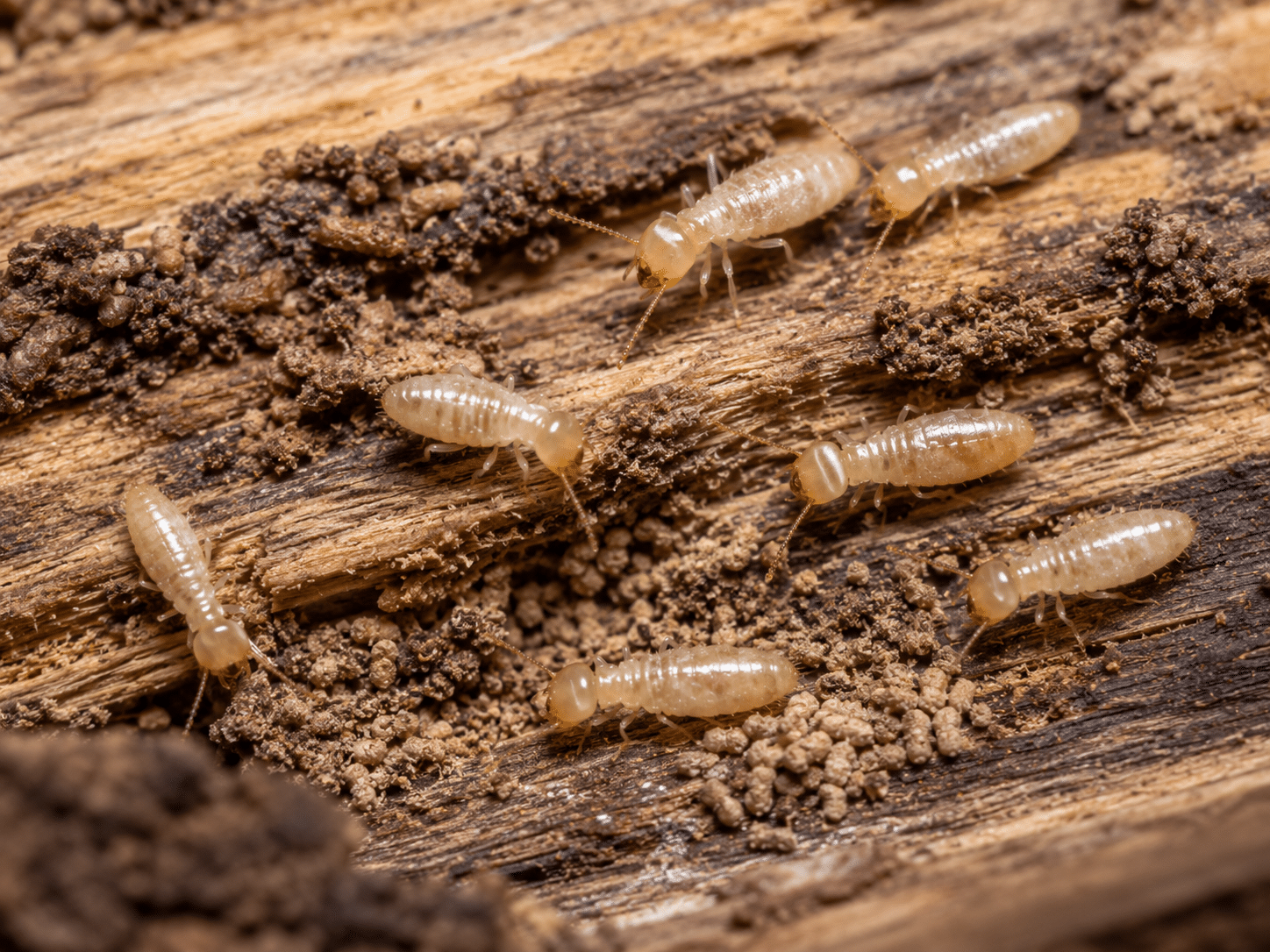
of termite-related structural damage throughout the United States. Workers typically measure between 1/8 and 3/8 inch long and have soft, cream-colored bodies that quickly dry out when exposed to open air. Because they spend most of their lives underground or hidden inside wood, homeowners rarely see worker termites directly.
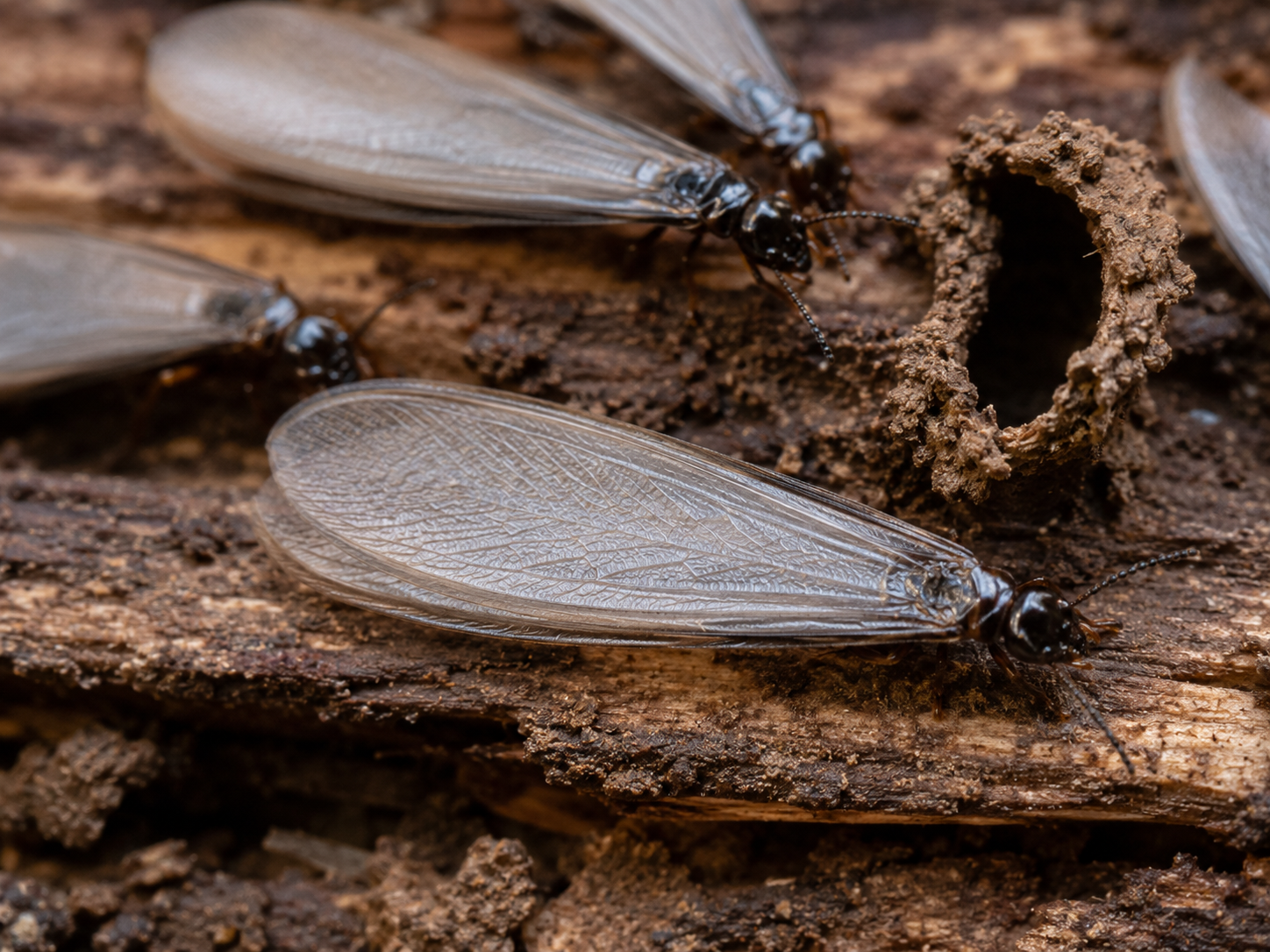
The reproductive swarmers look very different. They have darker bodies, almost black in appearance, with translucent whitish wings. In Los Angeles and surrounding communities, subterranean termite swarmers are most commonly seen during the spring, often following periods of rain and warmer temperatures. When dozens or even hundreds of winged termites suddenly appear around windows, doors, or exterior lights, it is often a sign that a mature colony is nearby.
Where They Come From
Unlike drywood termites, subterranean termites live in the soil and depend on moisture to survive. Their colonies can contain hundreds of thousands of termites, and in some cases, over a million.
During inspections throughout Los Angeles County, subterranean termite activity is frequently found around crawlspaces, raised foundations, retaining walls, planter areas, and locations where wood is close to soil. Older homes with foundation cracks, aging construction, or moisture issues are often at greater risk.
Subterranean termites enter structures through cracks in concrete slabs, expansion joints, utility penetrations, and even tiny gaps around plumbing or foundation walls. Landscaping can also contribute to the problem. Excessive mulch, poor drainage, leaking irrigation systems, and dense vegetation near the structure create the moist conditions these termites need to thrive.
Although Southern California is known for its dry climate, seasonal rains and irrigation systems provide enough moisture to support active subterranean termite colonies year-round.
The Sign That Gives Them Away
The most recognizable sign of subterranean termite activity is the presence of mud tubes. These pencil- width tunnels are made from soil, wood particles, and termite saliva and are commonly found running along foundation walls, crawlspace supports, stem walls, and other structural surfaces.
Mud tubes serve as protected highways that allow termites to travel between their underground colony and the wood they are feeding on while avoiding exposure to air and predators.
During inspections, mud tubes are often one of the first indicators that a subterranean colony is actively feeding on a structure. If a section of a mud tube is broken open and repaired within a day or two, it is a strong sign that the colony remains active.
Side-by-Side Comparison
The table below summarizes the key differences between the two species.
| Feature | Drywood termites | Subterranean termites |
| Colony size | Hundreds to a few thousand | Tens of thousands to 2 million |
| Nesting location | Inside dry wood | Underground, connected to soil |
| Moisture need | Low – thrives in dry wood | High – requires soil moisture |
| Primary sign | Frass (Pellets) | Mud tubes |
| Body size | 3/8 to 1 inch | 1/8 to 3/8 inch |
| Treatment method | Bora-Care®, foam treatments, localized treatment, fumigation | Termidor®, soil treatments, bait stations |
5 Questions to Help Identify Which Species Is Present
Before scheduling a termite inspection, there are a few questions homeowners can ask themselves that may help point toward the likely species. While these clues are helpful, they are not a substitute for a professional inspection, especially since both drywood and subterranean termites are common throughout Southern California.
1. Where Is the Evidence Located?
Signs found around window frames, attic spaces, exposed beams, fascia boards, or wood furniture often point toward drywood termites. Evidence found along foundations, crawlspaces, retaining walls, or areas near soil is more commonly associated with subterranean termites.
2. What Does the Evidence Look Like?
Drywood termites leave behind frass, which appears as small pellets that resemble coarse sawdust, pepper flakes, or coffee grounds. Subterranean termites typically leave mud tubes or soil-like tunnels running vertically along foundations, walls, or support posts.
3. Is There Soil Contact Near the Affected Wood?
Wood that touches the ground or sits close to moist soil creates an ideal entry point for subterranean termites. If damage is present in these areas and no frass is visible, subterranean activity should be considered first.
4. Were Winged Termites Visible?
The appearance and timing of swarmers can provide valuable clues. Drywood termite swarmers are typically seen in the fall and have brown bodies, reddish heads, and smoky translucent wings.
Subterranean termite swarmers are more commonly seen during spring, especially after rain, and usually have darker bodies with lighter translucent wings.
5. What Does the Damage Look Like Inside the Wood?
Drywood termites typically create galleries that cut across the wood grain and may leave chambers filled with frass. Subterranean termites often follow the grain of the wood, hollowing out the interior while
leaving a thin outer layer intact. Damage may appear minor on the surface while extensive activity exists beneath.
Even with these clues, termite identification is not always straightforward. During inspections throughout Los Angeles County, it is not uncommon to find signs that point toward both species, or in some cases, active infestations of both drywood and subterranean termites on the same property.
What Happens When the Wrong Treatment Is Applied?
One of the most expensive mistakes homeowners can make is treating the wrong termite species. Drywood termite treatments, such as localized wood treatments, Bora-Care® applications, foam
treatments, and fumigation, are designed to target colonies living inside the wood. These methods can be highly effective when drywood termites are the source of the infestation, but they do not affect subterranean colonies living underground.
Subterranean termite treatments work differently. Non-repellent termiticides such as Termidor® are applied to the soil around the structure, creating a treatment zone that termites travel through and transfer throughout the colony. These treatments are designed to target subterranean termites as they move between the soil and the structure.
When the wrong treatment is selected, the infestation often continues unnoticed while homeowners believe the issue has been resolved. Industry estimates suggest that retreatment and corrective work after misidentification can add anywhere from $500 to $2,500 or more in additional costs.
When a Professional Termite Inspection Is the Right Next Step
Both drywood and subterranean termites remain active throughout California year-round, and Los Angeles homes are regularly affected by both species.
If you discover frass beneath a wood member, mud tubes along a foundation, hollow-sounding wood, damaged framing, or discarded termite wings around windows and doors, the smartest next step is a professional inspection before spending money on treatment.
A licensed termite inspector can identify the species involved, determine the extent of the infestation, document any structural damage, and provide treatment recommendations based on actual findings rather than assumptions.
Homeowners in the Los Angeles area seeking a licensed termite inspection in Los Angeles can receive a comprehensive property assessment covering both drywood and subterranean termite activity. A professional inspection also provides the written Wood Destroying Organism (WDO) report commonly required during California real estate transactions.
Correct termite identification is the foundation of every successful treatment plan. Taking the time to identify the species properly can prevent unnecessary expenses, reduce long-term damage, and help ensure the right solution is applied the first time.