Garden projects look simple until weather gets involved. Sun, rain, soil moisture, and temperature swings can turn the wrong glue into a cracked joint or a loose pot label. This guide explains which outdoor glue works best for wood, plastic, and terracotta, so you can choose the right adhesive before your next raised bed, planter, trellis, or garden repair.
Match the Glue to the Material and the Weather
Outdoor glue has to do more than stick two surfaces together. It needs to handle moisture, heat, cold, and movement. Wood expands and shrinks as its moisture content changes, which is why the USDA Forest Products Laboratory notes that moisture affects wood’s dimensional stability in its Wood Handbook.
For wood garden projects, such as plant markers, trellis pieces, raised bed trim, or small tool racks, look for an exterior-rated wood glue, polyurethane glue, or outdoor construction adhesive. A Type III wood glue is a good choice for many outdoor wood joints because it’s designed for higher water resistance than standard indoor glue.
The surface matters too. Sand rough wood lightly, remove soil and dust, and dry the surface before applying glue. If the wood is damp, coated, or oily, even a strong adhesive may fail because it’s bonding to dirt or finish instead of the actual material.
Best Glue for Outdoor Wood Garden Projects
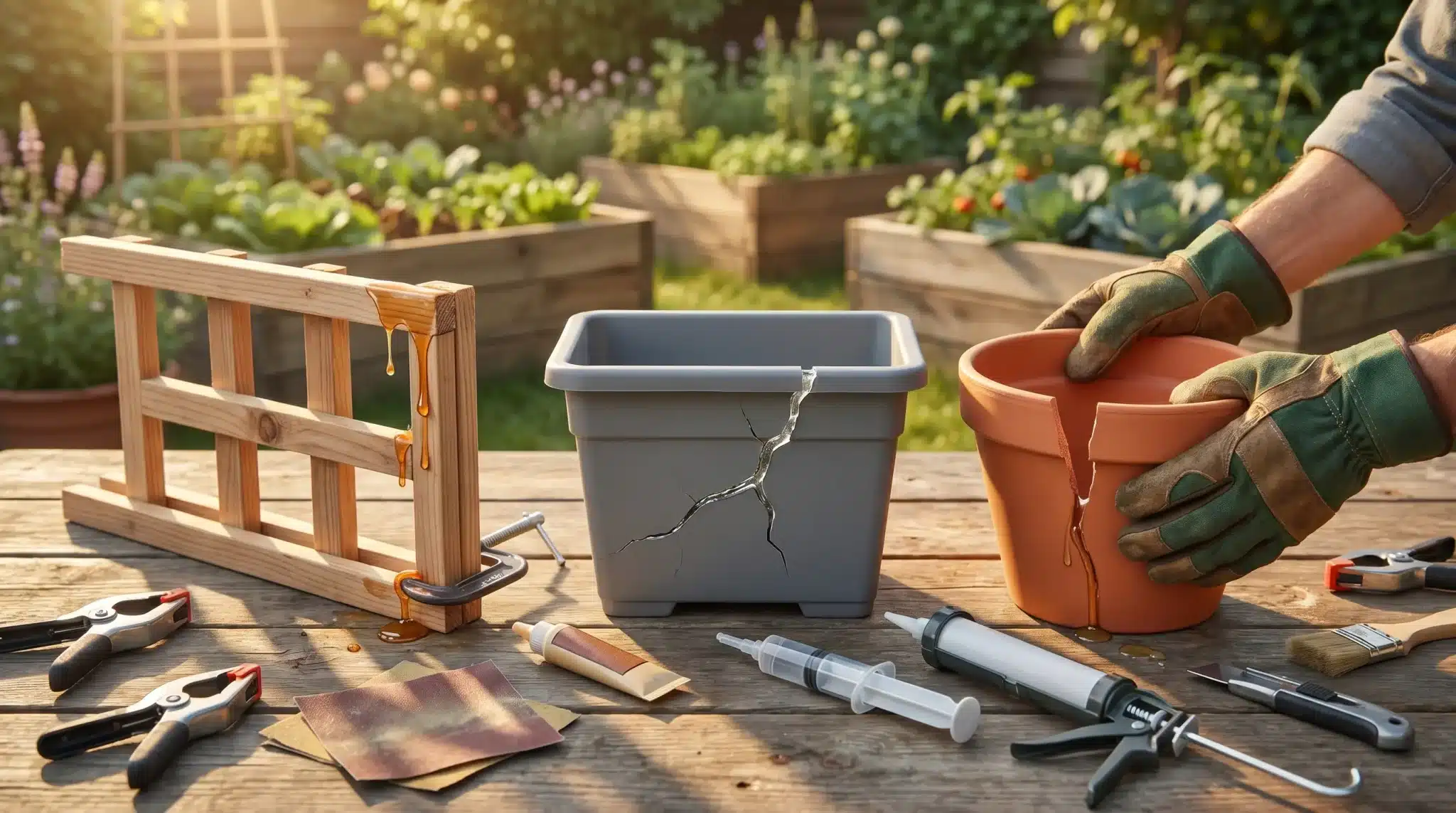
For simple wood-to-wood joints, exterior wood glue is usually the cleanest choice. It spreads easily, dries neatly, and works well for pieces that can be clamped tightly while curing. Think wooden seed trays, decorative stakes, small trellis frames, or garden signs.
Polyurethane glue is better when the wood may be slightly irregular or when you need more gap filling. It expands as it cures, so use it sparingly and clamp the pieces well. Too much can foam out of the joint and leave a messy edge.
For sheltered garden crafts, labels, lightweight wood decorations, or projects that combine paper, cardboard, or fabric with wood, a good water based glue can be useful because it’s easier to clean up and often lower in odour than solvent-heavy options. Just don’t assume every water-based formula is suitable for direct rain, soil contact, or constant outdoor exposure. Always check the label for exterior use and water resistance.
Best Glue for Plastic Planters, Labels, and Garden Accessories
Plastic is where many garden repairs go wrong. Some plastics bond easily, while others resist glue almost completely. Smooth plastic plant labels, nursery pots, watering can parts, and lightweight garden accessories may look similar, but they can be made from very different materials.
For hard plastics like PVC, acrylic, or ABS, a plastic-specific epoxy or plastic bonder is usually the safest choice. These adhesives are made to grip slick surfaces better than ordinary craft glue or wood glue. Lightly sanding the surface gives the adhesive more texture to grab.
Flexible plastics, such as some nursery pots or thin container lids, are harder. Glue may hold for a while, then peel off when the plastic bends. For those projects, use adhesive only for light-duty fixes, or combine it with a mechanical hold, such as a small screw, zip tie, clip, or wrapped support.
Avoid using hot glue outdoors for anything structural. It can soften in heat, become brittle in cold weather, and lose grip when exposed to moisture. It’s fine for a temporary craft, but not for a garden repair you expect to last through a season.
Best Glue for Terracotta Pots and Clay Garden Decor
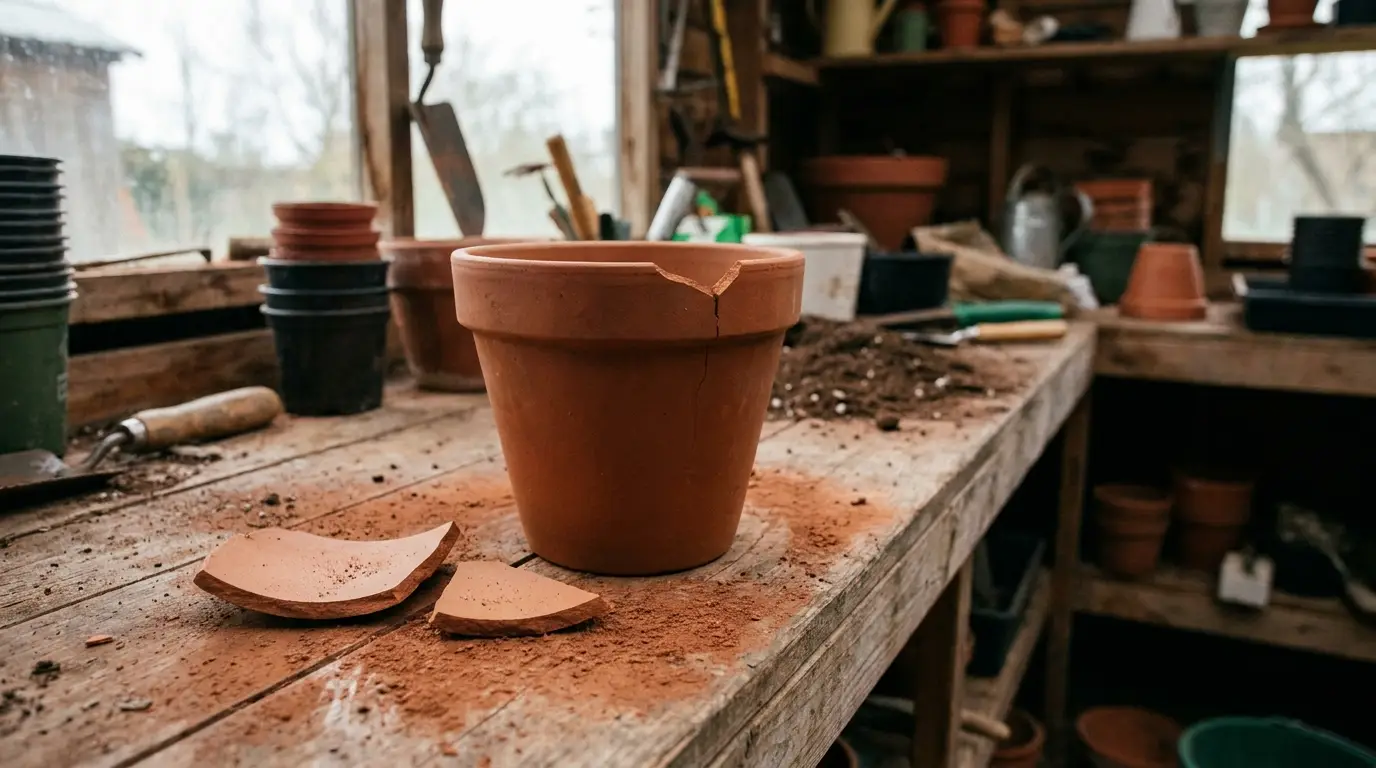
Terracotta is porous, dusty, and brittle, which makes preparation important. Before gluing a cracked pot or attaching a decorative piece, brush away loose clay dust and let the surface dry fully. A damp terracotta pot can weaken the bond before the adhesive has time to cure.
Two-part epoxy is usually the best option for cracked terracotta because it bonds strongly and fills small gaps. It works well for pot rims, saucers, clay ornaments, and broken decorative pieces. For larger cracks, apply the epoxy carefully, press the pieces together, and support the repair while it cures.
Outdoor construction adhesive can also work for heavier terracotta pieces, especially where the repair doesn’t need to look delicate. For example, it may suit a garden border accent or a decorative clay tile attached to masonry. Silicone sealant is better for flexible sealing than structural repair, so use it when you need water resistance around a joint, not when the piece must carry weight.
Prep, Cure Time, and Placement Matter as Much as Glue Choice
Most glue failures happen because the project is rushed. Outdoor adhesives need clean surfaces, firm contact, and enough curing time before they face rain or watering. “Dry to the touch” doesn’t always mean fully cured.
Read the product label before you start. Adhesives can contain volatile organic compounds, and the EPA explains that VOCs are chemicals that can be released as gases from certain products, including some building and household materials, in its guide to volatile organic compounds. Work outside or in a ventilated area, wear gloves when needed, and keep adhesives away from edible plant surfaces unless the product specifically says it’s safe for that use.
A good rule is to keep glued joints out of direct soil contact when possible. Soil stays damp, holds microbes, and can stress the bond. If you’re repairing a planter, let the glue cure completely before adding soil and watering.
A Simple Decision Guide for Garden Glue
Use exterior wood glue for wood-to-wood projects that can be clamped tightly. Choose polyurethane glue or outdoor construction adhesive when the wood is uneven or the joint needs more gap filling.
Use plastic bonder or epoxy for rigid plastic repairs. If the plastic bends easily, add a mechanical support instead of relying on glue alone.
Use two-part epoxy for terracotta cracks and breaks. Use silicone only when you need a flexible seal, not a load-bearing repair.
The best outdoor glue is the one matched to the material, the exposure, and the job. A small plant marker doesn’t need the same adhesive as a cracked terracotta pot or a raised bed component. Choose carefully, prep the surface well, and give the bond time to cure before the garden puts it to work.