
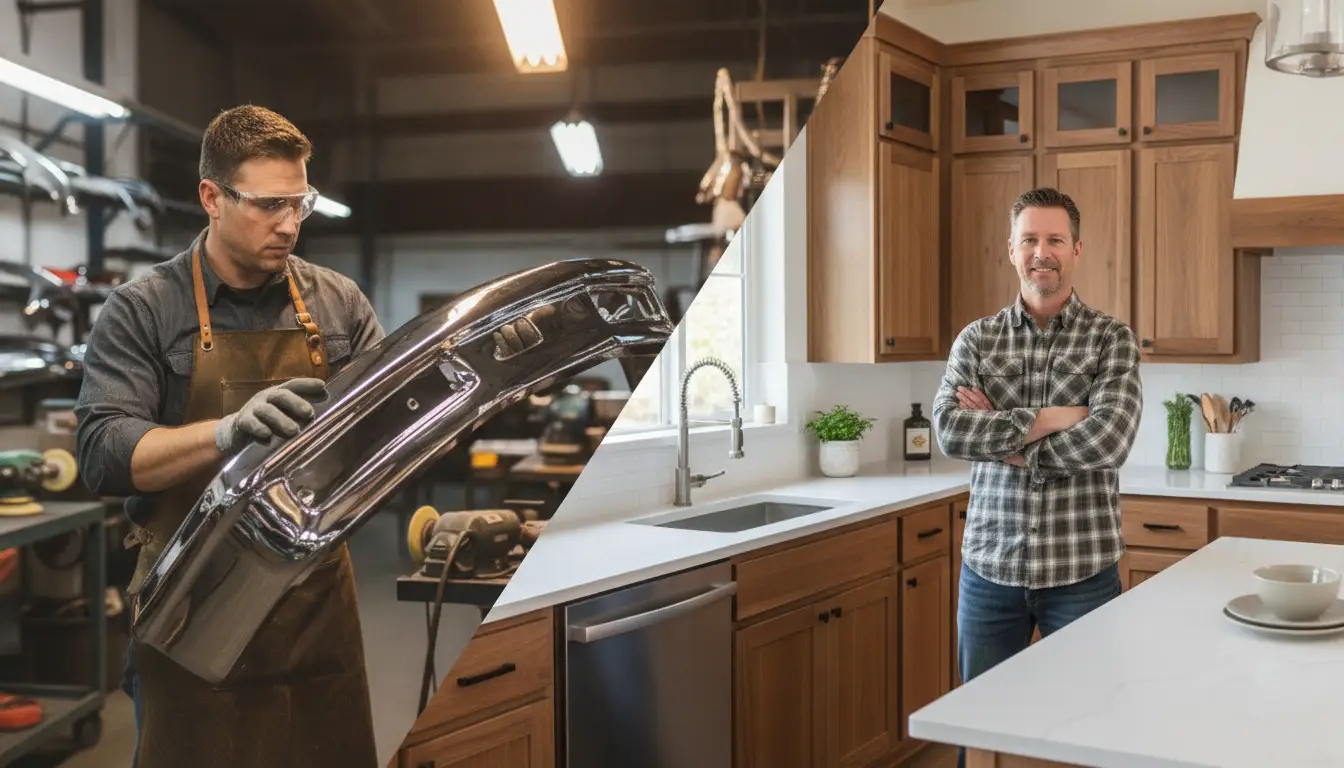
Local businesses often compete on more than price, experience, or technical skill.
They compete on trust.
A customer looking for a metal finishing specialist in Los Angeles or a remodeling contractor in Seattle is unlikely to make a decision based on a single advertisement.
They will search the business name, read reviews, look at project photos, compare responses to customer feedback, and check whether the company appears active and credible.
For specialized services such as Chrome Plating Los Angeles, reputation is particularly important because customers are trusting a business with valuable automotive parts, restoration components, decorative pieces, or commercial projects.
The same principle applies when someone hires a Home Remodeling Contractor to work inside their home for weeks or even months.
In both cases, effective local reputation management can turn online research into real customer confidence.
Why Local Reputation Matters More Than Ever
Most customers now research a company before making direct contact.
Even a strong referral from a friend may be followed by a quick online search.
Potential customers want confirmation that the recommendation is supported by recent reviews, professional responses, accurate business information, and visible evidence of completed work.
A weak online presence can create hesitation.
Imagine someone searching for a contractor after receiving a recommendation from a neighbor.
The contractor may have 20 years of experience, but if the customer finds outdated contact details, unanswered negative reviews, and no recent project photos, confidence can quickly decline.
Reputation management helps businesses make sure their online presence accurately reflects the quality of their actual work.
Start With Accurate Local Business Information
Trust begins with consistency.
A business name, address, phone number, opening hours, and service information should be accurate wherever customers may find the company online.
Conflicting information creates unnecessary friction.
For example, if one directory says a business closes at 5 p.m. while another says 6 p.m., customers may hesitate to make the trip.
For a local service provider, incorrect service-area information can be equally damaging.
A remodeling company should clearly communicate which neighborhoods and surrounding areas it serves.
A plating company should explain whether customers can bring parts directly to the facility, request a quote remotely, or ship components for evaluation.
These details may appear small, but they influence how reliable a company feels before the first conversation even begins.
Make Reviews Part of the Customer Experience
Many businesses treat reviews as something that happens naturally.
A better approach is to make requesting feedback a consistent part of the customer journey.
The best time to ask depends on the service.
A chrome plating business might request a review after the customer receives and inspects the finished component.
A remodeling contractor may ask after a major project milestone or following final completion.
The request should be simple and genuine.
Customers should never feel pressured to leave a positive review.
Instead, businesses can ask them to share an honest account of their experience.
The goal is to build a steady flow of authentic feedback rather than collect a large number of reviews all at once.
A consistent review pattern also gives prospective customers a more current picture of the business.
Respond to Positive and Negative Feedback
Collecting reviews is only one part of reputation management.
How a company responds matters too.
Positive reviews deserve more than a generic copy-and-paste response.
A short, personalized reply can mention the type of project completed or thank the customer for trusting the team.
Negative feedback requires even greater care.
Defensive responses often make the situation worse because prospective customers are also reading the exchange.
A useful response should acknowledge the concern, remain professional, avoid arguing publicly, and offer a clear path toward resolving the issue privately.
Not every complaint will be fair.
However, the response is not written only for the unhappy customer.
It also demonstrates to future customers how the business handles problems.
Show the Work, Not Just the Claims

Businesses frequently describe themselves as experienced, professional, reliable, and detail-oriented.
Customers see those words everywhere.
Visual proof is more persuasive.
For chrome plating specialists, before-and-after images can show the transformation of worn, corroded, or damaged parts.
Close-up photography can demonstrate surface quality and finishing detail.
Businesses can also explain the challenges involved in particular restoration projects without revealing confidential customer information.
Home remodeling contractors have similar opportunities.
A collection of kitchen renovations, bathroom remodels, additions, flooring projects, and structural improvements can demonstrate range and consistency.
The strongest project showcases provide context.
Instead of simply posting a finished room, explain what the homeowner wanted to change, what challenges the team encountered, and how the final design solved the problem.
That story makes the work more credible and memorable.
Build Reputation Through Educational Content
Local reputation management is not limited to review platforms.
Educational content can also build trust.
A potential customer often has questions before they are ready to request a quote.
A chrome plating company could explain topics such as surface preparation, restoration limitations, maintenance, turnaround expectations, and the differences between various finishing methods.
A remodeling contractor could create content about budgeting, project timelines, permits, material selection, renovation planning, and common construction delays.
Useful content demonstrates expertise without relying on aggressive sales language.
It also helps customers arrive at the first conversation with more realistic expectations.
This can improve the quality of leads and reduce misunderstandings later in the project.
Use Local Experience as a Competitive Advantage
Local knowledge is valuable because service conditions vary by region.
A business serving Los Angeles may understand the restoration needs of classic vehicles, motorcycles, architectural details, and custom components commonly found in the local market.
A Seattle remodeling professional may have experience dealing with older housing stock, moisture considerations, regional design preferences, and local construction requirements.
Businesses should communicate this experience naturally.
The goal is not to repeatedly mention a city name for search visibility.
The goal is to demonstrate genuine familiarity with the customers, properties, industries, and challenges found in that location.
Specificity creates credibility.
Manage Expectations Before the Project Begins
Many negative reviews begin with a gap between expectations and reality.
Clear communication can prevent a large percentage of these problems.
Customers should understand the estimated timeline, pricing structure, scope of work, possible delays, and what is not included.
For a plating project, the final result may depend on the condition of the original material.
Customers should understand what can realistically be restored before work begins.
For remodeling, unexpected structural, electrical, plumbing, or moisture issues may only become visible after demolition.
Explaining these possibilities early helps customers understand why schedules and budgets sometimes change.
Good reputation management often starts long before anyone writes a review.
Create a Consistent Communication Process
Silence creates anxiety.
This is especially true when customers have handed over valuable parts or committed significant money to a renovation.
Businesses should establish a clear communication process.
Customers should know who their main contact is, how often updates will be provided, and which communication channel should be used for urgent questions.
Updates do not need to be lengthy.
A short message explaining that work is progressing, materials have arrived, or the schedule has changed can prevent frustration.
Consistent communication makes customers feel informed and respected.
That experience often appears directly in positive reviews.
Encourage Referrals Without Being Pushy
A strong local reputation can create a cycle of reviews, referrals, and repeat business.
After a successful project, businesses can stay connected with customers through useful maintenance information, occasional updates, or simple follow-ups.
For example, a plating company might provide care instructions for a restored component.
A contractor could check in several months after completing a renovation to make sure everything is performing as expected.
These interactions keep the relationship active without turning every message into a sales pitch.
Satisfied customers are more likely to recommend a company when they remember both the quality of the work and the quality of the experience.
Monitor What Customers Are Actually Saying
Reviews provide valuable business intelligence.
Owners should look beyond the star rating and identify repeated themes.
Are customers consistently praising communication?
Do several people mention scheduling delays?
Are customers impressed by craftsmanship but confused about the quoting process?
Patterns in feedback can reveal where a business is strong and where operational improvements are needed.
This is one of the most useful aspects of reputation management.
It is not merely about appearing better online.
It can help a business actually become better.
Trust Is Built Through Consistency
A strong local reputation is rarely created by one marketing campaign.
It develops through repeated positive experiences.
Accurate information helps customers find the business.
Clear expectations reduce misunderstandings.
Good communication builds confidence during the work.
Quality results create satisfaction.
Thoughtful follow-up encourages reviews and referrals.
Whether a company restores valuable metal components or transforms residential properties, customers want evidence that they are dealing with people who are capable, transparent, and dependable.
Businesses that consistently deliver those qualities—and make them visible through reviews, project examples, educational content, and professional communication—can build a local reputation that becomes one of their strongest long-term competitive advantages.