Building a home is exciting, right up until the decisions start stacking up. The first choices you make shape your cost, timeline, and stress level more than anything that comes later.
That matters even more in Virginia, because building conditions change fast from one region to another. A lot in Fairfax, a wooded parcel in the Blue Ridge, and a coastal site near Virginia Beach can bring three very different price tags and rule books.
If you’re wondering where to build new homes in Virginia, start with these areas before plans or permits take over your life.
Start With Your Budget, Financing, and Timeline
Before you fall in love with a floor plan, get the money side straight. In Virginia, base construction costs often range from about $180 to $310 per square foot, while Northern Virginia and coastal custom builds can climb to $250 to $500 or more. Land is extra, and sometimes painfully extra.
Planning also takes longer than most first-time builders expect. Many projects spend 2 to 6 months in planning, then 12 to 18 months from early prep to final move-in.
A build budget is like an iceberg, the house is the part you see, but site work and approvals sit below the waterline.
Know What Your Total Budget Really Needs to Cover
Your budget has to cover more than walls, windows, and cabinets. It also needs room for land, grading, tree clearing, permits, design fees, utility hookups, and site prep. Material price swings can also push numbers around, so a 10 to 20 percent cushion is smart, not pessimistic.
This hits hard in Virginia. A sloped lot, clay-heavy soil, rocky ground, or flood-prone site can add serious cost before framing even starts. In rural areas, land may cost less, but utility extensions and septic work can eat that savings fast.
Get Pre-Approved Early so Your Plans Match Your Price Range
Many buyers need a construction loan, then switch into a regular mortgage after the home is done. Lenders often review the lot, the builder, and the plans, not only your income. That means pre-approval does more than set a number, it tells you what kind of project is realistic.
As of April 2026, VA construction loans often run about 5.5% to 6.75% for a 30-year fixed, while conventional construction loans often land around 6.5% to 7.25%. Rates move, so compare lenders and ask how draw schedules, rate locks, and loan-to-perm options work.
Learn the Local Rules Before Permits Slow You Down
Virginia doesn’t have one simple statewide process for custom homes. County and city rules shape what gets approved, how fast it moves, and what documents you need.
That means what works in Richmond may not work in Loudoun. Recent code updates that took effect in January 2026 also brought tighter energy and stormwater expectations in many places, so local review matters even more now.
Why County Rules Matter More Than Most First-Time Builders Expect
Northern Virginia jurisdictions often have more detailed reviews and heavier workloads. For simple homes, permit review may take about 4 to 8 weeks in Fairfax, 6 to 12 weeks in Loudoun, 4 to 6 weeks in Virginia Beach, and 3 to 8 weeks in Richmond. Those are only rough guides, and complex sites often take longer.
Build Permit Time Into Your Schedule From Day One
Permits don’t start after construction starts. They sit right in the middle of planning, and delays here can throw off loan timing, start dates, and move-in plans.
So ask early who handles submissions, revisions, and follow-up with the county. Some builders manage the full permit process. Others expect the owner or designer to carry part of that load. You want that answer before signing, not after.
Hire the Right Builder and Lock in a Design That Fits Virginia Living
The best builder isn’t always the lowest bidder. Price matters, of course, but process matters more than many people think. A clear builder can save months of confusion.
At the same time, your design should match the lot, the climate, and your daily life. Virginia homes do better with solid insulation, energy-efficient windows, and good ventilation for heat and humidity, all of which improve home comfort.
Look for a Builder Who Knows Your Part of Virginia
Interview three to five builders if you can. Review past work, call references, and confirm licensing and insurance. Then pay attention to how they communicate. If getting a straight answer now feels hard, it won’t get easier mid-build.
Local experience counts. Builders who know your county often understand permit offices, weather patterns, common soil problems, and which details hold up best in that region. That’s especially useful on coastal lots, wooded sites, and steep ground.
Finish the Floor Plan Before Construction Starts Changing It
Late design changes are budget wreckers. Every moved wall, added window, or resized kitchen can trigger change orders, delays, and fresh pricing.
So slow down before construction starts. Think through storage, traffic flow, work-from-home needs, guest space, aging in place, and how you actually live. The best house plan isn’t the longest wish list. It’s the one that fits your lot, your budget, and your future without fighting all three.
Building a new home in Virginia gets easier when you start in the right order.
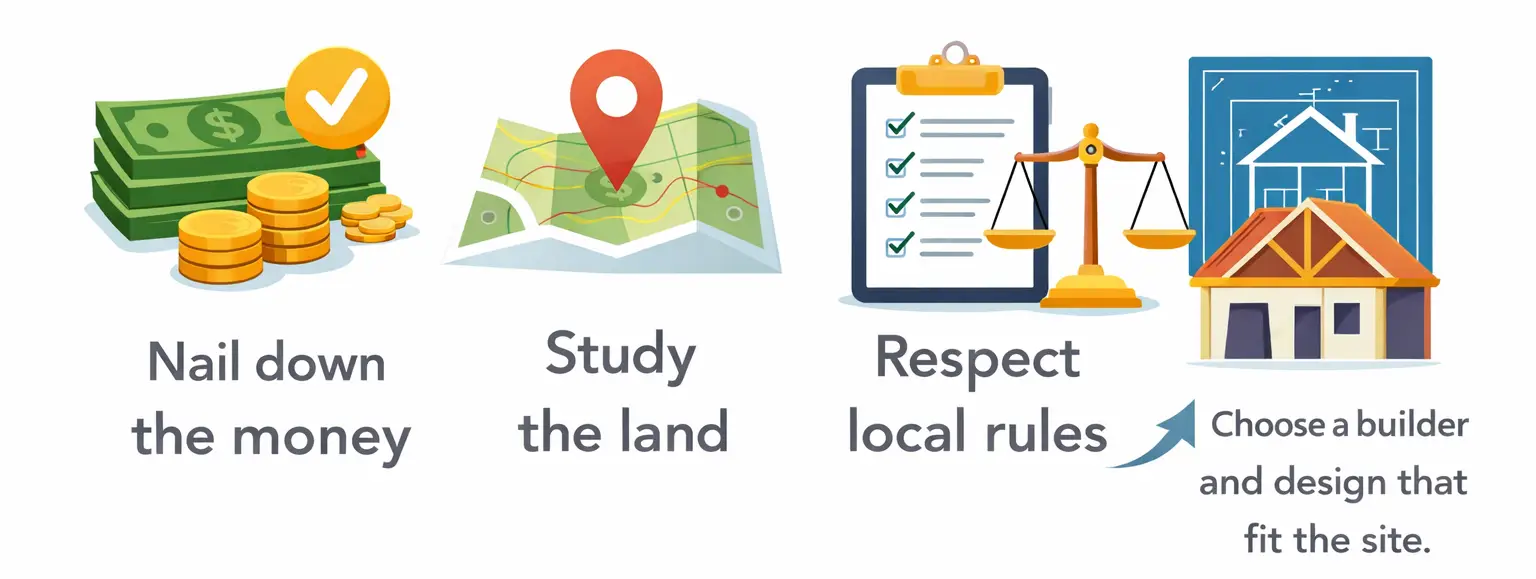
That calm, step-by-step approach beats rushing into plans every time. Before you buy land or approve drawings, talk with a local builder, lender, and land expert. Those early conversations can save months of delay and a pile of avoidable cost.