There’s something truly special about spider plants that keeps them thriving on windowsills across the globe. Maybe it’s those graceful cascading leaves or the sweet baby plantlets that dangle like nature’s ornaments.
But here’s the beautiful secret: this charming houseplant offers so much more than good looks.
Beyond adding that coveted green touch to your space, spider plants quietly purify your air, create a calming atmosphere, and practically care for themselves.
If you’re a seasoned plant parent or just beginning to build your indoor garden, this guide will show you exactly why spider plants deserve that special spot in your home.
What Exactly is a Spider Plant?
Meet the spider plant, scientifically known as Chlorophytum comosum, a houseplant native to tropical and southern Africa.
With its arching foliage and plantlets that sprout from long stems, it’s become a beloved fixture in homes everywhere. The plant gets its name from the baby offshoots that dangle from cascading stems.
Popular Varieties:
- Bonnie; compact with curly, ribbon-like leaves
- Vittatum; classic green edges with creamy white center stripe
- Variegatum; dark green center with bright white margins
Spider plants are forgiving, thrive in various light conditions, and bounce back from occasional watering mistakes, making them ideal for beginners.
Their adaptability also makes them perfect for office spaces where conditions aren’t always ideal.
Top Benefits of Spider Plants

Spider plants aren’t just pretty faces in your plant collection. They’re hardworking companions that boost your living space in more ways than you might expect.
They quietly purify your air, create a calming atmosphere, and practically care for themselves. Plus, those dangling plantlets make it easy to grow new plants in water and expand your collection.
1. Improves Indoor Air Quality Naturally
Spider plants actively filter harmful pollutants like formaldehyde, xylene, and toluene from your indoor air. This makes them valuable in homes with new furniture, carpets, or paint that release chemical vapors.
The NASA Clean Air Study highlighted how certain houseplants can help create cleaner breathing spaces. While they won’t replace proper ventilation, they’re a natural addition to your air quality toolkit.
2. Helps Reduce Asthma, Allergies & Respiratory Irritation
Cleaner air means easier breathing, especially for those sensitive to indoor pollutants. Spider plants also release moisture into the air, which can ease dryness-triggered symptoms like throat irritation and nasal congestion.
These improvements create a more comfortable environment for respiratory health. Keep in mind that while spider plants support a healthier environment, they’re not a substitute for medical treatment or prescribed therapies.
3. Increases Oxygen Levels Indoors
Like all plants, spider plants release oxygen through photosynthesis, refreshing stale indoor air. This benefit is especially noticeable in spaces with limited airflow, like bedrooms, home offices, or study nooks.
Having multiple plants can contribute to a more oxygenated environment that feels fresher and more invigorating. While individual plants contribute modestly, a collection improves overall air circulation in your home.
4. Boosts Humidity Naturally
Spider plants release moisture through their leaves, gently increasing humidity in dry indoor spaces. This natural humidifier combats dry skin, sore throats, and static electricity, especially in winter.
The added moisture also benefits other plants nearby and can make your space feel more comfortable overall. Research shows that indoor plants can increase relative humidity levels significantly in office and home environments.
5. Reduces Stress & Improves Mood
Research consistently shows that indoor plants lower anxiety and mental fatigue while promoting feelings of calm. Spider plants bring nature indoors, creating a soothing visual presence that helps you decompress after long days.
Studies have found that simply being around greenery can reduce cortisol levels and improve overall well-being. Place them in workspaces or study areas where stress tends to build up for maximum emotional benefit.
6. Safe, Non-Toxic & Pet-Friendly
Spider plants are non-toxic to cats, dogs, and children, making them worry-free additions to family homes. Pets might get mild stomach upset from munching leaves, but there’s no serious toxicity risk like with other houseplants.
This safety profile makes spider plants ideal for pet parents who want greenery without the anxiety. You can display them freely without constantly monitoring curious fur babies or little hands.
7. Requires Very Little Maintenance
Spider plants thrive on benign neglect, tolerating inconsistent watering schedules and less-than-ideal light conditions. They recover quickly from forgetfulness, ideal for beginners or busy schedules.
These resilient plants can go weeks without water and still look vibrant. Their easygoing nature means you get all the benefits of plant parenthood without the pressure of intensive care routines.
8. Helps Remove Carbon Monoxide When Combined With Ventilation
Spider plants can help lower CO levels when combined with proper ventilation, especially in kitchens with gas stoves or other CO sources, though they shouldn’t be your only defense.
They work best as part of a comprehensive safety approach that includes detectors and adequate airflow. Think of them as supportive players in your home’s air quality management system.
9. Great for Propagation & Sharing
Spider plants produce plantlets called “pups” or “spiderettes” that root easily in water or soil. This makes them incredibly rewarding for propagation enthusiasts who love expanding their plant collection without spending money.
You can share these baby plants with friends, gift them for special occasions, or even sell them locally. Watching new plants grow from your original is genuinely satisfying and promotes sustainable decorating.
10. Supports Focus, Productivity & Creativity
Greenery in your workspace isn’t just aesthetically pleasing; it actually enhances cognitive function. Studies show that plants like spider plants improve concentration, boost productivity, and stimulate creative thinking.
The presence of nature indoors reduces mental fatigue and helps maintain focus during long work sessions. Having spider plants nearby creates an environment conducive to better performance in any task.
11. Perfect for Any Decor Style
Spider plants adapt beautifully to any aesthetic, from modern minimalism to cozy boho vibes. Their cascading leaves look stunning in hanging baskets, perched on shelves, or sitting on desks and side tables.
The variegated foliage adds visual interest without overwhelming your existing decor. These versatile plants blend seamlessly into any space while adding that perfect touch of natural beauty.
Spider Plant vs. Other Popular Indoor Plants
While pothos, snake plants, and philodendrons each have their own strengths, understanding how they compare helps you make the best choice for your space and lifestyle.
Here’s how the spider plant stacks up against other popular indoor favorites.
| Feature | Spider Plant | Pothos | Snake Plant | Philodendron |
|---|---|---|---|---|
| Pet Safety | Non-toxic | Toxic | Toxic | Toxic |
| Maintenance | Very low | Very low | Extremely low | Low-moderate |
| Light Needs | Bright indirect, tolerates low | Low to bright | Low to bright | Bright indirect |
| Propagation | Extremely easy (plantlets) | Easy (cuttings) | Moderate | Easy (cuttings) |
| Special Trait | Produces baby plants | Fast grower | Night oxygen | Large leaves |
While snake plants need the least attention and pothos grow fastest, spider plants offer the perfect balance of safety, air purification, and those delightful plantlets that make sharing your plant love a breeze.
Like any houseplant, they can occasionally attract pests, so knowing how to manage thrips keeps your spider plant looking healthy.
Best Places in the Home to Keep a Spider Plant
Finding the perfect spot for your spider plant can maximize both its health and its benefits to your space.
These adaptable plants thrive in various rooms, but some locations bring out their best while improving your home’s air quality and aesthetic appeal.
- Living Room: Place near windows with bright indirect light for lush growth and cascading baby plants that create a stunning visual display.
- Bedrooms: Position nightstands or hanging planters where they quietly purify air and add oxygen while you sleep.
- Bathrooms: Hang near windows or shelves where natural humidity from showers keeps leaves vibrant without extra misting.
- Kitchen: Set on countertops or open shelving to filter cooking fumes and add fresh greenery to your culinary space.
- Home Office: Keep on desks or nearby surfaces where they boost focus, reduce stress, and improve air quality during work hours.
Spider plants adapt beautifully to most indoor environments as long as they receive moderate to bright indirect light and aren’t placed in direct, harsh sunlight.
How Many Spider Plants Do You Need for Maximum Benefits?
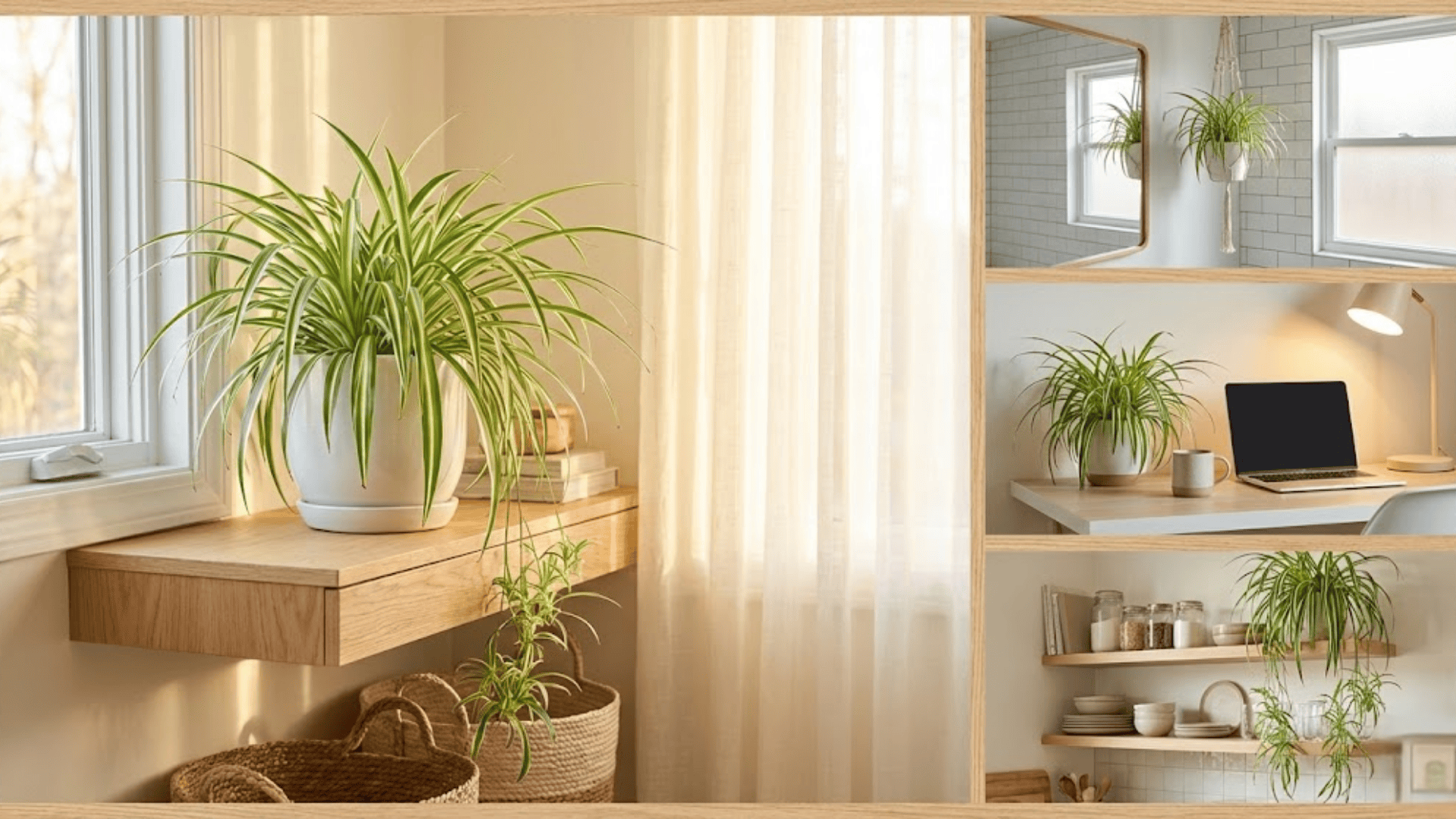
For noticeable air quality improvement, aim for one medium-sized spider plant per 100 square feet of living space. This means a typical bedroom might benefit from two plants, while larger living rooms could use three to four.
Distribution matters just as much as quantity; spread plants across different rooms rather than clustering them in one spot. Focus on areas where you spend the most time: bedrooms, living rooms, and home offices.
High-traffic zones and spaces with new furniture or fresh paint gain the most from multiple plants working together to filter pollutants continuously.
How to Care for a Spider Plant to Maximize Its Benefits?
Following a few simple guidelines keeps your plant thriving while ensuring it continues purifying your air and brightening your space naturally.
- Light: Provide bright, indirect sunlight near windows with sheer curtains; avoid direct sun that scorches leaves and causes brown tips.
- Watering: Water when the top inch of soil feels dry, typically once weekly; overwatering causes root rot while underwatering leads to crispy leaf tips.
- Soil & Pot: Use well-draining potting mix in containers with drainage holes to prevent waterlogged roots and promote healthy growth.
- Fertilizer: Feed with diluted liquid fertilizer once monthly during spring and summer; skip feeding in fall and winter when growth slows.
- Troubleshooting: Trim brown tips with clean scissors, increase humidity for drooping leaves, and flush soil occasionally to remove salt buildup from tap water.
With minimal attention and these care practices, your spider plant will reward you with lush growth and continuous air purification.
Possible Myths About Spider Plant Benefits
Spider plants have earned quite a reputation over the years, but not every claim holds up under scrutiny.
Let’s separate the science-backed benefits from the well-meaning myths that have taken root in plant communities.
Myth 1: Spider Plants Can Replace Air Purifiers
Fact: While spider plants do filter certain toxins, you’d need dozens of plants per room to match the efficiency of a mechanical air purifier. They work best as complementary tools alongside proper ventilation and air filtration systems.
Myth 2: Spider Plants Produce Massive Amounts of Oxygen
Fact: Spider plants release oxygen through photosynthesis, but the amount is modest compared to what your home’s ventilation provides. Their oxygen contribution is real but subtle, making a small difference in enclosed spaces.
Myth 3: Spider Plants Can Cure Allergies and Asthma
Fact: Spider plants help reduce some airborne pollutants that trigger symptoms, but they don’t cure respiratory conditions. They create a cleaner environment that may ease discomfort, though medical treatment remains essential.
Myth 4: All Spider Plants Are Equally Effective at Air Purification
Fact: Larger, healthier spider plants with more leaf surface area purify air more effectively than small or struggling ones. Plant size, health, and the number of plants all influence how well they filter your indoor air.
That’s a Wrap
I hope this guide has shown you just how remarkable spider plants truly are. From their air-purifying abilities to their pet-friendly nature and stress-reducing presence, these resilient beauties offer so much more than meets the eye.
The spider plant benefits extend far beyond decoration, turning your home into a healthier, more vibrant sanctuary.
Starting your plant parent experience or expanding your collection has never been easier.
Have you experienced any surprising benefits from your spider plants? I’d love to hear your stories and tips in the comments below. Let’s grow our green community together!