I keep coming back to bedrooms that feel borrowed from a story, not a showroom.
The kind the March sisters had in “Little Women,” worn wood, handmade quilts, books with actual creases.
Small objects that mean something to nobody but you. Architectural Digest confirmed those rooms were built deliberately, each detail chosen to reveal character.
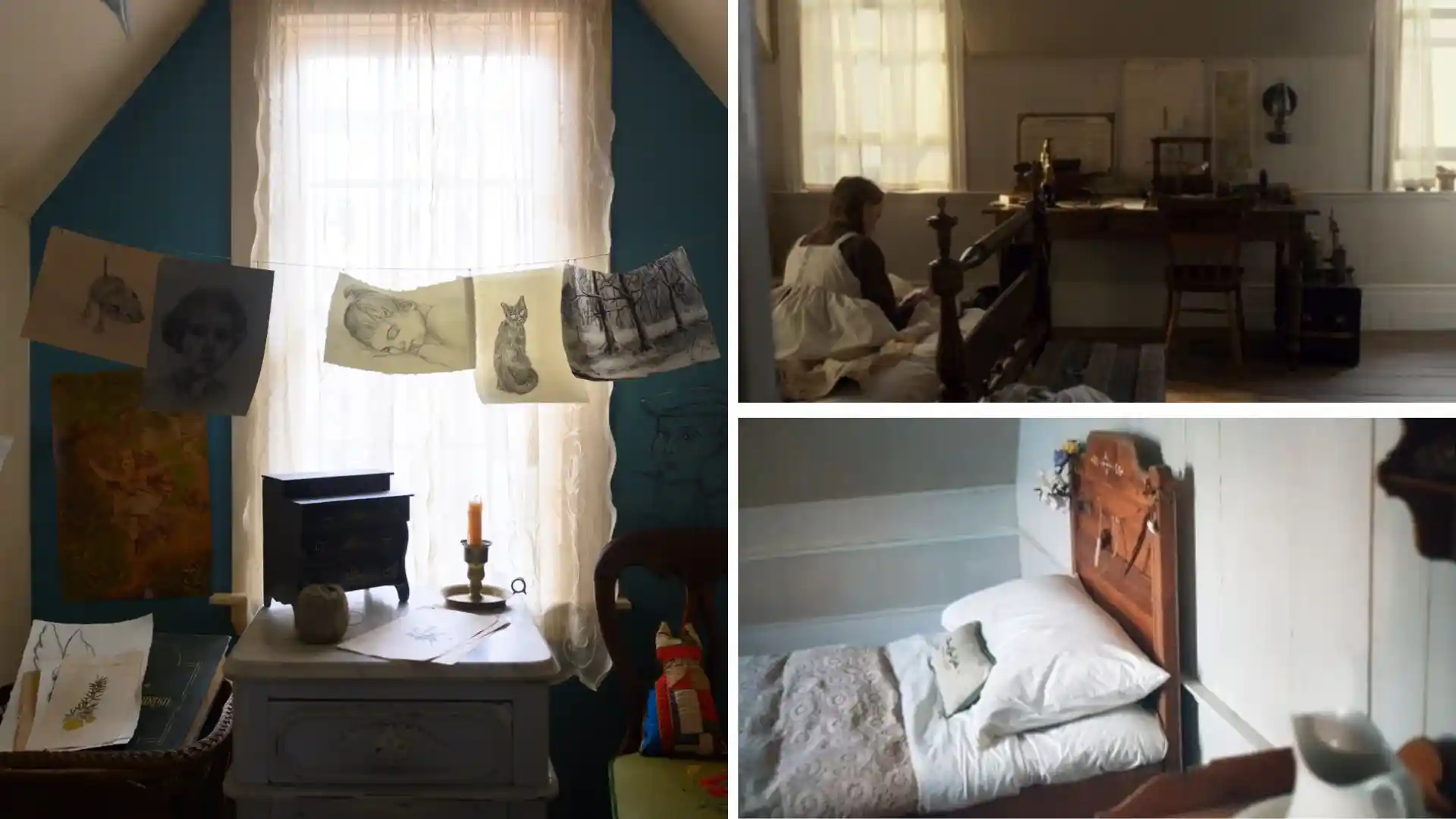
“Anne with an E” leaves me with that same longing, sunlit and unrushed.
Neither was chasing a trend, and maybe that is why they still feel honest.
A cottagecore bedroom follows that same quiet logic. Collected slowly, kept imperfect, made from things that already feel like yours.
The Details Behind a Cottagecore Bedroom
A cottagecore bedroom starts with texture.
Linen leads the way, softening with every wash and draping better over time than crisp percale ever could. A scalloped quilt or a chunky wool throw adds warmth on top, and the furniture should feel like it has already lived a little.
Worn oak and tarnished brass carry character new pieces simply cannot fake.
Lighting works on the same principle. Warm bulbs around 2700K flatter a room far more than daylight ones, which is why wrought iron sconces or pleated lampshades tend to suit this style so well.
A bundle of dried lavender rounds out the sensory side, adding a soft scent that lingers long after it is hung.
The finishing pieces are where it all comes together. Vintage pine, floral chintz, and hand-thrown ceramics root the room in something real, not something bought to follow a trend.
Authentic Cottagecore Bedroom Ideas
Some of these ideas came from rooms I have actually lived in and rearranged myself.
Others come from spaces I have admired, studied, and pinned over time, then adapted into practical steps you can try in your own room.
1. Let the Architecture Lead the Decoration
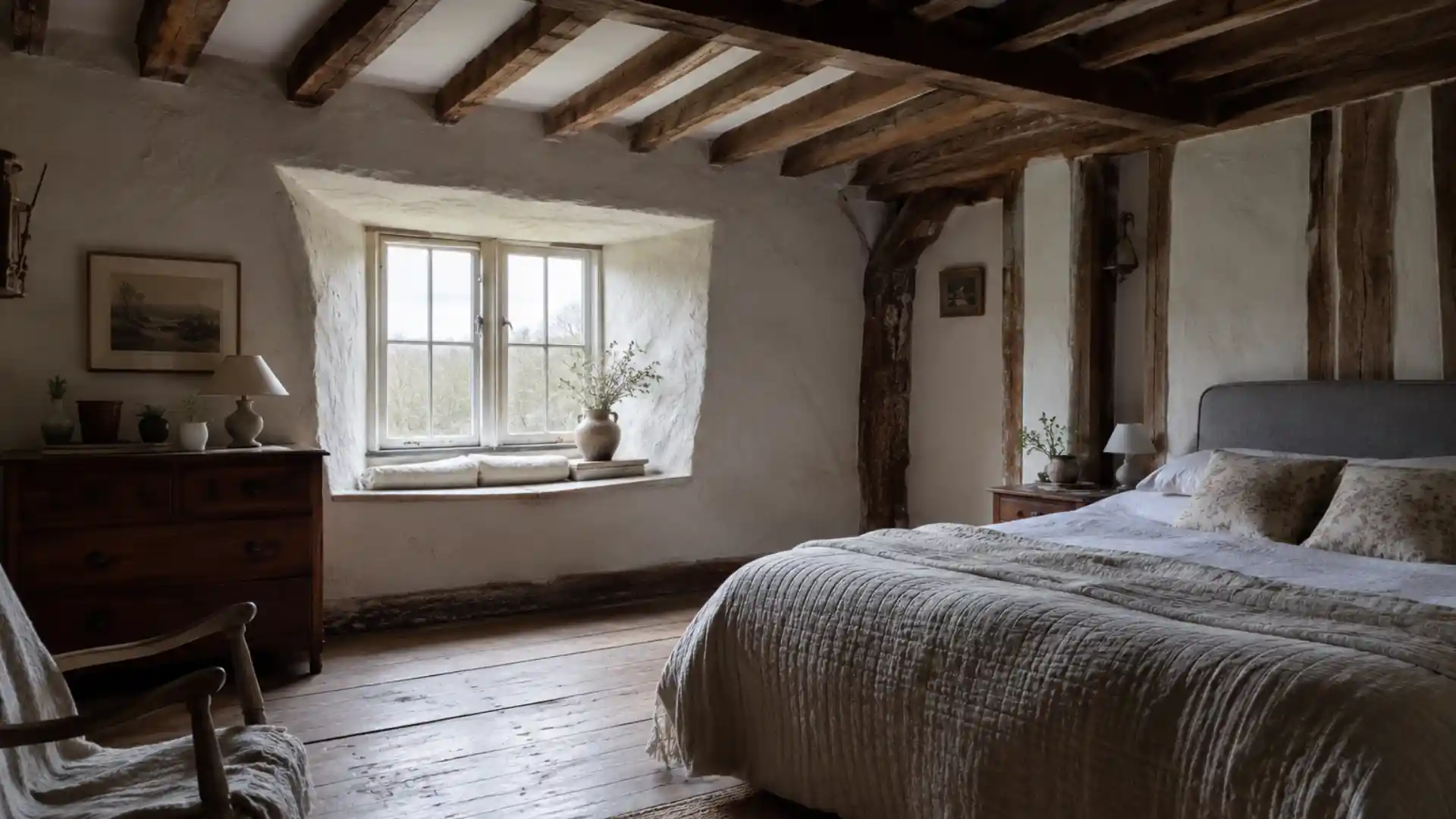
Exposed beams, plaster walls, dormers, low ceilings, sash windows, or old timber floors are not flaws to hide. They are the starting point.
Cottagecore works best when decoration responds to the room instead of fighting it. Before buying anything, walk through the space and note what it already has.
A crooked windowsill or an uneven wall often becomes the most charming detail in the finished room.
2. Create a Bed Alcove That Feels Tucked Away
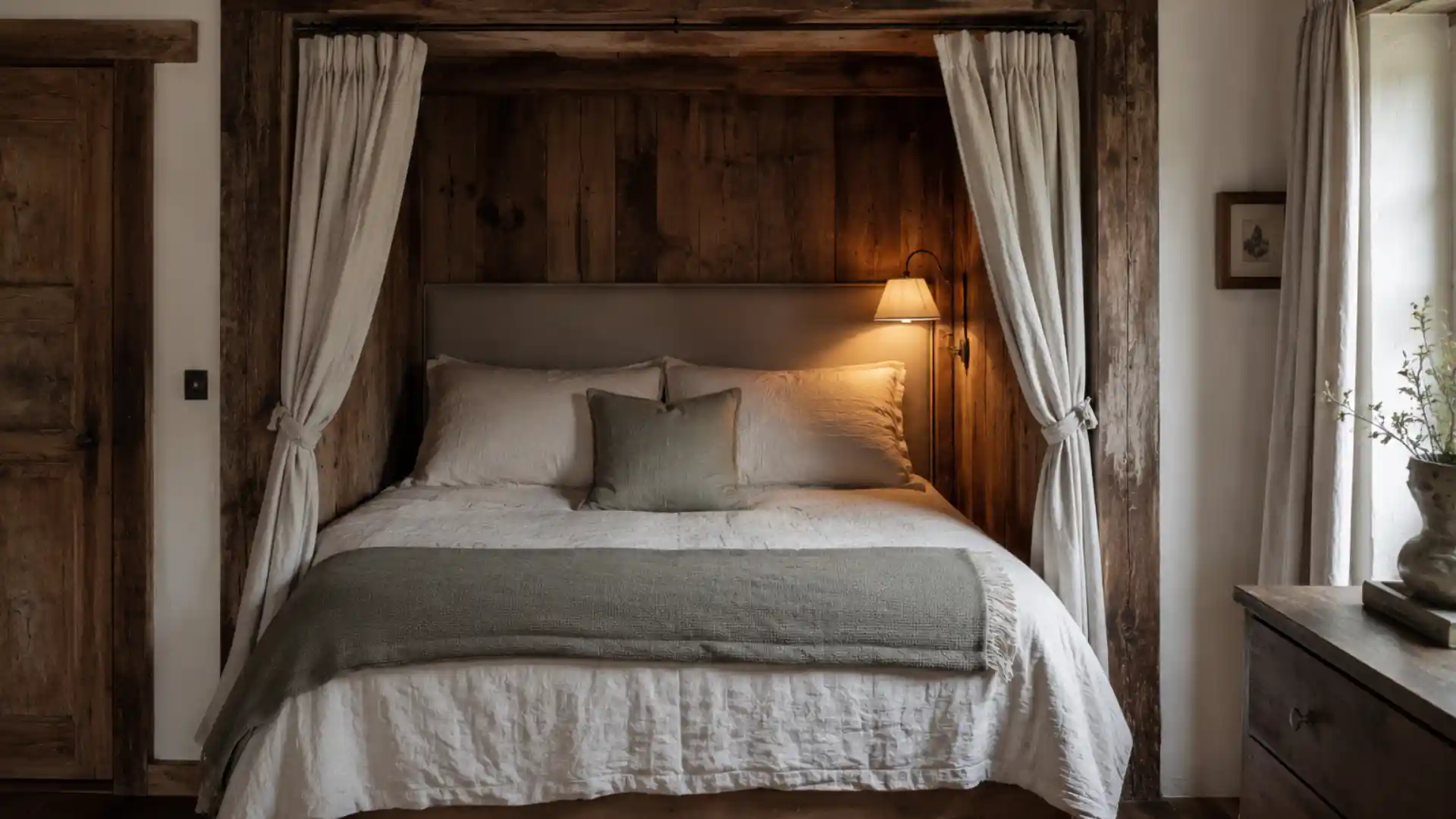
If the room has a recess, dormer, or partial wall, use it to shelter the bed rather than adding another decorative headboard.
The idea is a small room within the room, something that feels naturally sheltered rather than staged.
This works especially well in older homes with irregular layouts, where the architecture already suggests where the bed wants to sit.
3. Keep the Windows Visually Important
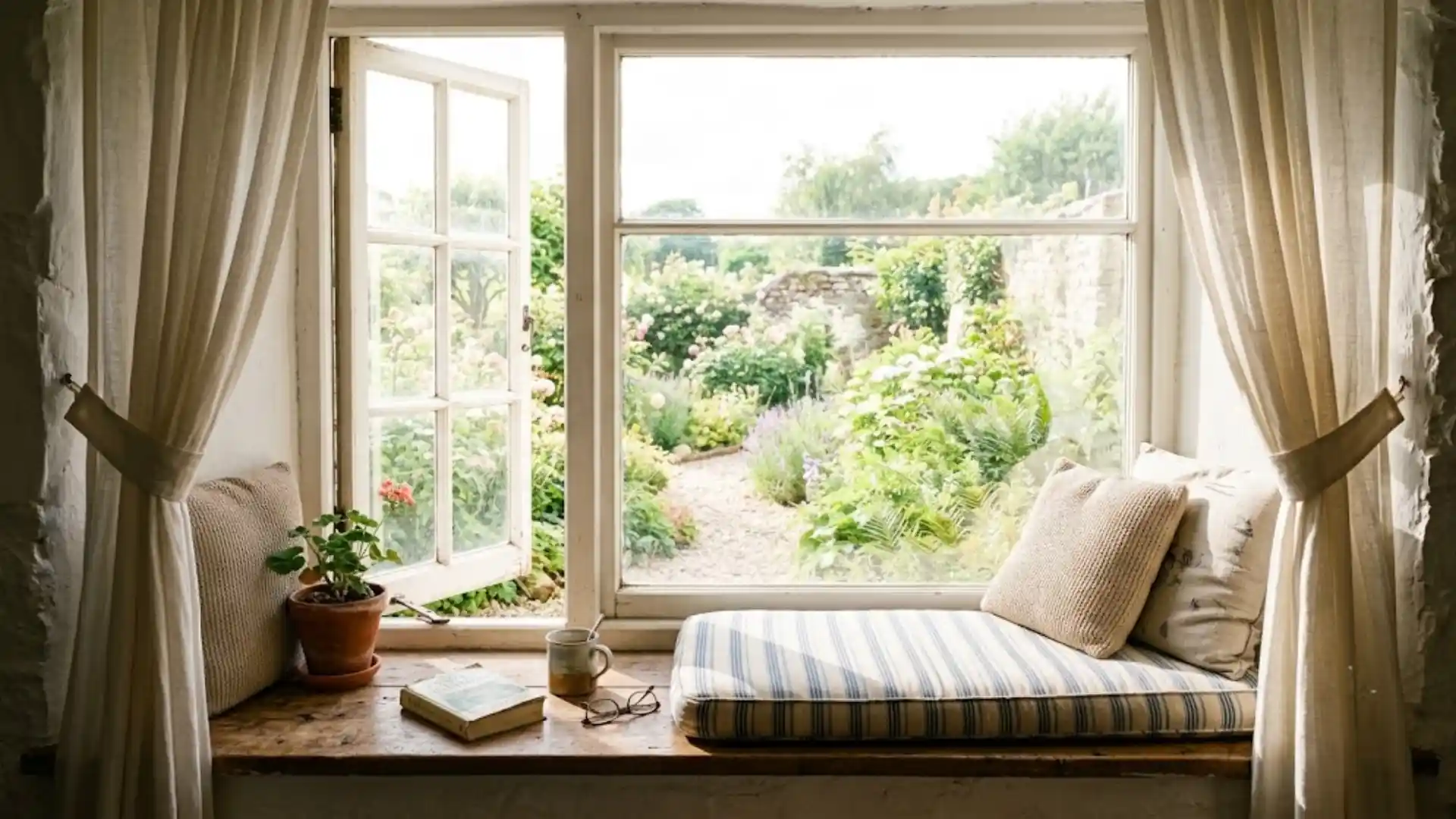
Instead of covering every wall with decor, let the window carry part of the room’s personality.
Prioritize garden views, morning light, simple curtains, and a deep sill you can actually use. A window seat or a small stack of books nearby makes the spot feel intentional.
A cottage bedroom should feel like it has a real relationship with whatever is outside it, not just a nice view to photograph.
4. Make the Bed Look Like It is Actually Used
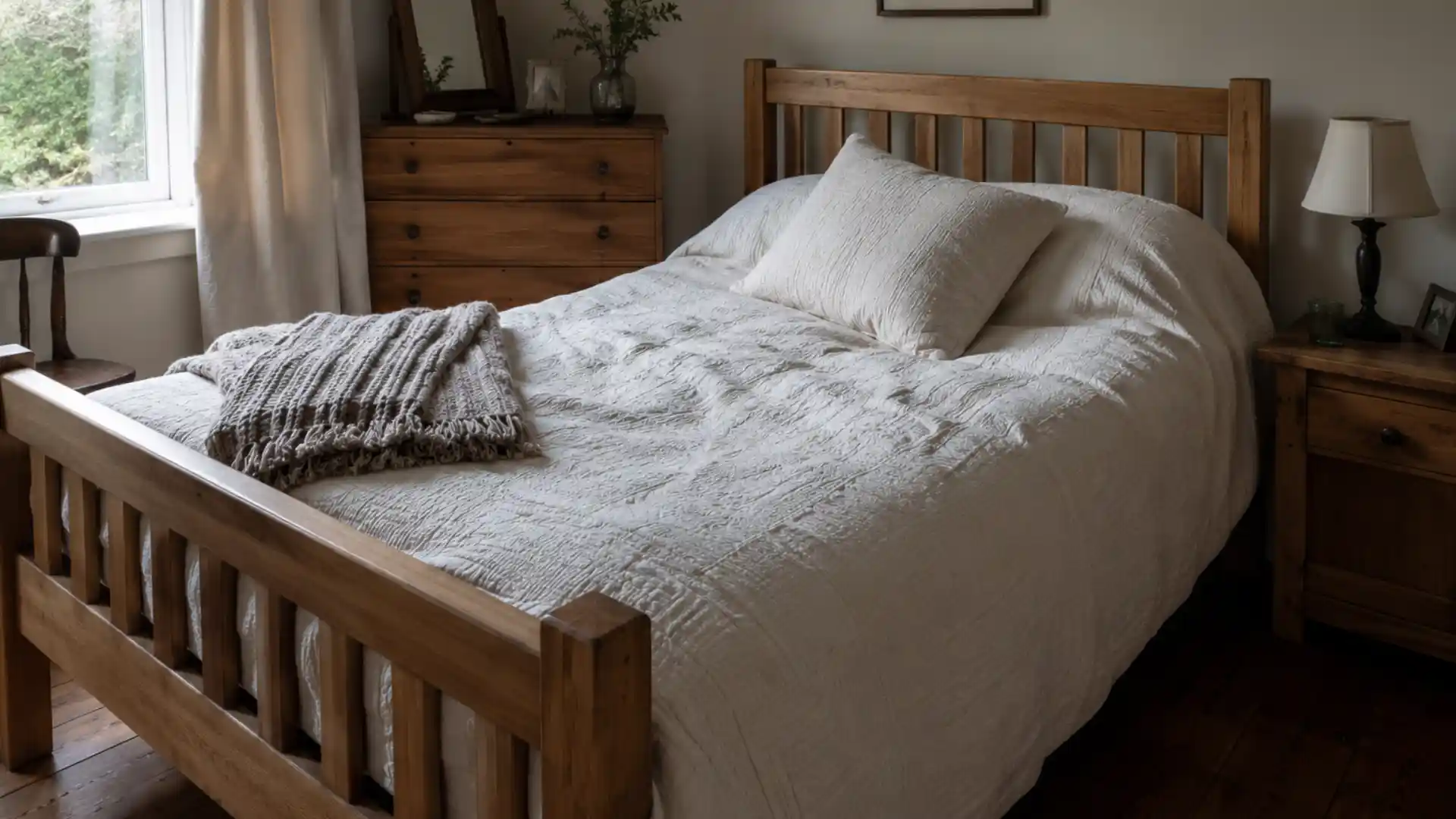
Skip the perfectly symmetrical, hotel-style bed. Layer sheets, a quilt, and a blanket or two so it looks like the bed was just made, not arranged for a photo.
A slightly rumpled bed reads as lived-in, which is the whole point here.
This is one of the easiest changes to make and one of the most convincing, since it signals a real person sleeps there.
5. Choose Bedding That Gets Better With Age
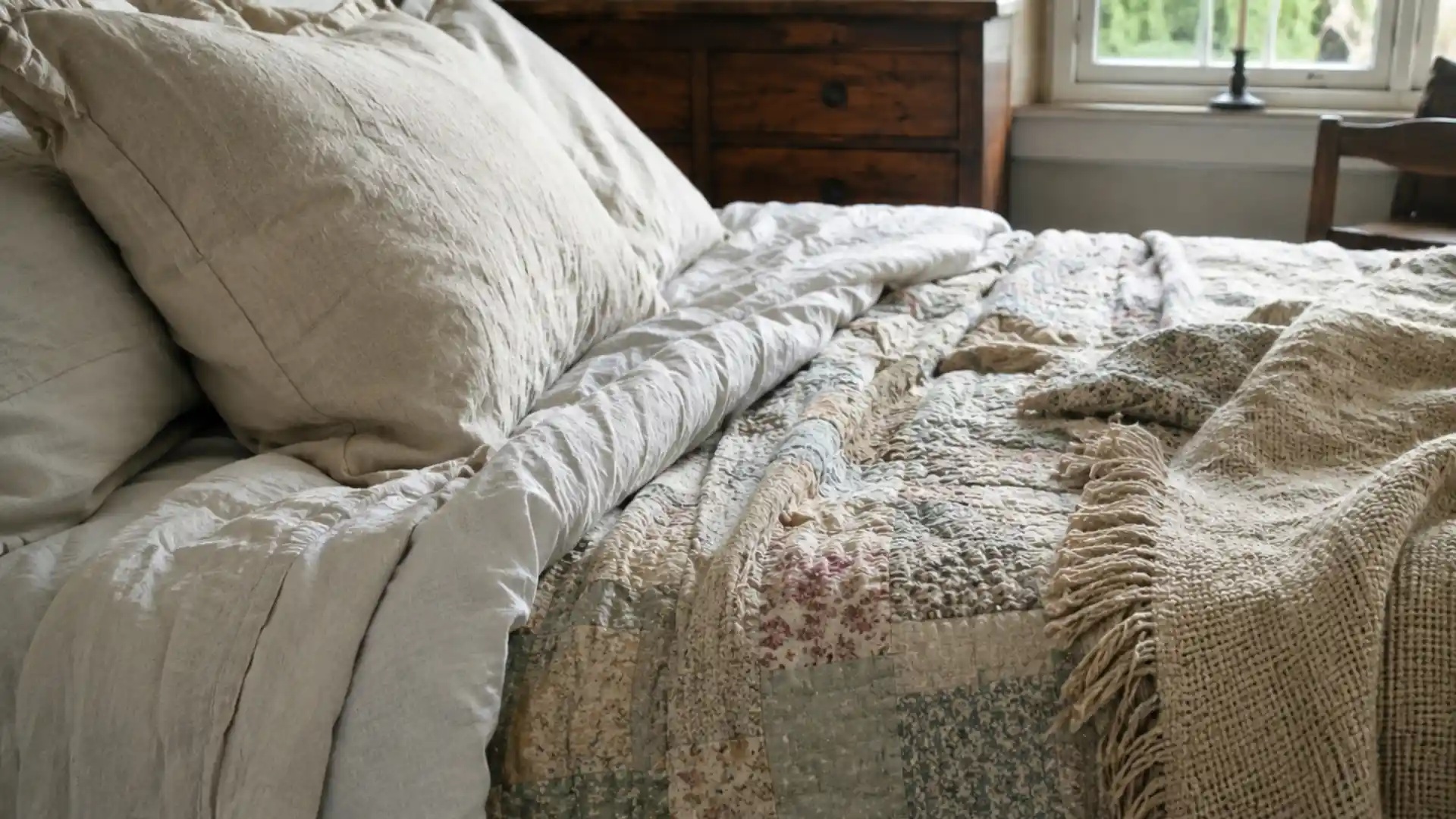
Washed linen, cotton, and faded quilts hold up better visually than crisp synthetic bedding ever will.
Character builds with wear, not a factory finish, so look for fabrics designed to soften over time. Traditional woven textiles fall into this category too.
Buying bedding that already claims to look distressed rarely reads as convincingly as fabric that has simply aged on its own.
6. Use One Heirloom Textile as the Emotional Anchor
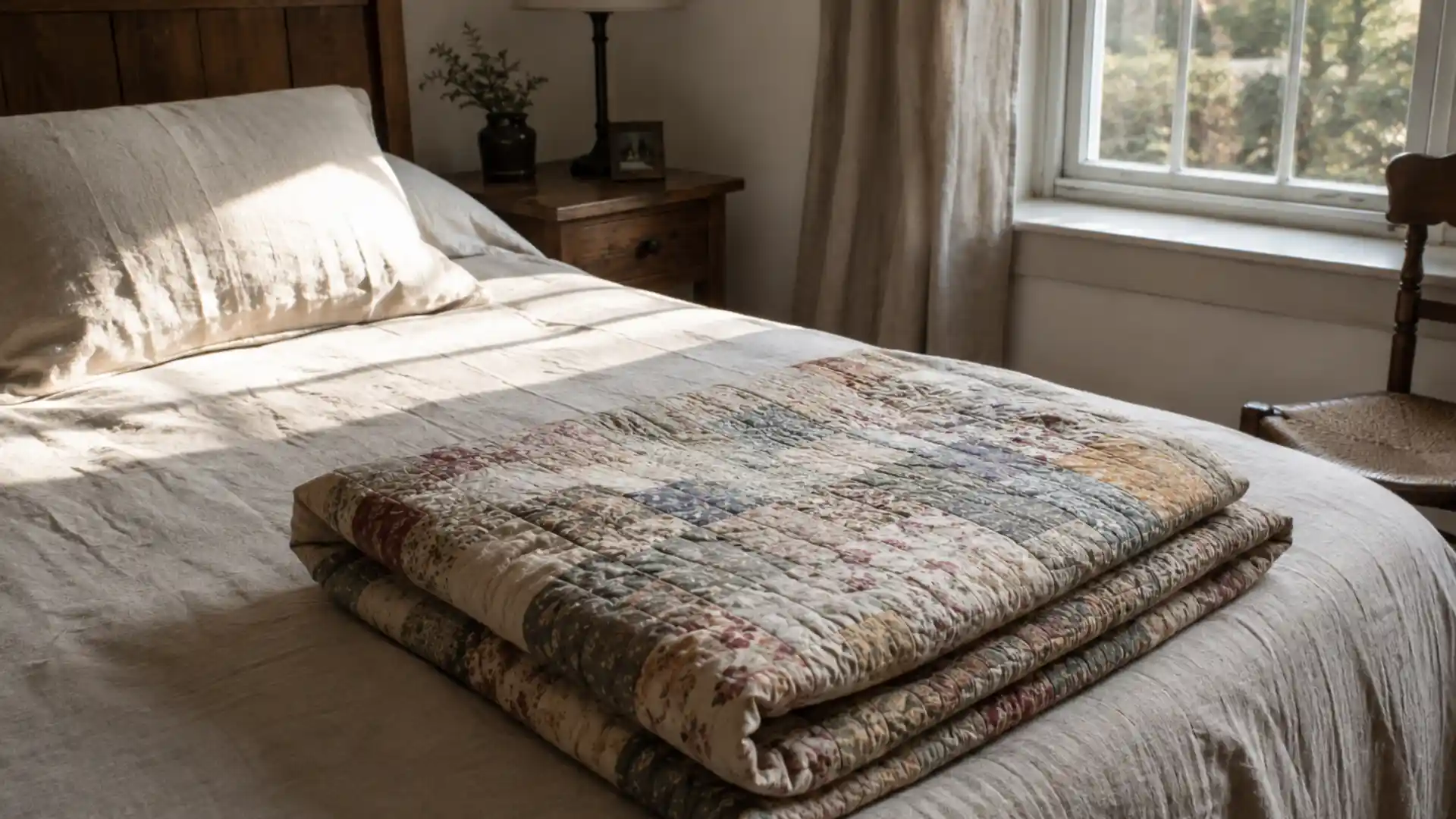
Rather than filling the room with cottage-patterned fabric everywhere, pick one inherited or vintage textile and let it anchor the space.
A quilt, an embroidered coverlet, or a handwoven blanket all work well here. Veranda specifically calls out passed-down quilts as central to this look.
One meaningful piece does more than a dozen matching ones, and it gives the room a story worth mentioning.
7. Let Fabrics Tell the Story of the Room
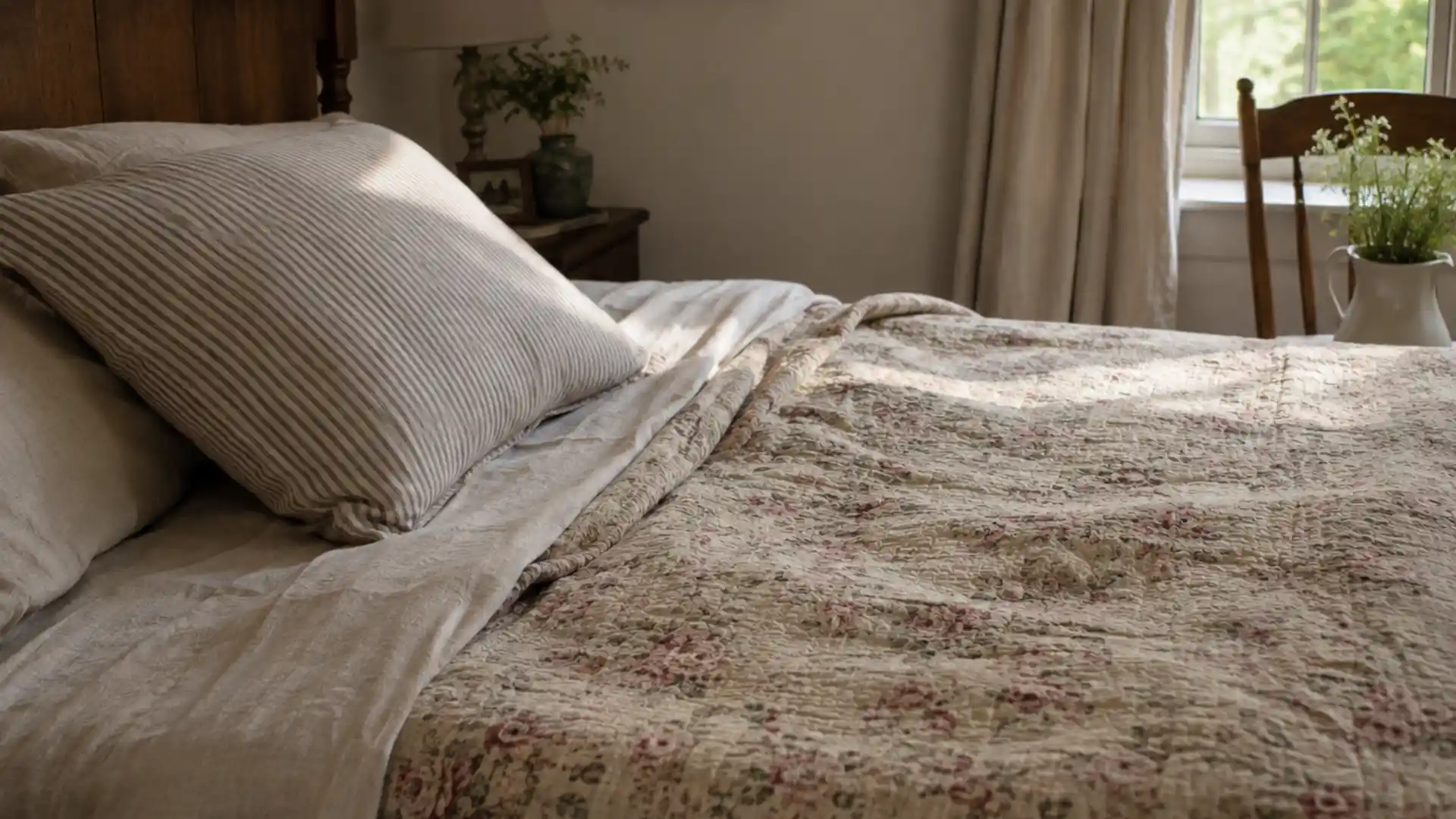
Mix a few fabric traditions instead of choosing one matching print.
Floral paired with ticking stripe and plain linen works, and so does gingham next to a faded botanical and worn cotton.
Contrast is what makes a room feel accumulated over time rather than bought in one trip. This mirrors how real cottage interiors evolved, piece by piece, across different decades.
8. Pair Pretty Fabrics With Plain, Workaday Ones
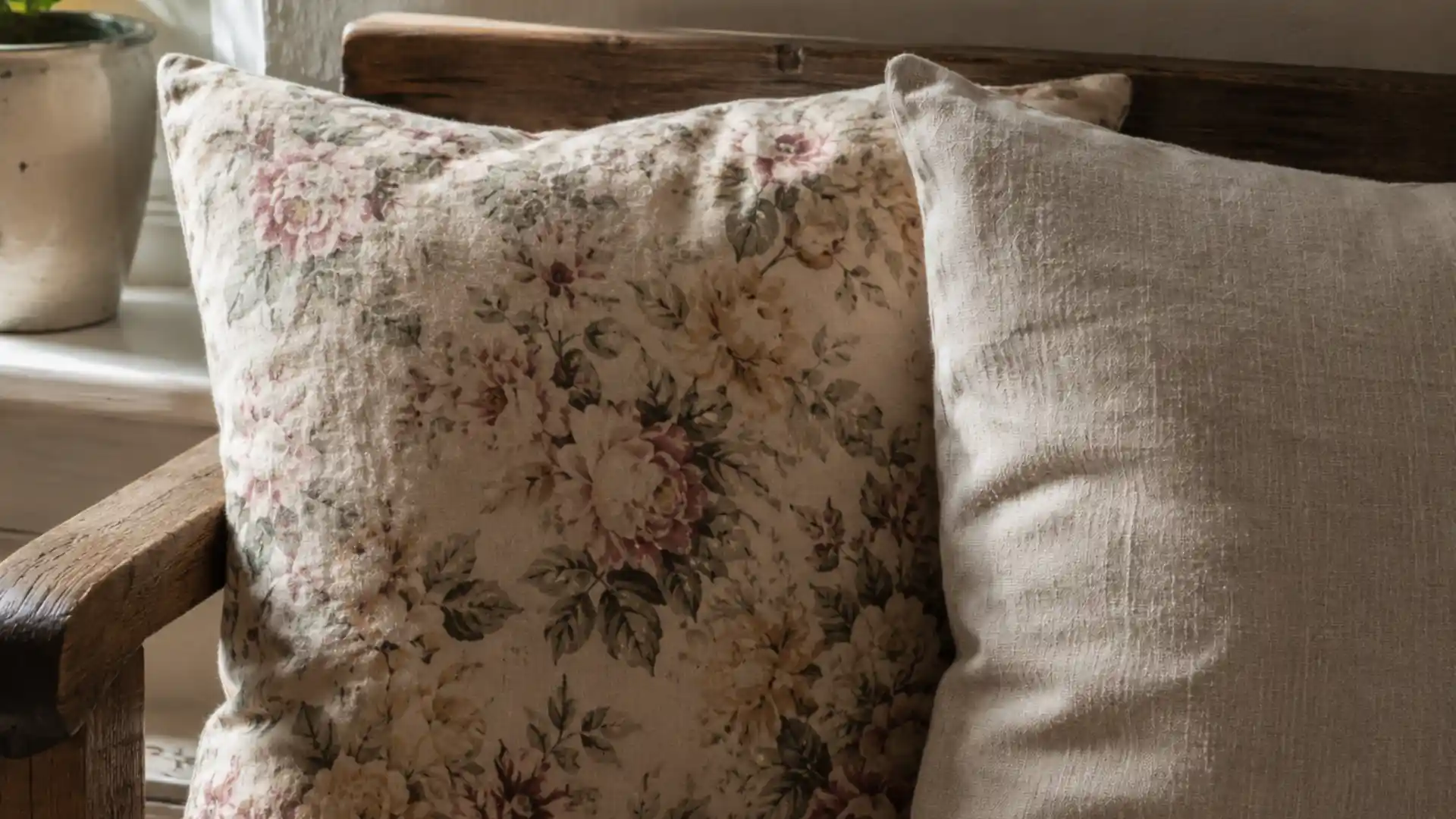
This is one of the more overlooked principles in authentic cottage design. Place a delicate floral fabric next to something ordinary, like homespun cotton, canvas, or plain muslin.
The juxtaposition keeps the room grounded instead of tipping into something overly theatrical.
Without this balance, a cottagecore room can start to feel like a costume set rather than a place someone actually lives.
9. Use Mismatching Furniture That Shares a History
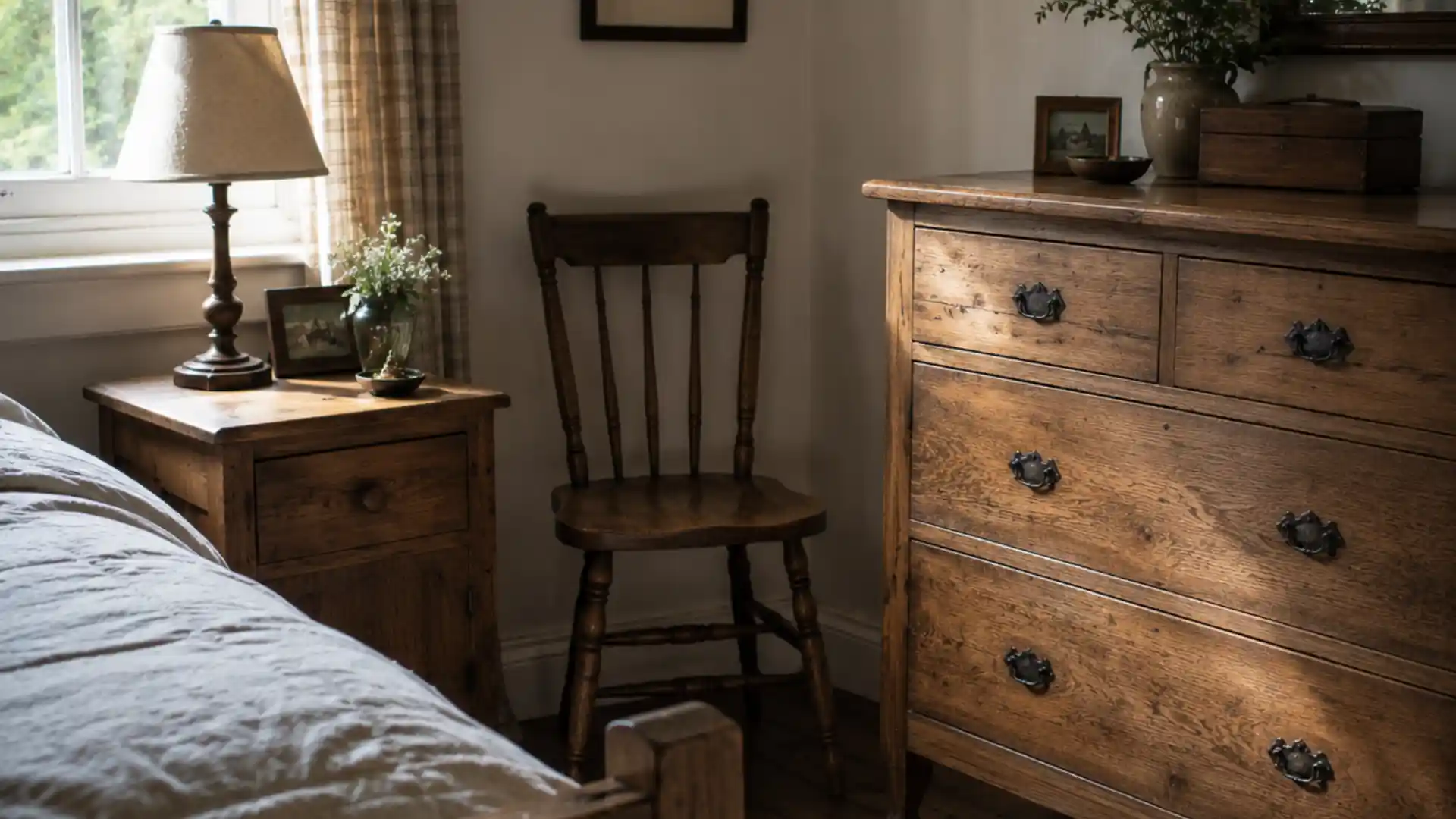
Nightstands, dressers, and chairs do not need to come from the same set.
Instead, repeat one underlying trait, like a similar wood tone, a related age, or visible patina across pieces.
Shared character matters more than matching design. This is closer to how furniture accumulates in real homes, piece by piece, over years rather than through a single purchase.
10. Keep One Piece Slightly Too Small
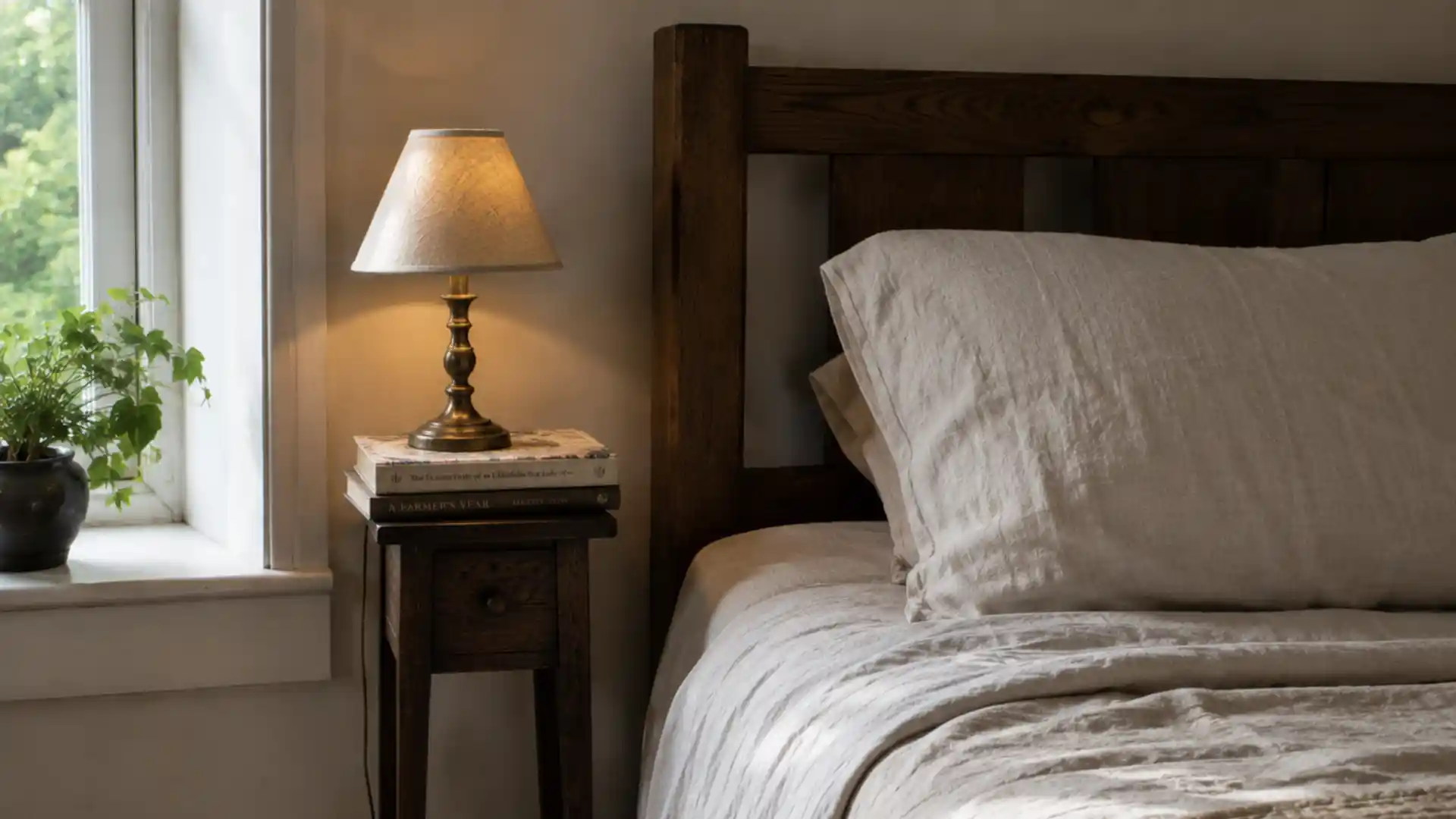
A narrow chair, a tiny bedside table, or a modest dresser can make a room feel inherited rather than freshly furnished.
Cottages were often shaped by what was available, not by ideal proportions.
A slightly undersized piece adds believability that a perfectly scaled one cannot offer. It suggests the room grew around what people already had, rather than what a showroom recommended.
11. Give an Old Piece Its Original Job
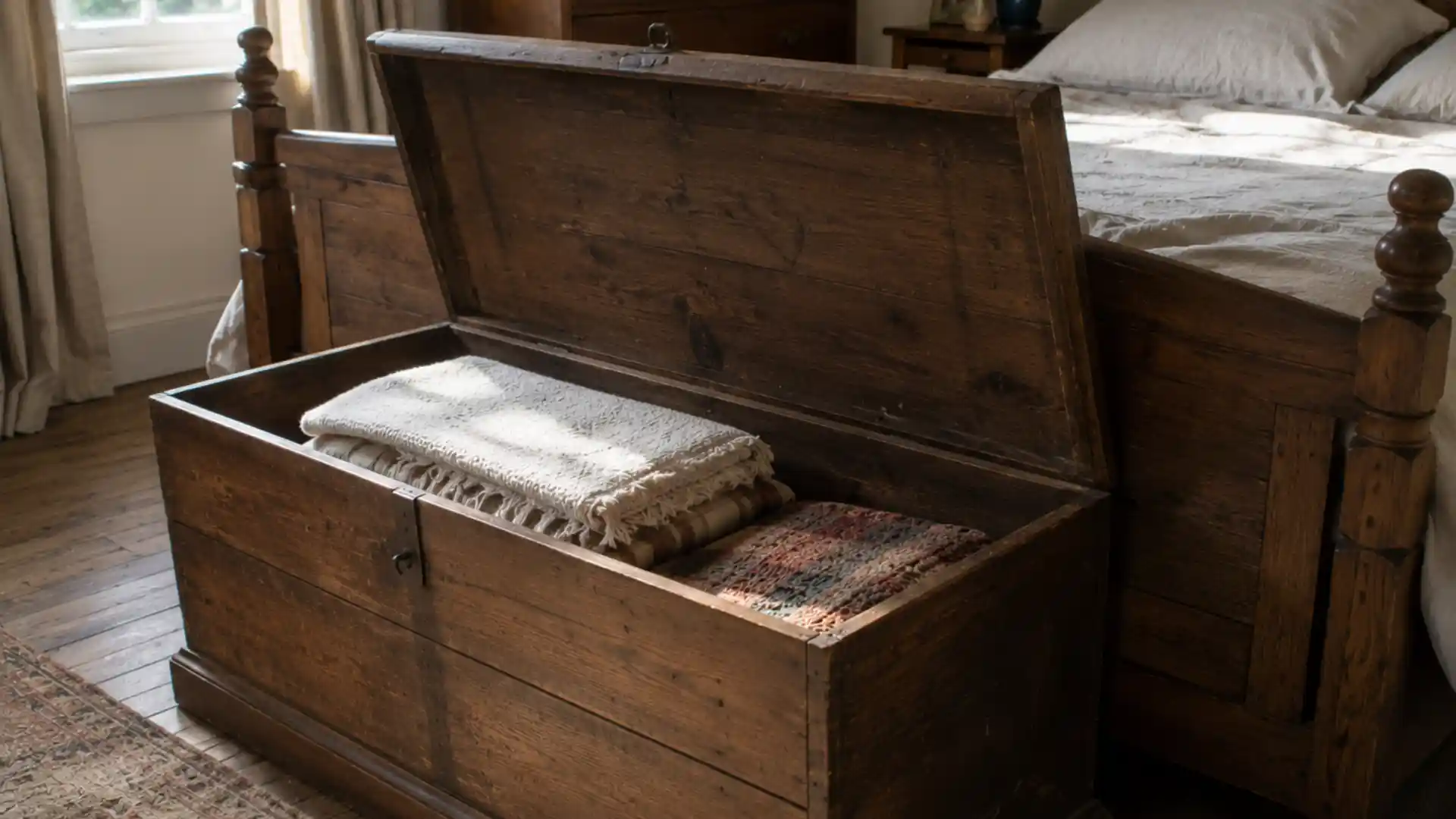
Use furniture the way it was meant to be used. An old chest can hold blankets, a small dresser can hold clothes, and a wooden trunk works well for seasonal linens.
Authenticity comes from function, not just appearance.
A beautiful piece sitting empty and purely decorative tends to feel staged, while the same piece doing real work in the room feels earned.
12. Make Storage Part of the Bedroom’s Character
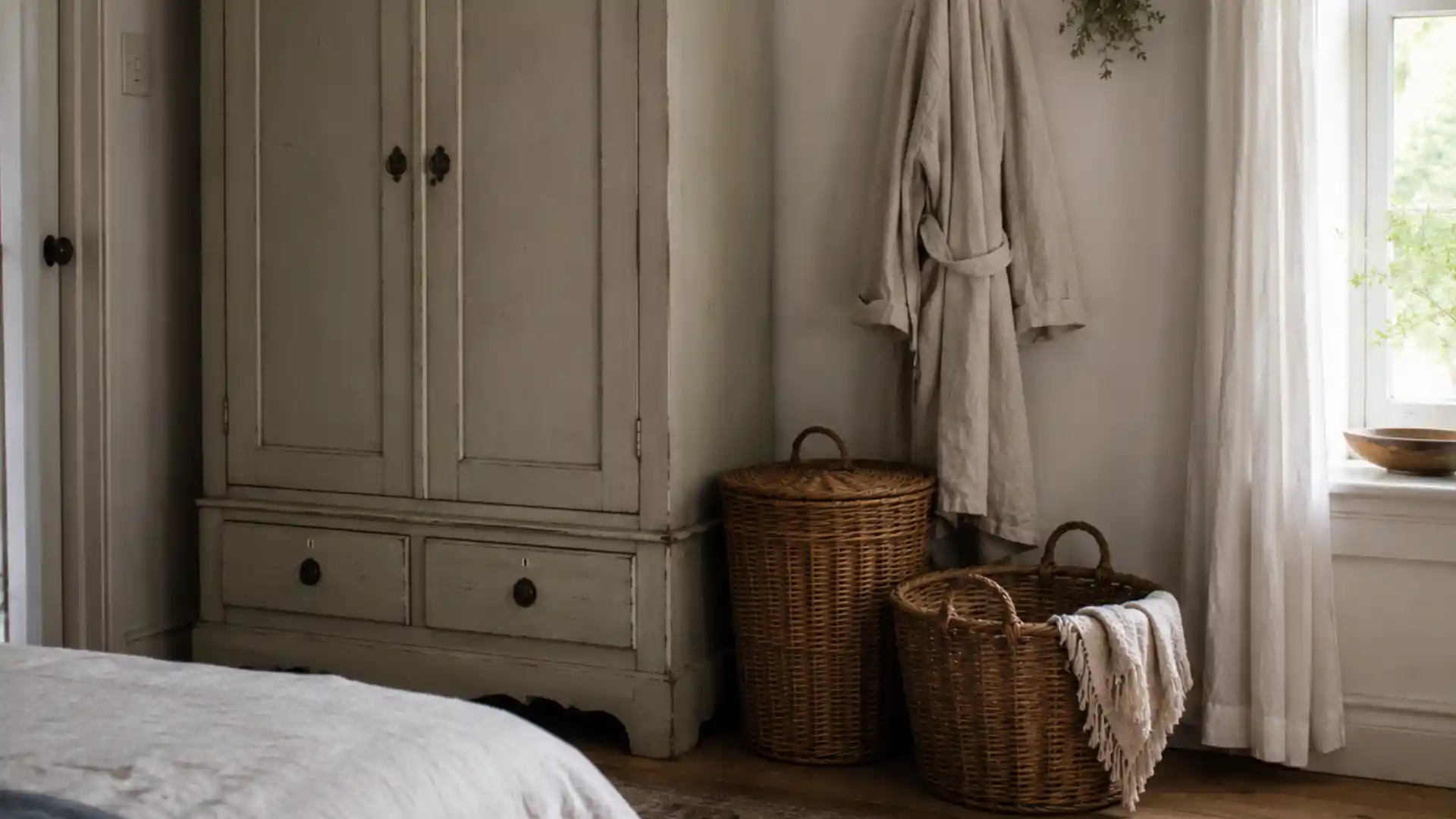
Baskets, cupboards, trunks and peg rails can double as storage and decoration at once. You do not need to hide every practical object from view.
Objects with a job add more character than objects with none.
A painted armoire or a built-in niche can carry as much visual weight as a piece chosen purely for looks, while also solving a real storage problem.
13. Put a Chair Where Someone Would Actually Sit
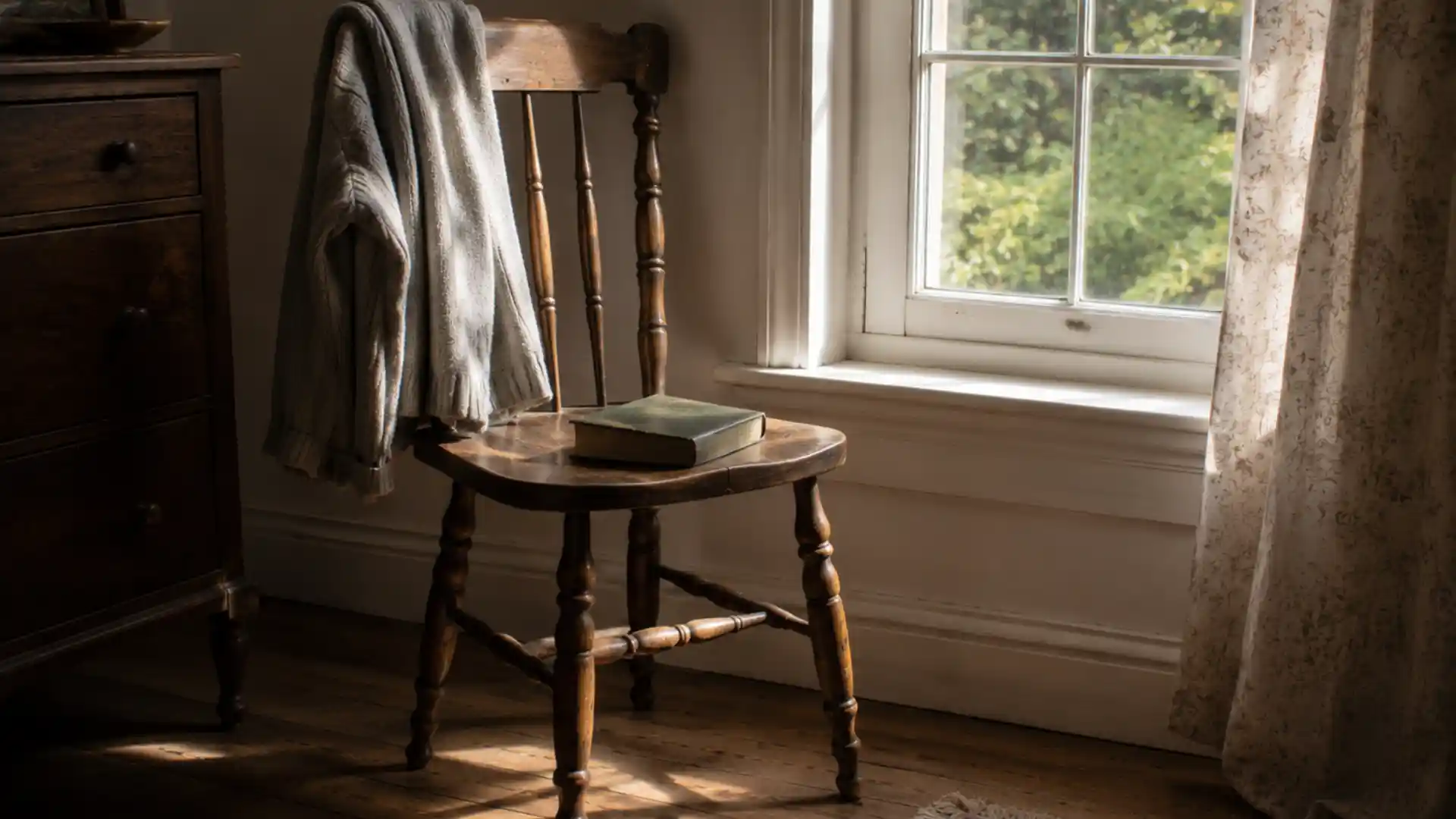
A chair beside a window, dresser, or fireplace makes more sense than one placed purely for styling.
Add a folded sweater, a book, or a small cushion only if it supports how the room is actually used.
Placement should follow logic, not just symmetry. A chair with no clear purpose tends to stand out as decor rather than blend into daily life.
14. Create a Dedicated Reading Place
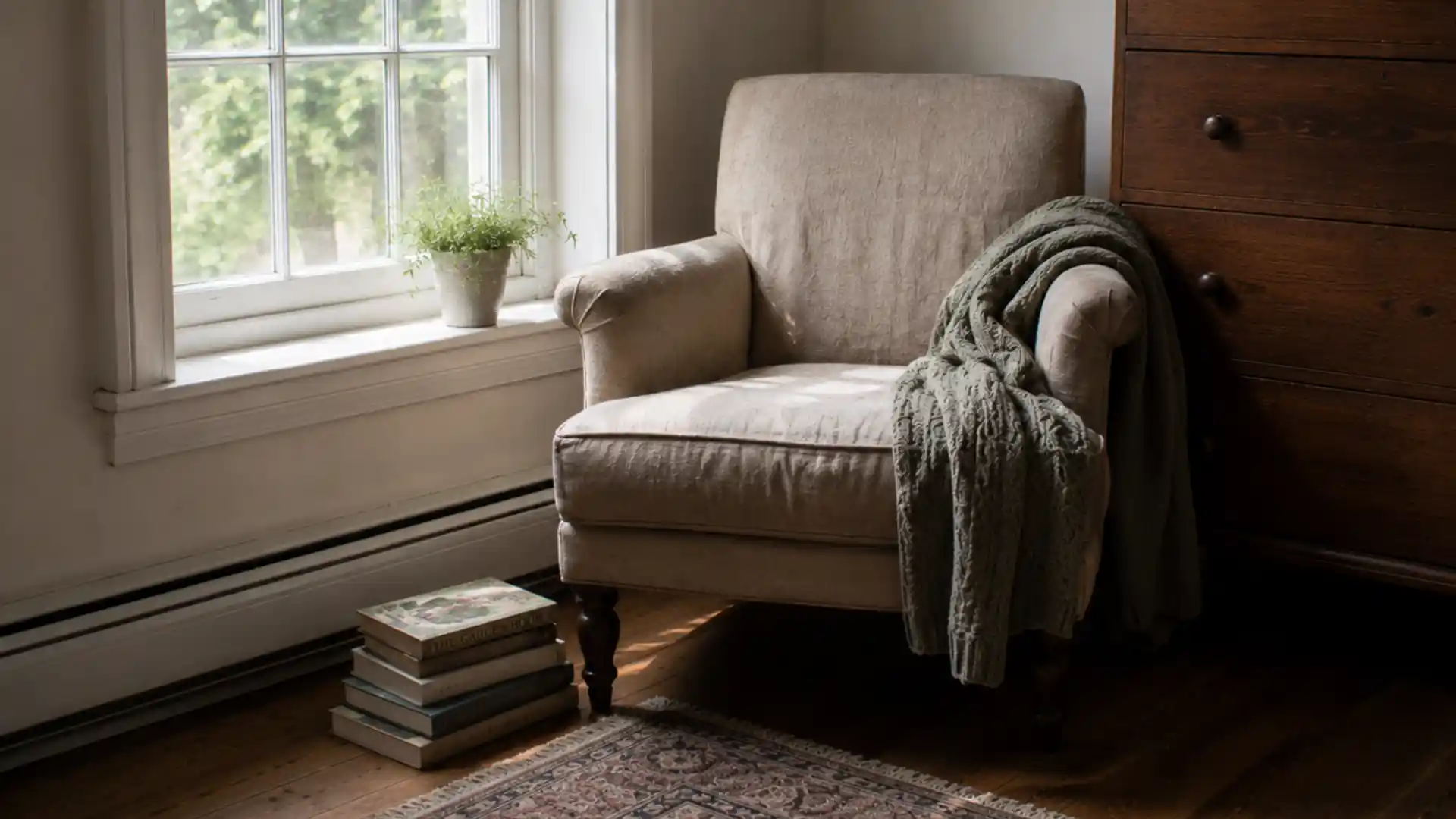
A cottage bedroom should invite slower activities beyond sleeping. A window seat, a small armchair, or a narrow chaise all work well.
The point is not simply adding a nook; it is giving the room a reason to be inhabited during the day too.
Even a modest corner with good light and a comfortable seat can shift how the whole room feels.
15. Make Room for Writing by Hand
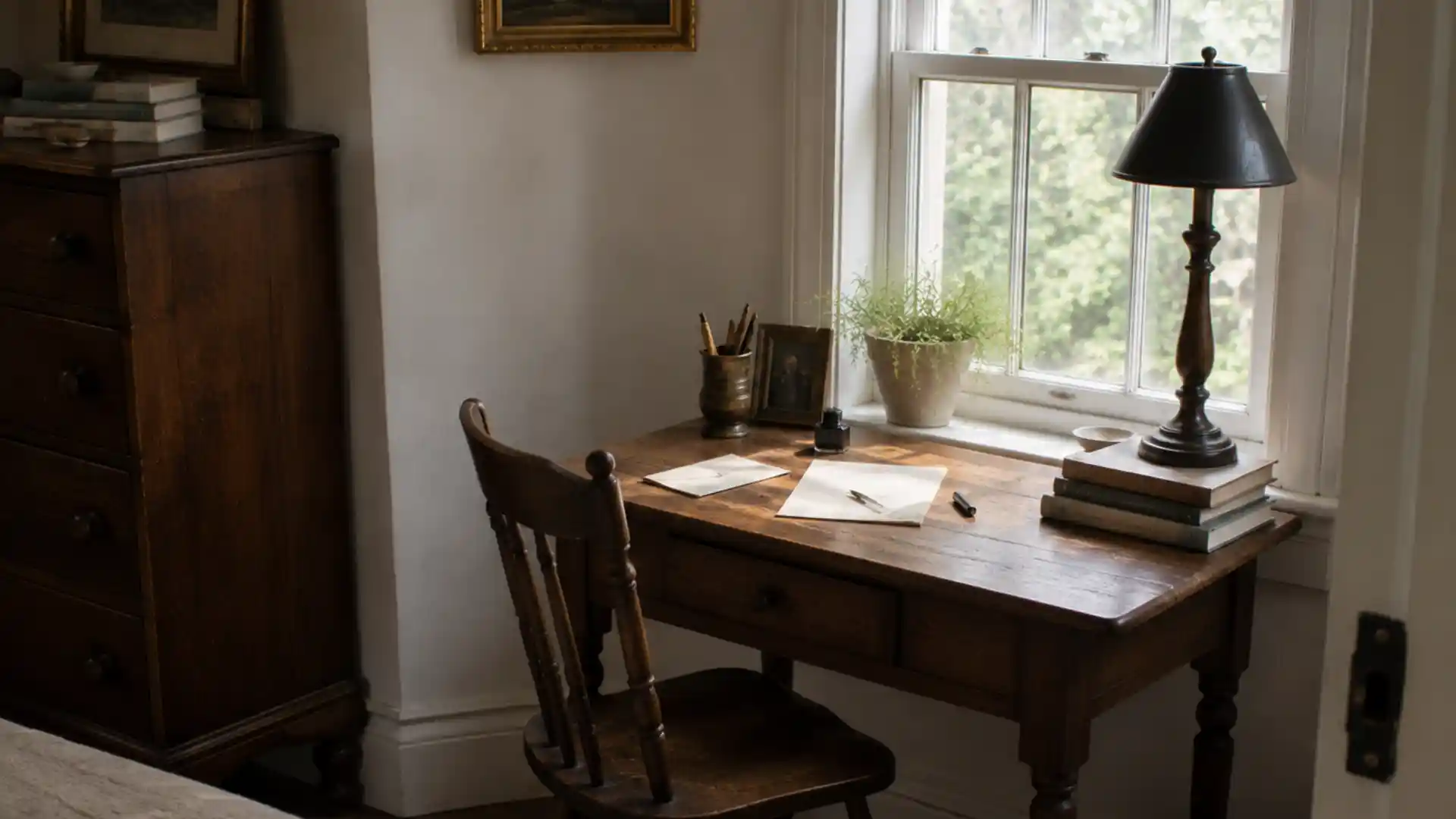
A small desk, a writing slope or even a bedside surface can introduce quiet, personal activity into the room.
Stationery, a few books and a practical lamp read as far more convincing than decorative desk clutter arranged for effect.
Real use beats staged props every time. This detail also nods to a slower, more analog pace that fits the cottagecore mood well.
16. Show Signs of Handwork
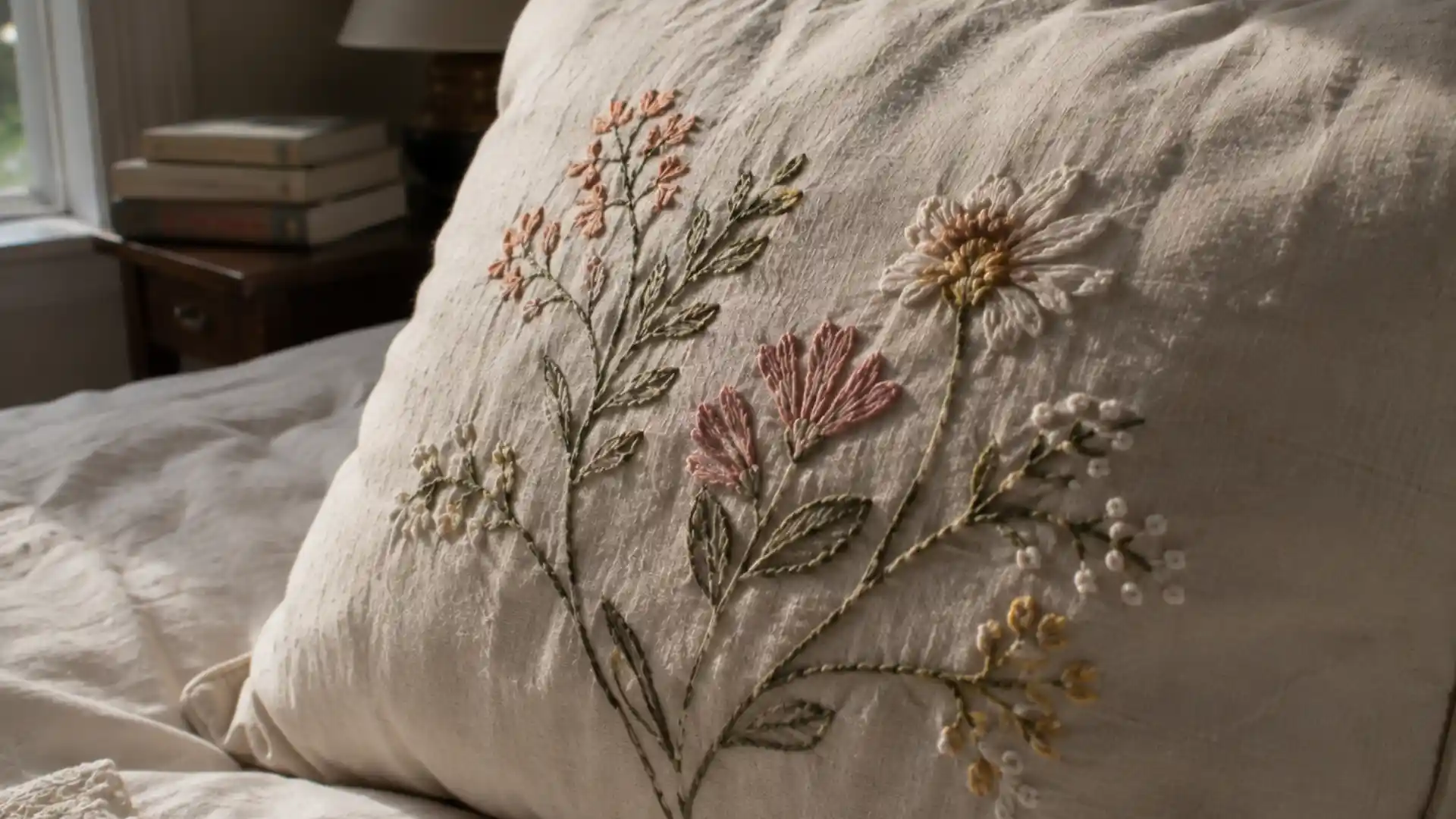
Skip manufactured cottagecore accessories in favor of something visibly handmade.
Embroidery, quilting, crochet, or even visible mending all connect the room to domestic craft rather than pure styling.
Handmade details carry weight that store-bought ones cannot replicate. Hand-painted furniture works here too, especially if the brushwork is a little uneven rather than machine-perfect.
17. Leave One Handmade Project Unfinished
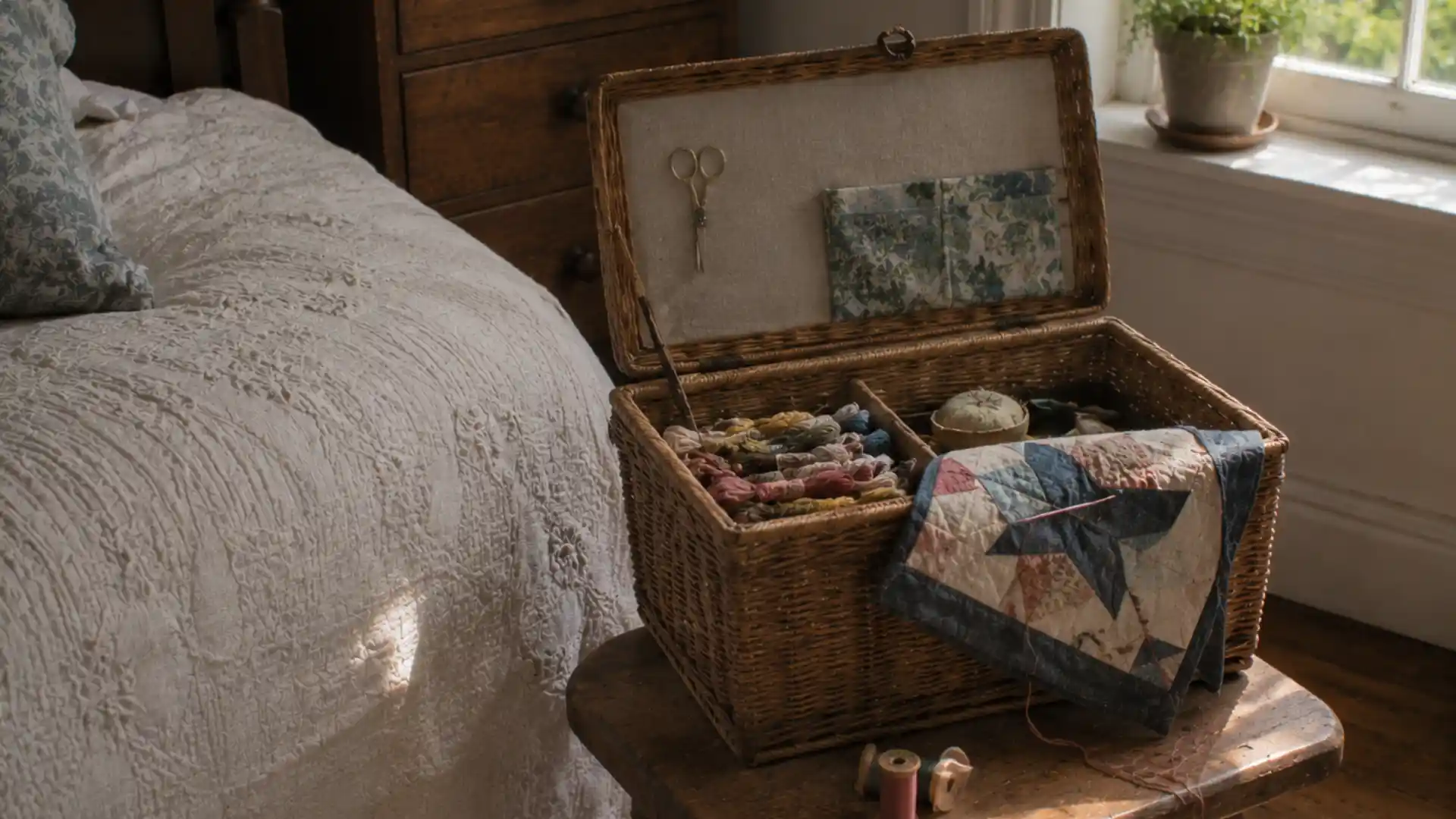
A basket of embroidery thread, a folded quilt still in progress, or an open sewing box can tell a more believable story than perfectly arranged crafts ever could.
Unfinished work suggests a real person lives there, actively making things rather than just displaying them.
This small touch is especially effective for photography, since it captures a moment rather than a static arrangement.
18. Display Things That Are Being Preserved
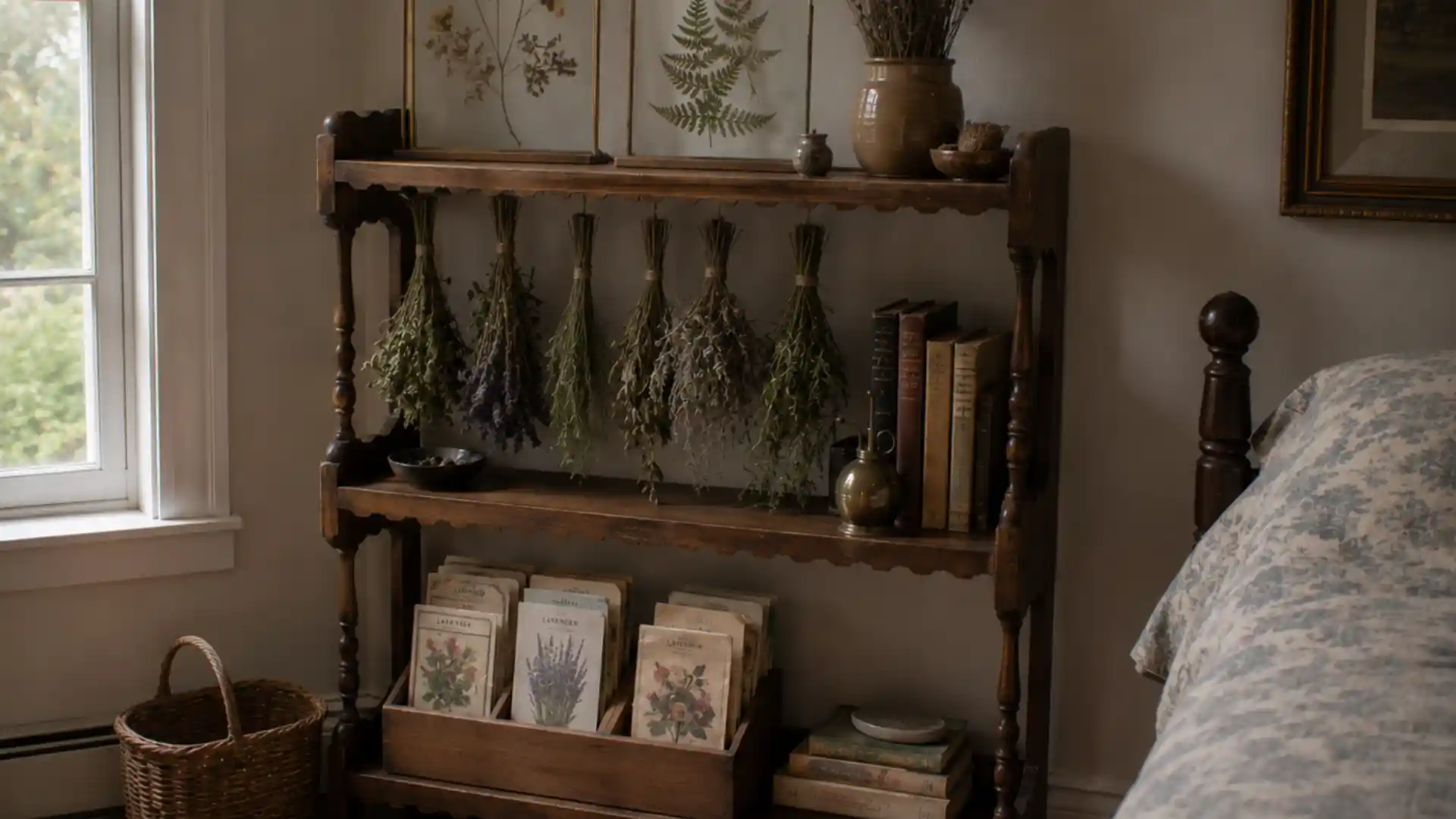
Cottage life has always involved preserving things from the garden or household. Pressed flowers, dried herbs, seed packets, and collected leaves all work well here.
The key distinction matters: these objects should look saved, not purchased as decor.
A seed packet from an actual planting season reads very differently than one bought new for the shelf.
19. Let the Seasons Change the Bedroom
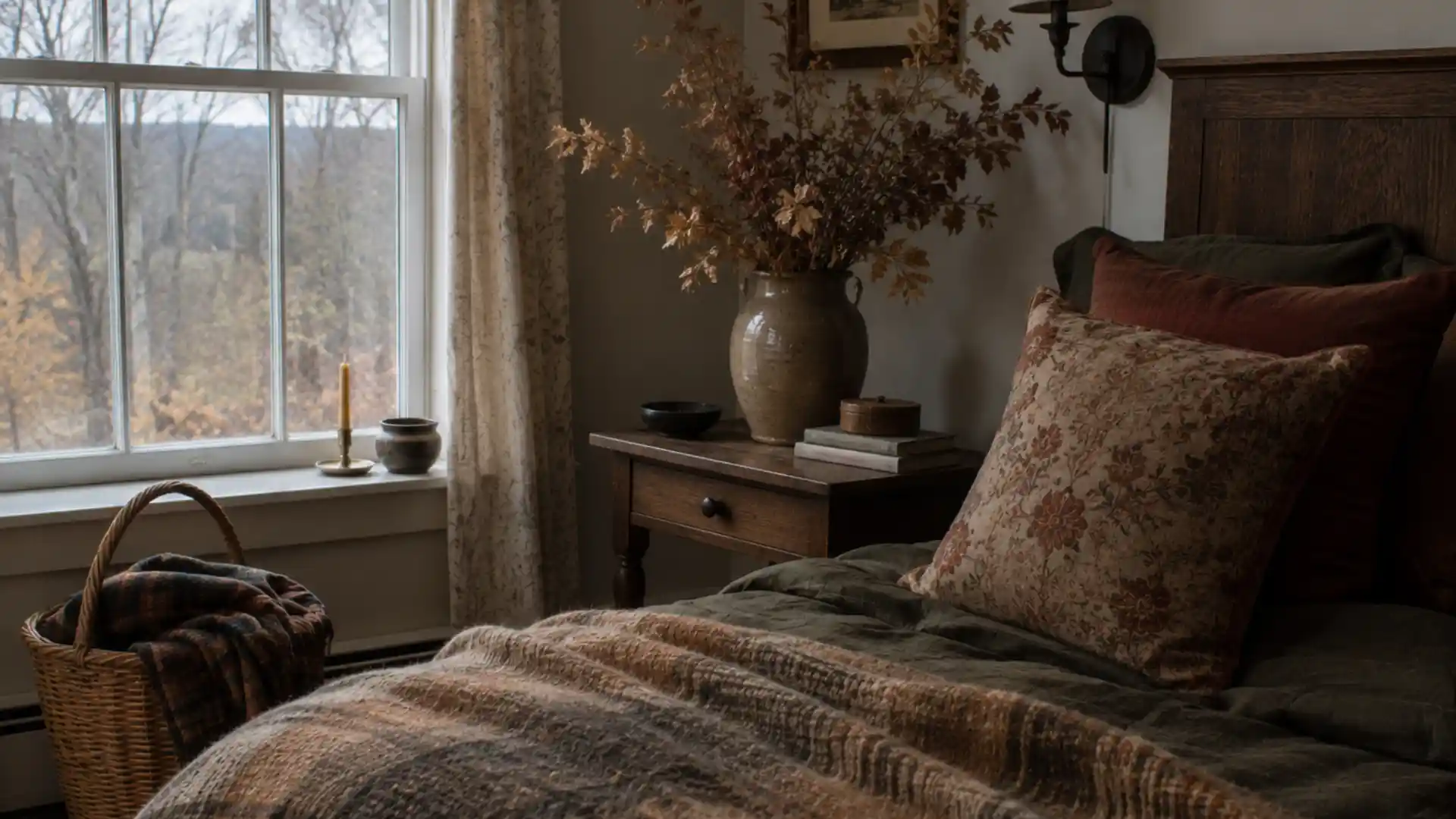
A cottagecore room should not look identical in July and January.
Spring calls for fresh stems and lighter textiles, summer for airy cotton and open windows. Fall leans into wool and deeper colors, while winter brings heavier quilts and candlelight.
Seasonal shifts connect the room to a real rhythm rather than a fixed, unchanging display.
20. Bring the Garden In Sparingly
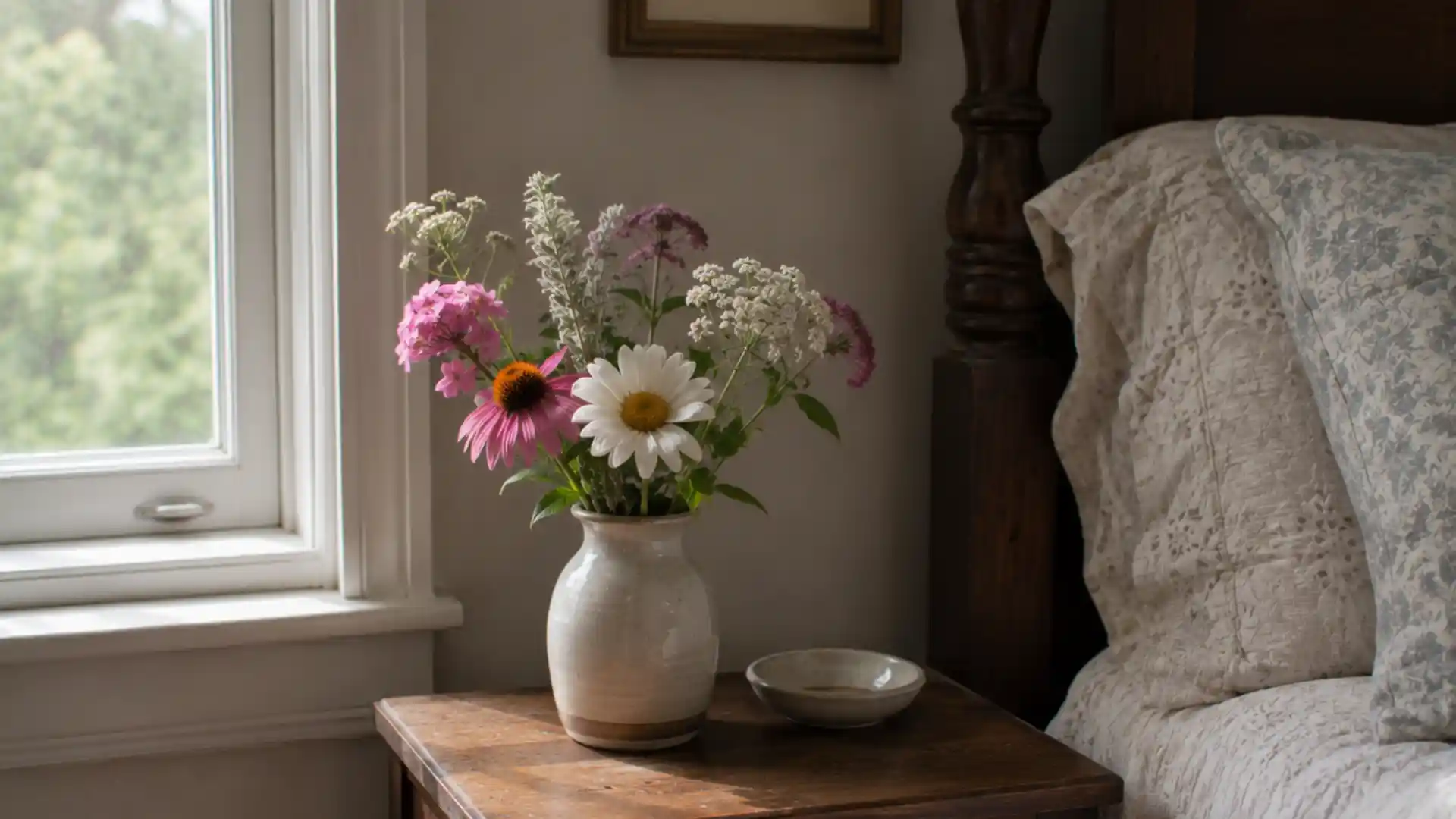
Skip the artificial vines and let nature enter through real materials and seasonal cuttings instead.
A small vase of actual garden flowers, even a modest one, reads as more convincing than a wall of faux greenery ever will. Restraint here does more than abundance.
The goal is a believable connection to the outdoors, not an indoor recreation of a greenhouse.
21. Make the Garden Visible From Bed
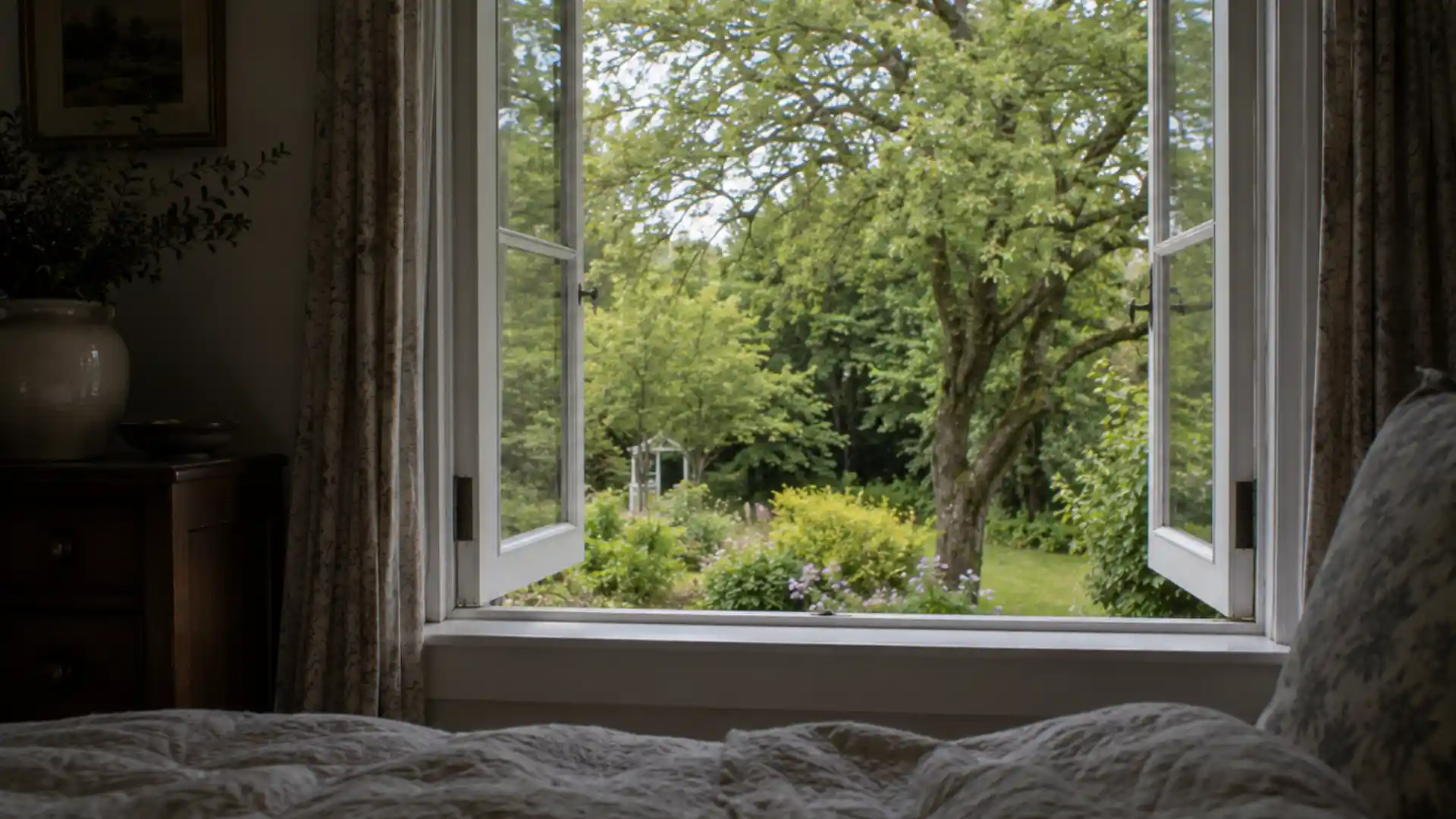
Where the layout allows, orient the room so the first view each morning includes a tree, garden, or hedgerow.
This is a layout decision more than a decorating one, and it shapes how the room feels before any furniture goes in.
Even a partial view through a window can set the tone for the entire space.
22. Use Materials That Reveal Their Age
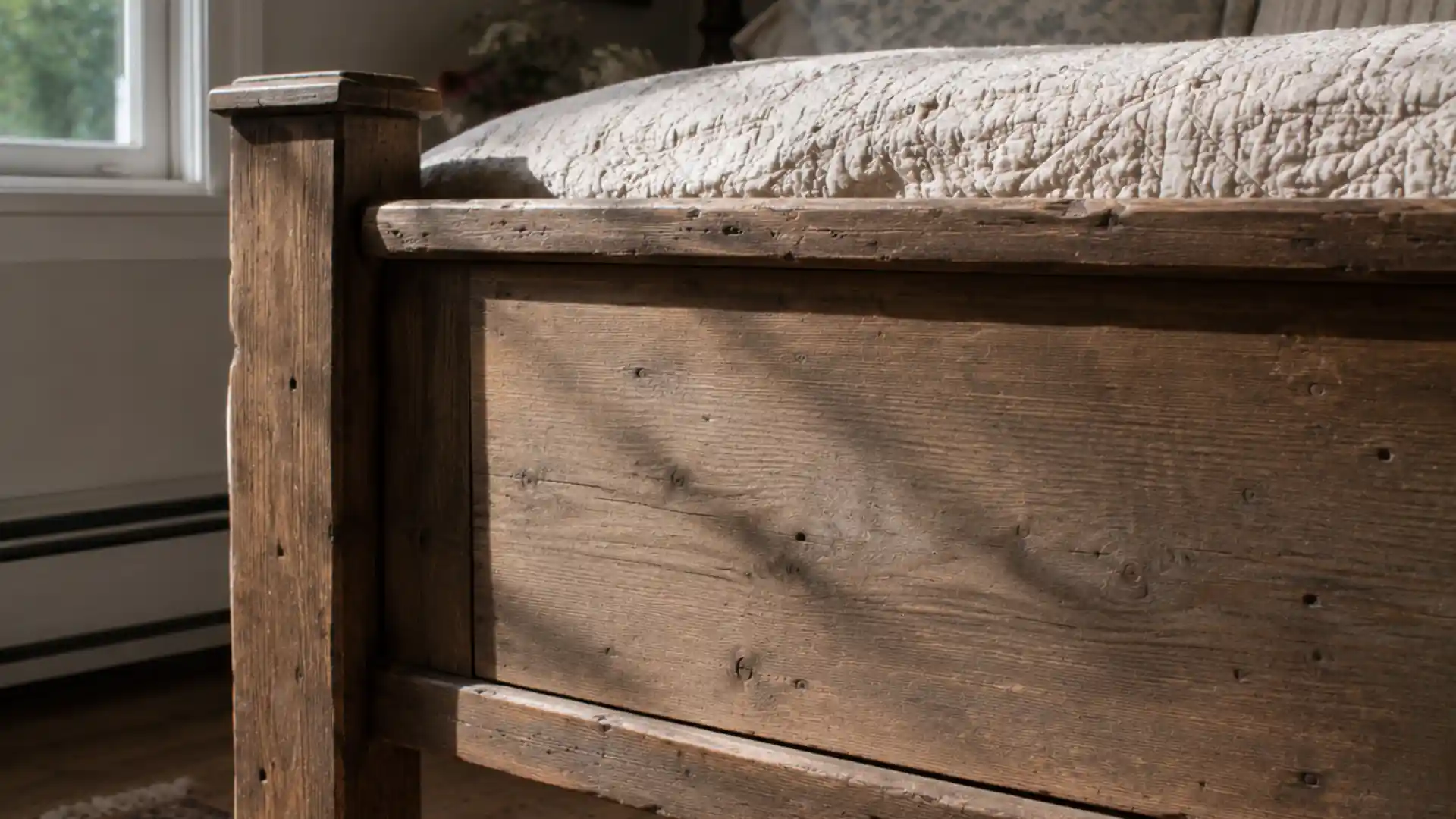
Choose finishes that show grain, knots, brush marks, or a bit of worn edge rather than a perfectly uniform surface.
Modern materials can still work in a cottagecore room, but the look benefits when nothing looks factory-fresh.
Slight color variation across wood pieces, for instance, often reads as more authentic than a single matched finish.
23. Let the Floor Look Like a Floor, Not a Feature
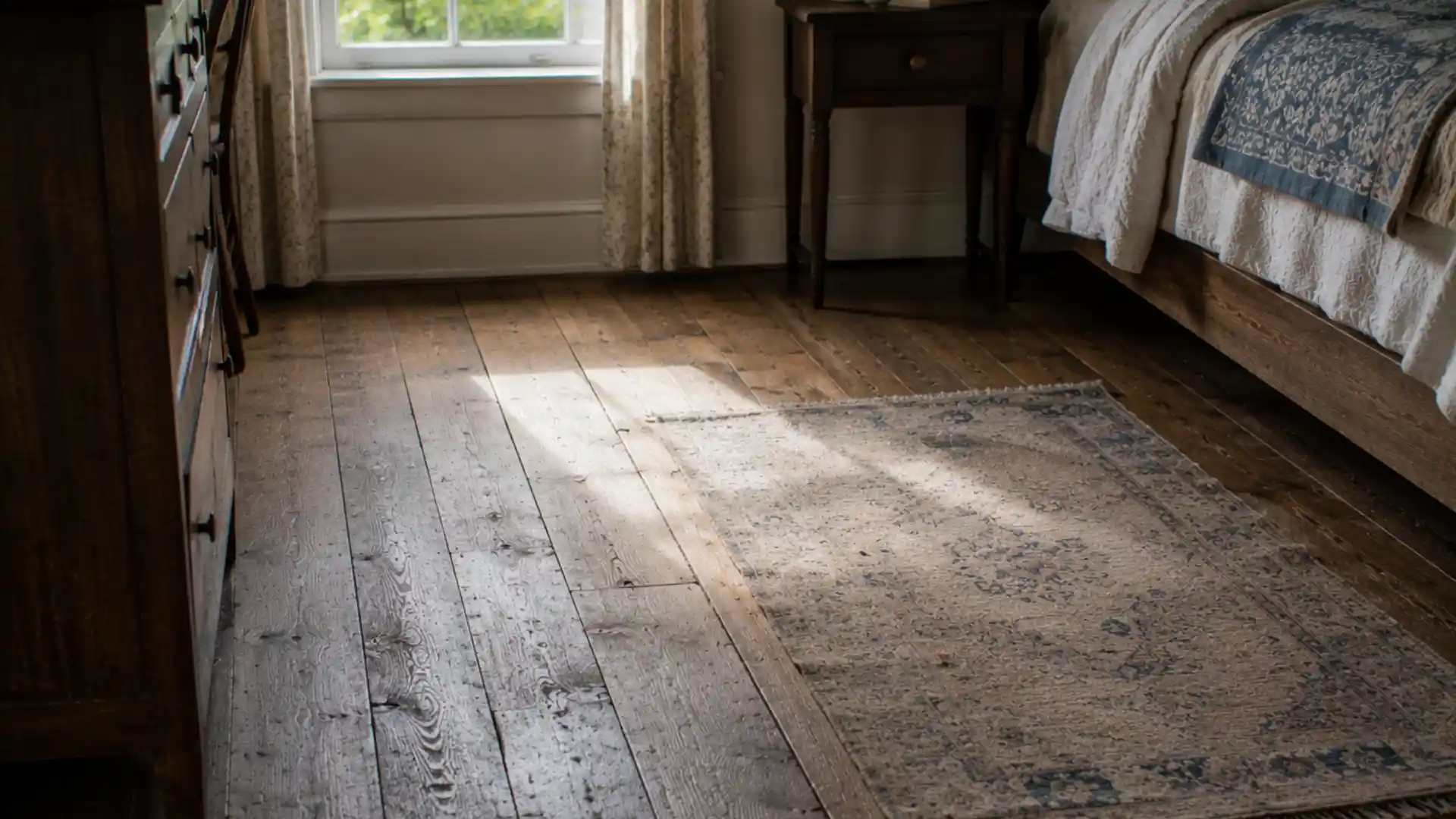
Old timber, painted boards, stone, or a simple natural rug create far more character than an overly decorated floor.
Restraint on the floor keeps the room from feeling overworked.
When every surface competes for attention, including the one underfoot, the room starts to feel cluttered instead of collected.
24. Treat the Ceiling as Part of the Cottage
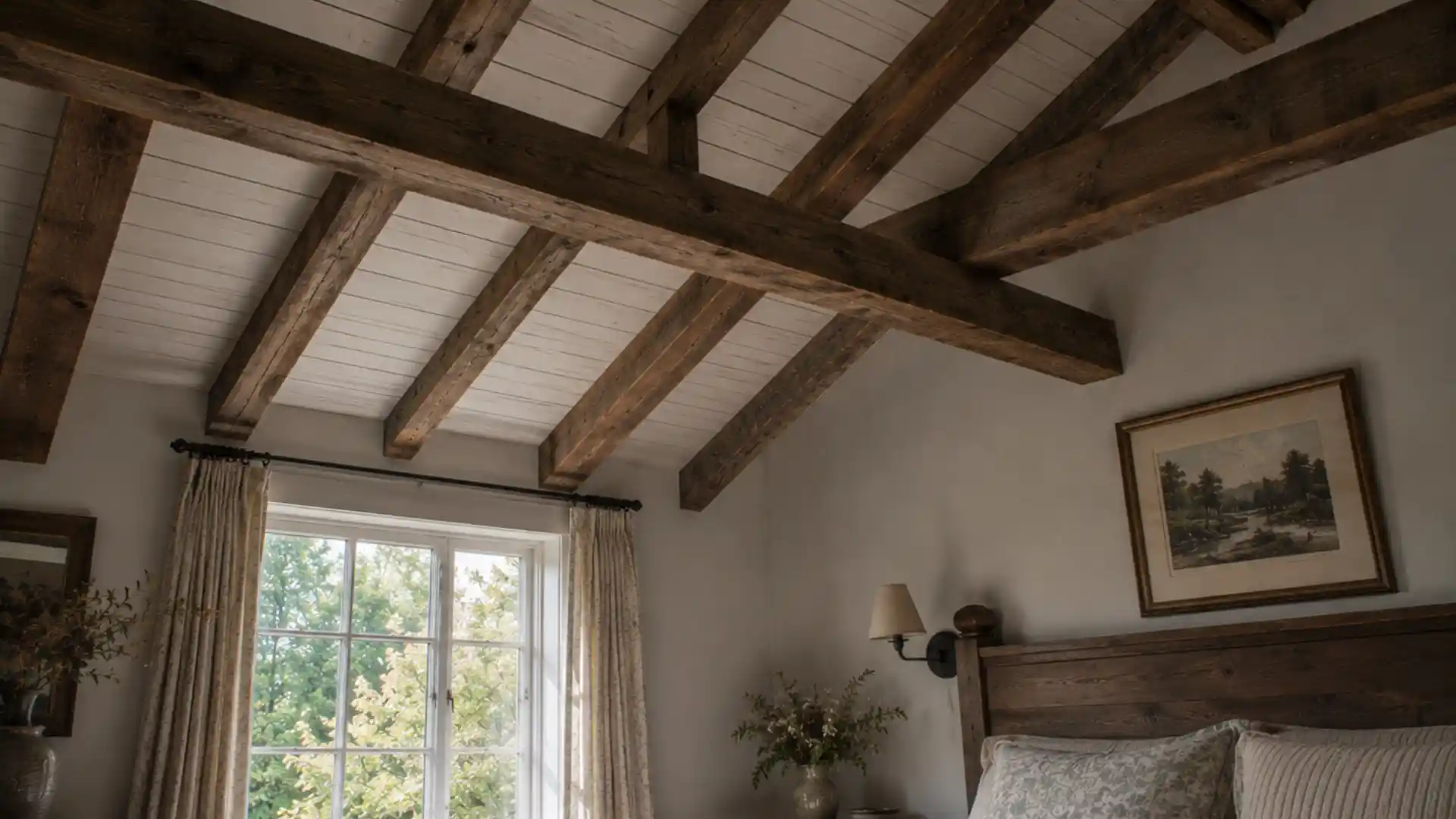
Beams, sloping rafters, or tongue-and-groove boards should be preserved rather than boxed in.
These structural quirks are part of what makes an older room feel specific to its own history.
A room should not hide the details that make it interesting, even if they are technically imperfect by modern standards.
25. Choose Lighting for Evening Life
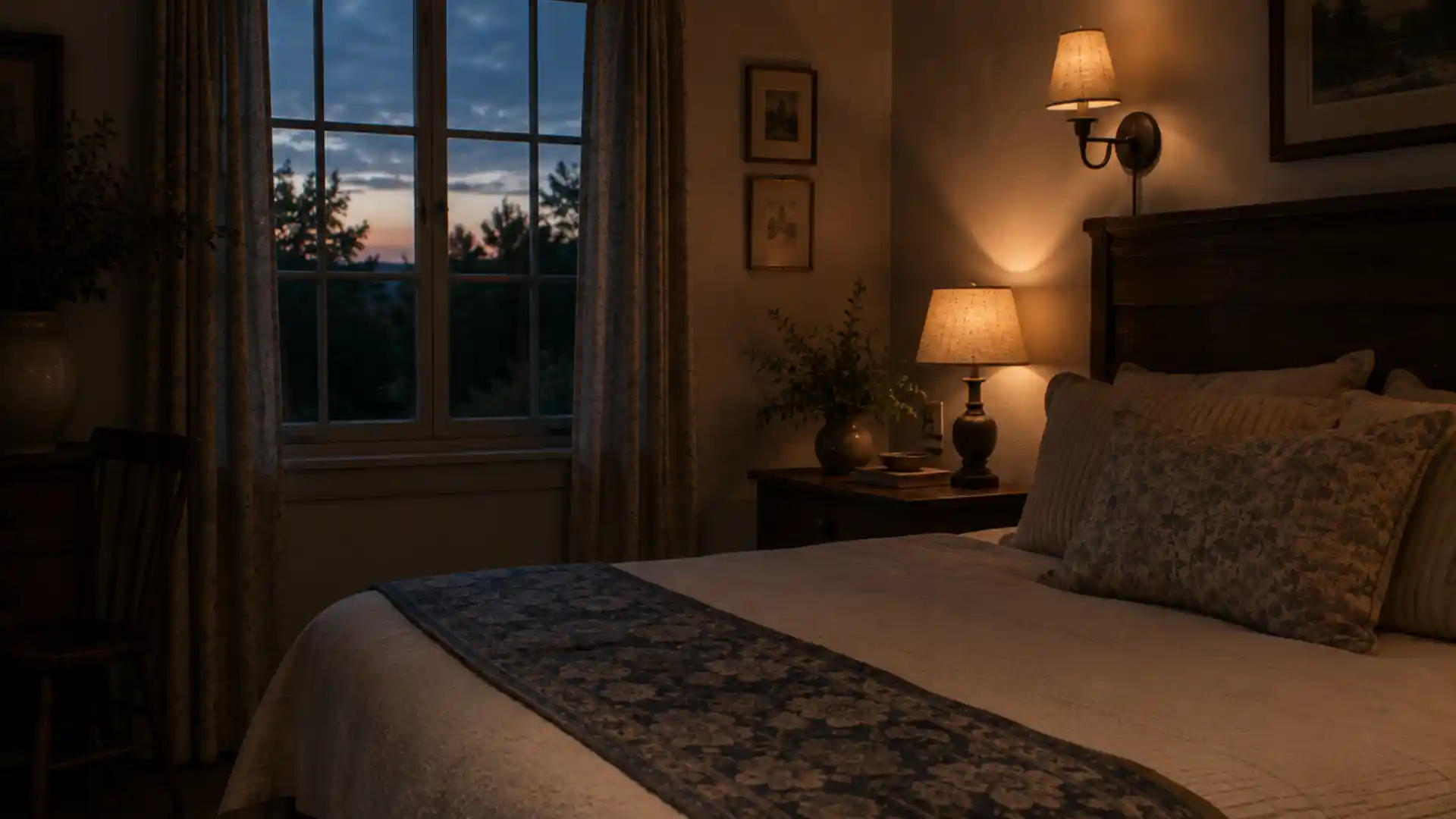
Think about what actually happens in the room after sunset, like reading in bed, dressing, or simply walking through in low light.
Warm table lamps, sconces, or fabric shades suit these moments better than one central ceiling fixture.
Layered, warm lighting supports real evening habits, and it is a detail most current bedroom design advice agrees on, too.
26. Let One Lamp Look Like It Came From Somewhere Else
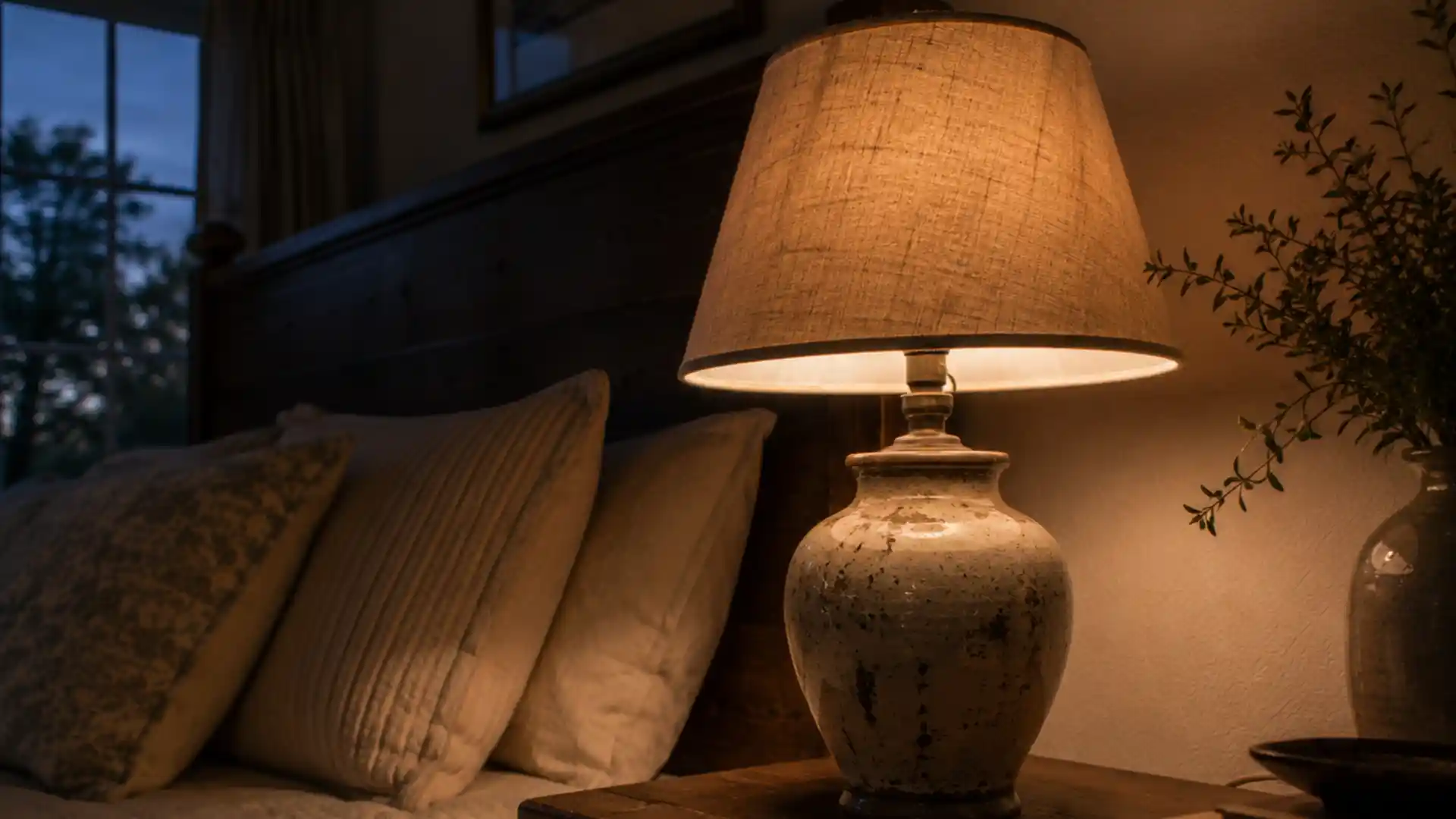
A secondhand lamp, an old ceramic base, or an inherited shade adds a bit of unpredictability that perfectly coordinated lighting lacks.
One mismatched piece can carry more personality than a matching set.
It also signals that the room was built over time, picking up objects along the way rather than furnishing everything at once.
27. Make the Walls Tell a Personal Story
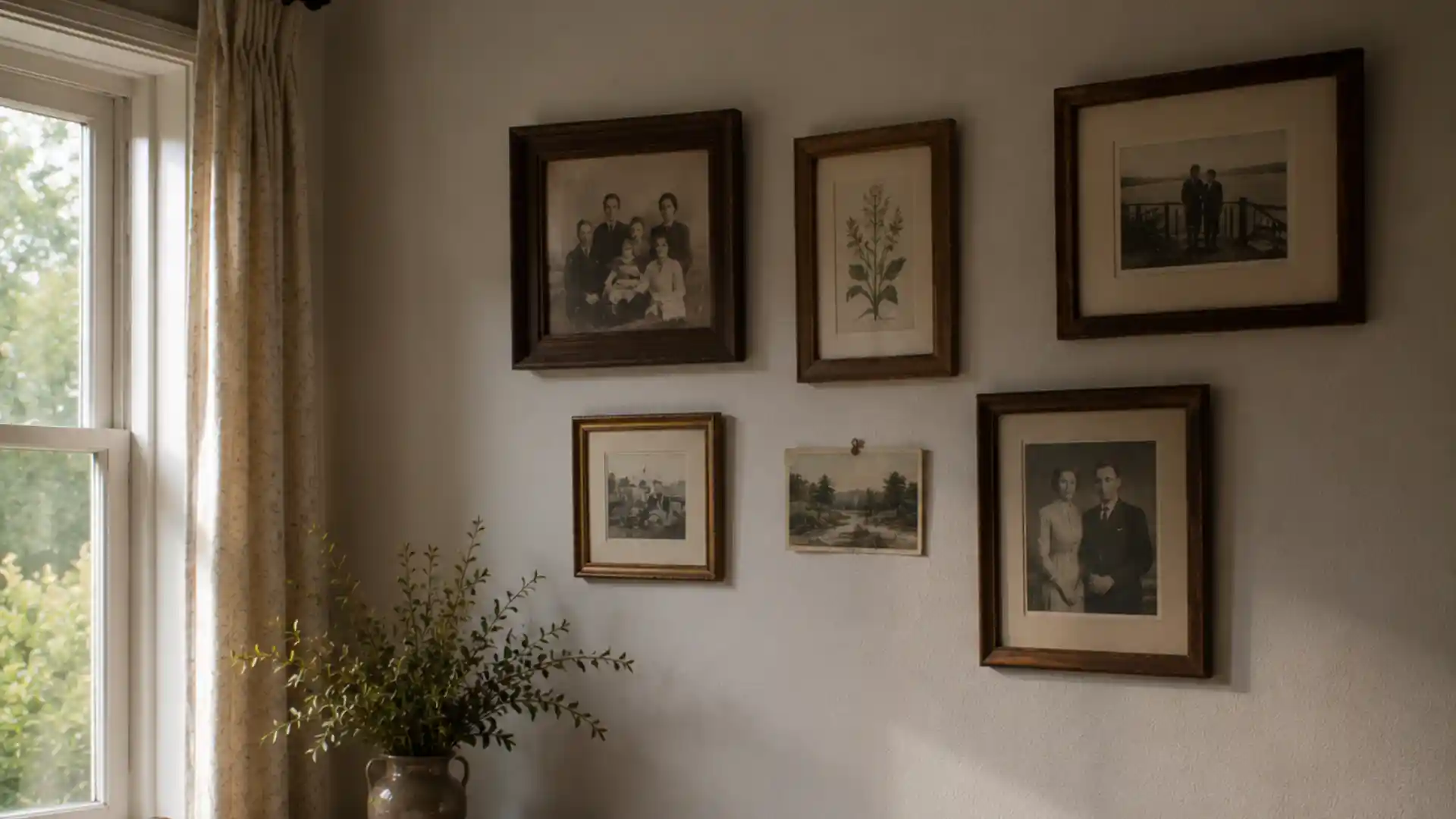
Skip the generic gallery wall in favor of things that plausibly belong to whoever lives there.
Family photographs, old maps, postcards, or a child’s drawing all work here. Walls should reflect the people in the room, not a curated aesthetic pulled from somewhere else entirely.
Even one unexpected item, like an old letter or a pressed leaf, adds real specificity.
28. Hang Art That Looks Like It Was Collected
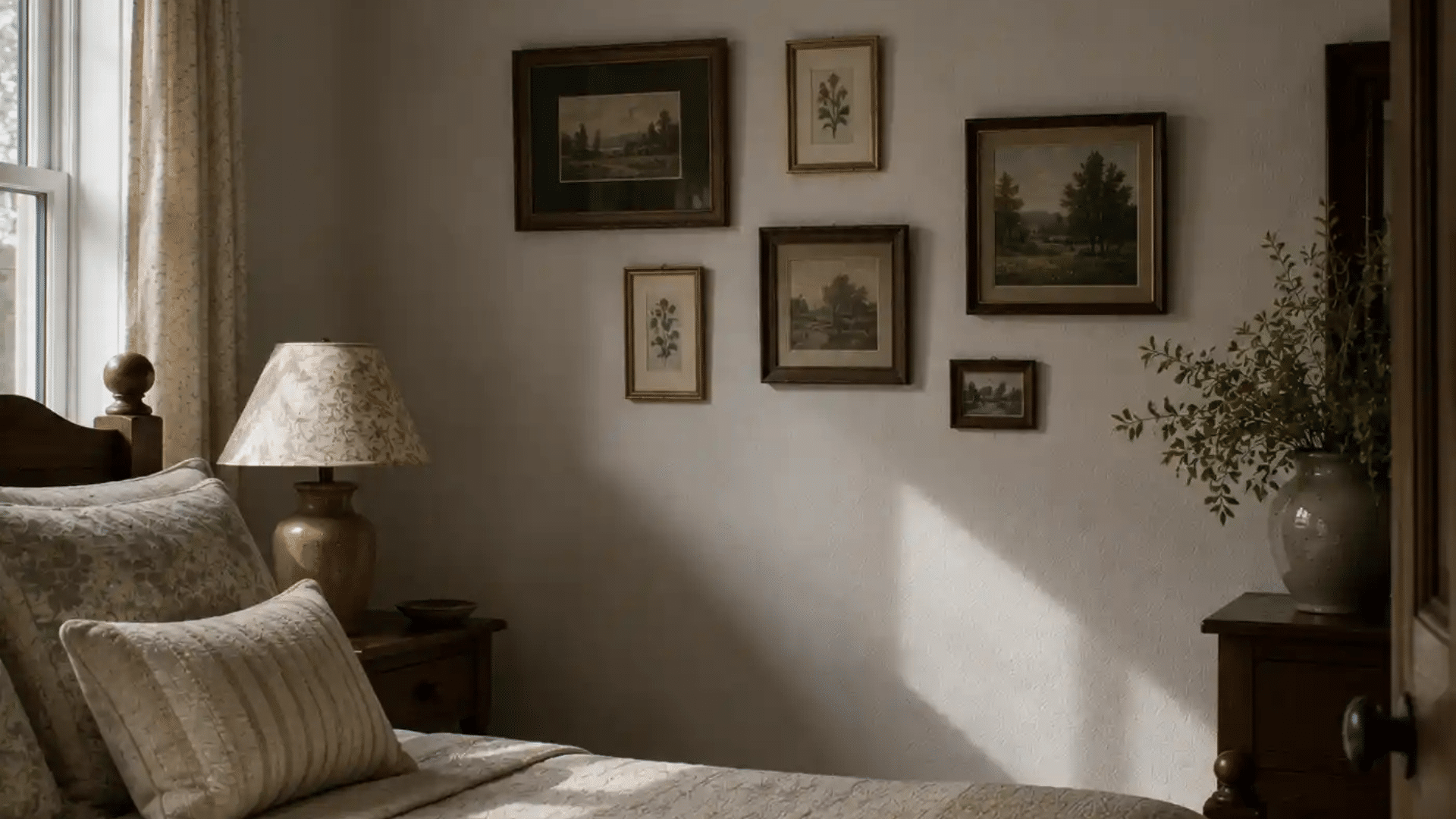
The frames don’t need to match, and the artwork can vary in scale, period, and subject, as long as a loose visual thread ties it together.
Variety reads as collected, not chaotic, when a consistent feeling runs underneath it.
This reflects how real art collections tend to grow, a piece at a time, rather than arriving as a set.
29. Give the Bedroom a Sense of Local Place
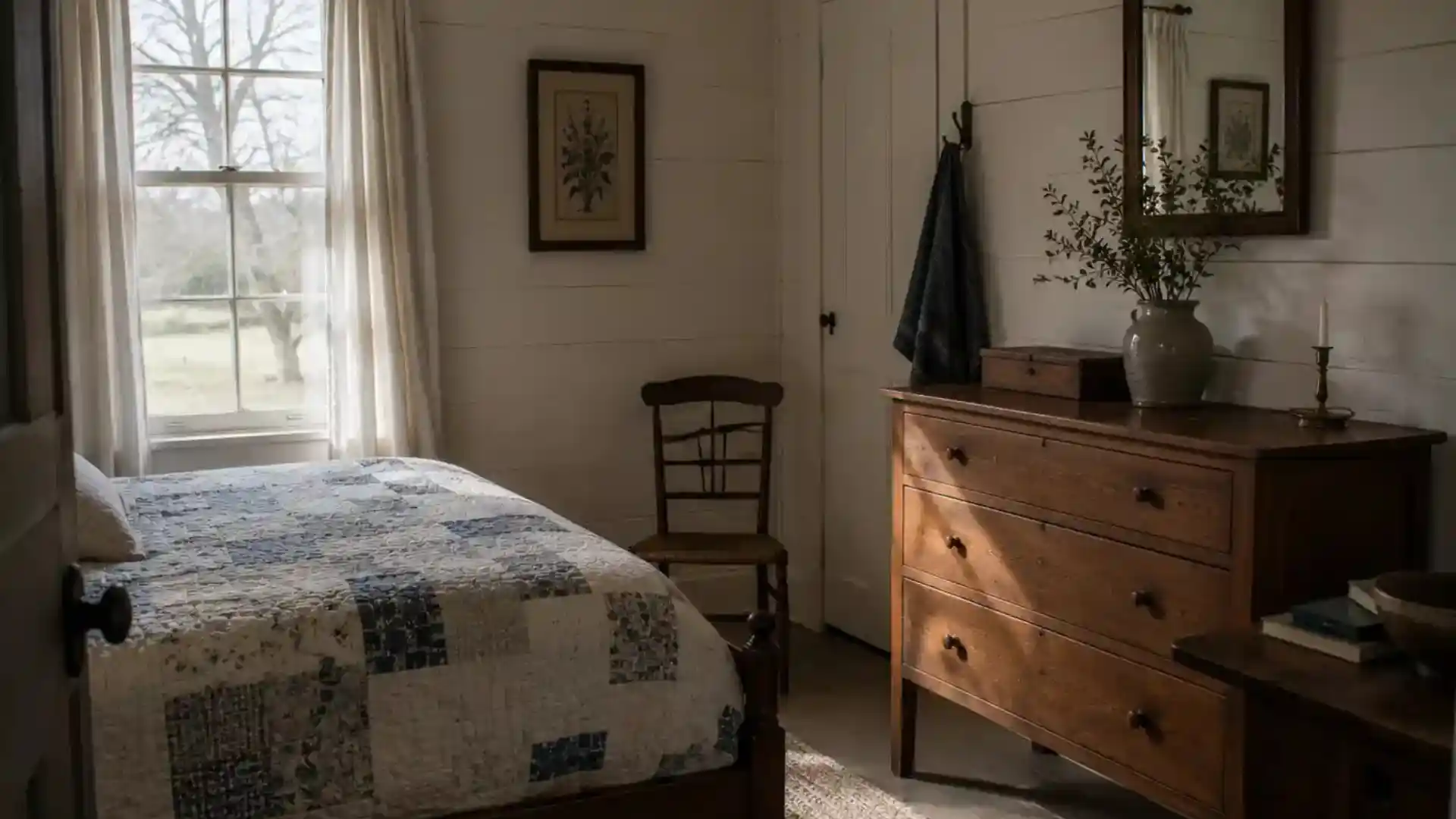
This is one of the better ways to move past generic, Pinterest-style cottagecore.
A New England-leaning room might use painted timber and Shaker-influenced furniture, while an English cottage interpretation leans into chintz and painted furniture.
An Appalachian take might emphasize handmade textiles and mountain craft traditions. No single regional style defines the whole aesthetic, and blending local references often makes a room feel more specific and less generic.
30. Use Practical Objects as Decoration
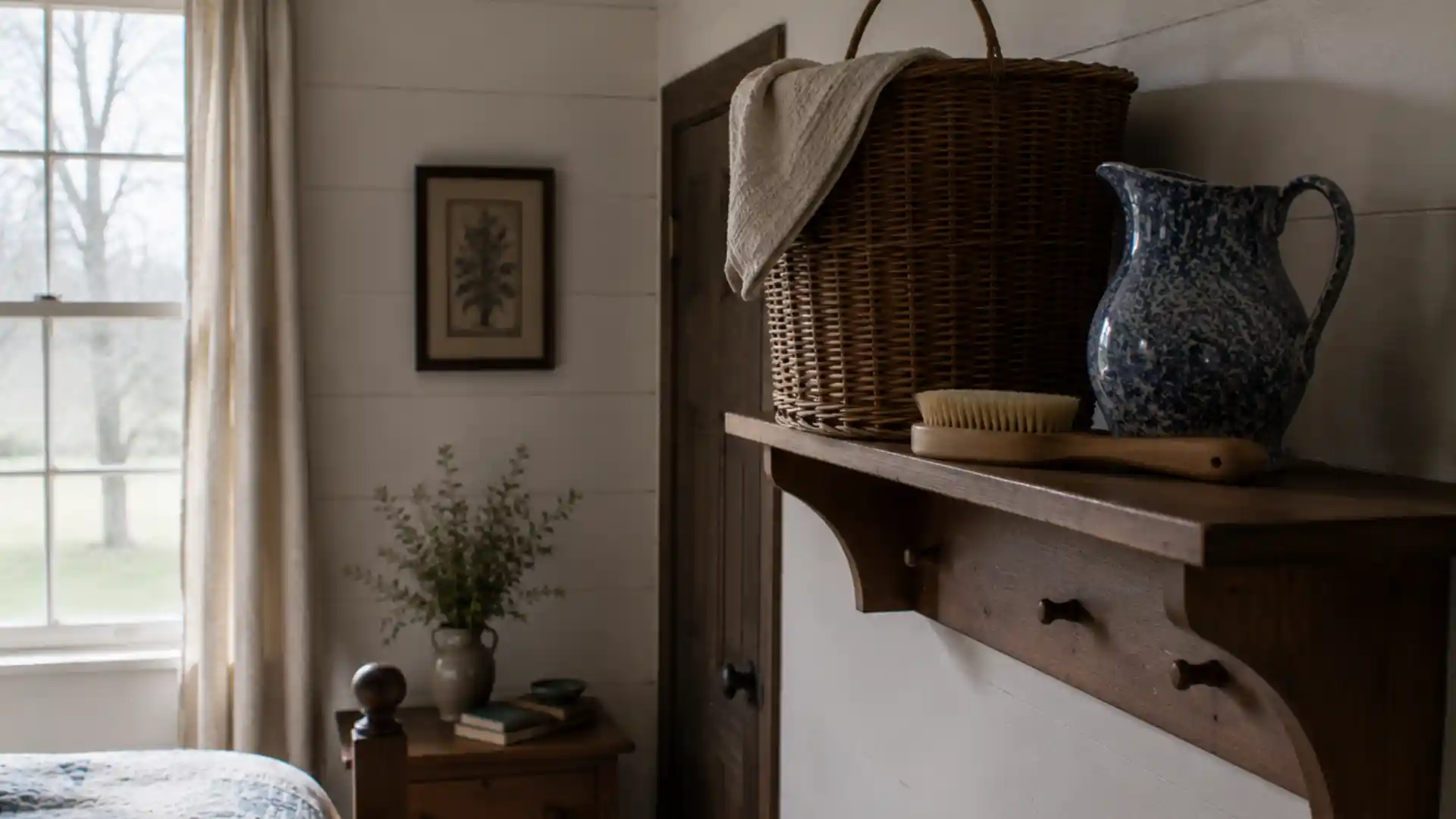
The most convincing cottage interiors tend to have beautiful things because they are useful, not because they were bought purely for styling.
A woven laundry basket, a ceramic pitcher, or a wooden clothes brush all qualify.
Function and beauty are not separate goals here; they are the same goal. Objects that do real work in the room tend to earn their place more naturally than pure decoration.
31. Allow Objects to Repeat Naturally
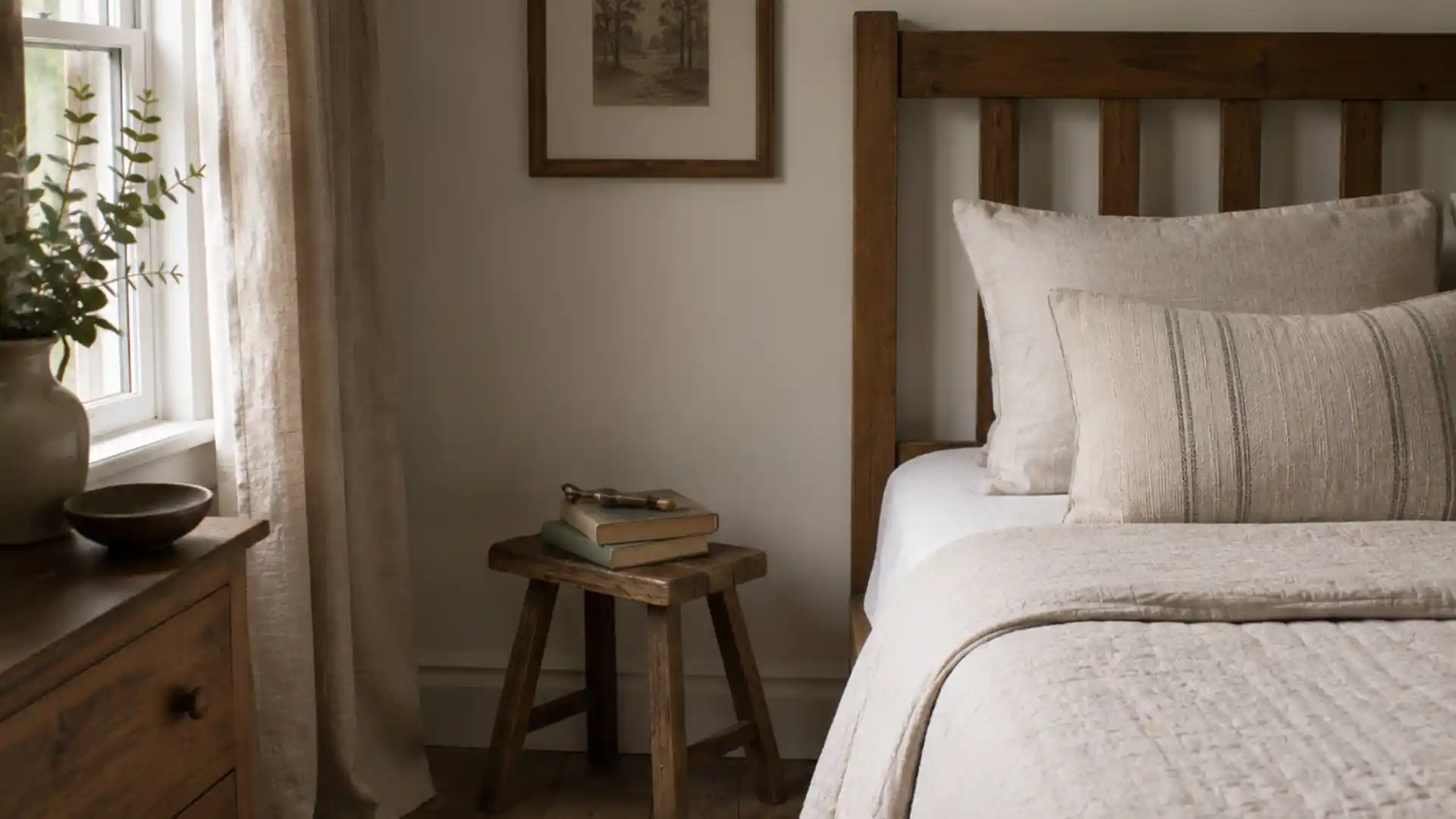
A cottage bedroom does not need dozens of unrelated accessories scattered around.
Instead, repeat materials through actual use, like wood across furniture and a frame, or ceramic across a lamp and a small vase.
Repetition through function creates cohesion without ever needing to buy a matching set. This approach also tends to look more intentional than a room filled with one-off decorative pieces.
32. Break Symmetry on Purpose
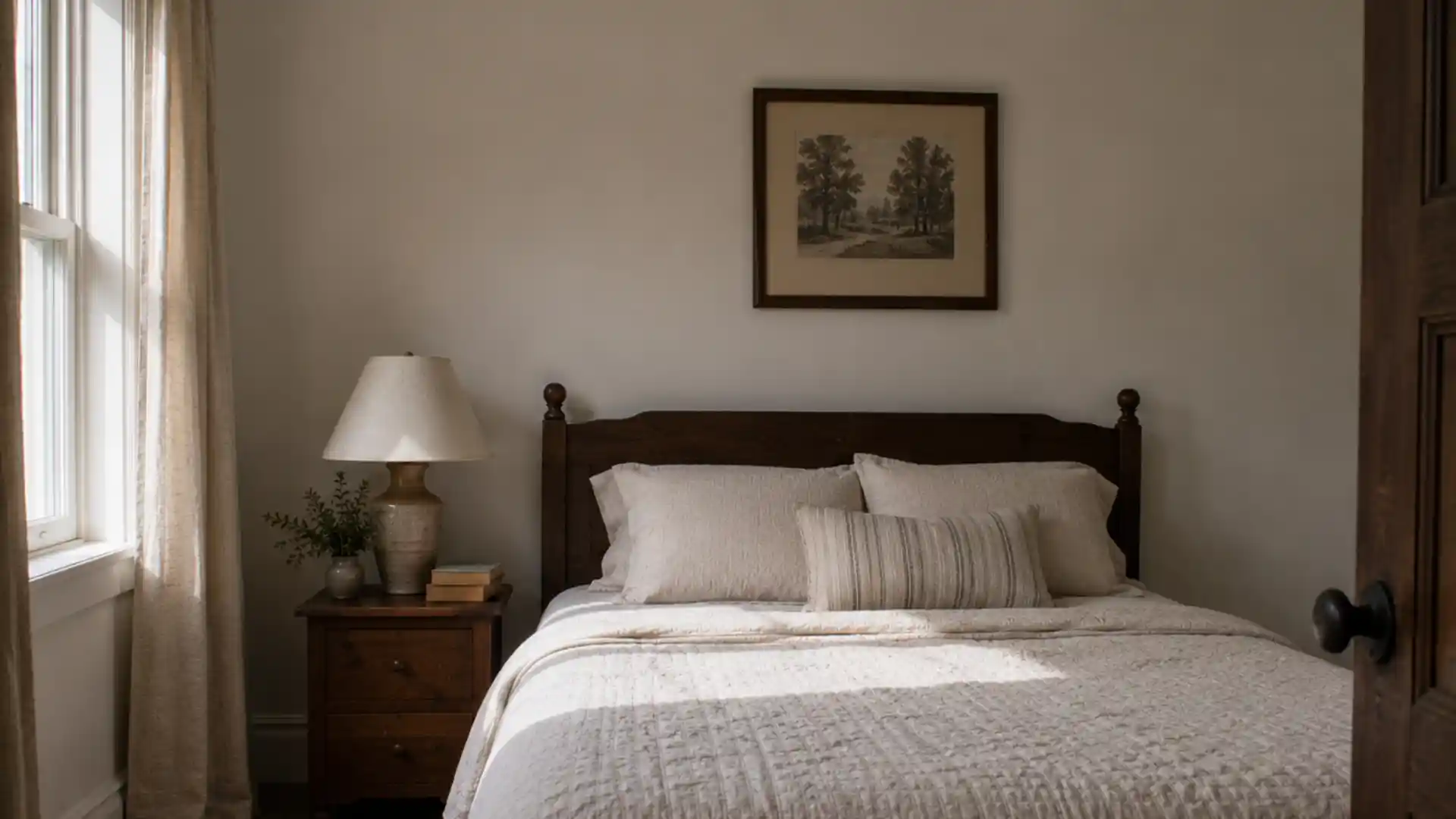
Use a single nightstand instead of a matching pair. Place artwork slightly off-center, or let one chair sit alone in a corner.
Perfect symmetry can read as professionally installed, while a bit of imbalance feels more like a room that evolved naturally.
This is a small adjustment, but it changes the overall impression of the space more than most people expect.
33. Resist the Urge to Fill Every Empty Surface
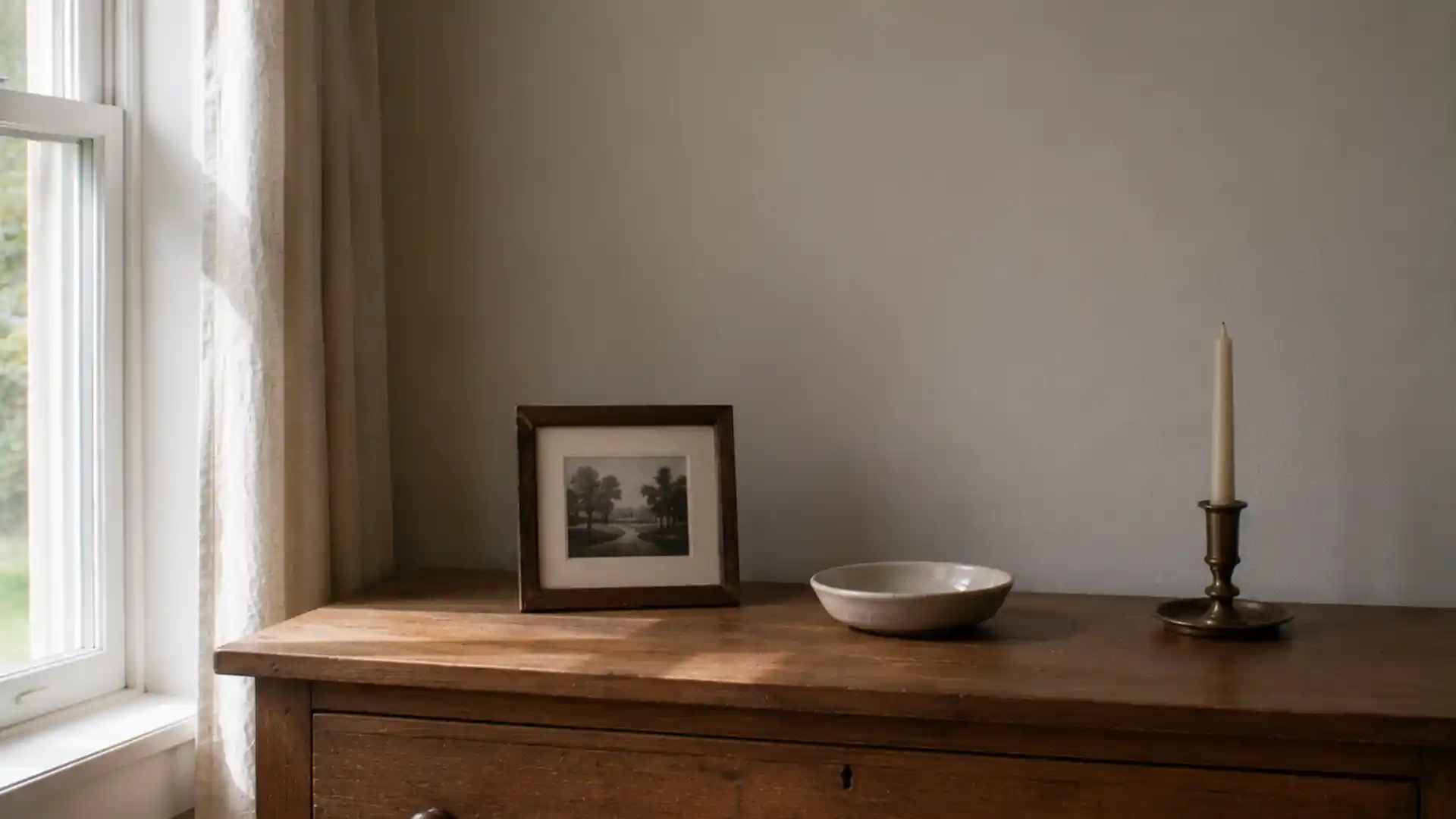
Negative space matters just as much as the objects in the room. An authentic cottage bedroom tends to have practical clutter rather than decorative clutter piled on for effect.
One dresser with three meaningful objects says more than a shelf crowded with dozens of small accessories.
Leaving some surfaces bare also gives the meaningful pieces room to actually stand out.
34. Keep One Modern Convenience Completely Unhidden
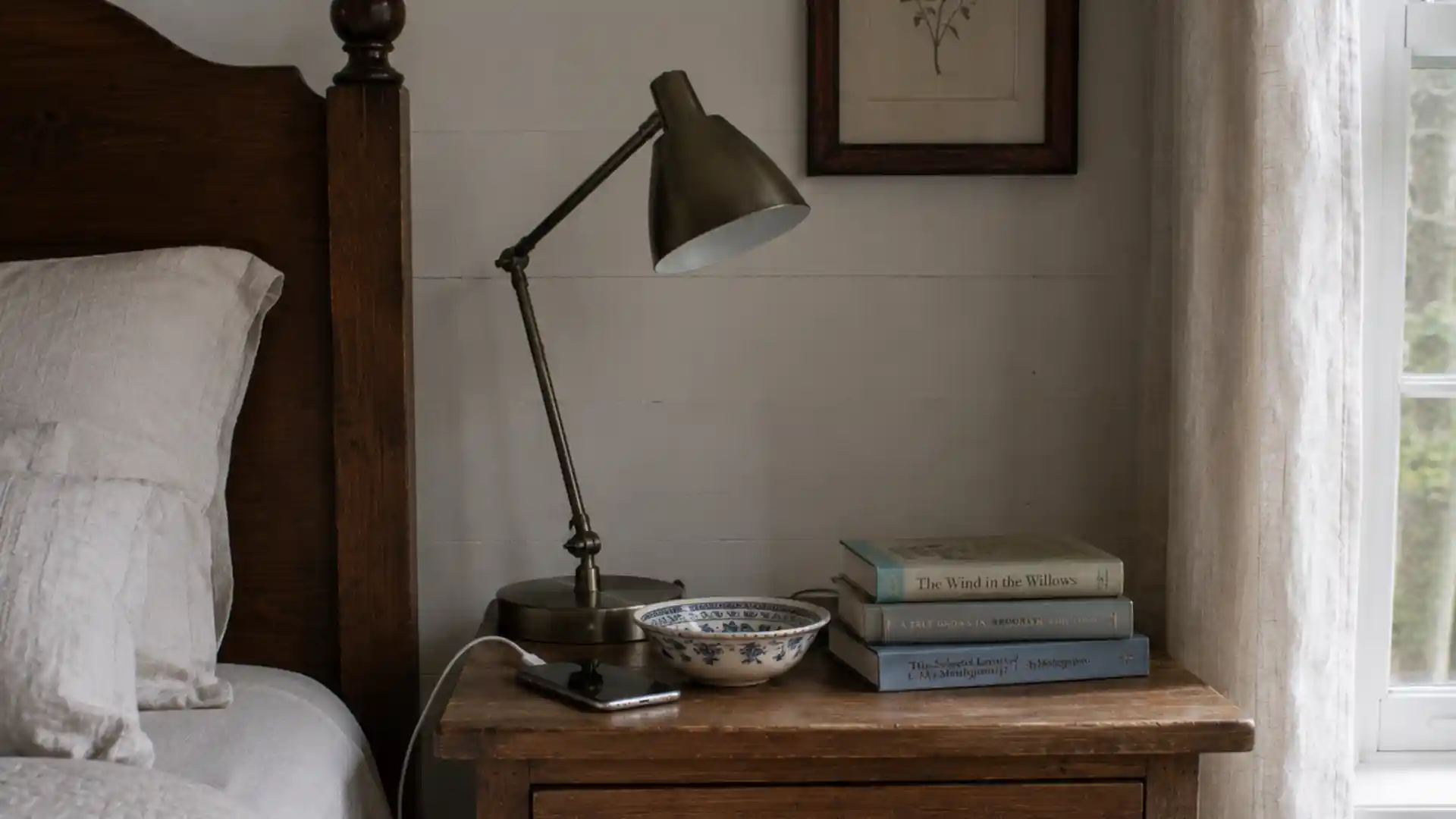
Cottagecore does not require pretending modern life does not exist.
A visible reading light, a discreet outlet, or a simple charging setup can sit comfortably next to older, traditional pieces.
The goal is a modern home with cottage character, not a historical reenactment of a room from another century. Hiding every modern object often feels more forced than letting a few stay visible.
35. Make the Room Slightly Imperfect
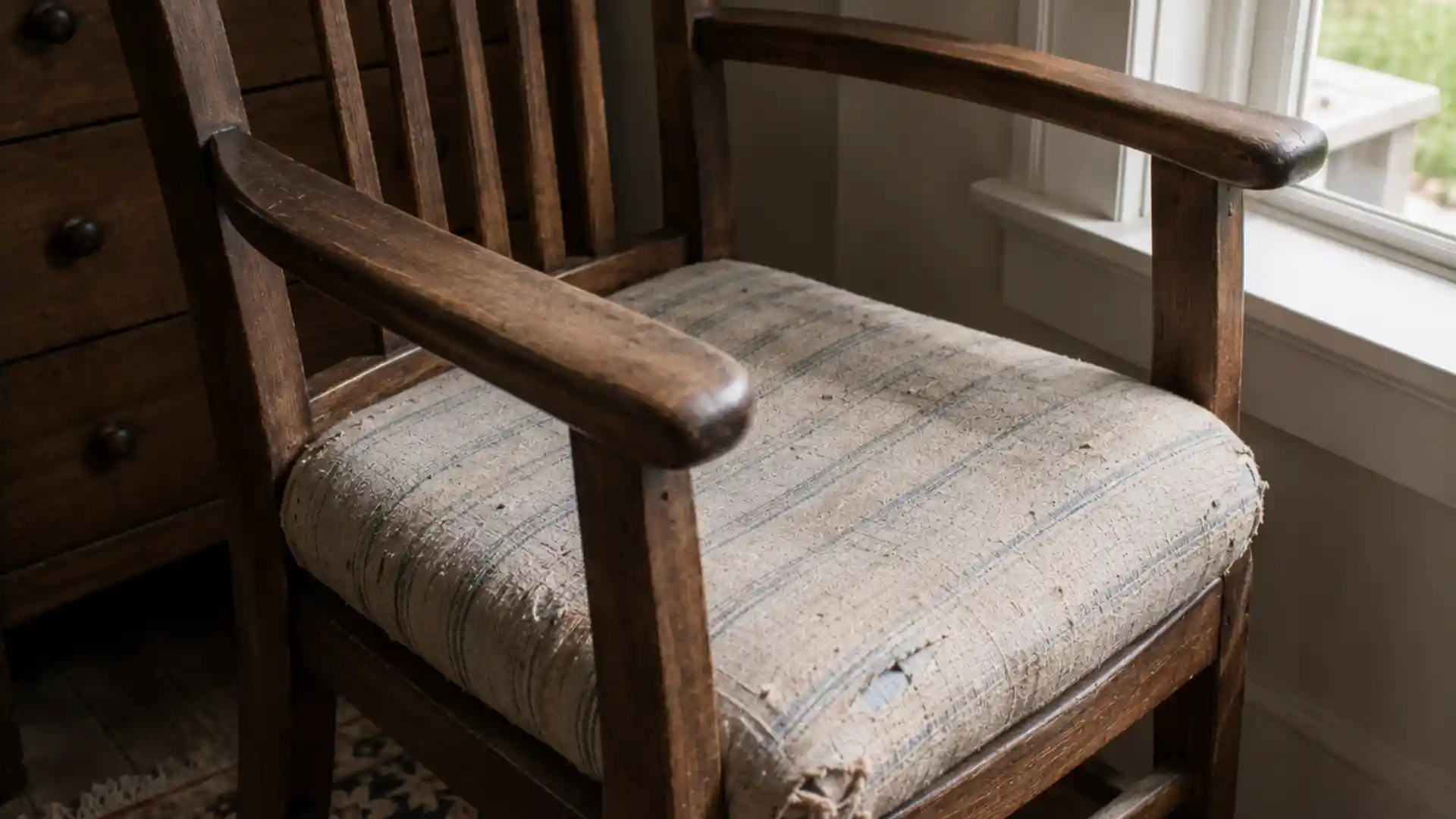
Avoid artificially distressing every surface in the room. Instead, preserve real imperfections, like a faded edge, old nail holes, uneven paint, or a repaired textile.
Believable imperfection has a clear origin, while manufactured distressing tends to look exactly like what it is.
A slightly worn chair or a patched quilt corner usually reads as more genuine than anything designed to look old from the start.
36. Add Something That Could Only Belong to You
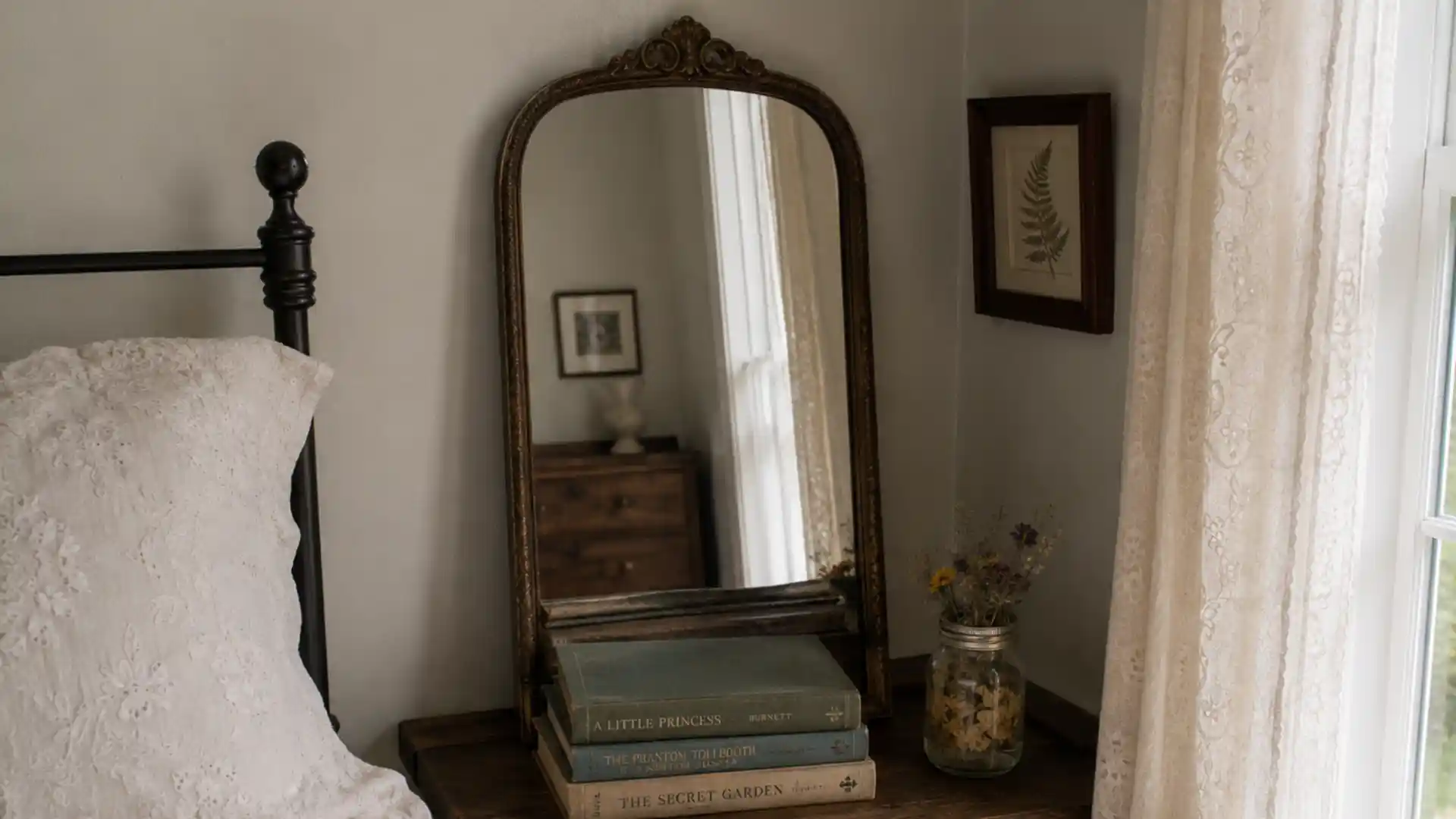
This is arguably the most personal idea on this list. A family quilt, childhood books, an inherited mirror, or a keepsake from a place you love all qualify.
The fastest way to make cottagecore look fake is to make it generic, so this is where a room can make its strongest, most individual statement.
No trend guide can replace an object that only means something to you.
37. Decorate Slowly
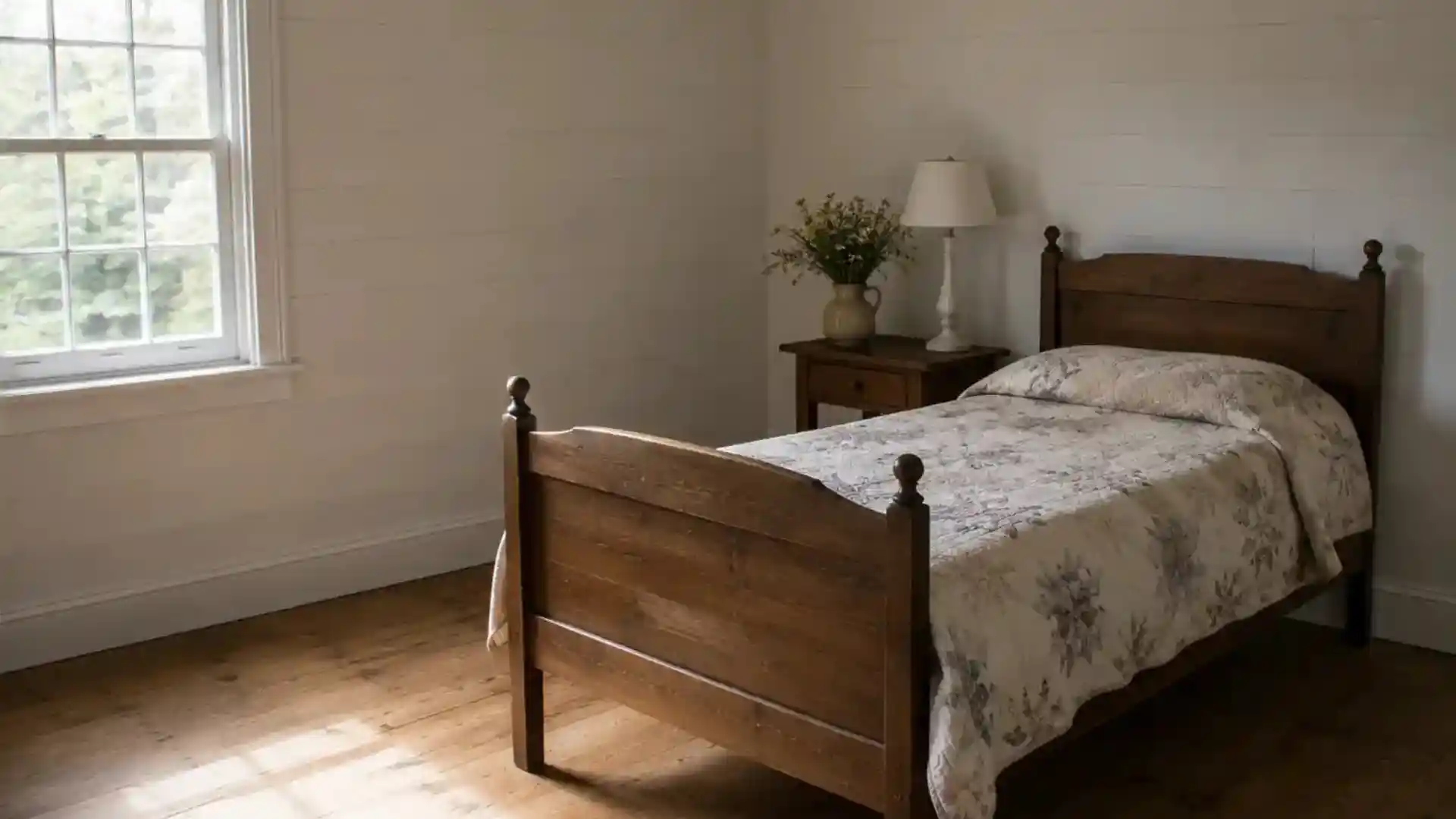
Don’t try to build a complete cottagecore room in a single weekend with dozens of new purchases.
Start with one meaningful furniture piece, one beautiful textile, and one connection to nature, then let the room evolve from there.
A collected room takes time to feel real, and that slower pace is part of what separates cottagecore from a quick decorating trend.
Cottagecore Bedroom Color Palettes That Feel Natural
Cottagecore colors work best when they feel pulled from outside rather than picked off a swatch card.
In my experience styling these rooms, muted, sun-faded and nature-derived tones photograph and live far better than anything saturated, which tends to look staged under normal room lighting.
Here are a few palettes that hold up well once you actually live with them.
| Color Palette | Best Suited For |
|---|---|
| Hedgerow Green + Cream + Weathered Oak | Walls, headboards, wooden furniture |
| Faded Rose + Warm White + Walnut | Quilts, curtains, bedside furniture |
| Butter Yellow + Old White + Natural Wood | Walls, trim, light fixtures |
| Dusty Blue + Sage + Oatmeal | Bedding, upholstery, rugs |
| Deep Moss + Brown + Aged Brass | Accent walls, lamps, drawer pulls |
| Clay Pink + Olive + Linen | Textiles, ceramics, accent pillows |
Cottagecore Decor Mistakes That Undo the Look
Most cottagecore advice tells you what to add. Fewer people mention what quietly undoes the look. After styling and rearranging a few of these rooms myself, these are the mistakes I would flag first.
- Faux ivy everywhere looks synthetic under real light, unlike the real thing.
- Matching “cottagecore” decor sets read as bought in bulk, not collected over time.
- Artificially distressed furniture rarely fools anyone up close.
- Decorative objects with no function sit dead in a room that’s supposed to feel used.
- Turning the room into a period-drama set trades warmth for costume.
The goal was never historical accuracy. It is the feeling of rural, domestic life, borrowed loosely and lived in honestly.
Until Next Time…
A cottagecore bedroom was never about matching everything perfectly.
It comes together slowly, through one worn quilt, one lamp that came from somewhere else, one flower cut from the garden that morning.
Some pieces you will inherit, others you will simply live with long enough to love. That patience is what separates a real room from a styled one.
Start small, keep what feels honest, and let the rest arrive in its own time.
What is that one detail that would make your own cottagecore bedroom feel truly yours? Tell me in the comments.
Frequently Asked Questions (FAQs)
What is the Difference Between Cottagecore and English Cottage Style?
English cottage style is tied to a specific place and period, with defined architectural rules. Cottagecore borrows that same warmth but stays looser, blending countryside references from anywhere without needing historical accuracy.
Can a Modern Bedroom Be Cottagecore?
Yes, and honestly it works better than you’d think. A few vintage pieces, warm lighting and natural textiles can soften even a fairly modern room without needing to gut the whole space first.
What Colors Make a Bedroom Feel Cottagecore?
Muted, nature-derived tones work best here. Think sage green, faded rose, butter yellow or dusty blue rather than anything bright or saturated. The colors should feel like they came from outside, not a paint chart.
Is Cottagecore Supposed to Look Cluttered?
Not cluttered, exactly, more collected. There is a real difference between meaningful objects sitting around with a reason to be there and just filling every surface for the sake of it.
Can Cottagecore Work in a Rental?
Definitely. Swap curtains, add a rug, bring in vintage furniture and textiles, and use removable wallpaper if you want pattern on the walls. None of it requires permanent changes to pull off convincingly.