A patio can be one of the most valuable areas of a home, but it is also one of the easiest spaces to overlook. Without a clear plan, it may become a place where old chairs, unused pots, and outdoor tools collect dust. With a few thoughtful upgrades, however, even a small patio can become a comfortable extension of your living space.
Whether you want a quiet spot for morning coffee, a container garden, a place to entertain friends, or a more functional family area, the right layout and materials can make your patio feel more inviting and practical.
Start With How You Want to Use the Patio
Before buying furniture, plants, lighting, or decor, think about how you actually want to use the space. A patio designed for outdoor dining will need a different setup than one meant for gardening, reading, or relaxing after work.
Start by choosing one or two main purposes. Maybe you want a small table for weekend breakfasts and a few planters for herbs. Maybe you want a comfortable lounge chair and soft lighting for quiet evenings. If you try to make the patio serve too many roles at once, it can quickly feel crowded.
Once you know the main purpose, every choice becomes easier, from furniture size to plant selection.
Choose Comfortable, Space-Smart Seating
Seating is often the foundation of a useful patio. The key is choosing pieces that fit the space without making it hard to move around.
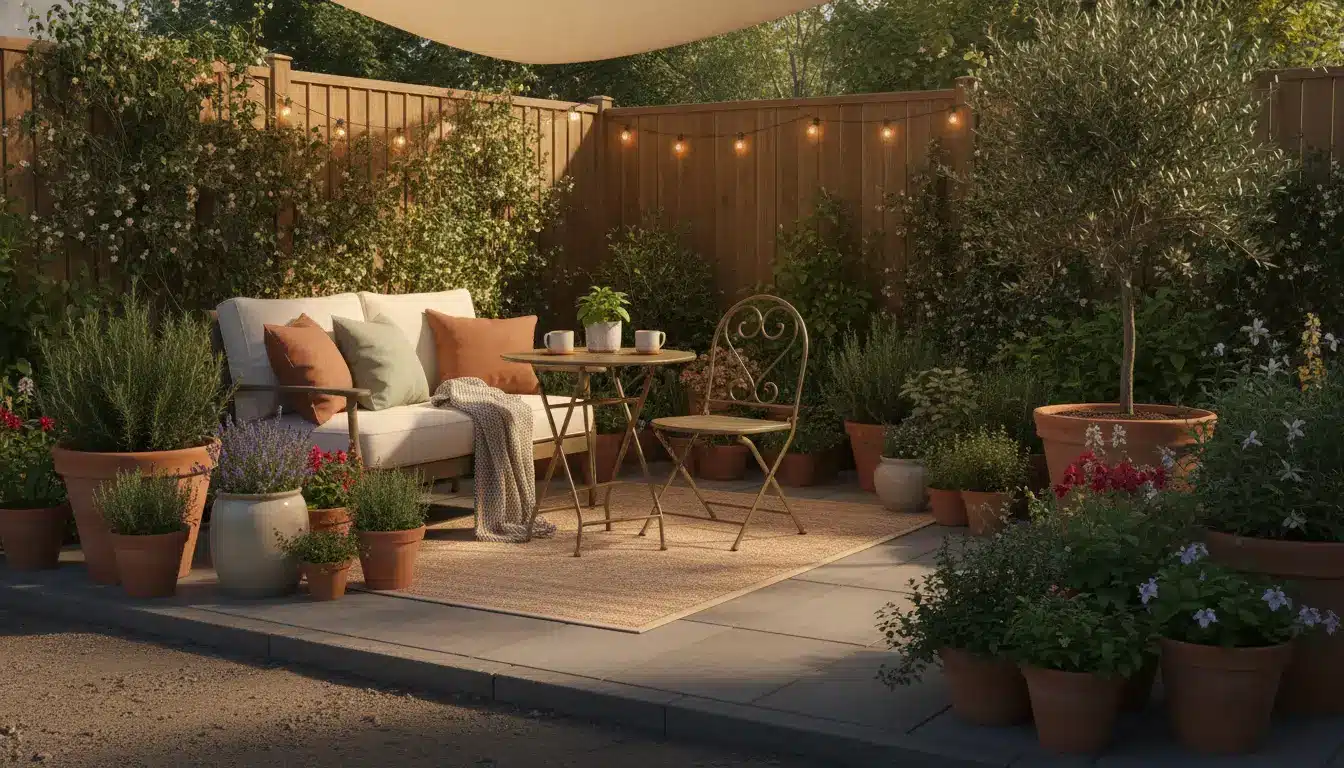
For smaller patios, consider folding chairs, compact bistro sets, stools, or a narrow bench. If you have more room, a loveseat, outdoor sectional, or pair of lounge chairs can create a comfortable gathering area. Built-in seating or storage benches can also help you save space while adding function.
Measure before you buy anything. Make sure there is enough room to walk through the patio, open doors, water plants, and move chairs in and out. Weather-resistant materials and washable cushions can also make the space easier to enjoy throughout the season.
Add Plants That Fit the Patio Environment
Plants can completely change the feeling of a patio. They add color, texture, privacy, and life to the space. The best choices depend on how much sun, wind, and shade your patio gets during the day.
Container gardens are a great option because they work in patios of almost any size. Herbs, leafy greens, flowers, small vegetables, and ornamental grasses can all grow well in pots when given the right light and drainage. Vertical planters, railing planters, trellises, and plant stands can help you add greenery without taking up too much floor space.
Before choosing plants, pay attention to maintenance. Some plants need frequent watering and pruning, while others are more forgiving. If you are new to gardening, start small with a few containers and expand once you understand the conditions of your patio.
Use Lighting to Extend the Space Into the Evening
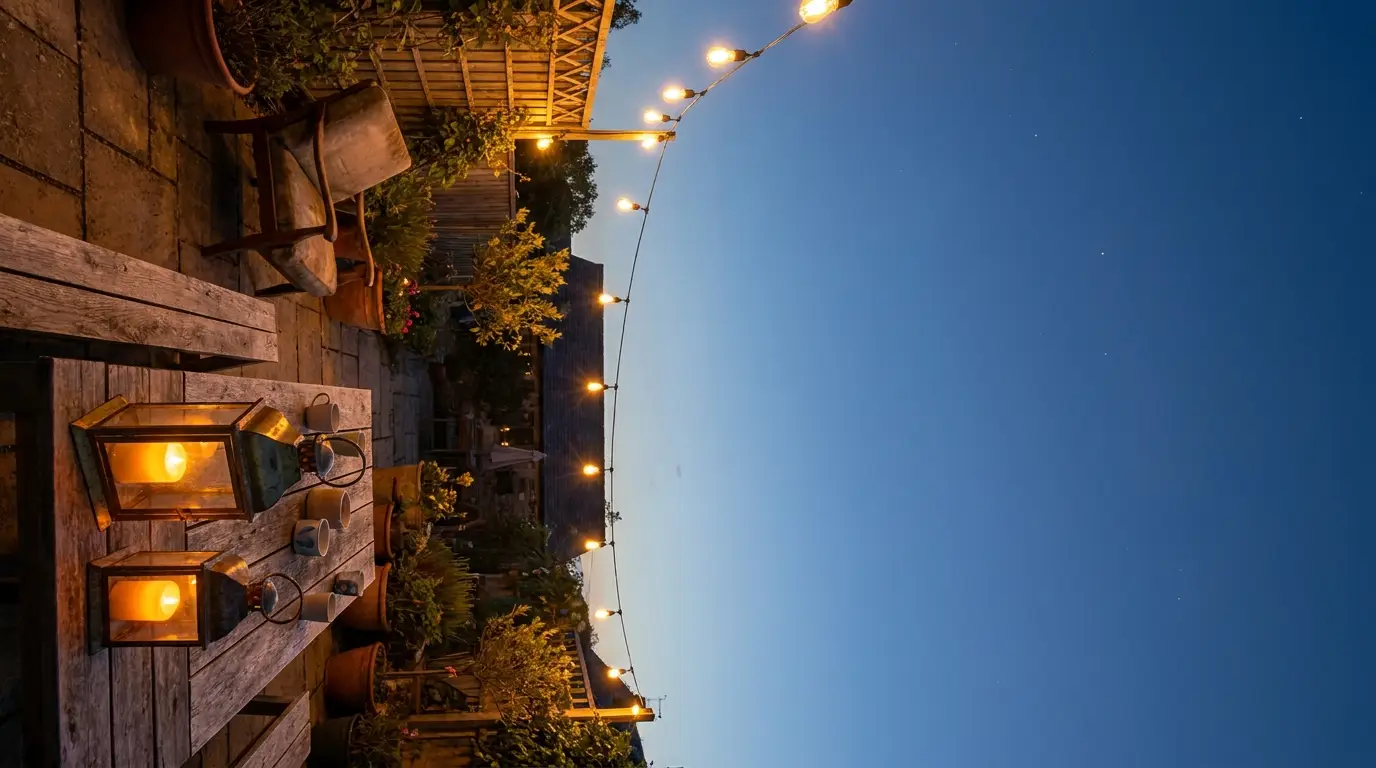
Good lighting can make a patio more useful after sunset. It also helps create a welcoming atmosphere.
String lights are a popular choice because they are simple, flexible, and warm. Solar lights can work well along walkways or near garden containers. Lanterns, battery-powered lamps, and wall-mounted fixtures can add softer lighting around seating areas.
Lighting is not only decorative. It also improves safety near steps, doors, uneven surfaces, and pathways. A few well-placed lights can make the patio feel more comfortable and easier to use at night.
Create Shade and Weather Protection
A patio that gets too much sun can be hard to enjoy during hot afternoons. Adding shade makes the space more comfortable and can help protect furniture, plants, and outdoor decor.
Depending on the size and layout of your patio, you might use a patio umbrella, shade sail, pergola, retractable awning, or outdoor curtains. Even a small umbrella over a table can make a big difference.
Outdoor rugs can also help define the space and make hard surfaces feel more comfortable. Choose materials designed for exterior use so they can handle moisture, dirt, and sun exposure. The goal is to make the patio feel like a true outdoor room, not just a bare slab of concrete or pavers.
Add Storage Without Making the Patio Feel Crowded
Useful patios need storage, especially if you garden, entertain, or have kids. The challenge is adding storage without making the area feel cluttered.
Deck boxes are great for cushions, outdoor games, and seasonal items. Storage benches can hold supplies while also providing extra seating. Wall hooks, compact shelves, plant stands, and small outdoor cabinets can help organize tools, watering cans, gloves, and pots.
Keep only what you actually use on the patio. If the space becomes a storage zone for unrelated household items, it will feel less relaxing and less functional. A few smart storage pieces can help keep everything tidy and easy to access.
Plan the Budget Before Upgrading
Patio projects can range from simple weekend updates to larger outdoor improvements. Before you start buying materials, make a list of what matters most.
Separate your must-haves from your nice-to-haves. Seating, shade, lighting, and plants may be more important than decorative extras at first. You can also save money by reusing furniture, repainting old pieces, shopping seasonal sales, starting plants from seeds, or completing the project in phases.
Homeowners planning a larger patio upgrade may want to compare savings, phased DIY work, credit options, or responsible financing options such as online loans before making major purchases.
A clear budget helps you avoid overspending and makes the project easier to manage from start to finish.
Make the Space Easy to Maintain
A patio should make life better, not create constant chores. Choose materials, plants, and layouts that match the amount of time you realistically want to spend on upkeep.
Look for durable outdoor furniture, washable cushion covers, easy-to-clean surfaces, and low-maintenance plants. Group containers together so watering is simpler. Keep gardening tools in one place. Sweep regularly to prevent leaves, dirt, and debris from building up.
The easier the patio is to maintain, the more likely you are to use it. Simple routines can keep the space looking fresh without turning it into another overwhelming household task.
A Better Patio Starts With Practical Choices
You do not need a large yard or an expensive renovation to create a useful outdoor living space. A good patio starts with understanding how you want to use it and making choices that support that purpose.
Comfortable seating, the right plants, practical lighting, shade, storage, and a realistic budget can transform an overlooked patio into one of the most enjoyable parts of the home. With a little planning, your patio can become a place to relax, grow, gather, and make better use of the space you already have.