Wet, muddy ground changes how people work. A dry field can turn slick after one storm. A jobsite entrance can become ankle-deep mud before the first shift ends. Farms, ranches, gardens, utility routes, and outdoor work areas can quickly become harder on the feet than they look.
That is why many workers, landowners, and outdoor professionals compare Wellington boots when they need footwear that can handle water, mud, washdowns, soft ground, and messy conditions without making the day harder.
Wellington boots are not just rain boots. In the right setting, they are practical protective footwear built around coverage, easy cleanup, waterproof materials, and dependable footing.
Wet Ground Turns Footwear Into a Safety Decision
Wet ground affects traction, balance, fatigue, and movement. OSHA workplace safety guidance notes that loss of traction is a leading cause of workplace slips, and that slips can be caused by wet surfaces, spills, or weather hazards.
That matters for workers moving across muddy lots, wet grass, concrete wash areas, loading zones, livestock areas, fishing docks, or outdoor maintenance sites. The Bureau of Labor Statistics reported 5,283 fatal work injuries in the United States in 2023. Construction accounted for about one-fifth of workplace deaths, and falls, slips, and trips made up 38.5 percent of construction deaths that year.
Wellington boots will not remove every risk. No boot can. But a suitable pair can help workers stay better prepared for wet terrain, especially when paired with safe walking habits, clean work areas, and proper jobsite procedures.
Higher Waterproof Coverage Helps Keep the Workday Moving
The main advantage of Wellington boots is coverage. Unlike low-cut work shoes or shorter boots, Wellington-style boots usually rise higher on the calf. That extra height helps reduce water and mud intrusion when walking through puddles, soaked grass, shallow ditches, animal pens, garden beds, and muddy access roads.
For agriculture, landscaping, utility work, and outdoor maintenance, this can be the difference between staying dry for most of the day and spending hours in wet socks. Once water gets inside a boot, comfort drops quickly. Wet feet can increase rubbing, soften skin, and make a long shift feel heavier than it needs to.
The EPA defines extreme precipitation as the top 1 percent of the heaviest precipitation events for an area, based on historical records. Heavy rain can overwhelm drainage, soften ground, and create muddy conditions where ordinary footwear struggles.
Mud Demands More Than a Smooth Sole
Mud behaves differently from water on concrete. It clings, shifts, packs into tread, and changes under pressure. That makes outsole design a real buying consideration, not a small detail.
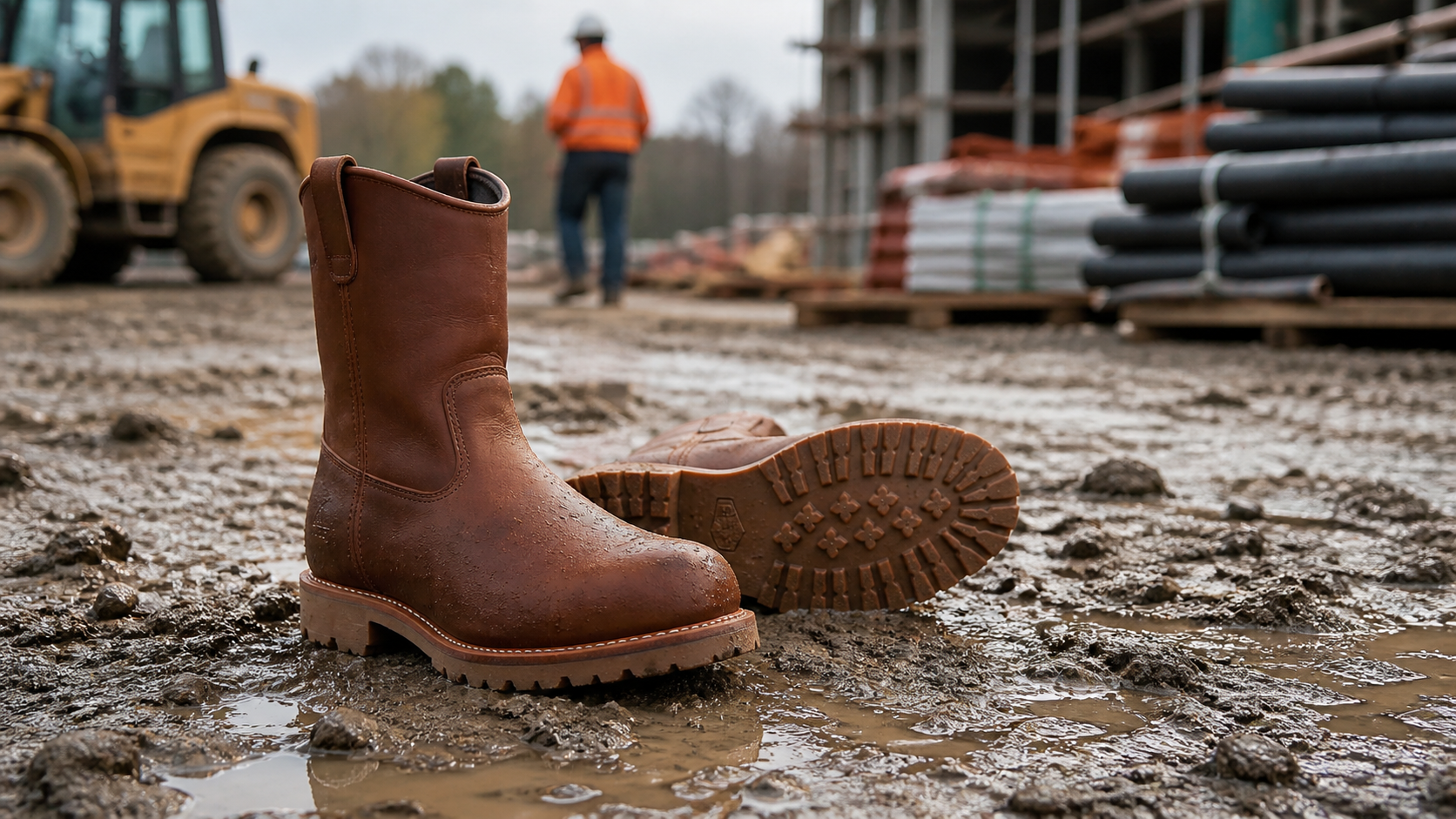
A smooth-bottom boot may be easier to rinse, but it can struggle on soft, uneven, or sloped ground. A deeper lug outsole can provide more bite in mud, gravel, pastureland, and loose soil. The tradeoff is that aggressive tread may collect more debris and require more cleaning.
Buyers should compare tread depth, heel stability, flexibility underfoot, and whether the outsole sheds mud reasonably well. It is also worth checking slip-resistant properties if the workday moves between soft mud and hard wet surfaces, such as wet concrete, shop floors, loading docks, or barn aisles.
The Canadian Centre for Occupational Health and Safety explains that slips happen when there is too little friction or traction between footwear and the walking surface.
Easy Cleaning Matters After the Mud Dries
Mud is not just messy. It can shorten the life of footwear when it dries into seams, stitching, leather, or fabric panels. Boots used in livestock areas, landscaping, farming, or wet outdoor maintenance may also pick up manure, fertilizer, chemicals, clay, or organic debris.
Wellington boots often use rubber, PVC, neoprene, or other water-resistant materials that are easier to rinse than traditional lace-up leather work boots. A landscaper moving between mulch beds and wet lawns may need to hose off boots before entering a truck. A rancher may need footwear that can move from muddy gates to barn wash areas. A municipal worker may need boots that can handle waterlogged ground without requiring a long cleaning process afterward.
This is where Wellington boots become operationally efficient. Less cleanup time. Fewer materials trapping mud in places it does not belong.
Comfort Still Has to Survive a Long Shift
Waterproofing alone does not make a boot useful. A boot that keeps water out but punishes the feet will not stay in regular rotation.
Comfort matters more after hour six, hour eight, and hour ten. Buyers should weigh footbed support, heel stability, calf opening, shaft comfort, boot weight, flexibility, toe room, width availability, lining material, and temperature control.
Some Wellington boots are built for simple wet-weather chores. Others are designed for long shifts, outdoor work, farm use, or industrial environments. A boot used for quick garden work does not need the same support profile as one used all day in mud, concrete, and standing water.
Fit is especially important because pull-on boots do not tighten with laces. If the boot is too loose, the heel may lift too much. If it is too tight, the toe box or calf area can become uncomfortable.
Protection Features Should Match the Hazard
Not every Wellington boot is built for the same risk profile. Some are simple waterproof pull-ons. Others include safety features for more demanding jobs.
Depending on the work environment, buyers may need to check for steel toe or composite toe protection, ASTM F2413 markings on protective styles, electrical hazard protection where relevant, puncture-resistant plates, chemical-resistant materials, oil-resistant outsoles, insulation for cold and wet conditions, or metatarsal protection for impact risks.
OSHA’s personal protective equipment guidance places responsibility on employers to assess workplace hazards and provide appropriate PPE where required. For footwear, that means the boot should match the actual hazard, not just the weather.
A farm worker dealing with mud and animal waste may prioritize waterproofing, traction, and easy cleaning. A construction worker in wet excavation conditions may need a safety toe and puncture resistance. A utility worker may need electrical hazard protection, depending on the job and employer policy.
Choose Wellington Boots Around the Ground, the Job, and the Worker
Wellington boots are essential for wet and muddy conditions because they solve a practical problem: keeping feet drier, cleaner, and better supported when ordinary footwear is outmatched.
The best pair depends on the environment. Muddy fields need traction. Washdown areas need waterproof materials and easy cleaning. Cold rain may require insulation. Industrial work may require safety toe protection, puncture resistance, or other job-specific ratings.
The smart buying principle is simple: match the boot to the job, the hazard, the ground, and the worker’s comfort needs. When the conditions are wet, muddy, and unpredictable, the right Wellington boot helps the workday move forward instead of turning every step into a fight.