Most gardeners learn the first two fertilizer numbers pretty quickly.
Nitrogen is the “green growth” one. Phosphorus gets tied to roots, blooms, and fruit. Those are easy ideas to remember, especially when a plant looks tired, and you’re standing in front of a wall of fertilizer bags.
Then there’s the third number: potassium. The K.
It doesn’t sound as exciting. It doesn’t promise a tomato jungle by next weekend. But when a plant has to handle heat, hold fruit, move water, and keep going through a rough stretch, potassium starts to matter a lot.
The third number isn’t just filler
A fertilizer label like 5-10-10 tells you the percentage of nitrogen, phosphorus, and potassium in that order. So in that bag, the last 10 is potassium. That’s the number gardeners often glance past because it feels less obvious than the first two.
That’s also why the word “potash” can be confusing. On fertilizer labels and in gardening talk, potash fertilizer usually refers to potassium-rich fertilizer materials used to supply that K number. It isn’t a separate secret ingredient. It’s part of the same nutrient conversation.
Potassium helps plants do some very unglamorous but important work. It supports water movement, root function, disease resistance, and the general sturdiness plants need when the weather turns rough. The University of Minnesota Extension describes potassium as important for plant hardiness and disease resistance, which is a pretty useful way to think about it.
Because that’s where the K really shows up: not always in the pretty early growth, but in how well the plant holds together later.
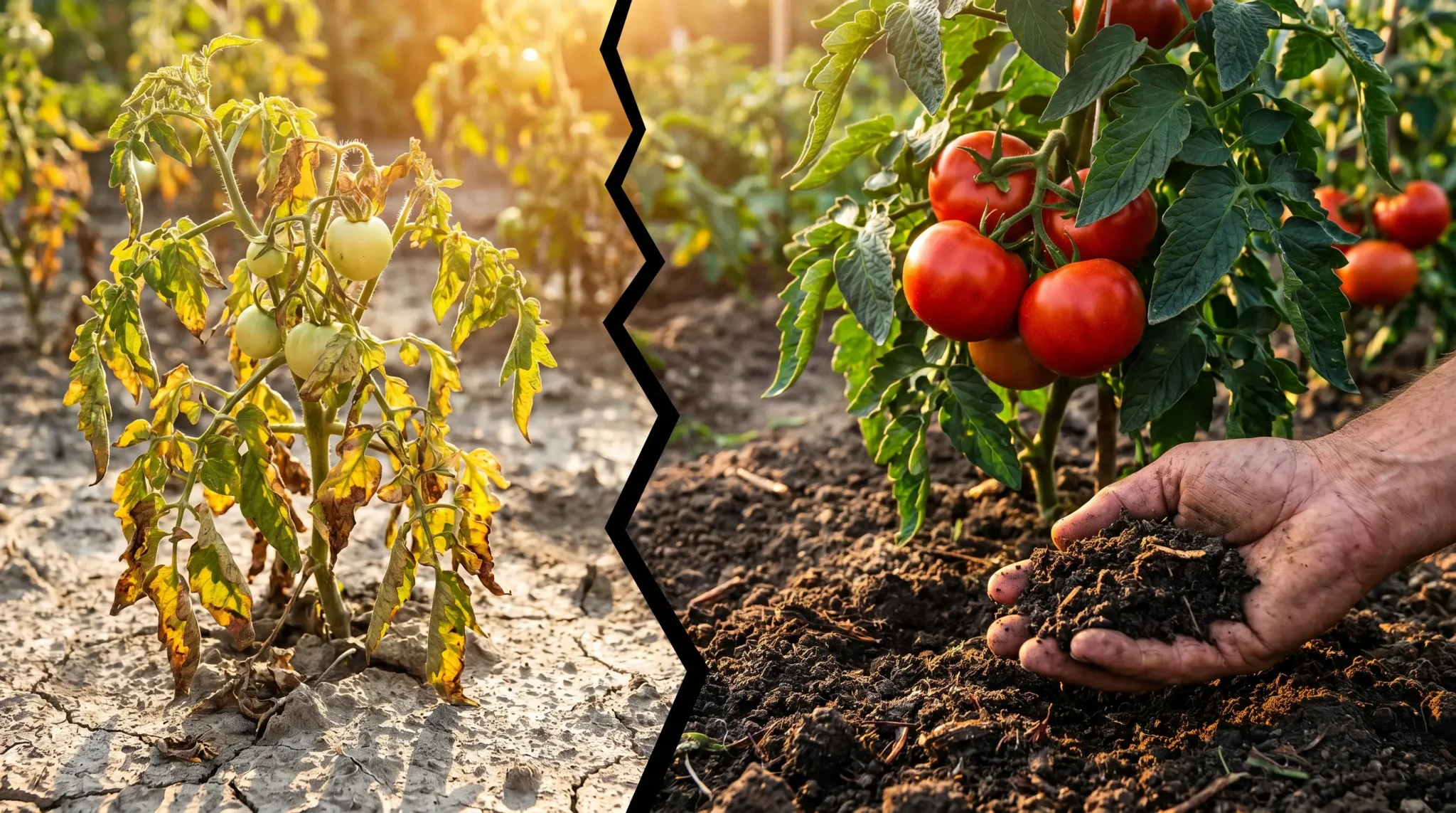
Think about a tomato plant in July. In May, it looked perfect. Fresh leaves, strong stem, lots of promise. Then the heat comes in, the watering gets a little uneven, fruit starts forming, and suddenly the plant looks stressed in a way that’s hard to name. The leaves aren’t just yellow. The whole plant seems less capable.
That doesn’t automatically mean potassium is low. Garden problems rarely come with one clean answer. But potassium is part of the plant’s ability to stay steady when the season stops being easy.
Where gardeners notice it, even if they don’t call it potassium
Potassium trouble can be sneaky because it often looks like “my plant is just not doing well.”
Older leaves may yellow or brown along the edges. Fruiting plants may look large, but disappoint at harvest. Stems can seem weak. A plant may wilt faster during hot spells.
That little pause matters. Many gardeners see one symptom and immediately add fertilizer. Sometimes that helps. Sometimes it just adds another problem.
Potassium tends to matter most when the plant is under stress. Leafy greens mostly need to keep making leaves. Fruiting crops have a harder job. They have to keep leaves alive, move sugars, regulate water, support flowers, and build something you’re actually going to eat.
That’s why a tomato plant can look “healthy” in the lazy sense—big, green, energetic—and still not perform well. If it gets too much nitrogen early, it may put on impressive growth but set fewer fruit. If the soil is poor, the plant may run out of support just when it needs the most balance.
This is one reason soil quality is more than a boring setup step. A raised bed filled with the right mix gives plants a much better base than cheap fill dirt with a little compost sprinkled on top. Seedsheets’ guide to topsoil vs. garden soil is useful here because it gets at a mistake people make all the time: using soil that fills a bed but doesn’t really feed one.
You can get away with that for a while. The plant may sprout. It may even look fine. But once heat, fruiting, and inconsistent watering pile up, weak soil starts showing.
The Mistake Is Made in Panic
There’s a certain kind of garden anxiety that leads straight to the fertilizer shelf.
A plant looks off. Leaves curl. The fruit is small. Growth stalls. So the gardener feeds it. Then feeds it again. Then tries a stronger product because the first one didn’t fix everything by Saturday.
That’s how small problems become weird problems.
Plants don’t use fertilizer just because it’s present. Nutrients have to be available in the soil, and roots have to be healthy enough to take them up. Soil pH, moisture, temperature, compaction, organic matter, and watering habits all affect what the plant can actually use.
Potassium is no exception. If the bed is dry every afternoon and soaked every third day, the plant is already dealing with stress. If roots are damaged, fertilizer won’t fix the root problem. If the soil already has plenty of potassium, adding more won’t make the plant tougher. It may just create salt buildup or throw the balance off.
The Oregon State University Extension gives a practical reminder that potassium fertilizers should be worked into the soil by broadcasting or banding, not placed directly against plant roots. That sounds like a tiny detail, but it’s the kind of detail that separates careful feeding from garden guesswork.
Containers make this even more important. A five-gallon pot doesn’t give roots much room to escape a heavy hand. Fertilizer salts, heat, dry pockets, and wet pockets all stack up quickly. One extra scoop can do more harm in a pot than it would in a large garden bed.
Lawns show the same pattern in a more visible way. Seedsheets’ article on whether you can over-fertilize your lawn explains how too much fertilizer can burn roots and stress grass. Vegetable plants aren’t turf, obviously, but the behavior is familiar: something looks weak, so we give it more.
A better move is to slow down and ask what changed.
Did the weather jump from mild to hot? Did watering get inconsistent? Is the plant fruiting now? Is it in a container that dries out too fast? Did you already use a high-nitrogen fertilizer a few weeks ago? Has the bed ever been tested?
Those questions are less exciting than buying a new bag, but they save a lot of plants.
How to Use the K Number Without Making It a Project
The easiest way to use the K number is to stop treating fertilizer like a general “plant boost.”
That’s how people end up feeding everything the same way. Lettuce, tomatoes, basil, peppers, flowers in pots by the back door — one scoop, one watering can, one hopeful little ritual. Sometimes it works.
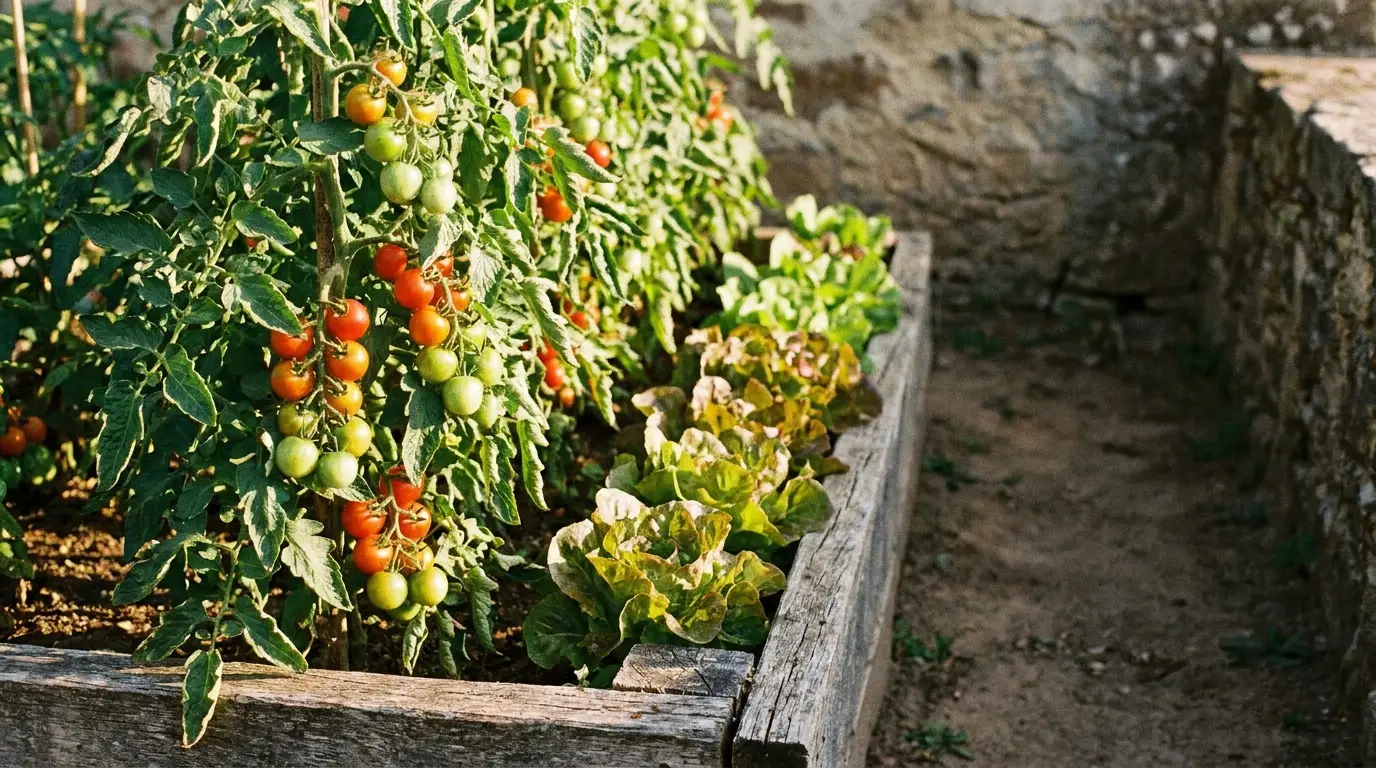
A leafy crop and a fruiting crop are not asking for the same thing. Lettuce, spinach, and herbs are mostly about leaf growth, so nitrogen carries more of the workload. Tomatoes and peppers are different once they start flowering. At that point, the plant isn’t just building greenery. It’s trying to hold flowers, move water, form fruit, and keep the leaves from quitting every time the weather gets hot.
That’s when the third number deserves a second look.
A balanced 5-5-5 can be fine for a mixed garden bed, especially if the soil is already in decent shape. A 5-10-10 leans more toward the part of the season when roots, flowers, and fruit matter more than extra leaves. The mistake is reading those numbers like a ranking. Higher doesn’t automatically mean better. It means stronger in that direction.
There’s also a timing piece that gardeners learn the hard way. A young tomato transplant may appreciate a gentle start. A waist-high tomato plant in July, already thick with leaves, probably doesn’t need another nitrogen-heavy push. Give it too much of that, and you can end up with a gorgeous green plant that acts like fruiting was never part of the plan.
Potassium is not a rescue button, either. If the bed dries out every afternoon, if the pot is too small, if the soil is packed tight, or if roots are already stressed, the third number can’t fix all of that. It can support a plant that’s doing hard work. It can’t make up for care that keeps changing every three days.
Wood ash is a good example of where people get too casual. Yes, it can add potassium. It can also raise soil pH, which may be the last thing your garden needs. Compost is less dramatic, but it’s usually the better long game: better texture, better moisture handling, better soil life, and fewer wild swings.
So the practical move is simple. Before buying fertilizer, ask what the plant is doing right now. Is it making leaves? Settling in? Flowering? Fruiting? Struggling in the heat? That one question will tell you more than the loudest promise on the front of the bag.
Wrap-Up Takeaway
The K in NPK is easy to miss because potassium doesn’t give gardeners the instant satisfaction of greener leaves. It works more quietly, helping plants handle water, stress, fruiting, and the rough middle of the season. That doesn’t mean every tired plant needs a high-potassium feed.