For a while, it felt like every kitchen had gone the same way.
Single lever taps everywhere. One handle, quick to use, nothing to think about. And to be fair, they do the job well enough. But lately, there’s been a bit of a shift — not dramatic, just noticeable if you’re paying attention.
More people are starting to look at dual lever taps again.
It’s not really about going backwards. It’s more that newer designs — particularly from brands like Deva — have made them feel relevant again, both in terms of style and build quality.
It’s a Small Difference, But You Notice It
The idea itself is simple.
Two handles instead of one. Hot on one side, cold on the other.
On paper, that might sound less convenient. In practice, it just feels a bit more controlled. You’re not guessing where the middle point is — you’re adjusting things gradually, almost without thinking about it after a while.
Some people prefer that. It’s not faster, but it’s a bit more precise.
The Look Plays a Big Part
There’s also the way they look.
Dual lever taps tend to feel more balanced. Two handles, a centred spout — it just sits nicely in the space. It doesn’t feel like an afterthought.
A swan neck style is probably the easiest way to picture it. Something like the Deva Newton chrome kitchen sink mixer tap with twin lever design. It has that soft curve that works in a lot of kitchens, whether they’re more traditional or somewhere in between. It doesn’t try too hard, which is usually a good thing.
Not Just for Older-Style Kitchens
People often assume dual lever taps only suit older kitchens.
That used to be true, but not so much anymore.
Some of the newer designs are a lot sharper. Cleaner lines, simpler shapes — less of that heavy, old-fashioned feel.
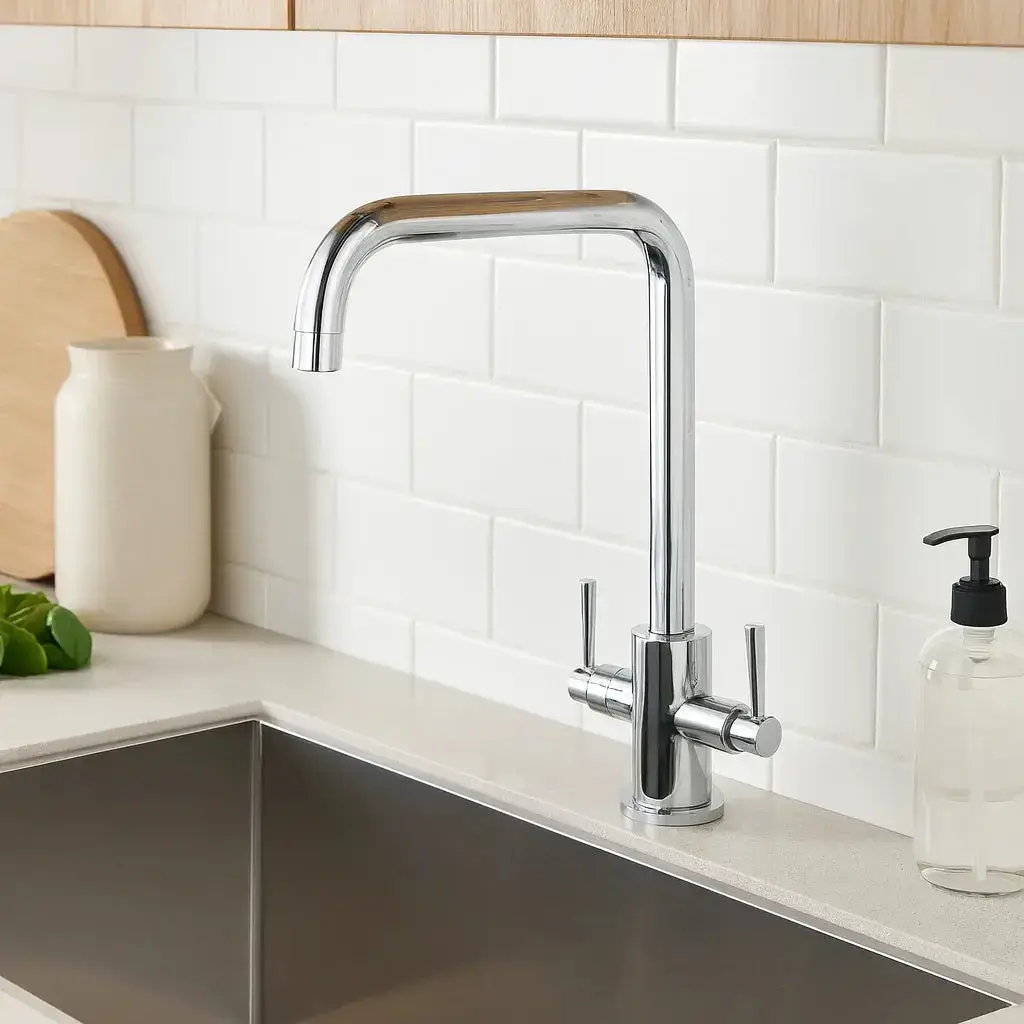
Take something like the Deva Walton chrome mono kitchen sink mixer tap with square U-spout. It still has the separate controls, but visually it’s much more modern. It wouldn’t look out of place in a newer kitchen at all.
Built for Everyday Use
Another reason people are leaning back towards dual lever taps is reliability.
Many models now come with a 12-year manufacturer guarantee, which gives a bit of reassurance — especially in a kitchen where the tap gets constant use.
They’re also typically WRAS-compliant, meaning they meet recognised standards for water safety and quality. It’s not something most people think about at first, but it’s worth having.
And for anyone trying to keep things simple when sourcing fittings, there’s also a growing preference to buy in Ireland where possible — whether that’s for quicker delivery, easier returns, or just knowing you’re dealing with a local supplier.
Day-to-Day, It’s Just Slightly Different
Using a dual lever tap doesn’t take getting used to in any big way.
It’s just a slightly different rhythm.
You turn one side, then the other. Adjust as needed. That’s it. If anything, it slows things down just enough to feel a bit more deliberate, which some people actually prefer.
If you’re filling a pot or washing up, that extra bit of control can come in handy.
It’s One of Those Details You Notice Later
The interesting thing about taps is that you don’t think about them much — until they feel wrong.
Too stiff. Too splashy. Awkward to use.
Or the opposite — when they feel right, they just disappear into the routine.
Dual lever taps tend to fall into that second category. They don’t try to do too much. They just work, and they fit into the space in a way that feels considered.
Final Thought
Single lever taps will probably always be the default choice for a lot of people.
But dual lever taps offer something slightly different. Not better, not worse — just a different way of doing the same thing.
And for some kitchens, that small difference is exactly what makes everything feel more put together.