Choosing the right dance floor can change how guests move, celebrate, and remember your event. Indoor and outdoor setups both work well, but they need different planning around space, weather, flooring, lighting, safety, and guest flow. A ballroom floor may need a polished finish, while an outdoor setup may need stronger support and surface checks. Before booking, hosts should understand what each option requires so the dance area feels smooth, safe, and exciting from the first song to the last.
Why the Dance Floor Setup Matters
A dance floor rental is not just a square space where people dance. It becomes the center of the celebration once the music starts, especially at weddings, galas, corporate parties, and milestone events. If the floor feels easy to find and comfortable to use, guests are more likely to join in.
Indoor and outdoor dance floors need different planning because the conditions are not the same. Indoor spaces usually give you more control over lighting, temperature, flooring, and layout. Outdoor spaces can feel beautiful and open, but they need extra attention to weather, surface level, and guest safety.
The right setup also affects the event flow. A dance floor placed too far from the DJ, bar, or seating area may stay quiet longer than expected. When the floor sits naturally inside the room layout, it becomes easier for guests to move from dinner to dancing.
What to Know About Indoor Dance Floor Rentals
Indoor dance floors are usually easier to control because the venue already has shelter, power, and stable flooring. Still, the setup needs to match the room size, guest count, and event style.
Check the Venue Floor First
The rental team should know what type of surface they are installing over. Carpet, tile, marble, and wood can all affect how the dance floor sits. A proper setup helps the floor feel even, secure, and comfortable for guests.
Choose the Right Size
A dance floor should feel active without feeling packed. If the floor is too large, it may look empty even when people are dancing. If it is too small, guests may avoid it because it feels crowded.
Match the Floor With the Event Style
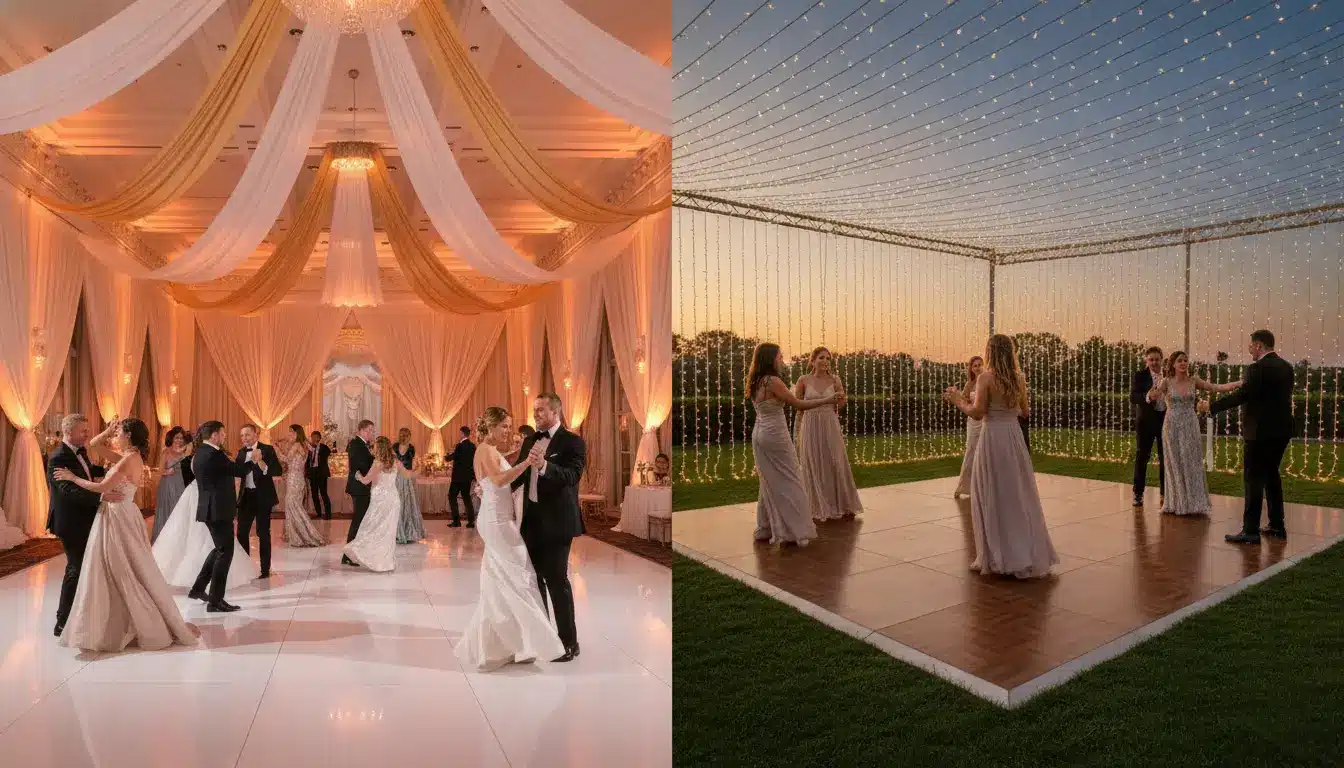
A white dance floor can feel polished for weddings, galas, and luxury events. A black, wood, or LED-style floor may fit corporate parties, nightlife-inspired events, and modern celebrations better. The best choice should support the room design instead of fighting with it.
What to Know About Outdoor Dance Floor Rentals
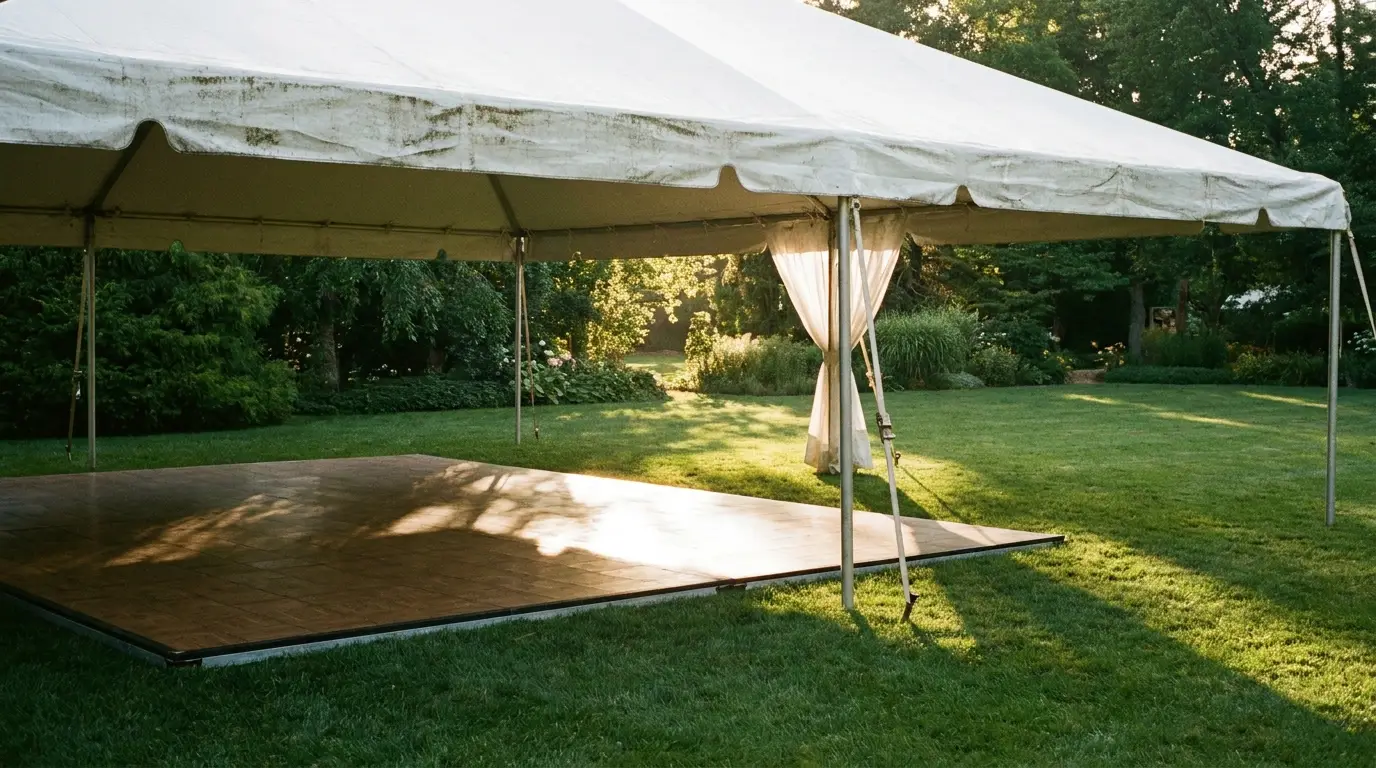
Outdoor dance floors can create a beautiful party setting, especially for garden events, beach weddings, rooftop parties, and tented celebrations. They also need stronger planning because the floor depends more on the ground and weather.
Check the Ground Surface
Grass, sand, stone, and uneven ground can all create setup challenges. The rental team may need a subfloor or leveling support before placing the dance floor. This helps reduce movement, gaps, and tripping risks during the event.
Plan for Weather
Outdoor events always need a weather plan. Rain, heat, wind, and humidity can affect guest comfort and the rental setup. A tent, covered area, or backup indoor space can protect the dance floor experience.
Think About Lighting After Sunset
Outdoor dance floors need proper lighting once the sun goes down. String lights, uplighting, stage lighting, or spotlights can help make the area feel warm and inviting. Without lighting, guests may not feel comfortable dancing or moving around the space.
What to Check Before Booking a Dance Floor
Before booking, hosts should confirm the details that affect setup, safety, and event flow. These checks help avoid surprises when the rental team arrives at the venue.
- Confirm the guest count first, because the dance floor size should match how many people may dance at once.
- Ask if the venue floor is level, stable, and ready for installation before the rental team arrives onsite.
- Check whether the dance floor can be installed on grass, carpet, tile, concrete, sand, or uneven surfaces.
- Ask about setup time, because large floors may need extra load-in time before décor and production begin.
- Confirm removal timing with the venue, especially if the event ends late or has strict pickup rules.
- Review lighting placement early, so the dance area feels visible, inviting, and connected to the room design.
Match the Floor With Production and Guest Flow
A dance floor works best when it connects naturally with the rest of the event production. If you are also using sound, staging, lighting, photo booths, or LED wall rental, the dance area should be planned as part of the full room design. This keeps the event from feeling like separate rentals were placed around the venue without a clear plan.
The DJ or band should be close enough to control the energy of the floor. Guests respond better when the music source feels connected to the dancing area. If the entertainment is too far away, the room can feel split between people watching and people dancing.
Guest flow also matters during transitions. After dinner, awards, or speeches, the floor should be easy to reach without forcing guests through tight spaces. A smart layout makes dancing feel like the natural next step in the event.
Safety and Rental Details Hosts Should Confirm
Safety does not make the event less exciting. It makes the dance floor easier for guests to enjoy without worrying about movement, crowding, or setup problems.
- Ask whether the rental includes delivery, setup, testing, and removal, so your team avoids extra event-day work.
- Confirm if outdoor installations need a subfloor, especially on grass, sand, gravel, or soft ground surfaces.
- Make sure all edges are secure, because loose borders can create tripping risks when guests enter quickly.
- Ask how the floor handles spills, since drinks are common near bars, lounges, and late-night dancing areas.
- Confirm power needs if the floor has lighting, LED effects, or any special interactive features installed.
- Check whether attendants are recommended for larger events, especially when the dance floor will stay busy all night.
Conclusion
Indoor and outdoor dance floor rentals can both create a strong event moment, but they need different planning. Indoor setups give more control, while outdoor setups need more attention to ground conditions, weather, lighting, and safety.
The best dance floor does more than fill space. It supports the event mood, connects with the entertainment, and gives guests a clear place to celebrate. When the size, placement, surface, and setup are planned early, the dance floor becomes one of the most active and memorable parts of the event.