
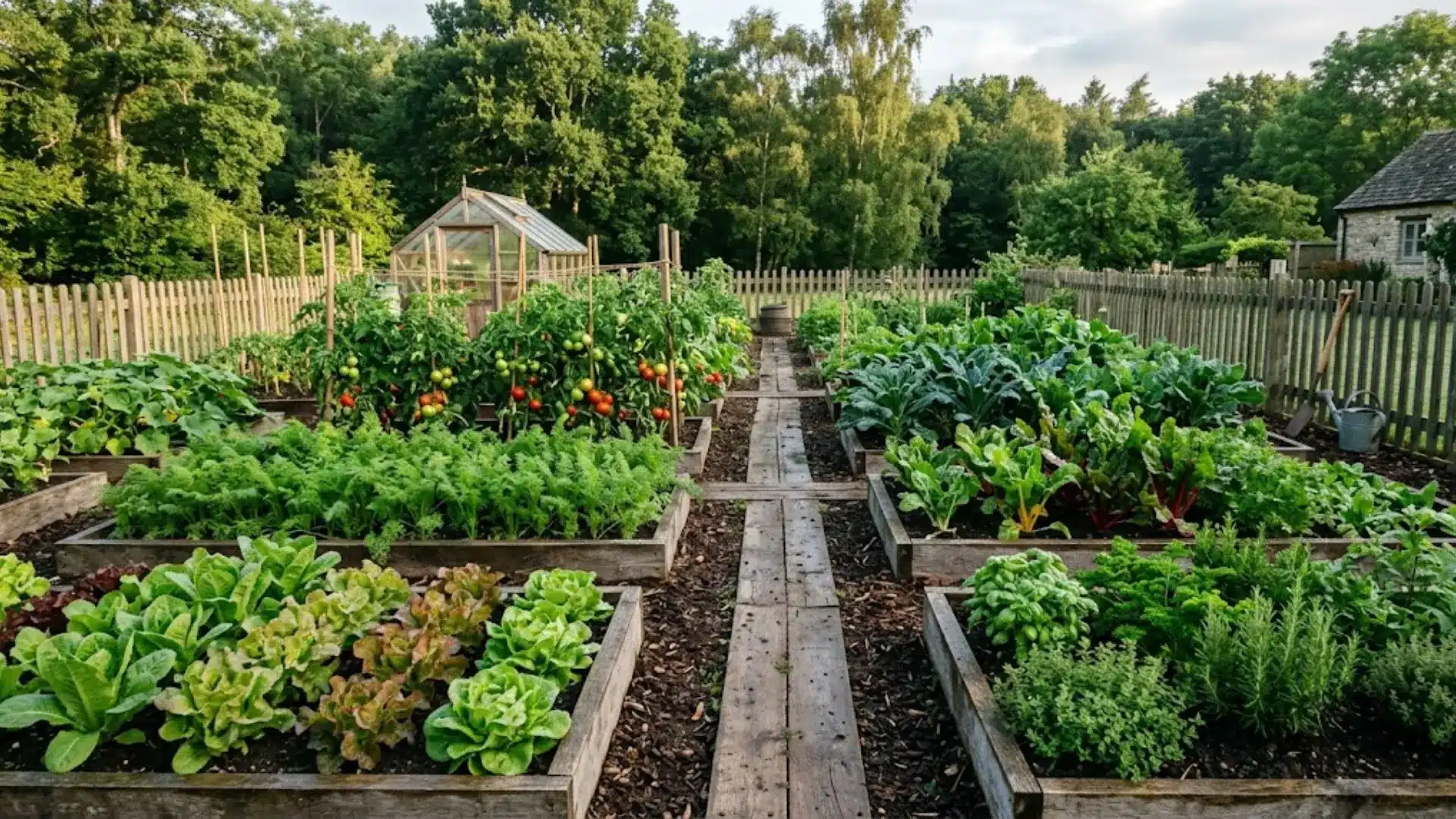
A garden only feels effortless when the layout does the quiet work behind the scenes.
Every plant needs room to breathe, sunlight has to land where it’s supposed to, and water should move through soil instead of pooling in the wrong corners.
So, after years of trial and error across tiny balconies and sprawling beds, I’ve learned that spacing matters just as much as which vegetables you pick.
Some gardeners swear by tidy grids, others prefer relaxed raised beds, but the good ones all rely on smart vegetable garden layout plans and spacing.
Here you’ll find spacing tips, real layout examples, rotation advice, and the planning mistakes worth avoiding.
Giving Every Plant Room to Thrive
Spacing might seem like a small detail, but it quietly decides how well your whole garden performs.
Get it right, and you’ll notice the difference in leaf color, root strength, and the size of what ends up on your plate.
Get it wrong, and even the healthiest seedlings start competing for the basics.
- Sunlight and airflow reach every leaf when plants aren’t crowding each other out, keeping foliage dry and diseases at bay.
- Roots stretch out fully rather than tangling with neighbors, resulting in bigger, healthier harvests.
- Overcrowded beds struggle with pests and nutrient competition, since everything is drawing from the same tight patch of soil.
- Mature plant size and root depth decide how much room something actually needs, not how big the seedling looks on planting day.
- Growth habit and companion planting also play a role, as sprawling vines and climbers need different spacing than compact, upright crops.
Once you know what a plant needs below and above the soil, spacing decisions get a lot easier, and the whole garden starts working with you instead of against you.
Laying the Groundwork Before You Dig In
Before you sketch out beds or order seeds, a little groundwork saves a lot of backtracking later. So, these five checks set the foundation for a layout that actually works with your space, not against it.
| Step | What to Look At | Why It Matters |
|---|---|---|
| Growing Space | Total dimensions, shape, and obstacles | Keeps your layout realistic, not overly ambitious |
| Sunlight Exposure | Sun and shade patterns through the day | Shows where sun-loving crops will thrive |
| Soil Quality | Texture, drainage, nutrient levels | Gives roots a strong start before planting |
| Watering Access | Distance to the house or water source | Keeps watering consistent all season |
| Growing Style | Raised beds, rows, or containers | Matches your space, soil, and mobility needs |
Once these basics are sorted, the fun part, actually designing your layout, becomes a lot more straightforward.
Orienting Your Garden for Better Sun Exposure
Sunlight exposure was already on the planning checklist, but orientation deserves its own callout because it affects how every layout style performs.
In most of the continental US, running rows north to south lets sunlight sweep across both sides of each row through the day instead of one side staying shaded.
Tall crops like corn, pole beans, or trellised cucumbers belong on the north end of a bed so they don’t cast shade over shorter, sun-hungry crops like lettuce or peppers.
On a slope, running rows across the grade rather than straight down it also helps slow water runoff during heavy rain, which matters as much for spacing as it does for erosion control.
Vegetable Garden Layout Plans and Spacing Ideas
Every garden style solves a different problem, whether that’s limited space, weed control, or simply wanting things to look pretty while they grow.
Here are nine layouts worth considering, along with the spacing that makes each one work.
1. Traditional Row Vegetable Garden Layout
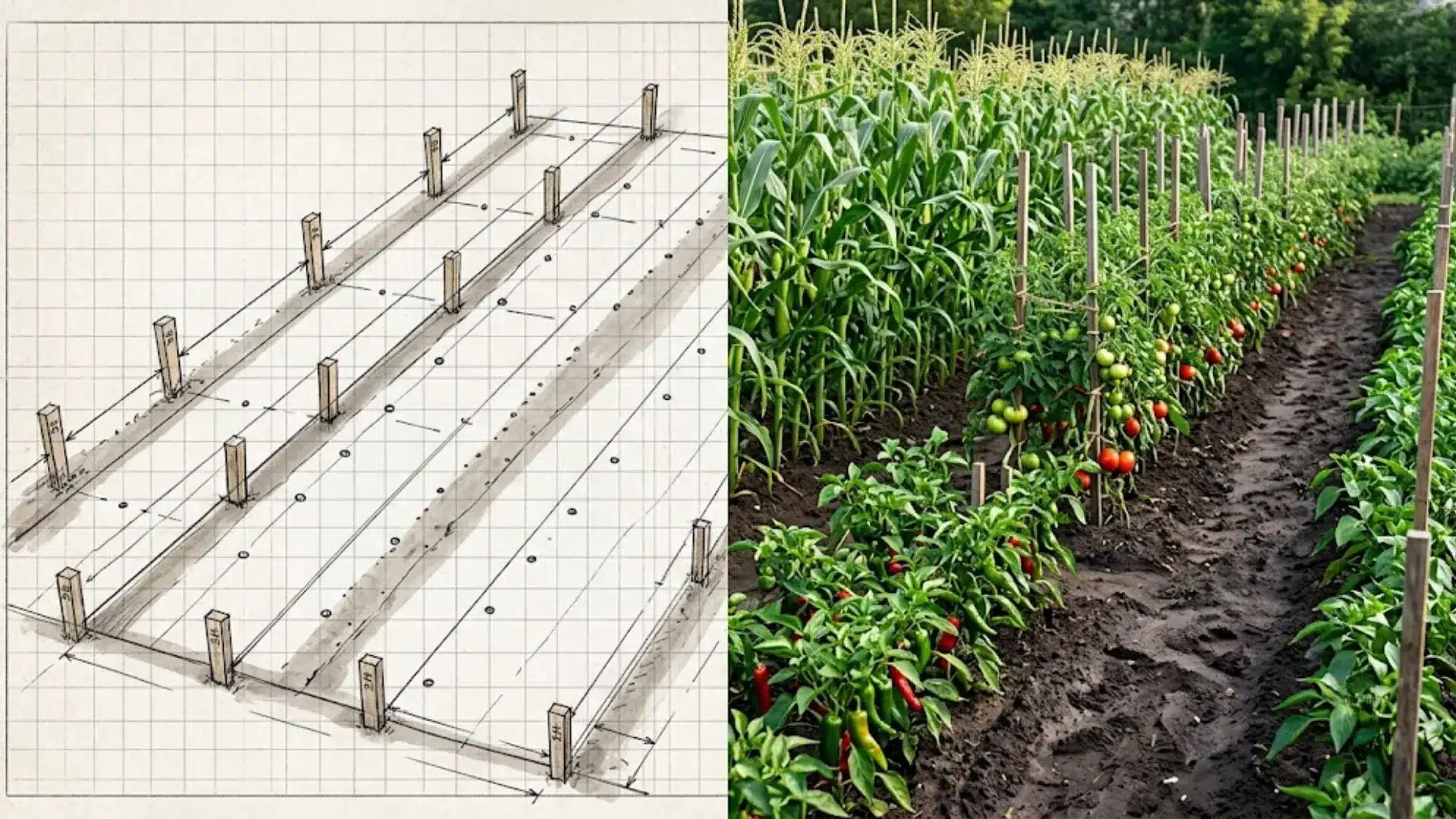
Style: Long, straight rows with clear walking paths between them
Ideal For: Gardeners who want a classic, easy-to-tend setup
Garden Size: Large backyards with open, unobstructed space
Plant List (row by row):
- Row 1: Corn, spaced 8 to 12 inches apart within the row
- Row 2: Tomatoes, spaced 24 inches apart within the row
- Row 3: Peppers, spaced 18 inches apart within the row
- Row 4: Squash, spaced 36 inches apart within the row
- Row 5: Bush beans, spaced 4 to 6 inches apart within the row
Spacing & Arrangement:
A row vegetable garden layout typically leaves 18 to 36 inchesbetween each row, depending on the crop, with wider gaps for sprawling plants like squash and tighter gaps for compact rows like beans.
This style makes mechanical tilling and hose watering simple, though it uses more land than other layouts and leaves more open soil for weeds to take hold.
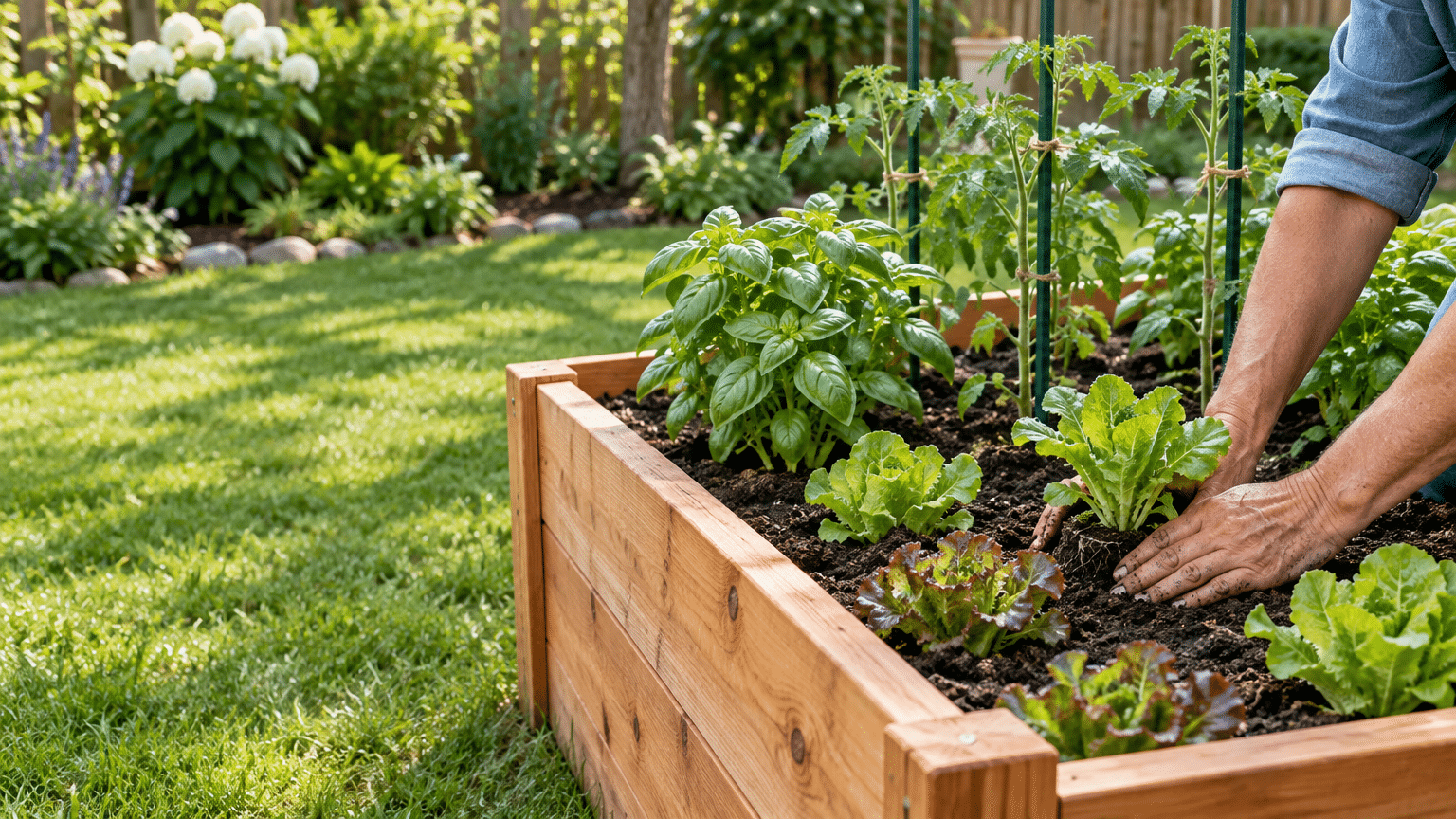
2. Raised Bed Grid Layout
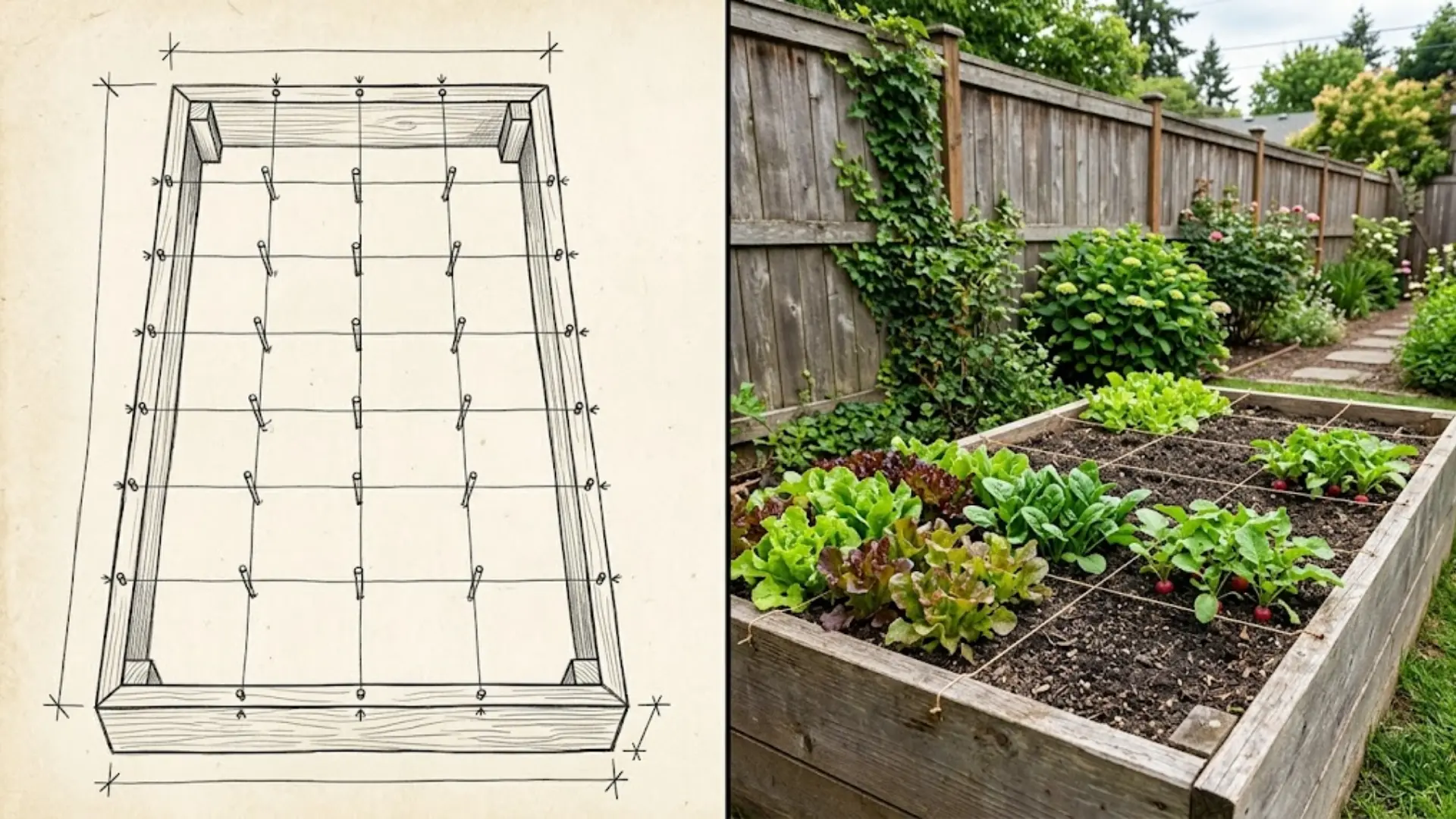
Style: Raised beds divided into a grid pattern for organized planting
Ideal For: Gardeners who want structure, better soil control, and less bending
Garden Size: Small to medium yards, patios, or backyard corners
Plant List:
- Lettuce
- Spinach
- Radishes
- Carrots
- Mixed herbs (basil, parsley, cilantro)
Spacing & Arrangement:
This layout borrows from square-foot concepts, dividingeach bed into one-foot sections that pack in more plants per square foot than open rows.
Recommended bed width sits around 4 feet, keeping every plant within arm’s reach without stepping into the soil. The tight grid shades out weeds naturally and keeps maintenance light.
Building the frame itself is usually the first step, and a budget-build walkthrough for raised beds can save some trial and error on materials.
3. Square Foot Garden Layout
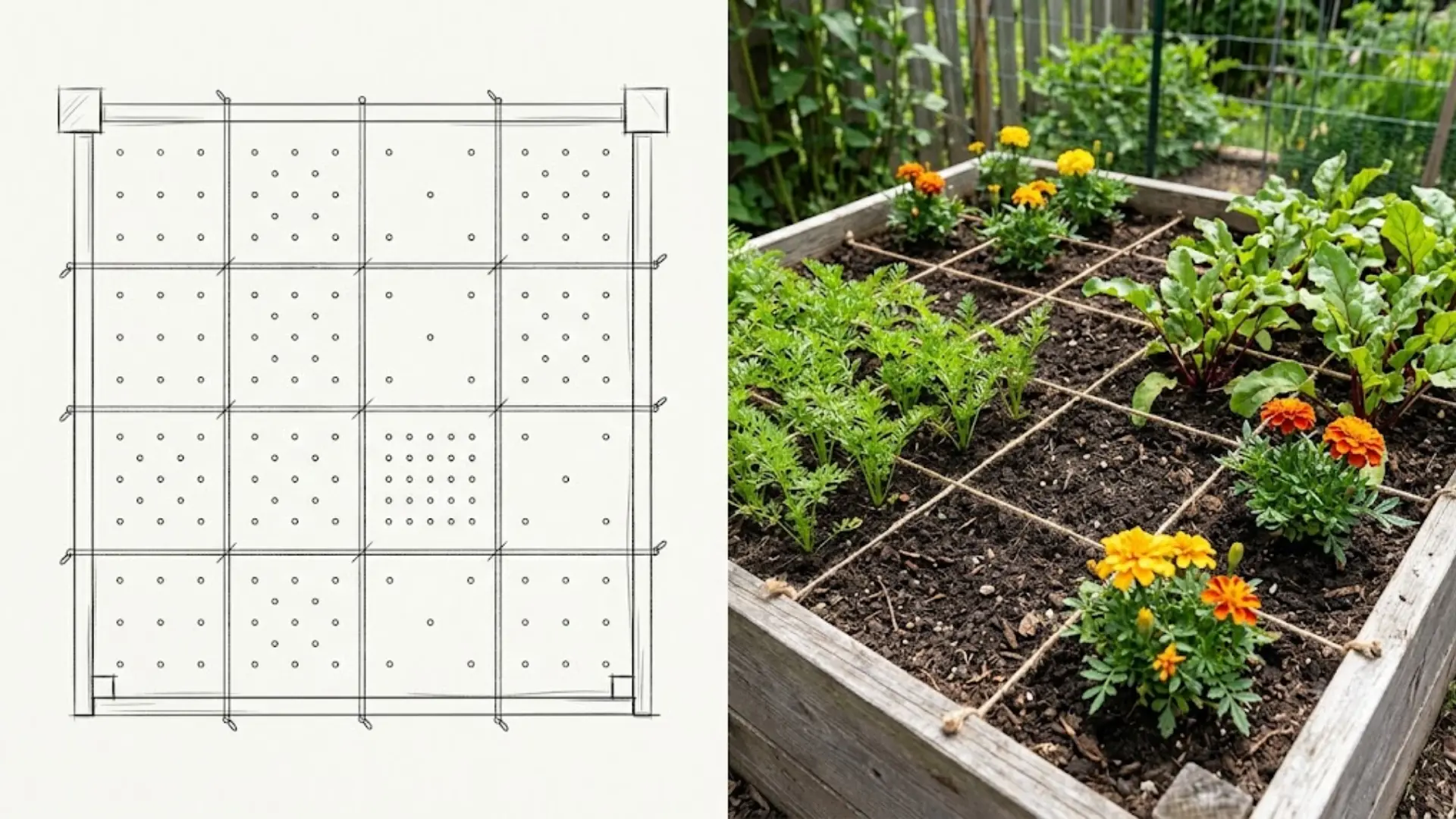
Style: A refined grid system using one-foot planting squares
Ideal For: Beginners who want a foolproof, low-waste planting method
Garden Size: Small beds, container gardens, or compact backyard plots
Plant List (per square foot):
- Carrots, 16 per square
- Beets, 9 per square
- Bush beans, 9 per square
- Onions, 16 per square
- Lettuce, 4 per square
- Marigolds, 4 per square along border squares
Spacing & Arrangement:
Each one-foot grid holds a set number of crops depending on their mature size, so a single square might fit sixteen carrots or just one pepper plant.
This efficient spacing takes the guesswork out of planning and works especially well for beginners who don’t yet have an instinct for how much room each vegetable needs.
4. Wide Row Layout
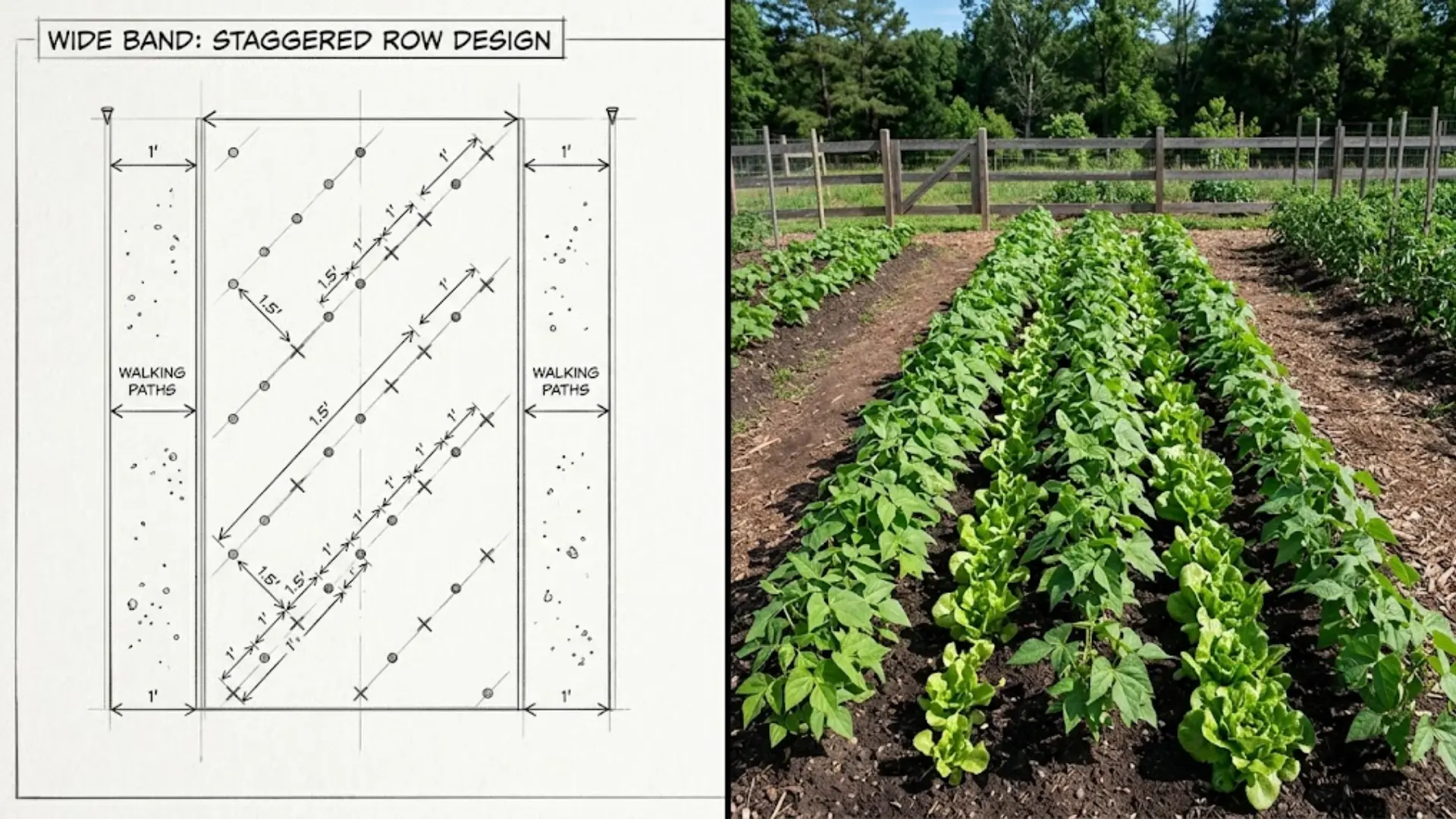
Style: Broad planting bands instead of single-file rows
Ideal For: Gardeners who want higher yields without a full grid system
Garden Size: Medium to large gardens with flexible bed shapes
Plant List:
- Spinach
- Kale
- Arugula
- Swiss chard
- Mesclun mix
Spacing & Arrangement:
Unlike traditional rows, wide rows spread plants across a band two to four feet across, letting leafy greens fill in and shade the soil beneath them.
This suppresses weeds far better than single rows while making harvest quicker, since one pass across the bed collects far more than a narrow row would.
5. Companion Planting Layout
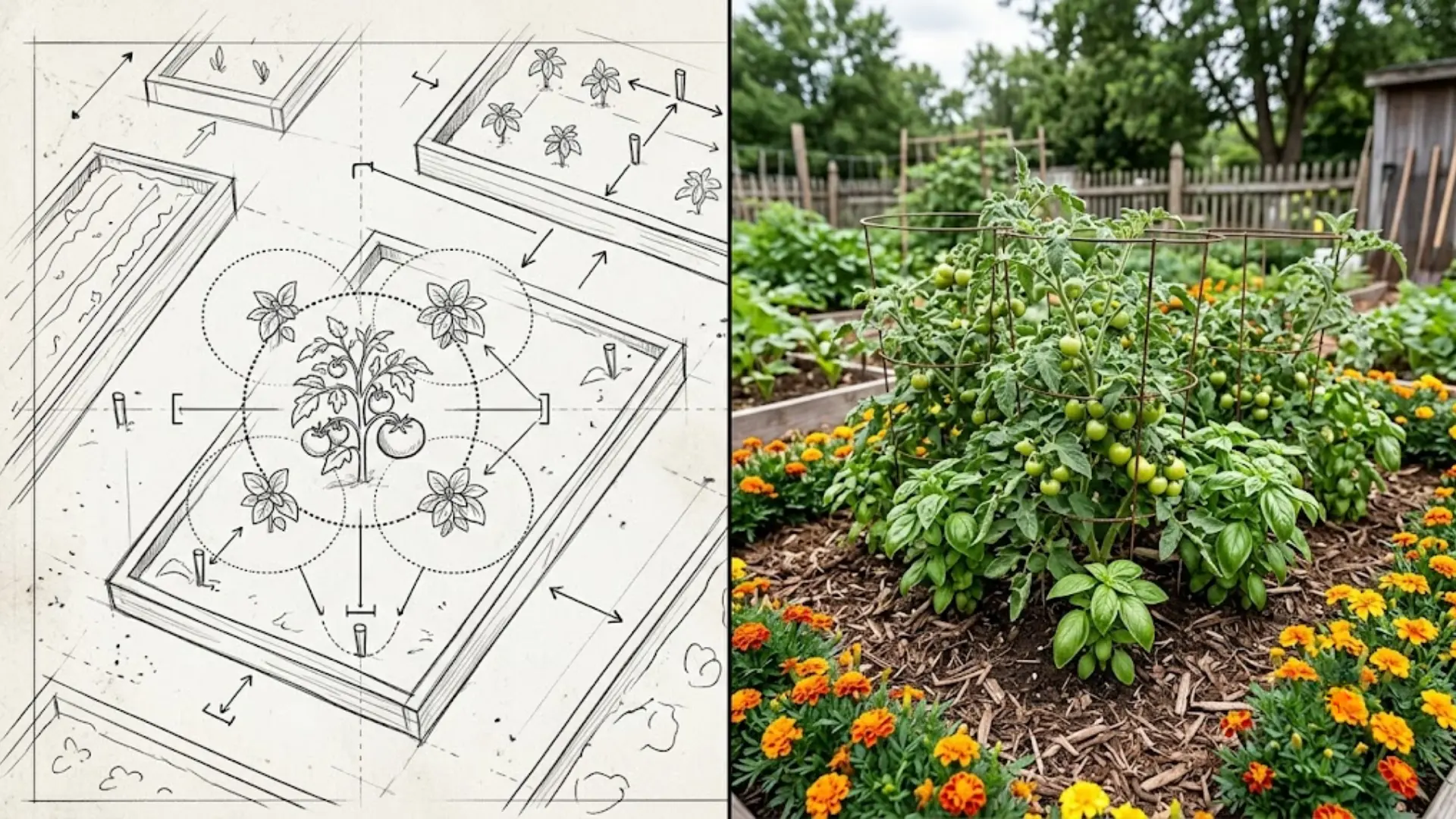
Style: Vegetables grouped in pairs or clusters that benefit each other
Ideal For: Gardeners focused on natural pest control and healthier yields
Garden Size: Any size, adaptable to small beds or larger plots
Plant List (by pairing):
- Tomatoes paired with basil
- Carrots paired with onions
- Beans paired with corn
- Marigolds bordering all beds
Spacing & Arrangement:
Spacing here shifts slightly to accommodate paired growth, tomatoes and basil sit close at roughly 12 inches apart, while beans climbing alongside corn need about 8 inches between stalks to share support without crowding roots.
Carrots and onions can sit as close as 3 inches apart since neither competes heavily for the same root space. Marigolds scattered along bed edges take up little room but help deter pests from neighboring crops.
Tomatoes tend to anchor most companion beds, and a layout guide for pairing them with the right neighbors covers spacing adjustments in more depth.
6. Block Planting Layout
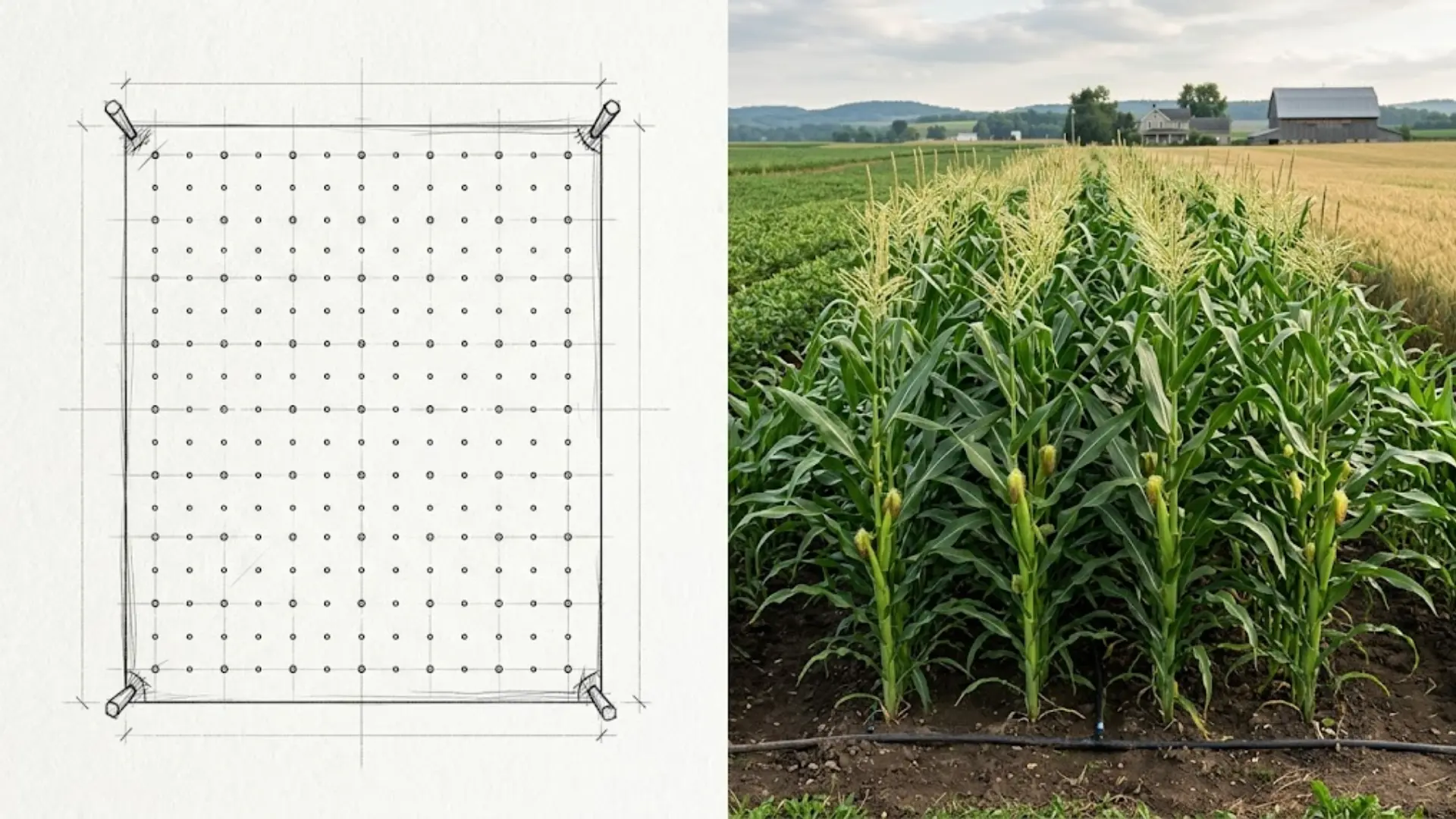
Style: Crops grouped into solid rectangular blocks rather than lines
Ideal For: Gardeners growing wind-pollinated crops or wanting space efficiency
Garden Size: Medium gardens with room for multiple blocks
Plant List:
- Corn
- Broccoli
- Cabbage
- Brussels sprouts
Spacing & Arrangement:
Block planting arranges vegetables in a rectangular cluster instead of a single line, which matters most for crops like corn that rely on wind pollination, a tight block improves pollen transfer far better than one long row ever could.
Spacing within the block usually mirrors standard in-row distances, around 12 inches for corn and 18 inches for brassicas, but the compact shape uses less total space than spreading the same number of plants across rows.
7. Vertical Vegetable Garden Layout
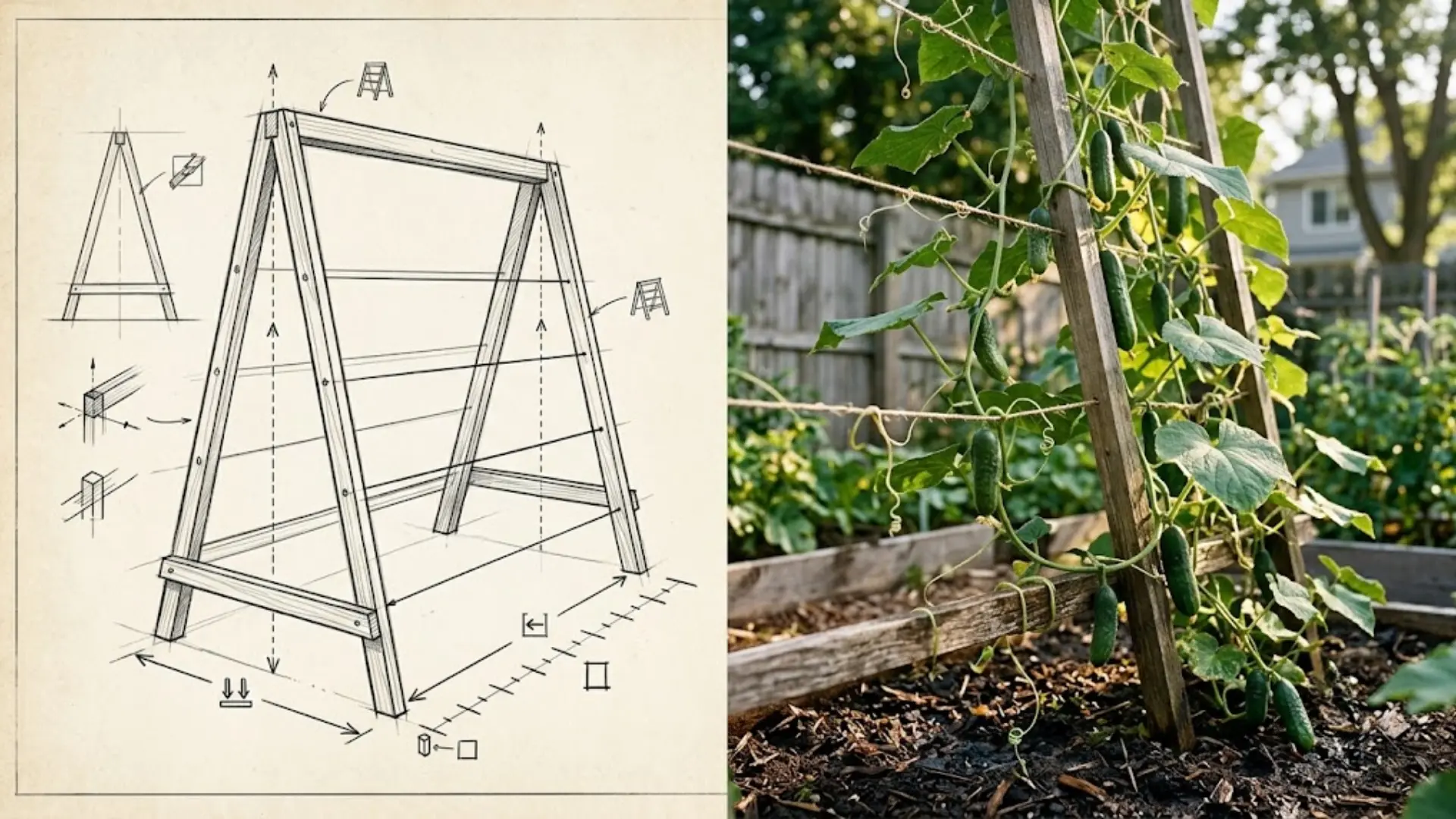
Style: Growing upward using trellises, arches, and cages
Ideal For: Gardeners short on ground space but wanting high yields
Garden Size: Small yards, balconies, or narrow side gardens
Plant List (by support type):
- Cucumbers on trellis
- Pole beans on arches
- Peas in cages
- Small melons on a reinforced trellis
Spacing & Arrangement:
Ground spacing for vertical crops stays fairly tight, often 12 to 18 inches at the base, since the real space savings happen above the soil rather than across it.
Trellises and arches need sturdy anchoring, and a handful of simple, tested trellis build ideas make it easier to match the right support to each climbing crop. Cages work well for bushier climbers like peas.
8. Family Meal Planning Layout
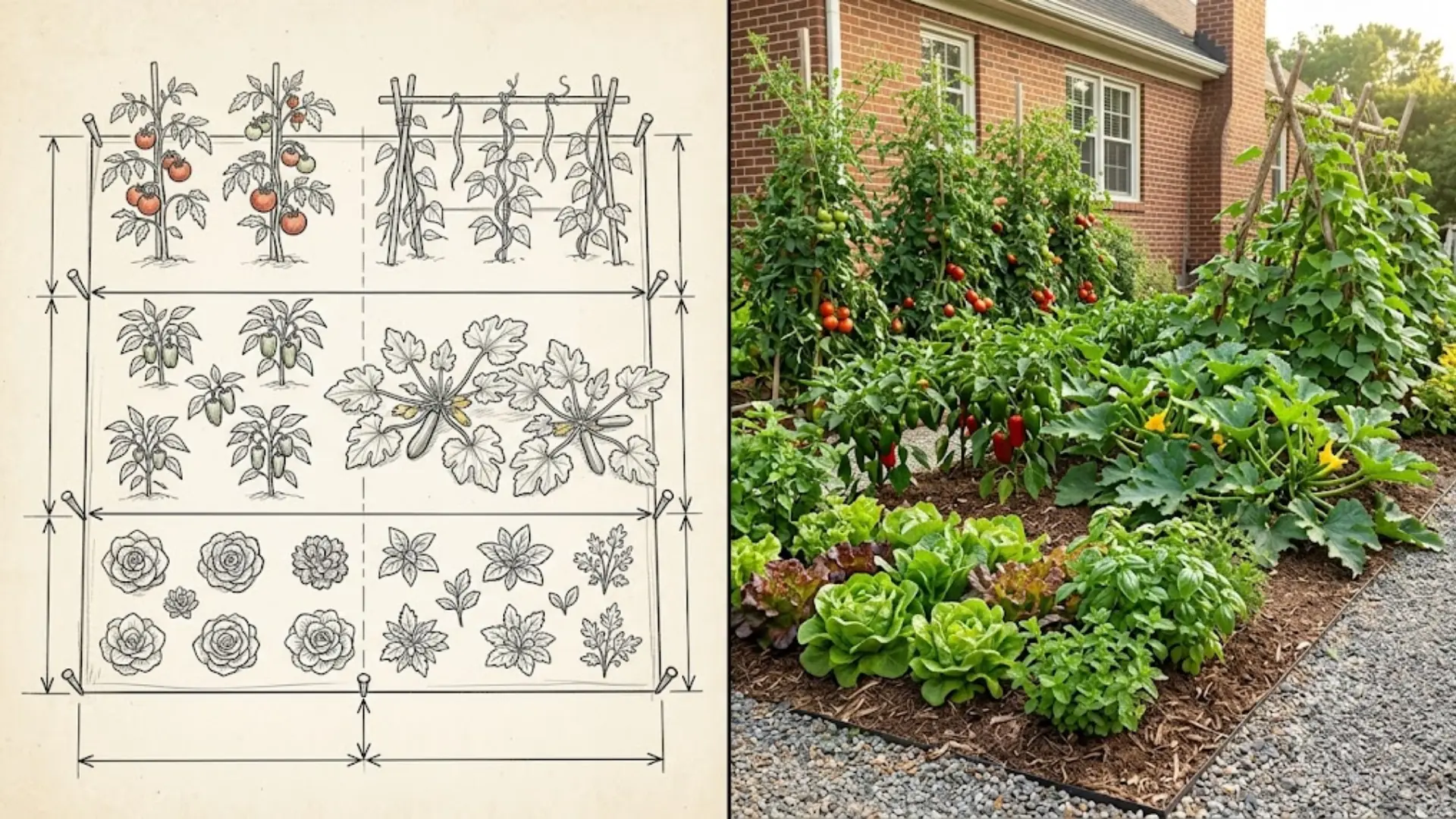
Style: Beds organized around what the household actually eats
Ideal For: Families wanting a practical, kitchen-driven garden
Garden Size: Medium gardens with room for varied crop groupings
Plant List (grouped by placement):
- Near the kitchen door: Lettuce, herbs, cherry tomatoes
- Mid-garden: Peppers, zucchini
- Back of the bed: Full-size tomatoes, pole beans
Spacing & Arrangement:
This layout starts with frequently eaten vegetables placed closest to the kitchen door for easy picking, then builds outward with succession planting so something is always ready to harvest.
Spacing follows each crop’s standard needs, but beds are grouped by season, with quick growers like lettuce near the front for repeated sowing and slower summer crops like tomatoes further back.
9. Four-Bed Crop Rotation Layout
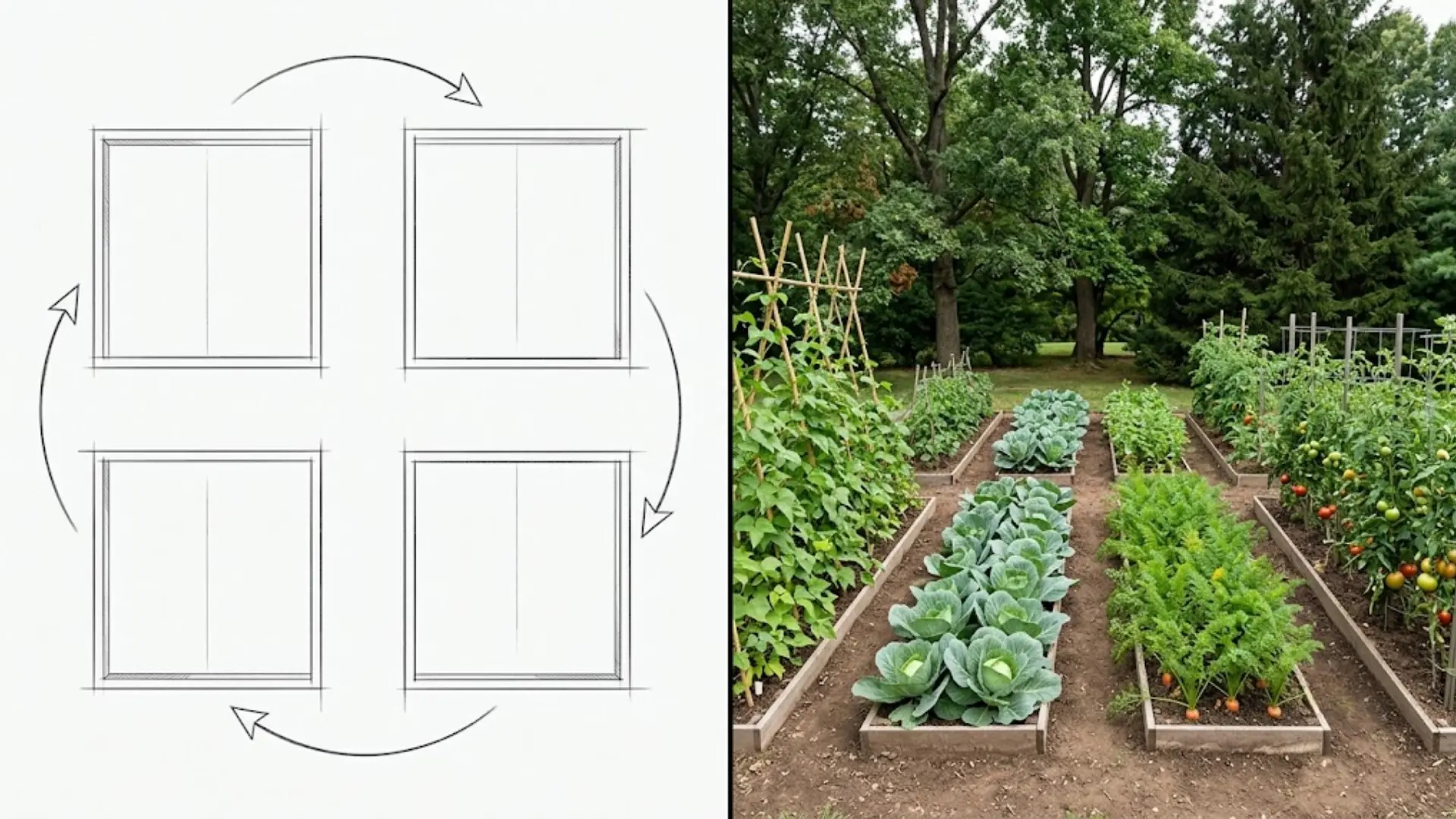
Style: Four separate beds cycled through different crop families each year
Ideal For: Gardeners focused on long-term soil health and disease prevention
Garden Size: Larger gardens with room for at least four distinct beds
Plant List (by bed and family):
- Bed 1: Legumes, beans and peas
- Bed 2: Brassicas, cabbage and broccoli
- Bed 3: Root vegetables, carrots and beets
- Bed 4: Nightshades, tomatoes and peppers
Spacing & Arrangement:
Rotation basics call for grouping crops by family, then moving each group to a different bed the following year.
This prevents soil diseases from building up and balances nutrient use, since legumes replenish nitrogen that heavy feeders like brassicas draw down.
A simple annual rotation example might move tomatoes from bed four to bed one the next season, tracking the cycle on paper so nothing repeats in the same soil for at least three years.
Two Layouts, One Big Spacing Decision
These two get compared most since they sit at opposite ends of the spectrum, structured versus open, and it’s usually the first real choice gardeners face.
The real differences show up in the numbers, space used, upkeep required, and setup cost.
| Feature | Raised Beds | Traditional Rows |
|---|---|---|
| Space Efficiency | Plants sit 6 to 12 inches apart in a grid, with paths only around the bed’s edge | Rows need 18 to 36 inches apart for foot traffic, using up nearly half the plot |
| Maintenance | Loose, uncompacted soil cuts weeding time roughly in half | Foot traffic compacts soil over a season, making weeds easier to take hold |
| Water Use | Dense canopy shades soil, often cutting watering frequency by a third | Bare soil between rows evaporates faster, needing more frequent watering |
| Weed Control | Full canopy blocks sunlight from reaching weed seeds within weeks | Sunlit gaps between rows give weeds a constant chance to sprout |
| Harvesting | Everything stays within arm’s reach from a 4-foot-wide bed | Requires walking into the row, risking compaction near roots |
| Cost | Runs $3 to $8 per square foot for lumber, soil, and amendments | Costs little beyond seeds, since no structure is needed |
Raised bed material costs vary a lot by region, lumber type, and bed size, so it’s best to price out lumber and soil locally rather than rely on a single per-square-foot figure.
How to Adjust Spacing as the Seasons Change?
Spacing needs to shift right along with the seasons, since what works for a spring bed rarely holds up once summer crops move in.
- Spring crops like lettuce and peas tolerate tighter spacing since cooler weather slows their spread.
- Summer vegetables such as tomatoes and squash need their full mature spacing from the start, since they’ll fill every inch given.
- Fall gardens can reuse spring spacing for crops like kale and radishes, since growth stays compact in cooler temperatures.
- Succession planting works best when new seedlings go into gaps left by harvested crops rather than squeezed between growing ones.
- Staggering plantings by a couple weeks keeps beds productive without ever forcing two mature crops into the same space at once.
Getting spacing right season after season comes down to matching each crop’s growth speed to the space it’s actually given, not the space it started with.
Getting Spacing Right Across Every Vegetable Family
Different plant families have wildly different space needs, and lumping them all under one spacing rule is where a lot of gardens go wrong.
Here’s a quick reference for getting distances right across the crops you’ll plant most often.
| Vegetable Family | Crops | Spacing Between Plants |
|---|---|---|
| Fruiting Vegetables | Tomatoes, peppers, eggplants | 18 to 24 inches |
| Root Vegetables | Carrots, beets, radishes, turnips | 2 to 4 inches |
| Leafy Greens | Lettuce, kale, spinach | 8 to 12 inches |
| Vine Crops | Cucumbers, melons, pumpkins, squash | 24 to 36 inches |
| Legumes | Beans, peas | 4 to 6 inches |
These ranges reflect widely used general guidelines. Exact spacing can shift by variety, so it’s worth double-checking the seed packet for anything you’re planting.
Layout Mistakes That Quietly Sabotage Your Harvest
Even experienced gardeners fall into a few predictable traps when planning their layout. Catching these early saves a whole season of frustration.
- Planting too close together, since crowded roots and leaves compete for the same resources.
- Ignoring mature plant size, which turns a tidy seedling bed into a tangled mess by midsummer.
- Blocking sunlight by placing tall crops where they shade out shorter, sun-loving ones.
- Skipping proper walking paths, making it hard to weed or harvest without stepping on something.
- Forgetting crop rotation, which lets soil diseases and pests build up in the same spot year after year.
- Mixing incompatible vegetables that compete for nutrients or attract each other’s pests.
- Overplanting vine crops like pumpkins and squash, letting them sprawl over and smother neighboring beds.
A little foresight around these common missteps keeps the whole garden running smoothly from planting day through harvest.
Tools and Charts Worth Bookmarking
A few reliable references make layout planning so much easier once the basics click. These are worth saving for whenever you’re mapping out next season’s beds.
- The USDA Plant Hardiness Zone Map helps confirm which crops and planting windows actually suit your climate.
- Cornell Cooperative Extension’s Gardening Resources break down spacing, days to maturity, and companion pairings for dozens of common crops.
- Old Farmer’s Almanac Planting Calendar helps time succession planting around your area’s first and last frost dates.
- The National Gardening Association’s plant care database offers quick spacing and depth references across thousands of vegetable varieties.
A simple grid notebook or graph paper works just as well as any app for sketching bed layouts to scale before digging in.
Wrapping It Up
A garden’s success rarely comes down to luck, it comes down to the choices made before a single seed goes in the ground.
Leaning toward tidy raised beds or sticking with classic open rows, the right vegetable garden layout plans and spacing turn a hopeful patch of soil into something that actually feeds you.
So always start small, adjust as you learn what your space and climate demand, and let the layout work in your favor.
Which style are you leaning toward for your next planting season? Drop a comment below, I’d love to hear what you’re planning.
Frequently Asked Questions (FAQs)
What is the Ideal Spacing for a Vegetable Garden?
Spacing depends on the crop family, root vegetables need just a few inches apart, while vine crops like squash need 24 to 36 inches. Checking seed packet guidelines for each specific vegetable gives the most accurate number.
How Do I Plan a Vegetable Garden for Beginners?
Start with a square-foot garden layout, since the one-foot grid system removes most of the guesswork about spacing. Pick a handful of easy crops, sketch out the grid, and expand once the basics feel comfortable.
Can Vegetables Be Planted Closer Together?
Some crops tolerate tighter spacing, especially fast-growing greens and root vegetables with shallow roots. Fruiting plants, however, need their full recommended distance to avoid stunted growth and disease.
How Do I Maximize Production in a Small Garden?
Vertical layouts, companion planting, and succession planting all squeeze more harvest out of limited space. Growing upward with trellises makes the biggest difference in tight spots.



2 Responses
This is amazing!! As a new(ish) gardener with a lot of ambition, your guide will be incredibly helpful. Thank you!
This was very helpful for me as a beginner! Thanks for posting!