I have seen many homeowners put extra effort into creating a greener, healthier lawn, only to find that too much of a good thing can create unexpected problems.
After years of gardening experience, from caring for small city balconies to managing large perennial beds, I’ve learned that plants respond best to balance, not excess.
Many of you might assume that using extra fertilizer will help your lawn grow faster, only to find later that too much can cause unexpected damage.
If you’re questioning yourself: can you over-fertilize your lawn? The answer is worth understanding before your grass starts showing signs of stress.
This blog explains this lawn care issue, so you can know what your grass needs to stay healthy and strong.
What Does It Mean to Overfertilize a Lawn?
Overfertilizing happens when you give your grass more nutrients than it can actually use. Think of it like overfeeding a plant in a pot.
The excess doesn’t just sit there harmlessly. It builds up in the soil and creates problems.
Nitrogen is usually the biggest culprit, as it’s the first number in the NPK ratio you see on fertilizer bags.
Grass needs nitrogen to grow green and healthy, but too much nitrogen can lead to rapid, weak growth that can’t sustain itself.
The NPK ratio tells you the percentage of nitrogen, phosphorus, and potassium in the mix. A bag labeled 20-5-10 means 20% nitrogen, 5% phosphorus, and 10% potassium.
Higher numbers mean stronger concentrations, which is why you need less product per application.
Can You Over-Fertilize Your Lawn?
Yes, you can over-fertilize your lawn, and applying extra fertilizer does not always lead to healthier grass.
Fertilizer provides essential nutrients that support growth, but using too much can create problems for your lawn.
Excess nutrients, especially nitrogen, can cause grass to grow too quickly, weaken the roots, and make the lawn more vulnerable to stress.
Applying fertilizer too often, using incorrect amounts, or spreading it unevenly are common causes of over-fertilization.
In my own yard, uneven spreading has caused more damage than applying too much overall, since a spreader that overlaps even slightly can double-apply to one strip of grass.
Therefore, I recommend that a healthy lawn needs the right balance of nutrients, so following product instructions and understanding your soil needs are important for preventing damage.
Signs Your Lawn Has Too Much Fertilizer
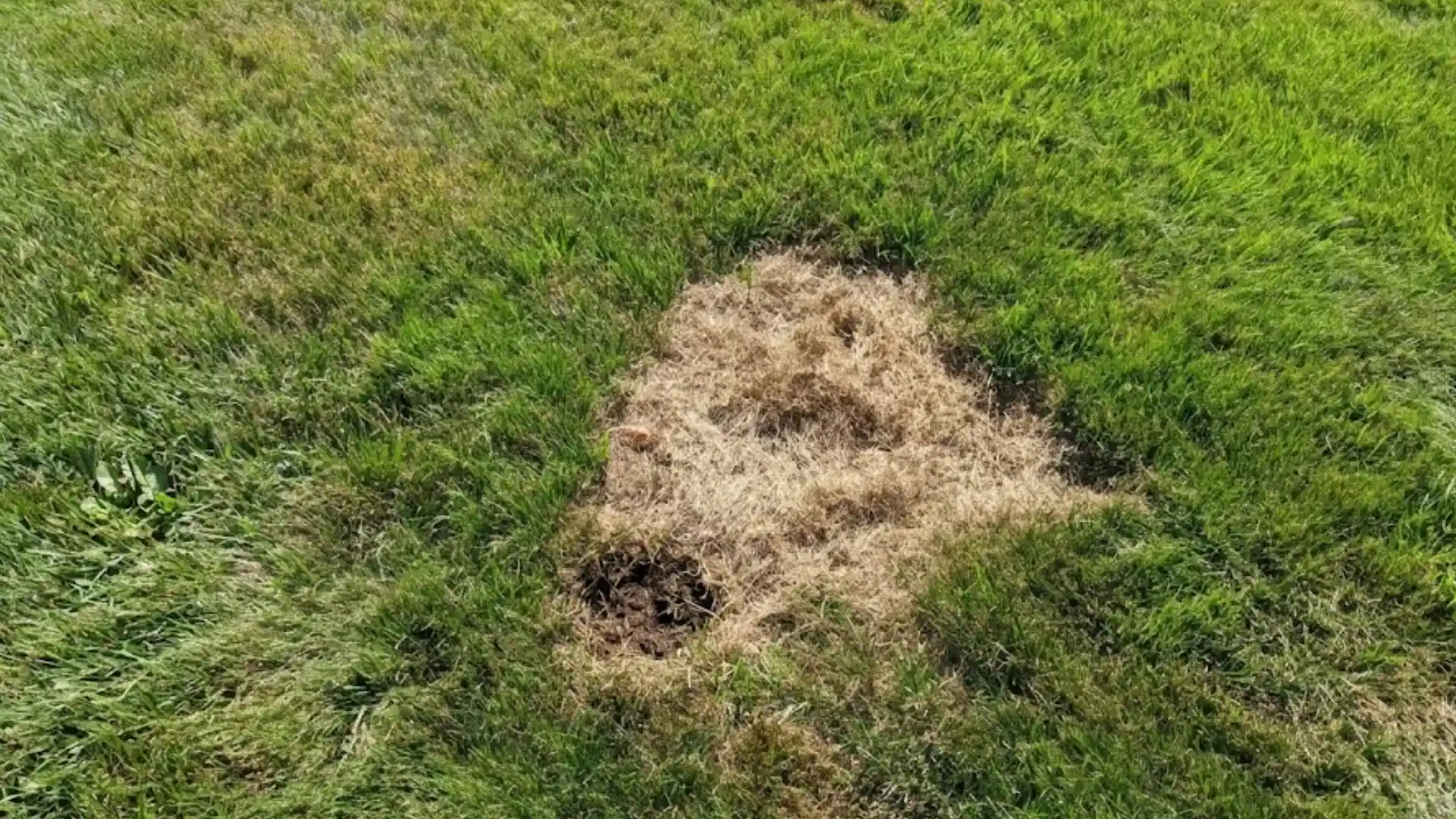
Applying too much fertilizer can quickly affect the appearance and health of your grass.
An over-fertilized lawn may show visible changes, including discoloration, weak growth, and soil issues caused by excess nutrients.
Look for these common signs to determine if your lawn has received too much fertilizer.
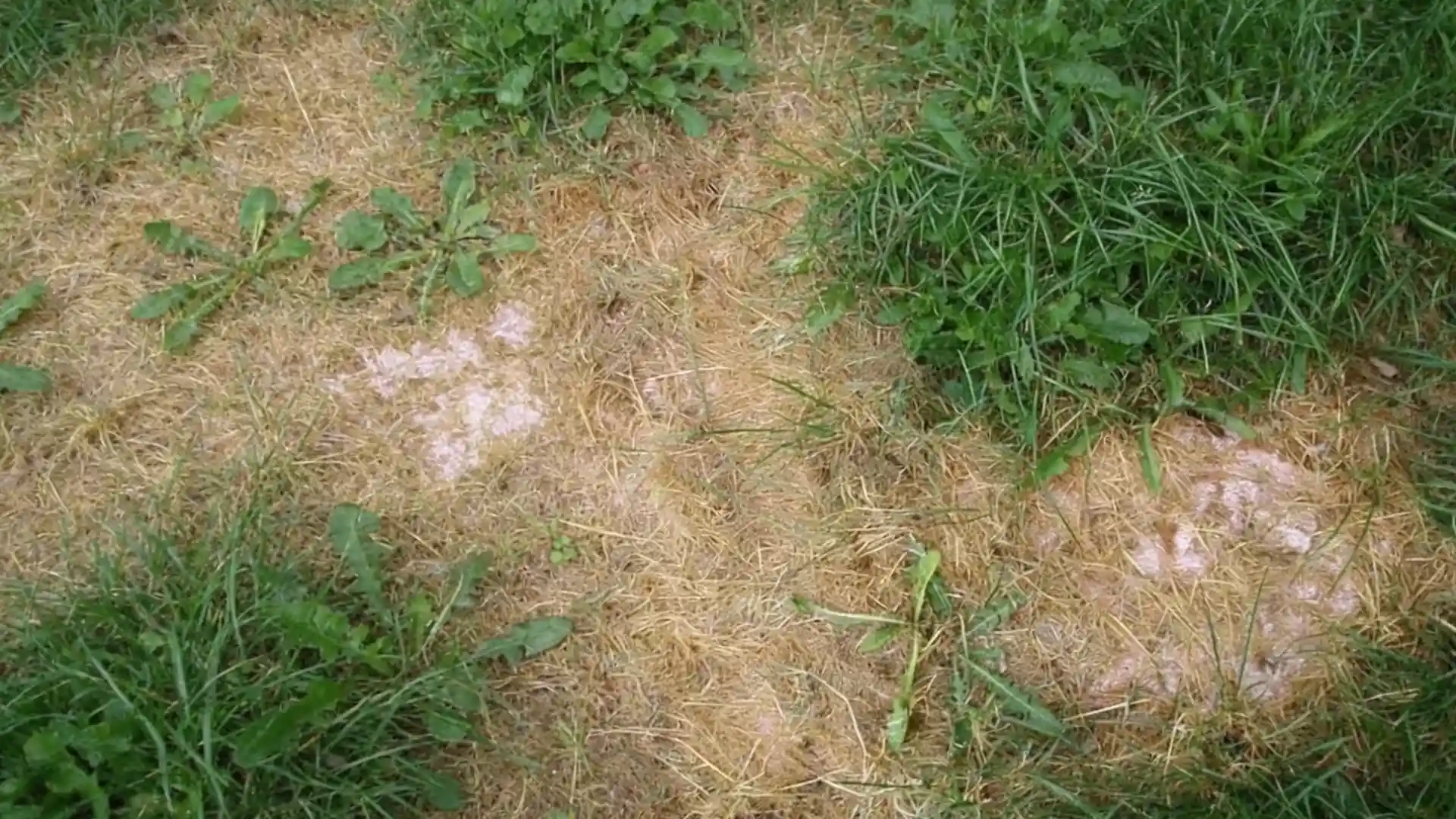
- White Crust on Soil Surface: A buildup of fertilizer salts may leave a white residue or crust on the soil, preventing proper water absorption.
- Rapid Grass Growth: Too much nitrogen can cause unusually fast growth, leading to frequent mowing and weaker grass over time.
- Dry or Wilting Grass: Over-fertilized grass may struggle to absorb water because damaged roots cannot function properly.
- Uneven Lawn Color: Heavy fertilizer application in certain areas can create patches of dark green, yellow, or brown grass.
- Increased Lawn Stress: Excess nutrients can make grass more vulnerable to drought, diseases, pests, and temperature changes.
What Happens If You Over-Fertilize Your Lawn?
While fertilizer supports healthy growth when used correctly, too much can disturb the natural balance your grass needs to stay strong and healthy.
1. Fertilizer Burn Causes Brown or Yellow Grass
Fertilizer burn happens when excess fertilizer salts build up around grass blades and pull moisture away from the plant tissues.
This can leave the lawn looking damaged soon after application. Common signs include brown patches, yellow streaks, and scorched-looking grass edges.
The damage often appears quickly because concentrated fertilizer can stress grass blades within a short period.
These burned areas may stand out against otherwise healthy sections of the lawn.
2. Excess Fertilizer Can Damage Grass Roots
Too many nutrients can affect how grass roots grow and function beneath the soil. Excess fertilizer may prevent roots from developing properly, leaving the lawn with a weaker foundation.
Shallow or damaged roots make grass less able to handle dry conditions and environmental stress.
In some cases, the surface may look green and grow quickly while the root system underneath is struggling to support long-term lawn health.
3. Over-Fertilizing Can Increase Lawn Problems
An excess amount of fertilizer can encourage fast grass growth that is weaker and harder to maintain.
Rapid growth may increase mowing needs and create thicker grass layers that contribute to thatch buildup. Over-fertilized lawns can also become more likely to experience diseases and attract certain pests.
When nutrient levels are unbalanced, grass may lose some of its natural ability to stay healthy through changing weather and growing conditions.
How Much Fertilizer is Too Much for a Lawn?
The amount of fertilizer a lawn needs depends on factors such as grass type, soil condition, fertilizer formula, and the time of year.
Putting on too much fertilizer harms your lawn more than it helps.
Too much nitrogen causes grass to grow too fast and become weak, making it more susceptible to diseases, insects, and drought stress.
It also burns the grass, creates ugly brown patches, and wastes your money. Excess fertilizer washes away into streams and groundwater, causing pollution.
Most home lawns only need 2 to 4 pounds of nitrogen per 1,000 square feet per year, split into several small applications. Never put more than 1 pound of nitrogen at once unless using a slow-release type.
Always check the fertilizer label and follow the recommended application rate for your lawn.
How to Fix an Over-Fertilized Lawn?
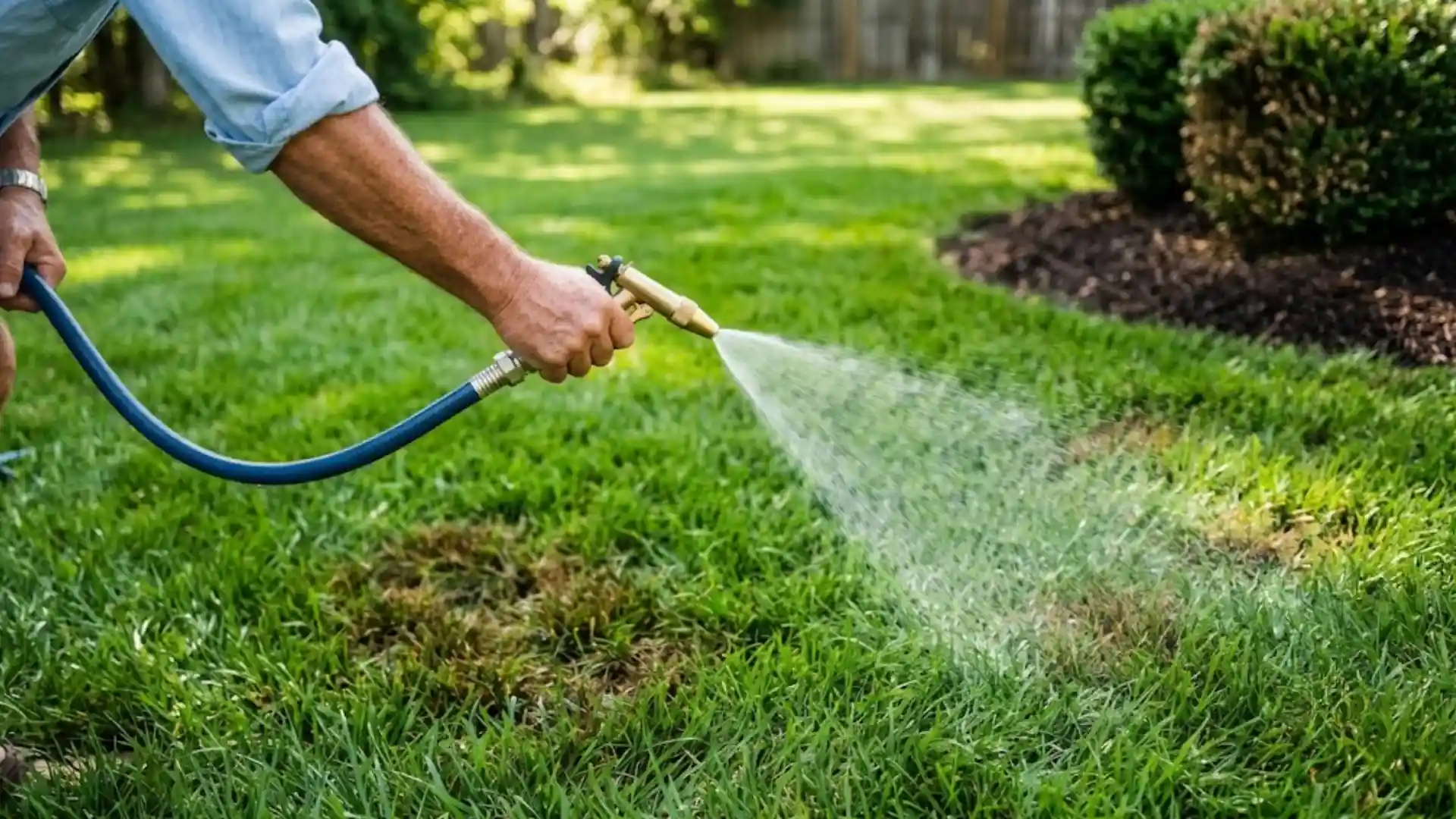
An over-fertilized lawn can often recover if the problem is noticed and addressed early. The right approach depends on how much damage has occurred and how strongly the grass has been affected.
1. Stop Applying More Fertilizer
From what I have experienced, when a lawn has too much fertilizer, adding more nutrients can increase the damage and place extra stress on the grass.
So, avoid using additional fertilizer or quick-fix growth products until the lawn has recovered. Giving the grass time to stabilize allows it to respond naturally without more nutrient buildup.
Continuing to apply fertilizer during this stage may worsen discoloration, root stress, and other signs of over-fertilization.
2. Water the Lawn to Flush Excess Fertilizer
Deep watering can help move excess fertilizer nutrients deeper into the soil and away from the grass root zone. This process reduces the concentration of salts that may be affecting the lawn.
Water should be applied carefully to avoid runoff and unnecessary waste.
Watering earlier in the day rather than in the evening also helps the flushed-out fertilizer soak in instead of sitting on wet grass overnight
In cases where fertilizer levels are high, repeated watering may be needed over several days to help the soil return to a healthier balance.
3. Remove Visible Fertilizer Granules
If fertilizer has recently spilled or has been applied unevenly, visible granules can create concentrated areas of damage.
Removing excess fertilizer from these spots can prevent further stress on the grass. Carefully collect any extra granules rather than spreading them across unaffected areas.
Uneven fertilizer buildup often leads to patches of severe damage because certain sections receive much higher nutrient levels than the rest of the lawn.
4. Repair Dead Grass Patches
Severely damaged grass may not recover if the roots and blades have been badly affected.
Start by checking whether the affected areas show signs of new growth or if the grass has completely died. Dead patches may need to be removed before new grass can establish.
Once the area is ready, improving soil conditions and reseeding bare spots can help restore a healthier-looking lawn.
Can Over-Fertilized Grass Recover?
Yes, over-fertilized grass can often recover, but the recovery time depends on the severity of the damage and the condition of the lawn.
Mild fertilizer damage may improve as the grass adjusts and new growth appears, while severe cases may take longer to repair.
Factors such as grass type, soil health, weather conditions, and the amount of excess fertilizer applied can affect how quickly the lawn returns to normal.
Some areas may recover naturally, while heavily damaged sections may experience permanent loss of grass.
Recognizing the signs early can make recovery easier and help protect the remaining healthy grass.
Tips to Prevent Over-Fertilizing Your Lawn
Preventing over-fertilization is easier than repairing lawn damage caused by excess nutrients. These simple tips can reduce the risk of fertilizer burn, nutrient imbalance, and other common lawn problems.
- Test Your Soil First: A soil test shows which nutrients your lawn actually needs, helping you avoid applying unnecessary fertilizer that can lead to nutrient buildup.
- Follow Fertilizer Instructions: Always use the recommended amount listed on the fertilizer package. Applying extra product will not make grass grow faster and can increase the chance of damage.
- Choose the Right Fertilizer Type: Different lawns need different nutrient levels. Selecting a fertilizer that matches your grass type and soil conditions helps prevent overapplication of nutrients.
- Use Proper Spreader Settings: Incorrect spreader settings can cause uneven fertilizer distribution. Calibrating your spreader helps ensure the product is applied evenly across the lawn.
- Avoid Overlapping Applications: Applying fertilizer to the same area multiple times can create concentrated nutrient spots, leading to uneven growth and potential fertilizer burn.
- Stick to a schedule: Feeding on a set seasonal lawn care timetable, rather than fertilizing whenever the lawn looks a little pale, keeps nutrient buildup from creeping up over the season.
Conclusion
Over-fertilizing your lawn can cause more harm than good, leading to issues like fertilizer burn, weak roots, and uneven grass growth.
If you notice yellow patches, brown areas, or unusual growth after fertilizing, you should act promptly.
A balanced lawn care routine focused on proper timing, accurate application, and your grass’s actual needs will always deliver better results.
Every lawn responds differently, so learning from your own experience can help you improve your approach over time.
Have you ever dealt with an over-fertilized lawn, and if so, did you find a solution that worked? Share your experience in the comments below.
Frequently Asked Questions
How Quickly Does Fertilizer Burn Appear on Grass?
Fertilizer burn can appear within a few days after applying too much fertilizer, especially when high salt levels affect grass blades and roots.
Can Rain Fix an Over-Fertilized Lawn?
Rain may help move excess fertilizer through the soil, but heavy fertilizer buildup may require more controlled watering depending on the severity of the issue.
Can Over-Fertilizing Affect Nearby Plants and Water Sources?
Yes, excess fertilizer can be carried by runoff and potentially affect nearby plants, soil quality, and local water systems if nutrients leave the lawn.