
I still remember the first time someone asked me if pineapples grow on trees. I was standing in my garden, pruning back some overgrown herbs, when a neighbor peered over the fence with genuine curiosity.
That question stayed with me because it shows how disconnected we’ve become from where our food actually originates.
Pineapples don’t grow on trees at all. They emerge from low-growing plants in a way that feels almost architectural, like nature decided to get creative with geometry. What makes this tropical oddity even more intriguing is how it develops.
Each fruit tells a story of patience, structure, and rather unexpected growing habits.
Understanding how pineapples actually form changes everything about how we might approach growing them ourselves, and honestly, the reality is far more interesting than any tree-based myth.
Do Pineapples Grow on Trees?
Most people picture pineapples dangling from palm trees or hanging in clusters like coconuts. There’s something about their tropical nature and that crown of spiky leaves that makes the tree assumption feel logical.
We’ve been conditioned to associate exotic fruits with tall, swaying canopies, so when pineapple comes up in conversation, our minds automatically sketch that same image.
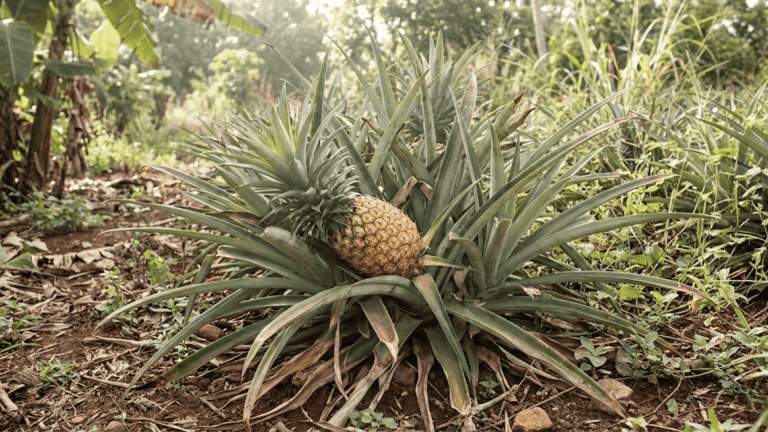
The reality sits much closer to the ground. Pineapples emerge from compact, ground-level plants that look more like oversized succulents than anything resembling a tree.
The entire fruit develops at the center of a rosette of sword-shaped leaves, rising up on a single sturdy stem. Nothing about it resembles what we expect.
What Do Pineapples Actually Grow On?

The pineapple plant itself is where things get really interesting. Once we move past the tree myth, what we’re left with is a low-growing perennial that behaves unlike most fruit-bearing plants.
1. The Pineapple Plant Explained
Meet Ananas comosus, the botanical name for what we simply call the pineapple plant. It’s a perennial tropical species that belongs to the bromeliad family, which explains those thick, waxy leaves and water-storing capabilities.
Bromeliads thrive in warm, humid environments, and the pineapple plant carries all those family traits. It stays productive for several years, sending up new growth and fruit under the right conditions.
2. Bush vs. Tree vs. Plant
Calling it a pineapple plant is the most accurate description. It’s not a bush because it lacks the woody stems and branching structure. It’s definitely not a tree.
What we’re looking at is a ground-hugging rosette that reaches only 2 to 5 feet tall. The leaves radiate outward from a central point, creating a compact crown that stays low and manageable throughout its entire life.
3. How the Pineapple Fruit Forms
The fruit emerges from the very center of the plant, pushed upward on a thick central stalk. What makes it unusual is that each pineapple is actually a multiple fruit formed from fused berries.
Dozens of individual flowers bloom along that stalk, and as they mature, they merge together into the single, spiky fruit we recognize. It’s a slow fusion that takes months to complete.
What Does a Pineapple Plant Look Like?
Standing in front of a pineapple plant for the first time feels a bit like meeting something prehistoric.
The leaves alone command attention, long and blade-like, fanning out in a tight spiral from the center. They’re serrated along the edges, tough to the touch, and built to withstand heat and drought.
- Sword-shaped leaves can stretch up to five feet long, creating a dramatic rosette that sits low to the ground.
- A central flower spike emerges from the heart of the plant, covered in small purple or red blooms that eventually fuse into fruit.
- The pineapple fruit sits perched on a short, sturdy stem just above the leaf crown, never touching the soil.
- Shallow, wide-spreading roots anchor the plant and absorb moisture efficiently across the surface.
How Long Does it Take to Grow a Pineapple?
Growing a pineapple requires patience that borders on meditative. The timeline stretches far longer than most garden crops, and every stage unfolds at its own unhurried pace.
| Growth Stage | Timeframe | Plant Activity | Visible Changes |
|---|---|---|---|
| Planting to Flowering | 12–18 months | Roots establish, leaf rosette expands | Plant matures, leaves thicken and multiply |
| Flower to Fruit | 5–7 months | Blooms fuse and develop | Fruit swells, changes from green to golden |
| Total Time to Harvest | 18–24 months | Complete growth cycle | Ripe pineapple ready to pick |
I planted my first pineapple top on a whim, tucked it into a corner of the garden, and honestly forgot about it for months.
When I finally noticed the tiny purple flowers pushing through the center, nearly a year and a half had passed. That’s the thing about pineapples: they teach you to stop watching the clock.
Pineapple Growth Stages
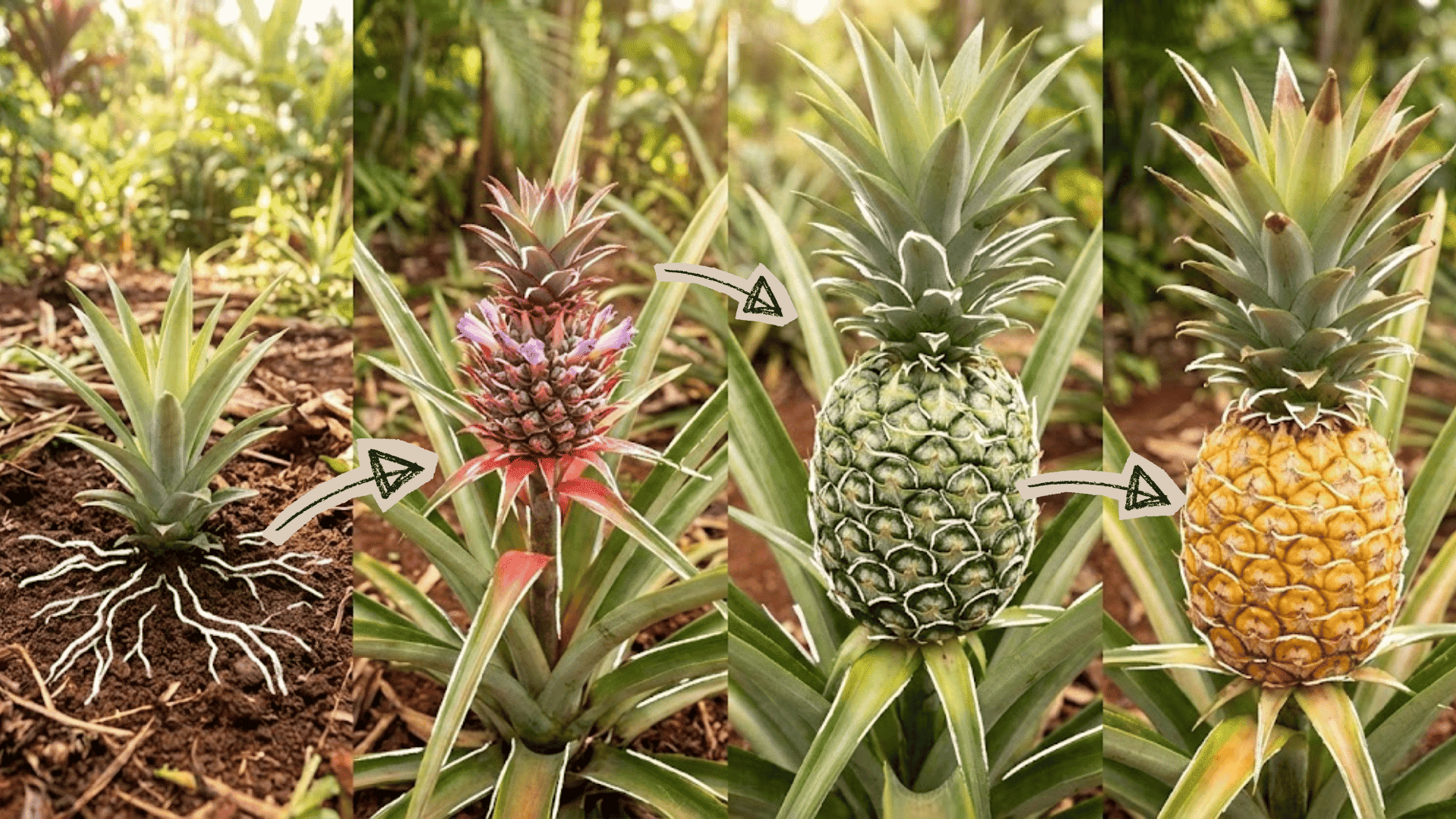
Watching a pineapple move through its growth stages feels like witnessing a slow unfolding. Each phase brings something new, building toward that final golden fruit.
Stage 1: Plant Establishment
The journey begins below ground. Roots push out from the base, anchoring the plant while new leaves unfold in tight spirals.
This foundation phase can take several months as the plant builds strength and size. The rosette grows wider, each leaf tougher and more substantial than the last. It’s all preparation for what comes next.
Stage 2: Flower Formation
When the plant reaches maturity, a central spike emerges, crowned with vibrant red or purple bracts. Small flowers bloom along this spike, each one delicate and short-lived.
The colors are striking against the green leaves, signaling that the plant is ready to fruit. This flowering stage marks the transition from vegetative growth to reproduction.
Stage 3: Fruit Development
After pollination, or even without it in commercial varieties, the flowers begin fusing together. Each tiny bloom becomes an individual berry, and these merge to form the composite fruit.
The pineapple swells gradually, pushing upward on its stalk. What starts as a tight cluster becomes the textured, segmented surface we recognize.
Stage 4: Maturing & Ripening
The final stretch brings visible changes. The fruit shifts from deep green to golden yellow, starting at the base and moving upward.
Aroma intensifies as sugars develop, and the outer shell softens slightly when pressed. The crown leaves may brown at the tips. These signals tell you it’s time to harvest.
How Do Pineapples Reproduce?
Pineapples have their own clever ways of making more of themselves, and none of it involves seeds the way most fruits do.
- The crown propagation method is the one most home growers use, simply twisting off that leafy top and planting it in soil.
- Commercial farms prefer suckers, the side shoots that sprout from the main plant and root quickly for faster production.
- Then there are slips, small offshoots that grow right at the base of the fruit itself.
Each method creates a genetic clone of the parent plant, which is why pineapples taste so consistent. It’s less about reproduction and more about regeneration.
Where Pineapples Grow Best?
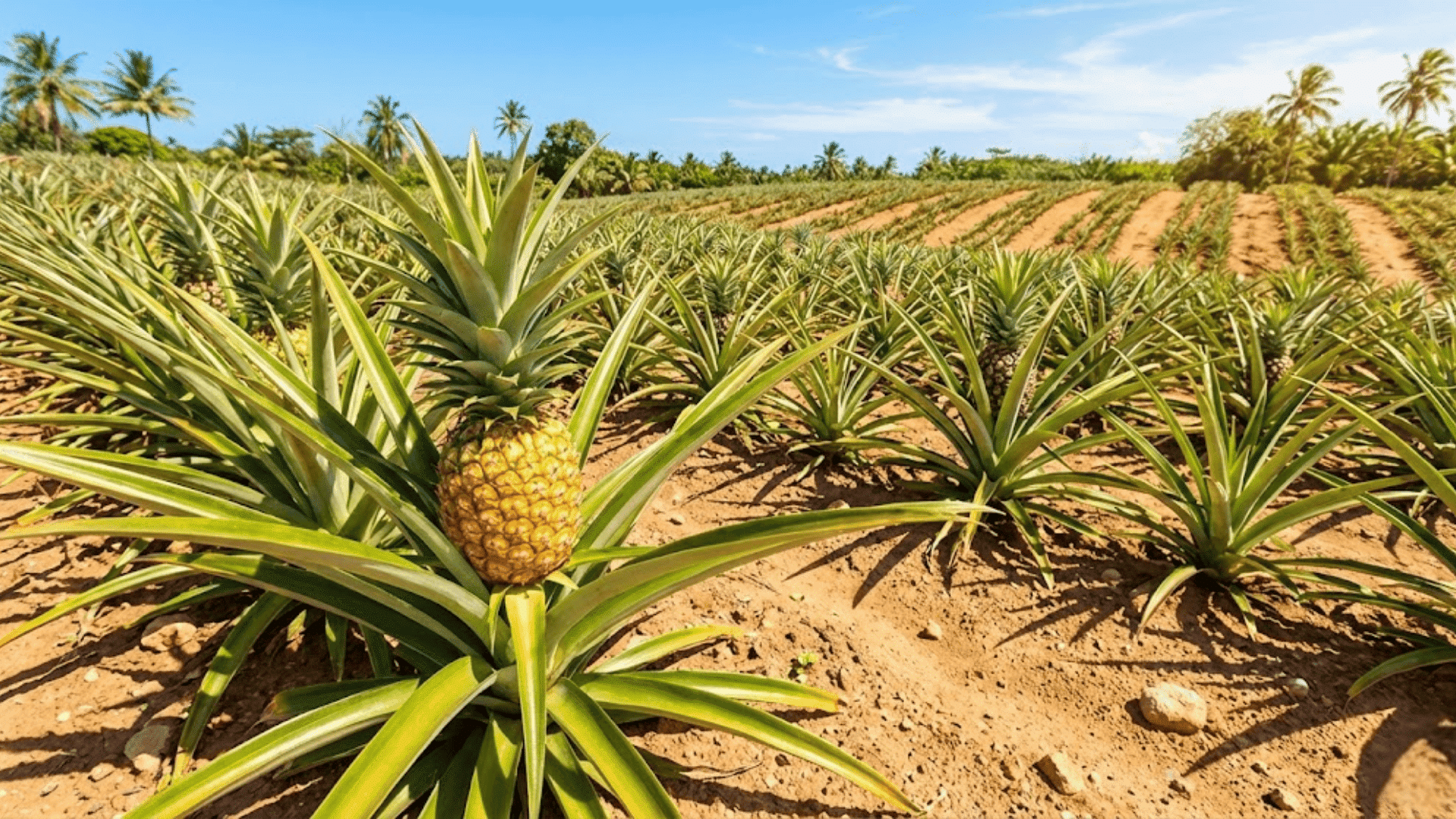
Pineapples are particular about their environment, thriving only where conditions mirror their tropical origins. They need warmth year-round, with temperatures consistently above 60°F, and won’t survive even a light frost.
The soil matters just as much: well-drained and slightly acidic, ideally between 4.5 and 6.5 pH. Heavy clay or waterlogged ground will rot the roots long before flowers appear.
Full sun exposure for at least six hours daily fuels both growth and the fruit’s sweetness.
As for water, pineapples prefer moderation. Keep the soil lightly moist but never soggy. These plants store moisture in their thick leaves, handling drought far better than they handle excess.
Can You Grow a Pineapple at Home?
Growing a pineapple at home is entirely possible, and it starts with something most people throw away: the crown.
Twist off the leafy top from a fresh pineapple, peel away the lower leaves to expose the stem, and let it dry for a day or two.
Plant it in well-draining soil, water lightly, and place it somewhere warm and bright. Roots will develop over the next few weeks, and the plant will slowly establish itself.
- Indoor plants require a large pot with drainage holes and a south-facing window for maximum light, while outdoor plants need warm climates and protection from frost.
- Overwatering kills more pineapple plants than anything else, turning roots mushy and leaves yellow before the plant ever gets a chance to flower.
- Poor soil that holds too much moisture or lacks acidity will stunt growth and prevent fruiting, no matter how long you wait.
- Expecting fruit within the first year leads to disappointment; pineapples demand patience and won’t produce until they’re fully mature.
Summing It Up
I’ve spent years helping people understand where their food actually comes from, and pineapples always seem to surprise them the most.
These plants don’t grow on trees; they rise from the ground in compact rosettes, fruiting slowly and deliberately over nearly two years.
There’s something grounding about watching that process, whether in a tropical field or a sunny corner of your own home.
If you’ve tried growing pineapples or have questions about getting started, I’d love to hear about it in the comments below. Sometimes the best growing tips come from shared experience.



One Response
Love the article on pineapples. Very interesting.