
A modern home office can be functional without looking like it was ordered straight from a corporate furniture catalog. Antiques give a workspace personality, history and visual depth, especially when they are paired with cleaner contemporary pieces. The goal is not to fill the room with old objects or recreate a period interior. Instead, choose a handful of antiques that complement the architecture, colors and furniture already in your home. From vintage lighting to an old writing desk, the right pieces can make an office feel collected and personal while still giving you a comfortable place to work.
Start With Statement Lighting
Lighting is one of the easiest places to introduce an antique because a lamp can command attention without changing the entire room. For homeowners interested in historic decorative lighting, original Tiffany lamps for sale in online auction houses are the way to find the perfect fit because auctions can provide access to different sizes, patterns, colors and styles beyond what you might encounter locally. When shopping, review condition reports, dimensions, provenance information and photographs carefully before making a decision.
A colorful antique lamp works especially well in an office filled with simple modern furniture. Place one on a streamlined wood desk, a side table beside a reading chair or a console against the wall. The contrast keeps the lamp from disappearing among too many competing decorative objects. Its stained glass can also introduce warmer colors into offices dominated by white, gray, black or natural wood.
Give Old Furniture New Context
An antique desk can become the visual anchor of a modern office, but it does not need an antique chair and matching cabinets beside it. In fact, mixing periods often produces a more relaxed room. Pair a traditional writing desk with an ergonomic office chair, contemporary artwork and simple shelving. An old library table can also work as a spacious desk if its height and proportions suit your everyday needs.
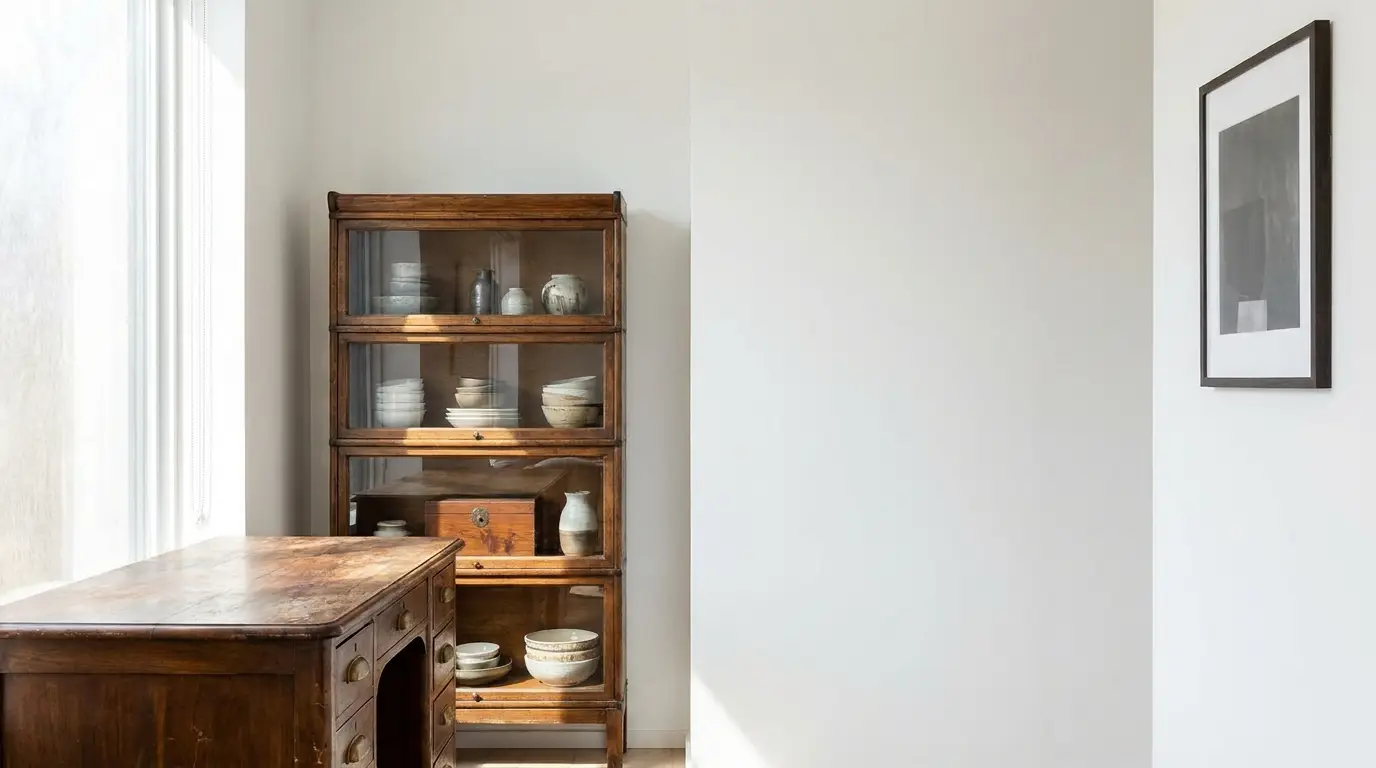
Storage pieces offer another opportunity. A vintage barrister bookcase can hold books, office supplies and decorative objects while adding architectural character. An antique chest can store files or supplies that would otherwise create clutter. Even a small side table can bring craftsmanship and texture into a room dominated by newer furniture.
Condition matters, but perfection is not always necessary. Minor wear, softened edges and an aged finish can be part of an antique’s appeal. A home office is meant to be used, so pieces with some history can make the room feel comfortable rather than overly precious.
Connect the Office to Home
Your office should feel connected to the rest of your house rather than existing as a completely separate decorating project. One way to create that connection is to repeat antique materials, colors or styles elsewhere. If your office contains dark wood furniture, for example, a small antique table in the foyer can establish a visual relationship between the spaces.
You can also repeat smaller details. Brass hardware in the office might relate to an antique mirror elsewhere, while a vintage ceramic piece can echo colors found in another room. These connections do not need to be obvious. They simply help antiques feel like part of the home’s overall personality instead of isolated decorative additions.
This approach is particularly helpful in open floor plans or homes where the office sits near a main living area. A consistent mixture of old and new makes the transition between rooms feel natural.
Use Antiques as Useful Decor
Antiques earn their place in a home office when they are beautiful and practical. Old boxes can organize stationery, vintage bookends can support frequently used books, and small trays can collect pens, keys and other desk essentials. A substantial antique mirror can reflect daylight and make a compact office appear larger.
Artwork deserves attention as well. Vintage paintings, botanical prints, maps and framed documents can soften the technological side of a workspace. A laptop, monitor and charging cables are unavoidable in many offices, but surrounding them with objects made by hand creates a more inviting atmosphere.
Avoid covering every surface. Antiques generally have greater visual impact when there is enough open space around them to appreciate their shape, material and craftsmanship. One striking object on a shelf can do more for a room than a dozen unrelated pieces squeezed together.
Build a Collected Look
The best modern offices usually develop through thoughtful choices rather than purchasing an entire matching furniture set. Start with the pieces you actually need, then add antiques that contribute color, texture, function or history. You might combine a contemporary desk with an antique lamp, a vintage rug and an old wooden cabinet while keeping everything else restrained.
Scale is important. Large offices can accommodate substantial desks, bookcases and artwork, while smaller rooms benefit from compact pieces with strong character. Measure available spaces before shopping, particularly when buying antiques online, where photographs can make proportions difficult to judge. Good antiques can bring craftsmanship, individuality and a tangible connection to another era into rooms built around modern life. When old and new pieces share the same space without competing for attention, a home office can feel polished, useful and distinctly your own.