Every spring, when the air near a citrus grove changes: sweet, delicate, almost impossible to place until you look around and find orange blossom.
That scent has traveled further than most flowers ever do.
It’s tucked into wedding bouquets in Spain, simmered into pastries in Morocco, distilled into perfume bottles that cost more per ounce than gold.
Orange blossom is not just a pretty bloom on a citrus branch, but it is a story worth slowing down for.
Orange Blossom Botanical Identity
This section anchors the flower in botanical fact with species, structure, scent chemistry, and the fruit-and-flower trait that underpins its symbolism later in the piece.
|
Attribute |
Detail |
|
Common name |
Orange blossom |
|
Scientific source (sweet) |
Citrus sinensis |
|
Scientific source (bitter) |
Citrus aurantium |
|
Family |
Rutaceae |
|
Flower color |
White to ivory |
|
Petal count |
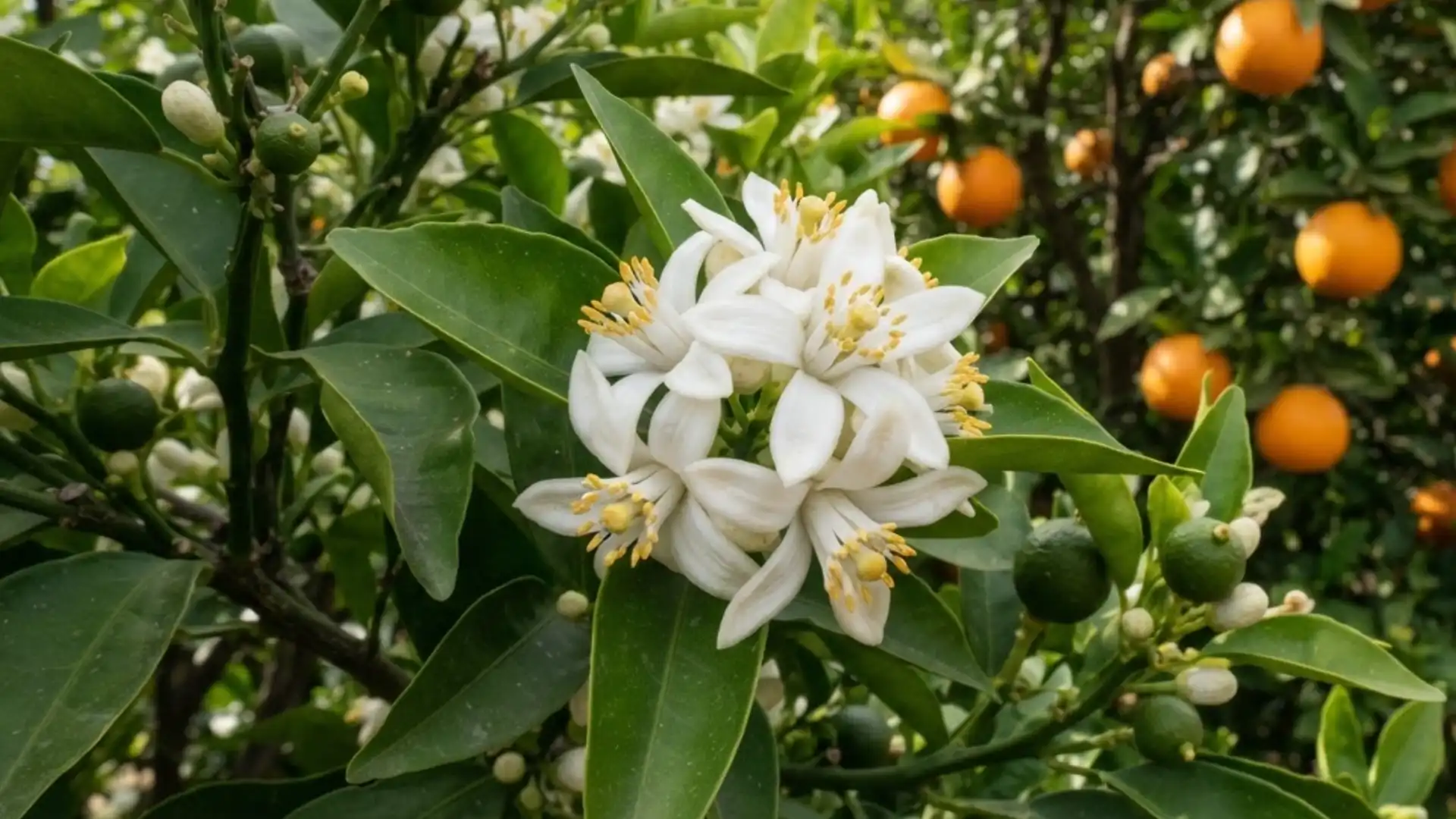
Five, waxy, lanceolate to oval with a pointed tip |
|
Flower size |
2-3 cm across |
|
Bud stage |
Pea-sized, tightly closed, round |
|
Growth pattern |
Emerges in clusters (corymbs) from leaf axils |
|
Fragrance profile |
Citrus-sweet base with jasmine, tuberose, fresh-grass, and nutmeg undertones |
|
Tree height at maturity |
8-15 meters |
|
USDA hardiness zones |
9-11 |
Origin & Geography of Orange Blossom
Orange blossom originated in southern China, India, and Southeast Asia, where early cultivators bred and grew citrus trees for their fragrance and beauty.
Traders carried the flower to the Mediterranean around the 1400s, and it later gained culinary prominence in France, where it was served at Versailles.
King Louis XIV filled his famous orangery with thousands of imported citrus trees because he loved the scent so much.
In the 1500s, Spanish explorers brought orange trees to the Americas, and French explorers helped spread cultivation into North America.
Today, orange blossom grows across the Mediterranean basin: Spain, Italy, Morocco, and Tunisia, and in the United States, mainly in Florida, California, Arizona, and Texas.
Florida remains especially significant: the state named orange blossom its official flower in 1909, cementing its place in American citrus history.
When Does Orange Blossom Bloom?

Orange blossom usually blooms in spring, when warmer temperatures encourage citrus trees to produce fresh buds and flowers.
In many warm regions, the main bloom starts between March and April, although the exact timing can change with climate, weather, and orange variety.
Areas with mild winters may see flowers earlier, while cooler places may have blooms later in spring.
The flowering period can last for several weeks because not every bud opens at the same time.
Some healthy orange trees may also produce smaller flushes of flowers later in the year. During peak bloom, the tree can be covered with fragrant white flowers that attract bees and other pollinators.
After pollination, many blossoms fall naturally, while some remain on the tree and begin developing into young oranges.
The Cultural Symbolism of Orange Blossom
Orange blossom has carried symbolic meaning in many cultures for centuries.
Its white petals, sweet fragrance, and connection with fruit have made it a symbol of purity, love, fertility, and new beginnings:
- Purity and Innocence: The white color of orange blossom is often linked with purity, innocence, and sincerity, especially in traditional bridal customs.
- Love and Marriage: Orange blossoms became closely associated with weddings because they were believed to represent lasting love, devotion, and a strong marital bond.
- Fertility and Abundance: Orange trees can carry flowers and fruit at the same time, which helped the blossom become a symbol of fertility, prosperity, and abundance.
- New Beginnings: Because the flowers appear before new fruit develops, they are also connected with fresh starts, renewal, and hopeful new chapters in life.
- Good Fortune: In some cultural traditions, orange blossoms are linked with luck, happiness, and prosperity, making them popular for celebrations and meaningful gifts.
Over time, orange blossom has kept many of these traditional meanings while also gaining a place in modern weddings, perfumes, art, and celebrations.
Its symbolism can vary between cultures, but themes of love, renewal, purity, and abundance remain the most common meanings connected with this delicate citrus flower.
Uses of Orange Blossom

Orange blossom does far more than look pretty on a tree. Below, I have listed some of the uses of orange blossom, starting with the most prized application: fragrance.
I am not certain how strong the clinical evidence is behind those calming claims and healthcare benefits, so treat them as traditional use rather than proven medical fact.
1. In Perfumery and Aromatherapy
Neroli oil comes from steam-distilling bitter orange blossoms, and it is not cheap to make. It takes roughly 2,000 pounds of flowers to produce just 36 ounces of oil.
That scarcity is part of why perfumers treat it as a luxury ingredient. The name traces back to a 16th-century Italian princess who loved its scent.
Beyond perfume, neroli oil is prized in aromatherapy for calming the nervous system and easing stress before sleep.
2. Water and Culinary Uses
Orange blossom water starts with steamed blossoms, condensed into a fragrant liquid. Raw petals taste bitter and soapy, so distillation is what makes them usable in the kitchen.
Bakers add it to madeleines, baklava, and rice pudding for a floral lift.
Moroccan cooks use it in savory dishes like chicken bastilla. It also turns up in honey, lemonade, and cocktails, pairing well with almonds, dates, and citrus.
3. Health and Skincare Benefits
Orange blossom carries small amounts of vitamin C, potassium, calcium, and magnesium, modest nutritional value, but a long history of folk use.
Distilled toners made from the flower are used to calm irritated skin, while infused oils double as gentle skin treatments.
In some Middle Eastern traditions, the water is added to bathwater or offered in a bowl for guests to dip their fingertips into, valued for its soothing, calming effect.
How to Grow an Orange Blossom Tree?
Growing an orange blossom tree is easier when you give it plenty of sun, well-drained soil, and steady care.
Planted in the ground or a container, the tree needs warmth, regular watering, and proper feeding to produce healthy leaves, fragrant flowers, and fruit.
- Choose a Sunny Spot: Plant the tree where it receives at least six to eight hours of direct sunlight daily.
- Use Well-Drained Soil: Grow it in loose, fertile soil that drains quickly and does not remain soggy after watering.
- Water Consistently: Keep the soil evenly moist during establishment, but allow the upper layer to dry slightly between waterings.
- Feed During Growth: Apply a balanced citrus fertilizer during the growing season to support healthy foliage, flowering, and fruit development.
- Protect From Cold: Shield young trees from frost and freezing temperatures, especially when growing them near colder climate limits.
- Prune Lightly: Remove dead, damaged, or crossing branches while avoiding heavy pruning that may reduce future flowering and fruiting.
- Watch for Pests: Check leaves and stems regularly for scale, aphids, mites, or other common citrus pests and treat early.
Common Pests and Problems on Orange Blossom Trees
Even well-tended orange blossom trees run into a handful of repeat offenders. Catching these early keeps flowering and fruiting on schedule.
- Aphids: Small, soft-bodied insects that cluster on new growth and cause curled leaves. Insecticidal soap and controlling aphids naturally usually clear an infestation within a week or two.
- Scale insects: Flat, immobile bumps on stems and leaf undersides that secrete sticky honeydew. Wipe them off with a soft cloth and follow up with horticultural oil.
- Spider mites: Tiny pests that cause stippled, bronzed leaves during hot, dry stretches. A strong water spray plus neem oil keeps populations down.
- Citrus leafminers: Larvae that tunnel through young leaves, leaving silvery trails. Prune the affected growth and avoid heavy nitrogen fertilizer, which encourages the soft new growth they prefer.
Conclusion
Orange blossom carries a rare kind of dual identity, a working part of the citrus tree’s life cycle. Also a symbol people have leaned on for centuries to mark love, new beginnings, and hope.
That’s a lot of meaning packed into one small, five-petaled flower.
Have you tried orange blossom water in a recipe, or picked up on its scent somewhere unexpected? Share your experience in the comments below.
Frequently Asked Questions
Does Every Orange Blossom Become an Orange?
No. Orange trees naturally produce more flowers than they can support as fruit. Many blossoms drop, while successfully pollinated flowers may develop into young oranges.
Is Orange Blossom the Same as Neroli?
No. Orange blossom refers to the citrus flower itself, while neroli is an essential oil commonly produced by steam-distilling flowers from the bitter orange tree.
Can an Orange Tree Have Flowers and Fruit at the Same Time?
Yes. Orange trees can hold developing or mature fruit while producing new flowers, especially in warm climates with suitable growing conditions and healthy seasonal growth.
Is Orange Blossom Honey Made From This Flower?
Yes. Bees that forage on orange groves during bloom season produce orange blossom honey, a light, floral honey common in Florida, Spain, and other citrus-growing regions.