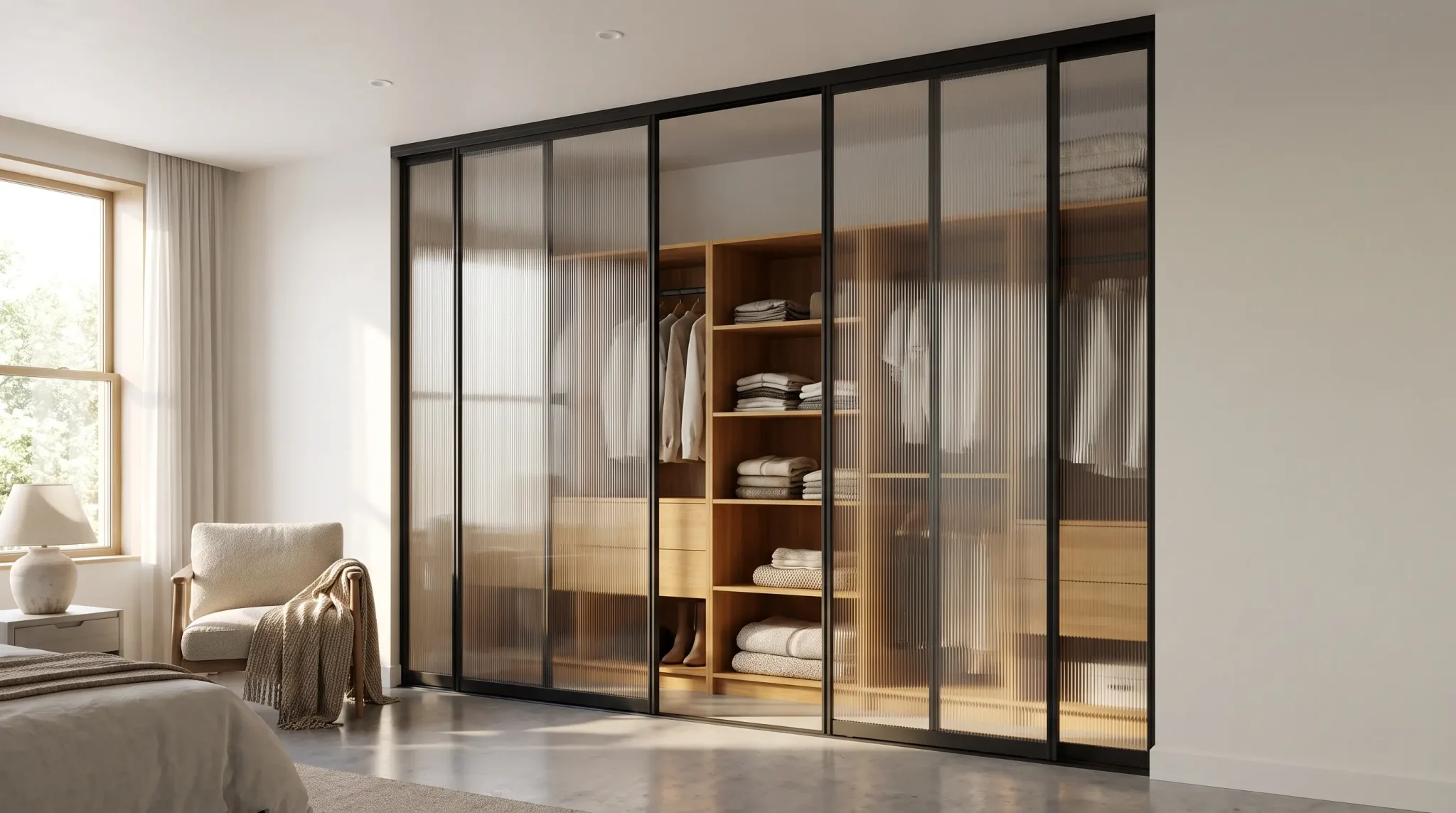
Floor-to-ceiling wardrobes put every structural decision under real pressure. A profile that handles a standard freestanding cabinet just fine will buckle, flex, or loosen once it spans eight to ten feet of vertical height with doors, shelves, and hardware all attached. So choosing aluminum profiles for floor-to-ceiling wardrobes isn’t purely an aesthetic question; it’s about picking components that stay square, stay strong, and still look sharp years down the line. The right profile balances alloy composition, dimensional precision, surface treatment, and track compatibility; get any one of those wrong and the rest of the build pays for it. This guide breaks down each factor in plain terms so you can make a confident call before ordering a single piece.
Material Properties to Evaluate in Aluminum Profiles
The material itself is where most buyers trip up first. Color and finish tend to get attention early, while alloy grade gets treated as a secondary concern, but that priority order should be flipped, especially for a floor-to-ceiling build. The structural load on a wardrobe frame reaching the ceiling is substantially greater than on a mid-height unit, and the profile material has to carry that load without creeping or deflecting over years of use. When you look at premium aluminum wardrobe profiles designed for tall installations, the alloy designation and wall thickness are among the first published specs worth reading carefully. Those numbers tell you far more about long-term performance than color swatches ever will.
Here’s the thing: not every profile marketed for wardrobes is engineered to the same tolerance. A mismatch between the profile spec and your installation height is the root cause of most alignment failures down the road.
Alloy Grade and Structural Strength for Floor-to-Ceiling Installations
The two alloy families you’ll encounter most in furniture-grade aluminum profiles are the 6000-series broadly and 6063 specifically. The 6063 alloy – sometimes called architectural aluminum – pairs good extrudability with solid tensile strength, typically around 27,000 to 30,000 PSI at T5 temper. That matters because floor-to-ceiling frames carry both the dead load of the structure itself and the live load of doors swinging open, shelves stacked with clothes, and drawer pulls getting yanked every single day. A profile cut from a lower-grade alloy or with thin walls (under 1.5 mm) will show deflection at the top rail over time, particularly on spans wider than 36 inches. You want a wall thickness of at least 1.5 mm to 2.0 mm for vertical stiles and a minimum 6063-T5 designation. If a supplier won’t publish the alloy grade or wall thickness in their product documentation, treat that as a clear reason to look elsewhere. The spec sheet is the baseline; everything else builds on it.
Surface Finish Options and Their Impact on Durability
Anodizing is the standard surface treatment for interior aluminum profiles, and the thickness of the anodic layer directly predicts how well a finish holds up under daily contact. For dark finishes – matte black being the most popular choice in contemporary wardrobe design right now – a layer of 12 to 14 microns is the target range. Lighter finishes in silver, champagne, or bronze can perform acceptably at 10 to 12 microns. Anything below 10 microns will show wear at contact points – door edges, handle zones, shelf rests – within two to three years on a heavily used wardrobe. Powder coating is a legitimate option for budget builds, but it chips at edges and corners in ways that anodizing doesn’t; touch-ups are visible and rarely satisfying. For a floor-to-ceiling wardrobe you expect to last a decade or more, anodizing at the right micron count isn’t optional. Ask your supplier for the anodizing spec in writing, not just a color chip.
Frame Design and Dimensional Specifications That Matter
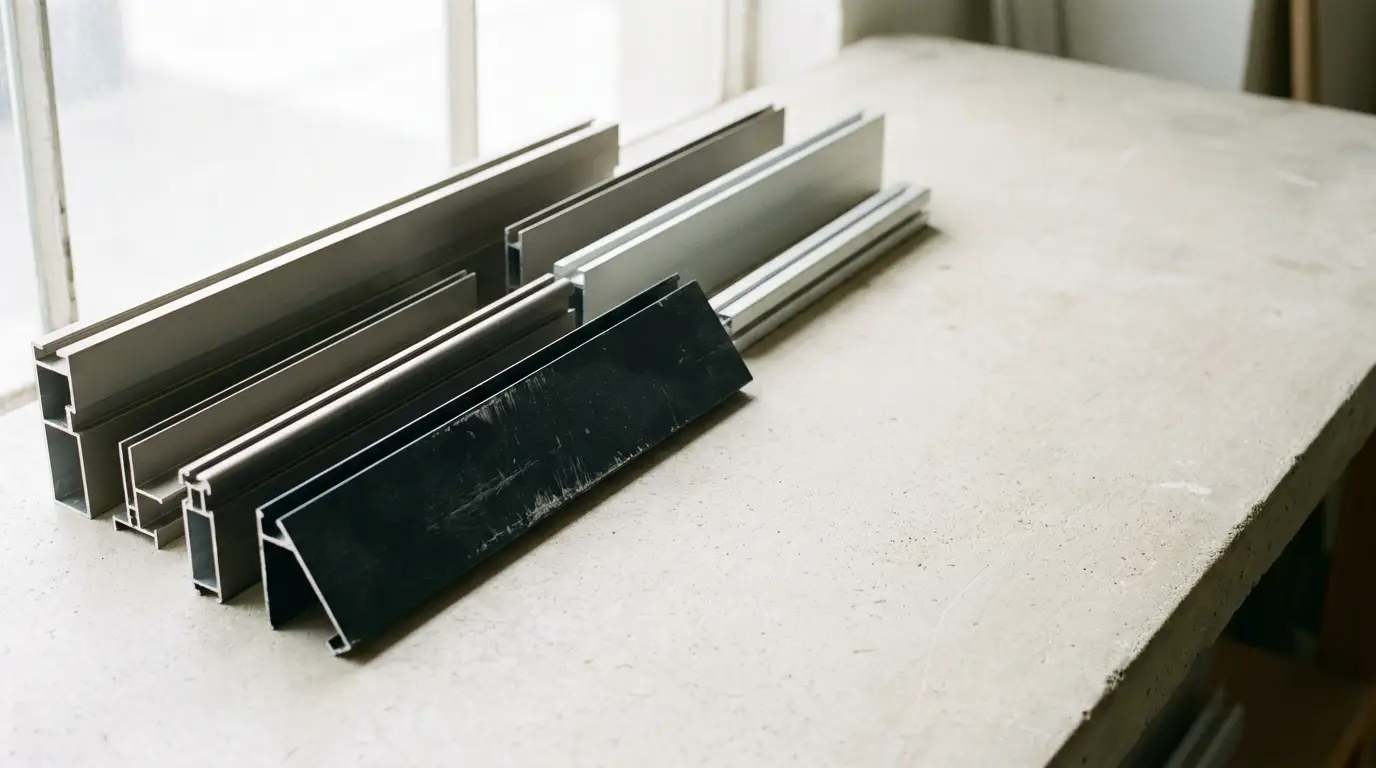
Profile dimensions control how the frame reads from across the room and how it behaves under load. A frame that’s too narrow for the door it carries will flex visibly at hinge or roller points; one that’s too wide looks clunky and eats into usable wardrobe depth. Floor-to-ceiling builds add another wrinkle because the top rail needs to connect to a ceiling surface that may not be perfectly level, and the vertical stiles need a tolerance stack accounting for slight height variation across the room. Getting the dimensional spec right before fabrication saves you from shims, filler strips, and remediation work that typically costs more than the original parts did.
Profile Width and Proportions for Different Door Sizes
Door width and panel weight are the two variables that dictate profile width. For sliding wardrobe doors up to 24 inches wide and under 30 pounds per panel, a 45 mm to 50 mm face-width profile gives adequate stiffness without reading as heavy. Push the door to 30 to 36 inches wide, or add a heavy fill panel – say, 10 mm tempered glass or solid wood veneer – and you need a profile in the 60 mm to 70 mm range to prevent bowing at the stile’s midpoint. Hinged doors on tall wardrobes place torque at the hinge mortise that sliding doors simply don’t, so hinged-door profiles need thicker back walls even at identical face width. A 65 mm profile with a 2.0 mm wall behaves structurally differently than a 65 mm profile with a 1.5 mm wall, and they won’t perform the same under a full-height door. Match the profile width to the door width and fill material, not just to what looks proportional in a catalog.
Track System Compatibility and Installation Requirements
The track system – top rail, bottom guide, and the roller or hardware between them – has to be specified as a unified assembly, not as individual parts sourced from different suppliers. A top track designed for a 16 mm roller won’t run cleanly with a 20 mm roller; the tolerances stack in ways that cause binding, noise, and uneven glide within months. For floor-to-ceiling installations, the top track carries most of the door weight, so its mounting depth and the substrate it’s attaching to both need assessment before you order anything. Concrete ceilings need different anchor hardware than drywall, and the track profile itself needs a channel depth matched to your selected roller diameter. Bottom guides on tall sliding doors should be adjustable by at least 3 mm vertically to compensate for floor variation. And if your ceiling has a crown or drop, a track with a slotted ceiling plate lets you level the door plane without shimming the entire head rail.
Practical Selection Criteria for Your Wardrobe Project
Balancing Cost, Quality, and Aesthetic Preferences
Budget pressure is real. But the savings calculation on cheaper profiles rarely accounts for the full picture. A lower-cost profile at a 40 percent discount that requires professional remediation in year three – re-squaring the frame, replacing worn rollers, refinishing chipped powder coat – ends up costing more than the premium option would have upfront. The practical approach is to tier your spending by function: put serious budget into structural components (stiles, top rail, track system) and be more relaxed about decorative elements like handle profiles and shelf rests, where load demands are lower.
Aesthetically, the dominant directions in US interiors right now lean toward matte black frames with fluted glass panels and warm-toned wood fills, or brushed champagne aluminum paired with frosted or reeded glass. But finish trends shift; alloy grade and wall thickness don’t go out of style. Honestly, choose the structural spec for permanence and the finish for today’s preference; a reanodize or repaint is possible if tastes change, but a frame swap is not.
Conclusion
Choosing aluminum profiles for floor-to-ceiling wardrobes comes down to three decisions you can’t skip: alloy grade and wall thickness, profile dimensions matched to door size and fill weight, and a track system selected as a unified assembly. Surface finish matters for longevity, but it’s downstream of structural integrity. Spend your research time on the spec sheet before the color card, confirm anodizing micron counts in writing, and treat track compatibility as a system-level problem rather than a parts-list problem. A well-specified frame built from the right profiles will stay square, run smoothly, and look exactly as intended for the life of the wardrobe.