Every rug in your living room sits at a specific size for a reason. Rug size for living room spaces changes based on your layout and room.
Your furniture arrangement and floor space both matter. A rug that’s too small can look strange on the floor. One that’s too big can crowd the whole room. I walk clients through this almost every week.
Getting rug size for the living room right just takes a little planning. You don’t need fancy tools or design training for this.
A tape measure and a bit of patience go a long way. Once you know the basics, picking the right size gets easy fast!
Why Rug Placement Changes the Whole Room
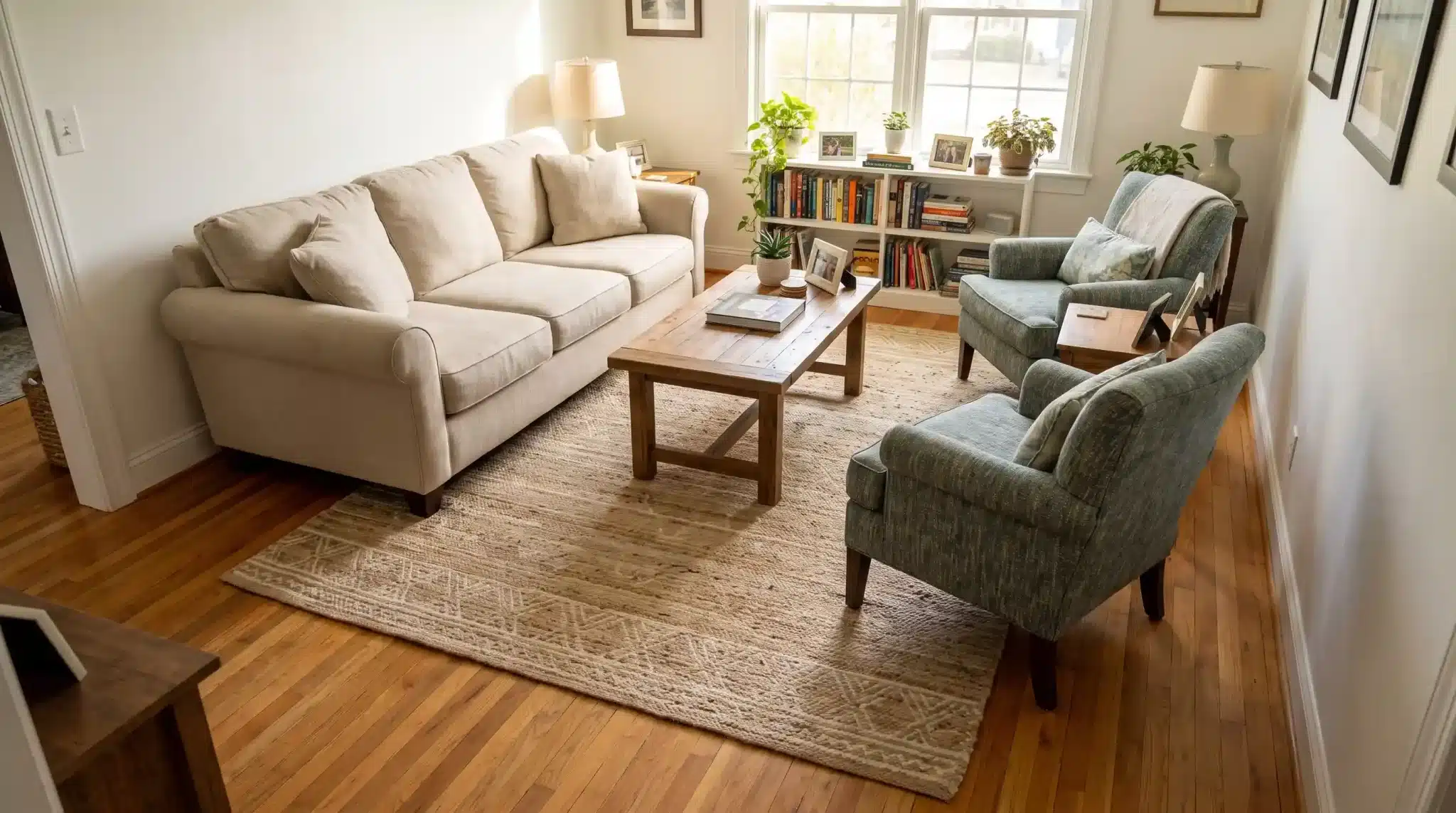
A rug does more than protect the floor or add color to your living room. It connects the sofa, chairs, and coffee table within one clear seating area.
When positioned correctly, the rug helps your eye read the furniture as one complete group. This makes the room feel balanced, comfortable, organized, and thoughtfully designed.
A rug that is too small or placed far from the furniture can look disconnected. It may seem to float in the room while the surrounding seats appear scattered.
Good living room rug placement is about grouping furniture and defining the space. Each seating piece should touch it for a grounded arrangement.
How to Position Your Living Room Rug: Layout Options
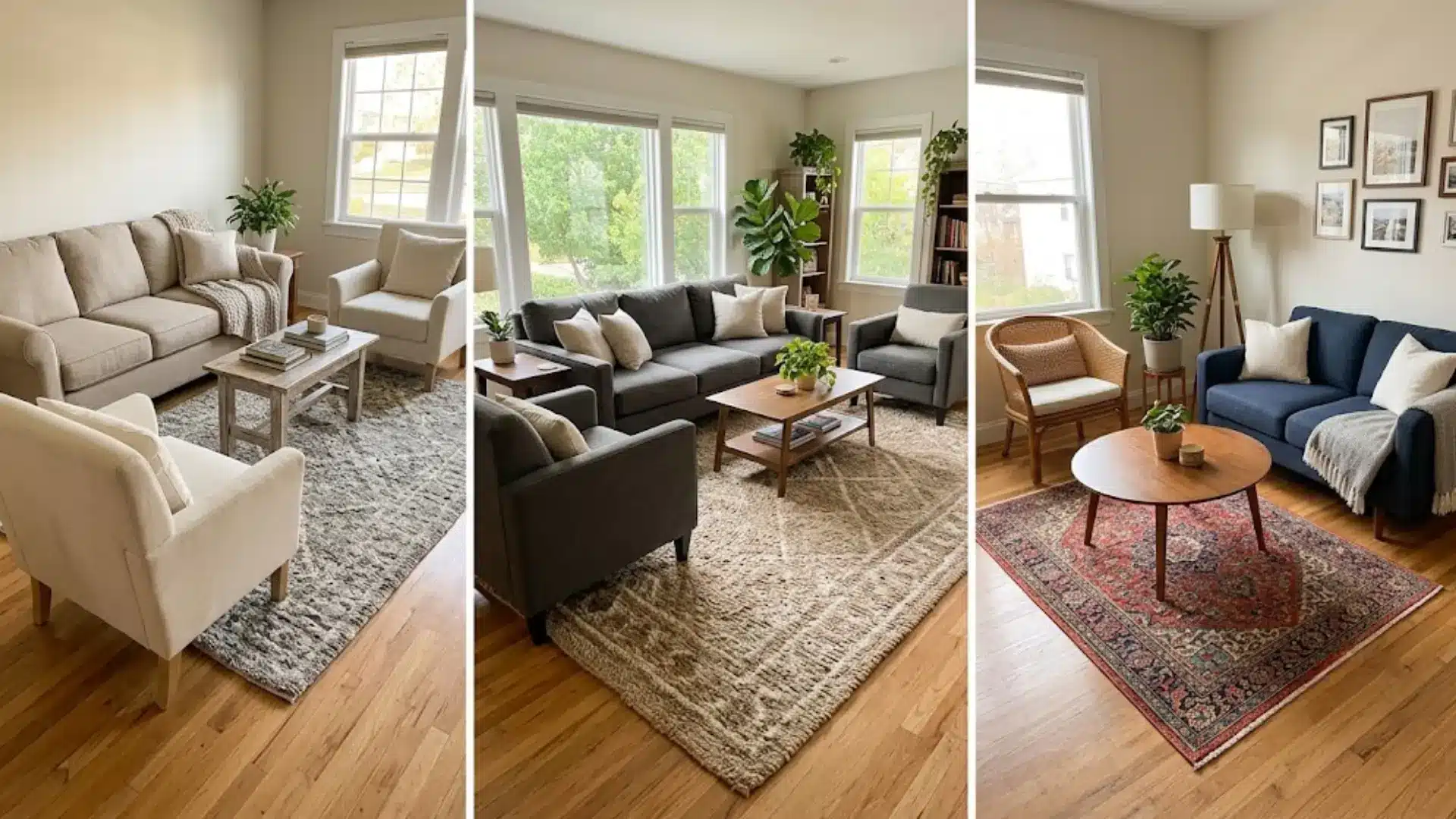
Living room rugs can be arranged in three main ways, and I always walk clients through each one before they pick a size. Here’s how each layout works:
1. Front Legs on the Rug
Place the front legs of the sofa and chairs three to six inches on the rug, leaving the back legs on the bare floor behind them.
This popular arrangement anchors the furniture in place without covering too much flooring, giving the layout a grounded, intentional feel while still showing off some of the floor underneath.
2. All Legs on the Rug
Place every leg of the sofa, chairs, and side tables fully on the rug, leaving a visible border of rug around the furniture on all sides.
This arrangement creates one complete, connected seating zone, tying every piece together so the whole area feels like a single, well-planned space rather than scattered furniture.
3. All Legs off the Rug
Keep the sofa and chairs completely off the rug, and center it beneath the coffee table as the main focal point.
The rug ends up acting as a standalone accent piece, so make sure it extends well beyond every side of the coffee table to avoid looking too small or disconnected from the rest of the layout.
Rug Sizes for Every Living Room Space
Choosing the right rug size depends on your room dimensions, furniture arrangement, and preferred placement style, and it’s the first thing I check with every client. Here’s how each size stacks up:
1. Rug for a Small Living Room
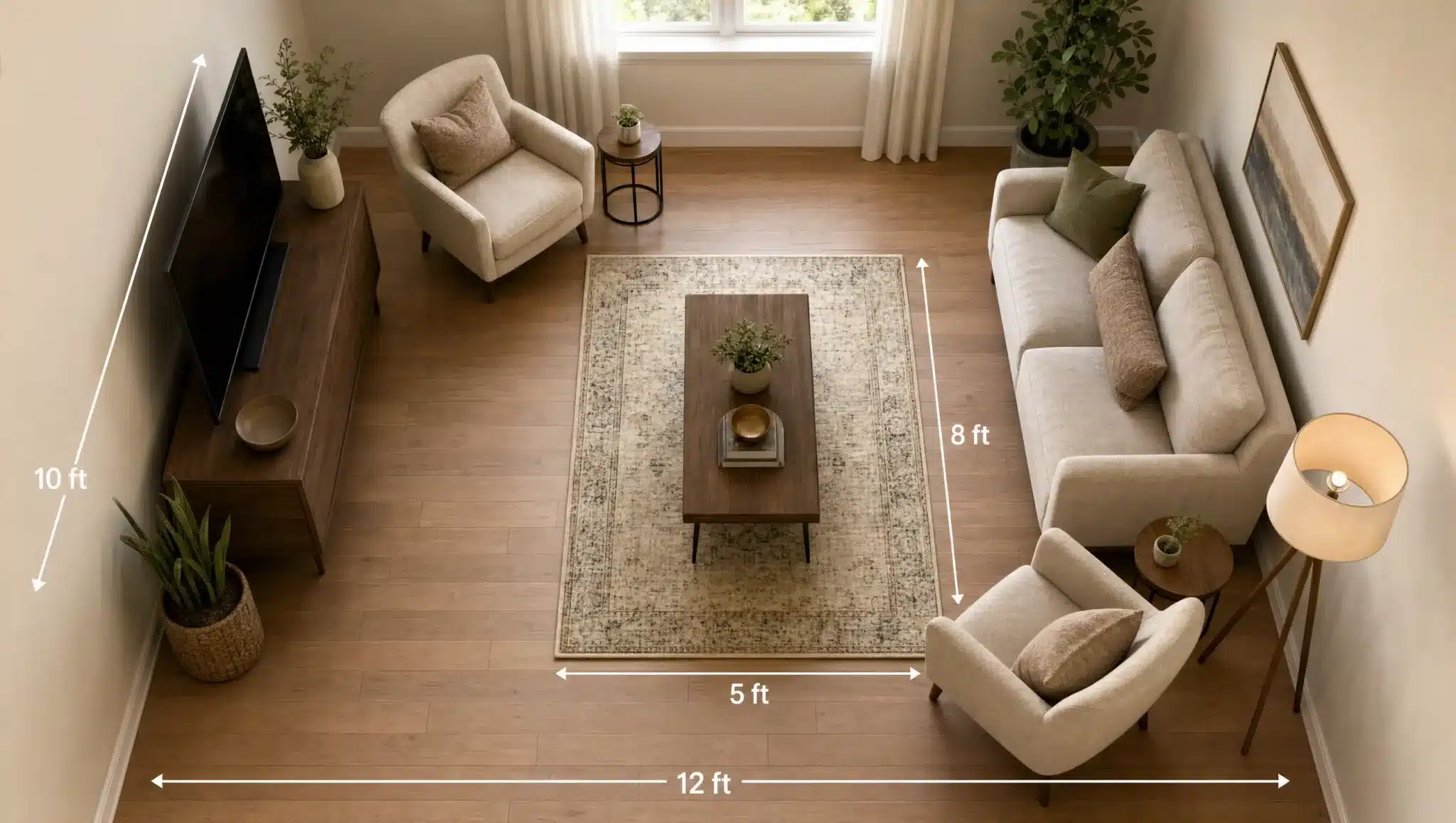
Small living rooms under 120 square feet call for a 5×8 rug, since space is limited and every inch matters.
Go with an All Legs Off layout, letting the rug sit under the coffee table while the sofa and chairs stay off to the sides. The room stays open and airy instead of feeling boxed in.
- Works well with: Loveseats, compact sofas, and small coffee tables
- Ideal for: Apartments and cozy living rooms
2. Rug for a Medium Living Room
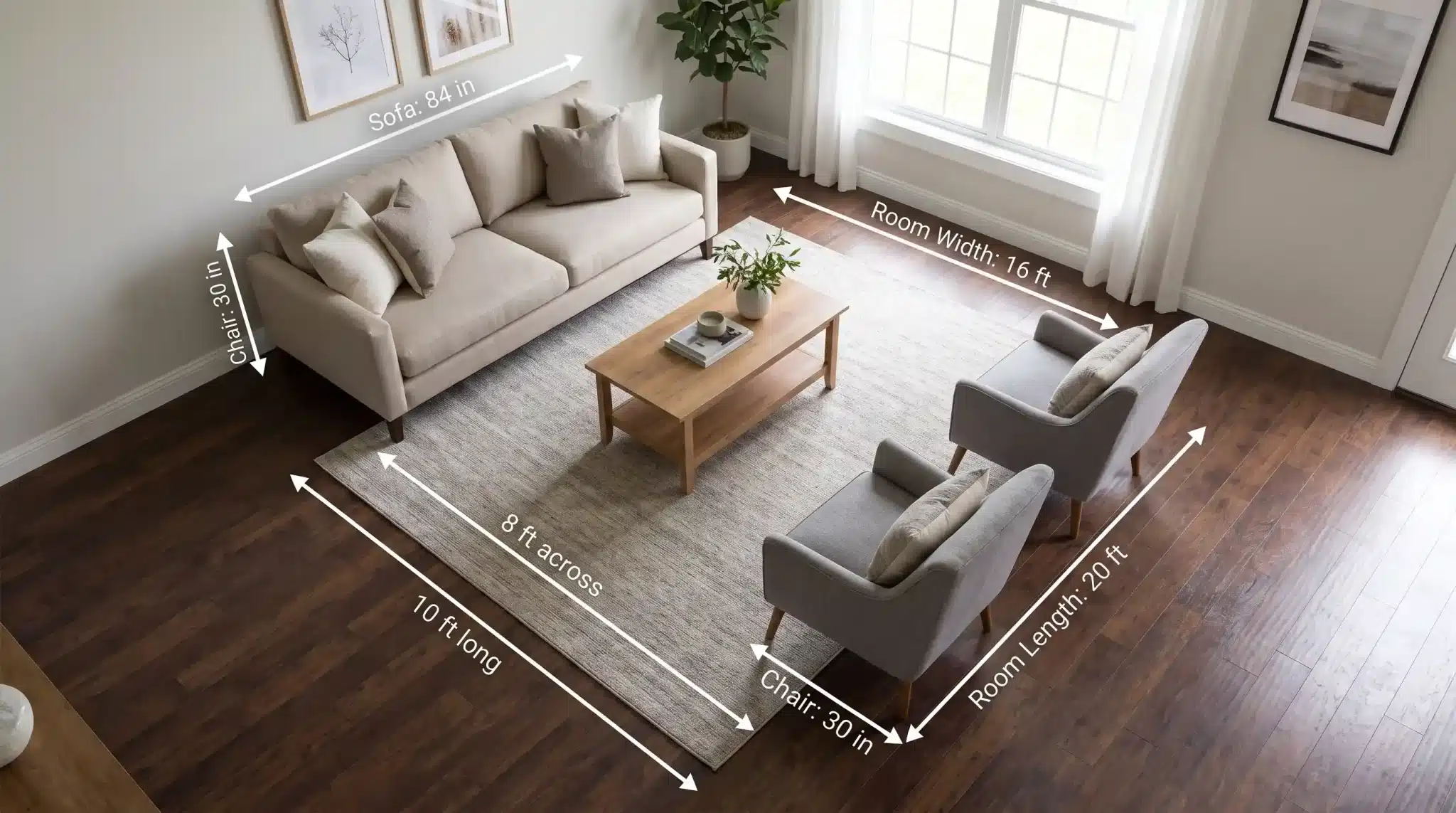
For rooms between 120 and 200 square feet, an 8×10 rug hits the sweet spot for most standard layouts.
A Front Legs On approach works great, with just the sofa and chairs’ front legs resting on the rug’s edge. It grounds the space nicely without needing wall-to-wall coverage.
- Works well with: Standard sofas, accent chairs, and coffee tables
- Ideal for: Most average-sized living rooms
3. Rug for a Large Living Room
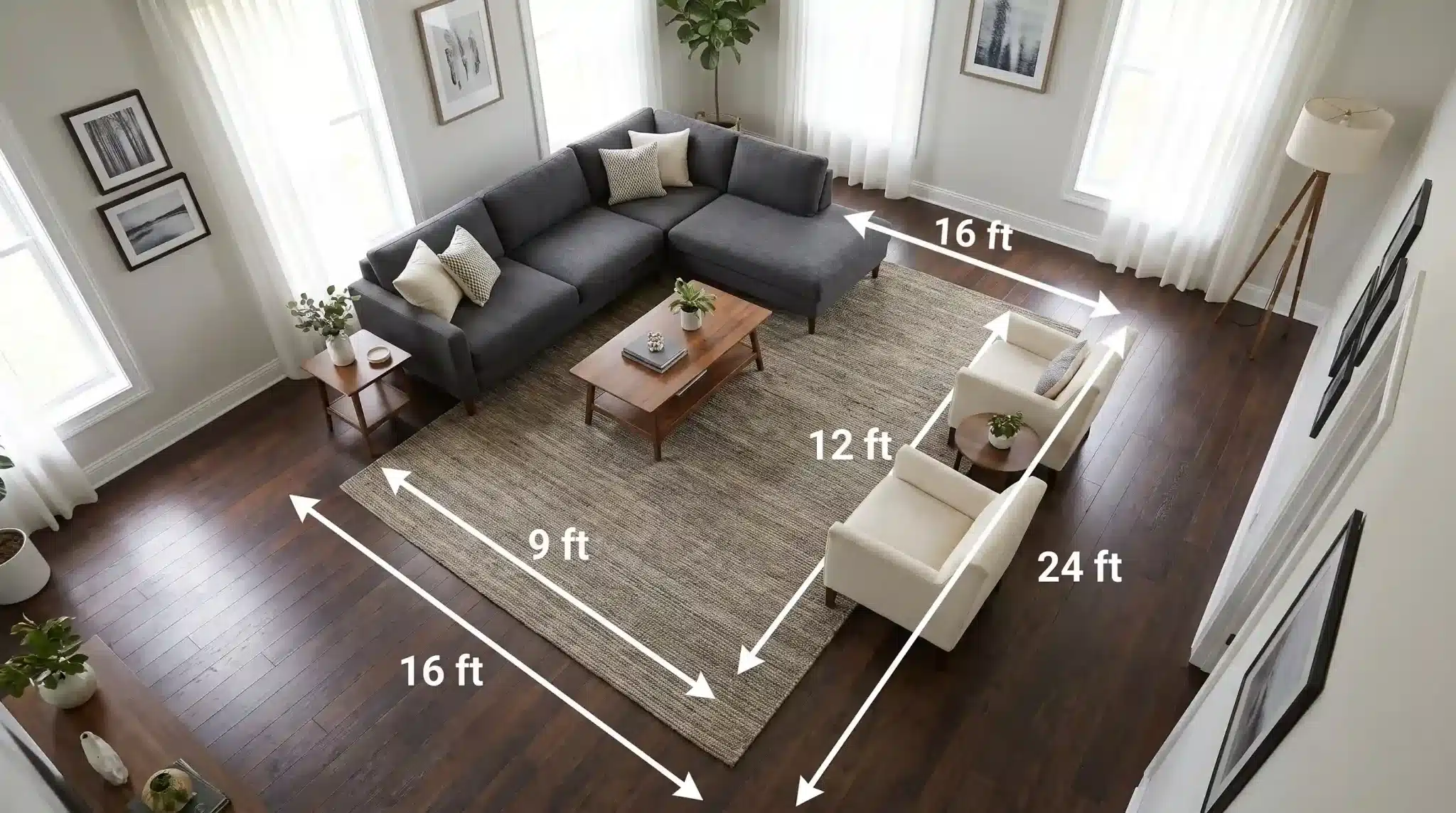
Once your room passes 200 square feet, bigger furniture usually means you need a 9×12 rug to match.
Try the Front Legs On layout so the front legs of each piece rest on the rug’s edge. This grounds a larger seating area while still leaving some floor visible around it.
- Works well with: Sectional sofas, armchairs, and side tables
- Ideal for: Large living rooms and open floor plans
4. Rug for an Open-Concept Space
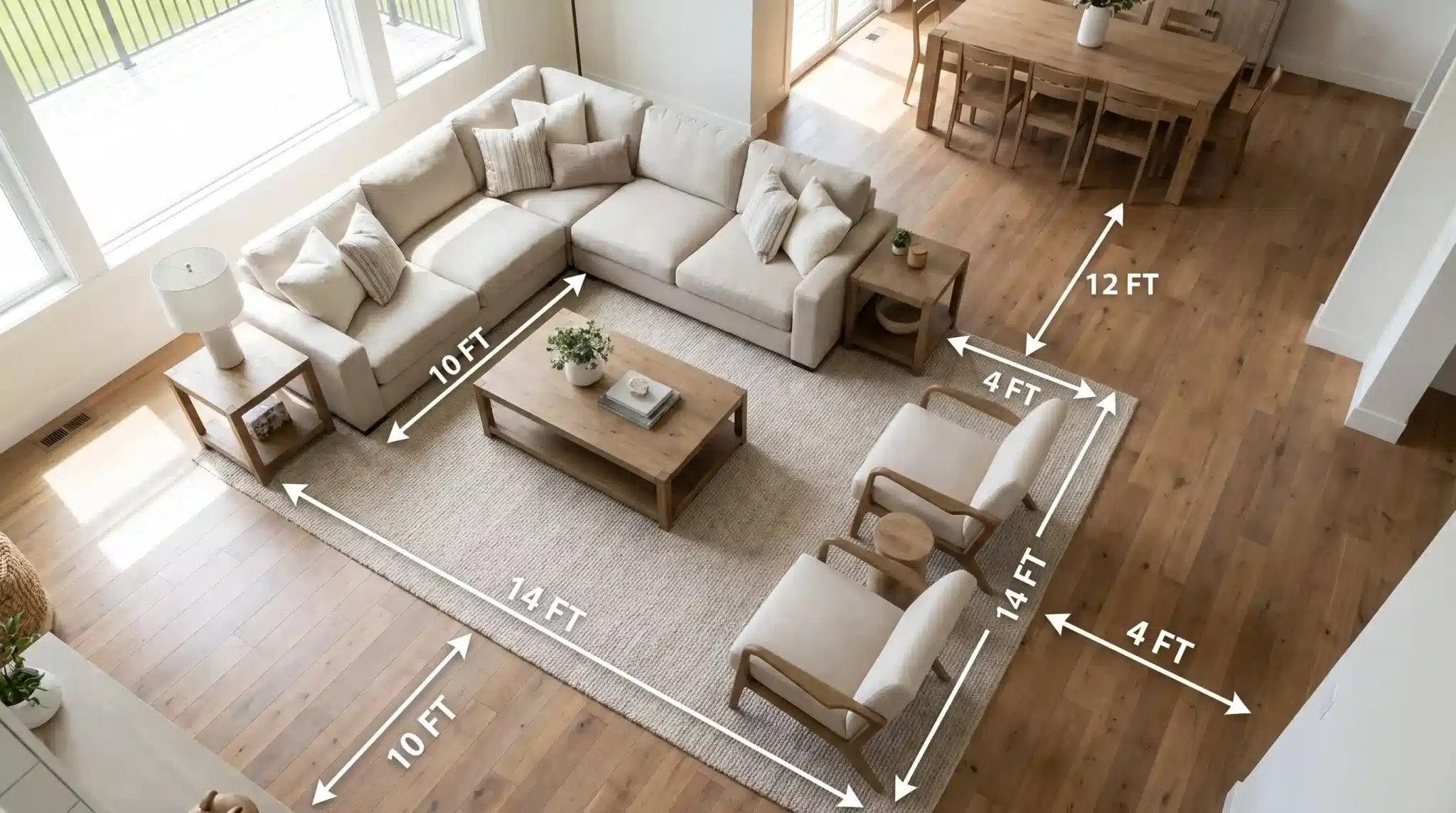
Open floor plans and oversized rooms often need something bigger, which is where a 10×14 rug comes in handy.
Keeping every leg on the rug defines the seating zone, even when the space flows into a dining or entry area. For open layouts, zoning an open floor plan with a second rug keeps areas from blurring.
- Works well with: Large sectionals and complete furniture groupings
- Ideal for: Multiple seating zones and spacious living areas
How to Measure Before Buying a Living Room Rug
Getting rug size right can feel tricky, but a few simple steps make it easy. Just follow these steps before you order your next rug:
- Step 1: Arrange your furniture the way you want it before measuring anything.
- Step 2: Measure the full seating area, including the sofa and chairs around it.
- Step 3: Use painter’s tape to mark out a few possible rug sizes on the floor.
- Step 4: Check that walkways and doorways still have room once the tape is down.
- Step 5: Compare your taped area to standard rug sizes, then recheck everything before you buy.
The painter’s-tape trick helps you see the rug’s shape before it’s even in your home. This simple method saves you from costly guesswork and returns.
Golden Rules for Spacing, Alignment, and Furniture Match
A few simple measurements can help your rug fit the room and connect naturally with the surrounding furniture.
|
Placement Detail |
Recommended Rule |
Why It Matters |
|---|---|---|
|
Wall clearance |
Leave 12 to 18 inches of visible floor between the rug and each wall. |
An even border keeps the rug from looking too large or awkwardly placed. |
|
Sofa width |
Choose a rug that extends 6 to 8 inches beyond each side of the sofa. |
The extra width creates balance and prevents the sofa from overpowering the rug. |
|
Furniture overlap |
Place the rug 3 to 6 inches beneath the front legs of the seating. |
This overlap visually anchors the furniture and connects the entire seating arrangement. |
|
Rug orientation |
Run the rug’s longest side parallel to the main sofa. |
Matching these lines makes the furniture layout appear more organized and intentional. |
|
Rug pad |
Use a properly sized non-slip pad beneath the entire rug. |
A pad prevents movement, protects the floor, and helps the rug wear more evenly. |
Following these spacing and alignment rules will make your living room look balanced, comfortable, and thoughtfully arranged.
Common Mistakes That Make a Rug Placement Look Off
Even the right rug can look out of place when you overlook a few basic positioning details.
- Avoid choosing a rug that fits only beneath the coffee table without reaching any nearby seating. A small floating rug can break apart the furniture arrangement and make the room feel unfinished.
- Do not skip the rug pad, especially when placing a rug over hardwood, tile, or laminate flooring. Without proper grip, the rug may slide, wrinkle, damage the floor, or create a tripping hazard.
- Consider the room’s shape before choosing a round, square, or rectangular rug. A shape that fights the room’s natural lines can make the entire floor plan appear awkward and unbalanced.
- Center the rug within the seating arrangement instead of automatically placing it in the exact middle of the room. This keeps the furniture visually connected, particularly in open or irregularly shaped living spaces.
Avoiding these common mistakes will help your rug connect the furniture and make the entire living room feel more balanced.
Frequently Asked Questions (FAQs)
What is the 2/3 rule for living rooms?
The 2/3 rule means your rug should cover about two-thirds of your seating area’s floor space. This keeps furniture groupings balanced and proportioned, no matter your living room’s exact shape or size.
Can a living room rug sit on top of wall-to-wall carpet?
Yes, layering a rug over carpet works fine as long as you add rug tape or a grip pad underneath. This stops shifting and keeps both layers looking neat instead of bunched together.
Does a round rug work for living room rug placement?
Round rugs work best under round or square coffee tables in smaller rooms. In long, rectangular living rooms, a round rug often clashes with the space instead of grouping the furniture well.
Conclusion
Rug size for living room spaces comes down to a few simple steps I follow every time. Your rug ties your whole seating area together. Pick a size that matches your room and furniture.
Every room deserves a rug that actually fits. A good rug size for the living room makes everything feel connected.
It turns scattered furniture into one cozy group. I always measure everything before buying a rug. Small choices now save you big headaches later.
Trust your eye once you’ve covered the basics. You’ll notice the difference the moment it’s down.
Get this right, and your room will finally feel complete. Tell me what rug size worked for your space in the comments below!