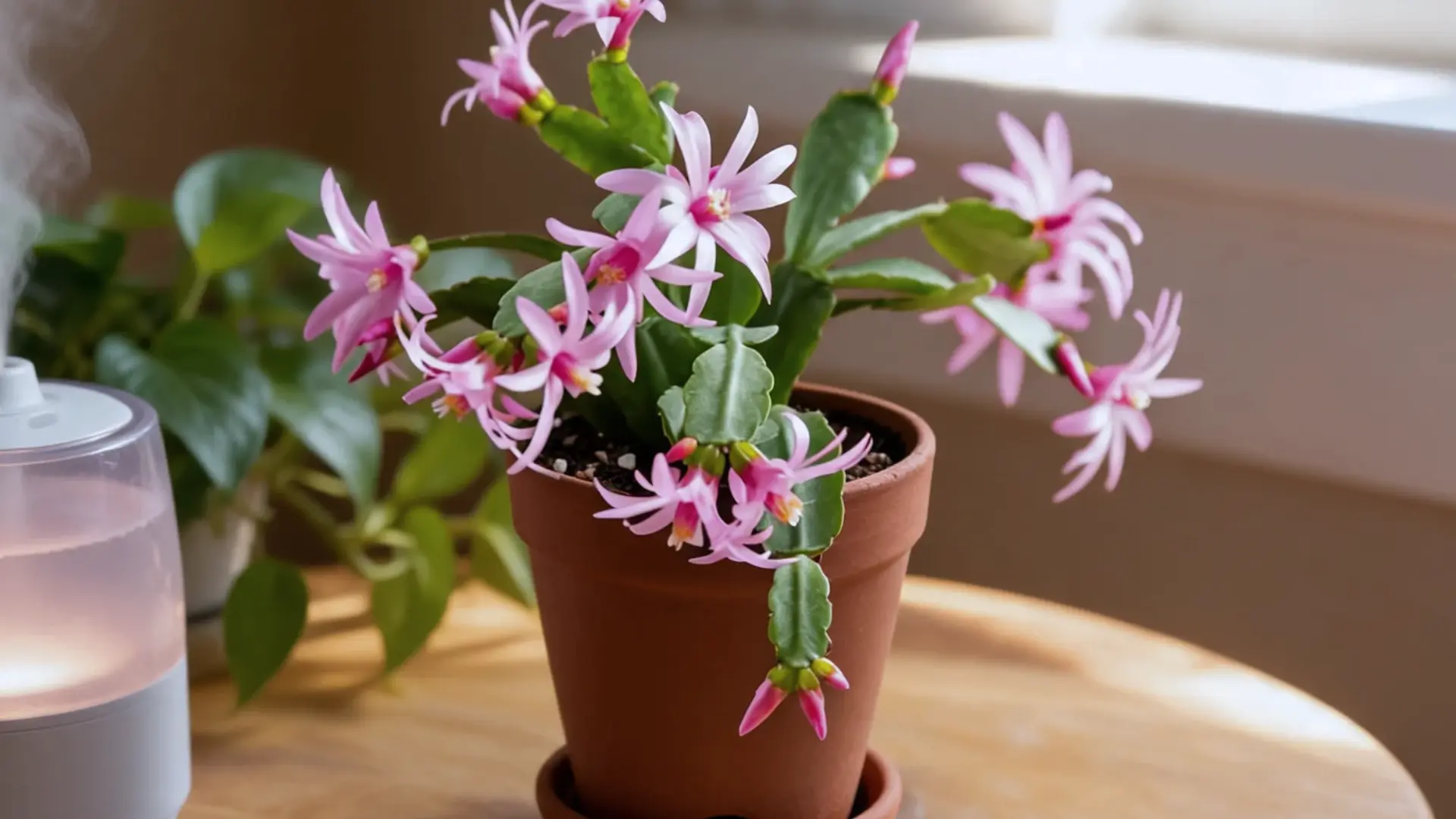
Easter cactus is a popular plant that many people grow indoors. Getting there depends on a few small daily habits. Easter cactus care feels tricky at first, but it really isn’t hard once you learn the basics.
My first plant dropped every single bud before it ever opened one. A little research showed me exactly where I went wrong.
A few small changes were all it took to fix things. Once you understand what your plant wants, everything gets easier and less stressful.
Get ready to give your Easter cactus the care it truly deserves.
What Makes Easter Cactus Different?
Easter cactus blooms in spring, unlike many cactus types that flower at other times. Its blooms often show up around Easter, which is how it got its name.
The segments are flatter and rounded, with soft scalloped edges instead of sharp spines. This gives the plant a gentler, almost leafy look compared to typical desert cacti.
Because it grows in forests, not deserts, its care needs differ quite a bit. It wants more moisture, more humidity, and less direct sun than desert varieties.
Regular cactus soil and watering habits often don’t work for this plant. Understanding these differences helps you avoid common care mistakes early on.
How to Care for Easter Cactus Indoors?
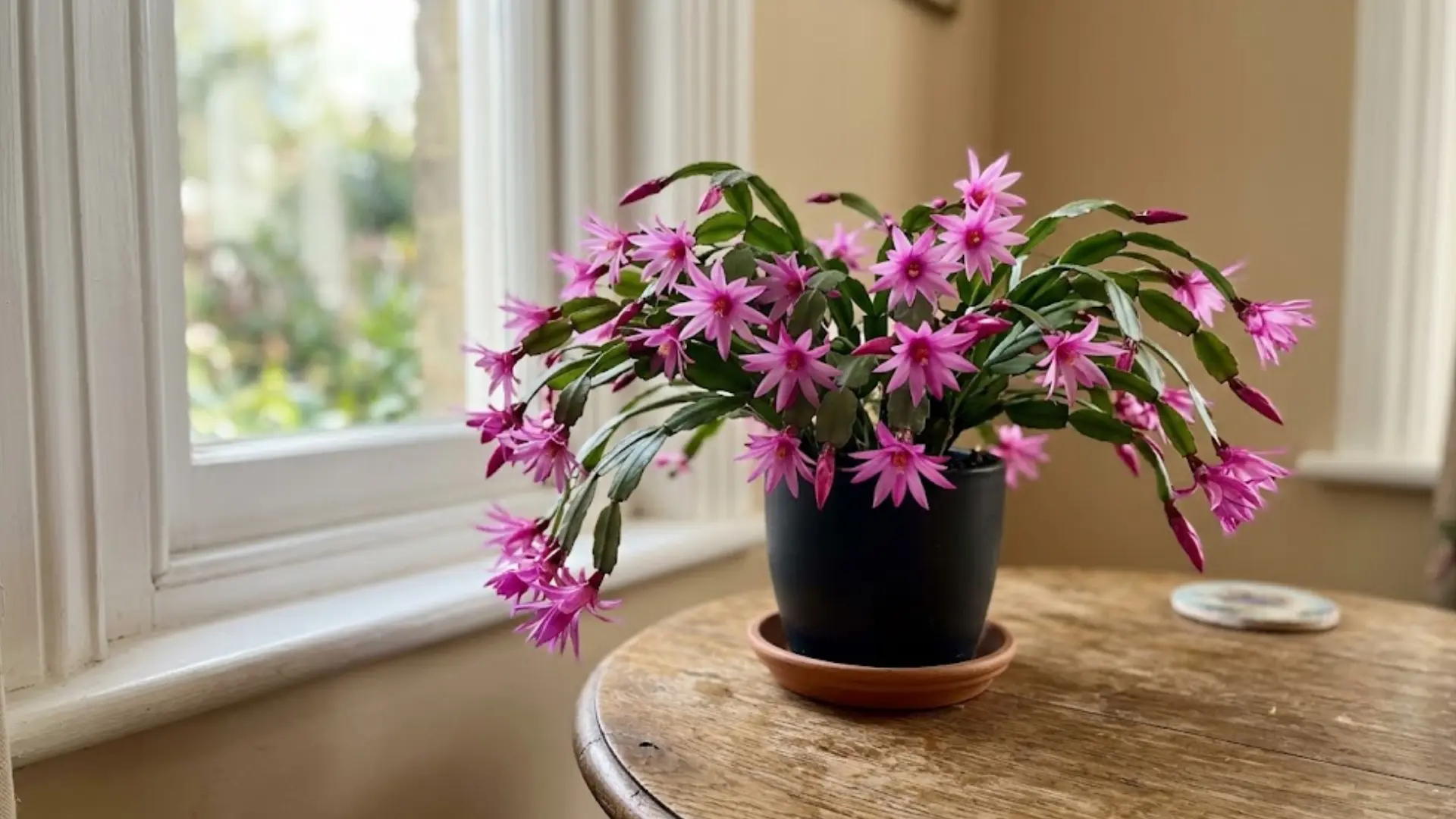
Easter cactus looks like a desert plant, but it does not act like one. It actually grows in tree bark and leaf litter in tropical forests, not sandy soil, which I didn’t expect at first. Here’s how I give it the kind of care it really needs:
1. Give It Bright Indirect Light
Bright indirect light is the safest choice for this plant. A little gentle morning sun is fine and even helpful. Avoid harsh afternoon sunlight, since it can scorch the leaf segments.
Mine sat by a west window for a week, and a few leaves faded. Not enough light causes weak, floppy growth and fewer blooms. Excess light can cause faded or reddish patches.
An east-facing window usually provides steady, gentle brightness.
2. Water When the Soil Partly Dries
Check the soil with your finger instead of watering on a set schedule. Let the top layer dry out slightly between waterings. When it is time, water thoroughly until it drains from the bottom.
Empty any excess water from the saucer so the roots don’t sit wet. Avoid letting the soil stay bone dry for long stretches. This plant does not like being treated like a true desert cactus.
3. Use Loose, Well-Draining Soil
A light houseplant or cactus mix works well, but it needs a little tweaking. Mix in something that holds a bit more moisture than standard cactus soil. Perlite keeps the mix airy and prevents compaction.
Fine orchid bark adds structure and lets air reach the roots. Good airflow around the roots matters a lot here. Always use a pot with drainage holes, since dense garden soil traps water and suffocates roots.
Simple Mix to Try: Combine regular potting mix with a bit of perlite and a handful of fine orchid bark for good drainage.
4. Maintain Moderate Humidity
This plant prefers the kind of humidity most homes already have. Extremely dry air can cause dull, shriveled, or dropping segments.
I noticed mine perked up once I started running a small humidifier during dry winter months. Grouping plants together also raises humidity naturally around them.
Constant misting is not really necessary and can invite fungal issues. Steady, moderate humidity works better than frequent, heavy misting sessions.
5. Keep Temperatures Mild
Normal indoor room temperatures suit this plant just fine. Avoid placing it near cold drafts from doors or windows. Keep it away from heating vents, since dry blasts of hot air stress the segments.
Sudden temperature swings can cause bud drop or wilting. Slightly cooler conditions before bud formation actually help trigger blooming. A stable, mild spot is usually all this plant asks for.
6. Fertilize During Active Growth
Start feeding after blooming ends and new growth begins. Use a diluted balanced fertilizer, since strong doses can harm the roots.
Avoid overfeeding, as too much fertilizer stresses the plant rather than helping it. Cut back or stop fertilizing during its natural rest period.
Watch for a white, crusty buildup on the soil surface. That salt buildup means it is time to flush the soil with plain water.
Tip: flush the soil with plain water every few months to prevent mineral buildup, even before you notice any crust.
7. Prune After Flowering
Prune only if needed, right after the plant finishes flowering. First, remove any damaged or shriveled segments you notice. If growth looks leggy, trim it back to encourage a fuller shape.
Pinch at the natural segment joints for the cleanest cuts. This encourages new branching and a bushier look overall. Save any healthy trimmed pieces, since they root easily for new plants.
Easter Cactus Blooming Timeline
I used to think care stayed the same all year, but it doesn’t. My plant’s needs shift with the seasons, right along with its growth cycle. Here’s a simple guide to what it needs during each part of the year:
|
Period |
What the Plant Is Doing |
Care Focus |
|---|---|---|
|
Late Winter |
Preparing for buds |
Cooler conditions |
|
Early Spring |
Bud formation |
Stable light and moisture |
|
Spring |
Flowering |
Avoid major changes |
|
Late Spring–Summer |
Active growth |
Water and feed |
|
Fall |
Growth slows |
Reduce feeding |
|
Winter |
Rest period |
Cooler, slightly drier care |
Knowing what stage your plant is in makes care much easier. It also helps you catch problems before they get worse.
How to Propagate Easter Cactus?
Growing new Easter cactus plants from cuttings is simple and works well for most home gardeners. Follow these easy steps to root your own segments successfully:
- Step 1: Pick firm, plump segments free from spots, damage, or wilting.
- Step 2: Separate segments right at natural leaf joints for clean, easy breaks.
- Step 3: Set segments aside for a day so cut ends callous over slightly.
- Step 4: Carefully insert the dried ends into lightly moist, well-draining potting mix.
- Step 5: Place your pot somewhere warm with bright, indirect filtered sunlight.
I always look for tiny new growth as my sign that roots are forming. It’s the small detail that tells me my cutting made it.
What Easter Cactus Growers Say on Reddit
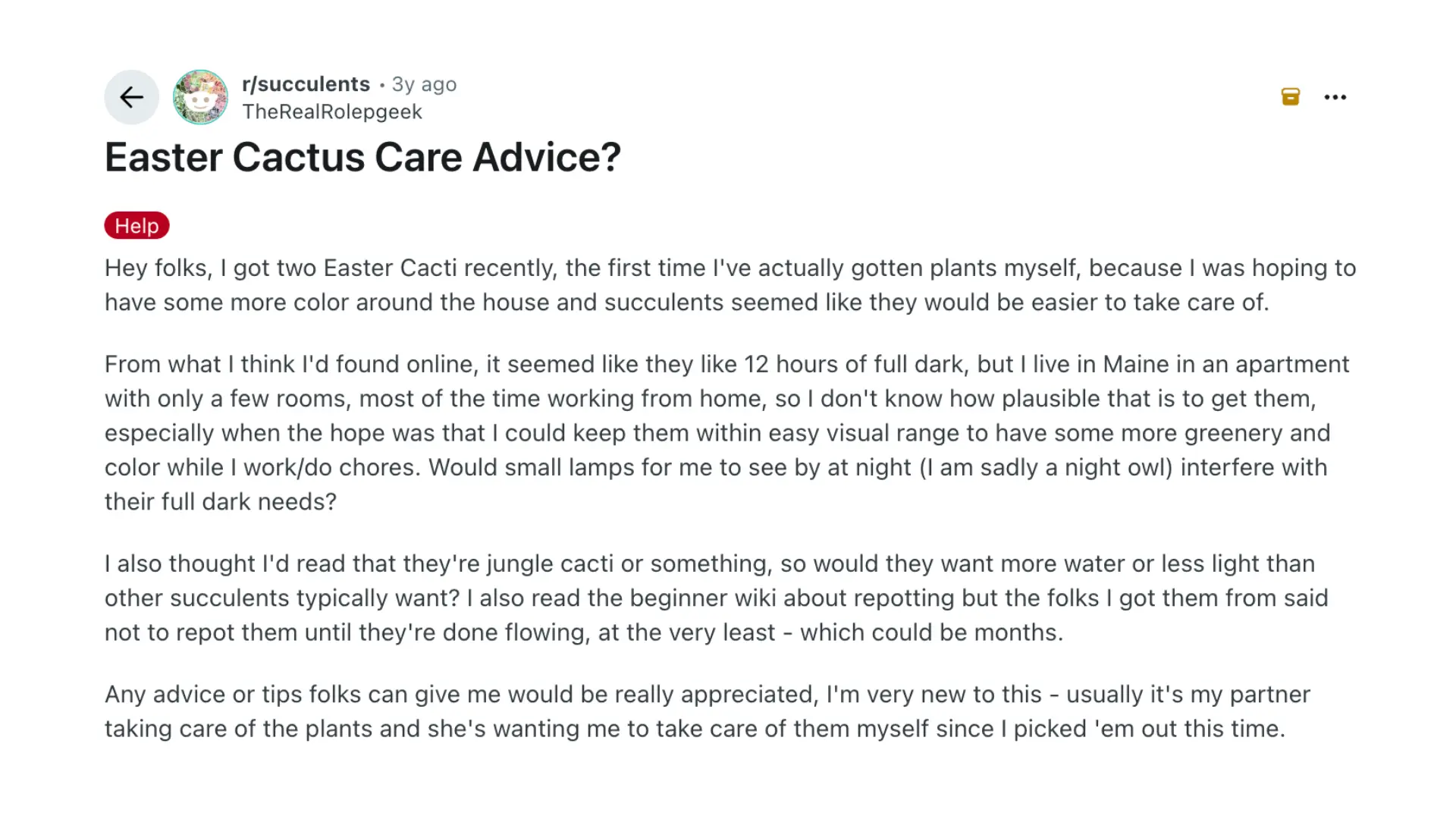
Many growers on Reddit share similar experiences with this plant. Many mention overwatering as their biggest early mistake. Others say their plant sulked after a sudden move or repotting.
One commenter pushed back on the idea that indoor lamps cause harm, saying lamps “would have to be awfully bright and awfully close” to bother the cactus.
Several growers agree that indoor light worries are often overblown. The common thread across the board is consistency.
Growers who kept a steady routine saw better blooms year after year. Small, steady care beats big changes every time with this plant.
Common Easter Cactus Problems and Fixes
My plant has acted up now and then, even with good care. Most issues trace back to just a few root causes. Here’s a quick table to help you spot the problem fast:
|
Problem |
Likely Cause |
Fix |
|---|---|---|
|
Wrinkled segments |
Too dry or root damage |
Water deeply and check roots |
|
Yellow segments |
Overwatering or stress |
Let soil dry out more between waterings |
|
Drooping |
Water stress or root issues |
Adjust watering and inspect roots |
|
Bud drop |
Environmental change |
Keep light and temperature steady |
|
No flowers |
No rest period or low light |
Give it a cool rest and brighter light |
|
Soft stems |
Root or stem rot |
Trim damaged parts and repot in fresh soil |
|
Brown patches |
Excess sun or damage |
Move to a spot with gentler light |
Once you know the cause, the fix is usually simple. A small change is often all it takes to get your plant back on track.
Frequently Asked Questions (FAQs)
Is Easter cactus the same as Christmas cactus?
No, they are different plants, even though they look similar. Easter cactus has rounder, scalloped leaf edges instead of pointed ones.
How long does Easter cactus live?
With good care, it can live for many years, even decades. Some plants get passed down through families over generations.
Is Easter cactus safe for pets?
It is generally considered non-toxic to cats and dogs. Still, it’s smart to keep any houseplant out of reach.
Final Words
Easter cactus care comes down to a few simple habits, nothing complicated. Small, steady habits keep your plant strong and blooming. You now know how light, water, and soil affect your plant’s mood.
Your plant reacts fast to changes, so keep its routine steady and calm. Little changes now can prevent bigger problems down the road.
Every wilted leaf or dropped bud teaches you something useful about your plant. Keep watching, adjusting, and learning as your plant grows through each season.
You deserve a thriving, blooming plant that rewards your effort. Drop your Easter cactus questions or tips in the comments below!