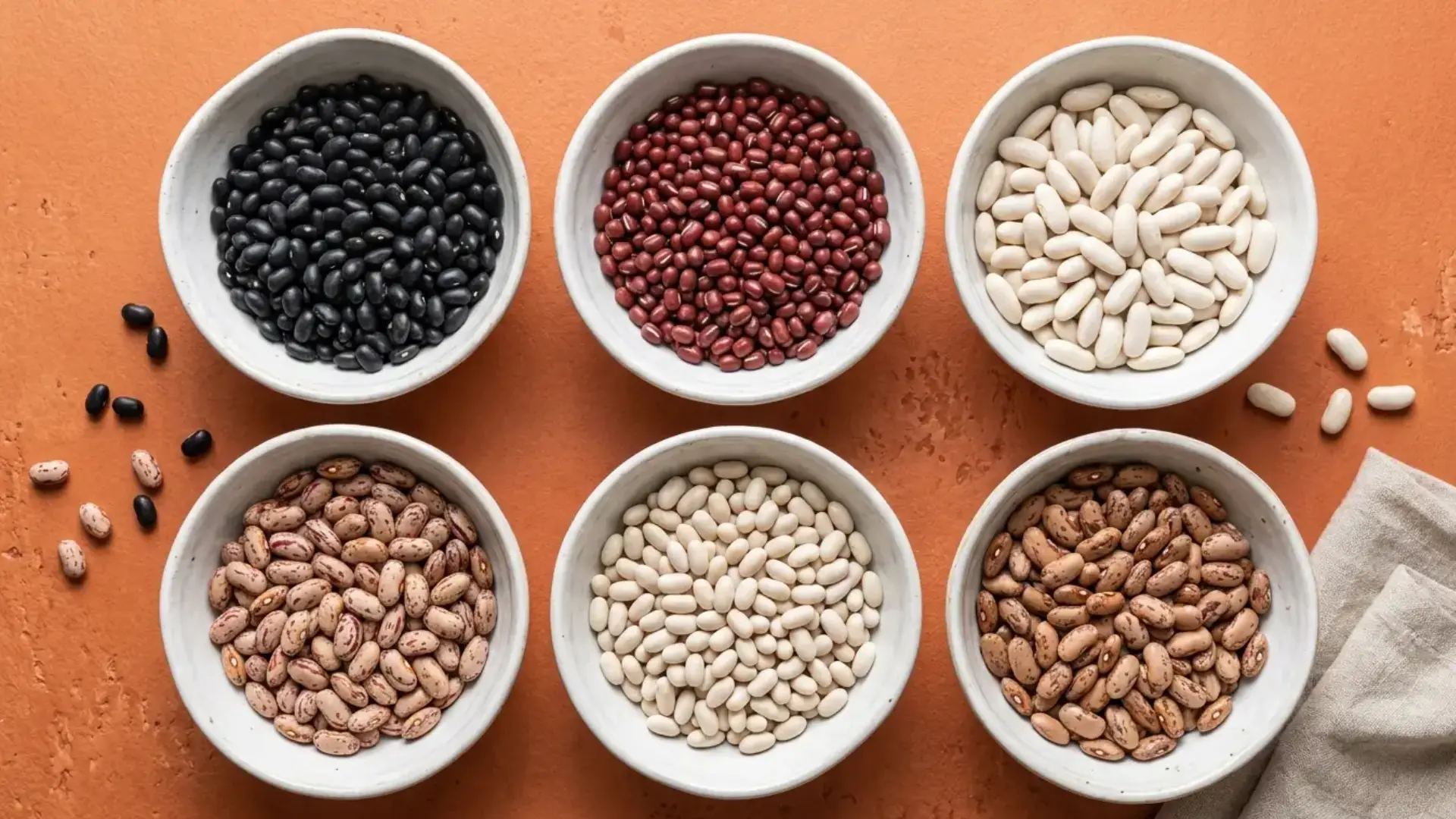
I once stood in a grocery aisle staring at six bags, all labeled just “beans.”
I had no clue which one my recipe actually needed. That confusion is common when it comes to knowing different bean types or what each one does in a pot. Some hold their shape through hours of simmering.
Others melt into a dip in minutes. A few aren’t beans at all.
This blog covers all types and categories, so grab the right bag with confidence next time, instead of guessing.
Types of Beans and How They Are Categorized
Beans can be categorized into several main groups.
Common grocery-store beans share the Phaseolus vulgaris species.
Cowpeas come from one plant with varying pod colors. Asian legumes trace back to East and Southeast Asia. Chickpeas and fava beans are tied to Mediterranean and Middle Eastern agriculture.
Heirloom varieties stay regional and scarce.
True peas and lentils belong to separate genera entirely. Cocoa, coffee, and vanilla are not legumes at all.
| Category | Beans in This List |
|---|---|
| Grocery-Store Beans | Black, Pinto, Kidney, Great Northern, Cannellini, Navy, Pink, Red, Cranberry, Fayot, Lima |
| Cowpeas | Black-Eyed Peas, Purple Hull Peas |
| Asian Legumes | Mung, Adzuki, Soybeans, Edamame |
| Middle Eastern Legumes | Chickpeas, Fava |
| Regional Varieties | Anasazi, Gigante, Tepary, Yellow Eye, Jacob’s Cattle, Scarlet Runner |
| True Peas | Split Peas, Snap Peas, Snow Peas, Marrowfat Peas |
| Lentils | Lentils |
| Pods Eaten Whole | Long Beans, French Green Beans |
| Not Legumes At All | Cocoa, Coffee, Vanilla |
Types of Beans for Your Recipes
Below are bean types, covering the everyday pantry staples along with a few heirloom and specialty picks worth trying.
Use this as a quick reference the next time a recipe calls for beans, and you are not sure which one to grab.
1. Black Beans
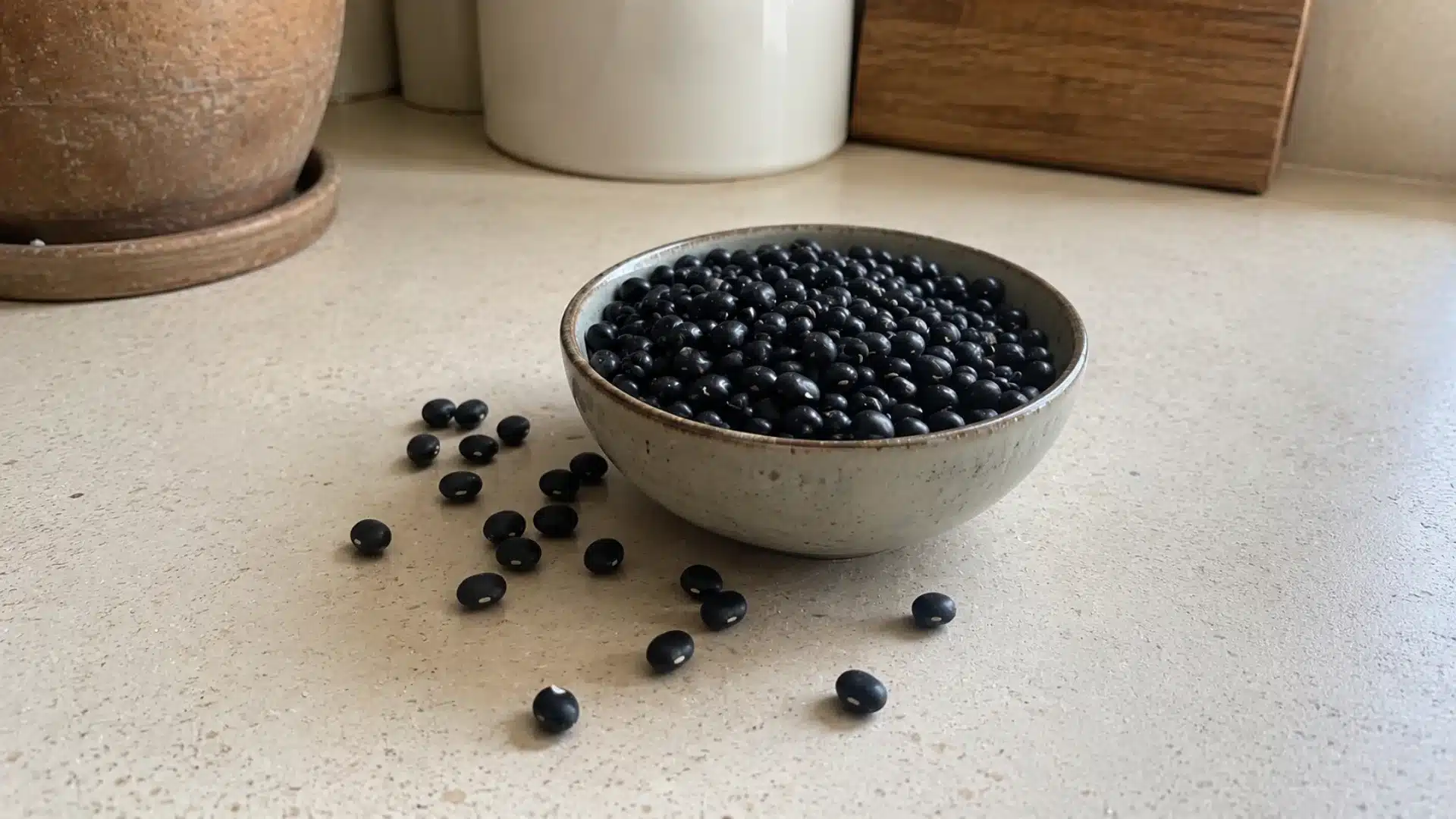
Black beans are small, oval beans with deep black skins and a soft, dense center once cooked. They hold their shape well through long cook times.
This makes them a dependable pick across soups, salads, and mains alike.
- Flavor: Mild and slightly sweet with an earthy finish
- Origin/Cuisine Tie: Popular across Mexican and Caribbean cooking
- Nutrition: 15g protein, 15g fiber per cup
- Best Culinary Uses: Burritos, soups, salads, and vegan burgers
2. Pinto Beans
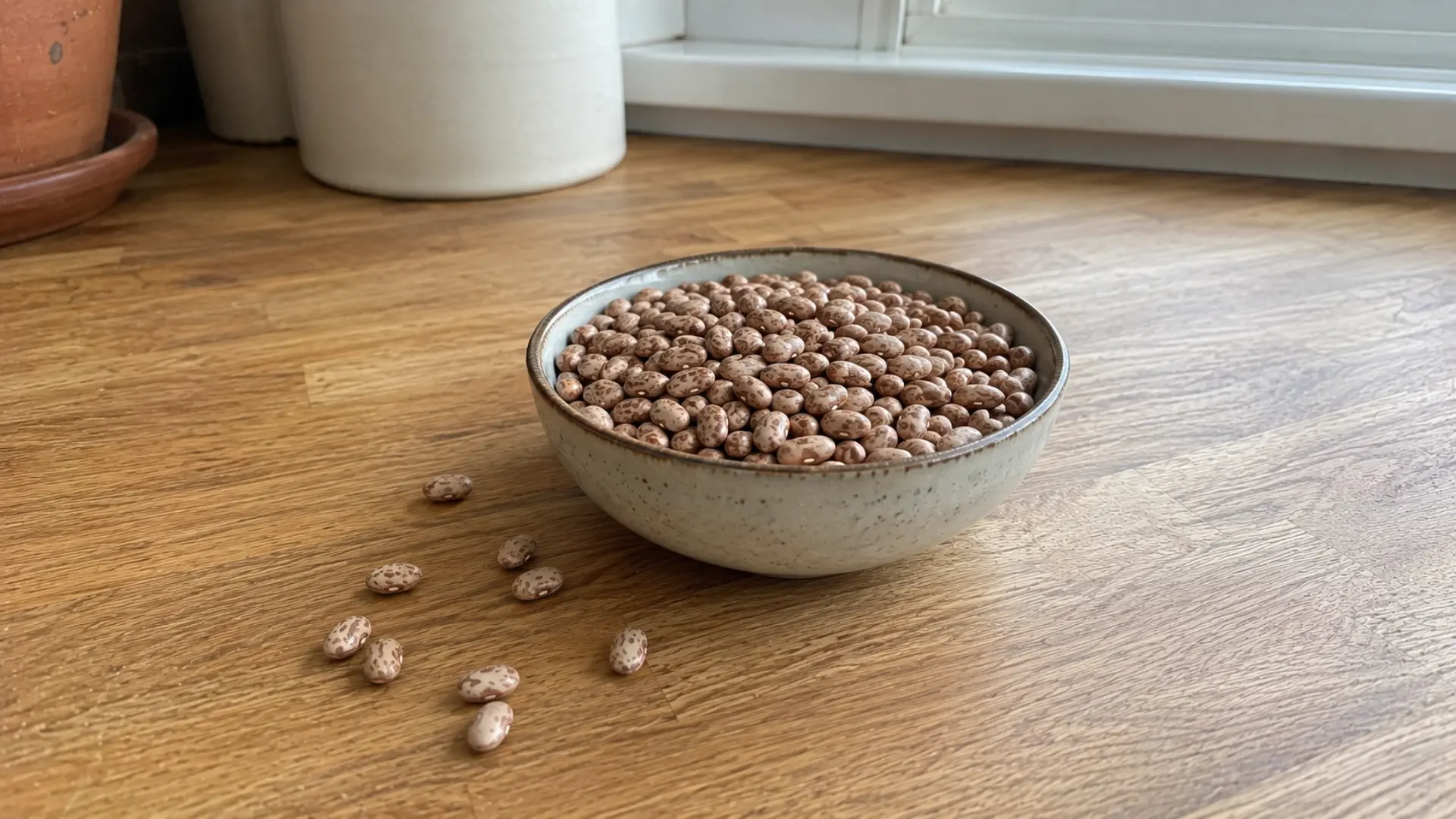
Pinto beans are medium, oval beans with beige and brown speckles that fade once cooked.
They are the most eaten beans. Their soft texture makes them easy to mash or blend.
- Flavor: Nutty and earthy
- Origin/Cuisine Tie: A Southwestern and Mexican cooking staple
- Nutrition: 15g protein, 15g fiber per cup
- Best Culinary Uses: Refried beans, chili, and burritos
3. Kidney Beans
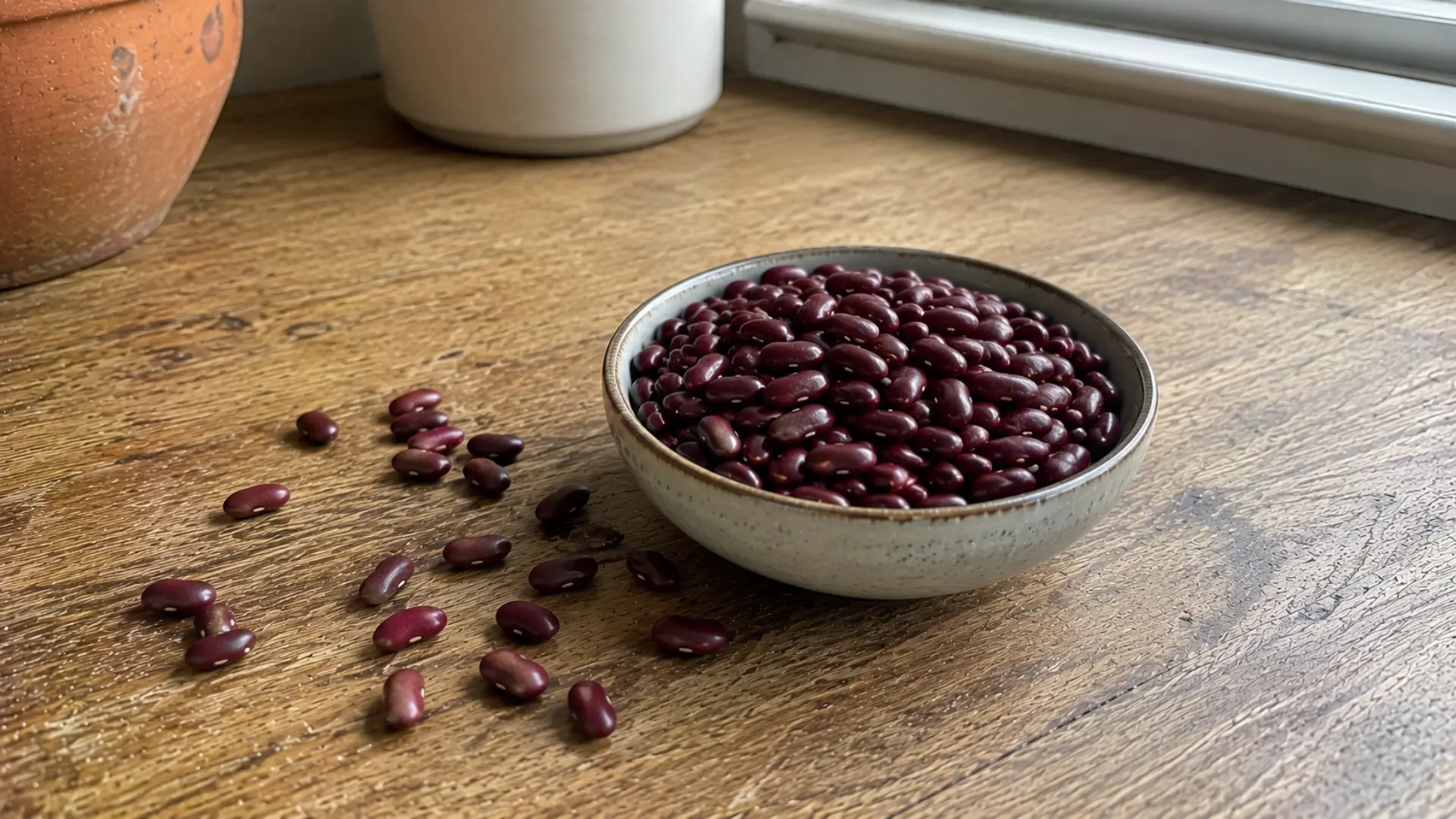
Kidney beans are named for their curved, kidney-like shape and come in dark red and light red varieties.
They stay firm through long simmering. This makes them a go-to for hearty, slow-cooked dishes.
- Flavor: Mild with a slightly sweet undertone
- Origin/Cuisine Tie: A staple in American, Creole, and Indian cooking
- Nutrition: 13g protein, 11g fiber per cup
- Best Culinary Uses: Chili, rice and beans, and stews
4. Chickpeas (Garbanzo Beans)
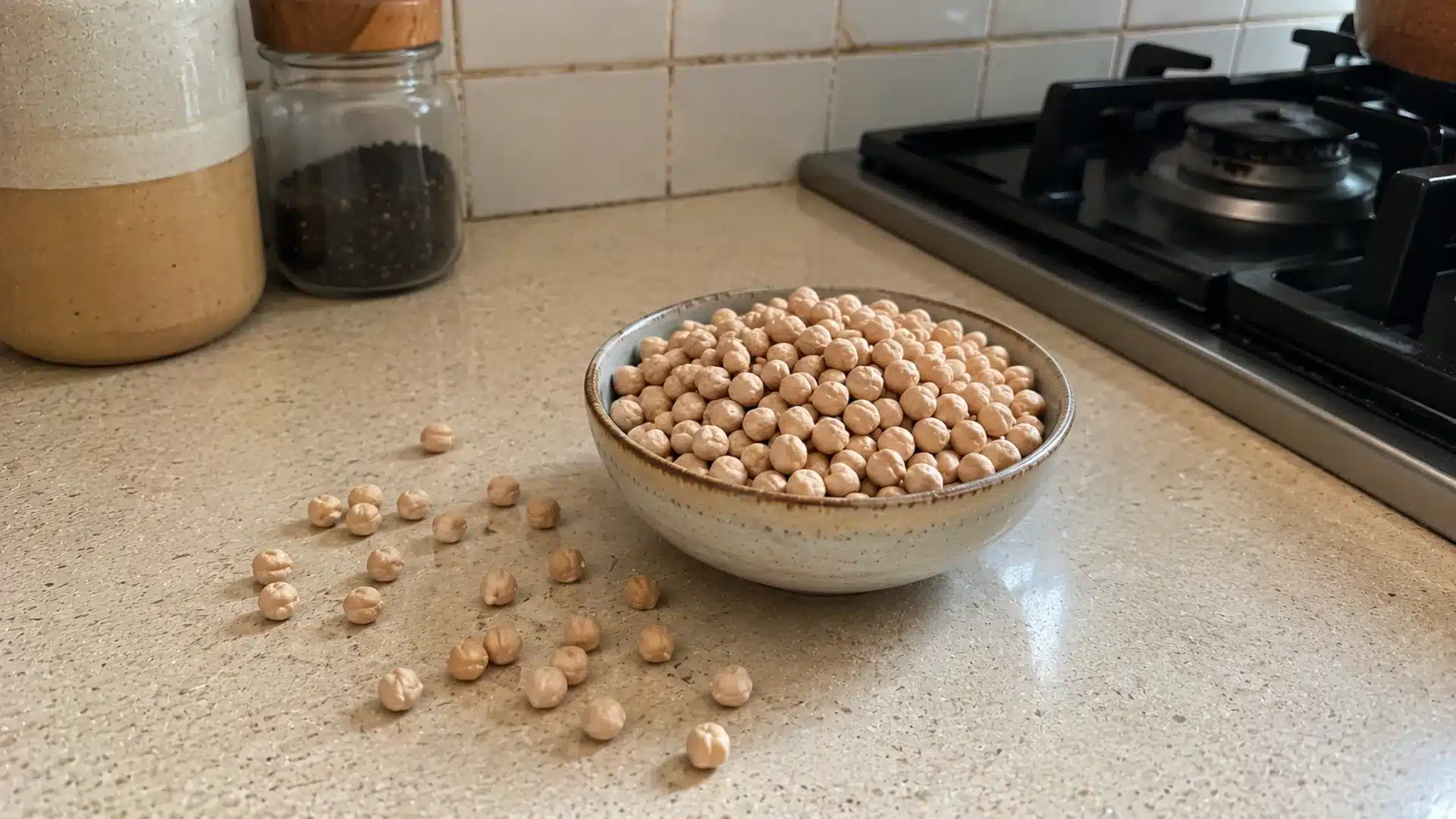
Chickpeas are round, beige legumes available in the large, thin-skinned Kabuli type and the smaller, darker Desi type. They’re one of the most universal legumes around.
Their firm bite works whether they’re whole, mashed, or blended.
- Flavor: Nutty with a buttery finish
- Origin/Cuisine Tie: Central to Indian and Middle Eastern cooking
- Nutrition: 14g protein, 12g fiber per cup
- Best Culinary Uses: Hummus, falafel, and curries
5. Great Northern Beans
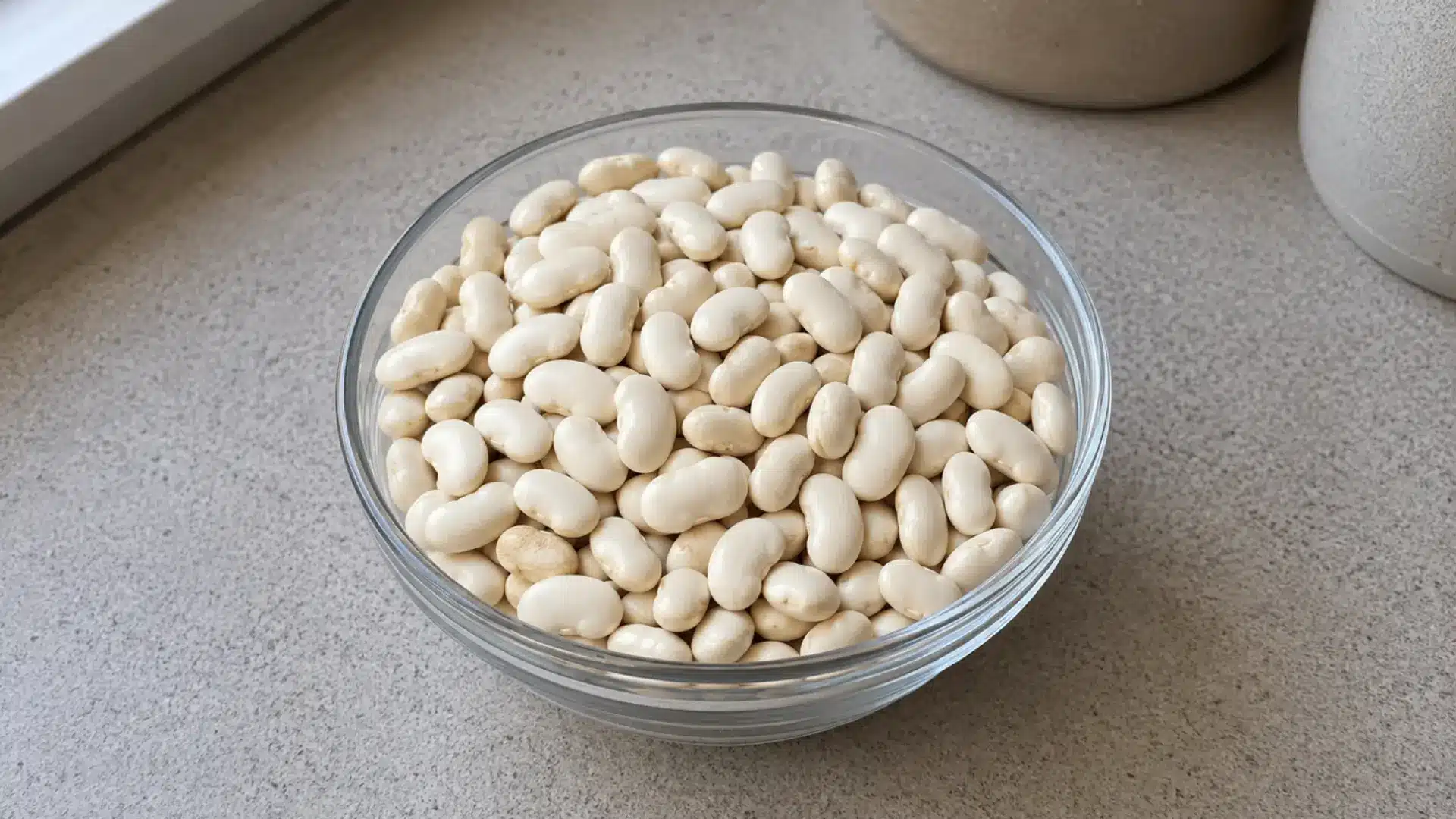
Great Northern beans are medium, oval, white beans that soak up whatever flavors surround them.
They hold their shape without turning mushy. That makes them a flexible base for both brothy and baked dishes.
- Flavor: Mild and slightly nutty
- Origin/Cuisine Tie: Common in French and American cooking
- Nutrition: 14g protein, 12g fiber per cup
- Best Culinary Uses: Soups, baked beans, and purees
6. Cannellini Beans (White Kidney Beans)
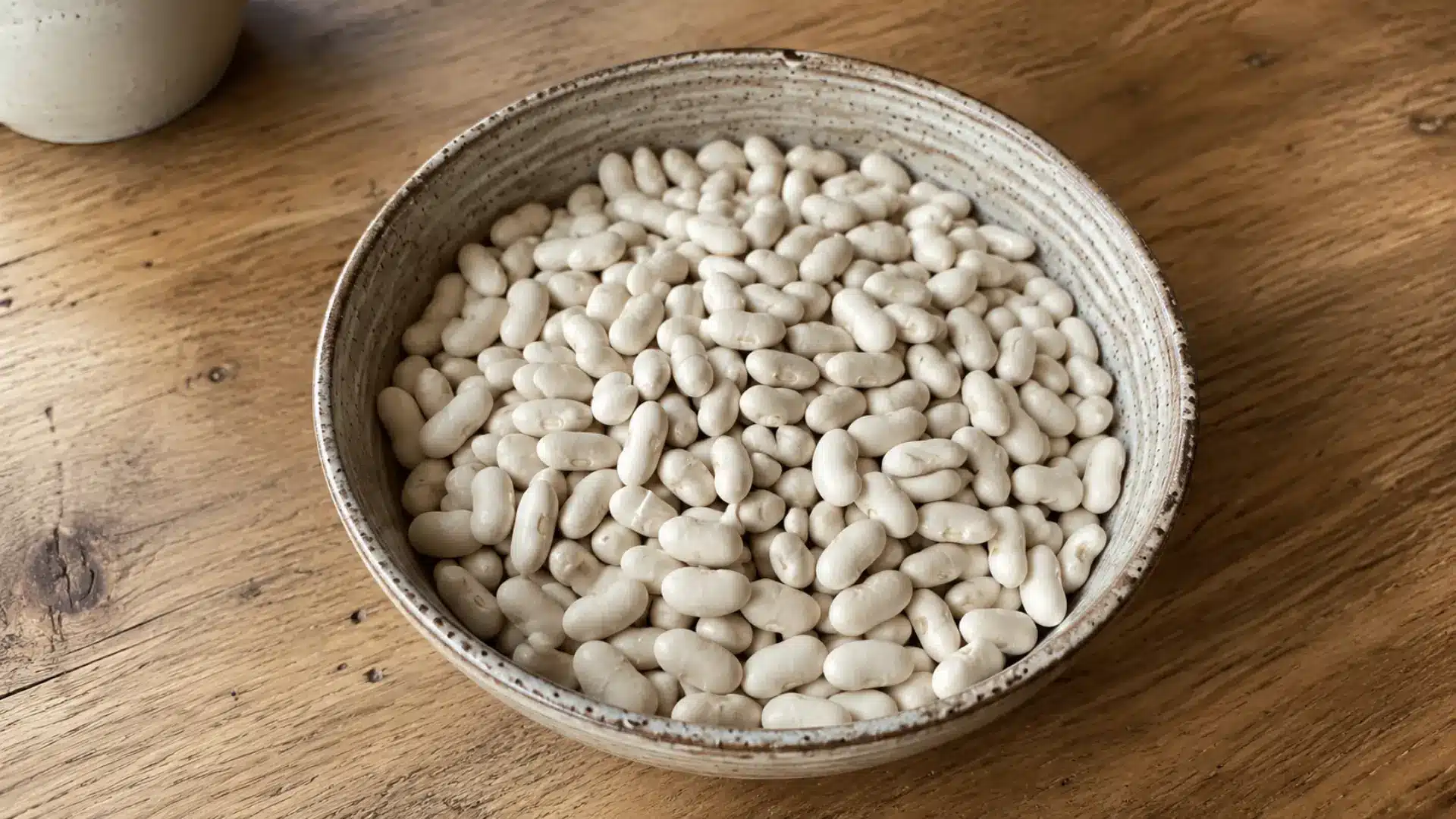
Cannellini beans are large, white, kidney-shaped beans with a tender bite once cooked.
They’re a mainstay of Italian pantries. Their creamy texture pairs especially well with olive oil and herbs.
- Flavor: Nutty and mildly earthy
- Origin/Cuisine Tie: A staple in Italian cooking
- Nutrition: 17g protein, 11g fiber per cup
- Best Culinary Uses: Pasta dishes, minestrone, and salads
7. Navy Beans
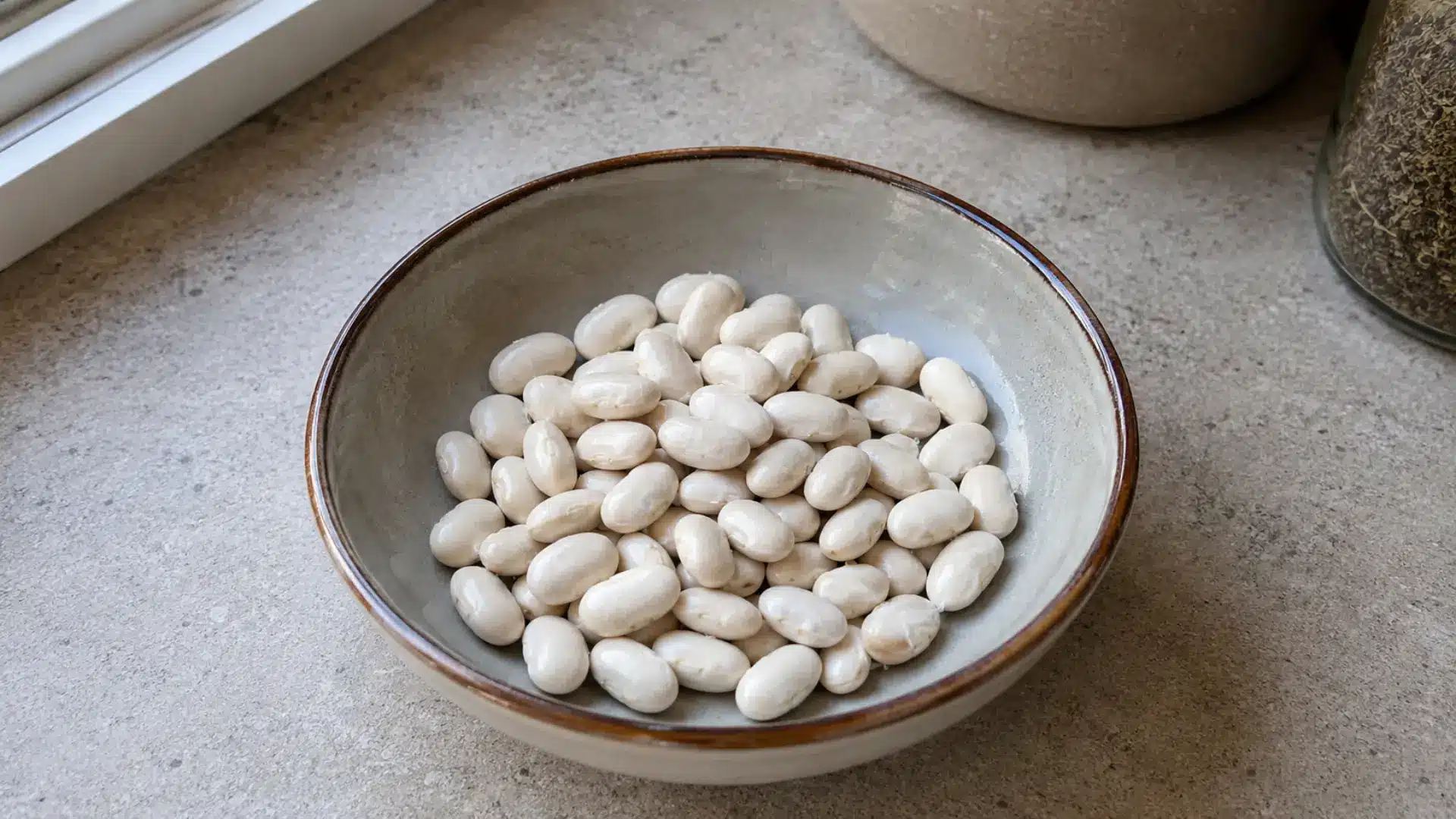
Navy beans are small, white, oval beans once used as a staple food for the US Navy. They absorb flavor easily during cooking.
Their high fiber content makes them one of the more filling beans around.
- Flavor: Mild and nutty
- Origin/Cuisine Tie: Central to classic American baked bean dishes
- Nutrition: 15g protein, 19g fiber per cup
- Best Culinary Uses: Baked beans, soups, and dips
8. Lima Beans (Butter Beans)
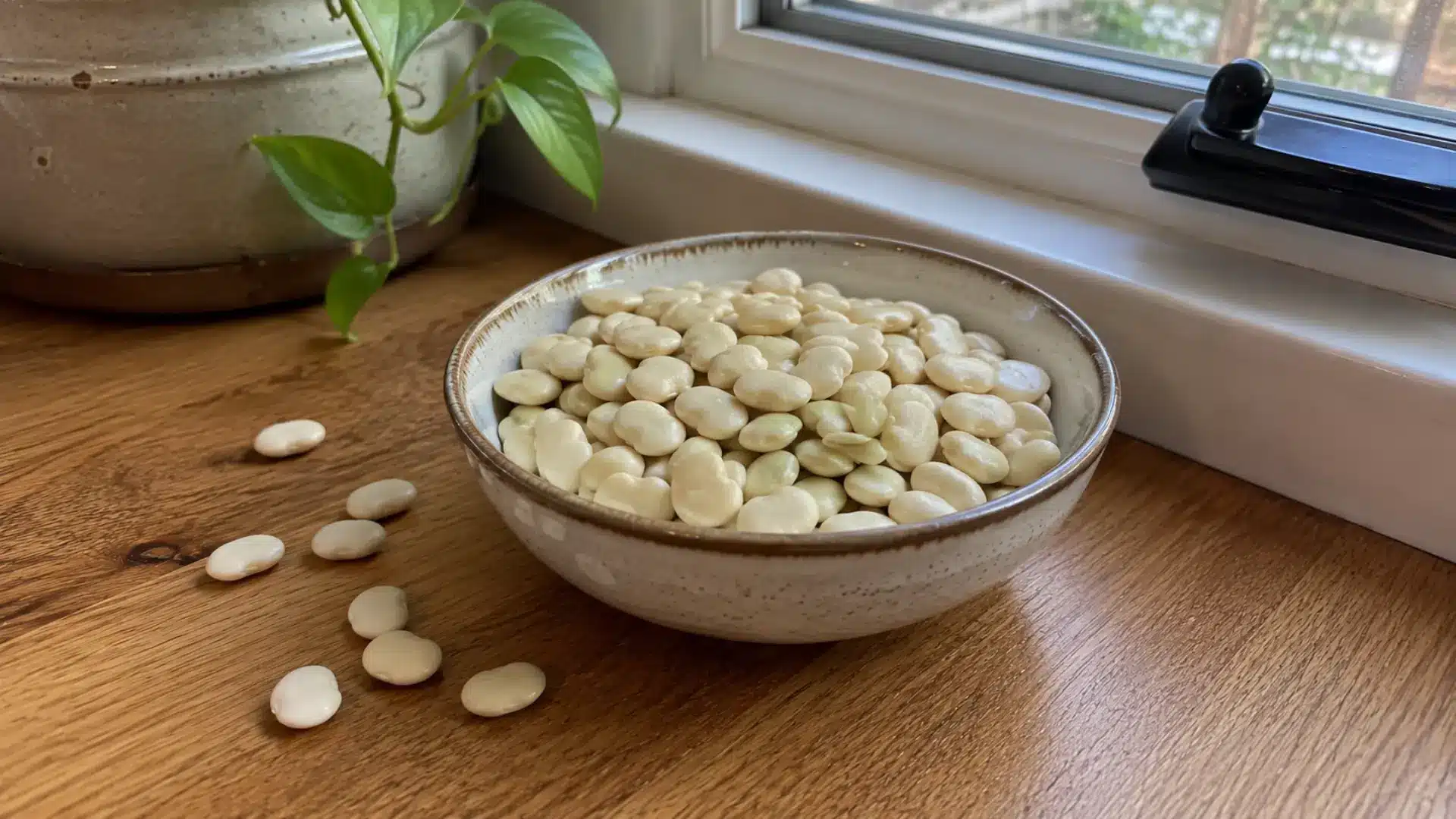
Lima beans come in a smaller baby variety and a larger butter bean variety, both known for a rich, buttery taste.
They are named after Lima, Peru. Their soft texture makes them a natural fit for creamy dishes.
- Flavor: Buttery and slightly sweet
- Origin/Cuisine Tie: Key to Southern American succotash
- Nutrition: 15g protein, 13g fiber per cup
- Best Culinary Uses: Succotash, soups, and casseroles
9. Fava Beans (Broad Beans)
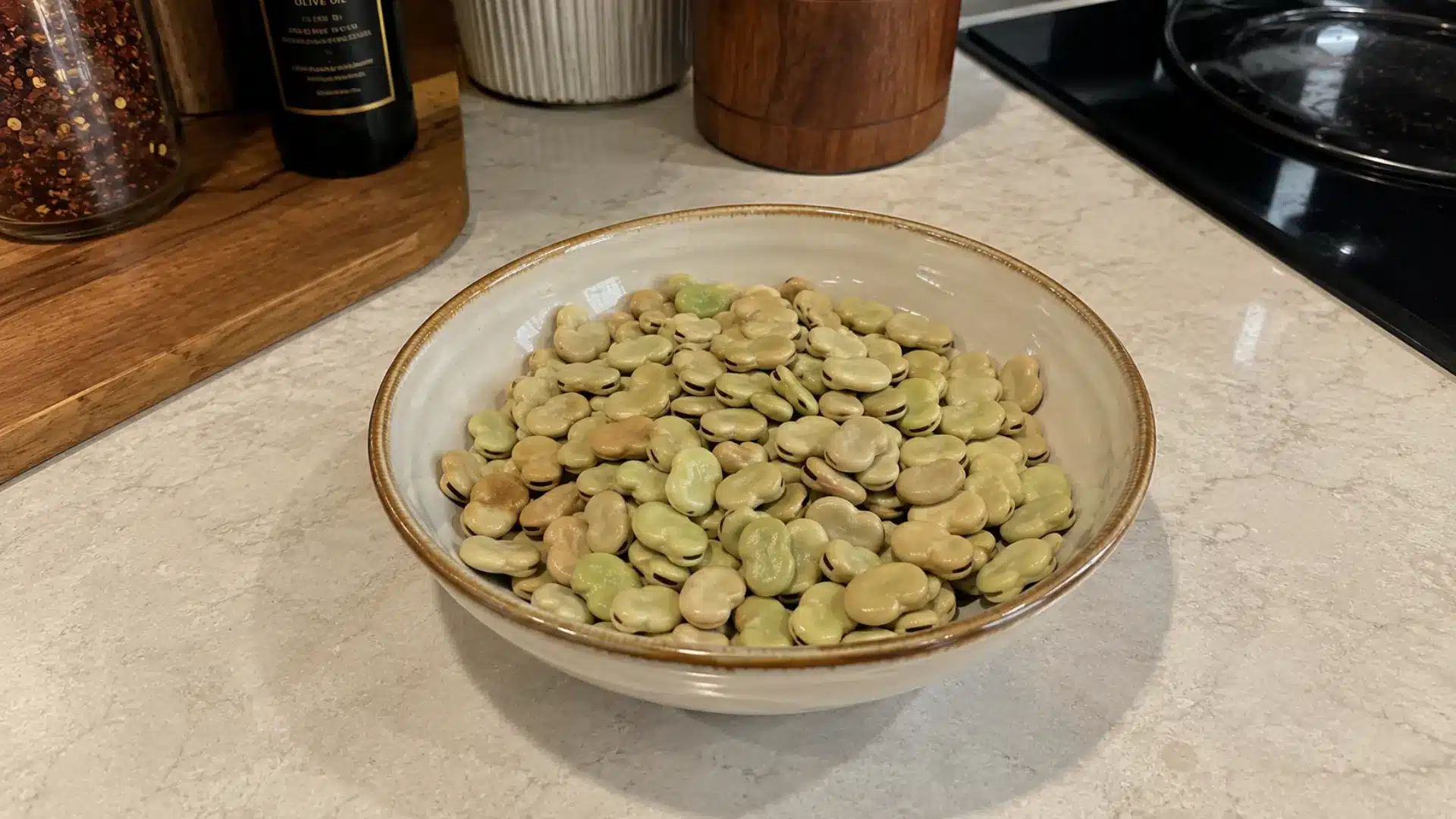
Fava beans are large, flat, green beans with a tough skin that’s usually removed after blanching. They’ve been part of Mediterranean cooking for centuries. Fresh favas need a bit more prep, but the payoff is worth it.
- Flavor: Slightly bitter with a nutty finish
- Origin/Cuisine Tie: A Mediterranean and Middle Eastern staple
- Nutrition: 13g protein, 9g fiber per cup
- Best Culinary Uses: Soups, dips, and bean salads
10. Mung Beans
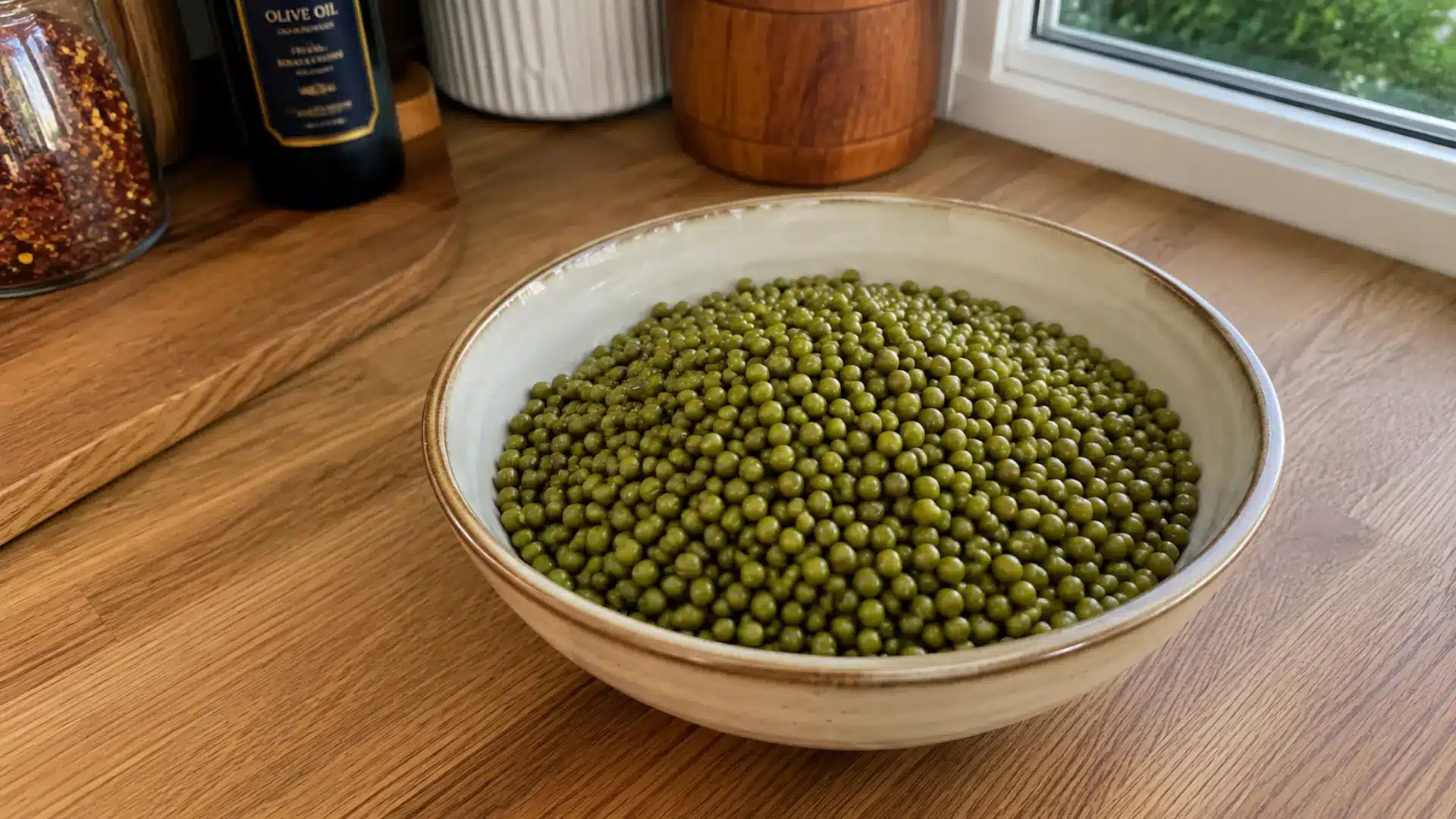
Mung beans are small, round, green beans that soften quickly during cooking.
They are also widely sprouted and eaten fresh. Their mild taste makes them easy to pair with bold spices.
- Flavor: Slightly sweet and nutty
- Origin/Cuisine Tie: Common across Chinese and Indian cooking
- Nutrition: 14g protein, 15g fiber per cup
- Best Culinary Uses: Soups, curries, and sprouts
11. Black-Eyed Peas
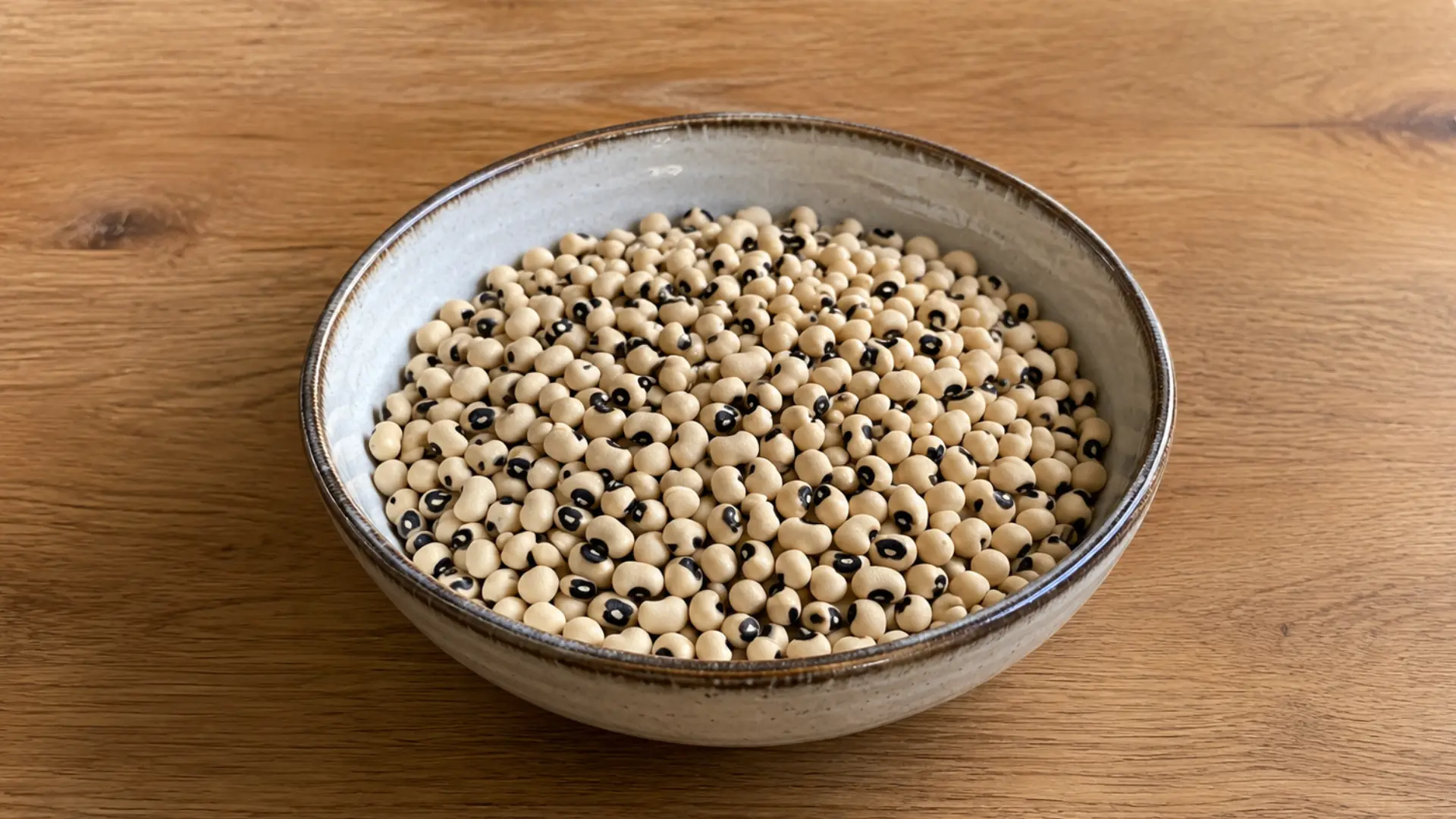
Black-eyed peas are small, white beans marked by a single black spot. They cook faster than most dried beans and often skip the soaking step.
In the South, they are tied to a well-known New Year’s tradition.
- Flavor: Earthy with a creamy finish
- Origin/Cuisine Tie: A Southern staple with African roots
- Nutrition: 13g protein, 11g fiber per cup
- Best Culinary Uses: Soups, side dishes, and salads
12. Cranberry Beans (Borlotti Beans)
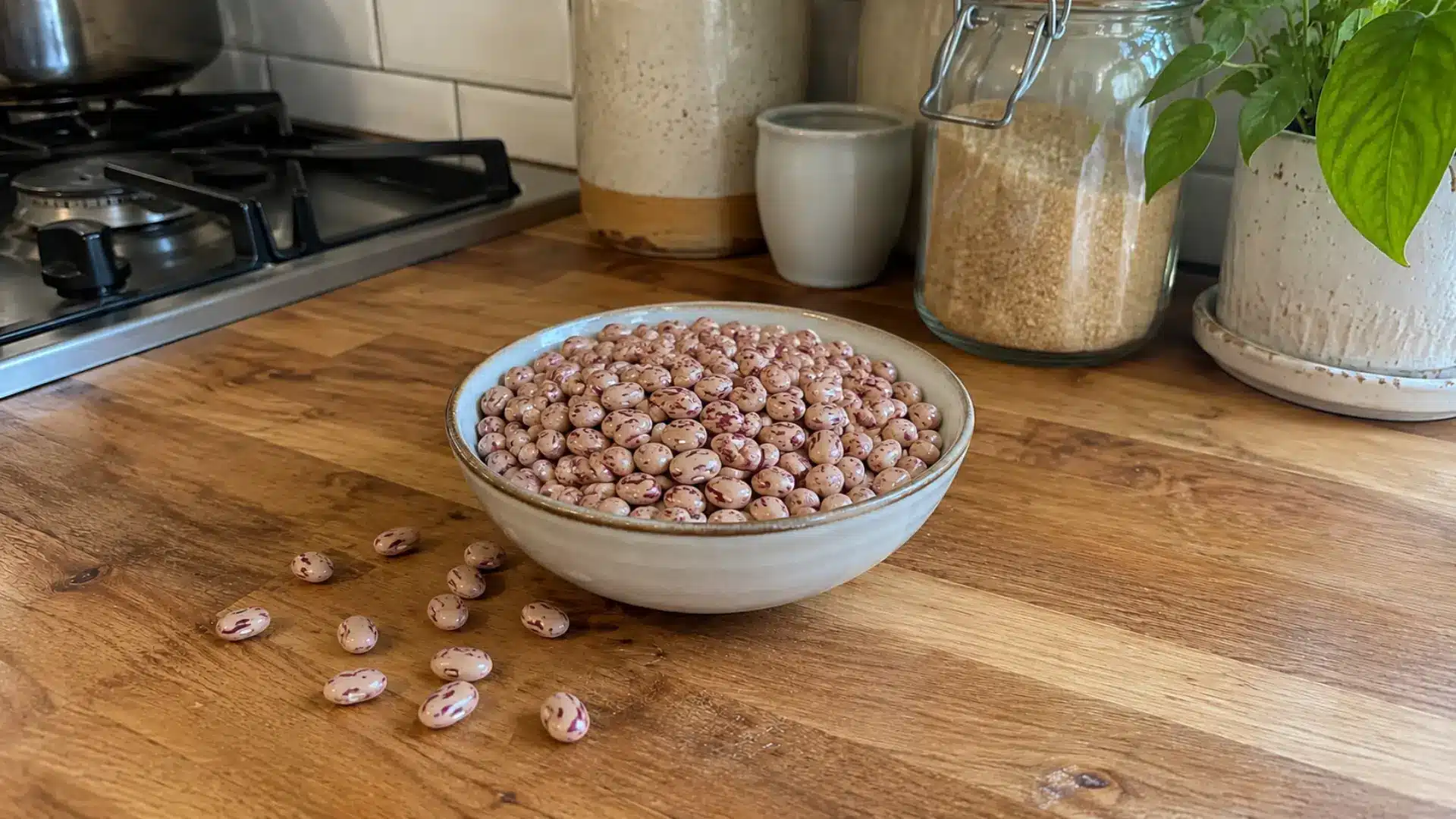
Cranberry beans are pale pink beans streaked with red that fade once cooked. Their thin skin creates a naturally rich broth.
They are a favorite where the cooking liquid matters as much as the bean itself.
- Flavor: Rich and nutty
- Origin/Cuisine Tie: Common in Italian and Portuguese cooking
- Nutrition: 17g protein, 13g fiber per cup
- Best Culinary Uses: Minestrone, pasta e fagioli, and stews
13. Red Beans (Small Red)
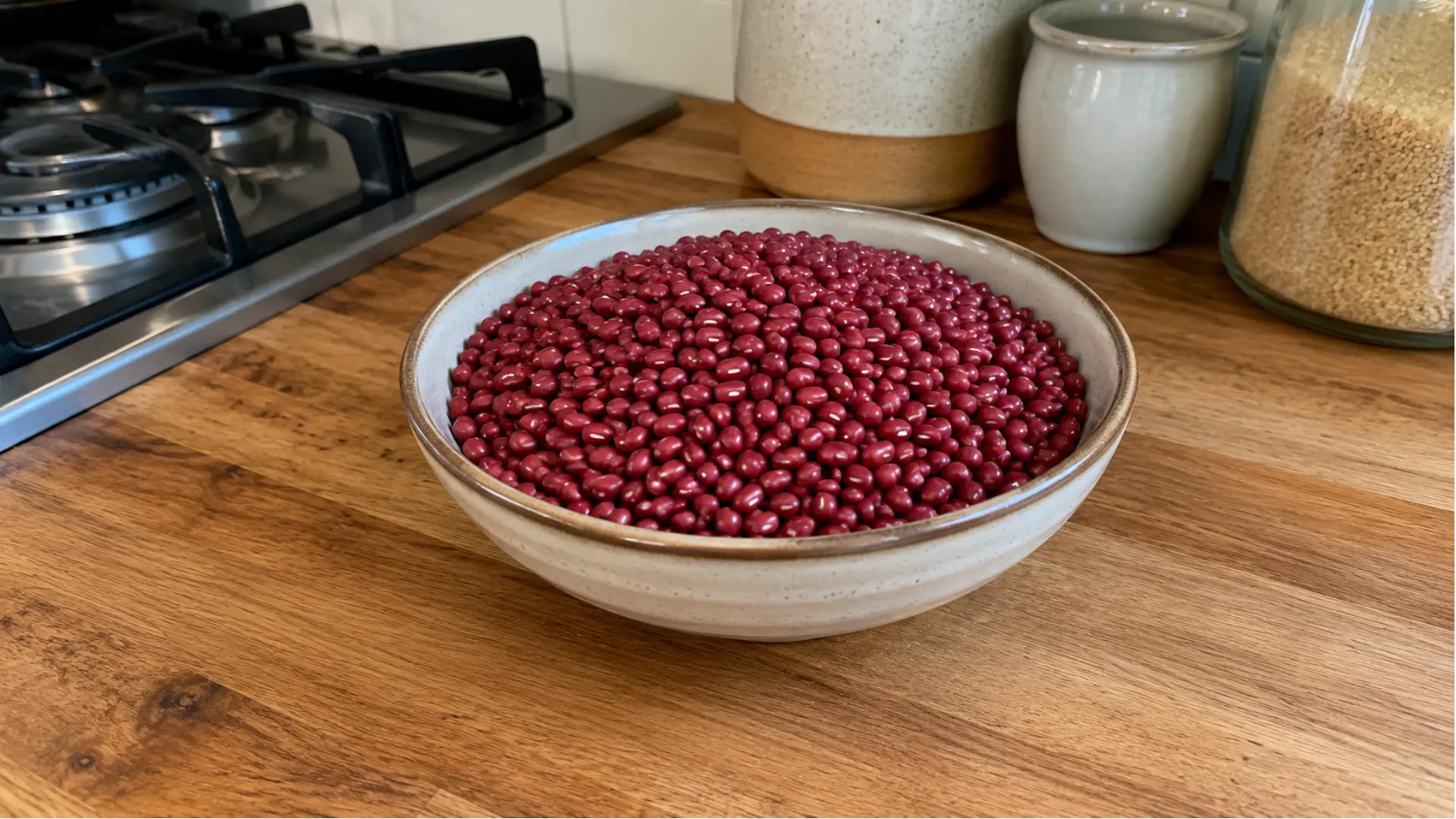
Small red beans are often mistaken for kidney beans, though they are smaller and creamier once cooked.
They are best known for one iconic Southern dish. Their firm hold makes them ideal for slow simmering with smoked meats.
- Flavor: Earthy and nutty
- Origin/Cuisine Tie: Central to Cajun and Creole cooking
- Nutrition: 15g protein, 13g fiber per cup
- Best Culinary Uses: Red beans and rice, and soups
14. Pink Beans
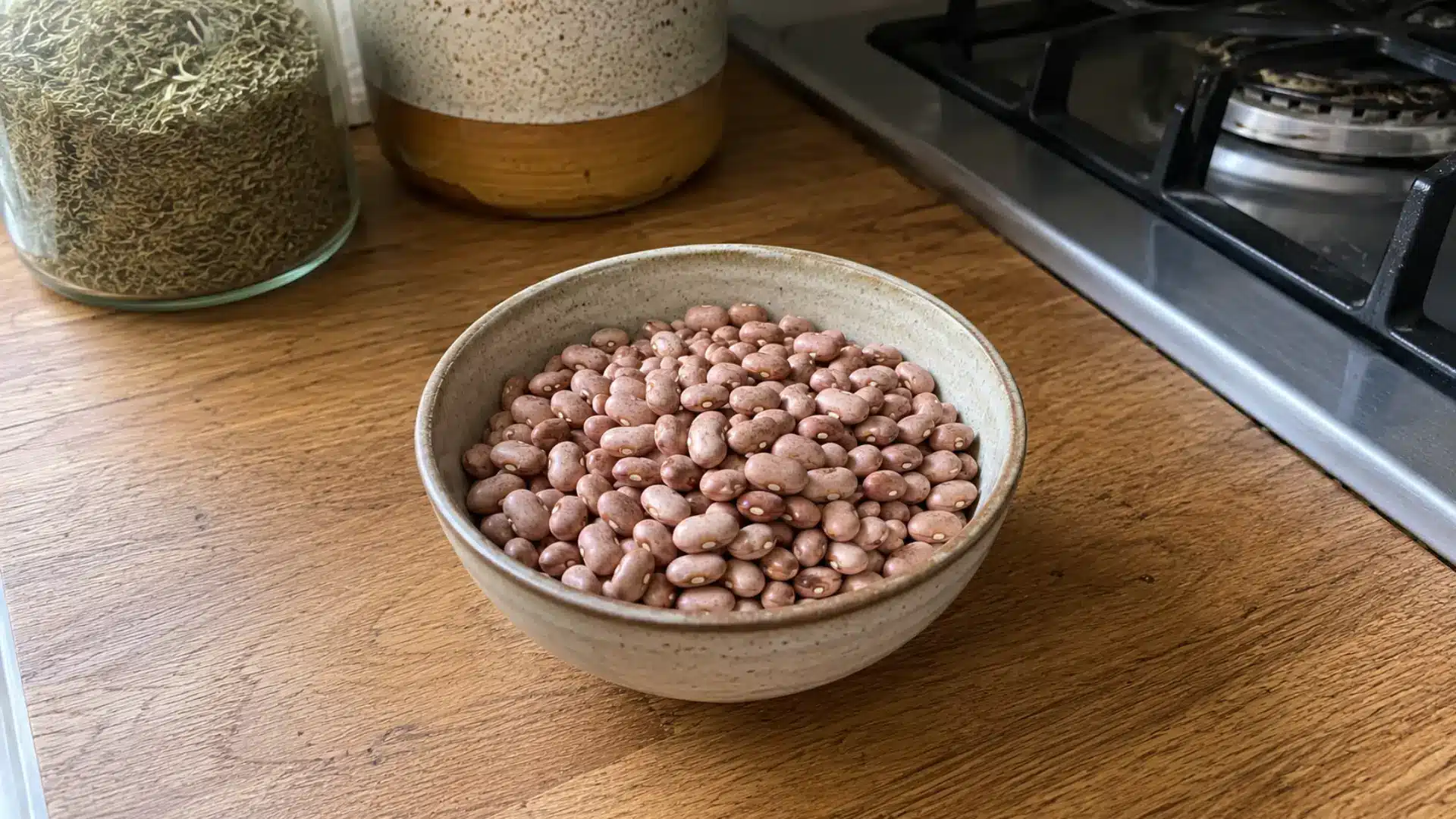
Pink beans are medium, oval beans named for their rosy color. They can usually be swapped in for pinto beans.
Their smooth texture works well in both brothy and mashed dishes.
- Flavor: Rich and savory
- Origin/Cuisine Tie: A staple in Caribbean and Latin cooking
- Nutrition: 15g protein, 9g fiber per cup
- Best Culinary Uses: Stews, chilis, and refried beans
15. Soybeans
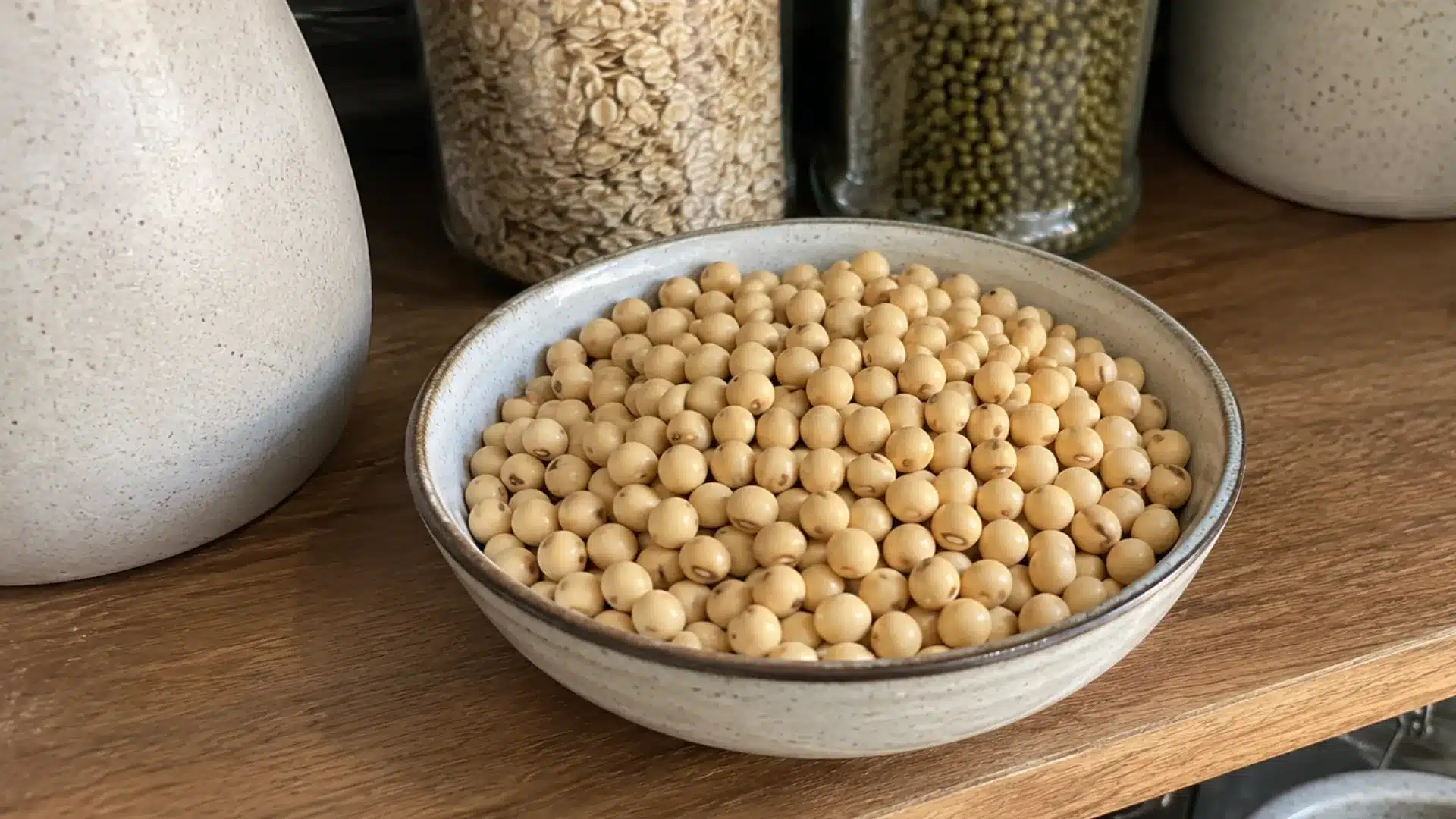
Soybeans are round, tan beans grown widely. They’re valued more for what they become than for being eaten whole. Almost every plant-based staple traces back to this one bean.
- Flavor: Mild
- Origin/Cuisine Tie: A major crop across Asia and the US
- Nutrition: 29g protein per cup, the highest of any common bean
- Best Culinary Uses: Tofu, tempeh, and soy sauce
16. Edamame
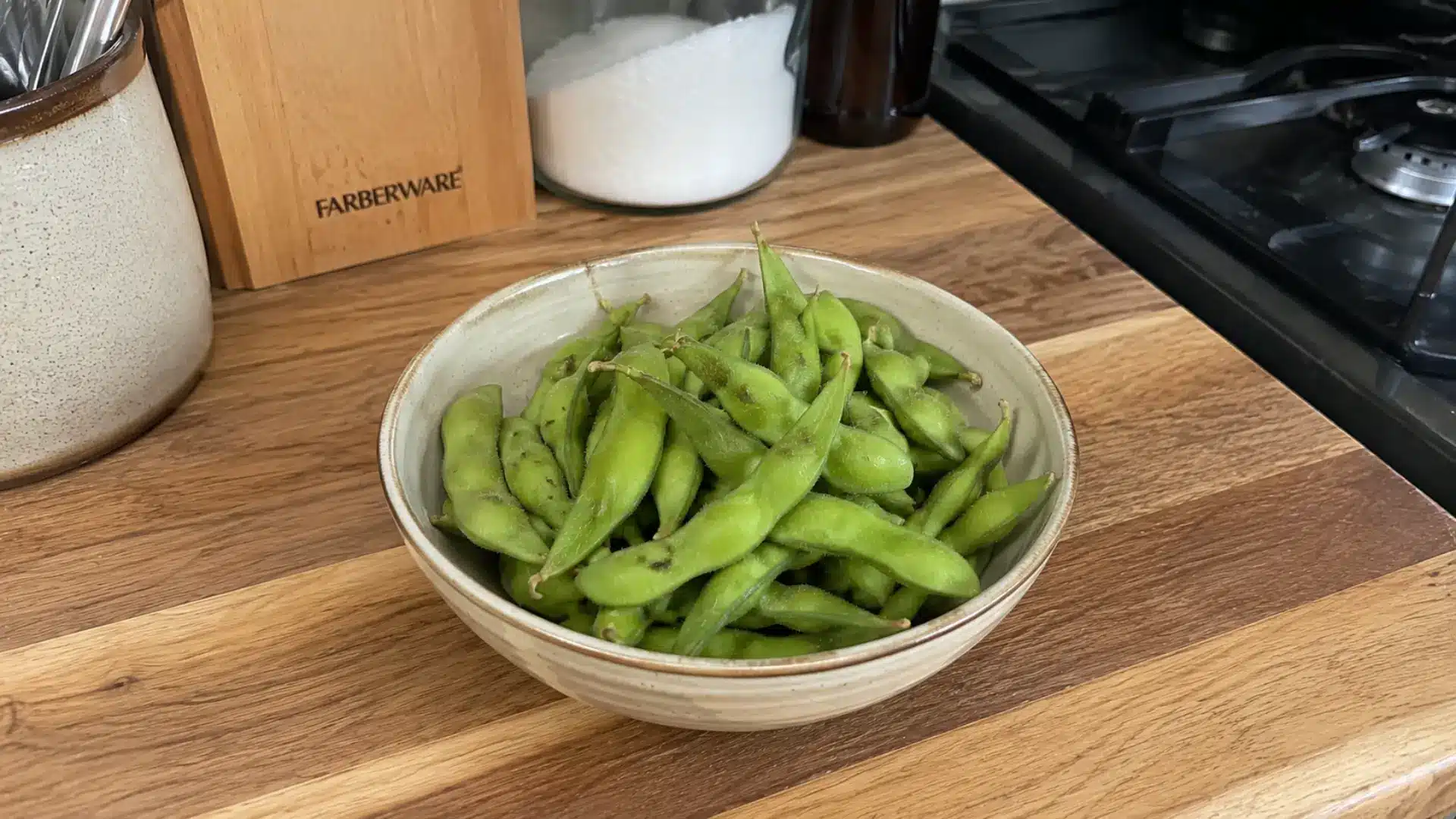
Edamame are young, immature soybeans harvested while still in the pod. They’ve become a familiar starter at Japanese restaurants nationwide.
A quick steam and a pinch of salt are really all they need.
- Flavor: Slightly sweet and mild
- Origin/Cuisine Tie: A staple Japanese appetizer
- Nutrition: 17g protein per cup
- Best Culinary Uses: Steamed snacks and grain bowls
17. Adzuki Beans
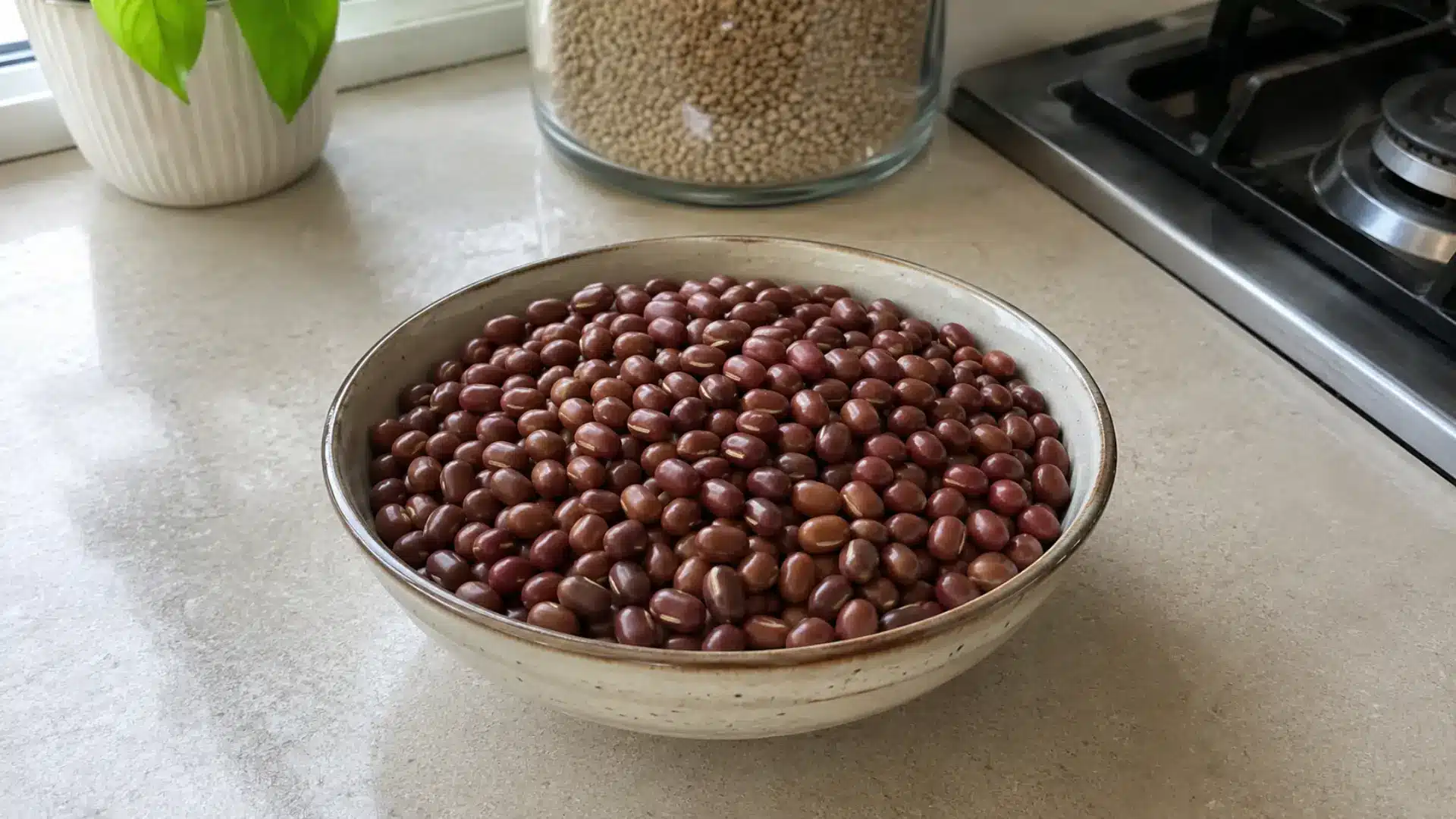
Adzuki beans are small, round, red beans best known for their place in Japanese sweets. Their natural sweetness sets them apart from most other beans.
They show up in desserts as often as savory dishes.
- Flavor: Nutty and sweet
- Origin/Cuisine Tie: Popular in Chinese and Japanese cooking
- Nutrition: 17g protein, 17g fiber per cup
- Best Culinary Uses: Red bean paste and desserts
18. Fayot Beans (Flageolet Beans)
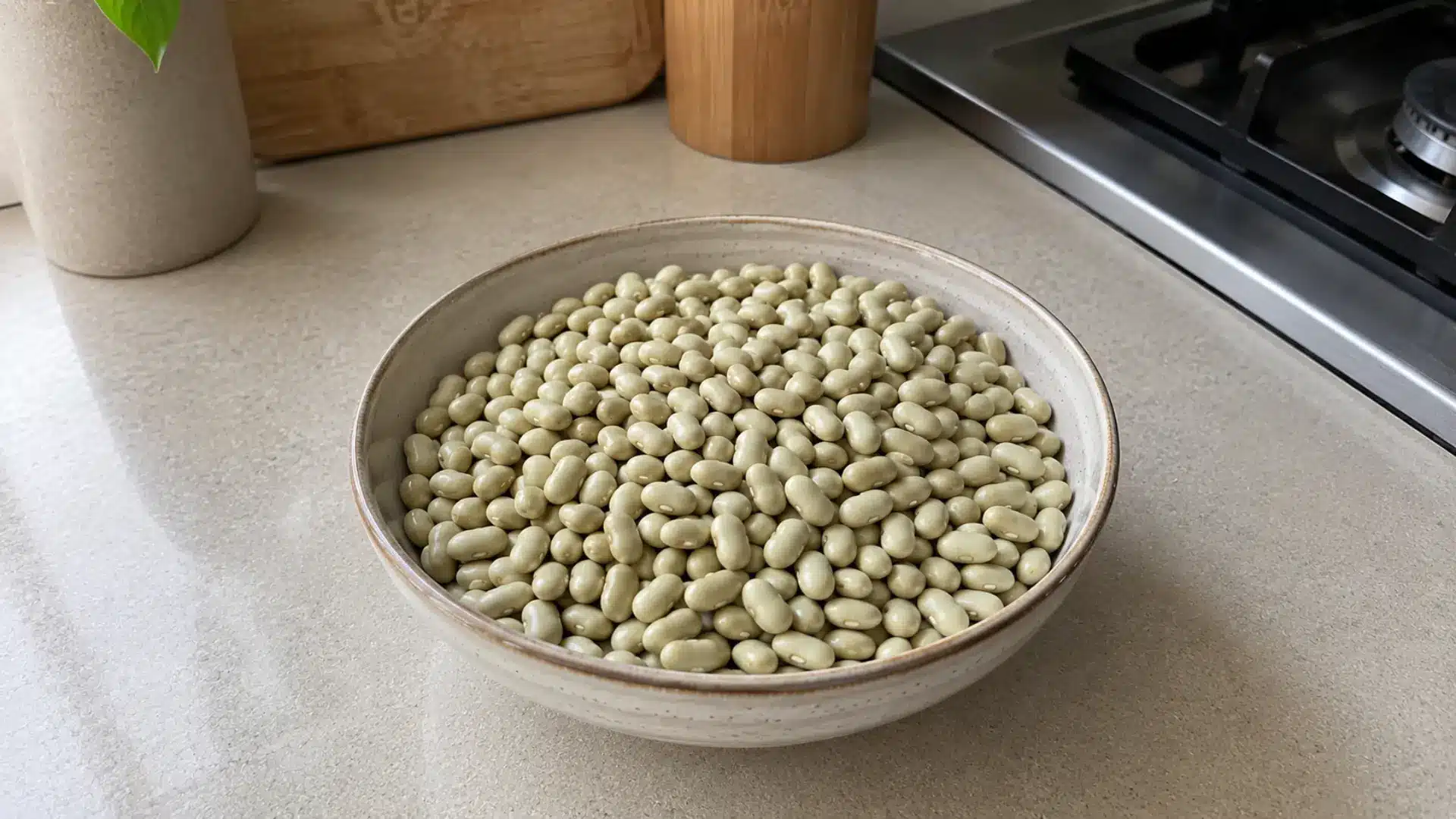
Fayot beans, also called flageolet beans, are kidney beans harvested early for a pale green to white color.
They are closely tied to one French stew. Their delicate flavor works in almost any dish that calls for white beans.
- Flavor: Mild and delicate
- Origin/Cuisine Tie: A French staple, best known in cassoulet
- Nutrition: 12g protein, 9g fiber per cup
- Best Culinary Uses: Cassoulet, soups, and salads
19. Anasazi Beans
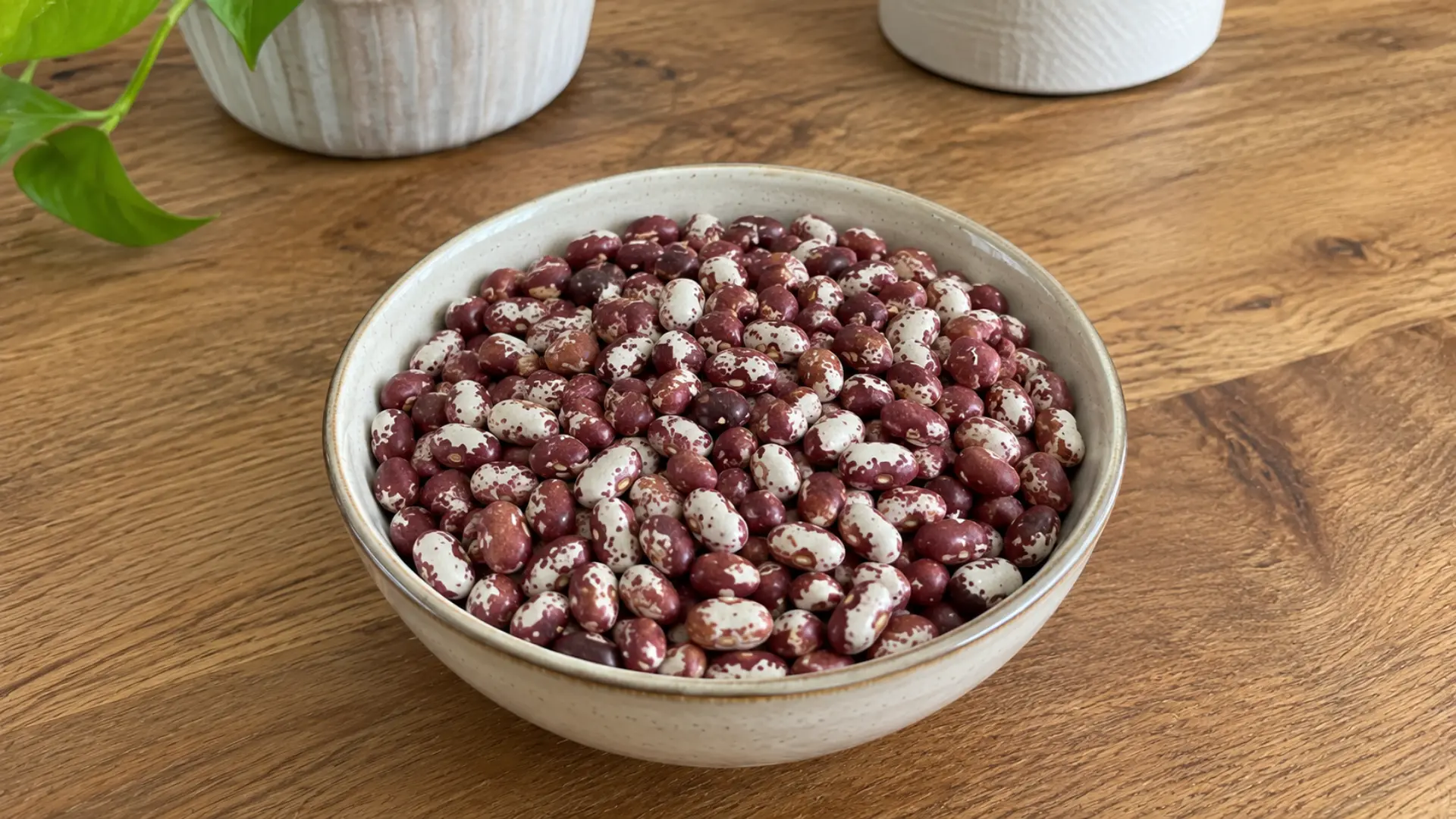
Anasazi beans are heirloom beans with a striking maroon-and-white mottled skin. They have been grown across the American Southwest for centuries.
Cooked, they keep much of their color and a naturally sweet taste.
- Flavor: Sweet and full-bodied
- Origin/Cuisine Tie: Tied to Native American Southwestern cooking
- Nutrition: 15g protein, 12g fiber per cup
- Best Culinary Uses: Southwestern dishes and bean salads
20. Gigante Beans
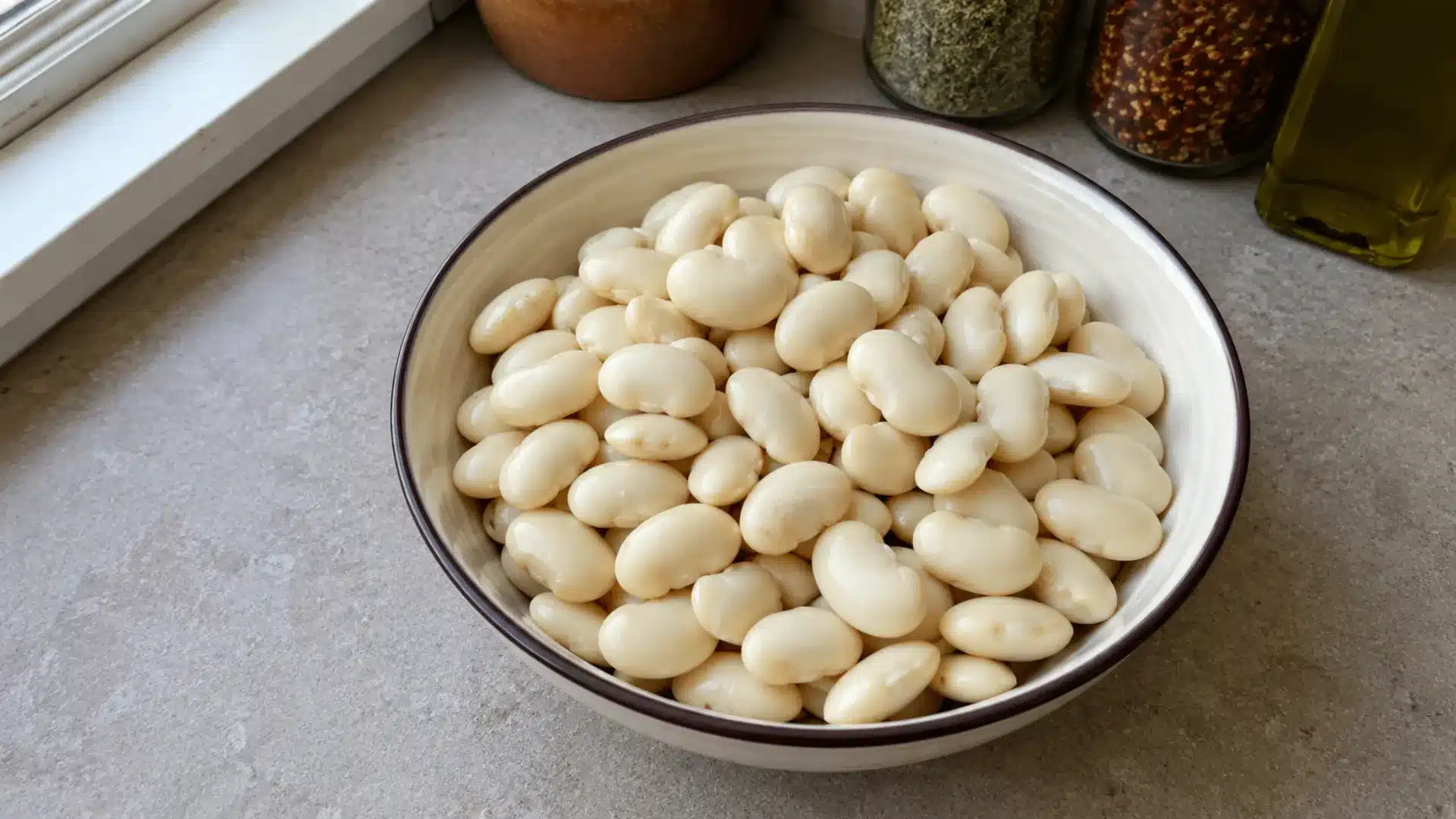
Gigante beans are extra-large, flat, white beans best known for one iconic Greek dish. Their size makes them stand out in any dish they’re added to.
A short cook time can leave them undercooked, so patience matters here.
- Flavor: Mild and slightly sweet
- Origin/Cuisine Tie: A staple in Greek cooking
- Nutrition: 15g protein, 11g fiber per cup
- Best Culinary Uses: Baked bean dishes and stews
21. Tepary Beans
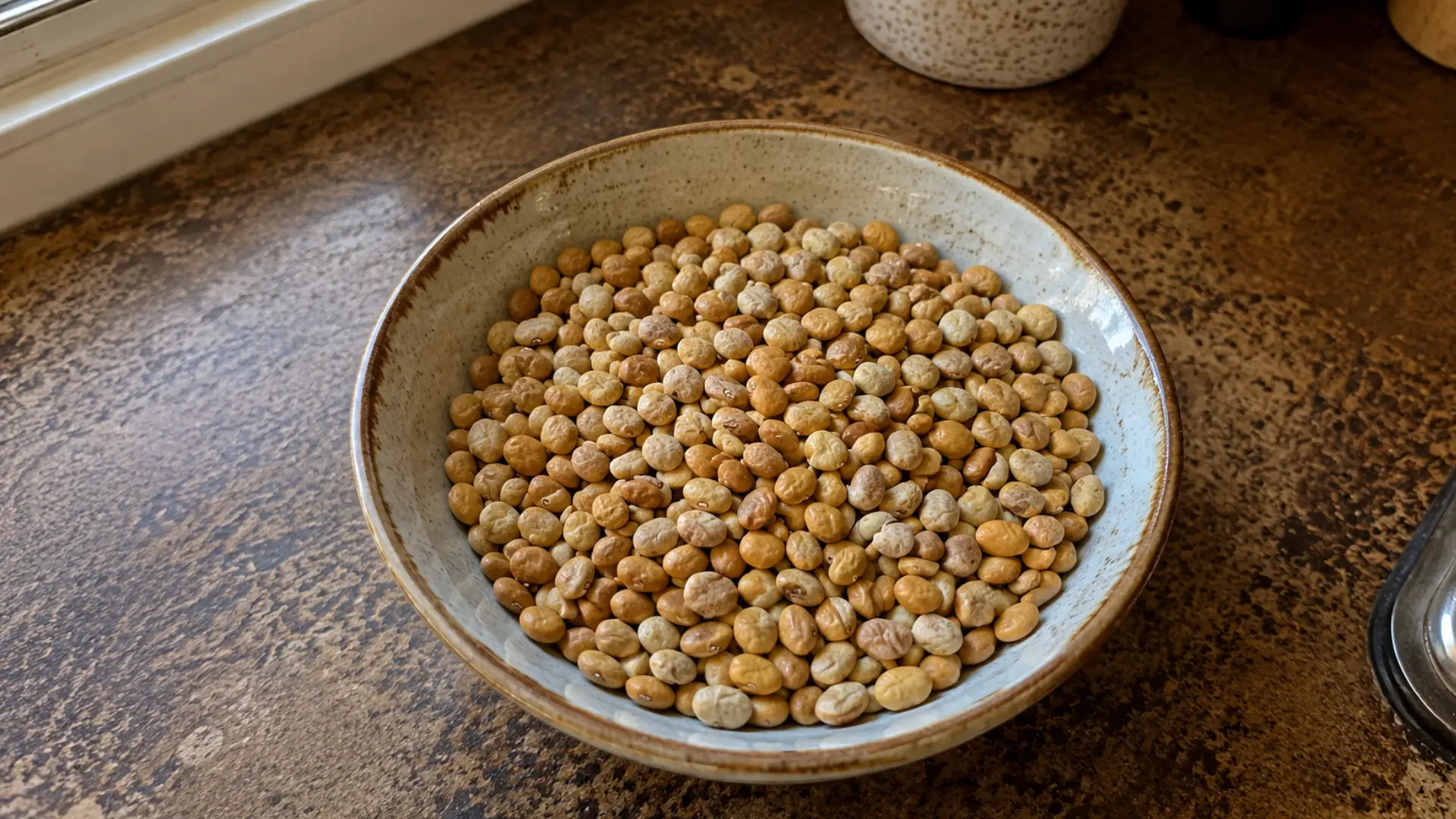
Tepary beans are small, drought-resistant beans grown in gray, white, or brown varieties.
They come from one of the hottest, driest regions in North America. That harsh growing environment gives them an unusually concentrated flavor.
- Flavor: Earthy and pronounced
- Origin/Cuisine Tie: Native to the Sonoran Desert
- Nutrition: 25g protein per cup, notably higher than most beans
- Best Culinary Uses: Soups and slow-cooked stews
22. Yellow Eye Beans
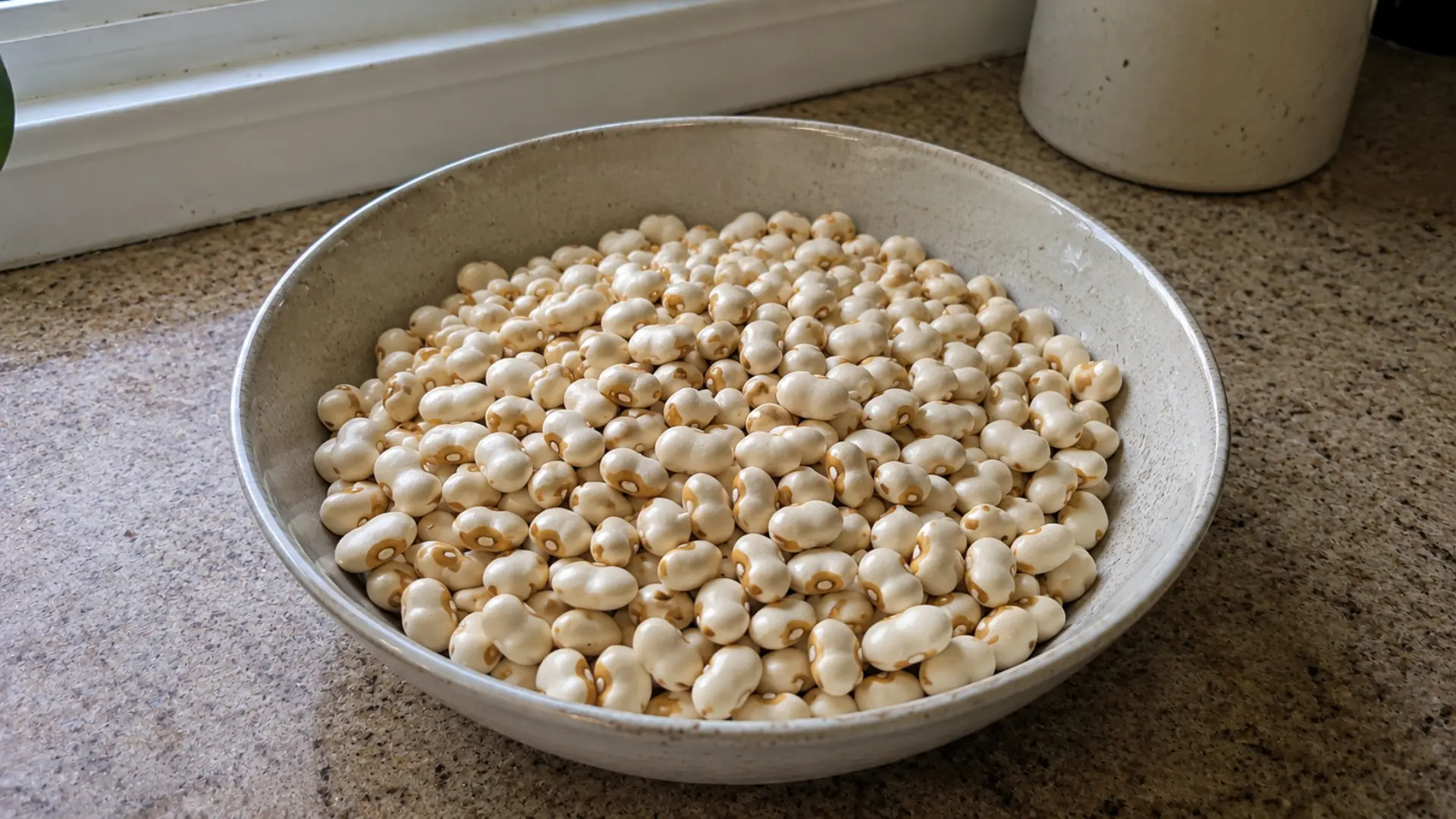
Yellow eye beans are off-white beans marked with a small caramel-colored spot.
They are a favorite for one classic New England dish. Their texture holds up well through hours of slow baking.
- Flavor: Earthy with a nutty finish
- Origin/Cuisine Tie: A New England heirloom, especially in Maine
- Nutrition: 15g protein, 11g fiber per cup
- Best Culinary Uses: Baked beans and casseroles
23. Jacob’s Cattle Beans
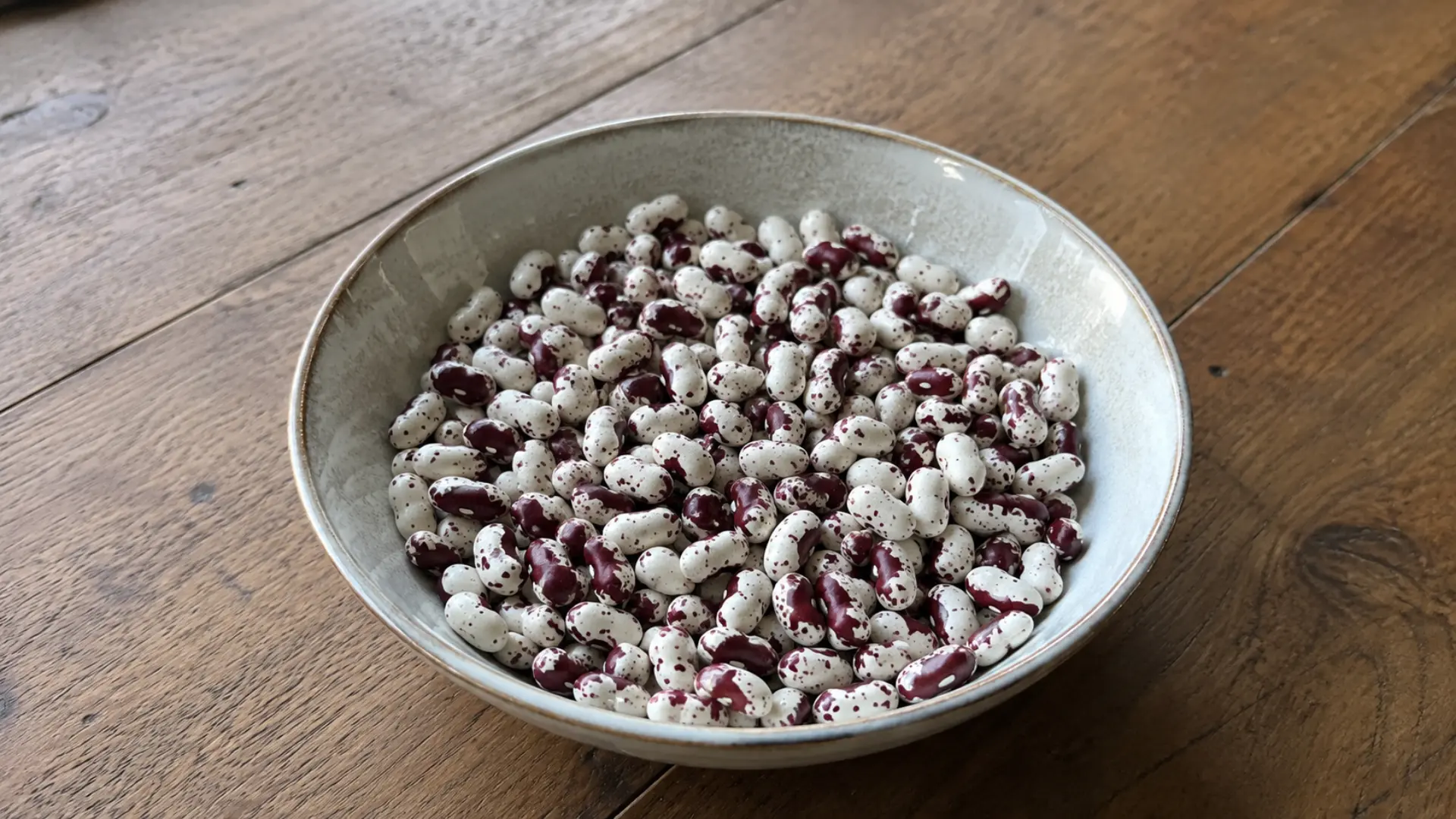
Jacob’s Cattle beans are ivory beans splashed with deep maroon markings, resembling a Holstein cow’s spots.
This heirloom has been grown in Maine since the 1800s. Its rich flavor holds up well against smoky, savory ingredients.
- Flavor: Rich with a faint wine-like note
- Origin/Cuisine Tie: A New England heirloom tied to baked bean traditions
- Nutrition: 15g protein, 11g fiber per cup
- Best Culinary Uses: Baked beans and hearty casseroles
24. Scarlet Runner Beans
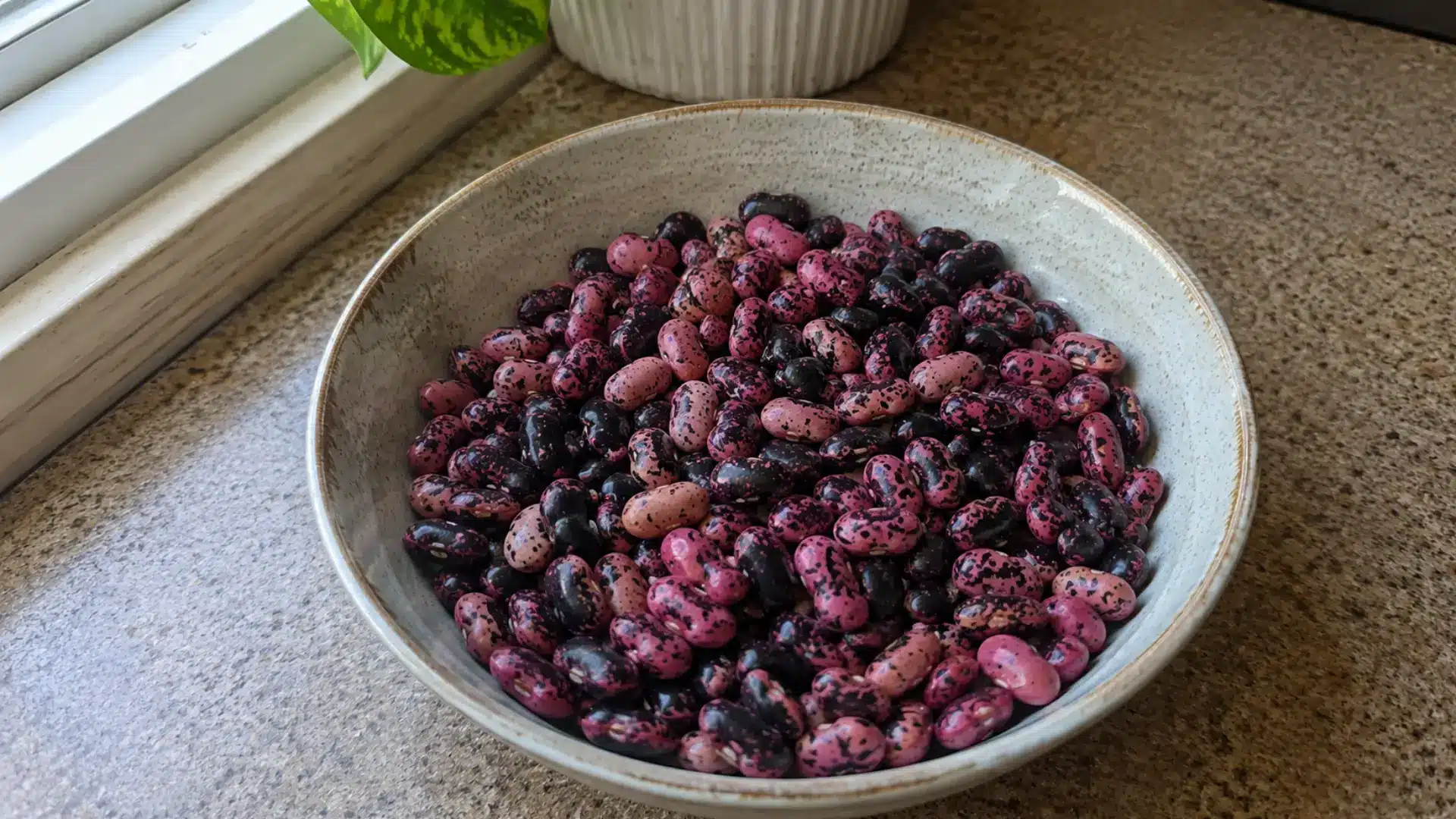
Scarlet runner beans grow on a climbing vine known as much for its bright red flowers as its beans.
Both the young pods and mature, shelled beans are edible. They’re as common in gardens as they are on plates.
- Flavor: Nutty with mild sweetness
- Origin/Cuisine Tie: Popular in English gardens and Central American cooking
- Nutrition: 15g protein, 12g fiber per cup
- Best Culinary Uses: Braises and shelled bean salads
25. Cocoa Beans
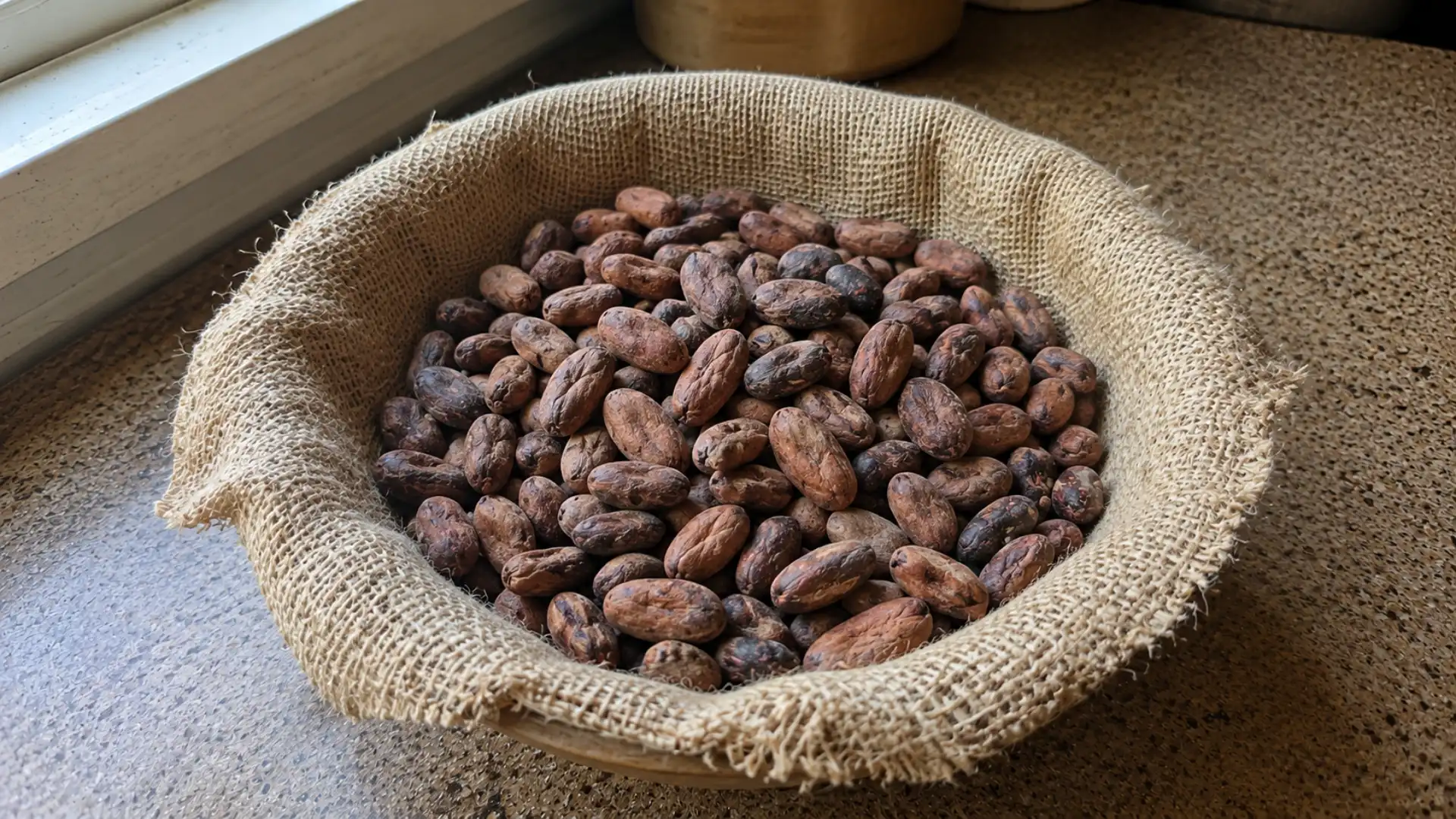
Cocoa beans are the seeds inside the pods of the cacao tree, and they’re the starting point for all chocolate. Before they resemble anything sweet, they are fermented and roasted.
The flavor most people know only shows up after this process.
- Flavor: Bitter and intense before processing
- Origin/Cuisine Tie: Grown mainly across West Africa
- Nutrition: High in flavanols, a plant antioxidant
- Best Culinary Uses: Chocolate, baking, and cocoa drinks
26. Coffee Beans
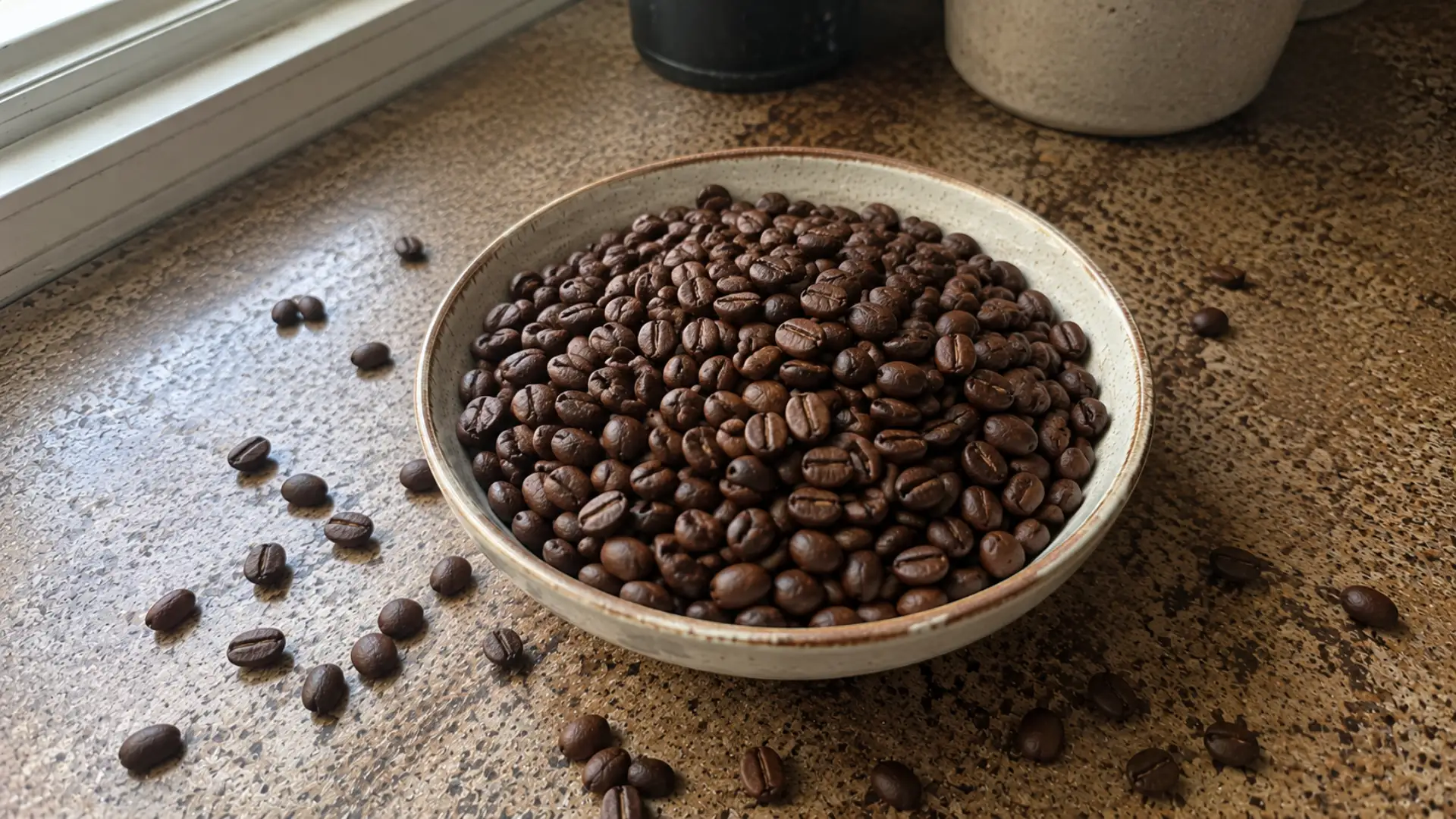
Coffee beans are the seeds found inside a coffee cherry, and they only look familiar after drying and roasting. The roast level shapes almost everything about the final flavor.
A single roasted batch can taste completely different depending on how dark it’s taken.
- Flavor: Ranges from fruity to deeply bitter, depending on the roast
- Origin/Cuisine Tie: Grown across Latin America, Africa, and Southeast Asia
- Nutrition: About 95mg caffeine per brewed cup
- Best Culinary Uses: Brewed coffee and baking
27. Lentils
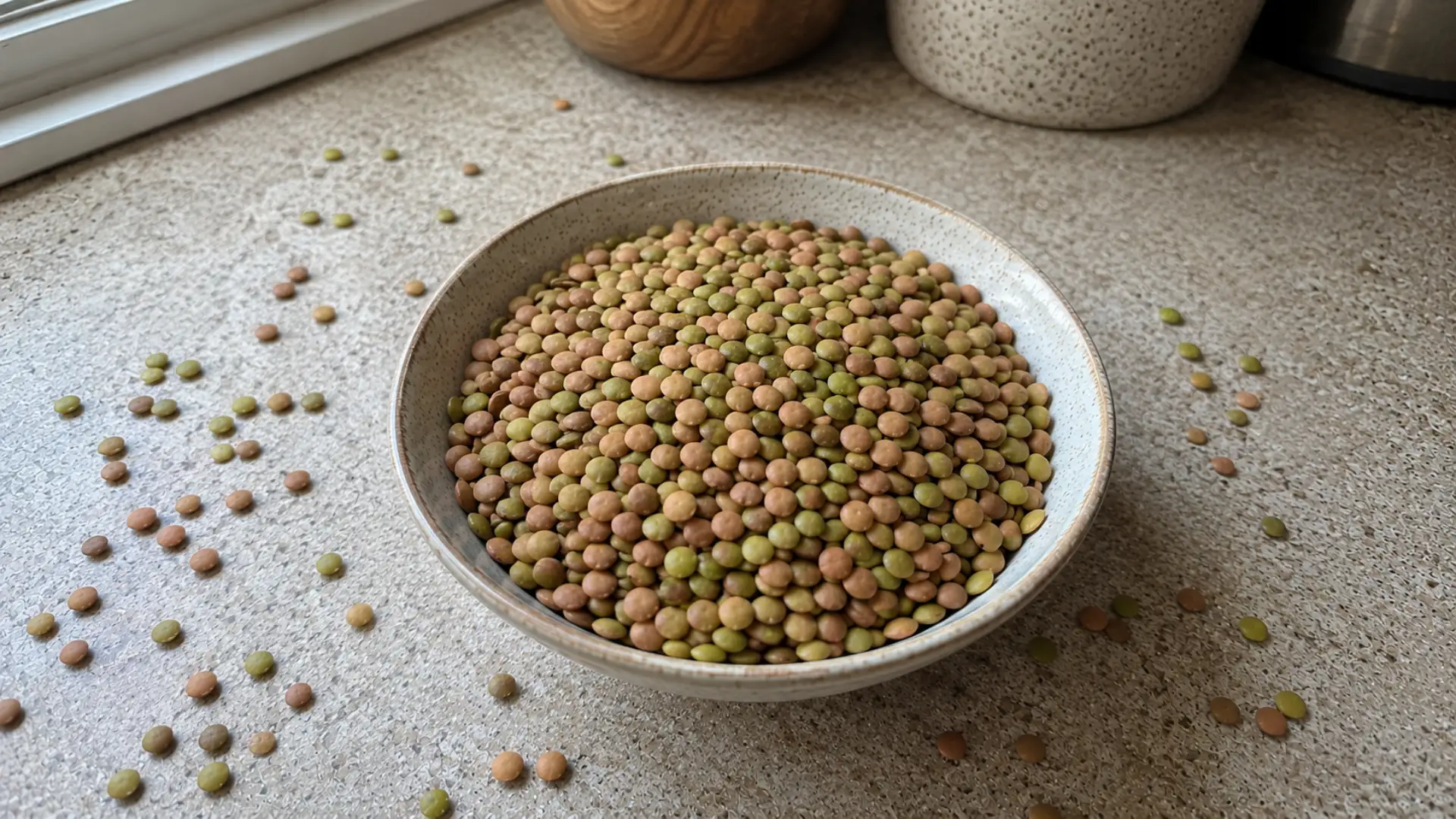
Lentils are small, disc-shaped legumes found in brown, green, red, and yellow varieties. They are technically not beans, but they are grouped with them due to similar uses.
They also cook faster than most dried beans and need no soaking. Lentils also show up often on lists of iron-rich foods for anemia, since their iron content ranks among the highest of common legumes.
- Flavor: Mild and earthy
- Origin/Cuisine Tie: A staple in Indian and Middle Eastern cooking
- Nutrition: 18g protein, 15g fiber per cup
- Best Culinary Uses: Soups, dal, and vegan burgers
28. Split Peas
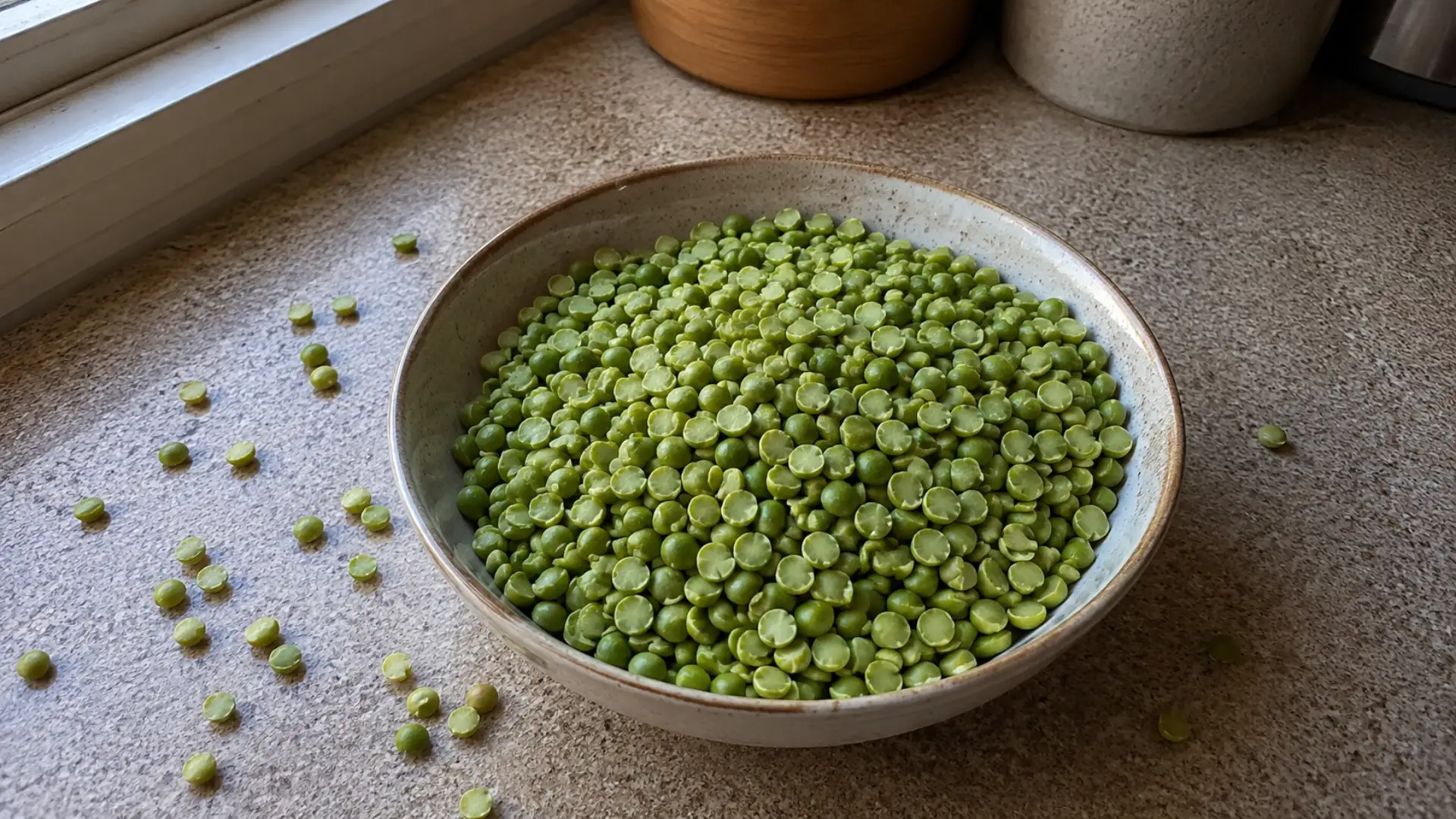
Split peas are dried peas that have been peeled and split in half to cook faster.
They come in green and yellow varieties. Once simmered, they naturally break down into a thick, hearty base.
- Flavor: Mild and slightly sweet
- Origin/Cuisine Tie: A staple in American and European comfort food
- Nutrition: 16g protein, 16g fiber per cup
- Best Culinary Uses: Split pea soup and purees
29. Snap Peas
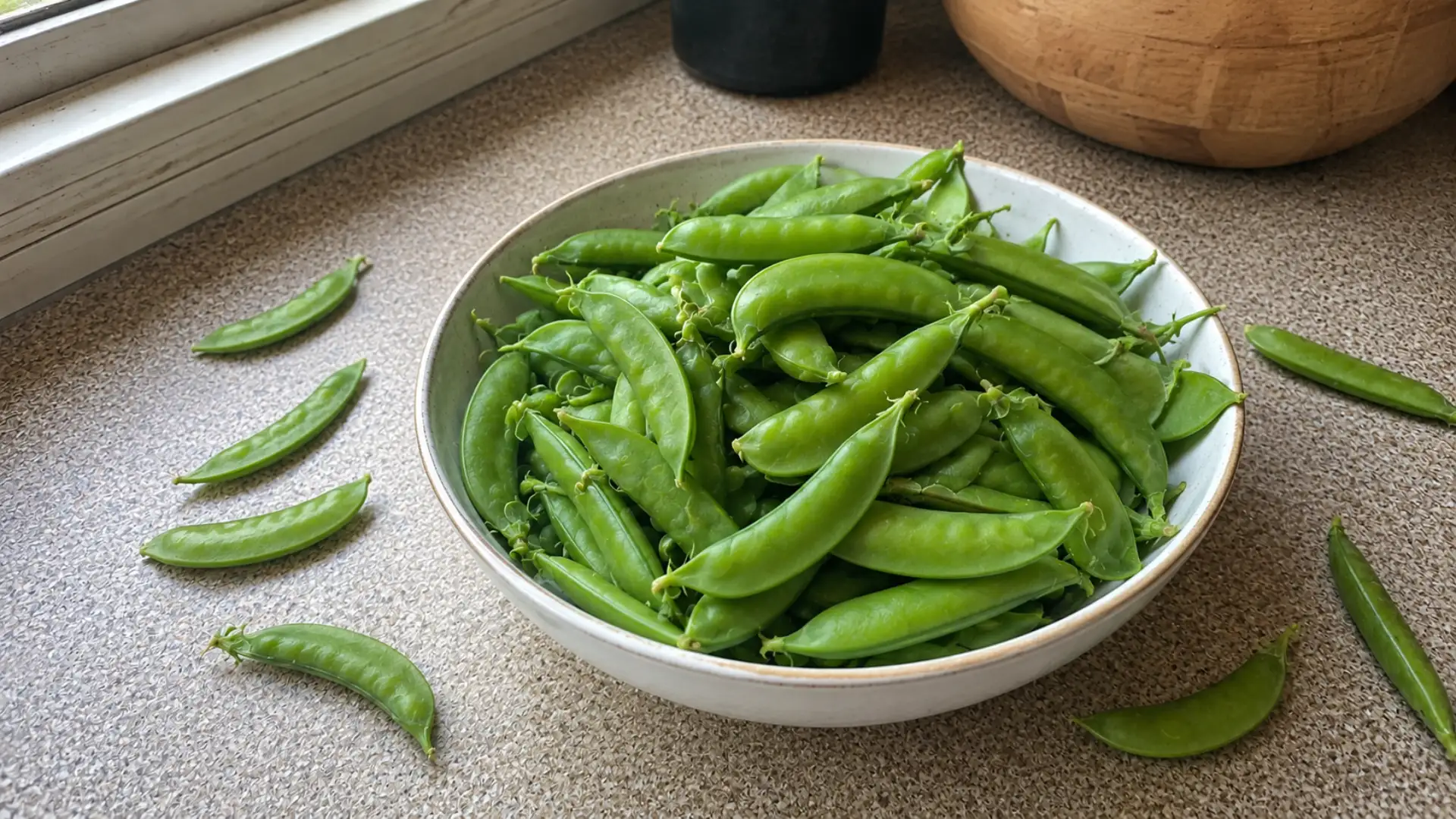
Snap peas, or sugar snap peas, are a cross between snow peas and garden peas.
Unlike most peas, the entire pod gets eaten. Their crisp bite makes them just as good raw as cooked.
- Flavor: Sweet and crisp
- Origin/Cuisine Tie: Common in Asian and Indian cooking
- Nutrition: 64% of the daily vitamin C per cup
- Best Culinary Uses: Stir-fries and raw snacking
30. Snow Peas
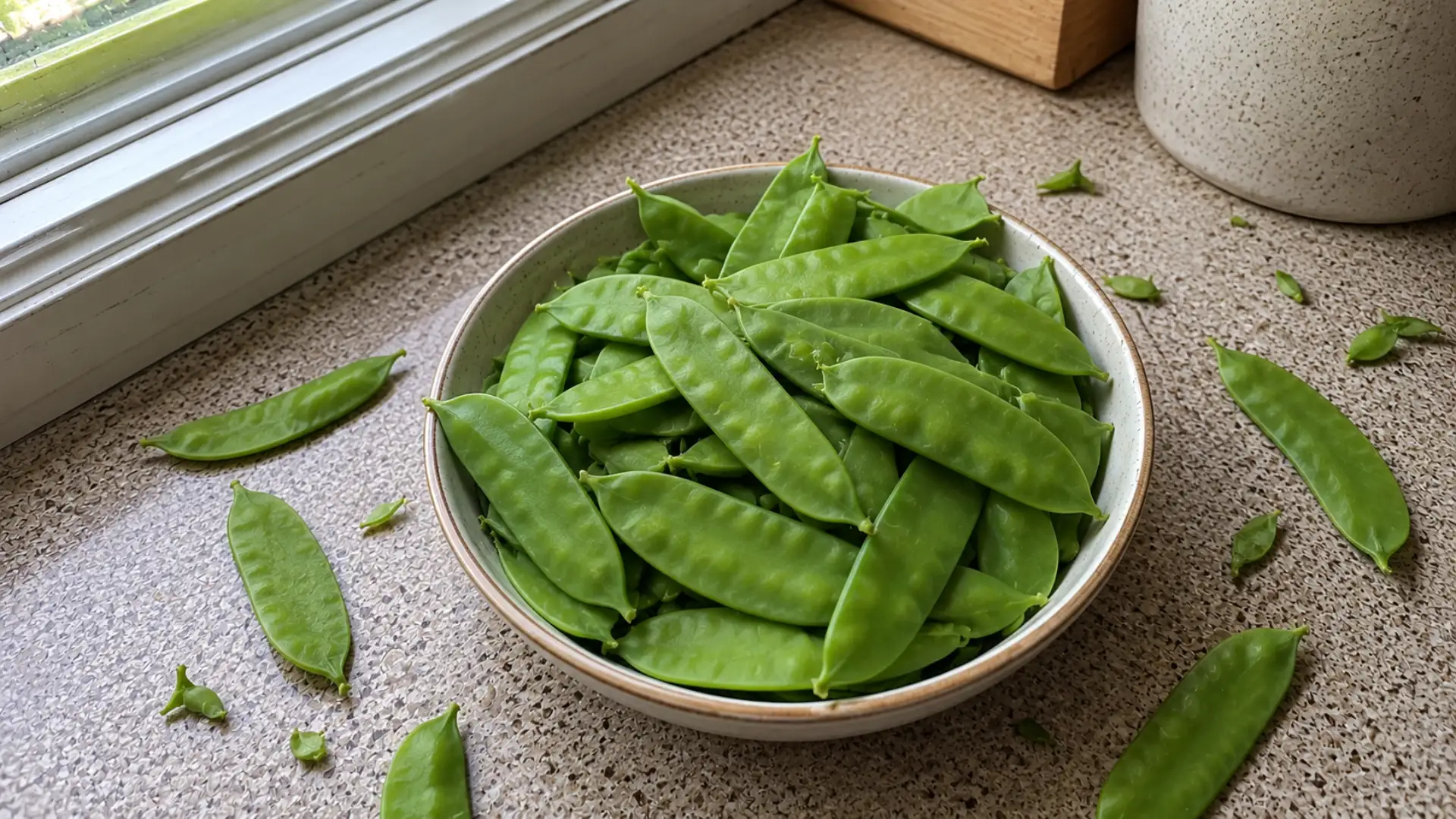
Snow peas are flat, thin-podded peas with barely developed seeds inside.
They’re a familiar sight in East Asian stir-fries. Their quick cook time keeps them crisp rather than soft.
- Flavor: Mild and slightly sweet
- Origin/Cuisine Tie: A staple in Chinese cooking
- Nutrition: 60% of daily vitamin C per cup
- Best Culinary Uses: Stir-fries and quick sautés
31. French Green Beans (Haricots Verts)
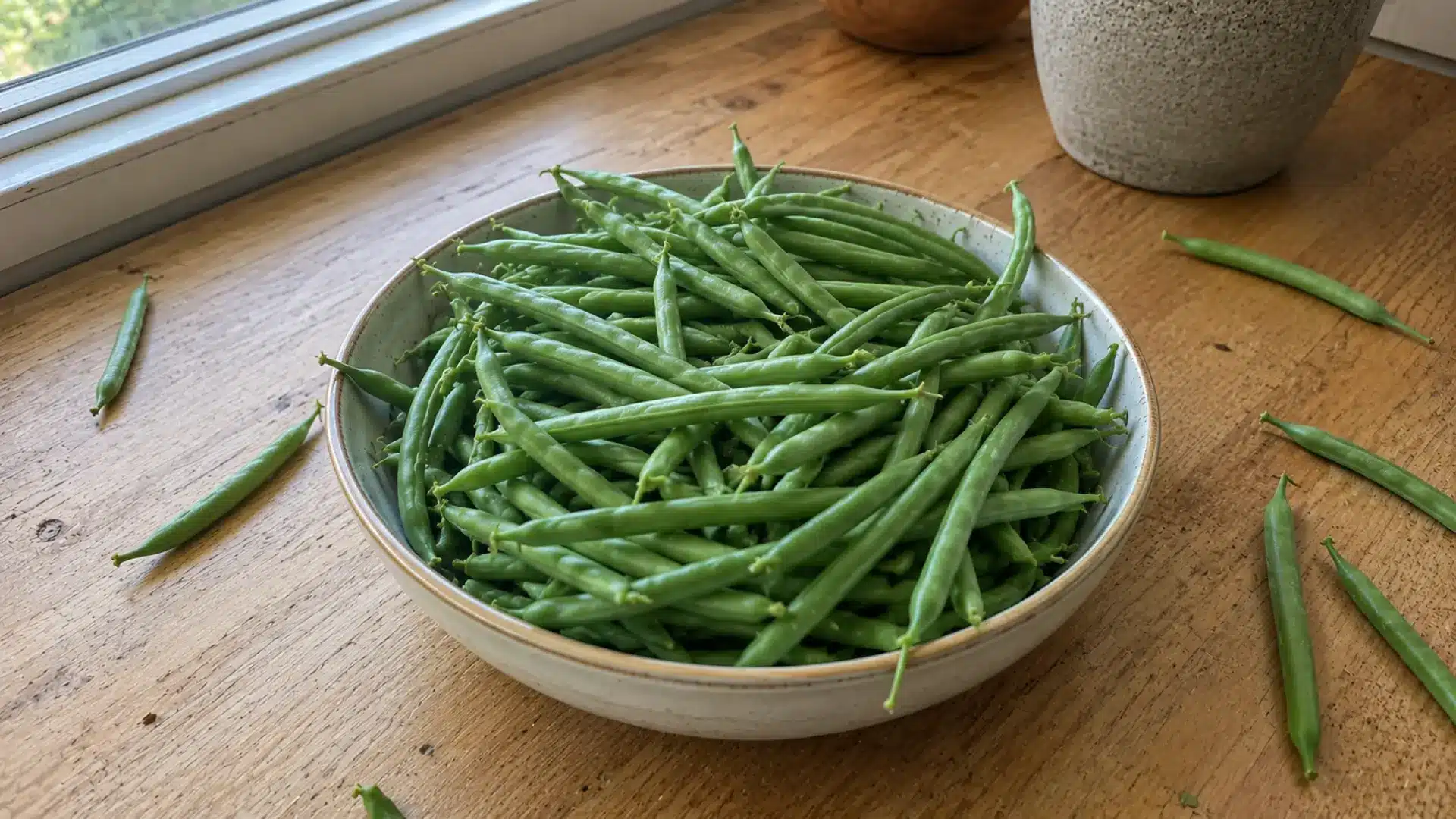
French green beans are the young, unripe pods of the common bean plant, picked before the seeds inside fully form.
French beans are thinner than standard green beans. That thinness means they cook through in just a few minutes.
- Flavor: Mild and slightly grassy
- Origin/Cuisine Tie: A holiday side dish staple in French and American cooking
- Nutrition: 20% of daily vitamin K per cup
- Best Culinary Uses: Sautés and green bean casserole
32. Long Beans (Yard-Long Beans)
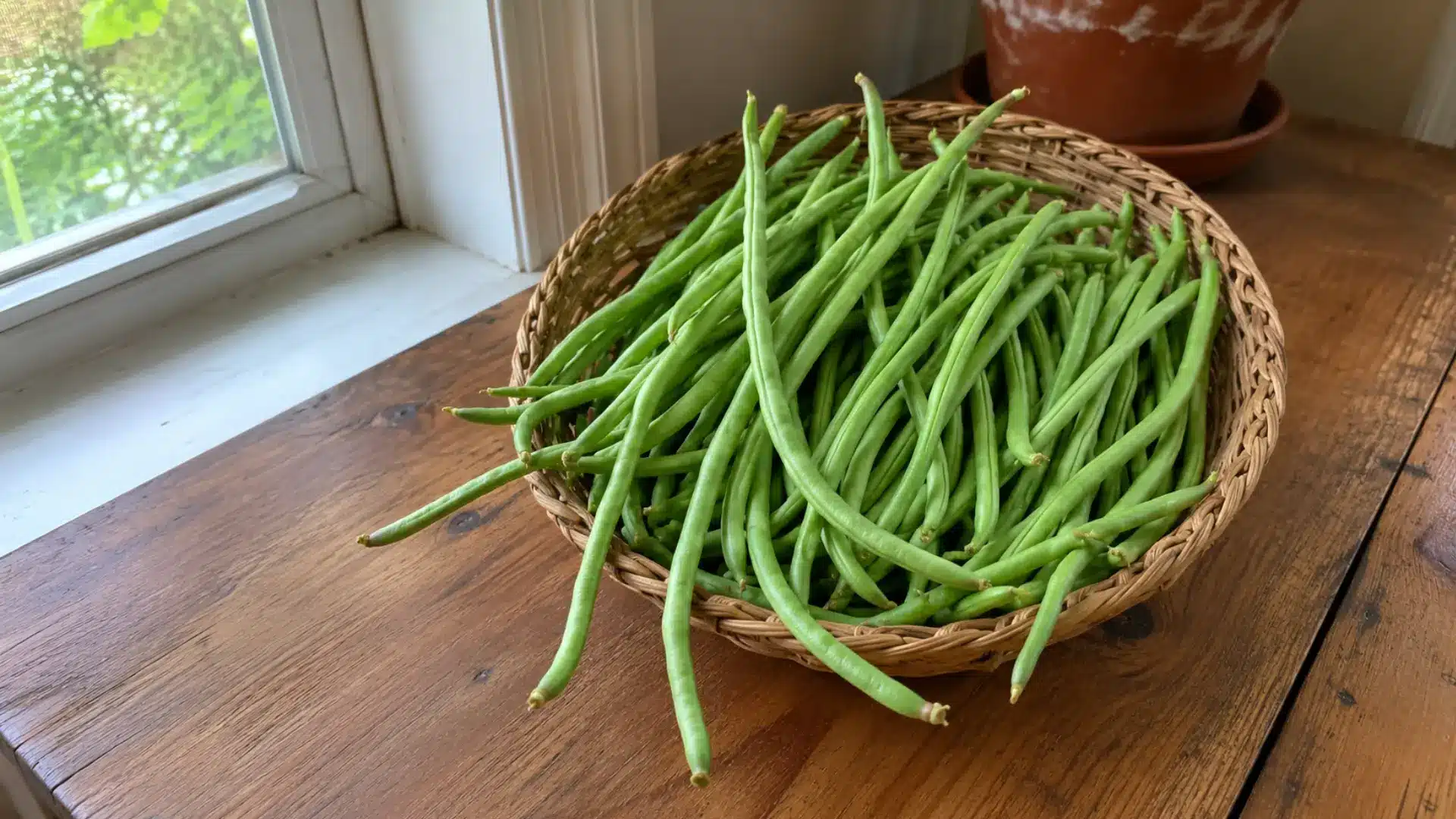
Long beans, also called yard-long or snake beans, can grow up to 18 inches long.
They’re usually cut into shorter pieces before cooking. Some cooks keep them whole just for the visual effect.
- Flavor: Similar to green beans, slightly earthier
- Origin/Cuisine Tie: Common in Southeast Asian and Chinese cooking
- Nutrition: 20% of the daily vitamin C per cup
- Best Culinary Uses: Stir-fries and curries
33. Marrowfat Peas
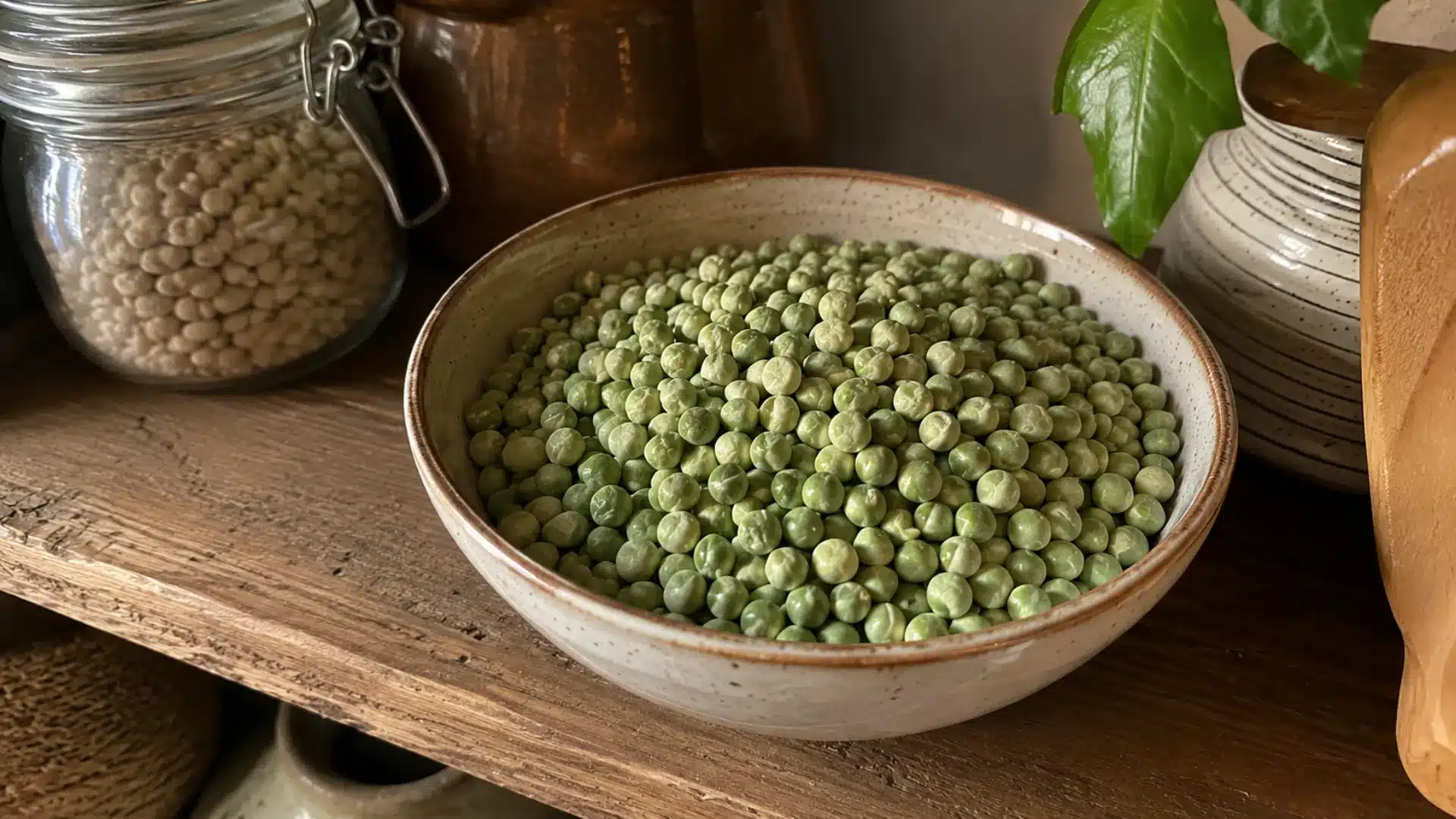
Marrowfat peas are mature green peas left in the field to dry naturally, rather than harvested young.
They’re best known as the base of a British pub classic. Their soft texture breaks down easily once soaked and cooked.
- Flavor: Starchy and mild
- Origin/Cuisine Tie: Widely used in British cooking
- Nutrition: 16g protein, 16g fiber per cup
- Best Culinary Uses: Mushy peas and savory snacks
34. Purple Hull Peas
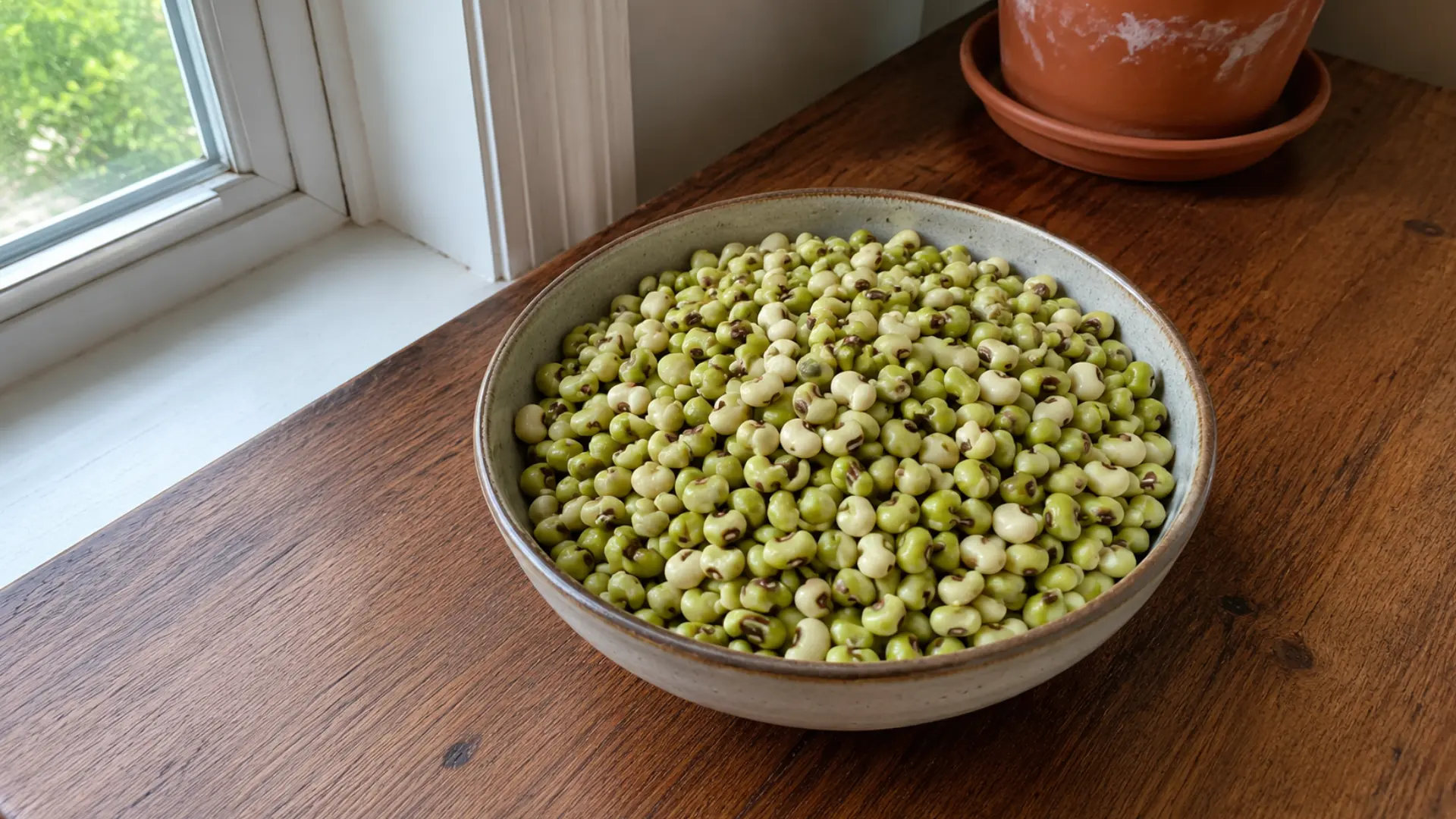
Purple hull peas are closely related to black-eyed peas but grow in a distinctive purple pod. They cook up slightly sweeter than their better-known cousin.
They are a familiar side dish across the American South.
- Flavor: Mild with a touch more sweetness than black-eyed peas
- Origin/Cuisine Tie: A Southern US staple
- Nutrition: 13g protein, 11g fiber per cup
- Best Culinary Uses: Side dishes and slow-simmered pots
35. Vanilla Beans
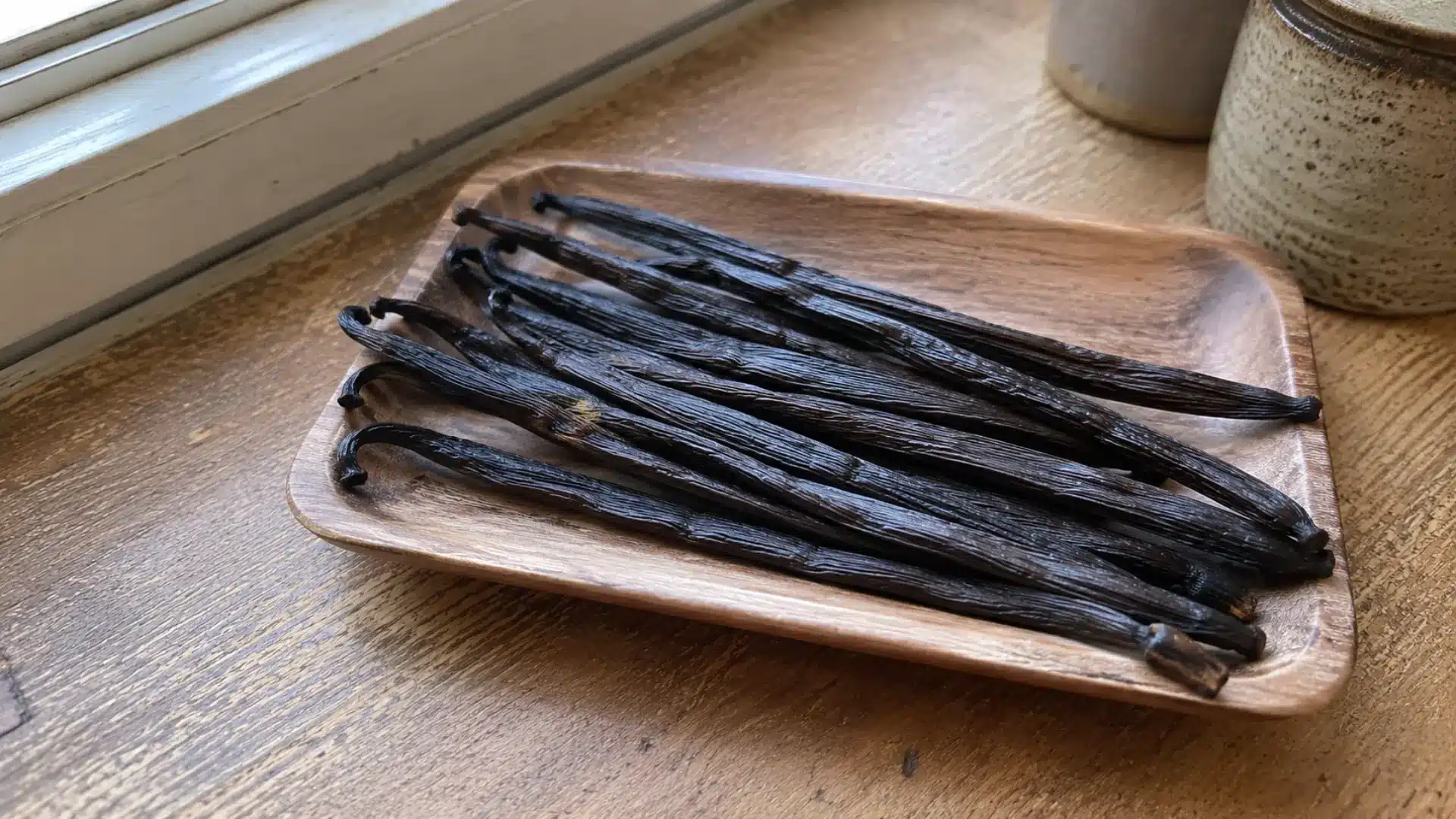
Vanilla beans are the long, thin seed pods of the vanilla orchid, cured over weeks to develop their signature aroma.
They are technically a spice, not a legume. A single pod can flavor an entire batch of baked goods.
- Flavor: Sweet, floral, and warm
- Origin/Cuisine Tie: Originally cultivated in Mexico, now grown widely in Madagascar
- Nutrition: Negligible; used almost entirely for flavor
- Best Culinary Uses: Baking, custards, and desserts
How to Choose the Right Bean Type?
Begin with the dish in mind, not the bean.
For a brothy stew, choose beans that hold their shape, such as kidney or gigante. For dips or spreads, opt for smooth, mashing beans like cannellini or lima. Baked goods or desserts suit adzuki beans or vanilla flavor.
Also, inspect the bag: beans should be uniformly colored, dry to the touch, and free of cracks or shriveling.
Older beans tend to cook unevenly regardless of the type.
When uncertain, buy a small amount and do a test cook before making a full batch.
Canned Beans vs. Dry Beans: Which Should You Use?
Both start as the same bean. The difference comes down to convenience, cost, and texture control.
Neither option is better across the board; it really depends on the dish and how much time you have.
Canned beans are quick, and rinsing reduces sodium. Dry beans need planning but are more economical, as a pound provides more servings than a can. Both are suitable; choose based on recipe and schedule.
| Category | Canned Beans | Dry Beans |
|---|---|---|
| Prep Time | Ready to use | Soak overnight, cook 1-2 hours |
| Average Cost | $1.00–$2.00 per 15 oz can | $1.50–$2.50 per pound |
| Texture Control | Fixed, soft | Full control |
| Sodium | Higher unless rinsed | Low, salt added by you |
| Shelf Life | 2-5 years unopened | 2-3 years for best quality |
| Best For | Quick meals, soups, salads | Big batches, freezing, specific texture |
How to Properly Store Beans?
Storage depends on whether beans are dry, canned, or already cooked.
Dry beans keep best in a cool, dry spot inside an airtight container, staying good for 2 to 3 years before quality starts to drop, though they’re safe well beyond that if there’s no mold or pests.
Unopened canned beans last 2 to 5 years in the pantry.
Once opened, leftovers should be stored in an airtight container in the fridge and used within 3 to 4 days.
Cooked beans, whether homemade or from a can, freeze well for up to 6 months.
Let them cool fully first, leave room for expansion, and portion them out for easier thawing later.
Bottom Line
Beans clearly don’t all behave the same way once they hit a pot.
Some bean types hold their shape through simmering, others become a creamy base, and a few, like cocoa and coffee, are not meant for the dinner table.
Knowing these differences simplifies grocery shopping and recipe planning.
Whether making chili, hummus, or trying new gigante or tepary beans, this list likely has a suitable variety.
Next time a recipe calls for beans, matching the right type to the right dish should feel like second nature.
Frequently Asked Questions (FAQ’s)
1. Why Do Beans Cause Gas?
Beans contain oligosaccharides that gut bacteria ferment, producing gas as a byproduct.
2. Can You Eat Beans Raw?
No. Raw beans contain toxins that break down only through proper cooking.
3. How Much Dry Beans Equals One Can?
About one cup of dry beans yields roughly three cups cooked.
4. Which Bean Works Best for Chili?
Kidney or pinto beans hold their shape best through long simmering.
5. Are Canned Beans Already Cooked?
Yes, canned beans are fully cooked and safe to eat straight from the can.