
Found tiny webs on your tomato leaves or sticky spots on your favorite houseplant?
That is usually a sign of pests, and it can spread fast if left alone. Neem oil is one of the safest and most effective ways to kill common pests and stop fungal issues, and it won’t harm pets or beneficial insects when used the right way.
But a lot of people get confused about the basics.
Do you spray neem oil on soil or leaves? Can it be used on indoor plants without damaging them?
This blog covers exactly how to use neem oil on plants to get rid of pest infestations, and the small mistakes that can turn a helpful spray into a harmful one.
How Does Neem Oil Work on Plants?
Neem oil works by disrupting a pest’s ability to feed, grow, and reproduce, rather than killing it instantly on contact.
Its active compound, azadirachtin, interferes with an insect’s hormone system, stopping larvae from maturing and preventing adults from laying eggs.
This gradually shrinks the pest population over time.
It also coats leaf surfaces with a thin film that suffocates soft-bodied pests like aphids and mites.
For fungal issues, it blocks spore germination, stopping disease from spreading further across the plant.
Results take a few days to appear because it targets biological processes, so repeated applications are more important than a single spray.
When Should You Use Neem Oil?
The clearest sign it’s time to use neem oil is spotting pests or damage early, before an infestation spreads across the whole plant. Watch for these warning signs:
- Sticky Residue on Leaves: Often a sign of aphids or other sap-sucking pests.
- Fine Webbing Between Leaves: A common indicator of spider mites.
- Small Flying Insects Near the Soil:Usually fungus gnats breeding in damp potting mix.
- Visible Holes or Chewed Leaves: A sign of caterpillars or beetles feeding on foliage.
- White Powdery Patches: Point to powdery mildew or other fungal disease.
- Curling or Distorted New Growth: An early warning sign of an active pest problem.
Once any of these signs appear, apply neem oil right away rather than waiting, since early treatment stops a minor problem from turning into a larger infestation.
What You’ll Need Before You Spray Neem Oil
Having everything ready before you start makes the process quicker and helps you avoid mixing mistakes.
| Item | Purpose |
|---|---|
| Neem oil concentrate | Active pest and fungus control |
| Mild liquid soap | Acts as an emulsifier to help oil mix with water |
| Water | Base for dilution |
| Spray bottle or pump sprayer | Application tool |
| Gloves | Protects skin during mixing and spraying |
| Measuring spoon | Ensures accurate dilution ratio |
Beyond the mixing supplies, it also helps to check the weather forecast beforehand, since spraying works best on a calm, dry day without direct sun.
Having a clean cloth nearby is also useful for houseplants, in case you want to wipe leaves instead of misting them.
How to Mix Neem Oil for Plants?
Mixing neem oil correctly is what makes the difference between an effective spray and one that damages your plant.
- Fill your spray bottle or pump sprayer with warm water first.
- Add a small amount of mild liquid soap and mix gently; this acts as an emulsifier.
- Slowly pour in the neem oil concentrate while stirring continuously.
- Close the sprayer and shake well until the mixture looks evenly blended.
- Use it right away, since mixed neem oil loses potency within a few hours.
Once mixed, your spray is ready to use on both garden and indoor plants. Just remember to always double-check the label ratio, since concentration can vary between brands.
Do You Spray Neem Oil on Soil or Leaves?
The answer is both, depending on the pest problem you are treating.
Spraying leaves targets surface pests and fungal spores, while pouring neem oil into the soil reaches root-feeding pests hiding underground. Most infestations clear up faster when you treat both areas together.
A few habits matter and can determine whether a treatment benefits or harms your plant.
- Spray early in the morning or in the evening to avoid leaf burn from direct sunlight.
- Coat both the tops and undersides of leaves, since most pests hide on the underside.
- Avoid spraying while plants are blooming to protect bees and other pollinators.
- Skip application on windy days, as the spray can drift and lose coverage.
- Don’t spray right before rain, since it can wash off the mixture before it works.
Keep these tips in mind to get better results when applying neem oil using the methods below.
Effective Ways to Use Neem Oil for Pest Control
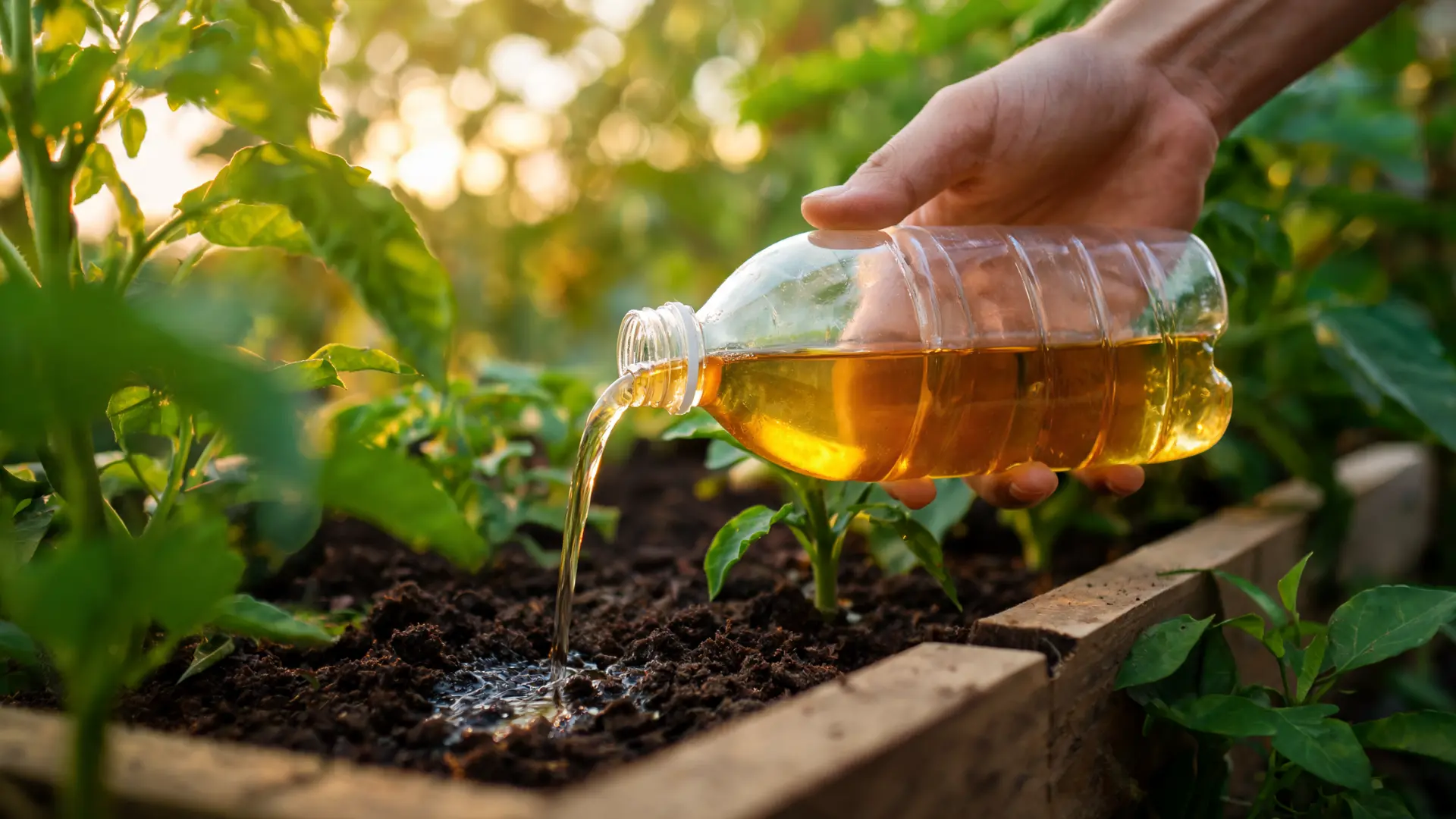
Neem oil isn’t a one-size-fits-all spray; the most effective application depends on the season and the specific pest.
Some pests overwinter as eggs in bark, others feed on leaves, and some dwell underground.
1. Dormant Spray: For Overwintering Pests and Eggs
When to use it: Late winter or early spring, before buds break, when temperatures stay consistently above 40°F.
How to use it:
Step 1: Mix neem oil concentrate with water according to label instructions.
Step 2: Pour the mixture into a pump sprayer.
Step 3: Choose a dry, windless day to prevent drift and uneven coverage.
Step 4: Spray thoroughly over bark, branches, and stems where eggs and larvae hide.
Step 5: Let the plant dry naturally before checking for even coverage.
2. Foliar Spray: For Active Pests on Leaves
When to use it: During the active growing season, when live pests or fungal spores are visible on leaves.
How to use it:
Step 1: Mix the neem oil spray fresh, right before use.
Step 2: Fill a handheld or pump sprayer with the solution.
Step 3: Mist the entire plant, coating both the tops and undersides of leaves.
Step 4: For houseplants, wipe leaves gently with a soft cloth instead- this also removes dust and adds shine.
Step 5: Repeat every 7 to 14 days until pest activity stops.
3. Soil Drench: For Root-Feeding and Soil-Dwelling Pests
When to use it: When pests like fungus gnat larvae live in damp soil or nematodes feed on roots rather than leaves.
How to do it:
Step 1: Dilute neem oil with water following label directions.
Step 2: Slowly pour the mixture around the base of the plant.
Step 3: Saturate the soil evenly without letting it run off.
Step 4: Allow the roots to absorb the solution over the next few days.
Step 5: Repeat every 2 to 3 weeks until pest activity decreases.
Which Plants Can You Use Neem Oil On?
Neem oil is safe for most houseplants, vegetables, herbs, and flowering plants, making it one of the most versatile natural pesticides available for home gardeners.
It works well on common houseplants like pothos, ferns, and peace lilies, edibles like tomatoes, peppers, and basil, and flowering or ornamental plants like roses and hydrangeas.
Each plant type may respond best to a different application method, whether that’s a foliar spray, soil drench, or a mix of both.
When matched correctly to the plant and applied consistently, neem oil stays gentle enough to use across nearly every plant in your home or garden.
Note: Succulents and cacti are more sensitive to oil-based sprays, so always dilute more than usual and test a small area first before treating the whole plant.
How to Use Neem Oil Based on Plant Type
Not every plant needs the same treatment: houseplants, vegetables, and flowering plants each come with their own risks and best practices.
Matching the right method to the right plant type helps you treat infestations effectively without causing damage.
1. How to Use Neem Oil on Houseplants?
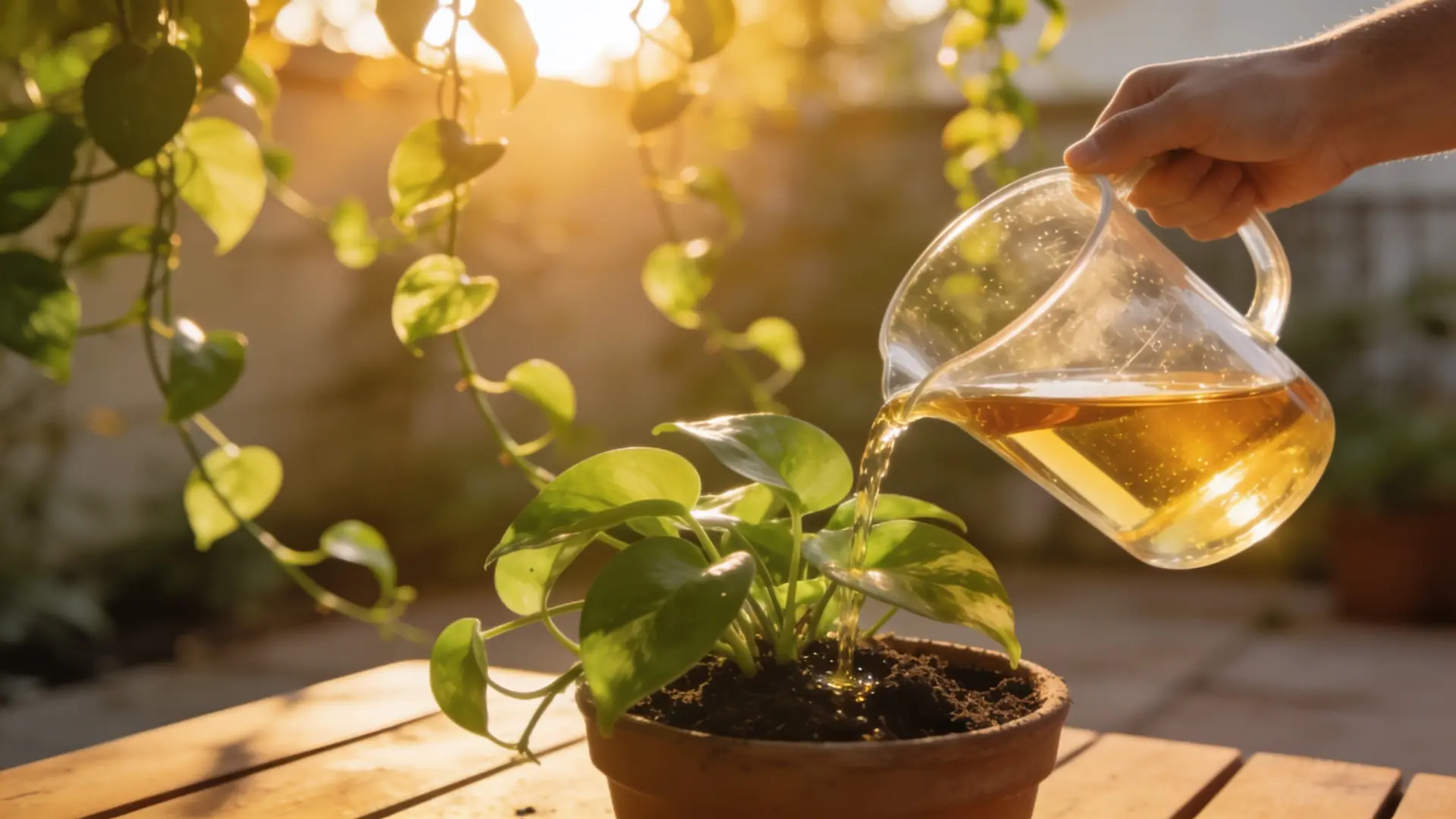
During an active infestation, spray or drench the soil weekly until pests disappear, then switch to a preventive routine of drenching every 3 weeks.
After spraying, move the plant away from direct sunlight for a few hours to avoid leaf burn. Wiping leaves gently with a soft cloth between treatments also helps clear dust and leftover residue, keeping indoor plants healthier overall.
Plant types: Pothos, snake plants, ferns, peace lilies
Best method: Foliar spray for surface pests like spider mites and mealybugs; soil drench for fungus gnats living in the potting mix.
2. Vegetables and Herbs
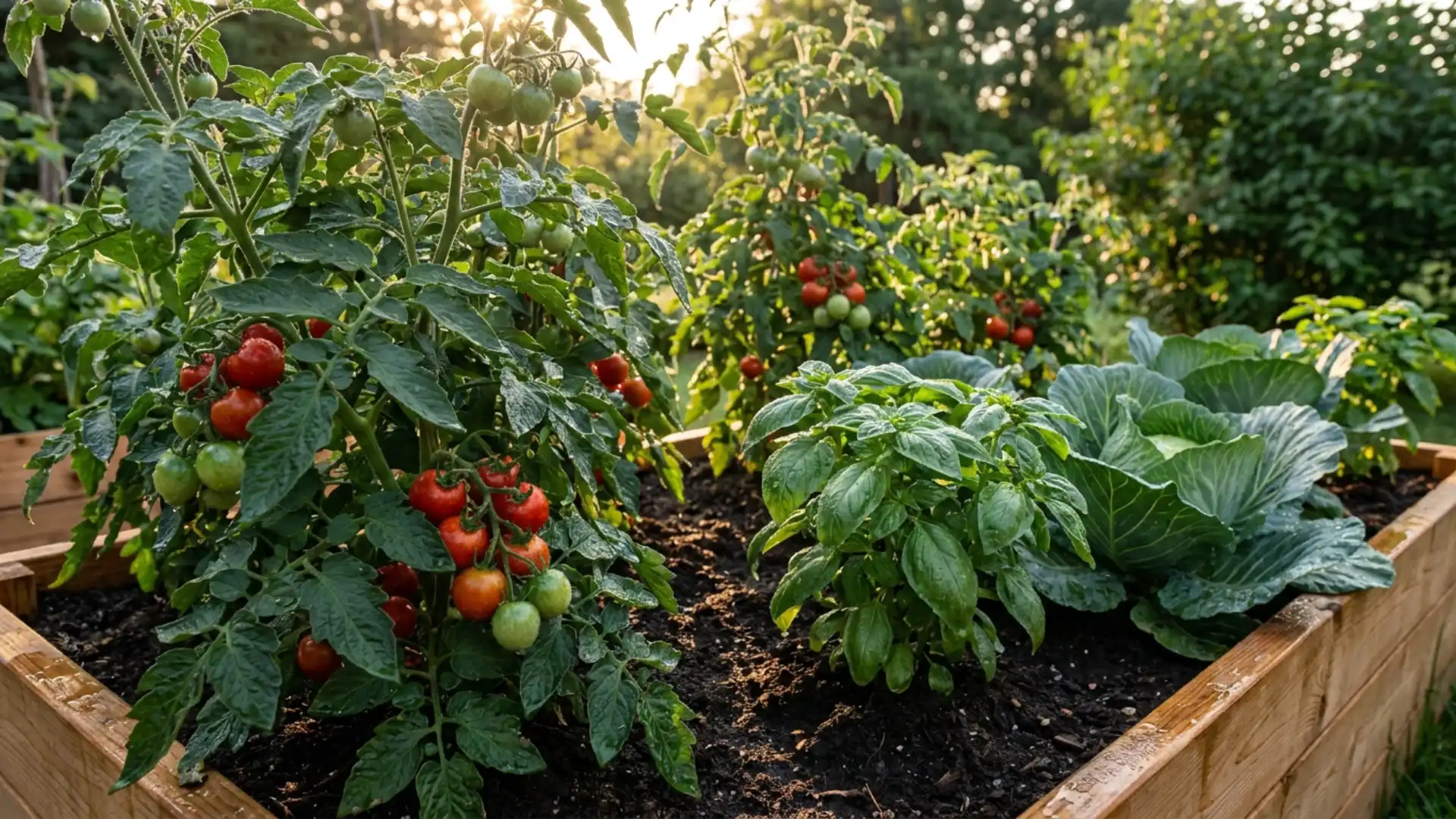
Mix a fresh batch of diluted neem oil right before each use, and spray during the early morning or evening to prevent leaf burn from the sun.
Avoid spraying within 24 hours of harvesting to keep produce safe.
Even after waiting, always wash vegetables and herbs thoroughly before eating, since neem oil residue can remain on the surface of leaves and skins.
Plant types: Tomatoes, peppers, cucumbers, basil, cabbage
Best method: Foliar spray, since most pests on edibles feed directly on leaves and stems.
3. Flowering and Ornamental Plants
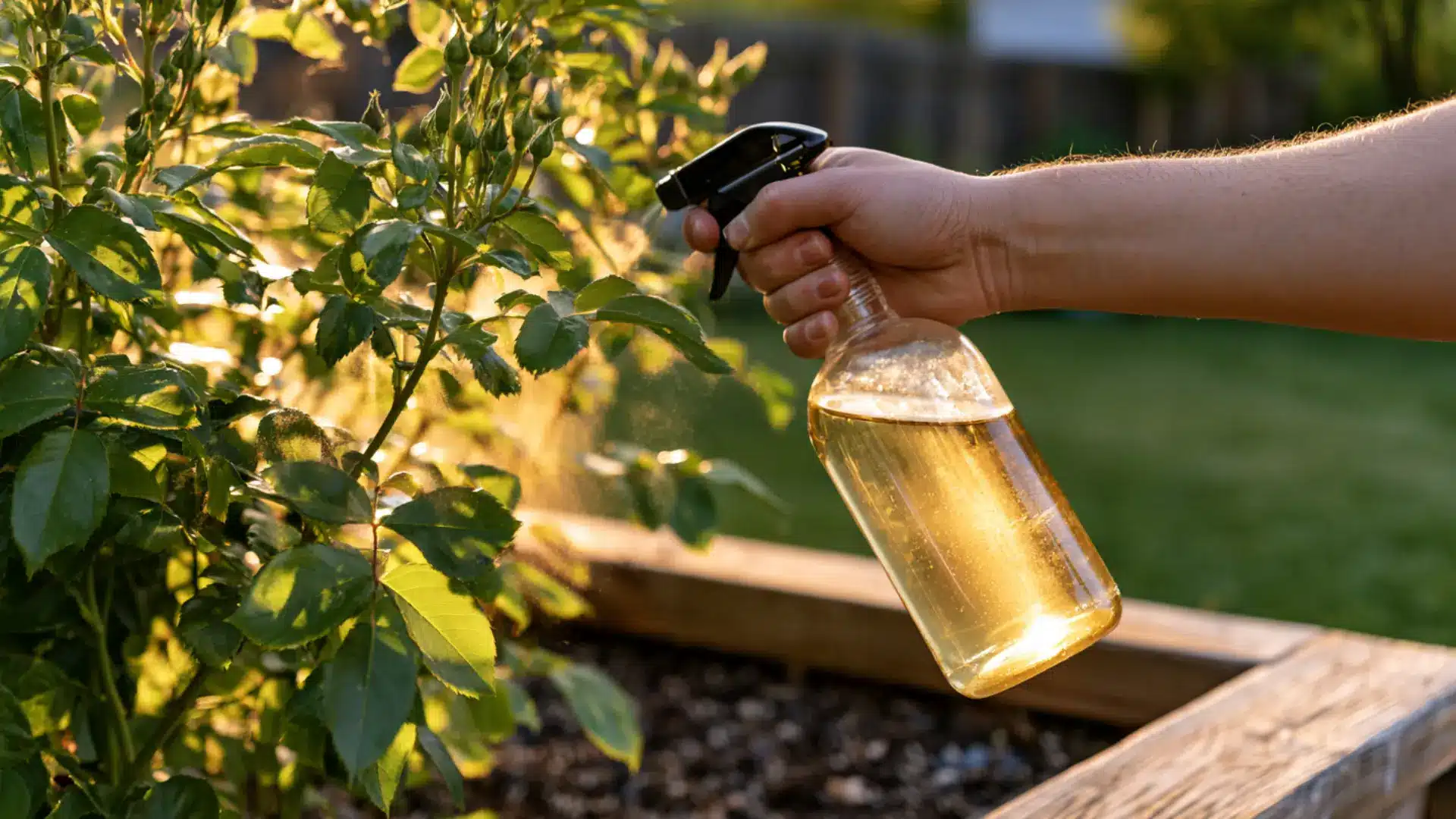
Spray early in the morning or evening when bees and other pollinators are least active, and aim the mixture at leaves, stems, and buds rather than open flowers.
This protects pollinators while still treating the pests hiding on foliage.
Repeating the application every 7 to 14 days keeps infestations under control without disrupting the plant’s blooming cycle.
Plant types: Roses, marigolds, hibiscus, hydrangeas
Best method: Foliar spray, applied carefully to avoid open blooms.
4. Fruit Trees and Shrubs
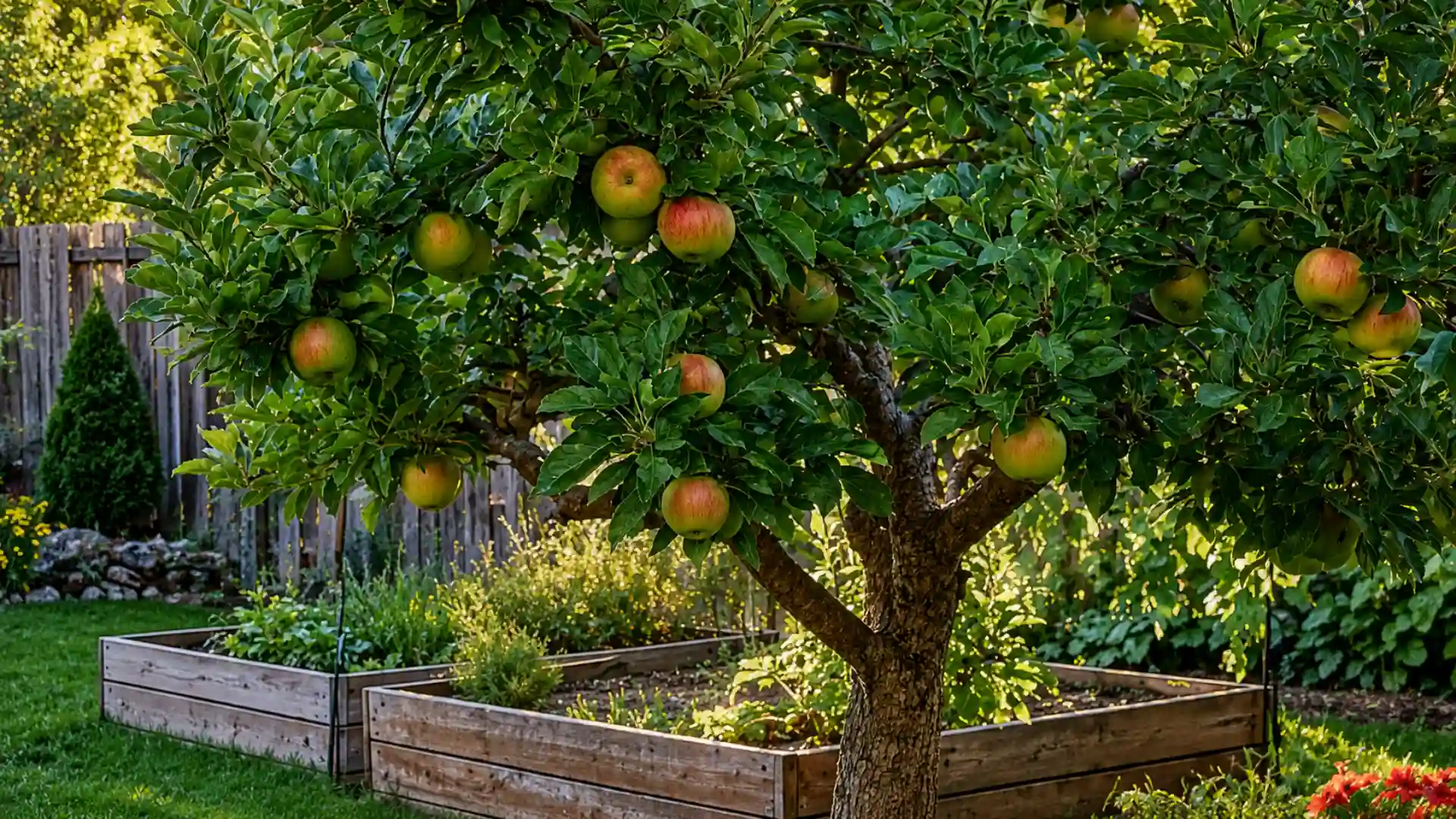
Fruit trees and shrubs benefit most from a dormant spray applied in late winter, which targets pest eggs and larvae hiding in bark before they hatch. Once the growing season begins, switch to a foliar spray for aphids, scale, and fungal issues like leaf spot.
Spraying too often on fruit-bearing trees can affect yield, so stick to label-recommended intervals and always wash fruit before eating.
Plant types: Apple trees, citrus trees, blueberry bushes, rose bushes (as shrubs)
Best method: Dormant spray in late winter/early spring to kill overwintering eggs; foliar spray during the growing season for active pests.
5. Succulents and Cacti
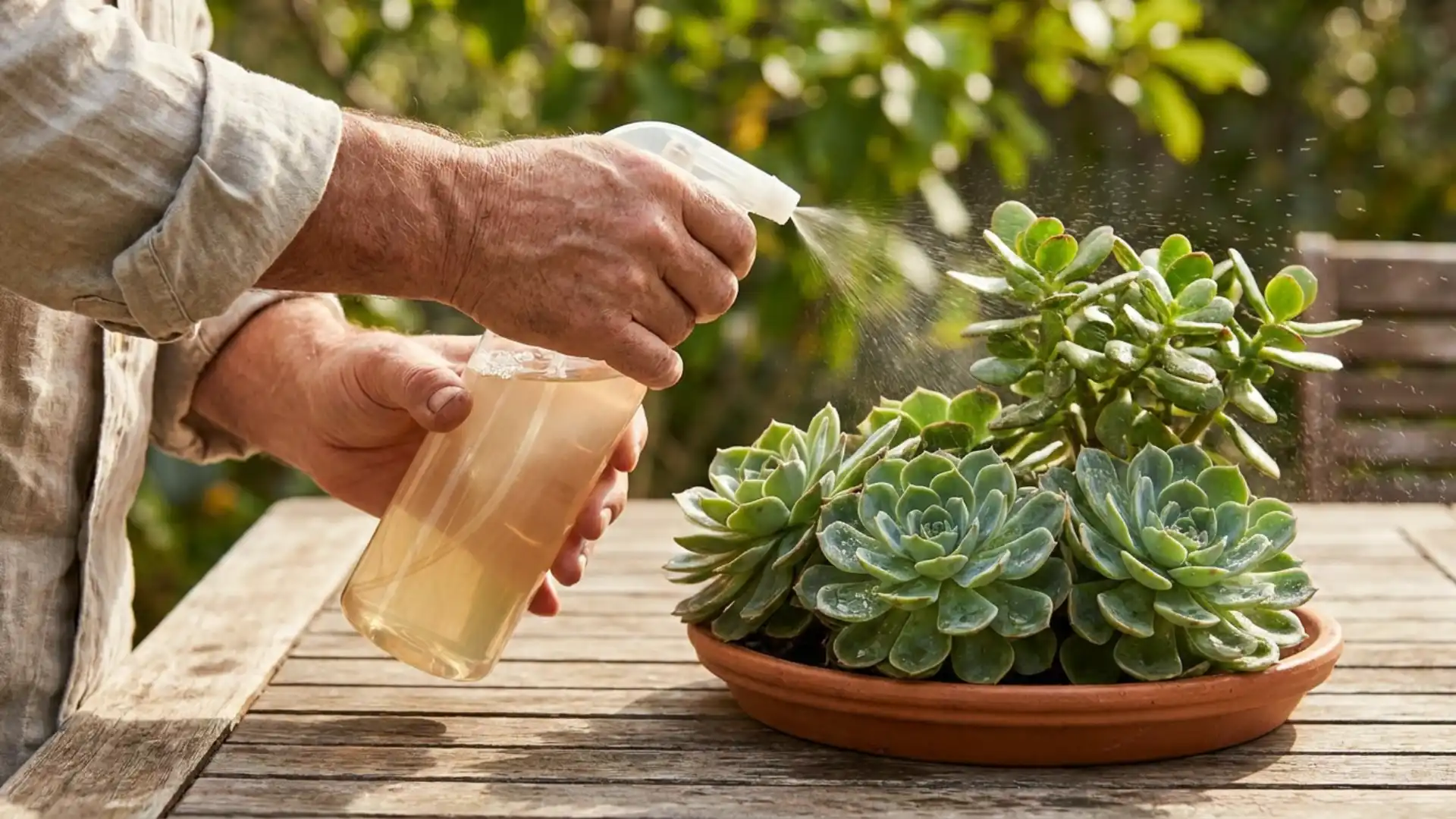
Succulents and cacti store water in thick, fleshy tissue, which makes them more prone to leaf burn or discoloration from standard neem oil concentrations.
Dilute the mixture further than usual, spray lightly rather than saturating the plant, and test on a single leaf first to avoid damage.
Because these plants naturally attract fewer pests, treatment is usually only needed occasionally rather than on a regular schedule.
Plant types: Aloe vera, jade plant, echeveria, barrel cactus
Best method: A lightly diluted foliar spray, as these plants are more sensitive to oil-based treatments.
To Dilute or Not? The Neem Oil Question Answered
It depends on what you are starting with.
Always dilute concentrated neem oil before use; applying it straight from the bottle can burn leaves and stress the plant.
The standard ratio is roughly 1–2 tablespoons of neem oil per gallon of water, though this varies by brand, so check the product label first.
Ready-to-use or pre-diluted neem oil sprays are the exception. These are formulated to be applied directly, with no mixing required.
Tip: When unsure, test a diluted mixture on one leaf and wait 24 hours before treating the whole plant.
Best Time of Day to Apply Neem Oil
Neem oil works best when used at the right time, both by season and time of day.
Apply it in late winter or early spring as a dormant spray to target overwintering eggs, or during the active growing season for live pests and fungal spores on leaves.
Time of day matters too: spray early in the morning or in the evening, never under direct midday sun, since this can burn leaves.
It’s also worth using neem oil as soon as you spot pests, rather than waiting, since early treatment prevents a small problem from turning into a full infestation.
How Often Should You Spray Neem Oil?
Neem oil isn’t a one-and-done treatment: it breaks down quickly in sunlight, which means its pest-killing effects fade within days of application.
Repeat applications are what actually build up enough protection to clear an infestation or keep one from starting.
- Spray every 7 to 14 days until pest activity disappears completely.
- Apply once every 3 weeks to keep pests from returning.
- After rain,reapply sooner than scheduled, since rain washes off the coating early.
Skipping applications gives pests time to recover between treatments, so stick to the schedule until the problem is fully resolved.
Common Garden Pests Neem Oil Works On
Neem oil isn’t limited to just one type of bug: it works against a wide range of common garden and houseplant problems.
| Pest or Disease | Signs to Look For | Where It’s Found |
|---|---|---|
| Aphids | Sticky residue, weak growth | New shoots, buds |
| Whiteflies | Small white flies scatter | Underside of leaves |
| Spider mites | Fine webbing, yellow specks | Leaf undersides |
| Mealybugs | Cottony white clusters | Stems, leaf joints |
| Thrips | Silvery streaks, curling | Leaves, flowers |
| Fungus gnats | Small flies near soil | Soil surface |
| Japanese beetles | Skeletonized leaves | Leaves |
| Caterpillars | Chewed holes | Leaves |
| Powdery mildew | White powdery patches | Leaves |
| Black spot | Dark circular spots | Foliage |
| Rust | Orange-brown spots | Leaves |
If any of these signs are showing up in your garden, neem oil is worth reaching for as both a treatment and a preventive measure.
Is Neem Oil Safe for Beneficial Insects, Pets, and Edible Plants?
Neem oil is generally considered safe when used correctly, but a few precautions matter.
Once fully dried, it poses little risk to bees and other pollinators, though you should still avoid spraying during blooming or directly on open flowers to protect them.
For pets, neem oil is safe once dry, but keep pets away until the spray fully dries to prevent skin irritation.
On edible plants, always avoid spraying within 24 hours of harvest, and wash fruits and vegetables thoroughly before eating, since residue can remain on leaves and skin even after the waiting period.
How Long Does Neem Oil Take to Work?
Neem oil doesn’t kill pests instantly, so results take a little patience to show.
Most people notice a visible reduction in pest activity within 3 to 7 days, as neem oil disrupts feeding and reproduction rather than causing an immediate die-off.
For a full infestation to clear, it usually takes 2 to 3 applications spaced a week apart, since neem oil breaks down quickly in sunlight and needs repeat treatments to stay effective.
Fungal issues like powdery mildew may take slightly longer to visibly improve, often needing consistent application over 2 to 3 weeks before the plant shows clear signs of recovery.
Safety Tips for Using Neem Oil
Neem oil is natural, but that doesn’t mean it’s completely risk-free.
Following these precautions lets you treat pests effectively without putting your health or the environment at risk.
- Wear Gloves for Larger Applications: Direct contact over extended periods can mildly irritate skin.
- Avoid Inhaling the Spray: Work in a well-ventilated area or wear a mask during heavy spraying.
- Keep It Away From Ponds and Streams: Neem oil can be toxic to fish and aquatic life.
- Wash Your Hands After Use: Rinse off any residue promptly.
- Wash Produce Before Eating: Rinse sprayed vegetables and fruits thoroughly to remove any residue.
Neem Oil vs. Other Natural Pest Control Methods
Not all natural pest control methods work the same way, and each one has its own strengths.
| Method | Best For | How It Works | Limitations |
|---|---|---|---|
| Neem Oil | Pests and fungal disease | Disrupts growth and reproduction | Needs repeat use; can burn leaves |
| Insecticidal Soap | Soft-bodied pests | Breaks down protective outer layer | No effect on fungal disease |
| Diatomaceous Earth | Crawling pests | Damages exoskeleton, causes dehydration | Ineffective when wet |
| Companion Planting | Prevention | Repels pests by scent | Slow results; prevention only |
| Sticky Traps | Flying pests | Traps pests on contact | Misses larvae and roots |
Neem oil stands out as one of the few natural options that treats both pests and fungal disease in a single product.
For most home gardens, it works well as a primary treatment, with other methods used alongside it for extra protection.
Summing It Up!
Neem oil is effective only when matched with the right method, mixed correctly, and applied consistently.
A single spray won’t clear an infestation; repeated treatments, proper timing, and full leaf coverage are crucial.
Whether it’s a foliar spray for aphids, a soil drench for fungus gnats, or a dormant spray before buds break, technique matters as much as the product.
Start with a trusted, cold-pressed neem oil product, follow label directions closely, and stay consistent with your schedule to keep both houseplants and garden plants healthy and pest-free.
Frequently Asked Questions (FAQs)
Can I Use Neem Oil Straight From the Bottle, or Do I Always Need to Dilute It?
No, always dilute concentrated neem oil first to avoid burning leaves.
How Long Does It Take for Neem Oil to Kill Pests?
Usually a few days to a week, since it disrupts feeding and reproduction.
Can Neem Oil Be Used on Vegetables Close to Harvest Time?
Avoid spraying within 24 hours of harvest, and wash produce before eating.
What’s the Difference Between a Dormant Spray and a Foliar Spray?
Dormant targets overwintering eggs on bark; foliar treats active pests on leaves.
Is It Safe to Use Neem Oil Around Pets and Children?
Yes, once fully dry; keep them away until the spray dries.