
Most residential codes cap backyard fence height at six feet. Second-story windows sit well above that line. So do raised decks, pool cages, and the sightline from a neighbor’s driveway. Evergreens cover what a fence misses. Height is the obvious appeal, though year-round foliage matters more, since a screen that drops its leaves in November goes see-through for five months of the year.
Well-placed trees also trim summer cooling loads. U.S. Forest Service research put the residential energy savings from urban vegetation at 7.2% nationally. A USDA Climate Hubs resource credits neighborhood vegetation with air temperature drops of up to 10°F. Shade across a west-facing patio in late August is where a homeowner actually feels that number. The seven evergreens below cover the usual residential situations, from a narrow strip beside a driveway to a hundred feet of open boundary.
Privacy Tree Options at a Glance
| Variety | Typical Mature Height | Growth per Year | Best Landscape Use |
|---|---|---|---|
| Thuja Green Giant Arborvitae | 40 to 60 feet | 3 to 5 feet | Tall property screens |
| Leyland Cypress | 40 to 60 feet | 3 to 4 feet | Large open borders |
| Emerald Green Arborvitae | 10 to 15 feet | 6 to 9 inches | Narrow residential spaces |
| Nellie Stevens Holly | 15 to 30 feet | 2 to 3 feet | Dense evergreen borders |
| American Holly | 15 to 30 feet | About 1 foot | Broad natural screens |
| Oak Leaf Holly | 14 to 20 feet | 1 to 2 feet | Structured property edges |
| Skyrocket Juniper | 15 to 20 feet | 1 to 2 feet | Tight vertical spaces |
Mature spread decides most of these choices. A variety that outgrows its spot creates a second problem five years later.
1. Thuja Green Giant Arborvitae
This particular tree can grow three to five feet per year in decent conditions. That pace makes it the default pick for homeowners who want real coverage inside two seasons. The form stays pyramidal, with soft scale-like foliage that holds deep green straight through winter. Open sites produce 40 to 60 feet at maturity, though most residential rows get topped well below that.
Six hours of direct sun suits it best. Five to six feet of spacing produces a solid wall, while eight feet leaves a looser row with visible trunks. A deep soaking twice a week carries a new plant through its first summer. Three inches of mulch keeps that moisture in the root zone.
2. Leyland Cypress
Unrestricted border openings are ideal for Leyland Cypress. It grows out its soft needles at an annual rate of about three feet. This accounts for its popularity in border planting alongside rural land holdings. At maturity, it grows about forty to sixty feet tall with a fifteen-foot spread.
Crowded rows trap humid air around the lower branches, which invites Seiridium canker across the Southeast. Eight to ten feet between plants keeps air moving through the row. Full sun helps as well. The root system stays shallow for a plant this tall, so a stake through the first two winters protects against wind lean.
3. Emerald Green Arborvitae Tree
A typical suburban side yard measures eight feet across. These trees grow about ten to fifteen feet tall with a spread near four feet. The column holds its shape for decades with almost no shaping.
Three feet of spacing produces a solid hedge in five to six years. Cold tolerance runs to zone 3, which covers the northern states. Winter sun on frozen ground bronzes the foliage. The green returns once the soil thaws in spring, so steady moisture through the first two summers heads off the worst of it.
4. Nellie Stevens Holly
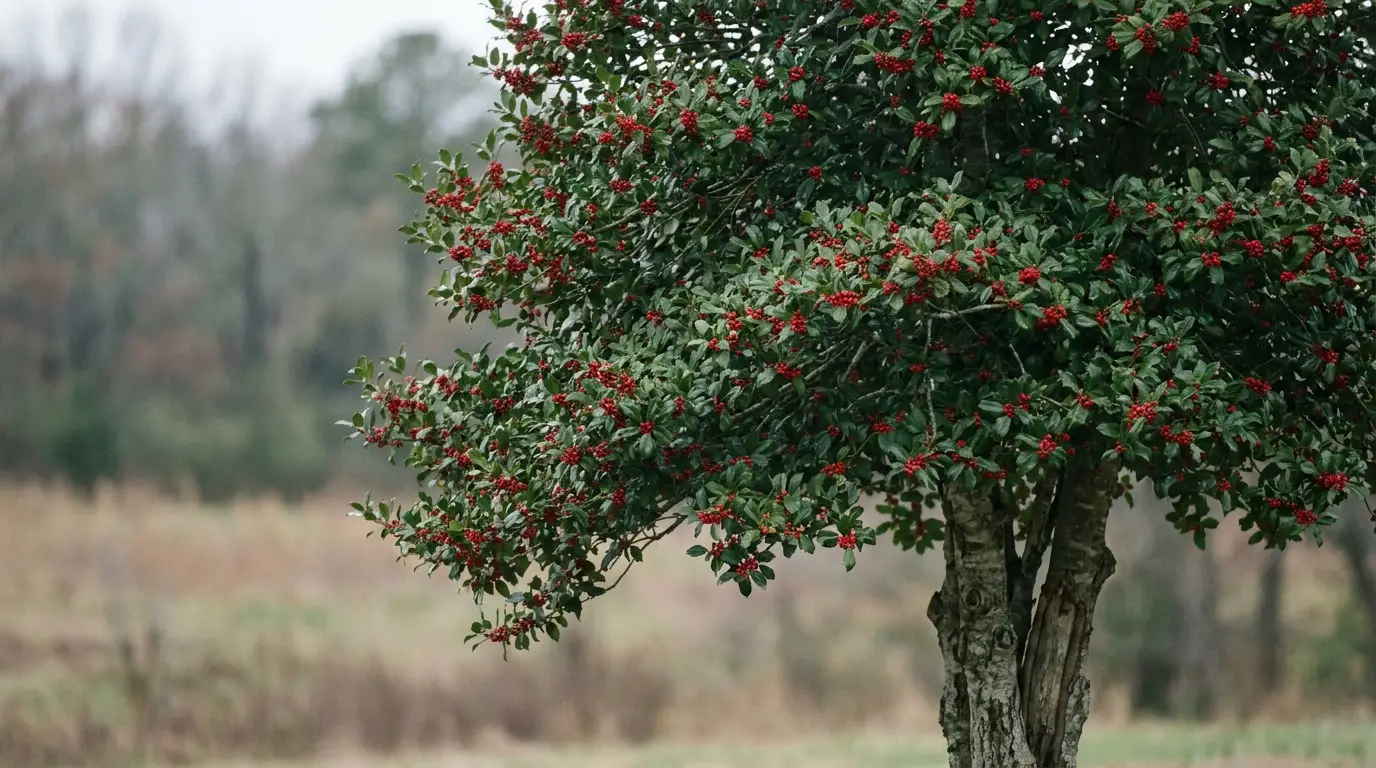
Nellie Stevens Holly carries glossy dark leaves on a broad pyramidal frame. Two to three feet of annual growth fills a boundary within a few seasons. Mature height lands between fifteen and thirty feet. Red berries appear in fall even with no male plant nearby. Birds strip them through January.
Drainage matters most here, since soggy roots invite rot. Full sun suits it. Part shade works too, though berry set drops. Five to eight feet of spacing forms a screen, with light pruning in late winter to hold the pyramid tight.
5. American Holly
American Holly grows wild from Massachusetts down through east Texas. The leathery spined leaves create dense cover on a broad frame, fifteen to thirty feet at maturity. These grow rather slowly, at around a single foot per year.
Berries require a male holly within roughly 40 feet. One male serves several female plants across a property. Acidic soil with reliable drainage suits the species. Six to eight feet of spacing gives the canopy room to broaden. Mulch out to the drip line protects the shallow feeder roots.
6. Oak Leaf Holly
It earns its name from foliage shaped like a small oak leaf. It reaches about fourteen to twenty feet with a spread around eight feet. New growth pushes out bronze-red before it settles into deep green.
Full sun works well. Partial shade produces a looser form with fewer berries. Soil should drain freely, since standing water damages the roots. Four to six feet of spacing produces a solid boundary. The plant holds its cone shape with no shearing at all, which spares a homeowner one annual chore.
7. Skyrocket Juniper
Skyrocket Juniper measures two to three feet wide at maturity. That footprint fits a strip beside a driveway where nothing else will. Height reaches fifteen to twenty feet in most yards. The foliage runs silver-blue. Few evergreens bring that shade to a property line.
Dry, lean soil suits this juniper. Heavy clay shortens its life, as does regular irrigation once the roots take hold. Full sun keeps the column dense from the base up. Three feet of spacing forms a screen. Heavy snow splays the branches apart, so a loose tie around the upper third helps across northern states.
Privacy is all about having an appropriate-sized tree for the space available. A Leyland Cypress, sixty feet high, planted in a ten-foot-wide side yard becomes problematic around year six. Ideally, the Trees should retain their shape within the assigned space, create a boundary for the original line of sight, and require low maintenance. Sunlight, drainage, and spacing play an equally important role as the selection of the tree itself. Good watering during the first two years does the rest.