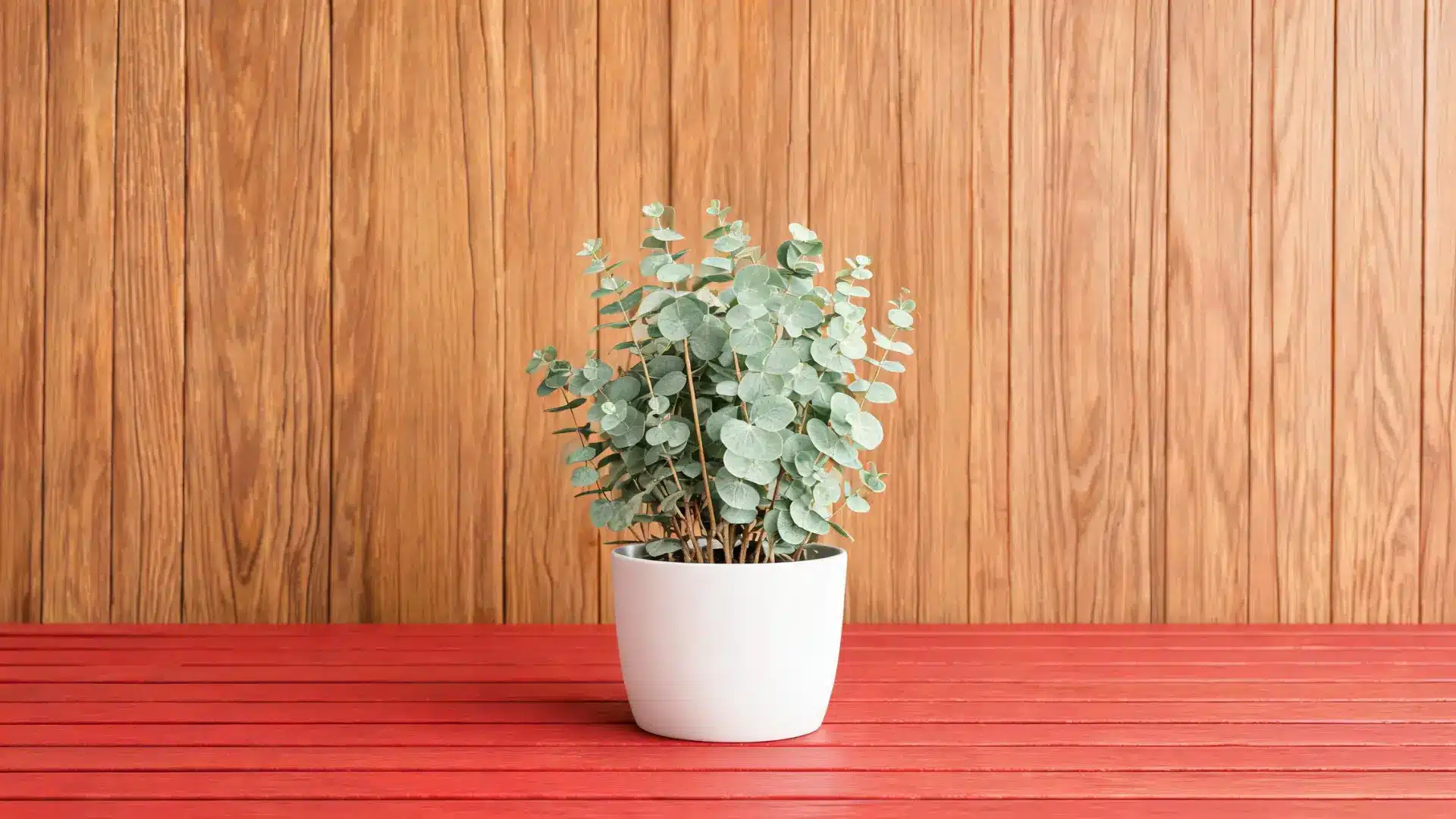
There’s something irresistible about the silvery-blue shimmer of eucalyptus leaves, whether tucked into a bouquet or brushing against a sunny windowsill.
Learning how to grow eucalyptus opens the door to a plant that’s as practical as it is beautiful, offering fragrant, textured foliage perfect for fresh or dried arrangements.
Better yet, eucalyptus adapts well to garden beds, containers, and even bright indoor spaces, making it accessible no matter your setup.
With the right sunlight, well-draining soil, and a little consistent care, this fast-growing evergreen rewards you with lush, cuttable stems season after season, ready to bring a touch of natural elegance into your home or garden.
What is Eucalyptus and Why Gardeners Love It?
Eucalyptus is a fast-growing, aromatic evergreen native to Australia, prized far beyond its origins for its silvery-blue foliage and clean, refreshing scent.
Gardeners and florists love it for good reason: the rounded, coin-like leaves add texture and movement to bouquets, wreaths, and centerpieces, while the fragrance brings a spa-like freshness indoors.
Beyond its beauty, eucalyptus is remarkably resilient once established, making care for eucalyptus plants approachable even for beginners.
Whether grown in a garden bed or a container, it rewards minimal effort with abundant, cuttable branches perfect for fresh or dried arrangements year-round.
Best Eucalyptus Growing Conditions
Eucalyptus grows best when its natural preferences for sun, dry air, and open soil are respected. Match these conditions closely, and the plant will reward you with vigorous, harvest-ready branches.
| Condition | Ideal Range | Notes/Tips |
|---|---|---|
| Sunlight | Full sun, 6+ hours daily | Direct morning-to-afternoon sun produces the strongest, most fragrant foliage |
| Soil Type | Sandy loam, well-draining | Mix in coarse sand or perlite if the soil holds water for more than a day |
| Soil pH | Slightly acidic, roughly 5.5–6.5 | Note: exact ideal pH varies by species; test soil before amending |
| Temperature | Warm days, mild nights, no hard frost | Note: cold tolerance varies widely by species — some handle light frost, others don’t |
| Watering | Deep soak, then dry out fully | Overwatering is the most common cause of root rot and yellowing leaves |
| Humidity | Low, with good air circulation | Avoid misting; eucalyptus prefers dry air over moisture in the leaves |
| Spacing | Wide enough to avoid crowding | Crowded plants get leggy and are more prone to fungal issues |
Eucalyptus isn’t fussy, but it does have clear preferences – plenty of sun, fast-draining soil, and room to breathe. Get these basics right, and steady, cuttable growth follows naturally.
Step-by-Step: How to Grow Eucalyptus?
Growing eucalyptus successfully starts with the right planting approach and continues with a few consistent habits that support strong, cuttable growth.
Follow these steps to get your plant established and thriving.
Step 1: Choose the Right Eucalyptus Variety
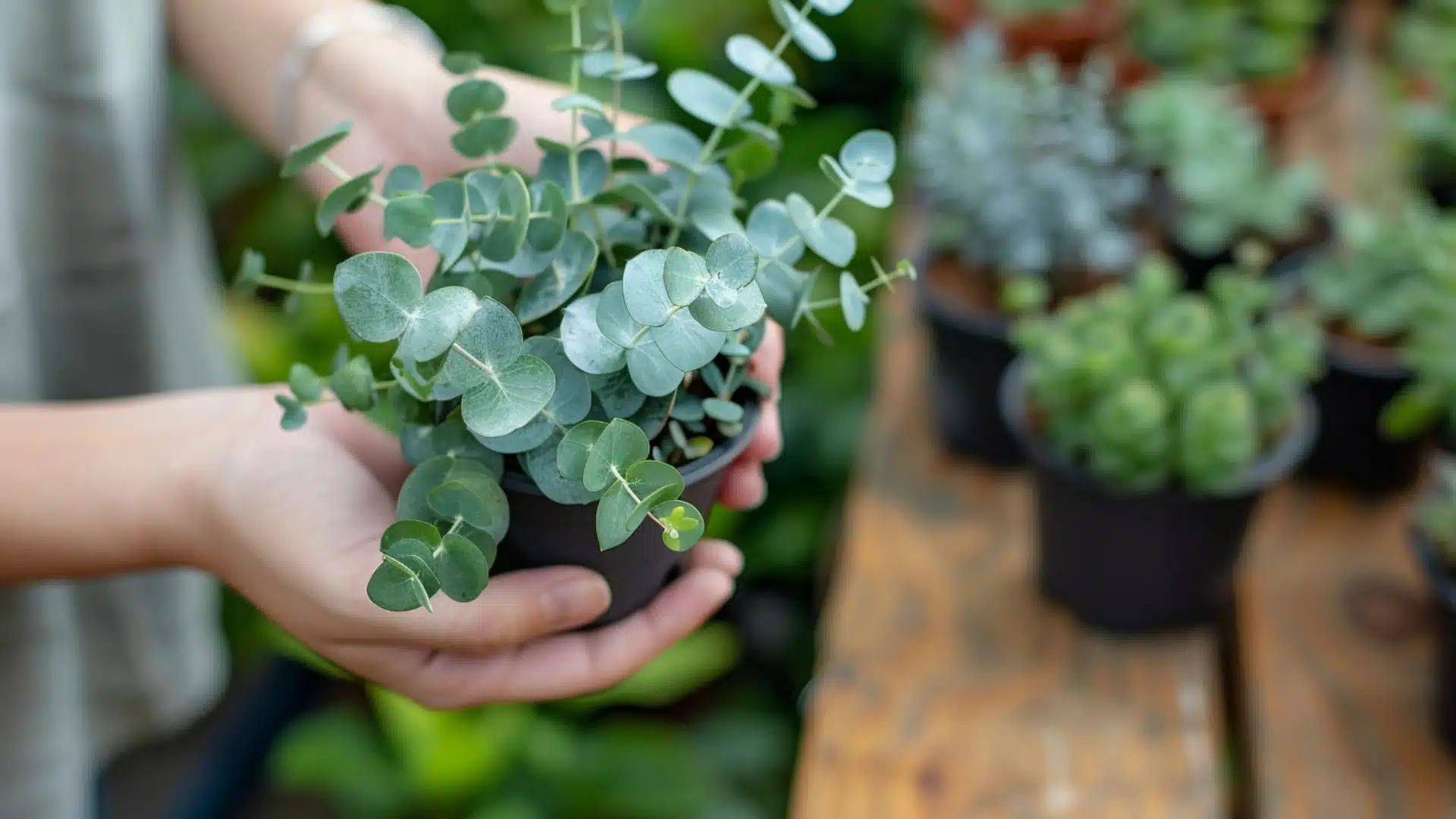
Select a variety suited to your goals and climate. Silver dollar and baby blue eucalyptus are popular for their rounded, silvery leaves and manageable size, making them well-suited for cut-flower gardening.
Check your hardiness zone and available space before choosing, since some varieties grow into towering trees while others stay compact enough for containers or small garden beds year-round.
Step 2: Prepare the Site or Container
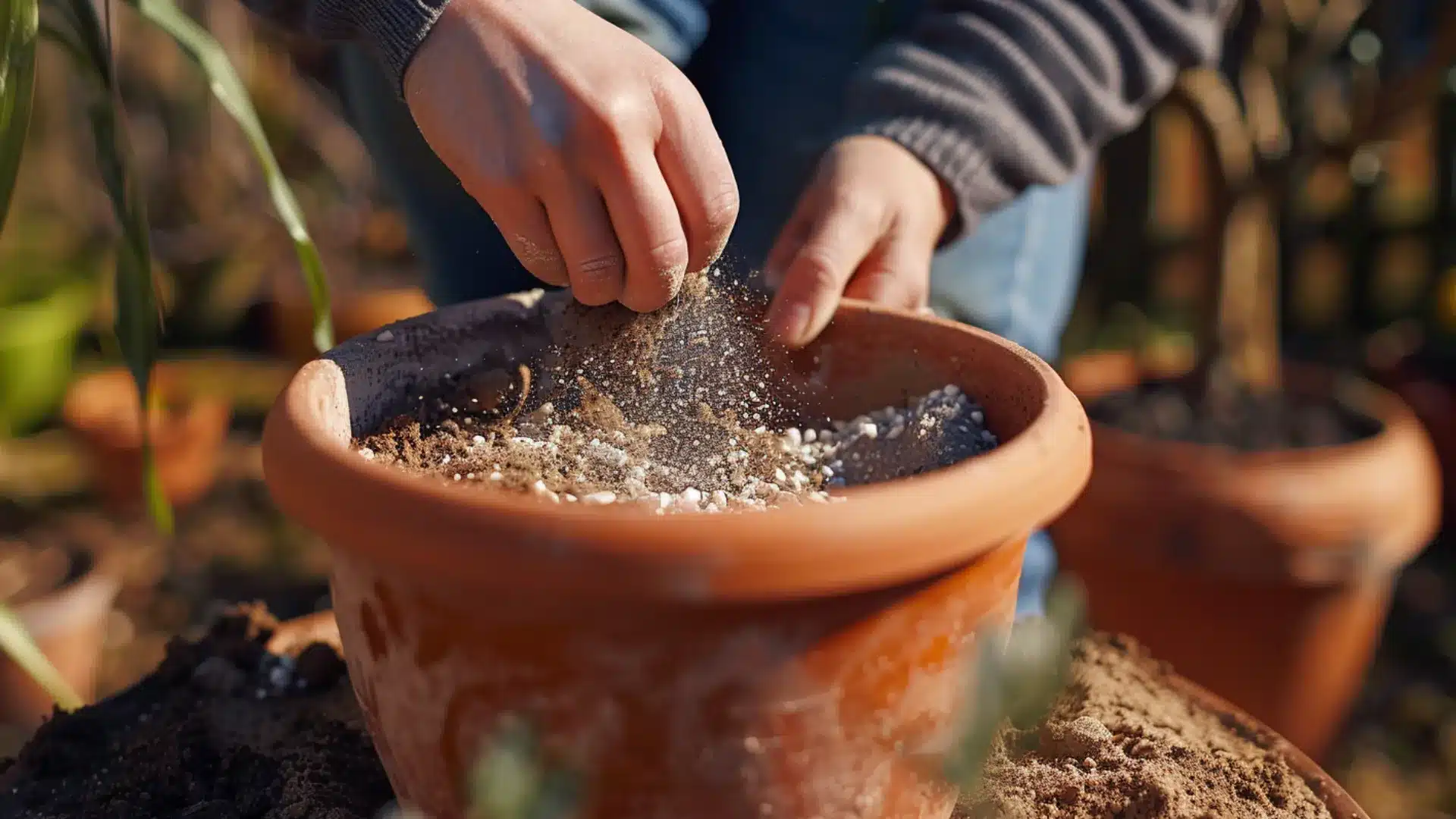
Choose a spot with full sun and loosen the soil to improve drainage, or select a container with drainage holes and fill it with a well-draining potting mix.
Amending soil with coarse sand or perlite helps prevent waterlogging, one of the most common reasons young eucalyptus plants fail to establish properly during their first growing season.
Testing drainage beforehand, by checking how quickly water disperses after a soak, can save time and prevent early root damage.
Step 3: Plant at the Right Depth and Spacing
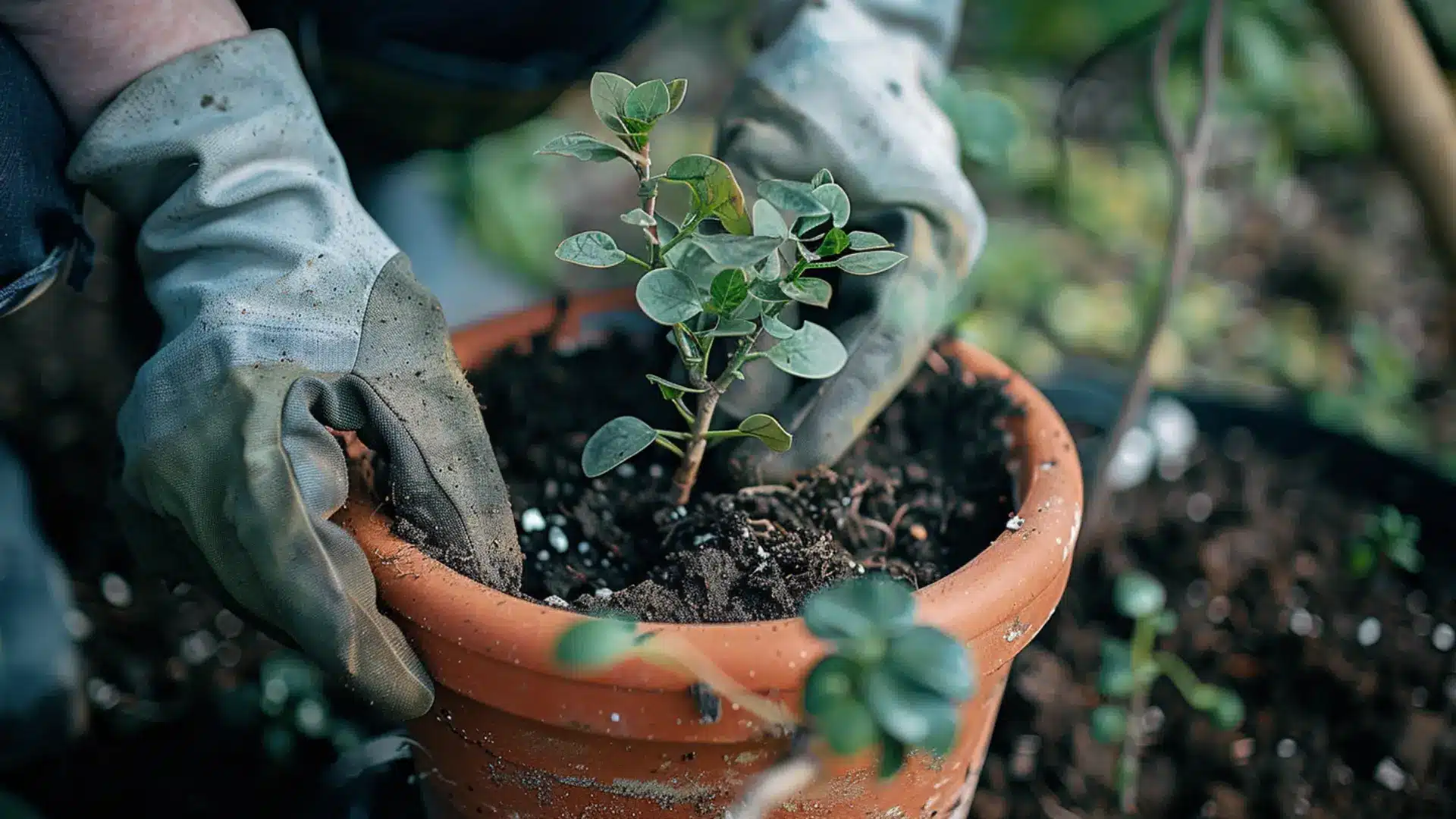
Dig a hole roughly twice the width of the root ball and plant at the same depth as the nursery pot, avoiding buried stems that can encourage rot.
Space multiple plants several feet apart to allow airflow and room for mature spread, which reduces the risk of fungal issues as the plants continue to grow.
Backfilling gently and firming the soil around the base also helps eliminate air pockets that can dry out young roots.
Step 4: Water Deeply and Mulch After Planting
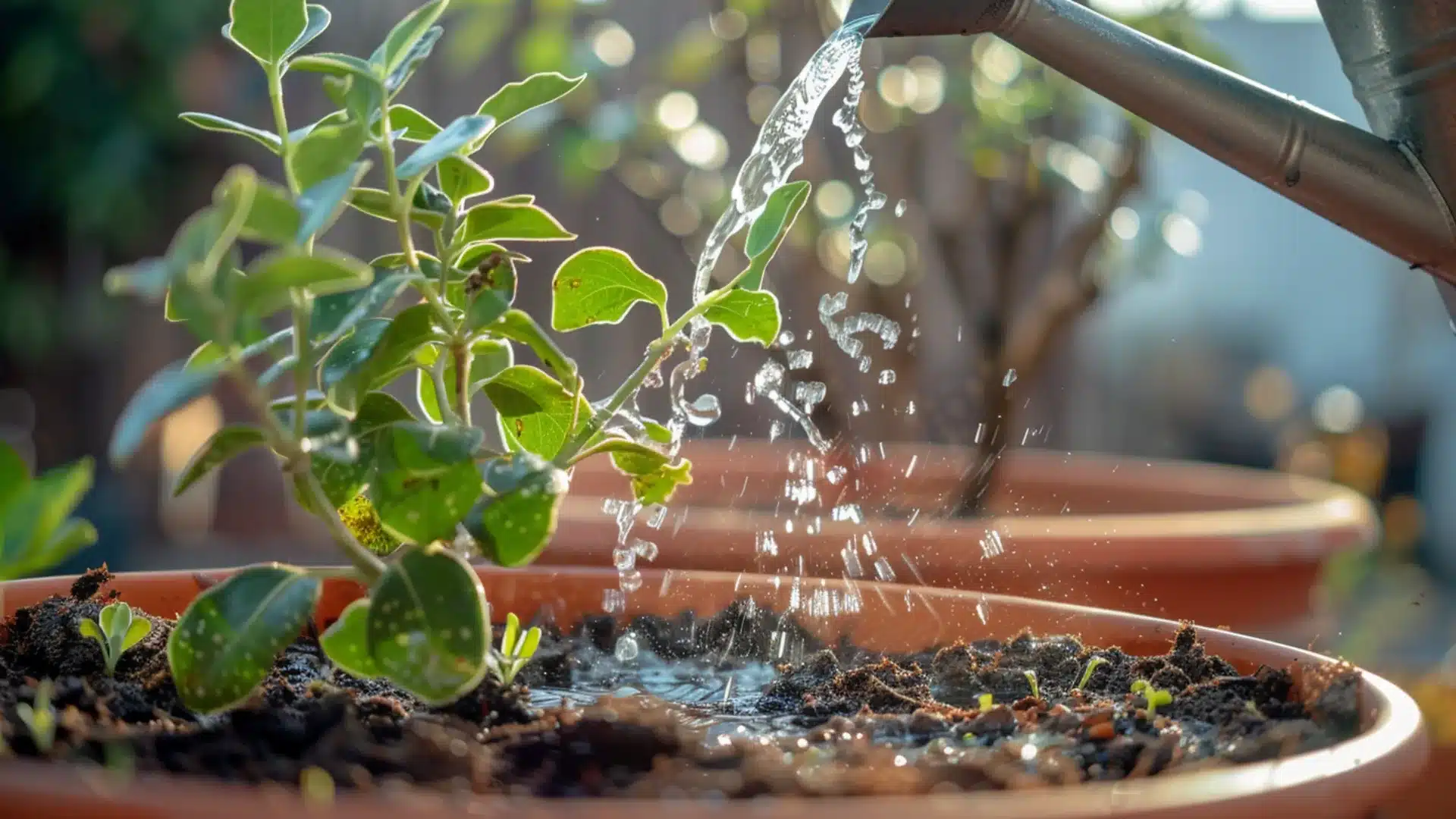
Water thoroughly right after planting to help the roots settle into place, then add a layer of mulch around the base, keeping it clear of the stem.
This retains moisture and regulates soil temperature, giving the young plant a stable foundation before it enters active growth.
Organic mulch, such as bark chips or straw, also breaks down over time and gradually enriches the surrounding soil.
Step 5: Support Early Root Establishment
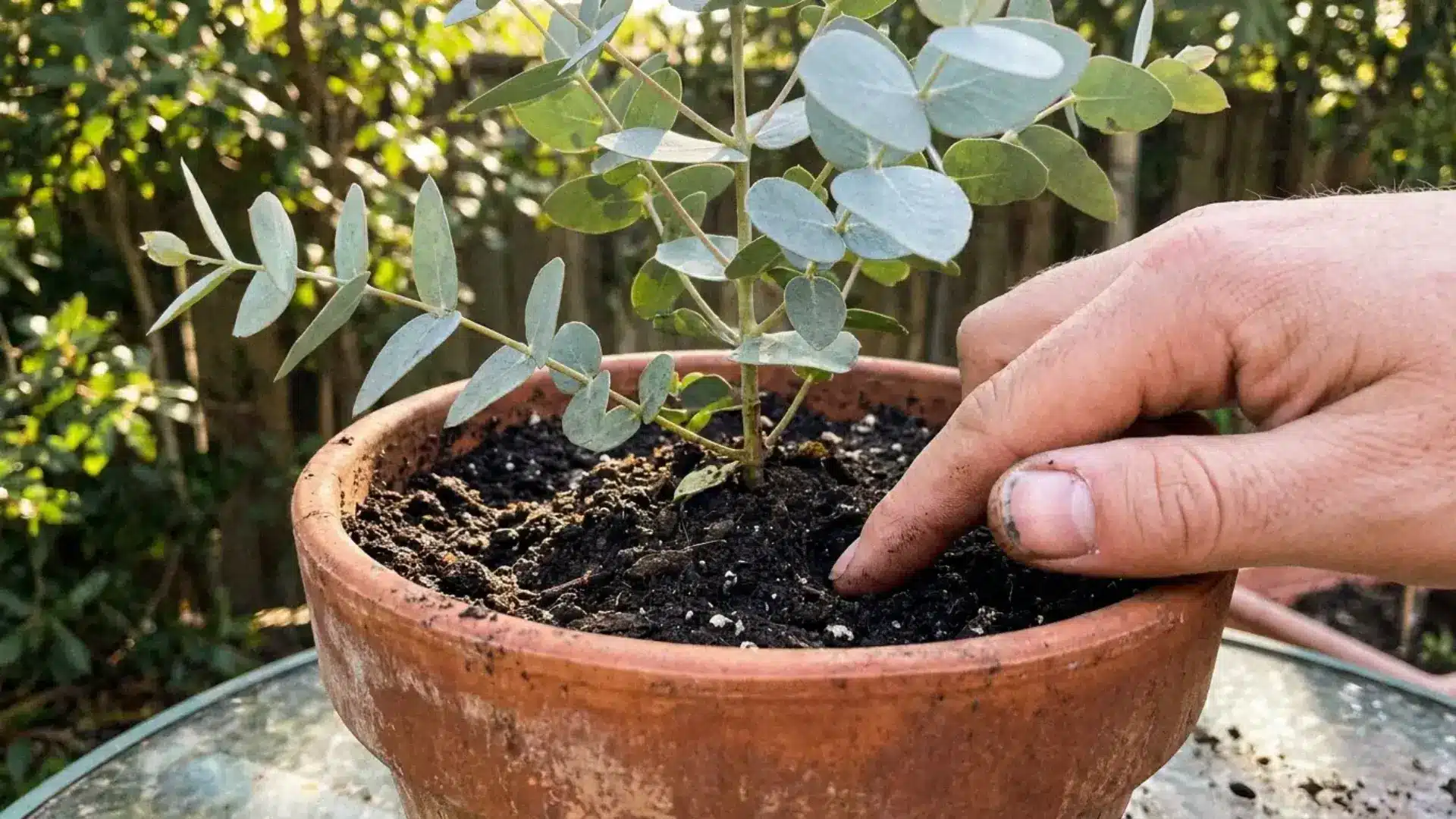
During the first few weeks, keep soil consistently moist without letting it become waterlogged, then gradually shift to a deep-and-dry watering rhythm as roots strengthen.
Watch for steady new foliage emerging, a reliable sign the plant has settled in and is ready for regular feeding and pruning going forward.
Checking soil moisture with a finger test before each watering helps avoid both over- and under-watering during this delicate establishment period.
Step 6: Feed and Prune to Encourage Growth
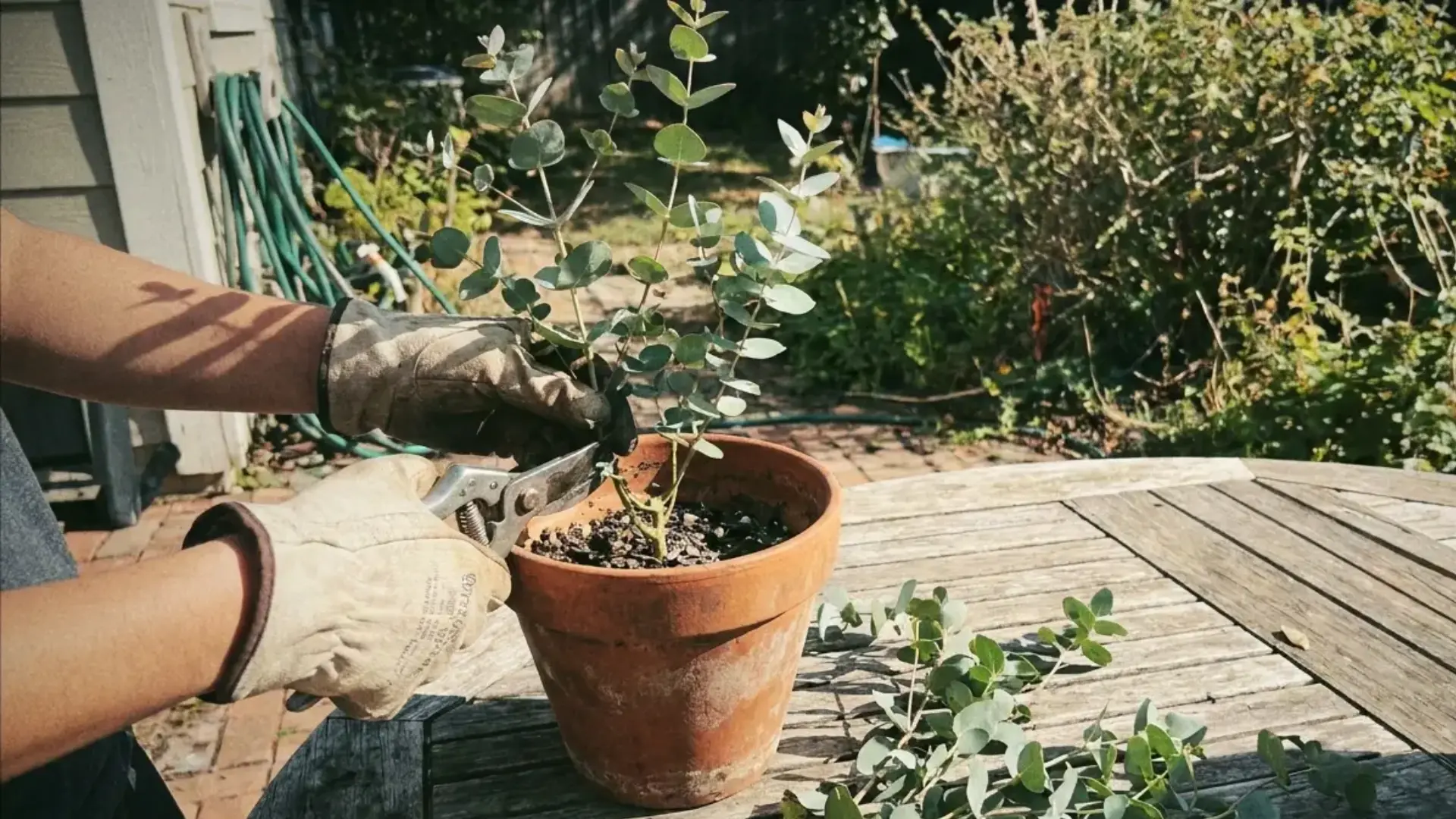
Apply a balanced fertilizer during the active growing season to support vigorous foliage and stem development. Regular pruning shapes the plant while stimulating fresh, straight growth, which is ideal for later cutting.
Removing crowded or weak stems also improves airflow around the plant, reducing the risk of disease as it matures.
Pruning after the plant has established itself also encourages branching, resulting in a fuller shape and more stems to harvest over time.
Eucalyptus Plant Care Essentials
Keeping eucalyptus healthy comes down to a few consistent habits: watering, fertilizing, and pruning. Get these right, and the plant rewards you with steady, cuttable growth all season long.
- Water deeply, then allow the soil to dry out fully before watering again
- Reduce watering frequency once roots are established and growing deep
- Increase watering slightly during hot, dry spells or for container-grown plants
- Apply a balanced, slow-release fertilizer at the start of the growing season
- Avoid high-nitrogen fertilizers, which can cause weak, leggy growth
- Prune in early spring or after the main growth flush to encourage fuller branching
- Make cuts just above a leaf node to stimulate fresh, straight regrowth
With the right watering rhythm, occasional feeding, and timely pruning, eucalyptus stays full, healthy, and productive. Consistent care now means more usable stems for later harvest.
Growing Eucalyptus in Containers or Indoors
Eucalyptus can adapt well to container life or indoor growing, as long as its core needs for light, airflow, and root space are still met. The table below breaks down what to watch for in each area.
| Factor | What to Do | Why It Matters |
|---|---|---|
| Pot Size & Material | Slightly larger than root ball; terracotta or clay | Prevents waterlogging and root rot |
| Indoor Light | South-facing window or brightest spot | Low light causes legginess and pale leaves |
| Humidity & Airflow | Low humidity; avoid misting; good airflow | Eucalyptus prefers dry, moving air |
| Repotting Cues | Repot in spring when roots crowd the pot | Supports continued growth |
| Ongoing Upkeep | Dust leaves, rotate pot, reduce watering in winter | Supports light absorption and even, steady growth |
Let me know which format you’d like locked in, or if you want both the table row and the closing paragraph included together.
With the right pot, light, and airflow, eucalyptus can thrive indoors just as well as outdoors. A little attention to these basics keeps it full, healthy, and ready to harvest.
Harvesting Eucalyptus for Cut Stems and Arrangements
One of the biggest rewards of growing eucalyptus is the steady supply of foliage it offers for fresh and dried arrangements. Harvesting correctly keeps the plant productive while giving you long-lasting stems to work with.
When and How to Cut Stems
Harvest stems once they reach a firm, mature length, rather than cutting new, tender growth. Use clean, sharp shears to cut just above a leaf node at an angle.
Cutting in the morning, when stems are naturally more hydrated, helps them stay fresher for longer. Avoid removing more than a third of the plant at once, since this encourages fuller, bushier regrowth rather than stressing the plant.
Post-Harvest Care
Proper conditioning makes a noticeable difference in how long cut eucalyptus stays fresh in arrangements. Strip away any lower leaves that would otherwise sit below the waterline, then immediately place the stems in clean water after cutting to prevent wilting.
Changing the water every few days helps prevent bacterial buildup, keeping stems firm and vibrant for as long as possible.
Drying Eucalyptus for Lasting Arrangements
Eucalyptus dries beautifully, which is part of why it’s so popular for wreaths and long-term décor. Bundle stems loosely and hang them upside down in a dry, airy space, keeping them out of direct sunlight to help preserve their color.
Allowing several weeks for stems to fully dry ensures they hold their shape and last for months when used in arrangements.
Common Problems When Growing Eucalyptus
Even with good care, eucalyptus can occasionally run into a few common issues. Spotting these early makes them easy to fix before they affect overall growth.
- Yellowing leaves often signal overwatering or poor drainage rather than a lack of nutrients
- Leggy, sparse growth usually points to insufficient sunlight or a lack of regular pruning
- Pests like aphids or scale can appear, especially on stressed or overly humid plants
- Root rot develops from consistently soggy soil, particularly in containers without adequate drainage
- Slow or stunted growth may indicate the plant has outgrown its pot and needs repotting
Most eucalyptus problems stem from watering, light, or space, making them straightforward to correct with small adjustments. Regular attention keeps the plant resilient and steadily producing healthy foliage.
The Bottom Line
At its core, eucalyptus asks for very little: a sunny spot, well-draining soil, and a bit of routine attention to watering and pruning.
In return, it delivers reliable, healthy growth that’s ideal for cutting, drying, and styling into arrangements that last.
Whether planted in the ground, tucked into a container, or grown as a bright indoor feature, eucalyptus adapts readily once its basic needs are met.
Paying attention to common issues like overwatering or crowding keeps the plant resilient over time.
With just a little consistency, eucalyptus settles in as an easy-going, rewarding addition to any space.
Frequently Asked Questions (FAQs)
Is Eucalyptus Toxic to Pets?
Yes, eucalyptus is toxic to dogs, catsFAQs
Can Eucalyptus Survive Winter Outdoors in Cold Climates?
Most varieties are frost-tender and struggle in hard freezes, though some cold-hardy types can survive mild winters with protection.
How Long Does an Eucalyptus Plant Typically Live?
In the right conditions, eucalyptus can live for several decades, though lifespan varies widely by species and climate.
Does Eucalyptus Attract Bees or Pollinators?
Yes, eucalyptus flowers attract bees and other pollinators when the plant matures and blooms.
Can You Grow Eucalyptus From Seed Rather Than a Cutting or a Nursery Plant?
Yes, eucalyptus can be grown from seed, though it typically takes longer to establish than starting with a nursery plant.