Nothing ruins time outdoors faster than a wasp that refuses to leave. One minute you’re relaxing, and the next you’re watching every sip and every bite.
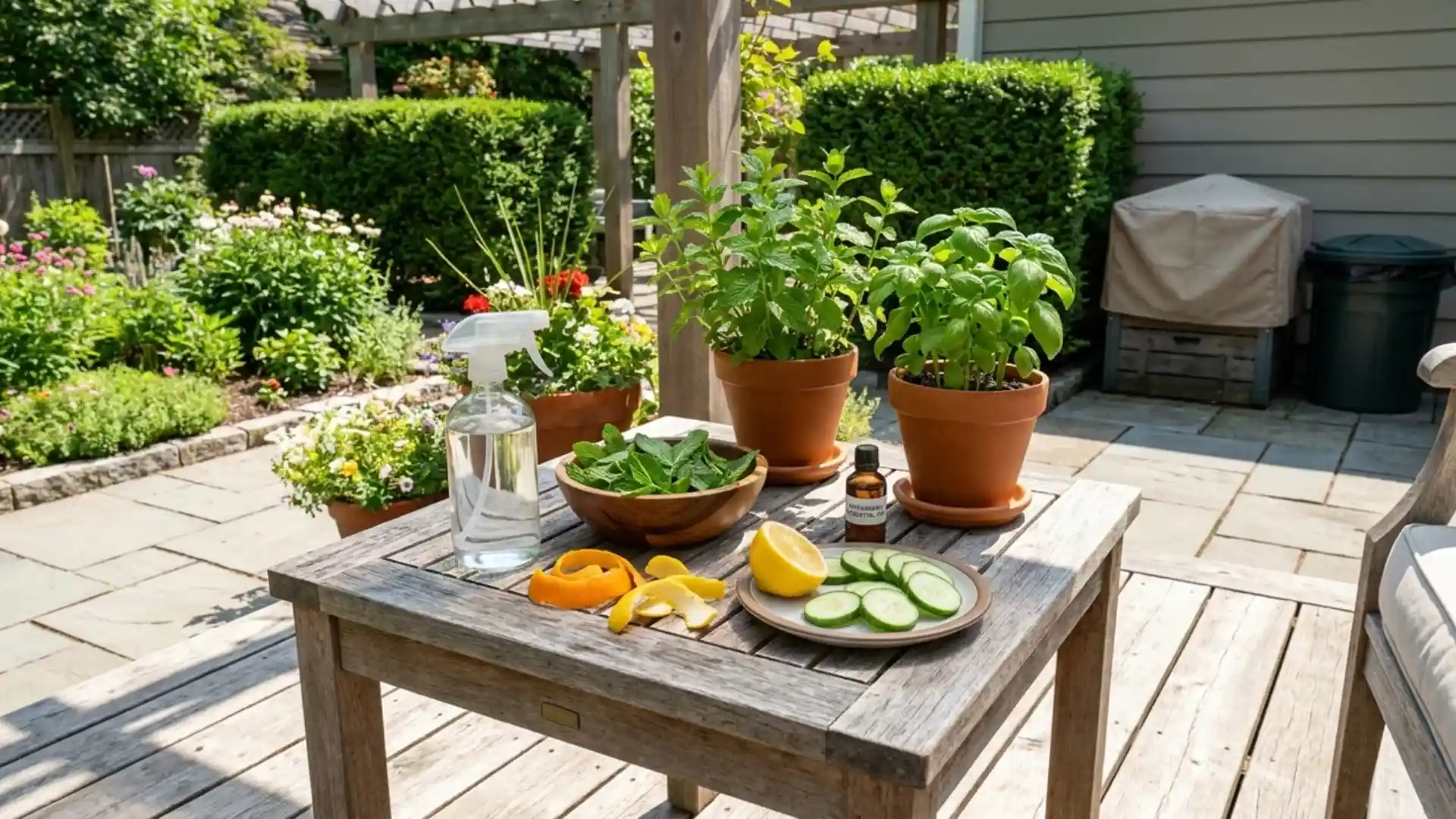
If you’re looking for how to repel wasps naturally, you don’t need to reach for harsh chemicals first. I’ve tried most of the tricks below in my own yard over a few summers, and some hold up a lot better than others.
A few simple changes around your yard and some easy DIY solutions can make your space far less inviting.
In this blog, you’ll learn what attracts wasps, which natural methods actually help, how to tell one wasp species from another, and how to keep them from coming back throughout the season.
Why are Wasps Attracted to Your Yard?
Wasps show up for a reason: easy access to food, water, or a sheltered place to nest.
Sugary spills, ripe fruit, uncovered trash, pet food, and standing water all attract foraging wasps. They also look for sheltered places such as roof eaves, sheds, wall gaps, and decks to build nests.
During late summer, larger colonies increase foraging activity, making wasps more noticeable around homes.
Once you understand what’s drawing them in, the right natural repellent becomes much easier to choose.
Types of Wasps You’re Likely Dealing With
Not every wasp behaves the same way, and knowing which one you’re dealing with changes what’s worth trying.
I’ve found that the fake nest trick and essential oil sprays work better on paper wasps than on ground-nesting yellow jackets, which barely notice a hanging decoy.
Wasp Type
Typical Nest Location
Aggression Level
What Helps Most
Paper wasps
Umbrella-shaped, open nests under eaves and railings
Low unless provoked
Decoy nests, essential oil sprays
Yellow jackets
Enclosed nests underground or in wall voids
High, especially near the nest
Sealing entry points, professional removal for larger colonies
Mud daubers
Small mud tubes on walls or under overhangs
Very low, rarely sting
Usually safe to leave alone
Hornets
Large gray paper nests in trees or on structures
High
Distance and, for active nests, professional removal
I’m not certain how these behaviors vary by region or climate, so if you’re trying to identify a specific nest, a local extension office or pest control service can confirm the species before you decide how to handle it.
Fast DIY Tricks People Are Trying to Repel Wasps Right Now
Social media is full of quick wasp hacks promising instant results, and it’s easy to see the appeal – most use items already sitting in your kitchen.
Some tricks are backed by real wasp behavior, while others work only temporarily or in specific situations.
Let’s break down the most popular ones people are trying right now.
1. The Fake Nest Trick (Does It Actually Work?)
Wasps are territorial insects and generally avoid building nests near an existing colony. A fake nest, often a crumpled brown paper bag shaped like a hive, is meant to trick wasps into believing the area is already claimed.
How to try it:
Crumple a brown paper bag into a rounded, nest-like shape
Hang it in problem areas like porches or eaves
Replace it if it gets wet or damaged
It won’t eliminate an active nest, but it may discourage new ones from forming.
2. Soda Can and Sugar-Water Traps
This trap uses sugary bait to lure wasps into a container they can’t easily escape. It’s simple, inexpensive, and uses items already found at home.
Steps to make one:
Mix sugar water or leftover soda in a bottle or can
Add a few drops of dish soap to break surface tension
Cut small entry holes and place traps away from seating areas
Empty and refresh weekly
Effective for reducing numbers, though it works best alongside other prevention methods.
Marcus Chen has been dealing with garden pests since 2015, like aphids, beetles, and whatever's chewing holes in your tomatoes.
A certified integrated pest management specialist, he teaches workshops and writes for gardening publications, helping people manage pest problems.
Marcus shares practical solutions that work, helping growers protect their plants and actually enjoy the process.
Marcus Chen has been dealing with garden pests since 2015, like aphids, beetles, and whatever's chewing holes in your tomatoes.
A certified integrated pest management specialist, he teaches workshops and writes for gardening publications, helping people manage pest problems.
Marcus shares practical solutions that work, helping growers protect their plants and actually enjoy the process.