The first rose bush I ever cut back looked fine until it stopped blooming for months. That pause forced me to pay attention, not to advice charts, but to how roses actually respond to timing.
I learned that pruning is less about bravery and more about reading the quiet signs the plant gives you. Once I figured out when to trim roses, the guesswork faded, and the plants bounced back stronger.
You are likely here because you want clear timing, not vague tips. This guide explains the right moments based on season, climate, and rose type.
You will learn what signals to watch for, what to avoid, and how to prune with confidence instead of hesitation.
What “Trimming Roses” Really Means
When people say trimming roses, they often mean different things.
Pruning is cutting back thicker stems to control size and guide how the plant grows. You do this to remove weak, damaged, or crowded canes so the rose stays strong.
Deadheading means removing spent flowers. You snip just below the faded bloom to help the plant put energy into new flowers instead of seed heads.
Shaping is light cutting to keep the rose looking balanced and open. This helps air move through the plant.
Timing matters more than most people think. Cut too early, and new growth can freeze. Cut too late, and you may lose flowers. Proper timing helps roses bloom better, push healthy new growth, and avoid stress.
Open airflow lowers the risk of disease by letting leaves dry faster after rain. Smart timing also prevents winter damage by avoiding tender growth before cold weather.
One last thing to know: some roses bloom on old wood, while others bloom on new wood. When you cut, it decides what flowers you get.
When to Trim Roses for the Most Blooms
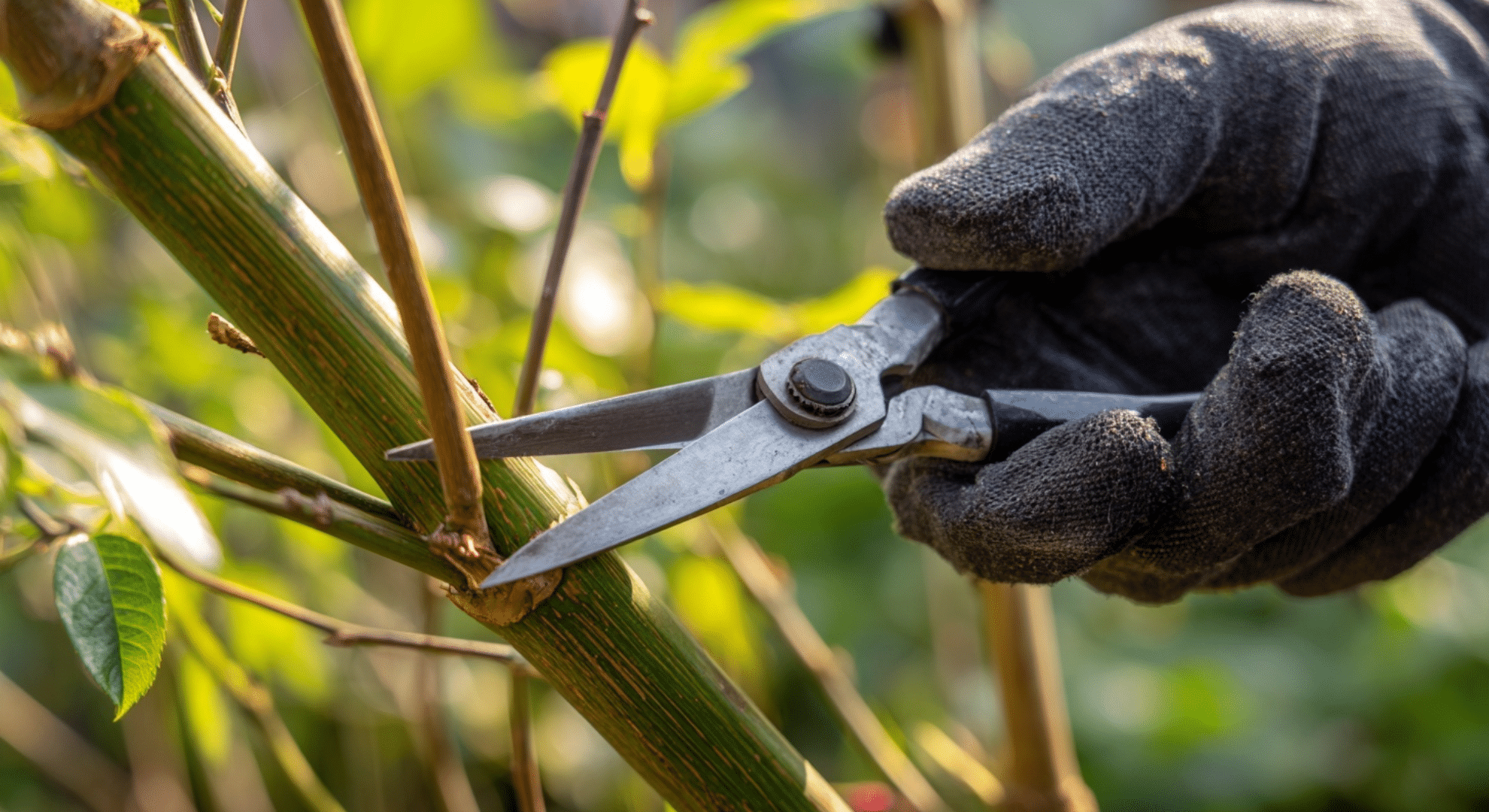
You get the most blooms when you do your main rose trimming in late winter to early spring, just before new growth starts.
Most roses rest during winter. When the days warm up, they wake up and push fresh growth. Trimming right before this happens tells the plant where to send its energy. Instead of feeding weak or crowded stems, the rose focuses on strong new canes that hold more flowers.
Late winter to early spring trimming also helps you see what needs to go. Dead, damaged, or thin canes are easier to spot before leaves appear.
Removing them opens the plant and improves airflow. Better airflow helps leaves dry faster and lowers disease risk.
This timing also protects your rose from cold damage. If you trim too early, warm weather may trigger new growth that freezes later. If you trim too late, the plant may already be spending energy on growth you cut away.
There are exceptions. Some climbing and old garden roses bloom on older wood, so heavy spring trimming can reduce flowers. Even then, light cleanup still helps.
For most roses, though, one solid trim at the right time sets the stage for healthier plants and better blooms all season.
Best Time to Trim Roses by Season
Knowing when to trim matters just as much as how. Each season plays a different role in rose care, and cutting at the right time helps you avoid damage and get more blooms.
Late Winter / Early Spring: Late winter to early spring is the main pruning time for most roses. This is when you shape the plant, remove weak canes, and push strong new growth that leads to better flowering.
Summer (After Flowering): Summer, right after flowering, is the key window for once-blooming roses. Trimming earlier removes buds, while trimming later can reduce next year’s flowers and stress the plant during heat.
Fall: Fall pruning should stay light. Heavy cuts can trigger tender new growth that cannot survive cold weather, leading to dieback, winter damage, and weaker plants the following spring.
Anytime: Anytime, remove dead, diseased, or damaged wood, along with suckers growing from the base. These drain energy, invite problems, and should never be left in place.
When to Trim Roses Based on Your Climate
In cold climates, waiting to prune matters because early cuts can wake roses too soon. Pruning before the last hard freeze often triggers soft new growth that gets burned, leading to dieback and reduced flowering later.
In mild or warm climates, roses have shorter dormancy periods, so pruning happens earlier. Common mistakes include waiting too long or making very light cuts, which can cause weak growth, crowded canes, and fewer blooms overall.
Figure Out Your Rose Type Before You Cut

Start by paying attention to how your rose blooms through the year. Roses that flower once in spring or early summer and then stop are usually once-bloomers.
Roses that flower, pause, and then bloom again are repeat bloomers. This pattern is the fastest clue.
The plant’s size and shape also help. Large, spreading shrubs and many climbing roses often bloom once. Compact bush roses and wide modern varieties tend to repeat bloom.
It also helps to know where flowers form. Some roses set buds on growth made the previous year. This is called old wood. Others make buds on growth that appears during the current season, called new wood.
Here’s a simple example. If you cut old wood on a once-blooming rose, you remove next year’s flowers. If you cut new wood on a repeat bloomer, you encourage fresh growth and more blooms later that season.
Knock Out Roses and Other Easy Shrubs
Prune these roses in late winter or early spring. You can cut them back by one third to one half. If plants look leggy, reduce them harder to reset shape.
These roses bloom on new growth and bounce back fast with more flowers.
Climbing Roses
Remove dead, damaged, or crossing canes first. Keep strong main canes and train them sideways for more blooms. Training guides growth, pruning controls size.
Prune repeat bloomers in late winter. Prune once-blooming climbers right after flowering to protect next year’s buds.
How Much to Cut Back Rose Bushes
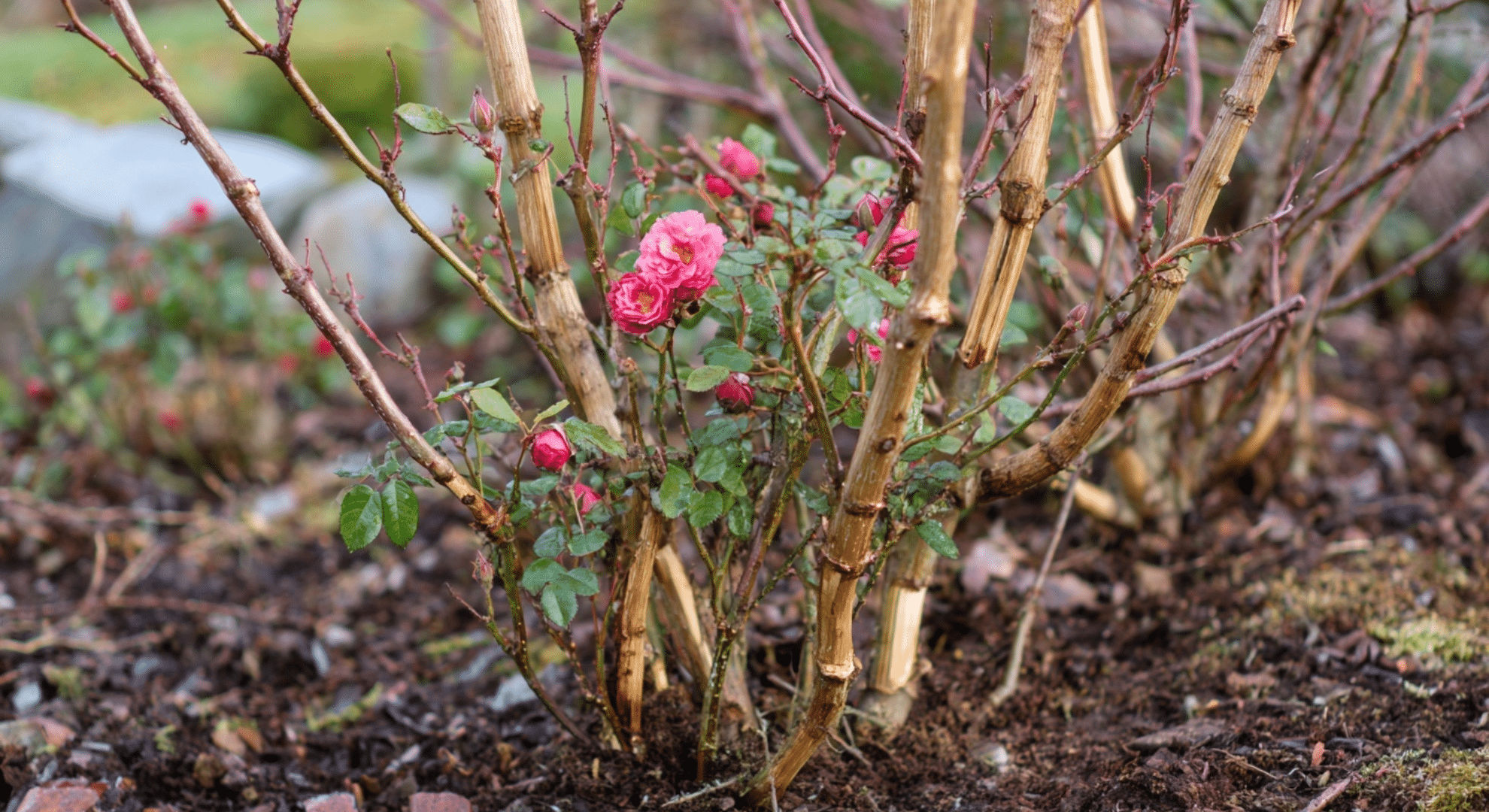
When people talk about when to cut back rose bushes, they usually mean how much stem to remove, not just when to prune. Cutting back means shortening canes to control size, shape, and growth strength. Instead of vague advice, think in inches and purpose.
A light tidy removes about 4–6 inches. This level cleans up spent blooms, weak tips, and small side growth without changing the plant’s size much.
A medium reshape cuts canes back by about one third, usually 8–18 inches depending on plant size. This improves airflow and resets shape while keeping plenty of flowering wood.
A hard renewal prune removes up to half or more of the plant, sometimes cutting canes down to 12–18 inches tall. This is used for overgrown, woody, or struggling roses that need a fresh start.
Step-by-Step Rose Pruning for Beginners
Pruning roses is mostly about making clean cuts and keeping the plant open and healthy. Once you know your rose type and timing, the actual cutting is repeatable and straightforward each season.
Step 1: Get Ready First
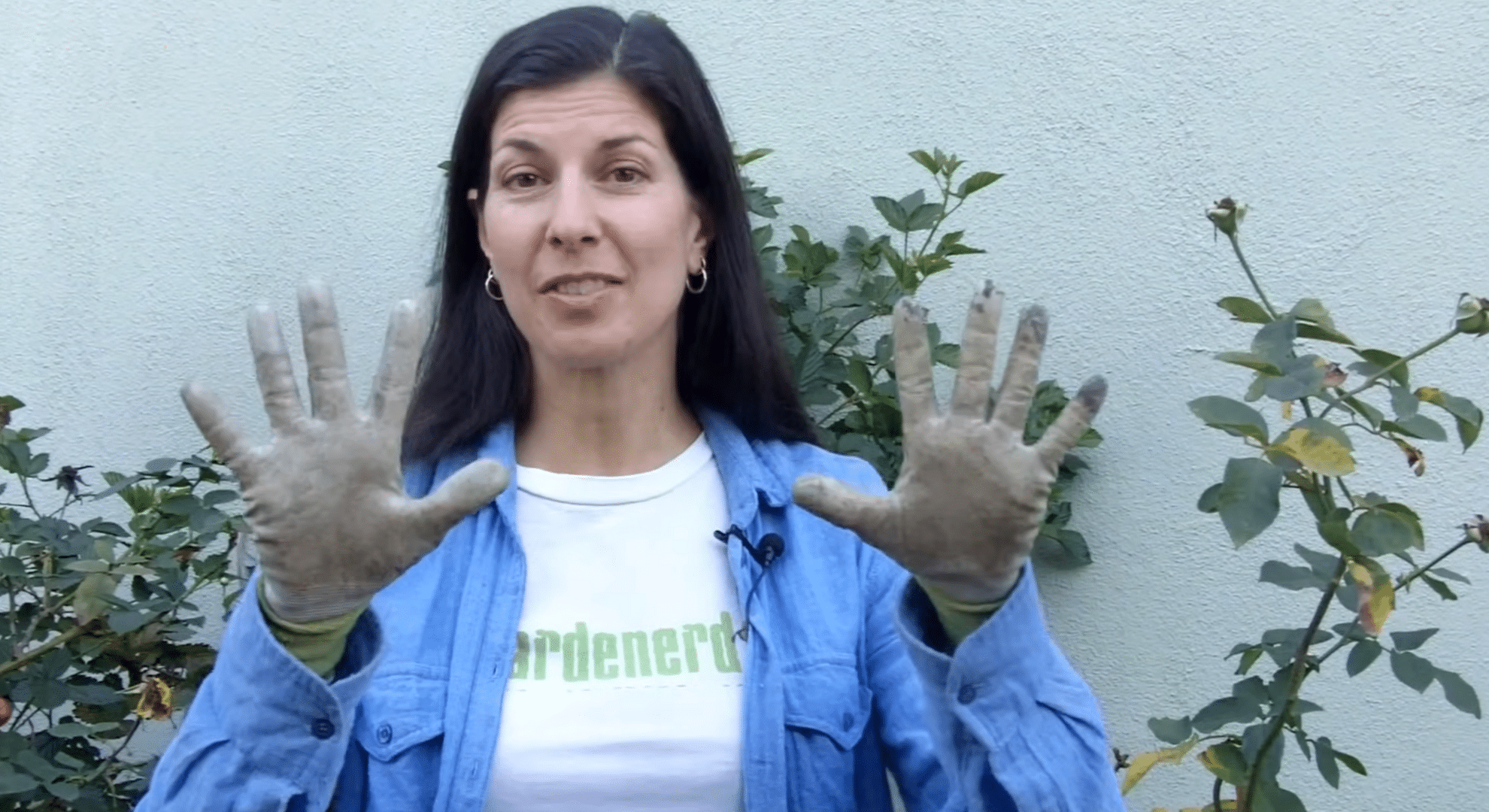
Before cutting, protect yourself with gloves, long sleeves, and clean, sharp pruners. Roses have sharp thorns, and clean tools lower the risk of spreading disease while you prune the plant.
Step 2: Remove the Leaves
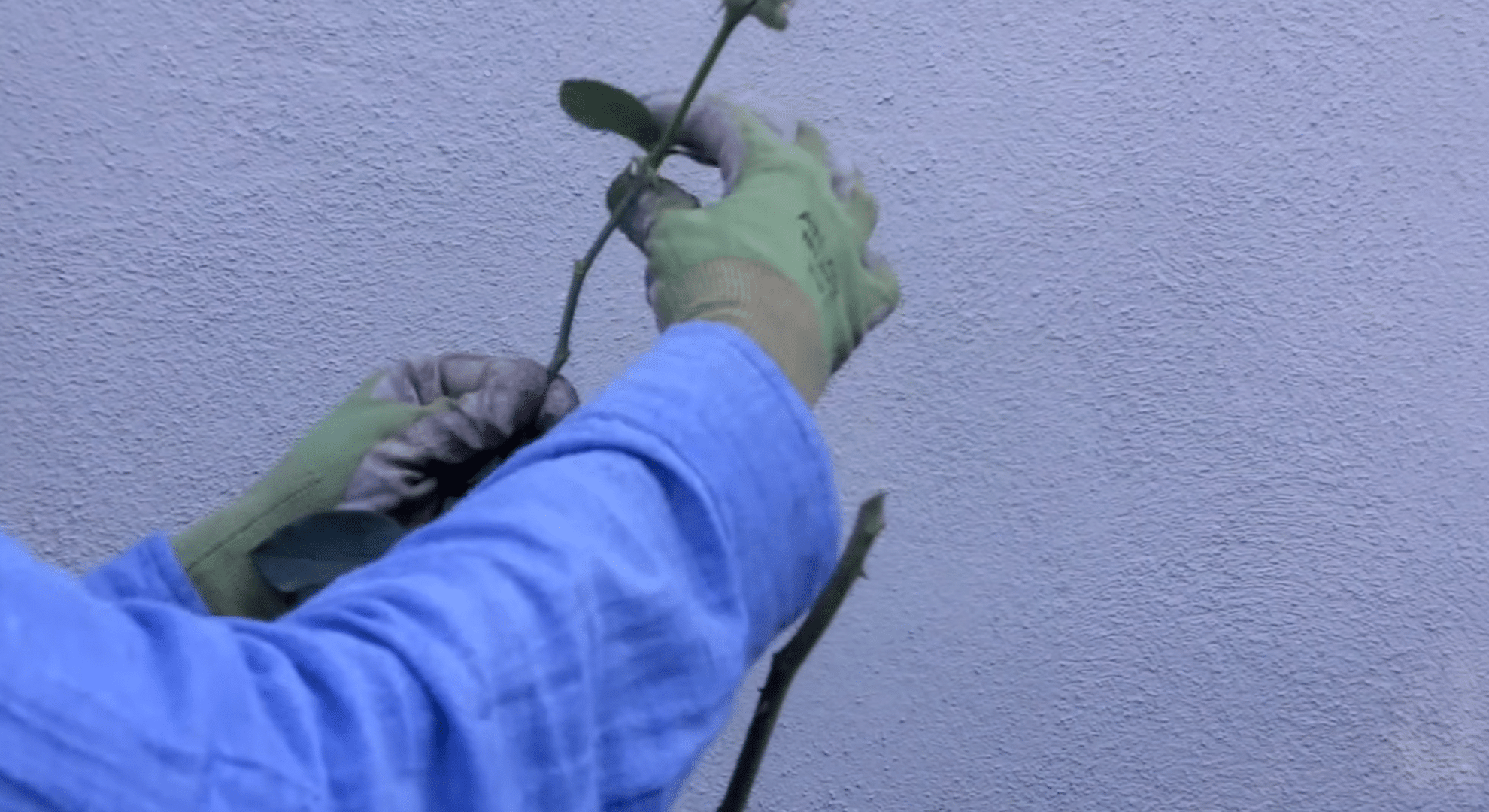
Pull off all remaining leaves from the rose plant. This helps you clearly see the plant’s structure and makes it easier to spot crossing, weak, or unhealthy canes before making cuts.
Step 3: Open the Center
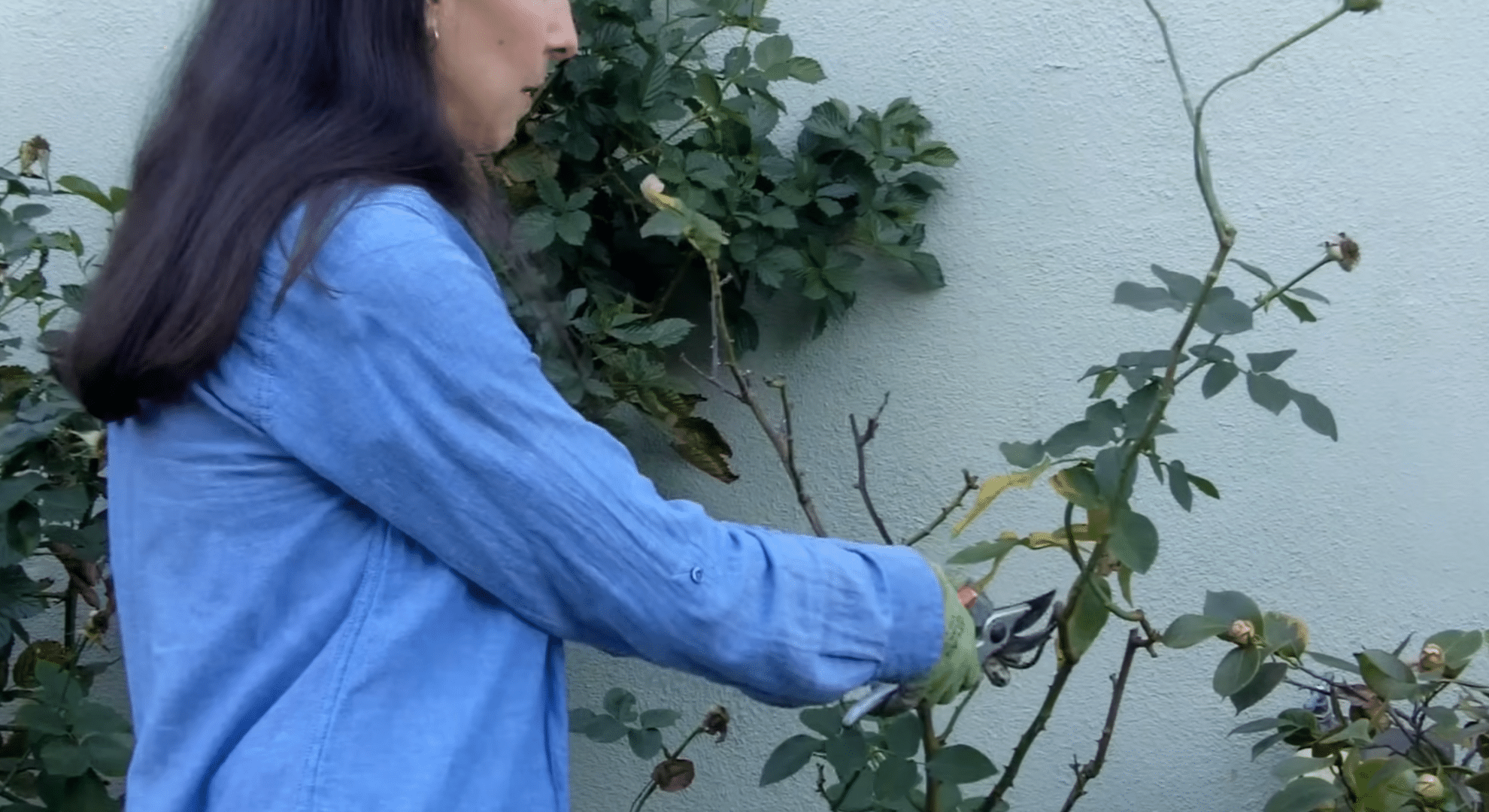
Remove canes that grow inward, cross other stems, or rub together. Crowded growth causes damage and poor airflow. Opening the center helps light and air move through the plant.
Step 4: Remove Unhealthy Growth
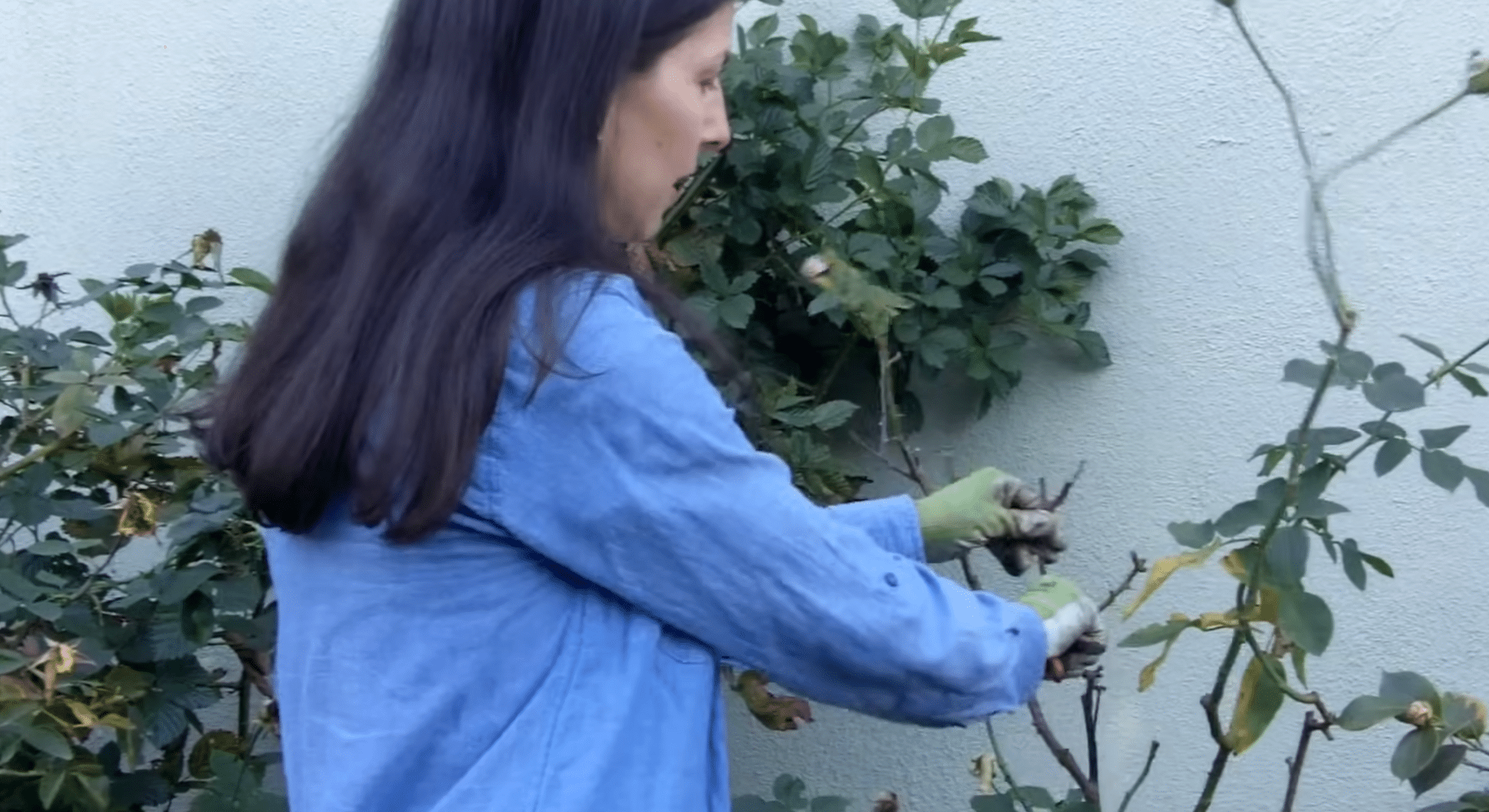
Cut out any dead, damaged, or diseased canes. If unsure, cut into the stem. Brown inside means dead. Green inside means alive. Removing weak wood keeps the rose healthier.
Step 5: Shorten the Main Canes
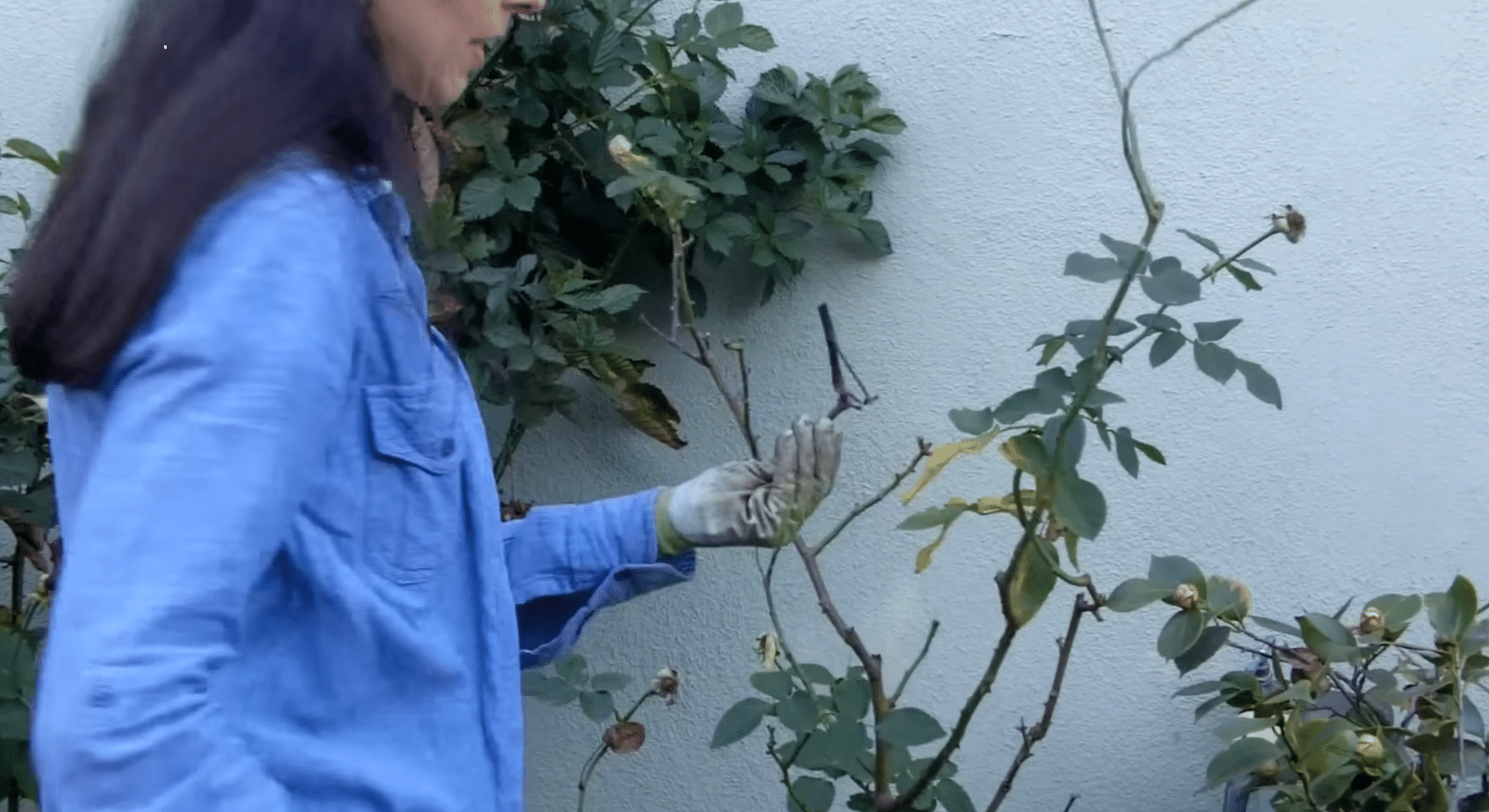
Trim back taller upright canes to keep the plant balanced. Guide growth outward instead of inward. This helps the rose hold its shape and produce stronger growth later.
Step 6: Make Clean Angled Cuts
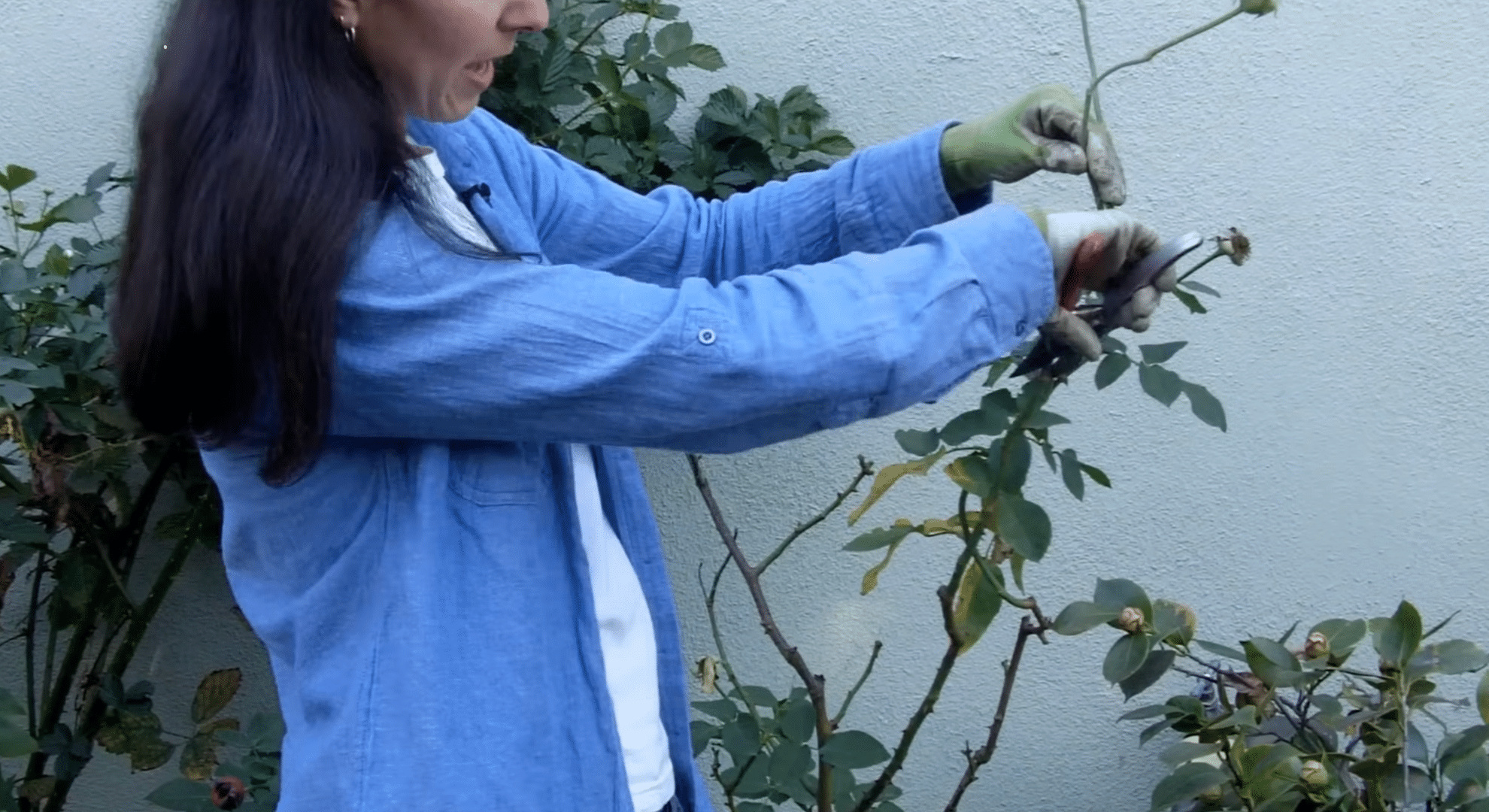
Make each cut at a slight angle away from the growth point. Angled cuts help water run off instead of sitting on the cut, which lowers rot risk.
Step 7: Step Back and Check
When finished, step back and look at the plant. It should appear open, balanced, and not crowded. Good airflow through the center means pruning was done correctly.
If you want a visual of this, here’s a tutorial you can follow step by step.
Fall Rose Care: Pruning or Just Cleanup?
Fall is about restraint. Pruning and cleanup are not the same thing, and mixing them up can lead to winter damage. In fall, your goal is safety and protection, not shaping or growth control.
| Task | Safe in Fall? | What to Do | Why It Matters |
|---|---|---|---|
| Heavy pruning | No | Save major cuts for late winter or early spring | Heavy cuts trigger new growth that cannot survive cold weather |
| Light cleanup | Yes | Remove dead, diseased, or broken canes | Prevents rot, pests, and disease over winter |
| Deadheading | Limited | Stop deadheading in colder areas | Signals the plant to slow growth and harden before winter |
| Tall cane control | Yes | Shorten only to prevent wind damage | Reduces cane breakage from winter winds and storms |
| Leaf removal | Optional | Clear fallen leaves around the base | Lowers disease risk without pushing new growth |
Stopping deadheading in cold areas helps roses enter dormancy. Leaving tall canes slightly shortened also protects roots by reducing wind rock and winter stress.
Rose Pruning Mistakes That Reduce Blooms
Small pruning mistakes can quietly cut down your flowers for the entire season. Most problems come from timing issues, poor cuts, or skipping basic plant care steps that roses depend on.
- Pruning once-blooming roses in spring, which removes buds already set for the year
- Cutting roses too hard in the fall, especially in cold climates, triggers weak growth before winter
- Leaving crowded centers that block airflow and trap moisture
- Making random cuts without guiding growth outward
- Using dull or dirty tools that damage stems and spread disease
- Ignoring the disease and pruning around infected areas instead of removing them
- Cutting without knowing whether the rose blooms on old or new wood
Good pruning is about patience and clean habits. When timing, spacing, and sanitation are right, roses respond with stronger growth and better blooms instead of stress and setbacks.
Conclusion
I learned that roses forgive a messy cut, but they will not forgive bad timing. This post showed the simple cues that matter most, like new buds, firm canes, and the season in your area.
Once I nailed when to trim roses, my plants filled out faster and bloomed with less waiting. The main takeaway is that you do not need perfect dates; you need a clear sign and a clean cut.
You can now walk up to your rose bush and know what to look for.
Use the timing tips, prune with steady hands, and stop before you overcut. Keep your tools sharp and your cuts quick.
If you want more garden help, check out my other blogs and keep learning!