How fabric choices at home affect the air your family breathes
The living room sofa is where most households spend their longest stationary hours. It is the surface that children press their faces against, that adults lean back into for hours at a time, and that animals curl up on without any awareness of what the fabric beneath them is made of or what it might be releasing into the air. The chemistry of that surface, particularly when it is synthetic or treated with chemical finishes, is not a neutral variable in the health equation of a home.
Indoor air quality is a subject that most people associate with ventilation, mould, or gas appliances. The contribution of furnishing materials to the chemical composition of indoor air is less commonly understood but equally consequential. The upholstered sofa, particularly when new or recently treated, can be among the most significant ongoing sources of chemical emissions in a living room.
What Volatile Organic Compounds Are and Where They Come From
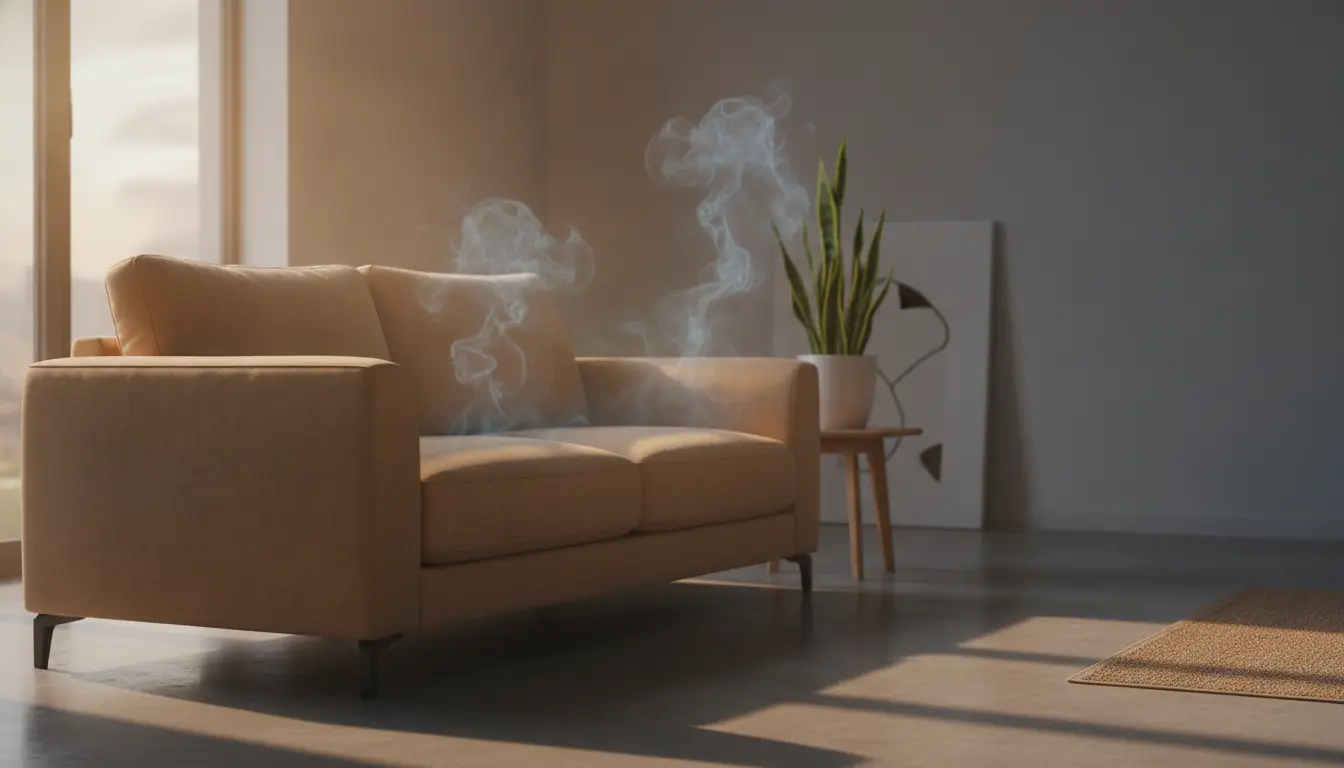
Volatile organic compounds, or VOCs, are carbon-containing chemicals that vaporise at room temperature and become part of the air in an enclosed space. They are emitted by a wide range of products and materials: paints, cleaning products, adhesives, pressed wood furniture, and upholstered furnishings. Once airborne, they are inhaled continuously by everyone in the space.
The health consequences of VOC exposure depend on the specific compound, the concentration, and the duration of exposure. Short-term effects include eye, nose, and throat irritation, headaches, and nausea. Long-term exposure to some VOCs, including formaldehyde and benzene, has been associated with more serious health outcomes. Children, whose respiratory systems are still developing and who spend more time at floor and sofa level, are disproportionately exposed in homes with high VOC-emitting furnishings.
What Environmental Authorities Say About Furnishing Materials
The United States Environmental Protection Agency’s guidance on indoor air quality confirms that home furnishings, including draperies and upholstered furniture, are identified sources of VOC emissions, with emissions typically highest from new products and dissipating over time. The same guidance notes that VOC concentrations indoors are consistently higher than outdoors and can be up to ten times higher in homes with significant emission sources.
The specific VOC burden of a piece of upholstered furniture depends largely on the materials it contains. Synthetic fabrics, particularly those treated with stain-resistant or flame-retardant finishes, tend to carry a higher chemical load than natural alternatives. Pressed wood components in sofa frames release formaldehyde. Adhesives and foam padding contribute additional compounds. The sofa as an assembled product may draw from all of these sources simultaneously.
The relevant practical point for households is that the fabric surface of the sofa, while not the only VOC source, is the one most immediately adjacent to the occupant’s body during use and the one that is most practically replaceable without professional intervention.
Natural Fabric as a Lower-Emission Surface Choice
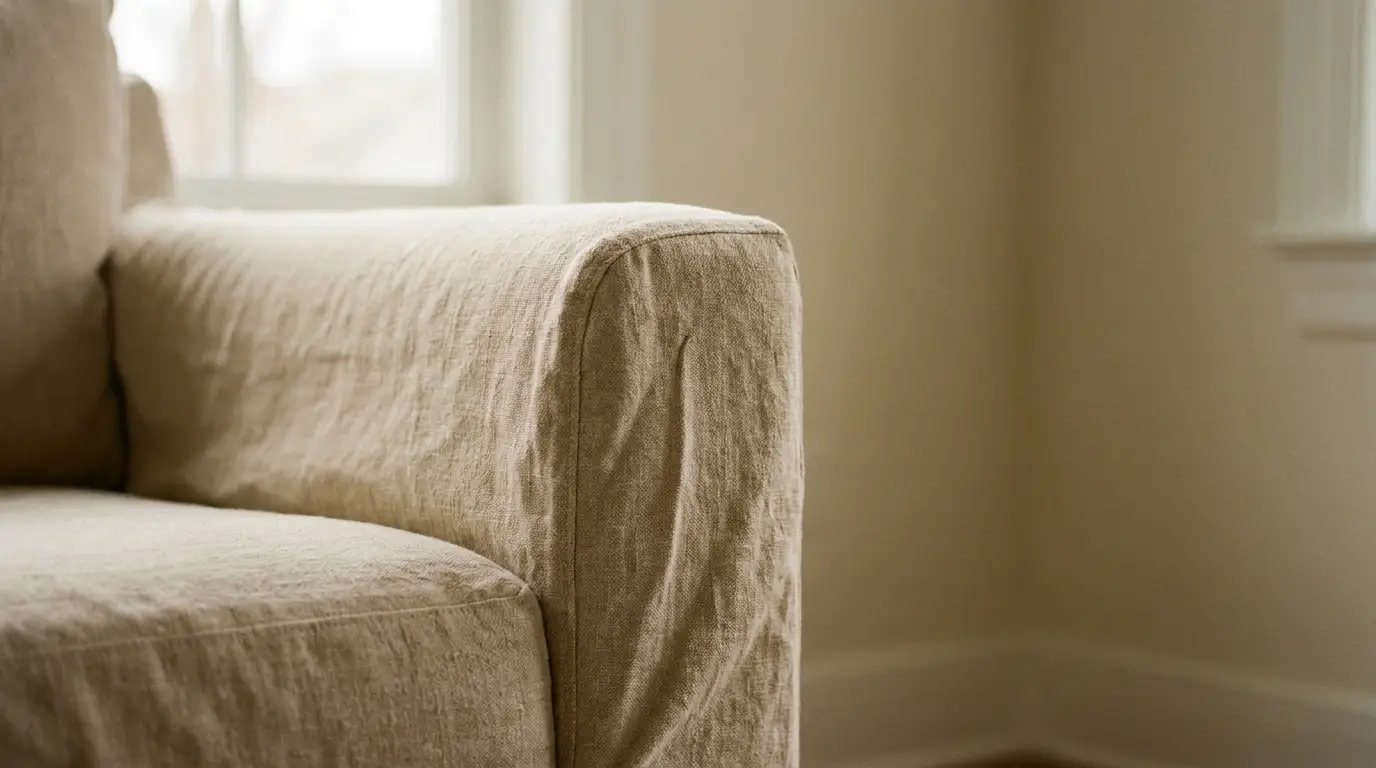
Natural fibres such as linen and cotton do not require the finishing treatments that synthetic fabrics depend on for their stain-resistance and texture-retention. An untreated or minimally treated linen cover does not emit the fluorochemicals used in stain repellents, the brominated compounds used in some flame retardants, or the processing chemicals associated with polyester and other synthetic base fibres.
This does not mean that any linen or cotton cover is chemically neutral. The dyeing process, any finishing treatments applied, and the washing processes used in production all affect the chemical profile of the finished fabric. A well-sourced natural fabric from a producer using responsible processing will, however, carry a significantly lower VOC burden than an equivalent synthetic alternative, and will off-gas less into the home environment during use.
For households with IKEA sofas, the decision to replace a synthetic original cover with a natural alternative directly addresses this source.Norsemaison slipcovers for IKEA sofas made in natural linen or cotton substitute a lower-emission natural surface for the original synthetic fabric, which reduces the ongoing chemical contribution of the sofa to the home’s indoor air environment. The benefit compounds over the weeks and months of use: the lower the sofa’s ongoing emissions, the lower the background VOC level of the room.
Washability and Its Role in Indoor Air Quality
The VOC issue intersects with a second indoor air quality concern: the accumulation of allergens, dust mites, and particulate matter on soft furnishing surfaces. A sofa cover that can be removed and machine-washed is, in this respect, meaningfully superior to a fixed upholstery surface that cannot. Washing removes accumulated particulate matter, reduces the allergen burden of the fabric, and restores the surface to a condition closer to its chemical baseline.
Natural fabric covers are washable in a way that addresses both the allergen and the chemical dimension. Washing a linen or cotton cover removes surface-accumulated particles and, over multiple cycles, continues to reduce the residual processing chemicals from manufacture that may be present in the fabric when it is new. A natural fabric cover that has been washed ten times carries a lower total chemical burden than a new synthetic cover that has never been washed.
Temperature and Seasonal Emission Variation
VOC emission rates from furnishing materials increase with temperature. In warmer months, or in rooms with higher ambient temperatures, the emission rate from synthetic fabrics and foam components rises measurably. This is why the indoor air quality of a living room in summer, particularly in a home that is closed up against the heat, can be significantly more chemically loaded than in winter when ventilation is more likely.
A natural fabric sofa cover addresses this seasonal variable more effectively than a synthetic alternative because its baseline emission rate is lower at every temperature. The proportional increase in emissions during warm periods produces a smaller absolute change when starting from a lower baseline.
Practical Steps for Improving the Chemical Environment of a Living Room
The sofa cover is one of several variables that determine a living room’s indoor chemical environment. The following practical measures, taken together, produce a more significant improvement than any single intervention:
• Replace synthetic sofa covers with natural fabric alternatives that do not require stain-repellent or heavy flame-retardant finishing treatments
• Ventilate the room daily, particularly in warmer months when emission rates from all furnishing materials are elevated
• Wash removable covers regularly to remove accumulated surface particulates and reduce residual manufacturing chemicals over time
• Introduce houseplants, which absorb certain VOC compounds at modest concentrations and contribute to a more chemically balanced indoor environment
• Choose natural fibre rugs and curtains alongside the sofa cover to address the full range of textile surfaces that contribute to the room’s VOC background
The indoor air quality of a home is a function of the cumulative chemical profile of everything it contains. Upholstered furniture is among the largest contributors to that profile, and the fabric on its surface is the variable most directly and practically within the household’s control. Choosing a natural fabric cover is not a minor aesthetic preference. It is a meaningful intervention in the chemical environment that everyone in the household inhabits every day.